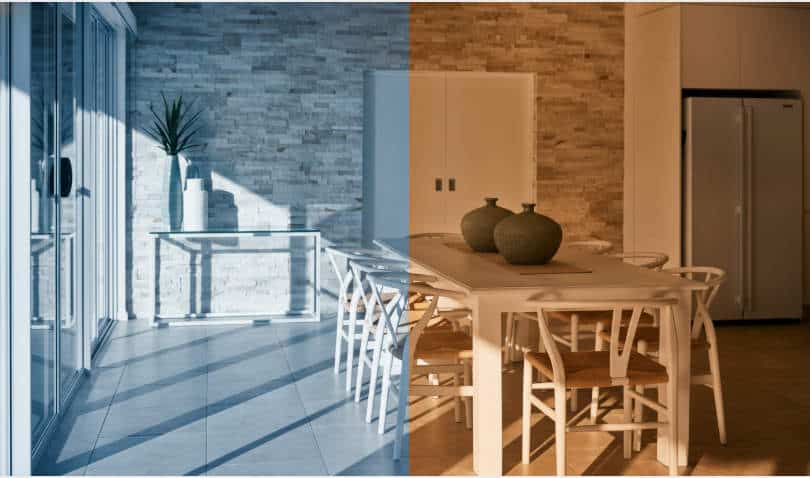
Color variance often serves as the primary source of friction between architectural specifications and final site inspections, leading to costly project rejections and timeline delays. When a high-profile commercial facade shows visible banding or inconsistent tones, the financial risk falls on the procurement team to source immediate replacements or face heavy liquidated damages. Mismatched expectations regarding geological material behavior result in stalled handovers and wasted resources during the critical phases of installation.
This guide establishes a technical framework for managing these shifts by examining the mineralogy of iron and mica alongside the logistics of batch mixing for large-scale orders. It outlines the 15% variance rule for sample-to-site expectations and details how factory sorting protocols stabilize visual flow across multiple shipping containers. These procedures allow contractors and developers to maintain aesthetic integrity and meet project schedules while working with the inherent properties of natural stone.
Why No Two Natural Stone Panels are Ever Geologically Identical?
Geological uniqueness is the fundamental value proposition of natural stone; every panel serves as a literal cross-section of millions of years of mineral deposit and tectonic pressure that no synthetic process can replicate.
Mineral Composition and Trace Element Variance
The chemical makeup of natural stone dictates its primary color and internal structure based on the specific minerals present during formation. We observe significant shifts in hue based on the concentration of iron oxide, which yields yellows and reds, or manganese, which introduces darker, earthy tones. Even within a single quarry bed, these minerals distribute unevenly. This creates a natural gradient across the stone face rather than a flat, monochromatic surface.
- Iron oxide, feldspar, and manganese drive the distinct color shifts seen across different quarry deposits and individual stone beds.
- Mica inclusions provide a signature reflective quality and visual depth that varies between every individual stone layer.
- Trace impurities distribute unevenly within the stone, ensuring that even panels cut from the same block show different mineral spotting and character.
Metamorphic Processes and Veining Patterns
Metamorphic activity transforms original sedimentary layers into the complex veining patterns found in modern architectural projects. Immense heat and pressure over millions of years fuse clay and silt into the irreplicable streaks characteristic of quartzite and slate. These patterns follow the natural fissures where mineral-rich fluids once moved through the rock, creating directional flows that look organic because they are the result of raw geological force.
The intensity of this geological pressure also dictates the density and crystalline structure of the final stacked stone panel. High-pressure environments produce the tight, durable grains found in premium metamorphic rocks, while the specific mineral intrusions that move through fissures during formation create one-of-a-kind patterns that cannot be repeated in a factory setting.
Sedimentary Layering and Natural Texture
Texture is a direct byproduct of the stone’s depositional history. Seasonal changes during the formation period left behind varying thicknesses of sediment and distinct color tones. When we use natural split-face techniques to create our panels, we expose the internal grain structures that have remained hidden for eons. This process highlights a spectrum of grain sizes, from fine silts to coarse mineral clusters, unique to every extracted piece.
- Seasonal changes during the formation period leave behind varying sediment thickness and color tones within the quarry.
- Natural split-face textures expose internal grain structures that human manufacturing cannot replicate.
- Regional differences in the quarry bed result in a wide spectrum of textures, ensuring no two installations ever feel identical.
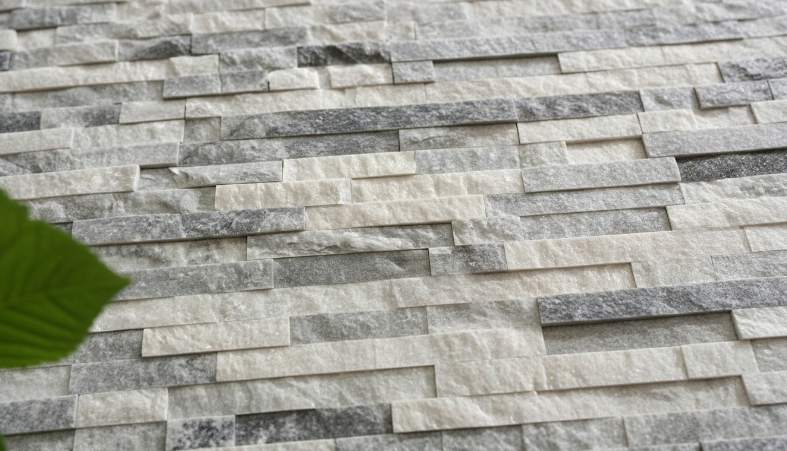
Can a Factory Guarantee 100% Color Consistency for Large Projects?
While geological authenticity makes a 100% identical match impossible, advanced source control and digital grading now allow professional facilities to reach a 95% tonal harmony for large-scale architectural projects.
Natural Variation and Geological Authenticity
Natural stone panels derive their primary value from the unique mineral diversity found within deep quarry deposits. Because these panels originate from solid stone blocks formed over millions of years, they exhibit organic textures and veining that synthetic materials cannot duplicate. Minor shade variations serve as a hallmark of authenticity, confirming the material is 100% natural and increasing the long-term character of the architecture.
- Individual stone panels exhibit unique mineral streaks because they are extracted from real geological veins.
- Attempting to force 100% identical matching contradicts the nature of genuine stone and removes the aesthetic depth clients expect.
- Subtle tonal shifts indicate high-quality, non-manufactured material that retains its value better than faux alternatives.
Advanced Grading and Three-Phase Inspections
Professional factories use multi-stage inspection protocols to filter out significant deviations and maintain visual harmony across thousands of square feet. At Top Source Stone, we implement a three-phase review: immediately after initial infrared cutting, following the assembly of interlocking Z-shaped panels, and once more during final packaging.
- Quality control teams grade every stone by tone, removing any pieces that deviate from the project’s specific color range.
- Infrared cutting equipment ensures that while colors vary naturally, the physical fit of each panel remains perfect.
- Pre-shipment visual verification allows buyers to review high-definition photos of finished crates to confirm tonal balance before balance payment.
Strategic Quarry Selection and Batch Control
Controlling the supply chain from the mountain to the crate is the most effective way to limit color shifts. We source materials for massive orders from a single geological layer—the same quarry vein—to maintain a consistent mineral DNA across the entire production run. This “Same-Batch Quarry Consistency” prevents the patchy, mismatched appearance often seen when wholesalers source from multiple disparate factories.
- Sourcing from specific quarry sections limits the impact of iron oxide and feldspar shifts.
- Coordinating extraction schedules ensures that panels for a single project share a unified visual flow.
- Managing the supply chain directly reduces the risk of mixing different mineral batches during the manufacturing process.
Digital Monitoring and Color Repeatability Standards
By 2026, leading production lines have integrated AI-driven sensors to track environmental variables that affect stone appearance. These tools help technicians calibrate sorting criteria against previous project benchmarks, allowing for a 90-95% shade repeatability that was previously impossible in natural stone production.
- Real-time sensors monitor humidity and temperature to ensure consistent bonding and resin application.
- Digital color management tools help technicians match new production runs to established “Golden Sample” standards.
- Advanced process controls minimize waste while keeping color tolerances within the strictest B2B industry parameters.
Premium Factory-Direct Stacked Stone Ledger Panels
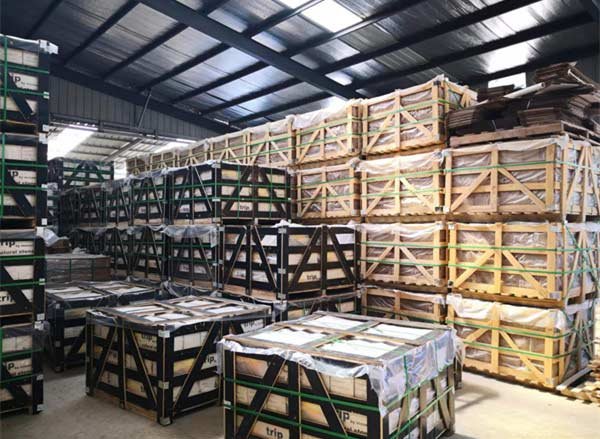
The “Batch Mixing” Strategy: Ensuring a Balanced Wall Color Flow
Effective stone installation requires a structured crate-blending protocol to distribute natural mineral variations evenly across the facade and prevent artificial color blocking.
Natural stone panels carry the geological signature of the specific quarry vein they were extracted from. While Top Source Stone maintains 95% hue uniformity by sourcing from the same quarry layer per order, the remaining 5% variance is what gives real stone its character. To manage this, installers pull panels from three to five different crates simultaneously. This practice spreads tonal shifts across the entire wall, ensuring that the unique textures of slate, quartzite, or marble appear randomized and authentic rather than patchy.
| Installation Protocol | Variance Management | Visual Result |
|---|---|---|
| Linear Crate-by-Crate | High Risk of “Banding” | Noticeable color blocks and unnatural transitions. |
| 5-Crate Multi-Blending | Controlled Mineral Flow | Balanced tonal distribution; mimics natural quarry veins. |
| Dry Layout Staging | Pre-Verified Consistency | Seamless architectural finish; zero post-install rework. |
Conducting a Dry Layout to Verify Tonal Balance
The dry layout serves as the most critical visual staging phase in a high-end project. Contractors arrange the panels horizontally on the floor before applying any permanent adhesive. This allows the design team to identify “hot spots”—clusters of dark minerals or mica reflections—that might disrupt the intended visual flow. By redistributing high-contrast pieces during this phase, project managers achieve the seamless, sophisticated look expected in 2026 commercial standards.
- Horizontal staging allows for the immediate identification of iron-oxide clusters.
- Designers can swap high-mica panels to ensure light reflects evenly across the facade.
- This step eliminates the risk of costly adjustments after the mortar has cured.
Preventing Visual Banding in Large Wall Sections
Large-scale commercial surfaces are particularly susceptible to horizontal banding if installers work through the inventory sequentially. This effect occurs when slight geological shifts between crates create visible lines on the wall. Systematic batch mixing breaks up these linear patterns, maintaining a consistent aesthetic across vertical transitions. This method is especially vital when using Z-shaped interlocking panels, as it ensures the “male-female” connections remain visually invisible by prioritizing color density over crate proximity.
Project managers use this strategy to maintain the architectural integrity of the wall from the base to the coping. By integrating material from different pallets, the installation team guarantees that the top of a 20-foot wall matches the base perfectly, preserving the professional finish promised by precision CNC diamond-blade edges. This level of planning transforms raw stone into a cohesive engineered surface.
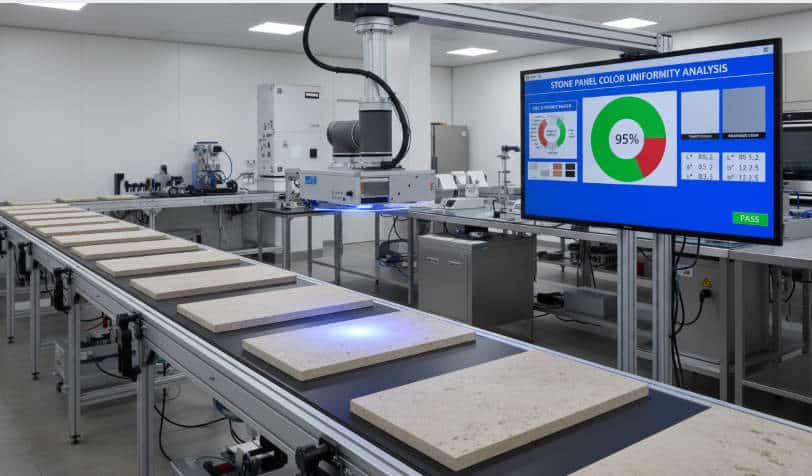
How Minerals Like Iron and Mica Create the Visual Depth of Real Stone
The optical complexity of natural stone panels stems from the heterogeneous distribution of minerals, where mica provides reflective luminosity and iron oxides deliver organic color saturation that remains stable under harsh 2026 UV standards.
Mica Crystals and Light Reflection
Mica minerals provide a distinctive shimmer that gives stacked stone its characteristic luminosity. The layered silicate structure of mica creates perfect basal cleavage, which allows individual crystals to reflect light like tiny mirrors. This natural sparkle in materials like slate and quartzite comes from these reflective mineral surfaces embedded deeply within the stone matrix.
- Mica allows the stone to interact with ambient lighting, changing its appearance as the viewer moves across a space.
- The reflective quality creates a “living” wall effect that shifts between morning sun and evening artificial light.
- Light-colored micas containing sodium or calcium provide a silvery brilliance, while darker varieties add metallic weight.
| Mineral Component | Visual Effect | Top Source Stone Models |
|---|---|---|
| Mica (Silicates) | High-gloss shimmer and light reflection | Alaska Gray, Sierra Blue |
| Iron Oxides | Rust, ochre, and deep orange gradients | California Gold, Copper Canyon |
| Quartz/Feldspar | Translucency and internal structural depth | Glacier White, Arctic Golden |
Iron-Bearing Minerals and Earthy Color Gradients
Iron and magnesium content within the stone dictate the rich, organic color variations that define authentic quarry materials. Iron-bearing minerals introduce deep rust, charcoal, and ochre tones that man-made pigments struggle to replicate. Because we source panels from the same quarry vein, we maintain these natural gradients while ensuring the hue remains consistent across the entire project installation.
Variations in mineral concentration ensure that colors appear as natural flows rather than flat, repetitive patterns. Darker mica varieties containing magnesium or iron provide a stark contrast against lighter sodium-based minerals. This interplay increases visual interest and prevents the “plastic” look common in manufactured stone veneers.
Mineral Distribution and Three-Dimensional Depth
The size and distribution of minerals like quartz and mica create a 3D effect that gives the stone a premium, weighted appearance. Varied crystal sizes within the stone create a textured surface that catches shadows and highlights simultaneously. We utilize CNC diamond-blade cutting to preserve these mineral structures at the edges, ensuring the internal depth is visible even at the joints.
- Translucent minerals allow light to penetrate slightly below the surface before reflecting back, creating a sense of inner depth.
- The geological interplay between different mineral layers ensures the stone looks authentic under harsh architectural lighting.
- Our “Same-Batch” strategy ensures that this mineral distribution remains uniform across large-scale commercial facades.
Why Natural Light Changes the Perceived Color of Your Installation?
Natural light serves as a dynamic filter, fundamentally shifting stone color from cool morning tones to warm afternoon hues while dictating the visible depth of mineral textures.
The Influence of Diurnal Color Temperature Shifts
Natural daylight is not a static light source; it functions as a shifting spectrum that dictates how the human eye interprets stone pigments throughout the day. Morning light contains higher concentrations of blue-spectrum wavelengths, which emphasizes the cool, silver-gray undertones in our Slate or Glacier White Marble series. As the sun moves across the sky, the color temperature drops, transitioning into the warmer infrared end of the spectrum.
By late afternoon, the sun provides warm, golden hues that saturate the iron-rich veins and earth tones in rustic stone varieties, making tans and ochres appear significantly more vibrant than they do at noon. Architects in 2026 prioritize evaluating stone samples on-site at three specific intervals—9:00 AM, 12:00 PM, and 4:00 PM—to ensure the selected material aligns with the project’s intended atmosphere across all daylight cycles.
Dynamic Shadow Play on Textured Surfaces
The physical depth of our Rough Series panels interacts with moving light sources to create evolving visual textures. Low-angle sunlight, typical of early morning or late evening, creates long, dramatic shadows across high-relief stone surfaces. This increase in contrast heightens the perceived ruggedness of the split-face stone, making the installation look more tactile and “3D.”
- Overhead midday sun flattens the stone’s appearance, as the direct light fills in micro-shadows, making the surface look more uniform and less aggressive.
- Direct light highlights the engineering of the interlocking Z-shape system, where the male-female connection points use these light shifts to conceal vertical seams more effectively than static indoor lighting.
Mineral Reflectivity and Crystalline Highlights
Natural minerals within the stone, such as quartz and mica, react uniquely to the full spectrum of natural light. Mica inclusions possess perfect basal cleavage, meaning they act as tiny mirrors that reflect light with high intensity. Artificial LED sources, even those with high color rendering indices, often miss the specific frequencies required to trigger the “sparkle” effect found in our Quartzite panels.
Because mica reflects light differently depending on the viewing angle, the stone creates a sense of movement as people walk past the wall. Natural light also reveals the true clarity of Marble Series panels, showcasing the internal crystalline structure and deep veining rather than just the surface pigment. This transparency allows light to penetrate the first few millimeters of the stone, creating a “glow” that “faux” stone products cannot replicate.
Exposure Variations Between Direct Sun and Ambient Shade
The intensity of light exposure dictates the baseline saturation and brightness levels of the stone’s natural pigments. Installation on a south-facing exterior wall results in higher color saturation and vivid contrast between different stone strips, as the high UV intensity brings out the maximum color range of the minerals. This is where the 95% hue uniformity of our same-batch quarry sourcing becomes critical, as intense light can expose even minor color shifts.
Conversely, north-facing or shaded installations provide a muted, consistent color palette. These areas rely on “cool” ambient light, which emphasizes the stone’s base mid-tones and reduces the “pop” of warmer veins. Designers now use these variations to their advantage, selecting a single stone model but utilizing different building orientations to create natural “accent” zones without needing to source different materials.
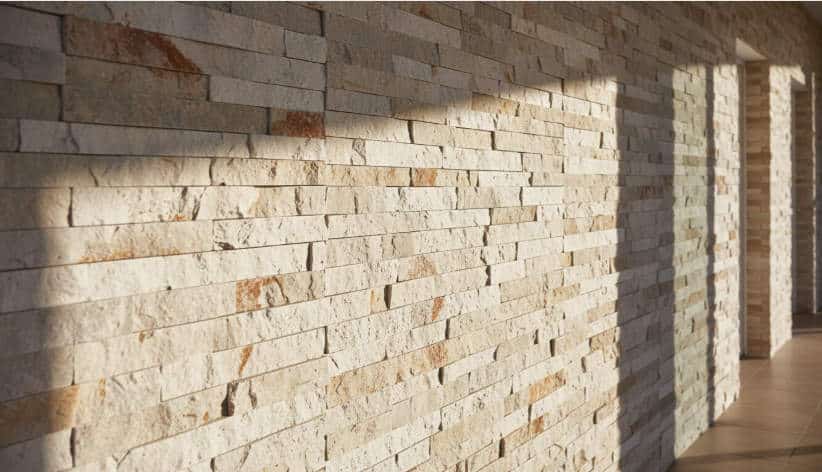
Managing Sample-to-Site Expectations: The 15% Variance Rule
Successful natural stone specification relies on recognizing that a 15% mineral variance is an indicator of geological authenticity, not a manufacturing defect, requiring proactive management from the quarry to the job site.
Defining the 15% Tolerance for Natural Mineral Shifts
Industry standards in 2026 recognize that natural stone possesses inherent geological fluctuations that distinguish it from synthetic alternatives. We apply the 15% variance rule to account for shifts in color saturation, mineral spotting, and veining patterns within a single production run. These deviations are treated as a hallmark of authenticity, ensuring that every installation remains unique rather than appearing like a printed ceramic imitation.
- The 15% rule provides a measurable benchmark for acceptable shifts in mineral density and base hue.
- Our three-stage inspection process monitors these shifts at the quarry face to keep the bulk order within a defined visual range.
- Categorizing these shifts as natural characteristics helps wholesalers manage client expectations during the submittal phase.
Why Small-Scale Samples Fail to Capture Full Veining
Handheld samples provide a textural snapshot but cannot represent the full geological narrative found in a thousand-square-foot order. A standard 6” x 24” panel shows only a fraction of the quarry’s depth, often missing the dramatic color transitions present in the “Rough Series” or the intricate mica sparkles in quartzite. Designers should use physical samples to confirm base color and finish, while relying on digital batch records for the broader aesthetic.
| Variance Parameter | Standard Industry Practice | Top Source Stone Protocol |
|---|---|---|
| Tolerance Management | Random / Unquantified | Strict 15% Saturation Limit |
| Batch Control | Mixed Quarry Layers | Single-Vein Extraction |
| Visual Verification | Outdated Physical Samples | Digital Batch Mapping & Photos |
- We advise viewing current 2026 batch photography to see the range of “Pencil” or “Marble” collections.
- Physical samples serve as a guide for thickness and weight, while the full order introduces the rich character of natural minerals.
- Large-scale projects should always reference a “range sample” consisting of at least three panels to see the 15% shift in action.
Utilizing Digital Batch Mapping for Project Consistency
Advanced logistics and quality control protocols bridge the gap between initial samples and final site delivery. We employ digital scanning to group panels with similar color values before they leave the factory. This proactive sorting ensures that distributors receive material sourced from the same quarry section, minimizing radical shifts that often occur when mixing layers of the mountain.
- Strategic crating ensures that all material for a specific elevation comes from the same extraction cycle.
- Our team provides real-time images of the exact crates assigned to a project, allowing for pre-approval of the color flow.
- Digital mapping reduces “patchy” wall sections by identifying outliers during the CNC diamond-blade cutting stage.
On-Site Blending Methods to Manage Visual Variance
Contractors play a vital role in balancing the 15% variance by utilizing proper dry-laying techniques before permanent installation. Even with high-level factory sorting, the organic beauty of the stone is best realized when panels are mixed across multiple crates during the layout process. This avoids unintentional “color blocking” and creates a harmonized surface that reflects the stone’s natural depth.
- We recommend opening at least four crates simultaneously to pull panels from different sections of the batch.
- Dry-laying the stone allows the installer to distribute minerals like iron and mica evenly across the wall.
- Mixing crates eliminates “hot spots” where multiple dark panels might otherwise be clustered together.
Conclusion
Understanding and managing natural stone variance ensures that large-scale installations maintain a cohesive aesthetic while celebrating the unique mineral depth of real slate and quartzite. Sourcing from single quarry veins and following the 15% variance rule allows professionals to deliver predictable results that meet strict architectural standards. This systematic approach to color shifts protects project integrity and streamlines the procurement process for high-volume orders.
Browse the Big 10 inventory to see how we maintain hue uniformity across our most popular North American selections. Reach out to our team to request a sample or a technical catalog tailored to your wholesale needs.
Frequently Asked Questions
Why does my stone look different from the initial sample?
Natural stone is a geological product shaped by millions of years of mineral settlement. Your stone may differ from a sample because of inherent variations in mineral concentrations, such as iron oxide and feldspar, which shift across different layers of the quarry. A single sample only represents a snapshot of the stone’s formation, whereas the full production reflects the natural evolution of the geological block.
How can I ensure all 50 containers have the same color tone?
To maintain maximum consistency across large orders, you must specify that the material be extracted from the same quarry bench or block sequence. Additionally, requesting a “range sample” or a factory blending process before crating ensures that any natural tonal shifts are evenly distributed. Professional inspection and photographic documentation of the batches prior to shipment are industry-standard practices for large-scale projects.
Does the color of natural stone change after sealing?
Yes, sealing can affect the visual appearance of the stone depending on the product used. While “penetrating” or “impregnating” sealers are designed to maintain the stone’s natural matte look, “enhancing” sealers are specifically formulated to darken the stone and deepen its color, providing a permanent “wet look.” It is critical to perform a test application on a scrap piece to confirm the final aesthetic before treating the entire surface.
Why are some stones in a single panel darker than others?
Tonal variation within a single panel occurs due to subtle differences in the depositional history of the minerals. Darker sections often indicate a higher density of trace minerals or moisture-retention characteristics in that specific part of the stone. These nuances are a hallmark of natural material and confirm that the panels have not been artificially colored or standardized.
What is the best way to mix different stone batches on site?
The gold standard for onsite management is the “dry layout” method. Installers should open multiple crates simultaneously and draw pieces from different batches during the layout process. This blending technique avoids concentrated patches of one color and ensures that the inherent geological variations are harmoniously integrated across the entire installation area.