يعد تنظيف ضباب الملاط خطوة حاسمة بعد التثبيت والتي تحدد ما إذا كان المشروع يلبي المعايير المعمارية أو يتطلب إعادة صياغة مكلفة. عندما يترك القائمون على التركيب بقايا أسمنتية على حجر منقسم الوجه، فإن النسيج العميق وغير المنتظم يحبس المادة، مما يحول الميزة المميزة إلى مسؤولية يمكن أن تؤخر تسليم المشروع وتقلل من قيمة العقار. غالبًا ما يؤدي الفشل في إزالة هذه الرواسب بالطريقة الكيميائية الصحيحة إلى حفر السطح بشكل دائم، مما يجبر المقاولين على استيعاب تكلفة استبدال ألواح الدفتر بالكامل.
يضع هذا الدليل بروتوكولًا فنيًا للحفاظ على السلامة الهيكلية والجمالية للمنشآت الأسطح الحجرية المكدسة. We examine the mechanics of routine dust extraction, the chemical differences between pH-neutral cleaners and destructive acids, and the specific application of poultice pastes for pulling deep-set oil stains from the stone. These procedures serve as a standard operating procedure for facility managers and installers to ensure stone accents remain durable assets rather than maintenance burdens.
The Dust Magnet: Managing the Deep Split-Face Texture
Texture depth is the defining characteristic of premium ledgestone, but 1.75-inch relief heights require a proactive mechanical extraction strategy to prevent atmospheric dust from dulling the stone’s natural mineral clarity.
Vacuuming Debris from Deep Crevices
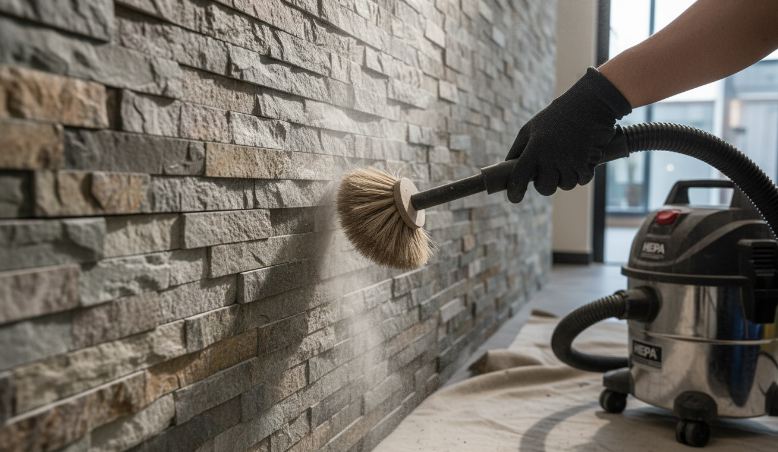
تتميز سلسلة Rough بأحجار يصل عمقها إلى 1.75 بوصة، مما يخلق جيوبًا طبيعية حيث يستقر الغبار المحمول بالهواء بمرور الوقت. في التركيبات الداخلية لعام 2026، يستخدم متخصصو الصيانة المكانس الكهربائية المجهزة بمرفقات فرشاة ناعمة لسحب الغبار من هذه الأسطح عالية الأبعاد دون المخاطرة بخدش الوجه المعدني الطبيعي. تعتبر هذه الطريقة فعالة بشكل خاص لتنظيف المفاصل المتشابكة على شكل حرف Z حيث تتراكم الجزيئات بشكل متكرر.
For the narrow gaps found in Pencil Series panels, vacuuming alone might not suffice. Compressed air canisters help dislodge fine particulates from these tight spaces, allowing the vacuum to capture the debris once it reaches the surface. This dual-tool approach maintains the deep relief shadow lines that make split-face stone a preferred choice for feature walls.
Applying pH-Neutral Cleaning Solutions
Natural slate, quartzite, and marble require specific chemical balances to avoid surface etching or permanent discoloration. We advise against using acidic cleaners or high-pressure washers, as these strip the الحجر طبيعي patina and can weaken the high-strength epoxy bond used in factory-assembled panels. Instead, mix a mild, pH-neutral stone soap with warm water for routine maintenance.
لتنظيف البقع العنيدة داخل المظهر الحجري الخشن، قم بتحريك المحلول باستخدام فرشاة ذات شعيرات ناعمة. وهذا يسمح للصابون بالوصول إلى الأعماق غير المستوية للشكل الحجري القاسي دون الإضرار بالطبقة النهائية. بمجرد اكتمال التحريك، فإن الشطف الخفيف بالماء النظيف والتجفيف السريع سيمنع بقع الماء من التشكل على الحجارة الداكنة مثل Midnight Slate.
عزل الأسطح لتبسيط عملية الصيانة
إن استخدام مادة مانعة للتسرب عالية الجودة وقابلة للتنفس تعمل كحاجز وقائي ضد ترابط الغبار وامتصاص السوائل. يجب على القائمين بالتركيب تطبيق هذا السداد فورًا بعد عام 2026 مرحلة التثبيت لحماية لون الحجر الأصيل وتسهيل دورات التنظيف الأسهل. بالنسبة للواجهات الخارجية، فإن إعادة غلق الحجر بشكل دوري يحافظ على مقاومة الأشعة فوق البنفسجية ويمنع بهتان اللون في المناطق عالية التعرض.
نوصي باستخدام مواد مانعة للتسرب ذات لمسة نهائية غير لامعة “سلسلة الخام” للحفاظ على الجمال الطبيعي غير العاكس مع تسهيل تنظيف الأنسجة العميقة بشكل كبير. يمنع السطح المحكم الغبار المجهري من التغلغل في مسام الحجر، مما يضمن بقاء جلسة التنظيف البسيطة بالمكنسة الكهربائية أو التنظيف الجاف فعالة لسنوات.
تقنيات التنظيف الجاف للجدران المزخرفة
تمنع الصيانة الجافة المنتظمة الغبار الناعم من التحول إلى طين أو أوساخ داخل الطبقات الحجرية عندما يمتزج مع الرطوبة المحيطة. تسمح منافض الغبار المصنوعة من الألياف الدقيقة ذات المقبض الطويل بذلك موظفو الصيانة للوصول إلى الجدران المميزة عالية التأثير في الأماكن التجارية lobbies or residential great rooms safely. This method provides a quick way to maintain the wall’s visual impact without the need for water-based cleaning.
- Sweep the stone surface in a downward motion to ensure dislodged dust falls to the floor for easy collection.
- Maintain the Pencil Series linear flow by brushing along the horizontal grain of the 10-12 حجر مكدس rows.
- Incorporate monthly dry brushing in high-traffic areas to prevent the accumulation of greasy dust particles.
Routine Dusting: Shop-Vacuums vs Microfiber Dusters
Effective maintenance of الحجر الطبيعي مكدسة requires matching the mechanical action of the cleaning tool to the specific relief depth of the stone profile to prevent long-term sediment buildup.
Soft-Brush Vacuuming for Deep Texture Extraction
توفر المكانس الكهربائية عالية الشفط المجهزة بملحقات فرشاة ناعمة طريقة التنظيف الأكثر فعالية للتحديدات ذات النسيج الثقيل مثل سلسلة Rough Series وسلسلة Pencil الألواح الحجرية. على عكس الأسطح المسطحة، تتميز هذه المقاطع بتنوعات كبيرة في العمق تحبس الجزيئات بعيدًا عن متناول طرق المسح التقليدية. تؤكد معايير جودة الهواء الداخلي لعام 2026 على استخدام المكانس الكهربائية المفلترة بتقنية HEPA في البيئات التجارية لضمان احتواء الغبار الحجري والمواد المسببة للحساسية البيئية بشكل كامل بدلاً من إعادة تدويرها.
- استخدم فرشًا مفرغة ذات شعيرات طبيعية لسحب الغبار من الشقوق العميقة مقاس 1.75 بوصة الموجودة في ألواح Rough Series دون خدش وجه الحجر الطبيعي.
- 10 إلى 12 صفًا حجر رقيق تستفيد الأشرطة الموجودة في سلسلة أقلام الرصاص من الشفط المركز الذي يرفع الحطام من المفاصل الأفقية الضيقة حيث تفشل منافض الغبار اليدوية.
- يضمن النهج المزدوج للأداة - تحريك الشقوق بفرشاة طلاء جافة أثناء التنظيف بالمكنسة الكهربائية في نفس الوقت - أقصى قدر من استخراج الحطام من حجر الحافة البارز.
ألياف دقيقة إلكتروستاتيكية للأسطح المصقولة والمسطحة
تعمل أدوات الألياف الدقيقة كحل صيانة أساسي للسلسلة المسطحة والسلسلة الرخامية، حيث يكون التلامس السطحي ثابتًا وتكون الشقوق في حدها الأدنى. تستخدم هذه الأدوات الكهرباء الساكنة لاحتجاز الجزيئات الدقيقة على سطح ألواح الرخام القطبي الأبيض أو الرخام المصقول، مما يمنع إعادة توزيع الغبار عبر الجدار. تحافظ طريقة التنظيف الجاف هذه على المظهر الطبيعي غير اللامع للمواد الصخرية والكوارتزيت دون التعرض لخطر بقع الماء أو بقايا كيميائية.
- تعمل منافض الغبار المصنوعة من الألياف الدقيقة الكهروستاتيكية على احتجاز الجزيئات المجهرية التي يمكن أن تضعف مظهر الحجر المصقول بمرور الوقت.
- تعمل الألياف الدقيقة بشكل أفضل للصيانة اليومية في الردهات التجارية ومساحات البيع بالتجزئة ذات حركة المرور العالية حيث تكون الصيانة السريعة والهادئة إلزامية.
- يسمح استخدام عصي الألياف الدقيقة القابلة للتمديد لفرق الصيانة بتنظيف الميزات السكنية ذات الجدران العالية بأمان من الأرضية، مما يقلل الحاجة إلى السلالم أو السقالات.
اختيار أدوات الصيانة بناءً على ملف تعريف الحجر
يعتمد الاختيار بين التنظيف بالمكنسة الكهربائية وإزالة الغبار بشكل كامل على الملمس المحدد وخطوط الظل الخاصة بالسطح تركيب حجر مكدس. محكم بشكل كبير “انقسام الوجه” تتطلب الحجارة قوة رفع ميكانيكية للفراغ لمنع تراكم الغبار الرمادي من الاستقرار في فترات الاستراحة الأفقية العميقة. وعلى العكس من ذلك، تسمح الألواح منخفضة الحجم بالتنظيف السريع باستخدام الألياف الدقيقة، مما يجعلها أكثر فعالية من حيث التكلفة للتركيبات التجارية واسعة النطاق.
- تتطلب الأحجار ذات النسيج الثقيل شفطًا ميكانيكيًا لمنعها “الشيب,” حيث يؤدي تراكم الغبار إلى حجب اللون الطبيعي للحجر.
- تعتبر الألواح المسطحة مناسبة بشكل أفضل لإزالة الغبار السريع من الألياف الدقيقة يوفر لمسة نهائية خالية من الخطوط على الحجر المصقول أو المصقول الأسطح.
- يجب على المقاولين تزويد العملاء بخطة صيانة متدرجة: غبار أسبوعي من الألياف الدقيقة للأسطح العامة والتنظيف العميق ربع السنوي للمفاصل المنسوجة.
ألواح دفاتر حجرية مكدسة ممتازة من المصنع مباشرة
Removing White Mortar Haze Immediately After Installation
Successful haze removal depends entirely on mechanical intervention before the cementitious binder achieves a permanent chemical set on the stone’s surface.
The Initial Damp-Sponge Wipe: Timing the First Pass
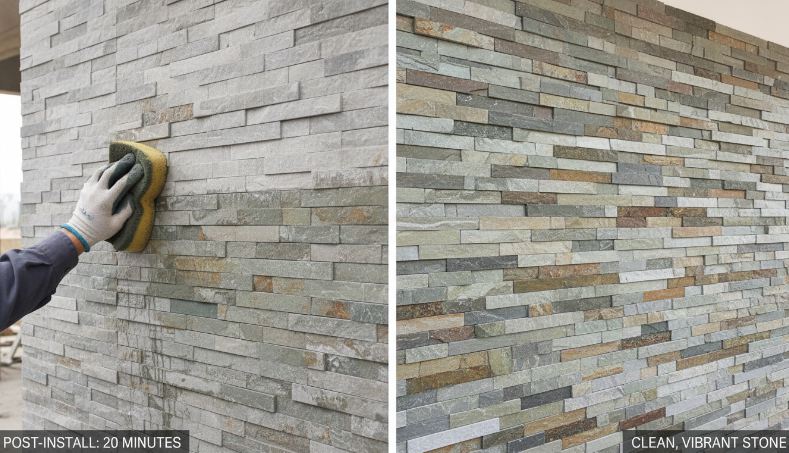
Immediate removal protocols prioritize catching mortar residue before it undergoes a full chemical bond with the stone surface. We recommend wiping excess mortar from the stone face within a 20 to 30-minute window of application. This prevents the particles from hardening into the natural clefts of the slate or quartzite, which makes later removal significantly more labor-intensive and risky.
| Cleanup Phase | Critical Timing | Primary Tool |
|---|---|---|
| Initial Film Removal | 20–30 Minutes Post-Install | Damp Masonry Sponge |
| Dry Buffing | After Surface Dries | Microfiber Cloth |
| Deep Crevice Cleaning | During Initial Wipe | Soft Nylon Brush |
- Use a lightly dampened masonry sponge to lift the film without saturating the stone joints or the epoxy backing.
- Monitor the ambient temperature, as 2026 installation standards indicate faster curing times in dry or high-heat environments.
- Wipe in a single direction to pull the mortar away rather than swirling it back into the stone’s pores.
Preventing Residue Buildup in Deep-Split Textures
The varied depths of the Rough and Pencil series require specific mechanical actions to clear haze from recessed areas. Standard flat wiping often misses the “الوديان” of the split-face texture, leaving behind white streaks that become visible only after the wall fully dries.
- Work a soft-bristled nylon brush into the deep crevices of the Rough Series to dislodge trapped mortar particles.
- Dab the recessed lines of Pencil Series panels rather than wiping across them to avoid pushing wet mortar deeper into the texture.
- Change the cleaning water frequently to ensure you are removing the haze rather than redistributing a diluted gray film.
Fresh Water Buffing for Early-Stage Residue
A secondary buffing phase with clean water often eliminates the need for harsh chemicals if performed shortly after the initial wipe. This step targets the microscopic cement particles that remain on the surface after the first pass.
- Perform a second pass with a clean, dry microfiber cloth once the moisture from the first wipe evaporates.
- Apply light circular pressure to buff away any remaining powdery white streaks on slate or quartzite panels.
- Ensure the stone surface feels smooth to the touch, indicating the cementitious particles are fully removed.
Safe Post-Install Cleaners for 2026 Standards
If residue persists after the water-only phase, specific non-acidic solutions maintain the stone’s integrity. Current industry trends shift toward pH-neutral chemistry to prevent the surface etching commonly caused by traditional muriatic or phosphoric acids.
- Select pH-neutral haze removers specifically labeled for use on natural marble or slate to prevent etching.
- Test any commercial haze remover on a scrap panel piece first to ensure it does not react with the high-strength epoxy resin used in our interlocking panels.
- Rinse the treated area thoroughly with clean water to remove all chemical surfactants after the haze disappears.
Deep Cleaning: pH-Neutral Cleaners vs Destructive Harsh Acids
Architectural stone maintenance in 2026 relies on preserving the molecular stability of the mineral surface; aggressive chemical cleaners often cause more structural damage than the contaminants they attempt to remove.
فعال maintenance protocols for natural stacked stone require a move away from the “stronger is better” mentality. Professional facility managers and stone restoration experts now prioritize chemical compatibility over raw solvent power. Using the wrong agent on a premium wall, such as a Carbon Black Slate or a Glacier White Quartzite, leads to irreversible surface changes that no amount of buffing can fix.
Preserving Stone Integrity with pH-Neutral Solutions
Standard maintenance protocols must center on pH-neutral cleaners to protect the delicate mineral composition of natural ledgestone. These formulas safely lift environmental dust and organic oils without triggering a chemical reaction in sensitive materials like the أعلى المصدر حجر Marble Series. Since these cleaners sit at a 7.0 on the pH scale, they do not etch the stone or strip the natural protective patina that develops over time.
| Cleaner Chemistry | Target Contaminant | Stone Impact |
|---|---|---|
| pH-Neutral (7.0) | Daily dust, skin oils, light grime | Zero risk; preserves epoxy resin backing |
| Alkaline Degreaser | Heavy grease, soot, food spills | Deep cleans pores; safe for most stones |
| Mild Acidic Solution | Efflorescence, mineral scale, rust | Restricted use; etches Marble and Limestone |
Beyond the stone face, pH-neutral cleaners protect the engineering behind the panel. High-strength epoxy resins used in the interlocking backing of Z-Shape and S-Shape panels can degrade when exposed to aggressive solvents. Maintaining a neutral environment ensures these adhesives remain pliable and strong, preventing individual stones from loosening within the modular unit.
The Structural Risks of Harsh Acidic Cleaners
Harsh acids like hydrochloric or phosphoric acid pose a significant threat to the structural and aesthetic longevity of natural veneer. While these chemicals dissolve inorganic buildup effectively, they also attack the calcium carbonate found in many stones. This reaction creates “النقش”—dull spots that look like water stains but are actually physical depressions where the stone has dissolved.
- Acidic residues trapped in the deep textures of the Rough Series can cause “blooming,” a secondary efflorescence that appears as white powder weeks after cleaning.
- Repeated acid exposure strips the natural vibrancy of the stone, leading to a bleached or faded appearance that destroys the “Same-Batch Quarry Consistency.
- Corrosive liquids migrate into the interlocking panel joints, eating into the stone’s pores and weakening the modular connection points.
Matching Cleaning Chemistry to Specific Contaminants
A professional cleaning strategy requires identifying the contaminant before choosing the chemical agent. We reserve mild acidic solutions strictly for inorganic issues like mineral scaling or hard water deposits, and typically only for exterior applications on more resilient stones like Quartzite or Granite. For interior accent walls where oil and dust predominate, pH-neutral degreasers provide the necessary lifting power without the risk of surface damage.
Applying a high-quality, breathable sealer after a deep cleaning cycle remains the best way to minimize future chemical intervention. Sealers fill the micro-pores of the stone, allowing dirt to sit on the surface where a simple damp microfiber cloth can remove it. This proactive approach eliminates the need for aggressive scrubbing and harsh chemistry altogether.
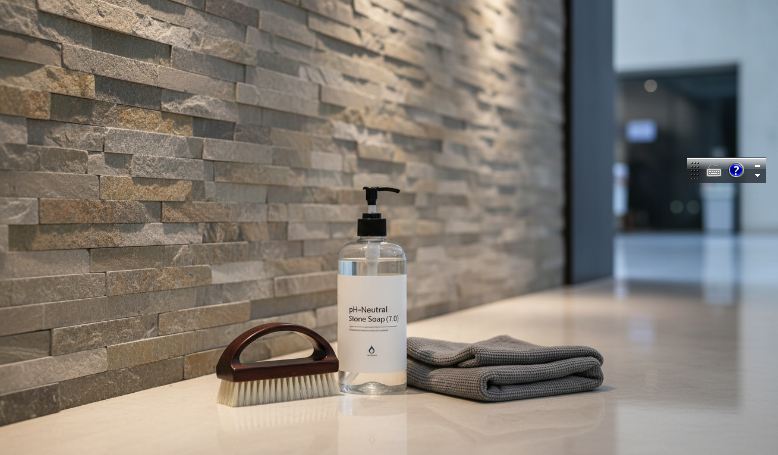
Why Pressure Washing Interior Stone is a Terrible Idea
High-pressure water creates hydraulic force that bypasses surface barriers to saturate wall cavities, leading to hidden mold growth and irreversible physical degradation of the natural stone face.
While pressure washing is a standard practice for exterior driveways or heavy masonry, applying this method to interior accent walls is a recipe for structural failure. High-pressure streams act as a wedge, forcing liquid into micro-cracks and through the substrate. Unlike exterior walls designed with drainage planes and weep holes, interior wall assemblies lack the ventilation required to dry out once they become saturated.
Moisture Infiltration and Wall Cavity Damage
Water driven by high PSI doesn’t just sit on the stone surface; it penetrates directly into the wall cavity. This moisture remains trapped behind the stone panels, where it begins a slow process of destruction that is often invisible until the damage is severe.
- Water bypasses the stone surface and saturates fiberglass insulation and electrical wiring, creating fire hazards and reducing thermal efficiency.
- Trapped moisture creates an ideal breeding ground for mold and mildew behind the panels, which can compromise indoor air quality.
- Saturated wood studs and drywall face rapid rot and structural degradation, potentially leading to the collapse of the القشرة الحجرية.
Surface Erosion and Irreversible Spalling
الحجر الطبيعي, particularly softer variants like limestone or certain slates, cannot withstand the concentrated impact of a pressure washer. The force physically alters the stone’s texture and destroys the unique, natural cleft finish that makes stacked stone desirable.
- High-pressure streams cause internal erosion in stones, resulting in a roughened, uneven surface that collects more dust and grime over time.
- Intense water force leads to spalling, where the stone surface flakes, chips, or peels away in layers, exposing unweathered and mismatched internal minerals.
- Pressure washing often leaves permanent etching marks or “tiger stripes” that ruin the aesthetic integrity of the wall.
Efflorescence and Chemical Etching Risks
Over-saturating الألواح الحجرية triggers chemical reactions within the minerals and the mortar. As the water eventually tries to migrate back to the surface and evaporate, it carries dissolved salts that crystallize upon contact with air.
- Excessive water absorption facilitates efflorescence, the appearance of white, powdery salt residues that are difficult to remove from textured split-face stone.
- The process often strips away protective patinas and existing sealants, leaving the stone highly vulnerable to future oil and water-based stains.
- Driving cleaning chemicals deep into the stone through high pressure can cause permanent chemical burns, pitting, or unwanted color shifts in the natural vein.
Compromised Adhesives and Panel Stability
The mechanical vibration and sheer force of a 3000 PSI stream target the weakest points of the installation: the bond lines. Maintaining the integrity of the epoxy and the thinset is critical for long-term safety.
- Extreme pressure can dislodge or weaken the high-strength epoxy resin used to manufacture interlocking Z-shape and S-shape panels.
- Water forced behind the panels compromises the bond between the stone and the cement board or masonry substrate, leading to delamination.
- Loose or vibrating stones resulting from pressure impact create immediate safety hazards and require expensive, specialized repairs.
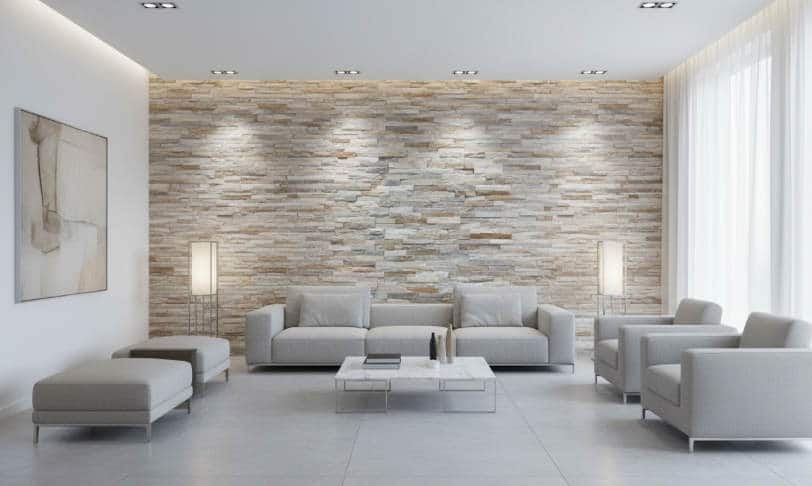
Using Poultice Paste to Pull Deep Oil Stains Out of Stone
Poultice cleaning remains the most effective non-destructive method for extracting embedded oils from porous الحجر الطبيعي by reversing the direction of capillary flow.
The Mechanism of Capillary Action in Oil Extraction
Poultice cleaning relies on the physical principle of capillary action to draw embedded contaminants out of the stone’s microscopic pores. The paste works by re-liquefying the deep-set oil and pulling it into an absorbent medium as the mixture dries. This method proves essential for porous materials like marble or light-colored quartzite where liquid surface cleaners cannot reach deep enough to solve the issue.
| طريقة العلاج | Extraction Depth | Surface Impact |
|---|---|---|
| إزالة الشحوم السطحية | Superficial (<1mm) | Safe if pH-neutral |
| Acidic Washing | Moderate (1-2mm) | High Risk (Etching) |
| Poultice Paste Extraction | Deep (5-10mm) | Safe / Non-Destructive |
Current 2026 industry standards favor non-acidic chemical agents that lift oils without damaging the stone’s mineral structure. Top Source Stone specifies 100% natural minerals in our ألواح حجرية مكدسة, which requires these pH-neutral approaches to maintain structural integrity and color consistency across the wall surface.
Applying the Paste for Maximum Absorption
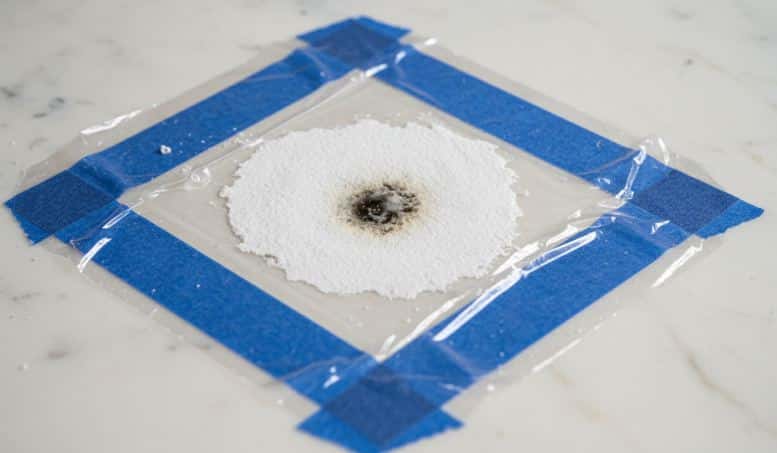
Proper application ensures the poultice remains in contact with the stain long enough to complete the chemical transfer. We recommend applying a 1/4-inch thick layer of paste directly over the affected stone surface. Covering the area with plastic wrap and taping the edges slows down the evaporation process, allowing the solvent more time to break down the oil.
- Maintain a dwell time of 24 to 48 hours to ensure the center of the stone is fully treated.
- Ensure the edges of the plastic wrap are airtight to force the solvent downward into the pores.
- Avoid disturbing the patch during the drying phase to prevent mechanical failure of the paste.
Safe Removal and Surface Recovery
Removing the dried poultice requires care to prevent physical abrasions on the stone face. Use a plastic or wood scraper to remove the hardened paste rather than metal tools that can scratch the finish. Once the bulk of the material is gone, clean the remaining residue with distilled water and a pH-neutral stone cleaner to restore the original appearance.
Verify the stain removal only after the stone has completely dried. Damp stone often appears darker than the surrounding area, which can lead to false conclusions about the success of the extraction. If a faint shadow remains, repeat the process with a fresh application of paste.
Preventative Sealing After Stain Remediation
The poultice process leaves stone pores open and vulnerable, necessitating immediate protection. Apply a high-quality penetrating sealer once the stone is clean and dry to prevent future oil absorption. Focus sealing efforts on high-traffic areas or باكسبلاش المطبخ where grease contact is most likely.
Regular maintenance with stone-specific sealants reduces the need for aggressive poultice treatments in the future. For B2B dealers and installers using Top Source المنتجات الحجرية, we emphasize that sealing is the final, non-negotiable step in any stone restoration project to protect the long-term aesthetics of the natural material.
خاتمة
Using the right tools for textured surfaces and addressing installation residues like mortar haze immediately ensures the stone maintains its original appearance. Sticking to pH-neutral solutions and proper dusting techniques preserves the structural integrity of slate and quartzite panels while preventing permanent surface damage. These maintenance steps deliver a professional finish that highlights the authentic quality of the material for years to come.
You can evaluate your current cleaning supplies to ensure they meet the safety standards required for منشآت الحجر الطبيعي. If you need technical specifications or want to view our current inventory, reach out to our team for a professional catalog.
الأسئلة المتداولة
What is the best daily cleaner for natural stacked stone?
The best daily cleaner is a pH-neutral stone cleaner specifically formulated for natural masonry. You can also use a mixture of warm water and a few drops of mild, non-acidic dish soap. Avoid any cleaners containing lemon, vinegar, or bleach, as these can etch the stone surface and break down sealants over time.
Can you use white vinegar to clean ledger panels?
No, you should never use white vinegar on لوحات دفتر الأستاذ. Vinegar is highly acidic and will cause a chemical reaction called etching on الحجارة الطبيعية like limestone, travertine, and marble. This reaction permanently dulls the surface and can cause “pitting,” compromising the structural integrity and aesthetic of the panels.
How to get white mortar haze off split face stone?
To remove white mortar haze, use a specialized commercial “grout haze remover” or a mild sulfamic acid solution designed for masonry. Apply the solution and scrub vigorously with a stiff nylon brush (avoid wire brushes which can leave metal fragments). Always perform a small patch test first and rinse thoroughly with clean water to neutralize the surface.
How to dust a rough interior stone accent wall?
The most effective way to dust rough stone is using a vacuum cleaner with a soft brush attachment to pull dust out of the deep crevices. For stubborn areas, use a canister of compressed air or a high-quality microfiber duster. Avoid using wet cloths initially, as this can turn dust into mud and push it deeper into the stone’s pores.
Can you pressure wash exterior stacked stone?
Yes, but you must use caution. Keep the pressure below 1,500 PSI and use a wide-angle fan tip (usually 25 or 40 degrees). Keep the nozzle at least 12 inches away from the surface to prevent “wand marks” or etching. Avoid direct high pressure on joints, as this can dislodge mortar or the adhesive backing of the الألواح الحجرية.
How to remove thinset from the face of stone veneer?
If the thinset is still wet, clean it immediately with a damp sponge and clean water. If it has dried, use a wooden stick or a stiff plastic scraper to gently pop the chunks off. For remaining residue, apply a professional-grade cement film remover and scrub with a nylon brush. Never use metal scrapers, as they will scratch and damage the stone face.