تصطدم جماليات White Trend والضغط من أجل تسليم التشطيبات الحجرية الأصلية بمشاكل تشغيلية حقيقية - الاصفرار الناجم عن الحديد، وتلطيخ السخام وتدهور الأشعة فوق البنفسجية - والتي تترجم مباشرة إلى مطالبات الضمان، وعمليات التفتيش الفاشلة لرمز الحريق، وتأخيرات مكلفة للمشروع. تواجه فرق التصميم والمقاولين ارتفاعًا في تكاليف إعادة العمل والمعالجة عندما يكون اختيار المواد وتفاصيل التركيب ومواصفات المواد المانعة للتسرب غير كافية.
يعمل هذا الدليل كإجراء تشغيلي قياسي تقني جاهز ميدانيًا للمصممين والمحددين والقائمين بالتركيب: فهو يشرح سبب سيطرة الحجر الطبيعي الأبيض على التصميمات الداخلية المعاصرة، ويقدم مقارنة معدنية أساسية وأداء الكوارتزيت الأبيض الطبيعي مقابل الرخام، ويضع ضوابط عملية لمنع الاصفرار (محتوى الحديد، والتعرض للأشعة فوق البنفسجية، والختم). سوف تحصل عليه الحماية من السخام والتنظيف خطوة بخطوة البروتوكولات، وتوصيات الملاط والاقتران للخشب مقابل المعدن لتحقيق أقصى قدر من عائد الاستثمار البصري، وتقنيات الإضاءة التي تجعل الملمس المعدني يبرز بعد حلول الظلام - كل قسم يحتوي على توصيات على مستوى المواصفات، وعتبات الاختبار ونقاط تفتيش التفتيش التي يمكنك تطبيقها في الموقع.
لماذا يهيمن الحجر الطبيعي الأبيض على التصميم الداخلي المعاصر؟
أبيض يوفر الحجر الطبيعي جماليات متسقة ومصممة هندسيًا المتانة التي تقلل من تكاليف دورة الحياة وتحمي هوامش المقاولين والوكلاء.
معلمات الأداء المادي والمتانة للحجر الداخلي الأبيض
حدد حجرًا طبيعيًا بنسبة 100% - كوارتزيت أو حجر أردواز أو رخام أو جرانيت - بناءً على التعرق والصلابة التي يتطلبها مشروعك: استخدم الكوارتزيت عندما تكون مقاومة التآكل والحرارة مهمة، واختر الرخام حيث تحدد العروق الكلاسيكية الأكثر نعومة المظهر الجمالي. المصدر من نفس عرق المحجر لتحقيق تجانس اللون بنسبة حوالي 95% داخل الدفعة؛ افعل هذا للحصول على ميزة كبيرة الجدران لتجنب تغيرات اللون المرئية أثناء التثبيت.
التصميم للتعرض الإقليمي: يتطلب الأشعة فوق البنفسجية المستقرة حجر عالي المقاومة للملوحة والرطوبة للمشاريع الخليجية ومقاومة ذوبان الجليد والتجميد بدرجة ASTM للمناخات الشمالية. تعيين السُمك حسب الوظيفة: 10-12 مم للبلاطات الخلفية، 20-35 مم للميزة القائمة بذاتها الجدران والألواح الخشنة المتميزة. التحقق من سعة الركيزة: تزن الألواح المسطحة ~ 30-40 كجم/م² ويمكن أن تصل الأسطح الخشنة إلى ~55 كجم/م² - استخدم أدوات التثبيت الميكانيكية عندما يتجاوز الحمل 40 كجم/م².
- المواد الأساسية: 100% كوارتزيت طبيعي، حجر أردواز، رخام، جرانيت - اختر حسب العروق وصلابة موس (الكوارزيت ~7، الرخام 3-5).
- هدف توحيد اللون: 95% ضمن دفعة واحدة؛ فرض اتساق المحجر نفس الدفعة.
- المواصفات البيئية: مستقر للأشعة فوق البنفسجية، عالي الملوحة & مقاومة للرطوبة، مقاومة للتجميد والذوبان ASTM للمناخات الباردة.
- السُمك: 10-25 مم قياسي؛ ما يصل إلى 35 ملم للخام/الممتاز - خصص 10-12 ملم للبلاطات الخلفية، و20-35 ملم للجدران المميزة.
- الوزن السطحي: ~30-40 كجم/م² (مسطح)، ~55 كجم/م² (خشن) - مثبتات ميكانيكية محددة عند >40 كجم/م².
استراتيجيات التصميم لتحقيق الرفاهية الهادئة والاستمرارية المكانية السلسة
اختر اللون الأبيض الناعم ذو الألوان الدافئة - يتماشى مع Pantone Cloud Dancer 2026 عندما تحتاج إلى لون أبيض معماري وصالح للعيش - وفضل الأحجار التي تظهر عروقًا عضوية لمنع المظهر العقيم. تشغيل حجر كامل الارتفاع عبر المناطق ذات المخطط المفتوح لخلق استمرارية بصرية؛ قم بتخطيط مطابقة الوريد واتجاه اللوحة أثناء القالب بحيث يُقرأ التعرق كتكوين مستمر بدلاً من الألواح المجزأة.
توازن الحجر الأبيض مع معادن مصقولة وأخشاب متوسطة اللون لإضافة الدفء والتباين المتحكم فيه. حدد تشطيبات الحواف (شق طبيعي، وجه منقسم، سلس) للتحكم في الملمس وانعكاس الضوء. استخدم الألواح المتشابكة على شكل Z أو S مع زوايا L متطابقة لإخفاء الوصلات الرأسية وتقليل القطع في الموقع؛ تتطلب دقة الشفرة الماسية باستخدام الحاسب الآلي من أجل ملاءمة ضيقة بين الذكور والإناث والتي توفر سطحًا معماريًا شبه سلس.
- استراتيجية الألوان: اللون الأبيض الناعم مع الألوان الدافئة (Pantone Cloud Dancer 2026) بالإضافة إلى العرق العضوي للدفء.
- الاستمرارية المكانية: الارتفاع الكامل يمتد عبر المساحات ذات المخطط المفتوح؛ إجراء مطابقة الوريد أثناء القوالب.
- إقران المواد: أبيض حجر + معادن مصقولة + خشب متوسط اللون للحصول على تباين متوازن.
- تشطيبات الحواف: شق طبيعي، وجه منقسم، سلس - اختر للتحكم في الملمس والضوء المنعكس.
- التحكم المشترك: استخدم الشكل Z/الشكل S لوحات متشابكة ومطابقة الزوايا على شكل حرف L؛ تتطلب دقة الشفرة الماسية باستخدام الحاسب الآلي لتناسب الذكور والإناث.
ضوابط المواصفات والمشتريات والتركيب للحجر الأبيض الجاهز للمشروع
تحديد أحجام الألواح والتعبئة مقدمًا: الألواح القياسية بقياس 150×600 مم أو 150×550 مم معبأة في 7 قطع/صندوق (0.63 متر مربع) أو 8 قطع/صندوق (0.72 متر مربع). اطلب مع بدل نفايات بنسبة 10% وتلبية الحد الأدنى لكمية الشركة المصنعة بمساحة 300 متر مربع للطلبات التجريبية أو ذات العلامات التجارية الخاصة. تحديد المهلة الزمنية للمشروع: يتم شحن العناصر الموجودة في المخزون إلى ميناء Xingang خلال 10-15 يومًا؛ تتطلب عمليات الإنتاج 20-25 يومًا لحاوية 20GP.
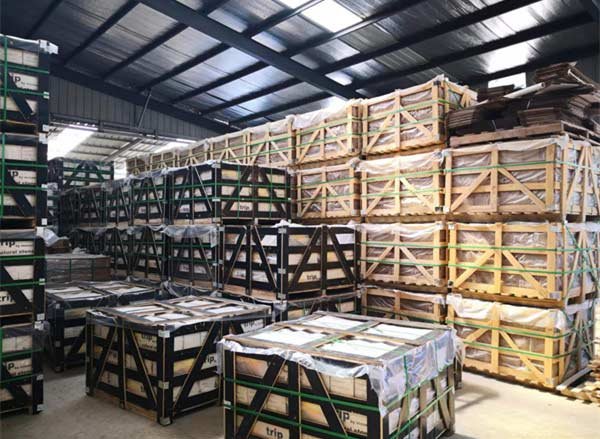
فرض مراقبة الجودة: اطلب صورًا ومقاطع فيديو عالية الدقة قبل الشحن للصناديق الجاهزة للتحقق من اللون والحافة والتغليف قبل تحرير دفعة الرصيد. للتثبيت، حدد مثبتات الركيزة، وعائلة المواد اللاصقة، والمثبتات الميكانيكية بناءً على الكود المحلي و حجر قياس وزن؛ التخطيط للتعامل مع الصناديق وتفريغ المنصات حول الأوزان الإجمالية للصناديق (900-1000 كجم) وحدود تحميل الحاويات لتجنب التأخير في الموقع أو تلف المناولة.
- لوحة & التعبئة: 150×600 مم أو 150×550 مم؛ كرتون 7 قطع/صندوق (0.63 متر مربع) أو 8 قطع/صندوق (0.72 متر مربع)؛ تشمل بدل نفايات بنسبة 10%.
- المشتريات: موك 300 متر مربع (تجريبي/علامة خاصة)؛ المهلة الزمنية: في المخزون 10-15 يومًا، الإنتاج 20-25 يومًا إلى ميناء Xingang.
- مراقبة الجودة: اطلب صورًا/مقاطع فيديو عالية الدقة قبل الشحن للصناديق الجاهزة قبل الدفع النهائي (التحقق البصري قبل الشحن).
- ضوابط التثبيت: تحديد طريقة تثبيت الركيزة ونوع المادة اللاصقة والمثبتات الميكانيكية وفقًا للكود المحلي ووزن الحجر؛ تتطلب زوايا L مطابقة للتشطيبات الملتفة.
- التخطيط اللوجستي: الوزن الإجمالي لصندوق البليت ~ 900-1000 كجم؛ 20GP أحمال الحاويات 25-30 منصة نقالة الحد الأقصى للتغطية لكل 20GP: الألواح القياسية ~ 750-860 مترًا مربعًا، والألواح الخشنة ~ 480-540 مترًا مربعًا.
- الشروط التجارية: الدفع القياسي T/T 30% إيداع، 70% رصيد قبل الشحن؛ فرض التحقق البصري قبل الشحن لحماية التدفق النقدي والهوامش.
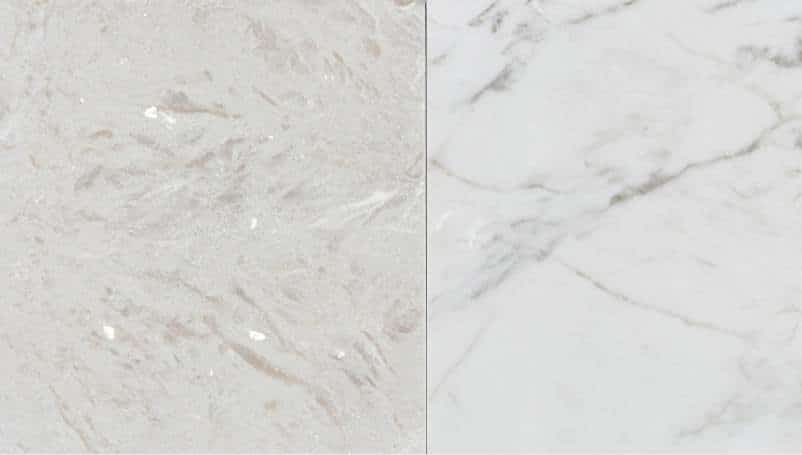
الكوارتزيت الأبيض الطبيعي مقابل الرخام: تحليل اختيار المعادن
اختر الكوارتزيت من أجل المتانة وانخفاض الصيانة؛ اختر الرخام فقط عندما تفوق الجماليات والاستخدام المتحكم فيه تكاليف الخدمة على المدى الطويل.
خصائص المواد والمواصفات المخبرية: الصلابة والمسامية والمتانة
يبلغ معدل الكوارتزيت تقريبًا 7 على مقياس موهس، مما يمنحه مقاومة عالية للتآكل والخدش تناسب الأرضيات وأسطح العمل ذات الحركة المرورية العالية. يقع الرخام حول Mohs 3–4 ويتعرض للخدوش والحفر بسهولة أكبر بكثير، لذا يحتفظ المصممون والمهندسون المحددون به للأسطح المزخرفة أو ذات حركة المرور المنخفضة حيث يحدد المظهر، وليس مقاومة التآكل، القيمة.
اختبار المسامية والامتصاص قبل المواصفات النهائية: قم بتشغيل ASTM C97/C97M (أو اختبار امتصاص الماء المكافئ) لتحديد مدى خطورة التلطخ والتلف الناتج عن ذوبان الجليد والتجميد. بالنسبة للمشاريع الخارجية في المناخات الباردة، يلزم إجراء اختبار التجميد والذوبان المكافئ لمعيار ASTM؛ يحمل حجر الكوارتزيت من أعلى المصدر أ “مقاومة للتجميد والذوبان” التعيين الذي يبسط الامتثال للمواصفات. استخدم بيانات وزن اللوحة المنشورة - الألواح المسطحة ~ 30-40 كجم/م²، والألواح الخشنة ~ 55 كجم/م² - عند حساب الأحمال الهيكلية لأنظمة التثبيت والدعم.
- الصلابة: الكوارتزيت ≈ موس 7؛ رخام ≈ موس 3-4
- فحص المسامية: قم بتشغيل نظام امتصاص الماء ASTM C97/C97M قبل الموافقة عليه
- تجميد الذوبان: تحديد الدورات المكافئة لمواصفة ASTM للواجهات الخارجية؛ يستخدم “مقاومة للتجميد والذوبان” الكوارتزيت للمناخات الباردة
- الاستقرار البيئي: يُظهر الكوارتزيت والأردواز عالي المصدر مقاومة قوية للأشعة فوق البنفسجية والملوحة العالية للاستخدام في منطقة الخليج
- أحمال التصميم: الألواح المسطحة ~ 30-40 كجم/م²؛ ألواح خشنة ~ 55 كجم/م2
أحجام الألواح وخيارات السُمك والآثار الهيكلية
حدد تنسيق اللوحة بدقة في أمر الشراء. المستطيلات القياسية للحجر المصدر العلوي هي 150 × 600 مم (6″ × 24″) و 150 × 550 مم (6″ × 22″); تنسيق الملاحظة على أمر الشراء لتجنب التشذيب الميداني وإهدار العمالة. تتراوح السماكة القياسية بين 10-25 ملم؛ استخدم ما يصل إلى 35 مم للألواح الخشنة أو المتميزة حيث تكون الصلابة أو قدرة التحمل مهمة.
سمك مناسب للتطبيق: 10-20 ملم الكسوة القشرة and vertical facades, and ≥20–35 mm for countertops and load-bearing treads. Include crate gross weights (900–1000 kg/crate) in lift plans and site crane calculations, and factor pallet counts and container loading into logistics: typical 20GP capacity supports 25–30 pallets.
- Standard panel formats: 150 × 600 mm and 150 × 550 mm — specify exact format on PO
- Thickness: 10–25 mm standard; up to 35 mm for rough/premium
- Weight per m²: flat panels 30–40 kg/m²; rough panels ≈55 kg/m²
- Application guidance: veneer facades 10–20 mm; countertops and treads ≥20–35 mm
- Corners and transitions: order matching L-corners and interlocking Z/S panels to reduce on-site coping
- الخدمات اللوجستية: الوزن الإجمالي للصندوق 900-1000 كجم؛ مواصفات الرافعة الشوكية/الرافعة وتحميل الحاويات (20GP: 25-30 منصة نقالة)
بروتوكولات القطع والتشطيب والتصنيع
استخدم قطع الشفرة الماسية باستخدام الحاسب الآلي لتشابك ملفات Z/S للحفاظ على التسامح بين الذكور والإناث وتقليل المفاصل الرأسية المرئية. حدد تشطيبات الحواف — شق طبيعي، أو وجه منقسم، أو تشطيب سلس — استنادًا إلى مقاومة الانزلاق والملمس المرئي المطلوب؛ اختر اللمسة النهائية التي تتوافق مع متطلبات صيانة المشروع وفركه.
Hold fabrication tolerances tight: maintain panel-edge tolerance to ±1–2 mm to ensure tight interlock and seam concealment. Request factory-made matching L-corners to preserve texture and color continuity at 90° transitions. Use diamond-segment blades and wet cutting to reduce microcracking in both marble and quartzite, and require pre-shipment visual verification with HD photos/videos before balance payment.
- Cutting: CNC diamond-blade for Z/S interlocks
- Edge finishes: Natural Cleft, Split-Face, Seamless Finish — specify per slip/scrub needs
- Fabrication tolerance: ±1–2 mm on panel edges
- Corner/coping: factory L-corners for texture and color continuity
- Cutting tools: diamond-segment blades and wet cutting to limit microcracks
- مراقبة الجودة: طلب صور/مقاطع فيديو عالية الدقة قبل الشحن للصناديق الجاهزة قبل الدفع النهائي
إجراءات التثبيت وأفضل الممارسات في الموقع
يؤكد “نفس دفعة المحجر الاتساق” عند التسليم والتأكد من توحيد اللون بنسبة 95% عبر الصناديق قبل البدء في التخطيط. تحضير ركائز لذلك فهي راسيا، ومستوية، ومصنفة هيكليًا بالنسبة لوزن اللوحة؛ دعم التصميم والمثبتات لدعم 30-55 كجم/م² حسب نوع اللوحة.
استخدم Thinset المعدل بالبوليمر في معظم الأحيان منشآت القشرة، وحدد المراسي الميكانيكية عندما تتجاوز الألواح سمك المادة اللاصقة الموصى بها أو للألواح الخشنة الثقيلة. تثبيت الألواح المتشابكة Z/S في التسلسل المحدد بين الإناث والذكور لتمويه المفاصل الرأسية؛ اضبط زوايا L في المصنع أولاً وقم بمحاذاة الألواح المجاورة لتقليل قطع الحقل. التعامل مع الصناديق (900-1000 كجم) باستخدام الرافعات الشوكية أو الرافعات وتحريك الألواح الفردية >25 ملم مع رافعات ميكانيكية لتجنب الكسر.
- فحص ما قبل التثبيت: التأكد من اتساق مقلع الدفعة نفسها وتوحيد اللون بنسبة 95%
- الركيزة: راسيا، ومستوية، ومصنفة هيكلياً للألواح التي يتراوح وزنها بين 30 و55 كجم/م2
- المواد اللاصقة/المثبتات: ثينسيت معدل بالبوليمر للقشرة؛ المراسي الميكانيكية للألواح السميكة/الثقيلة
- مجموعة التعشيق: اتبع تسلسل Z/S للإناث والذكور لإخفاء الدرزات الرأسية
- عمل الزاوية: اضبط زوايا المصنع على شكل حرف L أولاً للاحتفاظ بتدفق النمط
- المناولة: الرافعات الشوكية/الرافعات لأوزان الصناديق؛ استخدام المناولة الميكانيكية للألواح >25 ملم
التحقق من الأداء والصيانة واستكشاف الأخطاء وإصلاحها
قم بإجراء اختبارات القبول عند التسليم: افحص تناسق ألوان الدفعة وعيوب السطح و أبعاد اللوحة ورفض الصناديق غير المتطابقة قبل التثبيت. في الموقع، قم بقياس التسطيح وارتباط التماس؛ قم بتسجيل الانحرافات التي تزيد عن 2 مم والإبلاغ عنها حتى تتمكن من تصحيح مشكلات الركيزة أو التصنيع قبل عيوب قناع الجص أو المواد المانعة للتسرب.
ختم الرخام بانتظام للحماية من البقع؛ يتطلب الكوارتزيت إحكامًا أقل تكرارًا ولكن اختبر منطقة العينة المغلقة أولاً. تجنب الأحماض والحمضيات على الأسطح الرخامية واستخدم المنظفات المحايدة لدرجة الحموضة. احتفظ بنسبة 5-10% من المواد الزائدة من نفس الدفعة للإصلاحات المستقبلية واستبدل الألواح التالفة بقطع الغيار تلك. بعد التثبيت، قم بإجراء فحوصات موضعية لامتصاص الماء ومراقبة الجدران الخارجية بحثًا عن التصفيح أو الإزهار خلال دورة التجميد والذوبان الأولى.
- قبول التسليم: التحقق من اللون والعيوب والأبعاد؛ رفض عدم التطابق قبل التثبيت
- التحقق في الموقع: قياس التسطيح وفجوات التماس؛ تقرير الانحرافات >2 ملم
- الختم: الرخام - الختم العادي؛ الكوارتزيت - الختم الدوري بعد اختبار العينة (الجدول النموذجي 1-3 سنوات حسب الاستخدام)
- Cleaning: use neutral cleaners; avoid acids and citrus on marble
- Spare material: retain 5–10% same-batch spare panels for repairs
- Post-install tests: spot water-absorption checks; inspect for delamination and efflorescence in exteriors
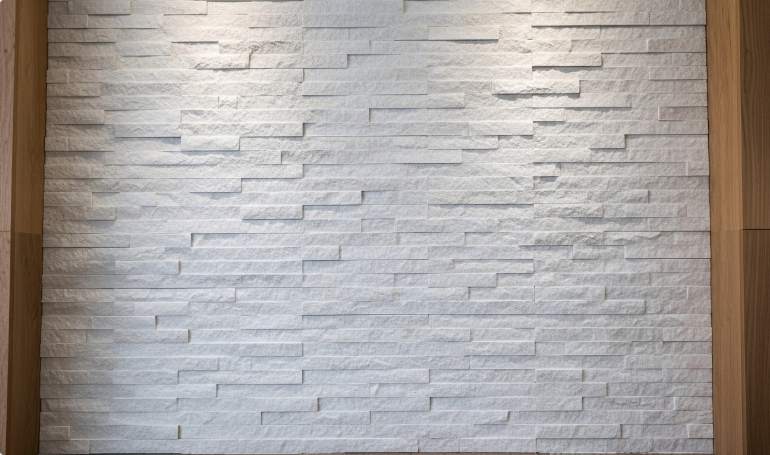
حجر مكدس مميز - عمليات تثبيت أسرع
How to Prevent Yellowing: The Impact of Iron Content and UV Exposure
Control iron and UV exposure to protect white stone appearance, avoid costly remediation, and preserve project value and warranty obligations.
Measure and Specify Iron Content: lab tests and acceptance thresholds
اطلب التحقق المختبري من الحديد الكلي والحديد القابل للذوبان في الأحماض في عينات المحاجر التمثيلية قبل قبول المواد. اختبار بواسطة ICP-OES أو AAS لتحديد كمية الحديد السائب والحديد التفاعلي (القابل للذوبان في الأحماض)؛ يؤدي الحديد التفاعلي إلى اصفرار السطح عندما يتأكسد. حدد عتبة قبول للحديد القابل للذوبان في الأحماض بنسبة ≥ 0.10% بالوزن وقم بوضع علامة على أي دفعة أعلى من 0.10% للمراجعة الفورية أو الاستبعاد لتقليل خطر الأكسدة المرئية على الجدران النهائية.
- اطلب تقارير ICP-OES أو AAS عن العينات التمثيلية المأخوذة من نفس مجرى المحجر لكل طلب.
- تحديد الحديد القابل للذوبان في الأحماض (التفاعلي) ≥ 0.10% بالوزن لتقليل خطر الاصفرار؛ رفض أو عزل الدفعات التي تتجاوز هذا الحد.
- Request a quarry certificate showing same‑batch vein sourcing to limit local iron‑rich streaks and ensure the product meets the أعلى المصدر حجر 95% hue uniformity target.
- Include a pre‑shipment visual and lab sample check as part of your “pre‑shipment visual verification” package to confirm lab values match documentation and visible hue consistency.
Control UV-driven surface yellowing: material selection and coating specs
يختار stone grades with documented UV stability for exterior use—quartzite and certain natural slates typically offer superior UV performance compared with coated or altered surfaces. Ask suppliers to provide a written UV‑stability statement and lab data for the specific quarry vein you order. For topical protection, prefer breathable water‑repellent impregnators (silane/siloxane chemistry) instead of film‑forming acrylic or alkyd topcoats, which oxidize and yellow over time.
- Request accelerated UV‑weathering per ASTM G154 (fluorescent UV) or equivalent for any coating or sealer applied to حجر خارجي.
- Require color change measurement using CIEDE2000 (ΔE00) and accept only ΔE00 ≤ 2 after the specified test cycles.
- Specify breathable, silane/siloxane‑based treatments for outdoor projects; prohibit acrylic/alkyd topical finishes on natural white stone facades.
- Document recoat windows in the project spec using the manufacturer’s test data and include recoat intervals in the maintenance section of the O&M manual.
Design and installation measures to stop iron transfer and moisture entrapment
Design details determine whether iron or moisture reaches the visible face. Isolate stone from ferrous materials by specifying corrosion‑resistant fixings: use 316 stainless steel anchors for coastal and Gulf projects and 304 for typical inland projects; forbid plain carbon steel fasteners that rust and bleed. Provide a ventilated rainscreen with a continuous air gap of 10–25 mm and positive drainage/weep paths to avoid trapped moisture and cyclic oxidation beneath panels.
- Specify 316 stainless anchors for coastal/Gulf regimes and 304 for inland installations; detail fastener type and finish on shop drawings.
- Design a ventilated rainscreen with a continuous 10–25 mm air gap and clear drainage channels to prevent moisture entrapment and mineral migration.
- Use low‑iron mortars and grout: require soluble iron < 0.05% or iron‑free pigments in mortar specifications and pre‑seal cut and edge surfaces to limit substrate‑driven staining.
- Include a maintenance protocol: perform annual inspections, replace corroded fixings promptly, and verify approved stain‑removal methods (test a small area first). For iron stains, follow supplier guidance and use an oxalic‑acid based poultice tested on a sample panel before full‑scale application.
Managing Soot Stains: Protection Strategies for Light Stone Surfaces
Targeted sealing, documented testing, and scheduled cleaning reduce restoration costs and preserve white stone appearance across the project lifecycle.
Assess surface vulnerability and map exposure zones
Start by identifying the stone mineral and surface finish—slate, quartzite, sandstone, granite, or marble—and record whether the face is natural cleft, split-face, or seamless. Textured finishes trap soot and require higher protection and more aggressive maintenance. Run a suction/absorption test on a 100 cm² patch and time it: <30s means low porosity, 30–120s means moderate, and >120s means high porosity; use that result to set sealer type and frequency.
Log panel specifications for every elevation: standard panels measure 150 × 600 mm or 150 × 550 mm, thickness ranges 10–25 mm, flat panels weigh roughly 30–40 kg/m² while rough faces run ≈55 kg/m². Heavier, rough panels absorb more sealer and need longer cleaning cycles. Classify exposure zones as high (fireplaces, grills, chimneys, HVAC returns), medium (kitchen backsplashes, near fixtures), or low (hallways, bedrooms) and assign protection priority accordingly. Always run a photographed test patch on an L-corner or same-batch reference panel for each sealer and cleaner to confirm color, sheen, and adhesion before full application.
- Perform 100 cm² suction test and record seconds to set porosity class.
- Record panel size, thickness, and weight per m² for each wall.
- Map zones (High / Medium / Low) and assign protection priority.
- Photograph and log a full test patch on matching same-batch material before approvals.
Select and apply protective sealers for soot resistance
Match sealer chemistry to porosity and location. Use penetrating silane–siloxane impregnators where you need a breathable, invisible barrier that repels water and soot without changing appearance. Use fluoropolymer or acrylic topical sealers only when surface-level stain resistance and an altered sheen remain acceptable. For fireplace surrounds choose impregnators rated for heat exposure and vapor permeability to avoid trapped moisture and long-term yellowing.
Follow coverage and application metrics: penetrating sealers cover 6–10 m²/L on rough split-face and 10–15 m²/L on smooth faces; apply 1–2 wet coats as needed. Topical sealers run about 8–12 m²/L per coat and normally require a single uniform coat. Apply with a low-pressure sprayer, back-roll or brush to force penetration, allow 5–15 minutes dwell, then wipe excess within 10–15 minutes to prevent hazing on light stones. Allow solvent- or modified sealers 24–72 hours to cure before exposure to soot and avoid application if rain or high humidity can interrupt the cure window. Mask vertical joints and male–female interlocks to prevent bridging that hides joint profiles or creates slippery seam buildup. Use nitrile gloves, eye protection, and a NIOSH-approved respirator for solvent-based products and comply with local VOC and disposal rules.
- Penetrating sealer coverage: 6–10 m²/L (rough), 10–15 m²/L (smooth).
- Topical sealer coverage: 8–12 m²/L per coat; usually one coat.
- Dwell and wipe: 5–15 minutes dwell, remove excess within 10–15 minutes.
- Safety: nitrile gloves, eye protection, NIOSH respirator; follow VOC/disposal regulations.
Routine maintenance and emergency soot-removal protocols
Maintain light stone with a daily or weekly regimen: vacuum with a HEPA-capable unit and agitate with a soft-bristle brush to remove loose soot before any wet cleaning. Use pH-neutral stone cleaners (pH 7–9) for routine washes. For embedded soot, test a mildly alkaline cleaner (pH 9–11) first; keep marble and other calcitic stones on pH-neutral products to avoid etching.
Limit mechanical force—prefer manual agitation. If pressure washing becomes necessary, keep pressure ≤500 psi, use a wide-angle nozzle, and maintain a 300–500 mm working distance to protect split-face texture and mortar joints. For stubborn deposits use a poultice: blend an absorbent base (kaolin or diatomaceous earth) into a paste with an appropriate solvent—use 3% hydrogen peroxide for organic soot—apply under plastic for 6–24 hours, then remove and neutralize. Always test the poultice on the same-batch reference panel first. After cleaning document with before/after photos, allow 48–72 hours for full drying before final assessment, and compare results to reference panels to detect any permanent discoloration. Specify أعلى المصدر حجر same-batch quarry consistency and matching L-corners in project specs and keep maintenance schedules plus product MSDS on file to protect warranties and longevity.
- Daily/weekly: HEPA vacuum, soft-bristle brush; avoid abrasive pads.
- Cleaner selection: pH 7–9 for routine; pH 9–11 for tested spot treatments (not on marble).
- Pressure-wash limits: ≤500 psi, wide-angle nozzle, 300–500 mm distance.
- Poultice steps: mix kaolin/DE with solvent, apply under plastic 6–24 hours, remove, neutralize, test first.
- Verification: photograph before/after, allow 48–72 hours drying, compare to same-batch reference panels.
- Design note: require Top Source Stone same-batch sourcing and matching L-corners in specs; store maintenance schedule and MSDS for warranty claims.

Pairing White Stone with Wood vs. Metal: The Contrast ROI
Contrast choices drive visual value, installation cost and rework risk—spec material, panel geometry and a 0.5–1.0 m² mock-up to protect margins.
Aesthetic ROI: Quantifying Contrast Effects and Spec Choices
Choose Glacier White Stacked Stone (Quartzite) or Glacier White from The Big 10 to achieve the soft architectural white that reads like Pantone 2026 Cloud Dancer; quartzite preserves warm undertones and mineral movement while keeping the surface durable. Use standard panels 150 x 600 mm (6″ × 24″) or 150 x 550 mm and prefer long, linear runs when pairing with wood to amplify perceived room width, or specify vertical feature bands to frame narrow metal trims and focal hardware.
Require same-batch quarry consistency with at least 95% hue uniformity for large visual fields to avoid patchiness across paired materials. Specify Z-Shape or S-Shape interlocking panels where you need invisible vertical joins and crisp contrast lines against metal; test a 0.5–1.0 m² mock-up with the exact wood stain or metal finish to validate undertones and scale before signing a bulk order.
- Recommended stock: Glacier White Stacked Stone (Quartzite) — aligns with Cloud Dancer aesthetics.
- Panel sizes: 150×600 mm or 150×550 mm; use linear runs for wood, vertical bands for metal accents.
- Color control: same-batch quarry sourcing, 95% hue uniformity.
- Edge/finish: Z-Shape or S-Shape interlocking to hide vertical joints.
- Validation: produce a 0.5–1.0 m² mock-up with the final wood stain or metal finish.
Performance ROI: Durability, Compatibility and On-Site Best Practices
Specify natural quartzite when the program demands UV stability, high salinity and humidity resistance, and ASTM-grade freeze-thaw durability for both exterior and interior applications. Use panel thickness based on load: standard 1.0–2.5 cm for walls and facades, premium/rough panels up to 3.5 cm where you expect heavy fixtures or direct mechanical loads; plan substrate and fixings for flat panels at ~30–40 kg/m² and rough panels near 55 kg/m².
Design compatibility details into the package: when pairing with wood, include a moisture barrier and a thermal/expansion gap to prevent movement transfer; when pairing with metal, specify corrosion-resistant fasteners and anodized or powder-coated finishes to prevent staining. Require matching L-corners to maintain continuous texture at transitions and mandate CNC diamond-blade precision for interlocking edges to reduce visible stepping and shorten finishing time. For kitchens and wet zones, choose quartzite for countertops and backsplashes and specify 3.5 cm thickness or thicker backing where heavy metal fixtures attach.
- Durability: UV stable, high salinity and humidity resistance, freeze-thaw rated.
- Thickness: 1.0–2.5 cm standard; up to 3.5 cm for premium/heavy-use.
- Weights: flat ~30–40 kg/m²; rough ~55 kg/m² — specify substrate capacity accordingly.
- Compatibility: moisture barrier and expansion gaps for wood; corrosion-resistant fixings and coated metals to avoid staining.
- Installation: use matching L-corners and CNC diamond-blade precision for interlocks to speed finishing.
Cost-to-Install ROI: Panel Selection, Labor Savings and Logistics Metrics
Calculate yields from box metrics before you price labor: standard boxes contain 7 pcs (0.63 m²) or 8 pcs (0.72 m²); rough stacked boxes contain 5 pcs (0.45 m²). Build work orders and waste allowances around those units and order in pallet multiples to reduce on-site handling—Option A (48 boxes) covers ~30.24 m²; Option B (60 boxes) covers ~37.80 m². For container planning, plan on a 20GP loading capacity of roughly 750–860 m² for standard panels and 480–540 m² for rough panels.
Respect MOQ and lead time constraints to protect schedules and margins: trial or private-label MOQ sits at 300 m²; in-stock dispatch runs 10–15 days, production lead time 20–25 days, so add buffers to project milestones. Account for crate gross weight (900–1000 kg) and USA port حدود الوزن (standard 17.5 tons) to avoid surcharges. Save on labor by specifying Z-/S-shape interlocks plus matching L-corners to reduce grout and finishing time and require pre-shipment visual verification to cut rework risk.
- Box coverage: 7 pcs = 0.63 m²; 8 pcs = 0.72 m²; rough box = 5 pcs = 0.45 m².
- Pallet options: 48 boxes ≈ 30.24 m²; 60 boxes ≈ 37.80 m² — order to pallet multiples.
- Container: 20GP max coverage ≈ 750–860 m² (standard panels).
- موك & lead times: 300 m² MOQ; in-stock 10–15 days; production 20–25 days.
- Weight/port: crate gross 900–1000 kg; confirm destination port limits (US standard 17.5 tons).
- Labor savings: specify interlocking profiles and L-corners; demand pre-shipment photos/videos (pre-shipment visual verification).
Lighting Secrets: Making White Mineral Textures Pop at Night
Deliberate beam control, color fidelity, and thermal-safe mounting keep white stacked stone textured, true-colored, and low-maintenance under night lighting.
Fixture selection and beam control for grazing white stacked stone
Choose optics and fixture types that emphasize micro-relief without creating glare or washed highlights. For tight, high-contrast grazing, use narrow-beam optics in the 10°–30° range; switch to 40°–60° when you need a softer wall-wash that reduces shadow contrast. Prefer linear LED modules (10–18 W/m) for continuous runs and adjustable spot fixtures (3–10 W) where pinpoint accents or angled adjustments are required. Place fixtures close to the stone—typically 50–200 mm from the face—and aim them at shallow grazing angles between 5°–20° to maximize shadowing on ridges and crevices while avoiding blown-out high points.
- Use clear lenses for tight beams and frosted lenses when you need blended appearance; select asymmetric optics for long linear runs to prevent banding.
- Specify shielded optics or baffles to control glare for occupants and minimize stray light on nearby windows.
- Select IP65-rated fixtures for exterior installations and low-voltage 12 V or 24 V systems for concealed linear channels behind panels.
Color temperature, CRI and intensity targets for white quartzite and slate
Set color temperature to match the stone’s undertone and the design intent: use 2700–3000 K to warm mineral veins and 3000–3500 K to preserve a neutral, architectural Cloud Dancer look. Specify high color fidelity: require CRI ≥ 90 (Ra) with R9 ≥ 50 and target TM-30 fidelity > 90 for premium projects so warm veins render naturally under night lighting. For scene balance, aim ambient illuminance at 100–200 lux and apply accent illuminance of 300–600 lux on textured faces to hold a 3:1–5:1 contrast ratio between accent and ambient layers.
- Use tunable-white drivers during mock-ups to dial CCT on-site and confirm how warm undertones respond under actual night conditions.
- Specify lumen output so linear LED power (10–18 W/m) meets the 300–600 lux accent target at your mounting distance; verify with an on-site light meter.
- Confirm fixture spectral data (IES files) and measure R9 and TM-30 during sample approvals to avoid surprises on large façades.

Mounting, wiring and thermal practices around interlocking Z/S-shape and corner panels
Plan service channels behind Z/S and S-Shape panels and leave a 10–20 mm service gap between the LED channel and the stone back for wiring and heat dissipation. Account for panel mass when selecting anchors: use stainless steel anchors or expansion bolts sized for substrate and load—standard flat panels weigh about 30–40 kg/m² and rough panels about 55 kg/m². Anchor aluminum LED channels directly to the structural substrate and use CNC-cut recesses at interlocks and L-corners so fixtures remain concealed and continuous across corners.
- Use constant-current drivers (350 mA or 700 mA) in ventilated enclosures and place drivers inside service-accessible zones; avoid burying drivers in sealed cavities.
- Follow wiring-gauge rules to limit voltage drop: 18 AWG for runs ≤5 m, 16 AWG for 5–15 m, 14 AWG for 15–30 m and keep voltage drop under 3% to preserve uniform output.
- Waterproof penetrations with neutral-cure silicone, use gasketed junction boxes and specify IP66 junctions and exterior-rated conduit for outdoor runs.
- Manage thermal load: keep LED case temperature below 70°C, apply 20–30% lumen/driver derating for high-ambient or enclosed installations, and verify temperatures with a thermistor during commissioning.
خاتمة
Correct installation and wiring of fireplace and lighting systems keeps occupants safe and ensures compliance with OSHA and local codes. Proper installation also preserves stone finishes and mechanical components, lowering maintenance needs and extending service life.
Review your fleet’s current setup and project specifications, or contact Top Source Stone for a certified lighting catalog and a sample panel to verify fit and finish. We provide technical data and pre-shipment photos to help protect your margins and schedule.
الأسئلة المتداولة
Does white stacked stone turn yellow over time?
The provided research does not document chemical yellowing of white stacked stone. It highlights that 2026 white natural stones commonly feature warm undertones and organic veining (for example, Pantone’s Cloud Dancer) that are selected to feel livable rather than sterile. To minimise the appearance of discoloration over time, choose stones with soft white/warm undertones and follow manufacturer/fabricator maintenance guidance; the research does not specify particular cleaning or treatment methods.
What is the best sealer to prevent soot on white stone?
The research does not name specific sealers or products for preventing soot. It emphasizes durability and long‑term livability as selection criteria for white stone. For soot-prone applications (like fireplaces), the appropriate approach is to use the manufacturer’s or fabricator’s recommended sealer and a routine maintenance plan; consult technical specifications or a stone professional for product selection because the research contains no product-level recommendations.
Which white stone is most heat resistant: marble or quartzite?
The research lists both marble and quartzite as popular, versatile white الحجارة الطبيعية in 2026 but does not compare their heat resistance. Both materials are commonly used in high‑end applications; for a definitive answer on heat resistance (for example, around fireplaces or direct heat), consult manufacturer technical data or a stone professional, since the research does not provide a direct comparison.
How to clean soot off white stacked stone fireplace?
The research does not provide step‑by‑step soot‑cleaning instructions. It does stress that white stone is used as a visible design feature with warm undertones, so maintenance matters. Follow fabricator or manufacturer cleaning recommendations, test any cleaner in an inconspicuous area first, and consider professional cleaning for heavy soot—the research contains no detailed cleaning protocol.
What color mortar should I use with white natural stone?
The research highlights that 2026 whites often have warm undertones (Cloud Dancer) and are used to create integrated, livable spaces. Therefore choose a mortar color that matches or harmonizes with the stone’s undertone—soft white or a warm neutral mortar will best preserve the seamless, quiet‑luxury look the research describes.