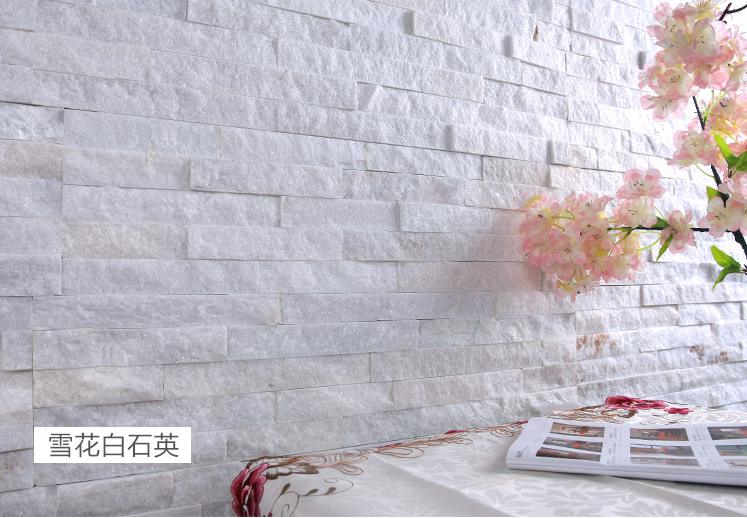
Sourcing Stacked Stone Backsplash inventory requires balancing 3D aesthetics with practical cleanability to prevent retail returns and brand erosion. Retailers frequently lose margins on maintenance complaints or installation failures when excessive panel thickness obstructs standard electrical outlets.
ASTM C97-compliant materials and low-profile designs (0.75″–1,25″) solve these technical hurdles by ensuring grease resistance and flush outlet fitting. We evaluate direct quarry sourcing and Z-shape interlocking systems to help wholesalers secure high-margin, professional-grade kits.
Why Stacked Stone is the Preferred Choice for Modern Kitchens
Natürlicher gestapelter Stein provides a grout-free, heat-resistant surface that offers distinct visual contrast and authentic masonry depth to increase property value.
Visual Contrast and Organic Depth
Flat-surface cabinetry and high-gloss finishes dominate modern kitchen design. Natural stone ledger panels break this monotony by introducing organic 3D textures that synthetic materials cannot replicate.
Top Source Stone selects materials directly from our Hebei quarries to ensure every installation avoids the repetitive patterns found in ceramic or porcelain prints. This provides an authentic masonry finish that adds tangible asset value to residential and commercial projects.
- Material Diversity: Available in 100% natural Slate, Quartzite, Sandstone, and Marble.
- Batch Color Consistency: High-level sorting at the factory prevents patchy or mismatched walls during bulk installations.
- Aesthetic Profile: V3 moderate shade variation ensures a unique pattern for every 6″ x24″ Panel.
Seamless Z-Shape Interlocking Systems
Precision-engineered Z-shape panels solve the most common technical failure in backsplash projects: visible vertical seams. These interlocking units create a grout-free finish that mimics a traditional dry-stacked Steinmauer.
The modular design speeds up installation and significantly reduces labor costs for wholesalers and contractors. The 6-inch by 24-inch dimensions allow for efficient coverage between standard countertops and upper cabinetry with minimal cutting waste.
- Structural Design: Interlocking Z-shape and S-shape panels eliminate visible joints.
- Adhesion Specs: High-strength glue backing ensures individual stones remain bonded in high-heat zones behind cooktops.
- Logistical Efficiency: US-Port optimized weights (17.5 tons per 20GP) maximize container value while meeting strict road regulations.
- Durability Standards: Materials meet high-density requirements equivalent to ASTM C170 and ASTM C97.

Material Suitability: Slate vs. Marble for Splash Zones
Slate provides high acid resistance and low porosity for heavy-cooking zones, while marble requires intensive sealing to prevent etching from common kitchen acids like citrus and vinegar.
Porosity and Chemical Resistance in Kitchen Environments
Marble typically measures 3–4 on the Mohs scale. This softness makes the stone susceptible to scratches and edge chipping near stovetops where heavy cookware is used. In contrast, slate offers higher density and natural resistance to staining. Its cleft texture requires specific cleaning methods to remove grease trapped in crevices, but the stone itself remains chemically stable.
Acidic liquids like tomato sauce, wine, and citrus cause immediate surface etching on marble. These spills lead to permanent cosmetic changes if the stone is not wiped instantly. Slate handles high heat behind ranges without structural damage, ensuring stability in zones where temperature fluctuations occur frequently.
ASTM-Compliant Selections for High-Moisture Zones
Top Quellstein utilizes ASTM C97 standards for absorption and ASTM C170 for compressive strength. We apply these metrics to ensure every panel resists the moisture levels found in commercial and residential splash zones. This technical verification protects wholesalers from site failures related to stone degradation.
- Mitternachtsschiefer & California Gold: These models provide the lowest absorption rates for heavy-use splash zones and remain top-sellers for durability.
- Königliches Weiß Marble: This series offers high-value property upgrades but requires a strict 6–12 month sealing cycle to maintain its appearance.
- Chargenkonsistenz: Our 2026 inventory sorting ensures large-scale installations maintain a uniform look, preventing the “lückenhaft” effect often seen in retail-grade shipments.
- Technical Specs: Standard 6″x24″ panels weigh 8–12 lbs/sqft, requiring a 1/2-inch cement board substrate for secure vertical adhesion.
Wholesalers should recommend slate for clients prioritizing long-term utility. Marble remains the preferred choice for high-end architectural aesthetics where the end-user accepts a higher maintenance schedule.
The Sealing Secret: Making Natural Stone Grease-Resistant
ASTM C97-compliant penetrating sealers create a hydrophobic barrier that prevents grease absorption, protecting stone backsplashes from permanent staining and bacterial growth in high-conviction kitchens.
| Materialtyp | Absorption Risk | Technical Standard | Versiegelungsfrequenz |
|---|---|---|---|
| Quarzit (e.g., Arctic Golden) | Low/Moderate | ASTM C97 | 12–24 Months |
| Schiefer (e.g., California Gold) | Niedrig | ASTM C97 | 12–18 Months |
| Marmor (Pencil Styles) | Hoch | ASTM C503 | 6–12 Months |
Porosity and Grease Penetration Risks
Naturstein contains microscopic pores that act as capillaries. In a kitchen, unsealed stone absorbs aerosolized grease and cooking oils, leading to deep-tissue staining. These stains are not surface-level; they integrate into the stone matrix and become nearly impossible to remove without specialized poultices.
Textured finishes, such as our Rough Series, amplify these risks by increasing the surface area. High-relief profiles trap soot and grease films that resist standard wiping. If these organic materials remain in the pores, they can foster bacterial growth and degrade indoor air quality over time.
- Stain Saturation: Unsealed pores allow lipids to darken the stone permanently.
- Cleaning Friction: Rough textures capture food particles that require scrubbing rather than wiping.
- Hygiene Degradation: Open joints and pores trap organic residue, creating sanitation issues behind cooktops.
ASTM C97 Compliance and Penetrating Sealers
Top Quellstein selects raw materials based on high-density requirements equivalent to ASTM C97. While these stones are naturally resilient, professional B2B installations require penetrating sealers to create a sub-surface hydrophobic barrier. Unlike topical coatings, these impregnating agents allow the stone to breathe while repelling water and oil-based liquids.
Maintaining this barrier is a technical necessity for commercial and residential durability. We recommend a standardized maintenance protocol that includes annual reapplication of these sealers to ensure the backsplash remains grease-resistant and easier to sanitize.
- Vapor Permeability: Penetrating sealers protect against grease without trapping internal moisture that causes spalling.
- Density Metrics: Materials meeting ASTM C170 and C97 provide the structural baseline for long-term kitchen use.
- Chemical Shielding: Proper sealing limits the etching effects of acidic splashes like vinegar or citrus on softer stones.
Boost Project Profits with Premium Stacked Stone
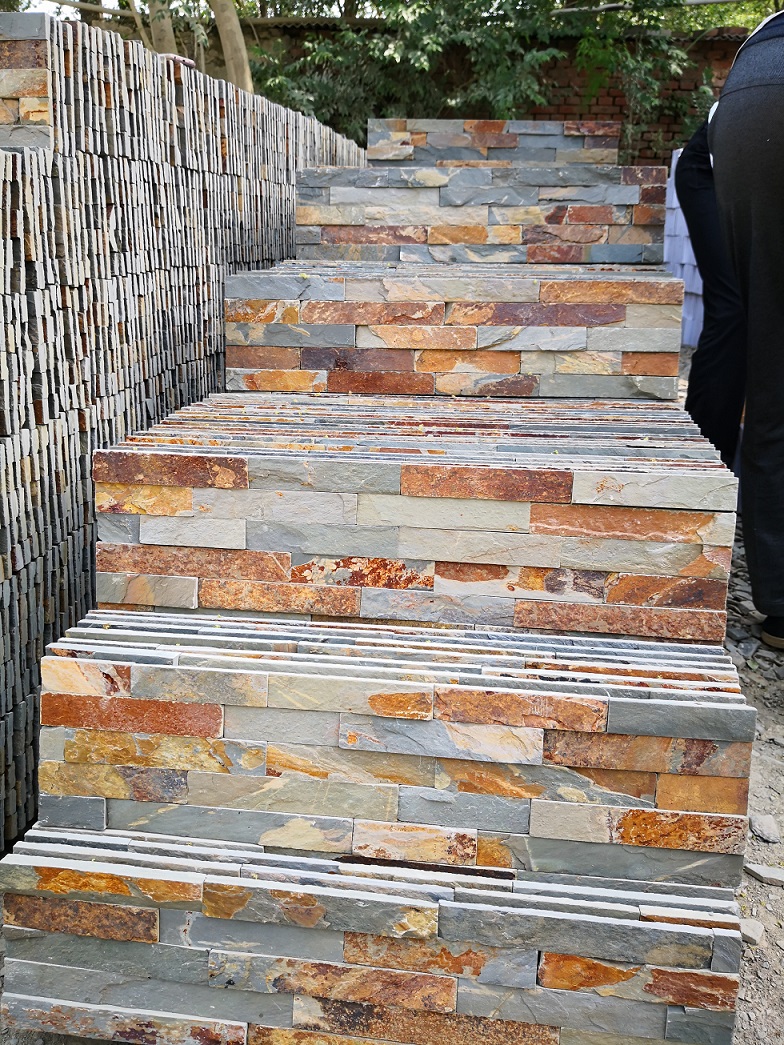
Low-Profile Panels: Saving Space in Compact Kitchen Designs
Low-profile panels (0.75″–1,25″ thick) prevent backsplash protrusion from crowding countertops, eliminating the need for electrical box extensions while maintaining full Naturstein durability.
Dimensional Advantages for Vertical Clearances
Slim profiles keep the stone footprint minimal. This prevents the cramped, “caved-in” visual effect typical of heavy-relief textures in tight urban kitchen layouts. By reducing the depth of the stone, designers maximize the usable surface area on standard 24-inch deep countertops.
Standard electrical faceplates sit flush against the stone surface. This eliminates the labor and cost associated with deep-box extensions or unsightly shims. The uniform thickness ensures a professional finish without technical workarounds at every outlet.
- Wall Protrusion: 0.75 to 1.25 inches.
- System Weight: 8–12 lbs/sqft (compatible with 1/2-inch cement board).
- Substrate Requirement: Standard framed walls with 1/2-inch cementitious backing.
Precision Specs of the Flat Series Interlocking System
Engineering tolerances dictate the success of space-saving designs. We use infrared cutting equipment to maintain a strict thickness range. This consistency allows for flush mounting across large surfaces without the “Lippenseite” that creates shadows and traps grease in small rooms.
Batch color consistency across our high-density quartzite prevents the patchy look that makes compact walls feel cluttered. We prioritize sorting at the quarry level to ensure tonal harmony across full pallet quantities, protecting dealer margins by reducing job-site sorting time.
- Thickness Tolerance: ±1/16 inch per panel.
- Joint Geometry: Seamless Z-shape interlock to eliminate visible vertical seams.
- Material Standards: 100 % Naturstein meeting ASTM C170 and ASTM C97.
- Quality Control: Pre-shipment visual verification (Photos/Videos) provided for all B2B wholesale orders.
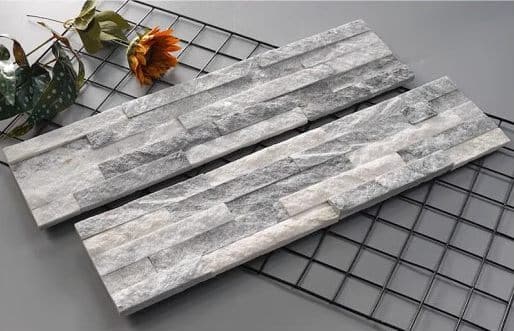
Coordinating Stone with Quartz and Granite Countertops
Balance polished quartz with rugged stone textures. Align color undertones and use batch-sorted ledger panels to ensure a professional, high-value kitchen transition.
Visual Harmony Between Natural Stone and Polished Surfaces
Designing high-end kitchens requires balancing the flat, non-porous nature of quartz or granite with the depth of Naturstein. We recommend pairing smooth countertop slabs with high-relief textures like our Rough Series to create a tactile break in the backsplash area. This contrast defines the perimeter and increases the perceived value of the installation.
Wirksam design centers on matching stone undertones with the primary veining of the countertop. For B2B clients managing large-scale residential projects, we align our natural stone inventory with current surfacing trends to ensure a cohesive look.
- Glacier White Quartzite: Best paired with cool-toned, marble-look quartz or white granite to maintain a bright, airy aesthetic.
- Alaska Gray or Sierra Blue: Complements gray-veined quartz or darker granite slabs, providing a neutral but textured backdrop.
- 6″ x24″ Ledger Panels: This standard dimension provides a rhythmic horizontal pattern that anchors large-format countertop slabs and reduces vertical joint visibility.
Batch Color Consistency for Professional Material Transitions
The junction where the stone meets the countertop edge is a critical failure point for aesthetics. Wholesalers often face the “patchy wall” problem when sourcing through middlemen who mix different quarry lots. Top Source Stone solves this through direct quarry control in Hebei, implementing high-level batch sorting before any shipment leaves the factory.
We use specialized interlocking systems to ensure the stone flows directly from the countertop surface. This eliminates the need for distracting vertical joints and maintains the “dry-stack” look required for modern architectural specifications in 2026.
- Seamless Z-Shape Interlock: Our panels use a precision-cut Z-shape to provide a grout-free finish that hides seams at the countertop transition.
- Load Specifications: Panels weigh 8–12 lbs/sqft. We mandate 1/2-inch cement board substrates to support this weight and prevent sagging at the countertop line.
- ANSI Compliance: Installers must use polymer-modified thinset meeting ANSI A118.15 to ensure a permanent bond between the Stein und die Mauer.
- Pre-Shipment Verification: We provide high-resolution photos and videos of the actual batch to verify color consistency before the balance payment, protecting your project margins from site-level rejects.
Because natural stone is porous, professional sealing is non-optional in kitchen environments. We recommend penetrating sealers post-installation to block grease and lipid ingress, particularly behind high-convection cooking zones where splatter is frequent.
Retail Kit Sourcing: Pre-packed Boxes with Corners and Trim
Retail-ready kits combine Z-shape panels and L-corners in reinforced packaging to minimize job site labor and distribution damage while maximizing US road weight compliance.
| Komponente | Technical Specification | Retail Advantage |
|---|---|---|
| Main Panels | 6″ x24″ Seamless Z-Shape | Grout-free, interlocking finish |
| Corner Units | Factory-Matched L-Shape | Eliminates on-site miter cutting |
| Verpackung | 5-Ply Reinforced Export Grade | Reduces breakage during transit |
Standardized Panel and Corner Component Synchronization
Retail-ready inventory relies on modularity. We produce 6×24 inch panels that fit standard 18-inch backsplash heights without excessive waste or vertical cutting. The interlocking Z-shape design ensures a dry-stack appearance that disguises seams between panels.
- Abmessungen: 6″ x24″ (approx. 150mm x 600mm) main panels.
- Corner Type: Pre-assembled L-corners match panel texture and color depth.
- Weight Profile: 8–12 lbs per square foot depending on stone density.
- Joint Style: Tight-jointed, grout-free interlocking edges.
Synchronized corner units are critical for wholesale distribution. They allow end-users to wrap pillars or turn kitchen corners without the specialized labor needed for diamond-blade miter cuts. This reduces silica dust hazards and installation time, making the product more attractive to the DIY-plus and contractor markets.
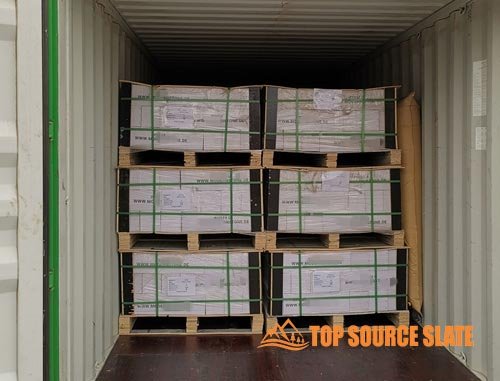
Reinforced 5-Ply Export Cartons and OEM Branding
Logistics often determine wholesale profitability. We optimize Containerbeladung specifically for North American regulations to avoid overweight fines and axle weight violations during domestic trucking from the port.
- US Port Optimization: 17.5 Tons per 20GP container (approx. 20 pallets).
- Carton Strength: 3-ply and 5-ply reinforced export-grade corrugated cardboard.
- Box Content: 7–8 pieces per carton for standard thickness; 5 pieces for rough textures.
- MOQ for Private Label: 300 m² for custom box printing and dealer branding.
Direct quarry sourcing from Hebei allows us to offer private label services where wholesalers can integrate their own SKU systems and branding onto the packaging. Before final payment, we provide visual verification through high-resolution photos and videos of the actual batch to ensure color consistency across the order.
Maintenance Guide for Homeowners: B2B Support Materials
Standardized care protocols focus on pH-neutral cleaning and ASTM C97-compliant sealing. These guides help B2B partners minimize service calls and preserve stone durability.
Daily Care Protocols for High-Texture Stone Surfaces
B2B distributors should provide homeowners with clear instructions on managing the deep crevices found in high-relief textures. We recommend using soft-bristle brushes and warm water to reach between the natural clefts of our Rough and Pencil Series panels without scratching the surface.
Advise clients to steer clear of the “all-purpose” aisle. Acidic or abrasive cleaners eat away at the mineral structure of slate and quartzite, leading to surface dulling or structural weakening. Our factory-sorted stones maintain batch color consistency, but chemical etching can create irreversible patchy spots.
In high-use splash zones, grease needs immediate attention. Porous Steinplatten can darken permanently if organic oils sit for too long. A quick wipe prevents the need for aggressive chemical degreasing later, which often damages the Stein ist natürlich patina.
Technical Standards for Sealing and pH-Neutral Maintenance
Maintaining the integrity of the high-strength epoxy bond in Top Quellsteinplatten requires the exclusive use of pH-neutral cleaners. Harsh chemicals compromise the backing system, which can lead to panel delamination in high-moisture kitchen environments.
- Sealer Grade: Use only high-grade penetrating sealants that meet ASTM C97 absorption standards.
- Maintenance Interval: Establish a re-sealing schedule every 12 to 24 months based on the specific density of the slate or quartzite model.
- Chemical Restrictions: Ban any cleaners containing bleach, ammonia, or vinegar to protect the stone’s mineral composition.
- Performance Metric: Sealed surfaces must maintain a grease-resistant barrier to prevent lipid absorption in cooktop splash zones.
Creating a grease-resistant barrier isn’t a one-time task. Distributors should educate contractors on these maintenance cycles to ensure the installation maintains its ASTM-rated durability. By standardizing these protocols, B2B partners protect their margins by reducing post-installation service requests and aesthetic complaints.
Abschließende Gedanken
Relying on generic middlemen often leads to patchy installations and high absorption failures that erode dealer reputations. We eliminate these risks by controlling production at our Hebei quarries to ensure ASTM C97 compliance and strict batch color consistency. This direct-to-factory model secures your margins by preventing the site-level rejects common with low-density retail alternatives.
Request a physical sample kit to verify our 0.75-inch low-profile fitment and interlocking precision firsthand. We provide pre-shipment visual verification and private label branding for wholesale orders starting at 300 Quadratmeter. Contact our export team today to review our US-port optimized inventory and secure your next project allocation.
Häufig gestellte Fragen
Is a stacked stone backsplash difficult to maintain in high-grease areas?
Natural stone features a textured surface that captures aerosolized oils and dust in its crevices. We recommend using a pH-neutral stone cleaner and a soft brush for routine care. For cooktop areas, selecting flatter profiles like our Pencil or Flat series simplifies the wiping process compared to high-relief rough textures.
Do I need to apply grout to natural stone panels?
No. Top Source Stone-Platten use a seamless Z-shape interlocking system designed specifically for a grout-free, dry-stack aesthetic. Filling joints with grout obscures the natural depth of the stone. Installers should use polymer-modified thinset meeting ANSI A118.15 standards to ensure panels fit tightly without visible seams.
Can I install stacked stone directly over existing kitchen tiles?
Industry standards advise against this. Our Natürlicher gestapelter Stein weighs between 8 and 12 lbs per square foot, which often exceeds the weight capacity and bond strength of existing tile. For a secure installation, remove the old tile and install a 1/2-inch cementitious backer board to support the dead load and prevent delamination.
Which stone colors complement a white kitchen cabinet design?
Neutral tones provide the best visual balance. Alaska Gray and Glacier White quartzite offer subtle gray veining that maintains a bright, open feel. For high-contrast modern looks, Carbon Black or Midnight Slate provides a sophisticated backdrop that highlights white cabinetry and stainless steel appliances.
How do I protect the stone from kitchen grease and oil stains?
Applying a high-quality penetrating sealer is essential. Because natural stone is porous, the sealer enters the pores to create a barrier against lipids and moisture. We recommend re-sealing the surface every 1 to 3 years to maintain the stone’s integrity and simplify cleanup in high-convection cooking zones.
Is it safe to use stacked stone directly behind a gas stove?
Natural stone is inherently non-combustible and heat-resistant. However, installation must comply with local building codes, which usually require a fire-rated substrate like fiber cement board behind the cooking zone. Proper sealing is necessary to prevent thermal discoloration and grease absorption caused by the heat of the range.