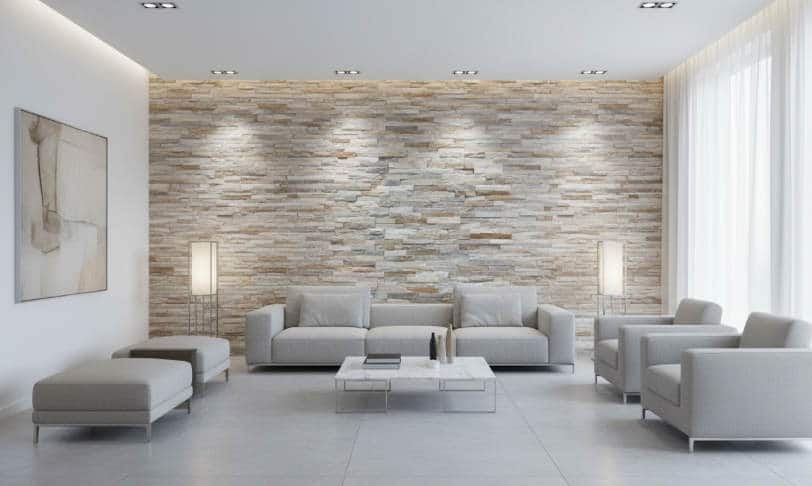
Éclairage & Shadow Play sert de base technique pour transformer une cheminée en pierre empilée standard en un point focal architectural de grande valeur. Lorsque les concepteurs ignorent l’interaction entre la lumière et la texture, ils risquent d’aplatir la profondeur naturelle de la pierre et de perdre l’esthétique haut de gamme que les clients attendent d’une maçonnerie coûteuse. Un éclairage mal exécuté met souvent en évidence les joints de l’installation ou crée un éblouissement intense, ce qui diminue finalement la qualité perçue de l’ensemble du projet de décoration intérieure.
Ce Le guide établit une procédure opérationnelle standard pour optimiser le foyer. visuels grâce au placement précis des luminaires et à la sélection de la température de couleur. Nous analysons la physique de la lumière rasante pour améliorer le relief de la pierre, déterminons les valeurs Kelvin spécifiques requises pour différents minéraux de pierre et fournissons des spécifications de positionnement exactes pour l'éclairage encastré. Ces techniques Les protocoles garantissent que chaque installation d'éclairage maximise la texture du matériau tout en s’intégrant parfaitement aux systèmes de gradation intelligents pour des performances constantes.
Pourquoi l’éclairage représente 50 % de l’impact visuel de votre foyer
Un éclairage efficace transforme un espace bidimensionnel mur de pierre en un élément architectural à haut relief en amplifiant les fentes minérales naturelles et la profondeur d'ombre inhérentes au véritable quartzite et à l'ardoise.
L'éclairage d'une pièce standard aplatit souvent l'apparence de pierre naturelle, washing out the intricate textures that make ledgestone desirable. In professional B2B installations for 2026, we see a shift toward scientific lighting hierarchies that treat the fireplace as a sculptural element rather than a simple wall covering. Proper lighting reveals the authentic mineral variations and color gradients that define high-quality quarry sources.
Strategic Layering for Visual Depth
Current design standards emphasize a three-tier system to prevent stacked stone from appearing flat under generic overhead lights. By separating ambient, task, and accent light, you control how the eye perceives the stone’s physical dimensions. This layering ensures the fireplace remains a focal point even when the primary room lights are dimmed.
- We recommend a hierarchy of 300-500 ambient lumens and 50-100 accent lumens to create a professional finish.
- Layered lighting highlights the unique clefts and ridges of stacked stone that remain hidden under standard room lights.
- Concealed LED strips placed along the mantle or ceiling reveal the authentic mineral variations in slate and quartzite.
Impact of Texture and Shadow Play
The choice between the Rough Series and Flat Series dictates how light interacts with the stone surface. High-dimension panels rely on raking light to cast dramatic shadows, which emphasizes the rugged, split-face finish of the material. Without these shadows, even the most premium pierre naturelle can lose its perceived value and architectural weight.
- Rough Series panels utilize high-dimension surfaces to cast dramatic shadows, adding a rugged, traditional feel.
- Série de crayons installations benefit from linear lighting that follows the stone’s horizontal flow, creating a sense of movement.
- Strategic light placement ensures the 100% vraie pierre texture is the focal point rather than the installation seams.
Color Temperature and Material Authenticity
Matching LED Kelvin ratings to specific types de pierre is critical for maintaining material authenticity. Incorrect color temperatures often make pierre naturelle appear like artificial concrete composites by washing out natural color gradients. Using the right spectrum ensures that earthy reds, golds, and deep grays retain their quarry-sourced vibrancy.
- Warm 2700K amber tones enhance the earthy reds and golds found in natural slate and sandstone.
- Modern cool white lighting suits the Marble Series, providing a clean and sophisticated look for high-end residential lobbies.
- Incorrect color temperatures can make authentic stone appear like artificial concrete composites by washing out natural color gradients.
The 70/30 Dominance Ratio
Atteindre le perfect cozy atmosphere requires balancing the fireplace glow against the surrounding room illumination. In premium installations, the fireplace should dominate the visual field without the room feeling dark or cave-like. This balance is managed through precise ratios that prioritize the fireplace as the primary light source in the immediate area.
- Professional installations maintain a 70% fireplace glow dominance while limiting overhead intensity to 30%.
- Smart dimming technology allows homeowners to adjust levels based on the time of day, preserving the stone’s visual weight.
- Precise lighting ratios ensure the fireplace remains the primary anchor of the room without being overpowered by general ambient light.
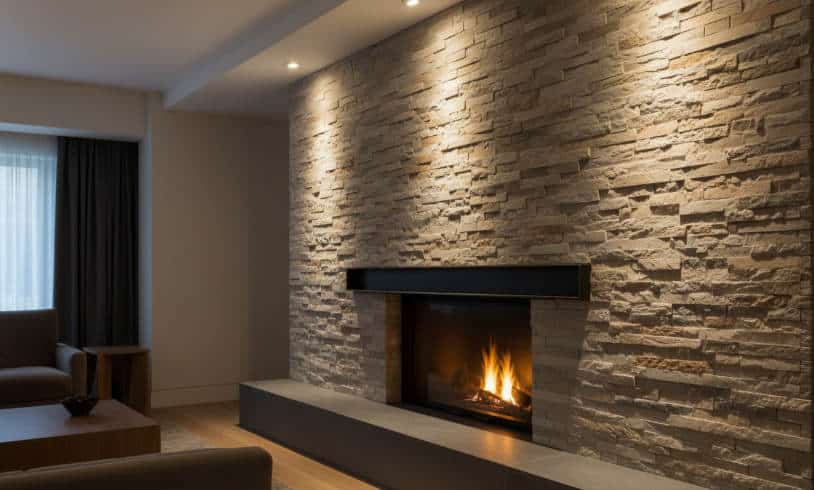
Raking Light vs. Direct Light: Which Enhances Stone Depth?
Raking light transforms a static stone surface into a dynamic architectural feature by leveraging shadow contrast to reveal texture that standard direct lighting usually flattens.
Raking Light: Accentuating Natural Texture and Shadow
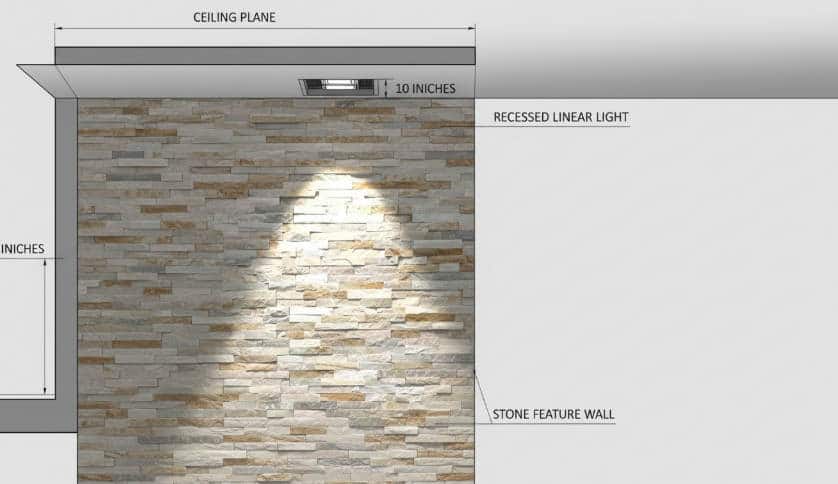
Positioning light sources at an acute angle to the stone—often called wall grazing—is the industry standard for high-relief installations. Cette technique force la lumière à parcourir la surface, créant de longues ombres qui soulignent l'épaisseur de 1,75 pouce de nos panneaux haut de gamme de la série Rough. En mettant en valeur les sommets et les vallées physiques de la roche, la lumière rasante crée un effet tridimensionnel qui change à mesure que le spectateur se déplace dans la pièce.
- Le jeu d'ombres révèle la surface de grande dimension de la série Rough, soulignant sa profondeur structurelle.
- L'éclairage à angle étroit identifie des pics minéraux uniques que la lumière directe aplatit souvent.
- Les concepteurs utilisent cette technique pour transformer les pierres empilées en un point focal qui change de caractère tout au long de la journée.
Éclairage direct : adoucir les surfaces pour des visuels nets
Direct light hits the stone surface perpendicularly, which minimizes shadows and brings the stone’s inherent color and mineral patterns to the forefront. We recommend this approach for the Flat Series or Marble Series where color consistency is the primary design goal. In smaller spaces, direct lighting prevents heavy shadows from making the wall feel imposing or the room feel enclosed.
| Lighting Technique | Wall Distance | Résultat visuel |
|---|---|---|
| Raking (Wall Graze) | 6 to 12 Inches | Maximized Texture & Depth |
| Direct (Wall Wash) | 3 Feet or More | Even Color & Soft Shadows |
- Head-on lighting works best for the Flat Series where color consistency is the main priority.
- Direct light prevents heavy shadows in compact rooms, maintaining an open feel.
- This method hides minor installation seams by washing the entire wall in even, bright light.
Matching Light Angles to Stone Series Profiles
The physical profile of the stone determines the most professional finish. Rough Series panels require side-angle lighting to showcase the natural split-face character of the rock. Without this angular light, the stone can lose its rugged appeal in photos and real-world viewing. In contrast, Slate Flat Series panels often look better under soft, direct light that brings out subtle veining and the la pierre est naturelle sheen without creating distracting dark pockets.
- Rough Series panels require side-angle lighting to showcase split-face character.
- Série de crayons stones benefit from raking light to emphasize fine, linear rows.
- Marble Flat Series panels utilize soft, direct light to highlight subtle mineral veining.
Positioning Fixtures for 2026 Architectural Standards
Strategic placement ensures the stone looks authentic under all conditions. For effective grazing, we recommend placing recessed lights 6 to 12 inches from the wall. This proximity creates the ideal angle for shadows to cast downward across the stone face. Many modern installations now utilize adjustable gimbal lights, allowing contractors to fine-tune the shadow depth after the stone is installed to account for specific mineral variations in that batch.
- Place recessed lights 6 to 12 inches from the wall for the ideal grazing angle.
- Use adjustable gimbal lights to fine-tune shadow depth after installation.
- Wall-mounted sconces add ambient glow while raking across the stone texture from the side.
Panneaux de registre en pierre empilés de qualité supérieure directement en usine
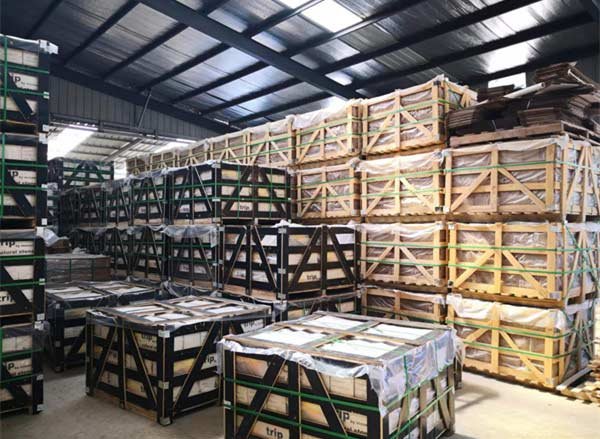
Températures de couleur des LED : ambre chaud vs blanc froid moderne
La sélection du bon indice Kelvin évite la distorsion des couleurs et garantit que les pigments minéraux naturels de la pierre s'alignent avec l'atmosphère architecturale souhaitée.
Warm amber lighting between 2700K and 3000K serves as the industry standard for residential comfort and rustic appeal. We recommend these lower Kelvin ratings for our Rough Series and high-texture ledgestone. These tones mimic traditional firelight, which deepens shadows and emphasizes the rugged, split-face profiles found in natural quarries. By utilizing warm spectrum LEDs, designers reduce harsh glare on uneven stone surfaces, creating a welcoming environment that highlights the earthy reds, tans, and oranges of the material.
Enhancing Detail with Modern Cool White
L'éclairage blanc froid, allant de 4 000 K à 5 000 K, offre la clarté requise pour les styles architecturaux modernes et les espaces commerciaux à fort trafic. Ce spectre met en valeur la précision et les lignes épurées de nos séries Flat et Pencil, ce qui en fait le choix préféré pour les halls d'entrée minimalistes et les environnements de vente au détail. Les températures plus fraîches reproduisent la lumière naturelle du jour, ce qui est essentiel pour mettre en valeur les authentiques nuances de gris et de bleu des matériaux en ardoise et en quartzite sans ajouter de chaleur artificielle.
| Température de couleur (Kelvin) | Collection recommandée | Impact visuel |
|---|---|---|
| 2700K – 3000K (chaud) | Or de Californie, miel doré | Amplifie les oxydes de fer terreux ; ajoute de la profondeur aux textures rugueuses. |
| 4000K – 4500K (neutre) | Gris Alaska, bleu Sierra | Conserve des tons d'ardoise fidèles à la réalité ; idéal pour les espaces de transition. |
| 5000K+ (Froid/Lumière du jour) | Blanc glacier, Blanc royal Marbre | Prevents yellowing; ensures “crisp” white aesthetics in modern builds. |
Selecting Light for Specific Stone Collections
Matching LED temperature to specific stone species is vital to maintaining material authenticity. For our Marble Series, such as Royal White, we advise against warm lighting as it can make the stone appear aged or yellowed. Cool white keeps the marble looking crisp and expensive. Conversely, multi-color slate installations require warm lighting to pull out the rich reds and tans that define the material’s character. Current 2026 design standards favor color-switching LEDs, allowing distributors to offer clients a dynamic system that adapts the stone’s appearance from morning daylight to evening mood lighting.
Functional Lighting for Indoor and Outdoor Stone
Lighting choices influence both visual impact and structural longevity. For pierre extérieure facades, amber LEDs improve visibility during adverse weather like fog or heavy rain, while indoor accent lighting benefits from dimmable systems to transition from functional brightness to ambient mood. Technical considerations include:
- Heat Management: Modern LEDs emit minimal heat, protecting the high-strength epoxy resins used in our panel assembly from thermal degradation.
- Dimmable Integration: Layered systems allow for 70% fireplace glow dominance while overhead intensity remains at 30% for a balanced aesthetic.
- Outdoor Durability: High-Kelvin LEDs used in commercial exteriors must account for glare reduction to maintain safety in high-traffic retail environments.
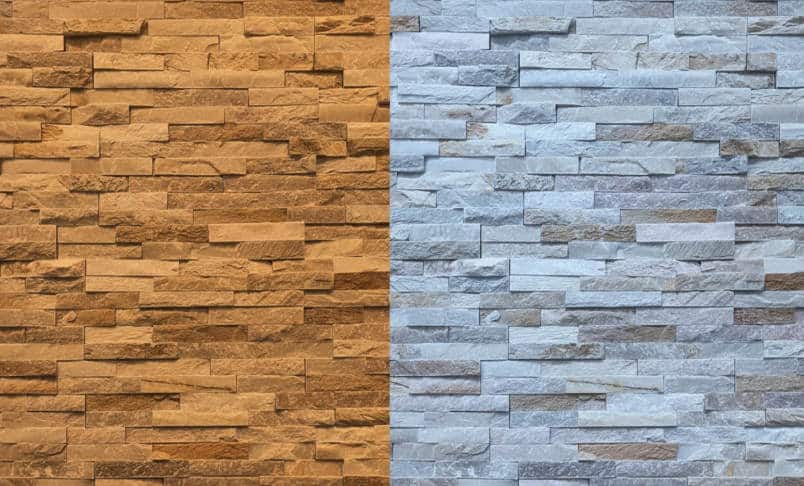
How to Position Recessed Lights to Avoid Awkward Seam Shadows
Precise placement of recessed fixtures determines whether a fireplace looks like a monolithic architectural feature or a collection of individual panels.
Establishing Optimal Wall Clearance
Standard lighting protocols for 2026 dictate that recessed fixtures should sit approximately 3 feet from the stone surface. This distance allows the light beam to spread naturally before it hits the texture, preventing “points chauds” that over-illuminate the top of the wall while leaving the bottom in shadow. When fixtures sit too close to the wall, the steep angle of light catches the top edges of the Z-shape interlocking panels, creating harsh vertical shadows that expose the very installation seams our CNC diamond-blade precision aims to hide.
| Placement Strategy | Distance from Wall | Visual Effect on Stone |
|---|---|---|
| Wall Washing | 30 to 36 Inches | Uniform glow; hides seams; ideal for Flat Series. |
| Wall Grazing | 12 to 24 Inches | High contrast; emphasizes Rough Series depth. |
| Incorrect (Too Close) | < 10 Inches | Harsh “scalloping”; exposes Z-shape joints. |
Maintaining this clearance ensures the light wash covers the interlocking points evenly. Our male-female connection system relies on uniform illumination to maintain the illusion of a continuous stone slab. By following these clearance standards, architects ensure that the 95% hue uniformity of our quarry-sourced stone remains consistent across the entire vertical span.
Applying the Ceiling Height Spacing Rule
Consistency in horizontal spacing eliminates dark “zones mortes” between light pools. The industry-standard formula requires spacing fixtures at exactly half the ceiling height. For a standard 8-foot residential ceiling, place fixtures 4 feet apart. This creates overlapping illumination zones that smooth out the light levels across the pierre naturelle surface. In commercial spaces with 10-foot ceilings, we recommend 5-foot spacing to prevent shadows from forming in the lower thirds of the fireplace wall.
- Use 4-foot spacing for 8-foot ceilings to ensure panneaux de pierre receive uniform light intensity.
- Maintain symmetrical layout relative to the fireplace centerline to anchor the visual weight.
- Avoid overcrowding fixtures, which can wash out the natural color shifts of materials like California Gold or Golden Honey.
Utilizing 30-Degree Beam Angles for Wall Washing
Adjustable gimbals are essential for high-end installations en pierre. Setting the fixtures to a 30 to 45-degree tilt toward the stone surface allows the light to “skim” the ridges. This technique highlights the natural split-face characteristics of our Rough Series—which can reach thicknesses of 3.5cm—without casting deep, distracting shadows into the recesses of the panels. A skimming light emphasizes the 100% natural minerals and quartzite crystals within the stone, making the surface “shimmer” rather than look flat.
For the Flat Series, wider beam spreads create a smooth, gallery-like glow. This softer approach hides micro-seams and works best for modern, minimalist designs. By directing the light beam at an angle rather than straight down, installers avoid the “cave effect” où le plafond est lumineux mais le véritable point focal en pierre reste sombre.
Alignement des luminaires avec la disposition des panneaux
Placement stratégique par rapport au l'installation de la pierre empêche la lumière de s'accrocher sur les bords du système de verrouillage. Nous vous conseillons de vous coordonner avec les installateurs pour garantir que les luminaires encastrés ne reposent pas directement au-dessus d'une ligne de joint verticale. Au lieu de cela, centrez les luminaires sur le corps principal d'un panneau en pierre. Cela permet à la lumière de s'estomper naturellement lorsqu'elle atteint les bords imbriqués, camouflant ainsi efficacement les points de transition entre les 6″ x24″ modules.
Une attention particulière doit être portée aux transitions de coin. Nos coins en L assortis sont préfabriqués pour des enveloppes à 90 degrés et doivent recevoir un rebond de lumière secondaire ou un accent dédié. S'assurer que la lumière ne “couper” at the corner keeps the fireplace looking like a solid, structural element. This professional finish is critical for Projets B2B where the seamless architectural look is the primary selling point for the end client.
Smart Lighting: Integrating Dimmers for the Perfect Cozy Vibe
Precision dimming transforms a static stone installation into a dynamic architectural feature by allowing the user to manipulate the ratio between shadow depth and surface highlights.
Effective fireplace lighting in 2026 relies on the ability to modulate intensity based on the time of day and the specific texture of the masonry. Smart dimming systems provide the granular control necessary to shift a mur de pierre from a bright, clean daytime backdrop to a dramatic, shadow-heavy focal point in the evening. This flexibility ensures that the 100% natural minerals in Top Source Stone panels—whether slate or quartzite—maintain their premium visual impact regardless of external lighting conditions.
Customizing Stone Shadows with Variable Brightness
Brightness control allows for the intentional manipulation of visual depth. By lowering light levels, you emphasize the deep recesses and split-face textures found in our Rough Series panels. This creates a rugged, high-contrast appearance where shadows define the fireplace’s character. For polished surfaces, such as the Marble Series or the clean lines of the Flat Series, dimming eliminates harsh hotspots and prevents glare that can otherwise obscure the natural veining.
- Lower light levels amplify the three-dimensional relief of pierre naturelle, making the fireplace the dominant room feature.
- Controlled intensity prevents visual “flattening” on sealed or polished stone surfaces.
- Variable output helps installers balance natural light from nearby windows with artificial accent sources.
Voice and App Integration for Instant Scene Changes
Modern smart dimmers utilize Wi-Fi and Bluetooth to bridge the gap between architectural masonry and home automation. Professionals now design “Fireplace Mode” scenes that can be triggered via Amazon Alexa or Google Assistant. These presets automatically adjust the accent lights to the optimal 50-100 lumen range, ensuring the stone is showcased perfectly without the user needing to leave the sofa. This integration supports a unified environment where the fireplace lighting works in tandem with other room lamps.
- Voice commands allow for hands-free atmosphere adjustments during social gatherings.
- Mobile applications provide remote management, allowing users to pre-set the mood before entering the room.
- Smart grouping ensures that fireplace accent lighting transitions seamlessly with main overhead dimming.
Circadian Scheduling for 2026 Interior Environments
Automated scheduling aligns fireplace illumination with human biological rhythms. In the 2026 design landscape, interior lighting is no longer static; it evolves as the day progresses. Programmed dimmers can be set to gradually soften the stone wall’s illumination as evening approaches, promoting relaxation through reduced blue light exposure. Sunrise settings can also be utilized to brighten the mur de pierre in the morning, providing a gentle wake-up call through natural-looking light reflection.
- Automated evening softening mimics the natural transition to sleep, enhancing the “cozy” psychological effect of the stone.
- Sunrise programming utilizes the stone’s surface to diffuse light naturally for morning routines.
- Smart scheduling improves home security by making the property appear occupied even when residents are away.
Balancing Energy Use with Visual Warmth
Beyond the aesthetic benefits, smart dimmers provide tangible technical advantages for the longevity of the lighting hardware. Reducing power flow to fireplace LEDs lowers heat output, which is critical for fixtures installed in tight, recessed spots above a heat-producing fireplace. This practice extends the lifespan of the LED chips and reduces the frequency of maintenance in hard-to-reach areas. For B2B clients and developers, this aligns with sustainable building goals while maintaining the luxury feel of stacked stone masonry.
- Dimming reduces energy consumption without sacrificing the high-end visual appeal of the stone.
- Lower thermal stress on light fixtures leads to fewer bulb failures in permanent stone installations.
- Efficient power management supports green building certifications for large-scale residential projects.
Conclusion
Integrating strategic lighting with pierre naturelle elevates the interior environment by revealing the intricate depth and shadows of the masonry. This approach ensures the natural clefts and CNC-precision edges of the panels appear intentional and high-end. Careful placement prevents awkward shadows and allows the authentic colors of the quartzite or slate to remain consistent across the entire feature wall.
Browse our current stone collections to see how different textures respond to various lighting setups. Contact our factory team to discuss volume sourcing or to request physical samples for your mood boards.
Foire aux questions
What is the best lighting for a stacked stone fireplace?
The gold standard for pierre empilée is a layered, three-tier lighting system. This includes ambient lighting (300-500 lumens), task lighting (100-200 lumens), and specific accent lighting (50-100 lumens). Using 2700K warm bulbs with precise dimming controls allows the stone texture to be highlighted while ensuring the fireplace flame remains the dominant visual element in the room.
Where should recessed lights be placed over a stone wall?
Recessed lights should be placed 6 to 12 inches away from the face of the mur de pierre to create a “wall grazing” effect. By positioning the fixtures close to the wall and directing the light downward, you create high-contrast shadows in the stone’s crevices, which emphasizes the rugged, three-dimensional depth of the material.
Does warm or cool light look better on natural stone?
Warm light, specifically in the 2700K range, is significantly better for pierre naturelle. This temperature enhances the organic earth tones—such as tans, browns, and reds—found in the stone and aligns with the natural glow of the fireplace. Cool lighting should be avoided as it often makes pierre naturelle appear flat, clinical, or unnaturally blue.
How to avoid glare on sealed stone fireplace surfaces?
To eliminate glare on sealed surfaces, use indirect lighting techniques and fixtures equipped with deep baffles or anti-glare louvers. Positioning the lights at an acute grazing angle rather than a direct perpendicular angle helps direct reflections away from the viewer’s line of sight. Additionally, using a matte or satin finish sealer instead of high-gloss will diffuse light more evenly.
Can LED strips be hidden within the stone texture?
Yes, modern frameless installations often incorporate concealed LED accent strips within the stone structure. These can be hidden in “shadow gaps,” underneath mantel overhangs, or within recessed channels (lintels) built into the stone layout. Utilizing low-profile COB (Chip on Board) LED strips provides a continuous glow without the visible “dots” often seen with traditional LED tape.