Angolo & Edge Precision rappresenta la differenza tra il superamento delle ispezioni di sicurezza e l'affrontare costose violazioni del codice, richieste di garanzia e rilavorazioni in loco che allungano i tempi ed erodono i margini. I bordi esposti o irregolari del camino concentrano il calore, intrappolano la malta e provocano il fallimento della finitura: problemi che in genere compaiono dopo il turnover e costringono a costose riparazioni o grattacapi legali per gli appaltatori.
Questa SOP pronta per il campo illustra i passaggi tecnici e i punti decisionali su cui fanno affidamento i muratori professionisti e i carpentieri di finitura: perché i bordi esposti sono importanti, un confronto tra il ROI in termini di costi e tempo degli angoli a L in fabbrica rispetto alla smussatura in loco, le specifiche di spazio interno del focolare e i prodotti compatibili con la barriera termica, le opzioni di transizione del muro a secco e i dettagli di rifinitura, i flussi di lavoro manuali di levigatura e lucidatura e il motivo per cui i pannelli a Z impediscono le giunzioni degli angoli verticali. Troverai elenchi di strumenti, grane abrasive, didascalie SKU, riferimenti ai codici, foto ravvicinate e un elenco di controllo dell'installazione scaricabile da utilizzare in cantiere.
Perché i bordi esposti possono creare o distruggere il design del tuo caminetto?
I bordi esposti definiscono la durabilità, la sicurezza termica e la qualità percepita di un caminetto: scegli il materiale, le giunzioni e l'installazione corrette o rischi costose rilavorazioni.
Materiale e prestazioni termiche: scegli pietra, spessore e finiture per i bordi a vista
Specifica la pietra naturale al 100% (ardesia, quarzite, arenaria, granito o marmo) e abbinala selezione delle pietre per il progetto ambiente. Elencare i codici SA per gli appalti: Ardesia 6803.00.90 e Quarzite 6802.93.11. Usa la norma spessore del pannello di 1,0–2,5 cm per impiallacciatura tipica corre e aumenta fino a 3,5 cm per pezzi grezzi/di alta qualità in cui i bordi sono esposti direttamente al calore, al carico o alla finitura. Scegliere le finiture della superficie e del bordo (a spacco naturale, a spacco, senza giunzioni) in base a quanto sarà visibile e tattile il bordo; le facce levigate/rivestite in pelle nascondono i segni di manipolazione meglio della lucidatura elevata per le zone ad alto utilizzo.
Scrivere le specifiche dei materiali per proteggere l'estetica e le prestazioni: richiedere l'approvvigionamento dello stesso lotto da una cava per mantenere l'uniformità della tonalità (~95% all'interno di un lotto), imporre la resistenza al gelo-disgelo per i climi settentrionali e richiedere la resistenza ai raggi UV e all'elevata salinità per le installazioni costiere e del Golfo. Utilizza queste richieste di specifiche nel pacchetto di approvvigionamento e presentazione in modo che produttori e importatori comprendano in anticipo le aspettative di durabilità termica.
- Materiali omologati: Ardesia, Quarzite, Arenaria, Granito, Marmo (100% Pietra naturale).
- Codici HS di importazione: Slate 6803.00.90; Quarzite 6802.93.11.
- Spessore del pannello: 1,0–2,5 cm standard; fino a 3,5 cm per bordi esposti/per uso intensivo.
- Durabilità: richiede resistenza al gelo-disgelo per climi freddi e resistenza ai raggi UV/salinità per progetti costieri/GCC.
- Richiamo di qualità: specifica la consistenza della cava dello stesso lotto per evitare variazioni di colore su lunghe tirature con bordi esposti.
Dettagli dei bordi e strategie di giunzione: profili ad incastro, angoli e tolleranze CNC
Utilizzare sistemi maschio-femmina ad incastro a forma di Z o a S dove sono necessari prospetti continui con bordi esposti; l'incastro meccanico nasconde giunti verticali e sottofondo e si legge come un unico piano. Pianificare le dimensioni dei pannelli attorno allo standard 150 × 600 mm (6″ ×24″) o 150 × 550 mm (6″ ×22″) moduli e ordinare sempre gli angoli a L di fabbrica corrispondenti per transizioni effettive a 90° anziché fare affidamento su mitra sul campo per l'integrità degli angoli.
Richiama la precisione della lama diamantata CNC sui disegni in cui i giunti devono essere letti installazione perfetta e mirata tolleranze: lacune <1 mm e linee di cucitura visibili inferiori a 2 mm. Gli angoli a L di fabbrica accorciano i tempi sul campo e riducono gli errori: aspettatevi un'installazione degli angoli fino al 50% più rapida e un costo di manodopera inferiore di circa il 25% rispetto alla smussatura in loco, quindi specificate angoli prefabbricati su progetti medio-grandi per proteggere la pianificazione e la qualità della finitura.
- Profili ad incastro: forma a Z o forma a S maschio-femmina per corse continue.
- Dimensioni pannello: 150×600 mm o 150×550 mm; includono angoli a L corrispondenti per curve di 90°.
- Precisione di taglio: specifica dei bordi della lama diamantata CNC; mirare alle lacune <1 mm e cuciture a vista <2 mm.
- Scelta del profilo: interblocco senza soluzione di continuità per lunghe corse visibili; bordo dritto per look lineari e controllati.
- Nota di disegno utilizzabile: richiamare la tolleranza CNC e il tipo di interblocco sui disegni di fabbricazione e richiedere angoli a L prefabbricati per evitare coping e discrepanze in loco.
Migliori pratiche di installazione e gestione del calore per bordi e prese d'aria esposti
Dimensionare e documentare le distanze tra la mensola del camino e i bordi sui disegni costruttivi: estendere le mensole del camino di 3-6 pollici oltre l'apertura del camino per bilanciare le proporzioni e fornire un buffer di separazione del calore. Non lasciare esposto lo sfiato della fabbrica; trattare le prese d'aria come un elemento di design integrando una cappottatura secondaria o una canalizzazione metallica in modo che la ventilazione sembri intenzionale ed eviti etichette antiestetiche e giunti meccanici. Progettare i substrati e gli ancoraggi attorno ai pesi dei pannelli (prevedere circa 30-40 kg/m² per i pannelli piani e circa 55 kg/m² per i pannelli grezzi) e specificare ancoraggi meccanici adatti ai carichi di pietra anziché fare affidamento solo sull'adesivo.
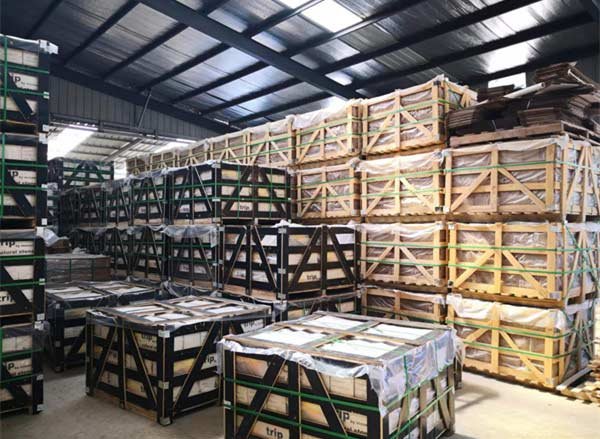
Protect logistics and QA: plan lifts using carton and crate data (standard cartons: 7–8 pcs/box; pallet crates average 900–1,000 kg gross). Request high-definition pre-shipment photos and videos and verify matching L-corners and color lot before releasing final payment. For double-sided or corner glass fireplaces that show black bars at glass edges, specify double-glass assemblies or trim profiles to mask the artifact and call out that solution in the glazing and stone interface details.
- Mantel clearances: extend 3–6 inches beyond opening; dimension on drawings.
- Venting: conceal factory venting with secondary cowling or metal ducting; integrate as intentional detail.
- Anchors & load: design for ~30–40 kg/m² (flat) or ~55 kg/m² (rough); specify mechanical anchors rated for pannelli in pietra.
- On-site logistics: cartons 7–8 pcs/box; plywood crates and pallet gross weight ~900–1,000 kg—plan lifts and scaffolding accordingly.
- Pre-install QA: require HD pre-shipment photos/videos and color-lot confirmation; verify matching L-corners before final balance payment.
- Troubleshoot glazing artifacts: specify double-glass or trim profiles where corner/double-sided glass reveals black bars at edges.

Factory L‑Corners vs. On‑site Mitering: An ROI Comparison
Scegli gli angoli a L di fabbrica quando i costi prevedibili, la pianificazione più rapida e il rischio di garanzia inferiore superano il premio marginale del materiale.
Confronta i costi diretti dei materiali e di fabbricazione per m²
Esegui un modello di materiali per voci che inizi dagli input unitari e converta cartoni e casse in m². Utilizza le specifiche del cartone e la geometria del pannello per calcolare la resa e la perdita di taglio, quindi sovrapponi il trasporto, le tariffe e i premi sugli angoli di fabbrica per produrre un costo del materiale sbarcato per m².
- Input unitari da raccogliere: costo del pannello (per m²), premio per l'angolo a L di fabbrica (per angolo o per m²), margine per la smussatura in loco (pannelli aggiuntivi%) e materiali di consumo per il taglio (durata della lama, smaltimento dei liquami).
- Box → area conversion: standard boxes = 0.63 m² (7 pcs) or 0.72 m² (8 pcs); rough boxes = 0.45 m² (5 pcs). Use these to size pallets and crates.
- Panel geometry: 150×600 mm or 150×550 mm panels, thickness 10–35 mm. Calculate yield reductions for thicker material and account for kerf loss when mitering corners on site.
- Freight sizing: flat panels ≈ 30–40 kg/m²; rough ≈ 55 kg/m²; crate gross weight ≈ 900–1000 kg. Convert shipping quote per crate to shipping cost per m² using crate gross weight and crate m² coverage.
- Dogane/tariffe: utilizzare i codici HS ardesia 6803.00.90 e quarzite 6802.93.11 quando si modellano i costi allo sbarco per USA/Canada/UE; includono le aliquote dei dazi e le spese di sdoganamento.
Calcolare il pareggio dei soli materiali con questa equazione e collegare gli input del progetto: (Costo di fabbrica + Premio angolo a L) = (Costo del pannello di base × (1 + scarti in loco%)) + costo di taglio in loco. Per convertire il trasporto in merci per m², dividi il costo di spedizione della cassa per m² della cassa (utilizza le opzioni pallet da 48 o 60 scatole → copertura standard ~30,24–37,80 m²). Utilizza la spedizione per m² e aggiungi i dazi applicabili dal codice HS per ottenere il costo finale del pannello base sbarcato.
Quantificare le differenze di manodopera, programma e rischio in loco
Costruisci un modello di lavoro che separi la pietra qualificata cutter hours, helper hours, and setup/cleanup. Use factory L‑corners to quantify time savings: industry data shows corner units can cut installation time roughly 50% and reduce labor cost 25% or more on typical pietra accatastata programs. Translate those percentages into hourly savings using local craft rates and project crew composition.
- Labor inputs: skilled cutter hours per m², helper hours per m², setup/cleanup hours per day, and hourly rates by market. Collect travel and overtime multipliers for remote sites.
- Rework drivers: color/vein mismatch at miters, inaccurate angles, and thermal stress at fireplace openings increase rework. Use same‑batch quarry consistency (Top Source: 95% hue uniformity) as a factory advantage that reduces rejects and callbacks.
- Impatto sulla pianificazione: gli angoli a L di fabbrica rimuovono il taglio e l'adattamento degli angoli di campo. Convertire la riduzione percentuale delle ore qualificate in meno giorni in sede e minori costi di mobilitazione/smobilitazione.
- Sicurezza e responsabilità: includono i costi per i sistemi di controllo delle polveri, gli aspirapolvere HEPA, i respiratori, le protezioni per l'udito e qualsiasi autorizzazione per il sito. Il taglio in loco aumenta i DPI e i costi di mitigazione; quantificarli come componente aggiuntivo per m² durante la smussatura in cantiere.
Assemblare un foglio di scenario in cui Costo totale installato = costo di trasporto del materiale + fabbricazione + spedizione + (ore di manodopera × tariffa) + indennità per rifiuti + costi di sicurezza del sito. Esegui scenari paralleli (angoli a L in fabbrica o smussatura in loco) in modo da poter isolare i giorni di pianificazione risparmiati, i costi di manodopera evitati e le riduzioni di imprevisti guidate da un minor rischio di rilavorazione.
Logistica, rifiuti, prestazioni a lungo termine e impatti della garanzia sul ROI
Model logistics at pallet, crate, and container level to expose carrying cost, MOQ impact, and sequencing risk. Use pallet packing options and container capacity to size orders against project cadence, and include lead time and MOQ in your carrying‑cost math so procurement decisions reflect project dates, not just unit price.
- Pallet/box math: Option A (48 boxes) → ~30.24 m²; Option B (60 boxes) → ~37.80 m² for standard panels. 20GP container capacity: 750–860 m² standard panels (25–30 pallets per container).
- Port weight limits: USA standard 17.5 t without special approval; heavy‑weight 24–26.5 t requires destination approval. Use these caps to decide whether to ship heavier rough panels or optimize for standard flat panels to avoid surcharges.
- MOQ & lead time: Minimum order and private label thresholds = 300 m². Lead time in‑stock = 10–15 days; production = 20–25 days. Convert lead time into carrying cost and project sequencing risk (delayed finishes, crew idle time).
- Quality and warranty effects: factory L‑corners shipped with same‑batch sourcing and CNC diamond‑blade precision reduce aesthetic mismatch and post‑install callbacks. Require pre‑shipment visual verification (photos/videos) to lower balance‑payment risk and claims.
Calculate lifecycle ROI by projecting net present value of reduced callbacks, lower waste disposal fees, and improved facade durability dalla precisione di fabbrica. Costruisci una semplice tabella VAN: risparmio annuo = (riduzione della manodopera di rilavorazione + meno materiali sostitutivi + richieste di garanzia evitate + minori costi di smaltimento e autorizzazione); scontare tali risparmi su un orizzonte di garanzia ragionevole. Utilizzare il risultato per giustificare il premio per l'angolo a L quando il VAN dei costi evitati supera il premio iniziale del materiale.
Pannelli in pietra Premium: installazioni più veloci, margini più elevati
Finitura intorno al focolare: distanze di sicurezza per i bordi grezzi
Distanze corrette, supporto non combustibile e adesivi testati prevengono guasti termici e proteggono le garanzie consentendo al tempo stesso una finitura architettonica salda.
Valutazione del sito e misurazioni delle distanze intorno al focolare
Inizia identificando il tipo di apparecchio (a legna, a gas o elettrico) e registra le autorizzazioni richieste dal produttore. Misurare con precisione l'apertura del focolare e impostare la sporgenza della mensola a 75–150 mm (3–6 pollici) oltre ciascun lato dell'apertura per bilanciare le proporzioni e controllare la diffusione del calore. Mappa ogni combustibile adiacente (rifiniture, montanti, travetti, pavimentazione) e segna le distanze richieste sul tuo layout; confermare il codice locale e il manuale dell'apparecchio prima di finalizzare il piano. Verificare la planarità del substrato: limitare la deviazione a 3 mm su 1 m (0,12 pollici su 39 pollici) in modo che i pannelli a letto pieno e gli adesivi raggiungano un contatto continuo.
- Registrare il tipo di apparecchio e la tabella delle autorizzazioni del produttore.
- Impostare la sporgenza della mensola a 75–150 mm (3–6 pollici) oltre l'apertura.
- Contrassegnare i materiali combustibili e le separazioni richieste in base al codice (IRC R1001.11 ove applicabile).
- Misurare la planarità del substrato; accettare una deviazione ≤3 mm per 1 m.
Selezionare pannelli in pietra e profili perimetrali compatibili con le condizioni del focolare
Specificare la pietra di origine superiore naturale Pannelli in pietra impilati in 150×600 mm or 150×550 mm formats and choose thickness appropriate to the look and load: standard 10–25 mm, up to 35 mm for rough/premium faces. Where vertical seams or corners will be visible, select interlocking Z-Shape or S-Shape panels or matching factory L-corners to conceal joints and eliminate onsite coping. Use CNC diamond-blade precision edges for male-female fits where raw edges meet the firebox opening; tight CNC cuts reduce field rework and keep visible seams under 1–2 mm.
- Panel sizes: 150×600 mm or 150×550 mm; thickness 10–25 mm standard, ≤35 mm rough.
- Weights: flat panels ~30–40 kg/m² (8–12 lb/ft²); rough panels ~55 kg/m²—size substrate and anchors accordingly.
- Scegli l'interblocco Z/S o gli angoli a L di fabbrica per l'occultamento degli angoli e delle cuciture.
- Specifica i bordi diamantati CNC per giunzioni maschio-femmina strette sui bordi grezzi.
Preparare un substrato non combustibile e un supporto termico
Installa un pannello di supporto in cemento o una piastrella ignifuga backer of at least 12 mm (1/2 in) directly over the framed cavity surrounding the firebox to create a non-combustible primary surface. Where a cavity exists behind the backer, pack mineral wool or equivalent non-combustible insulation 25–50 mm deep to cut conductive heat transfer. Fasten the backer with corrosion-resistant screws at 200–300 mm (8–12 in) centers and stagger joints to avoid weak lines. Clean, dry and verify the substrate is within the ≤3 mm per 1 m flatness tolerance before you apply adhesive or set panels.
- Backer: cement or fire-rated tile backer minimum 12 mm (1/2 in).
- Thermal layer: mineral wool 25–50 mm behind backer where space allows.
- Screw spacing: corrosion-resistant screws at 200–300 mm (8–12 in) centers; stagger all joints.
- Confirm substrate clean, dry, and flat (≤3 mm per 1 m) before adhesive.
Cutting, dry-fitting and mechanical fastening of raw stone edges
Trim panels and raw edges using CNC diamond tools or a diamond wet saw and hold cut tolerances to ±1 mm so joints sit tight without forcing. Dry-fit the entire assembly before adhesive application; plan a continuous 3–6 mm expansion gap at the project perimeter and lay out control joints every 900–1,200 mm to allow thermal movement. Apply heat-rated mortar or adhesive with full-bed coverage—specify a product rated to at least 540°C (≥1,000°F) or follow the appliance/manufacturer heat spec—and supplement the bond with mechanical anchors.
- Cutting tolerance: ±1 mm using CNC diamond or wet saw.
- Dry-fit and maintain 3–6 mm expansion gap; control joints every 900–1,200 mm.
- Adhesive: full-bed coverage; rated ≥540°C (≥1,000°F) or per appliance spec.
- Mechanical backup: stainless steel anchors or masonry screws spaced max 300 mm (12 in) on center and at panel edges for gravity load support.
Joint treatment, edge protection and finish sealing for heat exposure
Tool perimeter and control joints with a flexible high-temperature or intumescent sealant sized to the 3–6 mm gap so joints compress without transferring stress to the stone. Protect live or rough edges with a heat-compatible penetrating sealer formulated for quartzite or slate and allow full cure before exposing the assembly to sustained heat. Slope horizontal projections and install drip edges to avoid water pooling on mantels, and use matching L-corners for continuous texture at wrap points. Avoid organic polymer sealers adjacent to high-heat zones; select inorganic or heat-rated products specified for Pietra naturale.
- Sealant: flexible high-temp or intumescent sized for 3–6 mm joints.
- Edge protection: penetrating stone sealer for quartzite/slate; observe manufacturer cure time before heat exposure.
- Drainage: slope mantels and add drip edges to prevent pooling.
- Material selection: use inorganic/heat-rated sealers near the firebox; avoid organic sealers at high-heat interfaces.
Verification, thermal testing and final clearance documentation
Run a staged thermal test: start with low-intensity burn cycles and log surface temperatures at 15, 30 and 60 minutes at critical locations—raw edge, joint, and substrate behind the panel. Inspect anchors, adhesive bond and joint compression after cool-down and confirm no delamination, cracking or unacceptable movement. Record final clearances, gap sizes and material specifications in a job checklist and capture high-resolution photos for handover and warranty records.
- Thermal log: temps at 15, 30 and 60 minutes at edge, joint, substrate.
- Post-test inspection: anchors, adhesive bond, joint compression; note defects.
- Documentation: final clearances, gap sizes, panel sizes/thickness, weight per m², L-corner part numbers, and maintenance/sealer schedule.
- Handover: deliver installation notes and high-resolution photos to client or dealer for warranty and future maintenance.

Transitioning to Drywall: Trim Strips vs. The Natural Ending Look
Pick trim or a natural termination based on substrate tolerance, panel geometry, and lifecycle cost—these choices drive install time, anchor design, and future repairs.
Selection criteria: when to install metal trim strips vs. a natural stone termination
Choose metal trim strips when the drywall edge or substrate is irregular, drywall thickness varies, or the design needs a defined metal reveal for contrast and protection. Trim absorbs edge damage, speeds repeatable installations, and hides small substrate variations that would otherwise force field cutting. Opt for a natural stone termination when panel edges line up with clean substrate lines and you can use matching manufactured L-corners or precision-cut panels to wrap the stone around the corner; that approach produces a continuous texture and the seamless aesthetic high-end projects demand.
Prefer interlocking Z‑Shape or S‑Shape panels where you can—these male/female, CNC diamond‑blade precision panels camouflage vertical joints, lower the need for trim, and target visible seam lines under 2 mm with gaps smaller than 1 mm when installed correctly. Plan installations around standard panel sizes (150×600 mm or 150×550 mm) and thickness ranges (1.0–2.5 cm standard; up to 3.5 cm for rough/premium) and require same-batch quarry sourcing to preserve color consistency (manufacturer data shows ~95% hue uniformity within a batch).
- Use trim if substrate irregularity or high-impact traffic exists.
- Use natural ending when panels align and matching L-corners are available.
- Prefer Z/S interlocking panels to reduce visible vertical seams.
- Confirm panel size (150×600 or 150×550 mm) and thickness before deciding on trim.
Structural and material requirements for trimmed and natural terminations
Design the wall support for stone dead load first: flat (seamless/honed) panels typically load ~30–40 kg/m²; rough or heavy textured panels load ~55 kg/m². Where stone weight exceeds local drywall capacity, add backing or a mechanical support system rated for the specific kg/m² value and specify mechanical anchors that match the substrate and local code. For 90° transitions, specify factory-matched L-corners to maintain texture continuity and cut on-site labor; factory corners reduce install time and error rates compared with mitering on site.
When you use trimmed edges, specify corrosion-resistant metals—stainless steel or aluminum—sized to cover panel thickness and allow 5–10 mm tolerance for thermal movement and installation variation. Verify the panel edge finish (natural cleft, split-face, seamless) and exact thickness before ordering trim dimensions. Finally, select anchors and adhesives rated for the project’s environmental exposure—ask for freeze–thaw resistance and high-salinity tolerance when projects sit in cold climates or coastal Gulf regions, and ensure compatibility between adhesive chemistry and Pietra naturale type.
- Load targets: flat panels ~30–40 kg/m²; rough panels ~55 kg/m²—plan backing and anchors accordingly.
- Specify L-corners for 90° turns to preserve texture and reduce field cutting.
- Trim spec: stainless/aluminum sized for panel thickness + 5–10 mm movement tolerance.
- Require freeze–thaw and salinity resistance on adhesives and anchors when applicable.
Edge detailing and installation workflow to achieve a clean natural ending
Prep the substrate: confirm the drywall plane and shim to a continuous plane within 3 mm over 2 m; install backing where you expect mechanical anchors because stone can exceed drywall capacity. Start your layout with straight-edge rectangular panels for linear dry-stack runs and dry-fit all pieces before adhesive. Use the CNC diamond‑blade precision edges on Z/S interlocking series to align male/female joints and aim for gaps smaller than 1 mm and visible seam lines under 2 mm.
Install pre-fabricated L-corners first to lock texture continuity, then set field panels into interlocks so vertical joints fall into the male/female recesses. Leave a 2–5 mm grout or a flexible movement joint where substrate or thermal movement is likely; install a minimal metal reveal only where you need a crisp, durable edge or where code requires non-combustible protection. Verify final coverage and edge alignment with a straightedge and document batch numbers and crate photos on site so future repairs match the same quarry batch.
- Prep: shim drywall plane ≤3 mm over 2 m; add backing for anchors when required.
- Layout: dry-fit panels; use CNC-cut Z/S panels for tight male/female joint alignment.
- Corners: set factory L-corners first, then work field panels into interlocks.
- Finish: leave 2–5 mm flexible joint where movement expected, or use a slim metal reveal for a protected crisp edge.
- Verify: check alignment with a straightedge and record batch numbers for future matching.
Risolvere il “Raw Edge” Problem with Manual Honing and Polishing
Consistent manual honing prevents field rejects, preserves same-batch color, and protects dealer margins by delivering installation-ready L-corners and interlocks.
Inspect and quantify raw-edge defects before surface work
Start every rework with a standardized inspection sheet and the right measurement tools. Measure and record panel ID, size (150x600mm or 150x550mm), thickness (standard 1.0–2.5 cm; up to 3.5 cm for rough panels), and estimated weight (approx. 30–40 kg/m² flat; 55 kg/m² rough). Log environmental readings when relevant: moisture meter values and any packaging damage that could affect edge work or crate integrity.
- Inspection tools: digital caliper, straightedge, feeler gauges, low-mag handheld loupe, moisture meter, tape measure.
- Defect map: note chipping, micro-cracks, delamination, thin lips, uneven bevels with linear location and severity for each panel.
- Baseline acceptance: hue uniformity ≥95% per batch, visible edge deviation ≤2 mm per linear meter, maximum burr radius before honing 0.5–1.5 mm.
Classify corrective action by measured severity to control cost and risk: light touch hone where edge radius or burrs fall inside target, moderate repair when honing plus color-matched epoxy fill restores continuity, heavy intervention when you must trim and replace the panel or re-cut the edge with a CNC diamond-blade to meet interlock tolerances.
Manual honing protocol: grit progression, tooling, and technique
Follow a progressive abrasive sequence and keep water as the constant. Use resin-bond diamond hand pads or plates with wet lubrication and select grits to match material hardness—suggested series: coarse 60/120 → medium 220/400 → fine 800/1500, and finish with 1500+ for polishing. Adjust dwell and grit steps for quartzite, which requires longer contact time per stage than slate. Choose flexible backing and 50–100 mm pad widths for edge work to preserve geometry and reach interlocks without overcutting.
- Tooling: resin-bond diamond hand pads, flexible backing, variable-speed backing pad or hand-guided motion; maintain constant water flow to suppress dust and control heat.
- Technique: make consistent linear passes along the edge, keep the pad flat to preserve profile, perform 5–15 controlled passes per grit stage, and monitor edge radius to hold 0.5–1.5 mm rounding unless the project calls for a sharper finish.
- Pressure and timing: apply even, moderate pressure; avoid localized gouging; increase contact time on quartzite versus slate.
- Safety: wear an N95/FFP2 respirator for dry tasks, gloves, and eye protection; contain wet slurry to protect crate packaging and neighboring finished panels.
Polishing, sealing, and quality verification for installation-ready edges
Finish edges to a controlled sheen that matches adjoining faces and interlocks. Complete polishing with a fine diamond pad (≥1500 grit) or a material-appropriate polishing slurry and verify consistent sheen across Z/S interlocks and L-corners. Confirm CNC diamond-blade precision interfaces remain true: test that male-female interlocks seat without gaps and that seam camouflaging shows no visible stepped gaps at a 1.5 m viewing distance.
- Polish step: final pass with ≥1500 grit or equivalent slurry; equalize sheen across adjacent profiles and corners.
- Sealing: apply a breathable, stone-specific penetrating sealer when required; choose formulas rated for high salinity and humidity for Gulf climates.
- Fit verification: verify interlocks seat and gaps fall below visual tolerance; confirm edge straightness target ≤2 mm per linear meter.
Use a final QC checklist and document results before shipment. Require hue uniformity ≥95% per crate, no visible micro-chips, consistent surface sheen, and photographic or video evidence of each reworked panel. Mark reworked panels, pack in 5-ply export cartons with matching L-corners where needed, and include inspection records to preserve same-batch quarry consistency and protect dealer margins.
- QC checklist: hue uniformity ≥95% per crate; edge straightness ≤2 mm/m; absence of visible micro-chips; consistent sheen across panels; HD photos/videos logged.
- Logistics: mark reworked panels, use 5-ply export cartons, include inspection records and matching L-corners; preserve pre-shipment visual verification to protect margins.

Why Z‑Panels are Superior for Avoiding Vertical Corner Seams
Z‑Panels use CNC male‑female interlocks and factory L‑corners to remove stepped vertical joints, cutting on‑site labor and long‑term seam visibility risk.
Interlocking Z‑Shape Mechanism: Male‑Female Joint Design and Seam Concealment
Fonte principale Stone cuts male‑female edges with CNC diamond‑blade precision so Z‑ and S‑shaped panels lock consistently across runs. The interlocking profile hides the substrate and eliminates the stacked, ‘fatto un passo’ vertical gaps you see when installers butt straight‑edge panels together; when engaged correctly the seam reads as a continuous face instead of a vertical line.
Confirm profile compatibility before ordering and on site: our interlocking series ships in standard rectangle and interlock formats and pairs with matching factory L‑corners at 90° to preserve texture and color continuity at plane transitions.
- Applicable panel formats: 150 × 600 mm (6″ ×24″) e 150 × 550 mm (6″ ×22″).
- Thickness range: 1.0–3.5 cm (standard panels 1.0–2.5 cm; rough/premium up to 3.5 cm).
- Use matching factory L‑corners for all 90° outside transitions to maintain texture and hue alignment.
Site Controls and Installation Practices to Prevent Visible Corner Seams
Specify same‑batch quarry material for each run and verify the delivery against order photos — Top Source Stone targets ~95% hue uniformity per batch to avoid perceived seam lines from color variation. Dry‑fit every Z‑panel before adhesive: confirm full male‑female engagement, remove grit or mortar from the interlock, and check that clips or fasteners seat without forcing the joint.
Plan for panel mass and substrate capacity. Flat panels weigh about 30–40 kg/m²; rough faces can reach ~55 kg/m². Confirm load capacity and fastening method before installation, align and seat panels flush along the entire length, and avoid offsetting horizontal courses that recreate vertical stepping at corners. Target installation tolerances: gaps <1 mm and visible seam lines under 2 mm.
- Pre‑install checklist: verify batch hue, dry‑fit panels, clear interlocks, confirm substrate load, and confirm fastening pattern.
- Use built‑in metal clips where available to reduce drilling and alignment errors at vertical edges.
- Install factory L‑corners first to set course lines and ensure the wrap‑around finish reads continuous.
Material and Performance Advantages That Sustain a Seamless Corner Appearance
Fonte principale Stone supplies 100% natural slate and quartzite engineered for architectural use; the material exhibits inherent UV stability so color does not fade and make seams more visible. The stone meets high salinity, humidity and freeze‑thaw resistance expectations for Gulf and northern climates, which preserves mechanical interlock integrity over time and reduces joint movement that exposes seams.
CNC precision edges limit long‑term joint drift; maintain that advantage by inspecting adhesive and mortar joints regularly and addressing any voids quickly. When the project priority is continuous corner wrap and minimal vertical seam visibility, specify Z/S interlocking systems and matching factory L‑corners rather than standard rectangles to cut installation risk and protect the finished appearance.
- Durability note: choose freeze‑thaw resistant quartzite/slate for cold climates and high‑salinity formulations for coastal projects.
- Maintenance actions: inspect adhesive/mortar annually, clean interlocks before resealing, and replace damaged L‑corner units rather than patching seams.
Conclusione
Correctly finishing exposed edges secures required clearances, keeps installers and occupants safe, and prevents premature stone or mortar failure. It also ensures compliance with OSHA and applicable building codes while preserving the long-term performance of the fireplace assembly.
Review your fleet’s current setup for edge details and clearance checks, and update specifications where gaps appear. Contact Top Source Stone to request a certified product catalog, sample pack, or technical data sheets for the Pietra impilata naturale serie.
Domande frequenti
How to finish stone edges around a firebox opening?
Treat the exposed stone edge as a deliberate design element: either frame it with a secondary cowling or metal trim to make the cut edge read as an intentional finish, or use a projecting mantel (generally 3–6 inches past the opening) to visually balance and conceal the joint. Whichever approach you choose, precise proportioning and material selection matter—use appropriate finishing and protective treatments so the edge endures thermal stress and doesn’t look unfinished.
Do I need special corner pieces for fireplace stone?
Not always, but corners are high‑visibility areas that require deliberate solutions and precision. Multi‑sided or corner fireplaces often demand corner‑specific detailing (or commercial corner glazing solutions in double‑sided applications) so the junctions don’t read as unfinished; plan the corner treatment up front and execute it precisely to avoid exposed, unrefined edges.
Come nascondere il bordo tagliato su un angolo esterno?
Make the cut edge intentional: conceal it with a trim or cowling, integrate a metal accent that intentionally contrasts, or extend a mantel or surround slightly past the opening so the joint is masked. The key is precision and finishing—choose a solution that reads as purposeful and use appropriate materials/finishes so the corner holds up and looks professional.
Can I use metal trim with stacked stone fireplace?
Yes—metal trim or cowling can be used intentionally with pietra accatastata to create an industrial or finished detail. Metal ducting and cowling are examples of how metal can turn a raw element into a design statement. Ensure the metal is integrated with precise proportions and detailing, and select finishes and installation methods that tolerate the fireplace environment.
Il modo migliore per tagliare una mitra a 45 gradi su una pietra registro?
Because exposed corners are make‑or‑break details, prioritize precision and finish: plan the joint geometry carefully and use professional stone cutting and installation if you need a clean 45° miter. Precise execution and appropriate finishing are more important than shortcuts, since visible inaccuracies will undermine the overall look.