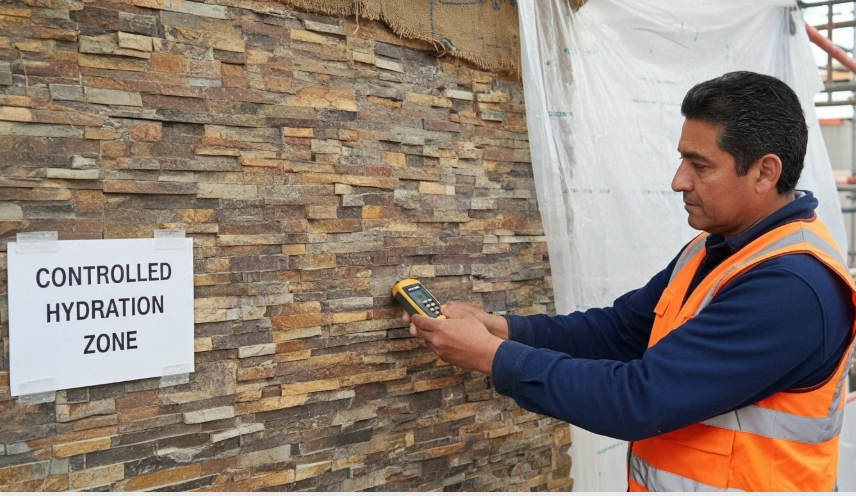
Managing efflorescence & stains is a primary requirement for maintaining project hand-over standards and avoiding expensive rework costs. When white mineral deposits appear on a newly finished facade, they indicate moisture issues that can lead to structural decay and legal disputes over workmanship. Ignoring these signs early in the construction phase often causes permanent surface damage and impacts a contractor’s bottom line and professional reputation.
This guide provides a technical protocol for identifying the chemistry behind mineral migration and preventing buildup during the initial 28-day curing cycle. We examine the role of hard water in surface discoloration and provide specific methods for removing mortar without etching the stone face. Following these steps helps teams manage moisture-rich environments to prevent mold and ensure exterior stone installations meet long-term durability specifications.
What is the White Powder on My Stone Wall? (The Chemistry of Efflorescence)
Efflorescence is a natural chemical indicator that moisture is migrating through the masonry system, dissolving soluble salts within the substrate and depositing them as crystals on the stone surface during evaporation.
How Soluble Salts Form White Residue
Efflorescence occurs when water-soluble salts—primarily calcium, potassium, or sodium—dissolve after moisture enters the wall structure. While natural stone itself is often chemically stable, the porous nature of both the stone and the mortar allows these dissolved minerals to travel toward the exterior face. Industry data confirms that backing materials and mortar joints are the primary sources of these salts, rather than the stone panels themselves.
- Minerals dissolve immediately upon contact with water infiltrating the wall system.
- The internal pore structure of the masonry acts as a conduit for mineral migration.
- Identifying the salt source is the first step in long-term remediation.
The Role of Moisture and Capillary Action
Water serves as the vehicle for mineral transport. Rainwater, ground moisture, or even internal condensation seeps into the installation through microscopic gaps or porous substrates. Capillary action then pushes this salt-saturated water toward the surface. As the liquid reaches the air-exposed face of the stone, the water evaporates, leaving behind the characteristic white, chalky powder.
This process remains active as long as two conditions are met: a supply of soluble salts and a recurring moisture source. Without addressing the water pathway, surface cleaning provides only a temporary aesthetic fix while the underlying chemical cycle continues.
Selecting Low-Alkali Materials for Prevention
Professional installers prevent efflorescence by specifying materials that limit salt availability from the start. We recommend using low-alkali portland cement for both the substrate and bonding layers. This reduces the concentration of salts available for dissolution. By shifting the focus to managing water infiltration through integrated design, we minimize the pathways that allow moisture to reach the salt-heavy mortar layers.
Sourcing high-quality natural stone also plays a role. Stacked stone panels with lower mineral reactivity—common in premium slate and quartzite—reduce the risk of the stone contributing to the residue. This proactive material selection is far more cost-effective than chemical remediation after the wall is complete.
Environmental Factors and Surface Evaporation
External conditions like humidity and temperature influence the severity of efflorescence. Cool, damp weather leads to slow evaporation, which allows more salts to reach the surface before they crystallize. This often makes efflorescence more visible during winter or in shaded exterior applications.
To combat these environmental triggers, exterior applications require proper flashing and moisture barriers. Applying a breathable, high-quality sealer to the stone face is also effective. A silane-siloxane based sealer reduces the stone’s permeability to liquid water while remaining vapor-permeable, ensuring internal moisture can escape without trapping salts behind the panel face and causing sub-florescence.
Why Does Moisture Trapped Behind the Stone Cause Staining?
Moisture acts as the primary transport mechanism for mineral salts and organic spores, converting internal substrate dampness into permanent surface discoloration through capillary migration.
Capillary Action and Mineral Migration
Natural stone panels feature an inherent porosity that facilitates capillary action, essentially pulling water through the material like a wick. When moisture enters the wall assembly from the substrate or through unsealed joints, it migrates toward the drier exterior face. During this transit, the water dissolves soluble salts and alkalis found within the setting mortar or the stone’s own mineral composition.
As the water reaches the surface and evaporates, it leaves these minerals behind. This process creates the white, chalky residue known as efflorescence. Continuous cycles of wetting and drying concentrate these mineral deposits, turning temporary surface dust into stubborn crystalline streaks that penetrate the stone’s texture and compromise the visual integrity of the installation.
Organic Growth in Damp Cavities
Stagnant moisture trapped behind stone panels creates a humid micro-environment that encourages biological colonization. Dark green or black staining frequently results from mold, algae, or lichen thriving in the damp space between the substrate and the stone veneer. This is particularly common in exterior applications where poor ventilation prevents the stone from “breathing” and shedding moisture.
Organic spores utilize the trapped humidity to take root within the stone’s pores. Without a high-quality moisture barrier or proper airflow, these organisms sustain their growth cycles, leading to deep-seated discoloration. Professional installers in 2026 prioritize moisture management systems to eliminate the water availability these organisms need to survive.
Substrate Chemical Reactions
Water serves as a catalyst for chemical interactions between the stone and the underlying mounting materials. Iron-rich stones, such as specific slate varieties, often oxidize when exposed to prolonged moisture, causing rust-colored orange or brown stains to bleed through to the surface. This oxidation is a permanent chemical change that simple cleaning cannot easily reverse.
- Leaching from non-compatible waterproofing membranes can introduce external dyes into the stone.
- Contaminated water sources during the mixing phase often deposit minerals that react with the stone’s chemistry.
- pH-neutral impregnating sealers block the microscopic pathways that transport these staining agents.
Hydrostatic Pressure and Drainage Failure
Inadequate drainage systems allow hydrostatic pressure to build up, forcing liquid water through the stone structure rather than allowing it to shed away. The absence of proper flashing or weep holes leads to water pooling behind the ledger panels. This forced penetration carries dirt, sediment, and mortar fines into the stone, causing grey or muddy discoloration.
Installing stone over a dedicated drainage mat or rainscreen system ensures that moisture exits the wall assembly quickly. This preventive measure protects the stone from deep-seated sediment stains that surface scrubbing rarely resolves. Proper engineering at the installation phase remains the most effective defense against moisture-driven aesthetic damage.
Pannelli contabili in pietra impilati di alta qualità realizzati direttamente in fabbrica
How to Prevent Efflorescence During the First 28 Days of Curing?
Efflorescence prevention relies on strict moisture control and chemical stabilization during the initial hydration phase to stop salt migration at the source.
Managing the first 28 days of a stone installation determines the long-term visual integrity of the wall. During this critical window, the mortar undergoes a complex chemical hydration process. If moisture evaporates too quickly or unevenly, it carries soluble salts to the surface of the natural stone, leaving behind the chalky white residue known as primary efflorescence. Successful prevention requires a technical approach to moisture retention rather than reactive cleaning after the salts have already crystallized.
Implement Proper Wet Curing Techniques
Wet curing maintains consistent moisture levels within the substrate to manage the movement of minerals. Field experts use wet burlap or plastic sheeting to cover the installation, ensuring the surface stays damp throughout the initial curing phase. This controlled environment promotes even hydration and prevents the rapid drying cycles that draw salts through the stone’s pores.
| Prevention Strategy | Technical Action | Industry Benefit |
|---|---|---|
| Moisture Management | Wet burlap or plastic sheeting cover | Prevents rapid salt-wicking evaporation |
| Chemical Bonding | Low-alkali cement + Fly ash additives | Binds free lime within the mortar mix |
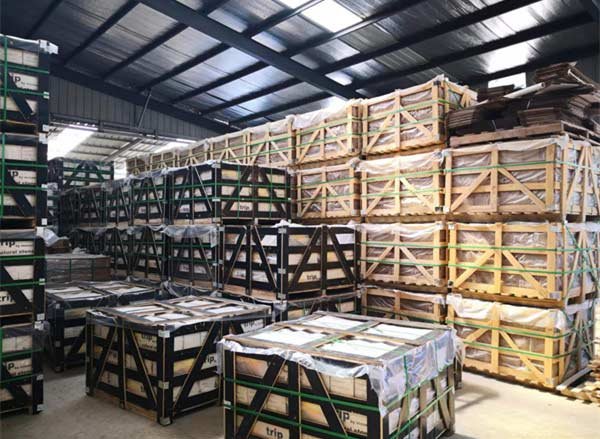
| Site Logistics | Palletized storage above soil level | Stops ground moisture absorption |
Optimize Mortar Mix and Water-to-Cement Ratios
Controlling the chemical composition of the mortar mix reduces the availability of free lime and excess water. Installers should reduce the water-to-cement ratio to the minimum required for workability. This limits the transport medium available for salts. Incorporating supplementary cementitious materials like fly ash binds free lime during the chemical reaction, while specifying low-alkali cements designed for high-end natural stone further minimizes risk.
- Mix mortar with the lowest possible water volume to limit mineral transport.
- Use fly ash to convert soluble calcium hydroxide into stable compounds.
- Select Type S mortar with low-alkali Portland cement for ledger stone applications.
Protect Materials from Ground Moisture and Weather
Preventing external water from entering the stone system before it fully cures stops the efflorescence cycle before it begins. Logistics at the job site matter; we recommend storing all natural stone panels on pallets to prevent them from wicking moisture from the soil. Cover unfinished masonry walls with waterproof tarps at the end of each workday to protect against unexpected rain, and ensure proper flashing exists behind the panels to redirect water away from the curing mortar.
Respect the Full 28-Day Hydration Timeline
Rushing the construction schedule often leads to premature sealing, which traps moisture and salts inside the wall. We advise waiting a minimum of 28 days before applying any stone sealants. This allows the substrate to reach maximum density and outgas naturally. During this window, monitor the surface for any emerging white powder and clean it immediately with a dry brush to prevent deep-seated crystallization. Final inspections should only occur once the structural concrete or masonry backing has fully settled.
Is Your Water Source the Problem? Why Hard Water Affects Stone Finish
Hard water mineral deposits act as a persistent aesthetic mask, transforming vibrant natural textures into dull, clouded surfaces through the accumulation of calcium and magnesium scale.
Mineral Accumulation and Surface Clouding
Hard water contains high concentrations of calcium and magnesium that settle into the intricate textures of natural stone panels. When mineral-rich water evaporates on the surface, it leaves behind white, chalky deposits known as scale. These minerals fill the natural pores of the stone, effectively masking the vibrant colors and unique textures of materials like slate and quartzite.
Regular exposure to untreated water creates a stubborn film that obscures the stone’s authentic finish. For B2B importers and distributors, recognizing this issue is vital, as end-users often mistake mineral clouding for stone fading. In reality, the high-quality minerals in Top Source Stone products, such as our California Gold or Arctic Golden series, remain UV stable; the “fading” is simply a layer of mineral buildup that requires proper maintenance to clear.
Chemical Etching on Porous Stone Varieties
The mineral content in hard water reacts differently depending on the stone’s chemistry. Marble and limestone series are particularly susceptible to etching when minerals bond with the stone’s calcium carbonate structure. This is more than a surface stain; it is a physical change in the stone’s face that can lead to permanent dulling.
- Rough Series panels provide significantly more surface area for mineral attachment, making cleaning difficult once scale takes hold.
- Etching on polished or honed surfaces often requires professional honing to restore the original finish.
- Porous stones like sandstone may absorb mineral-rich water deeper into the substrate, leading to internal crystallization.
Preventative Care and Maintenance for 2026
Effective stone management in 2026 focuses on proactive sealing and specialized tools to mitigate hard water damage. Applying a high-quality, breathable sealer creates a barrier that prevents minerals from penetrating the stone’s surface while allowing internal moisture to escape. This is especially critical for exterior applications in high-salinity or high-humidity regions where water quality fluctuates.
We recommend a simple maintenance protocol: use a squeegee after water exposure to remove moisture before it evaporates and leaves deposits. For routine cleaning, use pH-neutral stone cleaners specifically formulated to current industry standards. These cleaners break down light mineral build-up without damaging the stone’s integrity or stripping the protective sealant, ensuring the “Grande 10” inventory colors like Glacier White or Midnight Slate retain their architectural impact for years.
How to Safely Remove Mortar Stains Without Damaging the Stone Face?
Modern masonry protocols prioritize immediate wet-cleaning and alkaline-based chemical remediation over traditional aggressive acids to preserve the structural integrity and aesthetic of natural stone panels.
Immediate Removal of Wet Mortar During Installation
Effective cleanup begins the moment the stone touches the substrate. Waiting even a few hours allows cement binders to penetrate the microscopic pores of natural stone, often leading to a permanent haze that is difficult to remediate without aggressive chemicals. Installers must use a clean, damp sponge to wipe away excess mortar before it sets. It is vital to replace rinse water frequently; using saturated water merely smears a thin film of cement across the stone face, which becomes visible only after the wall dries.
- Wipe away wet mortar immediately using a clean sponge and plain water before it begins to cure.
- Change rinse water frequently to avoid spreading a thin film of cement across the stone surface.
- Use a soft-bristled brush to gently agitate textured areas in the Rough Series without scratching the natural face.
Safe Alkaline Cleaners for Dried Residue
If mortar has already cured, industry standards now favor alkaline-based solutions as the primary defense. Traditional muriatic or hydrochloric acids are increasingly avoided because they can cause permanent mineral oxidation (rusting) in certain slates or quartzite and cause irreversible etching in others. Specialized alkaline masonry cleaners break down the cementitious bond without reacting violently with the stone’s mineral composition.
| Metodo di pulizia | Target Material | Miglior caso d'uso |
|---|---|---|
| Wet-Sponge Wipe | All Natural Stone | During installation (Pre-cure) |
| Alkaline Gels | Quartzite, Slate, Sandstone | Cured mortar haze & residue |
| Poultice Paste | Porous Limestone, Marble | Deeply ingrained particles |
For vertical ledger stone applications, gel-based formulas are superior to liquid cleaners. These high-viscosity products stay on the vertical face longer, increasing chemical dwell time to effectively dissolve the mortar bond while preventing aggressive runoff from damaging the landscaping or lower wall sections. Always rinse the stone thoroughly with water after application to ensure the surface is neutralized.
Specialized Poultice Methods for Deep Stains
A poultice approach uses capillary action to draw ingrained mortar particles out of the stone’s microscopic pores. This is the preferred method for high-value architectural projects where surface scrubbing could alter the stone’s natural patina. By mixing a stone-safe cleaning agent with an absorbent powder—such as diatomaceous earth—into a thick paste, you create a targeted treatment for stubborn spots.
- Mix a stone-safe cleaning agent with an absorbent powder to create a thick paste for stubborn spots.
- Apply the paste directly to the stain and cover it with plastic to slow the drying process.
- Remove the dried paste once it has absorbed the contaminants, then clean the area with a pH-neutral solution.
Essential Testing and Material-Specific Precautions
Chemical reactions vary significantly based on mineralogy. Calcium-based stones, including marble and limestone, react instantly to acidic cleaners, resulting in permanent etching that requires professional honing to repair. Even with non-acidic cleaners, testing is a mandatory step. Apply the product to a small, inconspicuous area or a scrap piece from the current batch to verify that the chemistry does not cause discoloration or weaken the epoxy resins used in Top Source Stone panel assemblies.
- Test any cleaning product on a small, inconspicuous area or a scrap piece of stone before full-scale application.
- Avoid all acidic cleaners on calcium-based stones like marble and limestone to prevent surface etching.
- Consult Top Source Stone for a list of approved proprietary cleaners that protect the high-strength epoxy resin used in panel assembly.
Why Acidic Cleaners are Often the Enemy of Natural Stone Beauty?
Acidic cleaning agents trigger irreversible mineral depletion and structural degradation in natural stone, effectively stripping the aesthetic and financial value from a premium architectural installation.
The Chemical Process of Acid Etching
Natural stones like marble, limestone, and specific quartzite veins contain calcium carbonate and other reactive minerals. When an acidic substance contacts these minerals, a chemical reaction occurs that dissolves the stone surface. This process, known as etching, creates dull, cloudy spots that differ fundamentally from a simple surface stain. Etching represents physical damage to the stone’s structure rather than a layer of dirt.
- Acids rapidly dissolve the mineral binders in calcareous stones.
- Visible erosion and cloudy “etch marks” can appear within minutes of contact.
- Common household acids, including vinegar or lemon juice, are aggressive enough to cause permanent surface scarring.
Degradation of Protective Stone Sealers
High-performance sealants protect stacked stone panels by filling the pores and creating a hydrophobic barrier. Harsh acidic cleaners break down the molecular bonds of these sealers, rendering them useless. Once the sealer is stripped, the stone becomes highly vulnerable to moisture infiltration, deep-set organic staining, and the recurrence of efflorescence.
- Acidic chemicals compromise the integrity of the protective sealant layer.
- Exposed pores allow water and contaminants to penetrate the stone substrate.
- Maintenance standards in 2026 dictate re-sealing every 12 to 18 months to mitigate environmental damage.
Standardizing pH-Neutral Cleaning Protocols
Professional stone care relies on pH-neutral solutions that lift surface debris without altering the stone’s chemistry. These cleaners preserve the natural luster and color depth of materials like our Alaska Gray or Midnight Slate series. Routine maintenance using water and a soft-bristled brush provides the safest and most effective way to keep the stone clean while protecting the factory-grade finish.
- pH-neutral cleaners remove dirt without reacting with the mineral composition of the stone.
- Standardized cleaning protocols prevent the gradual dulling of polished or honed surfaces.
- Gentle mechanical agitation with soft brushes replaces the need for aggressive chemical intervention.
Risks to High-Strength Epoxy Adhesives
The structural integrity of stacked stone panels often depends on high-strength epoxy resins that bond individual stone pieces to the substrate. Concentrated acid exposure can weaken these chemical bonds. If the adhesive degrades, individual stone pieces may loosen or detach, creating a safety hazard and a costly repair scenario.
- Strong acids can cause the epoxy resin used in panel manufacturing to become brittle or delaminate.
- Compromised adhesives lead to “stone fallout” on vertical wall applications.
- Alkaline-safe degreasers serve as a safer alternative for removing oils without affecting the adhesive bond.
Preventing Algae and Mold in High-Moisture Exterior Applications
Effective biological prevention on natural stone facades requires a shift from reactive cleaning to integrated moisture management systems that combine structural drainage with nanotechnology-based surface protection.
Moisture Management and Drainage Infrastructure
Biological growth thrives where water stagnates. Preventing algae and mold starts at the substrate level by installing high-quality moisture-resistant barriers and flashing systems. These components direct liquid water away from the wall assembly, ensuring that the stone panels do not remain saturated after rain events. Modern building codes for 2026 emphasize water-managed drainage planes that facilitate rapid drying behind the veneer.
Proper drainage at the base of the exterior facade prevents rising damp, a common cause of localized humidity zones that encourage spore germination. We recommend integrating ventilation gaps to allow natural airflow. This airflow dries out the stone and the underlying substrate, neutralizing the damp environment required for mold colonies to take root in textured natural surfaces.
| Protection Layer | Standard Market Approach | Top Source Stone System |
|---|---|---|
| Sealing Technology | Standard topical silicone sealants | Nanotechnology-based hydrophobic penetrants |
| Joint Engineering | Traditional butt-joints (gaps likely) | CNC Diamond-blade Z-Shape interlocking |
| Resistenza all'umidità | Basic UV protection | ASTM-tested Freeze-Thaw & High Salinity Resistance |
Hydrophobic Sealants and Surface Protection
Advanced sealants create a chemical barrier that reduces water absorption, which is the primary fuel for organic growth. Nanotechnology-based hydrophobic sealants penetrate deep into the stone pores without blocking the material’s natural breathability. This is vital for natural slate and quartzite; if moisture becomes trapped behind a non-breathable sealer, it can cause stone spalling during freeze-thaw cycles.
- Apply sealants formulated for high-strength epoxy compatibility to ensure no reaction with the panel assembly.
- Maintain a consistent moisture-repellent surface by reapplying protective coatings based on environmental exposure.
- Use breathable sealants to prevent internal moisture accumulation within the wall cavity.
Maintenance Protocols and Soft Washing Techniques
Routine maintenance prevents organic spores from taking root in the deep textures of rough or pencil-style stone panels. We recommend establishing a seasonal schedule using soft washing techniques rather than high-pressure power washing. Excessive pressure often damages the interlocking Z-shape joints or weakens the epoxy bond between individual stones.
Use pH-neutral stone cleaners to remove surface debris. Acidic solutions degrade the natural finish of the stone and often leave it more porous, which actually encourages future algae growth. For localized spots, a soft-bristled brush and clean water will disrupt early-stage colonies before they spread across the facade. Regular removal of organic matter, such as fallen leaves or proximity to dense shrubbery, further limits the moisture traps that lead to mold development.
Conclusione
Managing moisture and adhering to proper curing protocols prevents efflorescence while maintaining the natural beauty of slate and quartzite panels. Choosing pH-neutral cleaners over acidic alternatives protects the stone face from damage during the maintenance process. These practices ensure that exterior walls remain durable and visually consistent for long-term commercial use.
Evaluate your current installation and cleaning workflows to confirm they meet these technical requirements for natural stone. Reach out to our team for a detailed material catalog or to discuss batch-specific inventory for upcoming large-scale developments.
Domande frequenti
Why is there a white powdery residue on my new stone wall?
This residue is known as efflorescence. It occurs when soluble salts within the mortar or backing materials are carried to the surface by moisture migration. As the water evaporates, it leaves the salt deposits behind. This is often a sign of excessive moisture within the wall system and can be minimized by using low-alkali portland cement and improving water drainage.
How to remove dried mortar from the face of a textured stone?
To remove dried mortar, first carefully scrape away large chunks using a wooden or plastic scraper to avoid scratching the stone. Apply a specialized masonry cleaner or a diluted muriatic acid solution (if the stone is acid-resistant), scrub with a stiff nylon brush, and rinse thoroughly with clean water. Always test a small, inconspicuous area first to ensure the stone does not discolor.
Is vinegar safe for cleaning natural stacked stone panels?
No, vinegar is not recommended for natural stone. The acetic acid in vinegar can etch and dull the surface of many natural stones, particularly those containing calcium carbonate like limestone, marble, or travertine. For safe maintenance, use a pH-neutral stone cleaner and a soft brush to protect the integrity and finish of the panels.
How to prevent mold and algae on exterior stone walls?
Prevention starts with moisture control. Ensure the wall has proper drainage, eliminate standing water, and trim back overhanging vegetation to increase sunlight and airflow. Applying a high-quality, breathable silane/siloxane-based sealer can significantly reduce water absorption into the stone, making the surface less hospitable to organic growth.
Can I power wash a stone wall to remove white stains?
While power washing can remove surface stains, it should be done with extreme caution. High pressure can damage mortar joints and force water deep into the stone, which may actually worsen efflorescence later. Use a low-pressure setting (below 1,000 PSI) and a wide fan tip, or ideally, use a stiff brush and a dedicated efflorescence remover for a safer and more effective result.