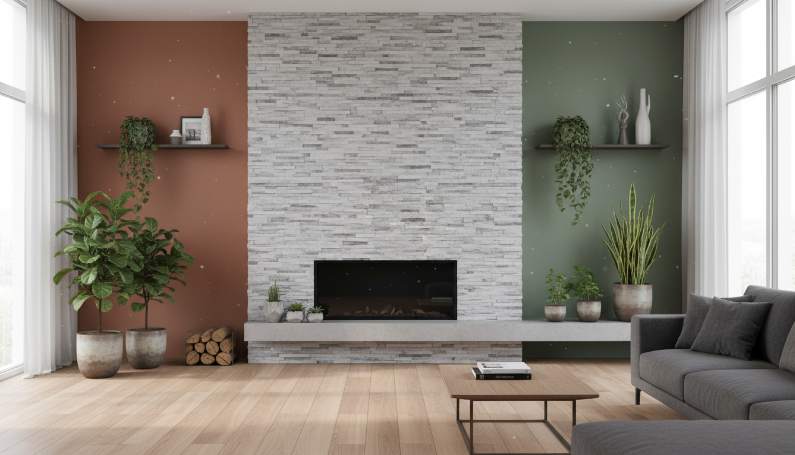
Grigio attuale & Le tendenze Silver determinano gran parte del ROI a lungo termine nelle moderne murature commerciali e residenziali, dove una scarsa selezione dei materiali porta a una rapida obsolescenza stilistica e a costosi progetti di retrofitting. La scelta della finitura in pietra sbagliata spesso si traduce in un ambiente freddo e sterile che non riesce a soddisfare le aspettative dei clienti in termini di estetica di fascia alta, danneggiando potenzialmente la reputazione di un’azienda e il canale di riferimento. Calcolare male la riflettività della luce della quarzite argentata può rovinare l’atmosfera di una stanza, costringendo i progettisti a spendere di più in soluzioni di illuminazione correttive e rielaborazioni elettriche nelle fasi avanzate del ciclo di costruzione.
Questa guida analizza l'applicazione tecnica del grigio e dell'argento pietra del registro, concentrandosi su come bilanciare le trame di quarzite con tavolozze di colori specifiche dai toni freddi per prevenire la piattezza visiva. Confrontiamo il divario di lucentezza tra Pietra naturale e alternative artificiali fornendo al contempo una struttura per l’integrazione di materiali organici come il legno di recupero per aggiungere il calore necessario. Seguendo questi selezione e installazione della pietra standard, sviluppatori e progettisti creano superfici durevoli e ad alte prestazioni che mantengono la loro integrità visiva e il loro valore di mercato per decenni.
Perché Gray è il “Donatore universale” del design moderno dei camini?
La pietra grigia naturale funge da ancoraggio architettonico strategico, fornendo la stabilità visiva necessaria per supportare lo spostamento del settore del 2026 verso tavolozze interne più calde e biofile.
Adattabilità alle tavolozze di colori caldi e terrosi del 2026
Mentre le tendenze degli interni attualmente gravitano verso “calore,” grigio pietra del registro rimane una componente fondamentale nel kit di strumenti del progettista. Agisce come stabilizzatore visivo se abbinato ad accenti di tendenza del 2026 come terracotta, verde muschio e marrone cioccolato. A differenza della vernice grigia piatta, che può sembrare clinica, pannelli in pietra naturale dall'inventario Top Source Stone riflettono la luce ambientale in modo diverso. Questo gioco di luci organico consente alla pietra di armonizzarsi sia con gli spazi minimalisti dai toni freddi che con gli stili di arredamento più nuovi e più terreni.
- I progettisti utilizzano il grigio come base sicura e ad alto investimento per i bordi dei caminetti, garantendo che l'installazione rimanga rilevante man mano che i colori degli accessori stagionali si evolvono.
- I pigmenti grigi naturali colmano il divario tra il modernismo industriale e il “calore organico” richiesto dagli attuali mercati al dettaglio B2B.
- Il controllo in fabbrica garantisce che i lotti di Alaska Grey o Carbon Black mantengano un'uniformità di tonalità del 95%, evitando l'aspetto irregolare che spesso rovina i design a tavolozza mista.
Ombreggiatura dimensionale con serie Rough e Pencil
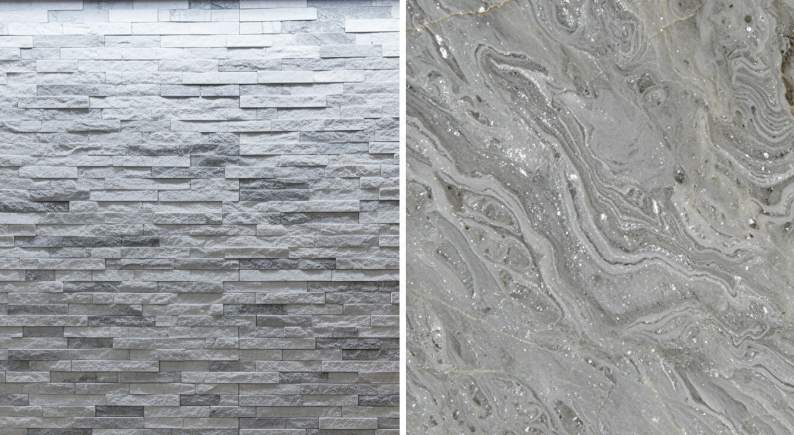
La sfida tecnica principale con il grigio monocromatico è evitare a “Piatto” O “morto” aspetto. Risolviamo questo problema attraverso la struttura fisica. La nostra serie Rough utilizza texture naturali a faccia divisa per creare ombre drammatiche che cambiano quando il sole si muove o quando viene regolata l'illuminazione del camino. Per applicazioni più contemporanee, la serie Pencil offre un flusso lineare e moderno che aggiunge dettagli sofisticati senza richiedere contrasto cromatico.
Variando la profondità della pietra, fino a 3,5 cm nella nostra serie premium, il camino diventa un punto focale tattile. Questa profondità architettonica garantisce che anche un’installazione monocolore eviti la sensazione clinica delle alternative artificiali. Precisione della lama diamantata CNC nel nostro I pannelli a forma di Z e a forma di S creano una finitura senza soluzione di continuità che enfatizza queste ombre naturali piuttosto che le linee di malta visibili.
Longevità dei pigmenti naturali sotto esposizione al calore
Grigio naturale la pietra mantiene la sua integrità visiva per decenni di camino uso, un'impresa che i materiali sintetici o verniciati non possono replicare. I pannelli in ardesia naturale e quarzite contengono minerali intrinseci che resistono allo sbiadimento dovuto alle alte temperature e all'esposizione ai raggi UV. Artificiale “grigio” le pietre spesso fanno affidamento su resine o pigmenti che possono sviluppare una tinta gialla o una lucentezza simile alla plastica se sottoposti a stress termico costante.
- Fonte principale Quarzite di pietra si colloca al 7° posto della scala Mohs, garantendo un'estrema resistenza a graffi e scheggiature durante l'installazione del focolare.
- I minerali naturali forniscono stabilità UV intrinseca, garantendo che i camini dei camini esterni o le pareti focali interne non perdano la loro capacità “argento” O “carbone” profondità nel tempo.
- Le proprietà di bassa manutenzione consentono alla pietra di rimanere vibrante anche con la semplice rimozione della polvere, eliminando la necessità della frequente riverniciatura richiesta dalle imitazioni di gesso o cemento.
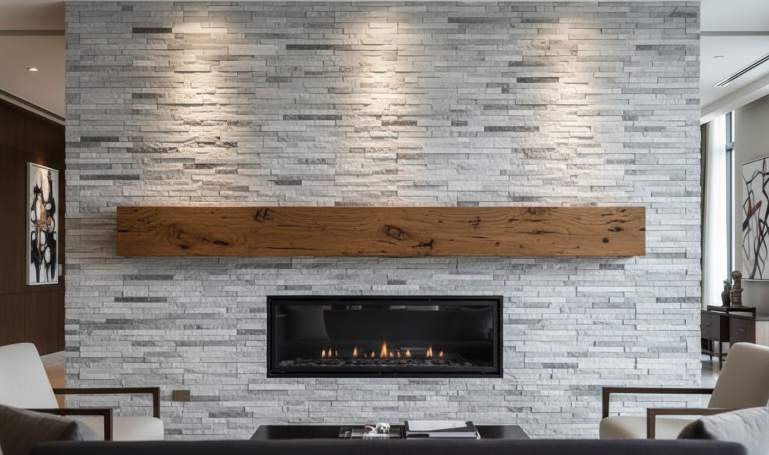
Bilanciamento delle texture in quarzite argentata con tavolozze di colori dai toni freddi
Il design efficace del 2026 si allontana dal monocromatico clinico utilizzando specifiche profondità di vernice dai toni freddi per estrarre carbone nascosto e vene minerali blu dalla quarzite argentata naturale.
I designer utilizzano vernice blu polveroso e grigio tempestoso per estrarre le sottili venature blu e carbone dall'argento pannelli in pietra, come la nostra quarzite grigia Alaska. Queste tavolozze specifiche e fresche impediscono alla quarzite di sembrare clinica aggiungendo strati morbidi e atmosferici alla stanza. Mentre il mercato più ampio esplora i toni più caldi della terra, gli schemi monocromatici di grigio rimangono un punto fermo per la fascia alta lobby commerciali e pareti caratteristiche residenziali dove a “lusso tecnico” l'estetica è la priorità.
| Serie di pietra | Lucentezza della vernice consigliata | Obiettivo visivo |
|---|---|---|
| Serie grezza (3,5 cm) | Piatto/Ultra opaco | Massimizza il drammatico gioco di ombre sulle texture a faccia divisa. |
| Piatto standard (1,5 cm) | Guscio d'uovo/Raso | Crea un sottile contrasto tra lucentezza e parete in pietra naturale levigatezza. |
| Forma a Z ad incastro | Finitura opaca | Mimetizza i giunti ed enfatizza la finitura architettonica senza soluzione di continuità. |
Coordinazione delle texture tra la pietra grezza e le finiture opache delle pareti
L'interazione tra la profondità fisica di pietra accatastata e la lucentezza della vernice circostante determina il successo visivo dell'installazione. Consigliamo di abbinare la quarzite della serie Rough con finiture di vernice piatte o opache per consentire alle ombre drammatiche della pietra di rimanere il punto focale. Il corretto bilanciamento della trama impedisce il “affaticamento della trama” spesso si trovano in spazi moderni sovraprogettati. Acquistando dalla stessa cava, garantiamo che la texture a faccia divisa mantenga un'uniformità di tonalità del 95%, il che è fondamentale quando si utilizzano vernici opache che non nascondono bene le incongruenze di colore.
- Utilizza i bordi della lama diamantata CNC per garantire adattamenti stretti e senza soluzione di continuità che eliminano gli spazi visibili del substrato.
- Distribuire “Coerenza della cava dello stesso lotto” per evitare l'aspetto irregolare che sconvolge le tavolozze dei colori dai toni freddi.
- Applicare finiture opache alle pareti adiacenti per assorbire la luce, rendendo il la pietra è naturale lucentezza pop senza abbagliamento.
Integrazione di accenti metallici per unire pietre e tavolozze di colori
Gli elementi metallici fungono da strumento di transizione per collegare la quarzite argentata organica con le vernici contemporanee dai toni freddi. L'hardware in nichel spazzolato e peltro fornisce un ponte riflettente di medio livello tra la superficie in pietra opaca e l'ambiente circostante verniciato. L’incorporazione di strisce di finitura metalliche all’interno del layout in quarzite aggiunge uno strato di precisione che completa il passaggio del 2026 verso il lusso tecnico. Questi metalli dai toni freddi rafforzano il “argento” identità della quarzite senza introdurre il calore conflittuale dell'ottone o dell'oro, mantenendo l'integrità architettonica del design.
Pietra impilata premium per l'eccellenza architettonica
Come prevenire “Planarità” nei layout monocromatici in pietra grigia?
La profondità architettonica nella pietra monocromatica si basa sull'interazione tra spessore fisico e ombre direzionali per prevenire la stagnazione visiva comune nei prodotti sintetici uniformi.
Gli architetti evitano la stagnazione visiva selezionando pannelli in pietra con notevoli variazioni di spessore. Utilizzando Top Pannelli della serie Rough di Source Stone, che raggiungono spessori fino a 3,5 cm (1,35 pollici), produce effetti superficiali spettacolari che cambiano con il movimento del sole durante il giorno. L'alternanza tra queste texture profonde e le sezioni più lisce della serie Flat rompe il piano visivo senza forzare un cambiamento nella tavolozza dei colori. Questo rilievo fisico garantisce che il camino rimanga un elemento tridimensionale piuttosto che un rivestimento murale piatto.
| Specifica del profilo | Intervallo di spessore | Dimensionalità visiva |
|---|---|---|
| Serie piatta standard | 1,0 cm – 2,5 cm | Texture sottile per interni minimalisti. |
| Serie Premium ruvida | 2,5 cm – 3,5 cm | Gioco di ombre in altorilievo; impedisce la planarità. |
| Interblocco a forma di Z | Taglio di precisione CNC | Mimetizza i giunti per una facciata continua. |
Implementare l'illuminazione direzionale per la definizione della texture
Una corretta illuminazione rivela i grani intricati e le fessure che scompaiono con l'illuminazione ambientale standard. L'installazione di luci wall-washing o radenti nella parte superiore o alla base dell'elemento enfatizza il rilievo 3D dell'ardesia naturale o della quarzite. Consigliamo strisce LED diffuse standard 2026 per fornire un'illuminazione morbida e variabile che imita i cicli di luce naturale. Evitare i proiettori diretti sopra la testa impedisce di sbiadire le sottili sfumature di grigio inerenti all'alta qualità Pietra naturale.
- Utilizza LED ad alto indice di resa cromatica (CRI) per garantire che le sfumature dell'argento metallizzato appaiano vivide.
- Posizionare gli apparecchi da 6 a 12 pollici dalla parete per massimizzare la “pascolo” effetto.
- Utilizza controlli dimmerabili per regolare l'intensità dell'ombra in base all'ora del giorno.
Unisci variazioni di lotti naturali e finiture superficiali
La miscelazione di lotti e finiture di pietra previene l'aspetto clinico e ripetitivo comune nelle alternative sintetiche grigie. Le squadre sul campo dovrebbero mescolare i pannelli provenienti da più casse durante l'installazione per distribuire le striature minerali e le variazioni di tono grigio organico in modo uniforme sul layout. L'inclusione di un mix di finiture levigate, satinate e a spacco naturale crea sottili differenze di riflessione della luce su tutta la superficie. Il sistema ad incastro a forma di Z Top Source Stone nasconde le cuciture, focalizzando l'occhio sul il movimento della pietra piuttosto che l’installazione griglia.
Incorpora accenti di materiali caldi per l'equilibrio visivo
La rottura del grigio monocromatico con materiali contrastanti fornisce la tensione necessaria affinché la disposizione della pietra risalti. L'abbinamento della pietra grigia dai toni freddi con mensole in legno di recupero introduce calore e consistenza organici che ammorbidiscono la sensazione industriale della quarzite argentata. L'integrazione di sottili strisce di metallo o finiture riflettenti tra le sezioni di pietra aggiunge un tocco moderno al layout. Il bilanciamento delle strutture rocciose robuste con superfici lisce e verniciate opache nelle aree adiacenti rende il pietra naturale profilo più evidente.
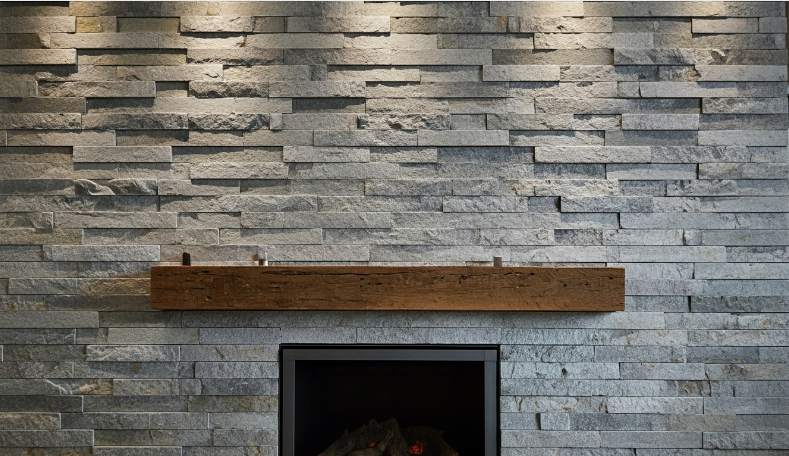
Alternative alla pietra grigia naturale e al grigio artificiale: il divario di lucentezza
I pannelli in vera quarzite e ardesia possiedono una struttura cristallina multidimensionale che mantiene la profondità visiva sotto la moderna illuminazione a LED ad alta intensità, una proprietà fisica che pigmenta resina e base di cemento “colto” pietre non può replicarsi.
Profondità minerale organica rispetto alle superfici in resina pigmentata
La pietra grigia naturale contiene variazioni minerali intrinseche che producono una lucentezza unica e non ripetibile. Questa profondità ottica deriva dal modo in cui la luce penetra negli strati superiori della pietra e si riflette sui piani di clivaggio interni. Al contrario, artificiale “colto” le pietre fanno affidamento su pigmenti superficiali e resine che spesso appaiono opache o “Piatto” se visualizzato con sistemi di illuminazione a LED 2026 ad alta intensità. La composizione monoingrediente di Vera pietra assicura che il colore e la struttura rimangano coerenti per tutto lo spessore del pannello, fornendo un peso visivo che manca alle opzioni sintetiche.
- Gli strati minerali naturali creano una superficie che rifrange la luce che cambia con l'angolo di osservazione.
- I prodotti ingegnerizzati utilizzano a “superficiale” processo di colorazione, rendendo visibili scheggiature o graffi.
- L'assenza di schemi ripetitivi in Pietra naturale elimina il “effetto carta da parati” comune nelle alternative stampate.
Permanenza del colore a lungo termine in ambienti con raggi UV elevati
La quarzite e l'ardesia naturali mantengono indefinitamente i toni grigi originali. Mentre le alternative ingegnerizzate spesso soffrono di degradazione dei pigmenti se esposte alla luce solare, pannelli in pietra naturale possiedono stabilità UV intrinseca. Ciò impedisce lo sbiadimento o l'ingiallimento comunemente riscontrati nelle imitazioni a base di cemento. Le specifiche architettoniche del 2026 danno priorità a questa longevità, favorendo materiali che mantengano la loro integrità estetica senza ritocchi chimici o macchie periodiche.
| Metrica delle prestazioni | Pietra impilata naturale | Artificiale “Finto” Calcolo |
|---|---|---|
| Resistenza UV | Indefinito; il colore è molecolarmente stabile. | Moderare; i pigmenti sbiadiscono in 3-5 anni. |
| Stabilità termica | Non combustibile; assorbe/irradia calore. | Può ammorbidire o emettere COV a temperature elevate. |
| Durezza superficiale | Mohs 6-7 (quarzite); Resistente ai graffi. | Moh 3-4; Incline all'abrasione superficiale. |
Stabilità termica e sicurezza per i moderni caminetti
Vero la pietra fornisce resistenza al calore e sicurezza superiori, che lo rendono la scelta preferita per applicazioni ad alta temperatura rispetto ai materiali compositi. Pietra naturale è naturalmente incombustibile e resiste a cicli termici intensi senza fessurarsi o rilasciare composti organici volatili (COV). Le pietre ingegnerizzate che utilizzano leganti in resina possono ammorbidire o emettere odori se installate troppo vicino a inserti per caminetti a gas o elettrici ad alto rendimento. La struttura densa della pietra grigia naturale agisce come un'efficiente massa termica, assorbendo e irradiando il calore in modo più efficace rispetto ai gusci artificiali leggeri.
Texture autentica e apprezzamento del valore di mercato
Usando genuino pannelli in pietra aumenta il patrimonio immobiliare, poiché l’industria riconosce i materiali naturali come un miglioramento premium rispetto ai sostituti sintetici. Le valutazioni immobiliari nel 2026 valutano costantemente installazioni in pietra naturale superiore rispetto alle controparti artificiali grazie alla loro durata e al fascino senza tempo. La sensazione tattile unica della spaccatura naturale le superfici in pietra regalano un'autentica esperienza sensoriale che plasma i prodotti non può corrispondere. Pannelli di pietra impilati di Top Source Stone offre il lusso della muratura a letto intero con un leggero sistema ad incastro che semplifica l'installazione professionale senza sacrificare la “Vera pietra” premio.
- La precisione della lama diamantata CNC garantisce un incastro senza soluzione di continuità per una finitura professionale.
- L'approvvigionamento diretto dalle cave garantisce la coerenza dello stesso lotto per progetti commerciali su larga scala.
- La resistenza al gelo-disgelo garantisce prestazioni sia nei climi interni che esterni del Nord America.
Miscelazione di pietra grigia con rivestimenti in legno di recupero per il calore
L'abbinamento della pietra grigia naturale ad alta struttura con le sfumature ambrate organiche del legno recuperato crea un punto focale architettonico equilibrato che risolve il problema “clinico” si sentono spesso associati alle moderne tavolozze monocromatiche.
Bilanciamento delle texture organiche con i pannelli in pietra della serie Rough
La profondità visiva nel design del caminetto dipende dall'interazione tra luce e ombra. La nostra serie grezza pannelli in pietra utilizzano una finitura naturale a faccia divisa con profondità che vanno da 1 a 1,75 pollici, creando recessi drammatici che i prodotti standard con impiallacciatura sottile non possono replicare. Questa superficie ruvida sostiene il peso visivo di una pesante mensola in legno di recupero, garantendo che la transizione tra la facciata in pietra e la trave di legno sembri intenzionale piuttosto che incollata. Utilizzo di vera ardesia o quarzite anziché a base di cemento “falso” alternative preserva l'autentica variazione tattile necessaria per completare le venature irregolari del legno invecchiato.
- La serie Rough produce varie linee d'ombra che enfatizzano la presenza tridimensionale del camino.
- Le texture naturali a faccia divisa forniscono un contrasto visivo ad alto attrito con le superfici levigate e esposte alle intemperie del legno recuperato.
- Autentico i pannelli in pietra mantengono motivi minerali unici su tutta la parete, impedendo il “ripetere lo schema” difetto riscontrato nei prodotti stampati.
Ammorbidire i toni freddi del grigio attraverso patine di legno stagionato
La pietra grigia funge da sofisticata tela neutra, ma l’uso eccessivo di toni freddi può rendere lo spazio abitativo poco invitante. L'integrazione di una mensola in legno di recupero introduce carattere storico e calore attraverso la patina naturale marrone e oro del legno. Questo approccio di materiali misti consente alla quarzite Alaska Grey o all'ardesia Midnight di fungere da ancoraggio moderno mentre il legno fornisce il necessario “Calore” alla temperatura del colore. Perché Pietra naturale offre stabilità UV intrinseca, lo sfondo grigio rimane coerente per decenni, fornendo un contrasto permanente con la trama in evoluzione del legno di recupero.
- Grigio pannelli in pietra evidenziare le venature e i segni storici di angoscia delle mensole in legno dei fienili.
- Le selezioni di pietra argento e carbone forniscono un confine ad alto contrasto che rende i toni caldi del legno “pop” contro il muro.
- La combinazione si allinea con le tendenze biofile del 2026 fondendo elementi minerali e botanici in un unico piano verticale.
Installazione semplificata per rivestimenti di camini in materiali misti
L'ingegneria moderna semplifica il processo di montaggio del legname pesante su pareti rivestite in pietra. Il nostro sistema di pannelli a Z ad incastro utilizza la precisione della lama diamantata CNC per creare una soluzione senza soluzione di continuità “maschio-femmina” connessione, consentendo alla pietra di avvolgersi saldamente attorno ai punti di montaggio della mensola senza giunti verticali visibili. Questi pannelli pesano tra 8 e 13 libbre per piede quadrato, rendendolo possibile installare la pietra su un muro standard borchie che supportano anche il peso della mensola. Inoltre, il non combustibile la natura della pietra naturale la rende la scelta tecnicamente superiore per la zona immediatamente circostante il focolare, preservando la cappa in legno da un'eccessiva esposizione al calore.
- I pannelli a Z ad incastro eliminano la necessità di complessi lavori di muratura o di linee di malta visibili vicino al bordo della mensola.
- Il profilo leggero dei pannelli elimina la necessità di basamenti strutturali specializzati nelle ristrutturazioni residenziali.
- Gli angoli a L abbinati garantiscono una finitura professionale e avvolgente sui bordi del camino e sulla cappa del camino.
Conclusione
La pietra registro naturale grigia e argento offre un sofisticato equilibrio tra estetica moderna e struttura geologica grezza che le alternative sintetiche non riescono a eguagliare. La quarzite e l'ardesia di alta qualità garantiscono stabilità e profondità del colore durature, garantendo che il camino rimanga un elemento architettonico vibrante per anni. Dare priorità al genuino pietra e precise tecniche di posa preserva l'integrità strutturale e il valore visivo della proprietà.
Consulta il nostro attuale inventario di opzioni in argento e pietra grigia per identificare la soluzione migliore per i tuoi requisiti di progettazione specifici. Contatta il nostro team per richiedere un catalogo dei materiali o discutere i dettagli sull'approvvigionamento di massa per il tuo prossimo progetto.
Domande frequenti
La pietra grigia impilata sta passando di moda?
Grigio la pietra impilata sta attualmente passando da un design dominante base per un accento secondario. Pur rimanendo funzionale neutro, le tendenze moderne per il 2026 mostrano uno spostamento significativo verso tavolozze più calde e terrose tra cui terracotta, marrone cioccolato e verde muschio. Per mantenere attuale la sensazione della pietra grigia, è meglio utilizzarla in applicazioni multi-strutturate e stratificate piuttosto che in superfici piatte e monocromatiche.
Di che colore la mensola del camino sembra migliore con la pietra di registro argentata?
Per un look sofisticato ed equilibrato, una mensola in noce naturale o rovere di recupero fornisce il calore necessario per contrastare le sfumature fredde della pietra argentata. Se preferisci un'estetica moderna e ad alto contrasto, una mensola in acciaio nero opaco o legno tinto carbone crea un punto focale architettonico nitido che enfatizza la struttura cristallina della pietra.
Come evitare che la pietra grigia guardi “sporco”?
Per evitare che la pietra grigia appaia fangosa o sporca, applicare appositamente un sigillante penetrante di alta qualità progettato per la pietra naturale per impedire a fuliggine e polvere di entrare nei pori. La manutenzione regolare dovrebbe includere la spolveratura asciutta in microfibra e l'uso di detergenti per pietre a pH neutro. Inoltre, assicurando che l'illuminazione abbia una temperatura di colore da neutra a fredda (3000K+) si evita che la pietra assuma una tonalità gialla o artificiale artificiale. “sudicio” lancio.
La migliore illuminazione d'accento per caminetti in pietra dai toni freddi?
L'illuminazione ottimale per la pietra dai toni freddi è un LED bianco neutro nell'intervallo da 3000K a 3500K. Questa temperatura evidenzia i riflessi naturali dell'argento e del blu all'interno della pietra senza rendere lo spazio asettico. Pascolo sui muri” gli infissi - luci da incasso posizionate a 6-12 pollici dalla facciata di pietra - sono l'industria standard per creare profondità e accentuare la struttura robusta del registro o della pietra impilata.
Cos'è più resistente: ardesia grigia o quarzite grigia?
La quarzite grigia è significativamente più resistente dell'ardesia grigia. La quarzite è una roccia metamorfica molto più dura che è altamente resistente ai graffi, al calore e all'attacco acido. Sebbene l'ardesia offra una struttura a spacco naturale unica, è un materiale più morbido incline a “scheggiatura” (sfaldamento) e scheggiature nel tempo, soprattutto in ambienti con caminetti ad alto traffico o ad alto utilizzo.