Calore & La sicurezza antincendio rimane il parametro prestazionale più critico per i rivestimenti dei caminetti, dove un singolo guasto del materiale può portare a violazioni delle norme edilizie o a costose riparazioni strutturali. Sebbene la finta pietra offra un’alternativa leggera, la sua dipendenza da leganti cementizi e resine sintetiche crea una vulnerabilità ai cicli termici che la pietra naturale semplicemente non condivide. Per sviluppatori e architetti, ignorare la fisica del trasferimento di calore spesso provoca fratture sottili, delaminazione e rischi di responsabilità a lungo termine che superano qualsiasi risparmio sui costi iniziali.
Questa ripartizione tecnica confronta la stabilità termica dei minerali naturali con pietra fabbricata per aiutarti a selezionare materiali che resistono a costanti sbalzi di temperatura. Analizziamo il perché finta pietra è soggetto a fessurazioni dovute all'espansione, ai rischi di rilascio di gas chimici in spazi confinati e agli specifici standard NFPA richiesti per garantire un'installazione sicura e conforme per focolari ad alta efficienza.
La tua pietra può sopportare il calore? Forza di legame tra minerali naturali e cemento
I cedimenti strutturali nei rivestimenti dei caminetti derivano quasi esclusivamente dalla mancata corrispondenza tra la dilatazione termica degli adesivi a base cementizia e il substrato, rendendo speciali rivestimenti epossidici minerali naturali l'unica scelta praticabile per zone di calore ad alta intensità.
Le applicazioni nei camini sottopongono i materiali di superficie a rapidi cicli termici. La malta standard applicata sul campo spesso fallisce perché manca del modulo elastico necessario per gestire l'espansione differenziale tra la pietra e muro. Risolviamo questo problema utilizzando una resina epossidica brevettata ad alta resistenza per incollare il nostro Pietra naturale pezzi al substrato del pannello. Questo legame chimico rimane permanente, anche se esposto al calore radiante delle moderne unità a gas ad alta efficienza.
Adesivi epossidici ad alta resistenza rispetto alla malta tradizionale
La produzione di questi pannelli a temperatura e pressione controllate garantisce che ogni unità soddisfi i requisiti di integrità strutturale del 2026. A differenza dei fragili legami cementizi che si rompono durante gli sbalzi termici, le nostre formulazioni epossidiche forniscono sufficiente flessibilità per assorbire movimenti minori. Ciò impedisce il “pietra” problemi comuni nelle murature manuali in cui i singoli pezzi si staccano man mano che la malta si asciuga e perde la presa nel tempo.
| Metrica delle prestazioni | Pietra naturale di prima qualità | Finta Pietra a base cementizia |
|---|---|---|
| Agente di legame | Epossidico industriale ad alta resistenza | Malta cementizia Portland |
| Dilatazione termica | Flessibile/capacità di assorbimento | Rigido/incline a fessurazioni |
| Metodo di produzione | Precisione CNC/Incollato in fabbrica | Applicazione manuale sul campo |
| Valutazione della sicurezza antincendio | Classe A (ASTM E84) | Variabile (MSV standard) |
Resilienza termica dei minerali naturali rispetto ai compositi cementizi
I minerali naturali come la quarzite e l'ardesia sono intrinsecamente non combustibili. Hanno resistito milioni di anni al calore e alla pressione geologica, quindi non reagiscono all’ambiente di un caminetto. La pietra finta, tuttavia, si basa sul cemento e sui coloranti artificiali. Questi materiali spesso soffrono di degradazione dei pigmenti se utilizzati in prossimità di fonti di calore intense, con conseguente scolorimento o scolorimento a chiazze. Il nostro 100% Vera pietra la composizione garantisce che la consistenza e il colore rimangano permanenti, indipendentemente dalla frequenza dei cicli del sistema di riscaldamento.
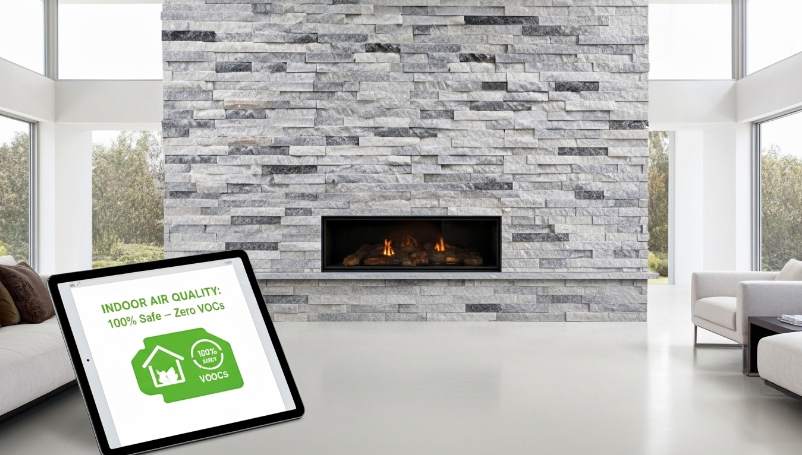
- Zero emissione di gas: I minerali naturali non rilasciano COV o odori chimici quando riscaldati, a differenza di alcune alternative sintetiche ad alto contenuto di resina.
- Stabilità ai raggi UV: La stabilità minerale intrinseca significa che l’esposizione diretta alla luce e al calore ad alta intensità non altera l’aspetto della pietra.
- Densità minerale: L'elevata massa termica permette alla pietra di immagazzinare ed irradiare il calore dolcemente, migliorando l'efficienza della zona caminetto.
Prestazioni strutturali nei caminetti e nelle zone ad alto calore
L’incollaggio controllato in fabbrica elimina l’errore umano riscontrato nella muratura manuale pietra per pietra. Utilizzando il taglio di precisione pannelli con forma a Z ad incastro o a forma di S, riduciamo al minimo i giunti visibili e garantiamo una perfetta aderenza che protegge il substrato sottostante dall'esposizione al calore. I test confermano che questi pannelli rimangono stabili e sicuri anche se sottoposti ai costanti sbalzi di temperatura dei moderni sistemi di riscaldamento.
Forniamo anche angoli a 90 gradi prefabbricati abbinati per ogni modello. Ciò garantisce che la struttura e il colore rimangano sincronizzati durante le transizioni delle pareti, fornendo una finitura avvolgente e architettonica professionale. Per gli importatori B2B e i project manager, ciò significa minori costi di manodopera in loco e una significativa diminuzione della responsabilità post-installazione correlata al distacco della pietra o alla fessurazione termica.
Dilatazione termica: perché la pietra finta è soggetta a crepe attorno ai focolari
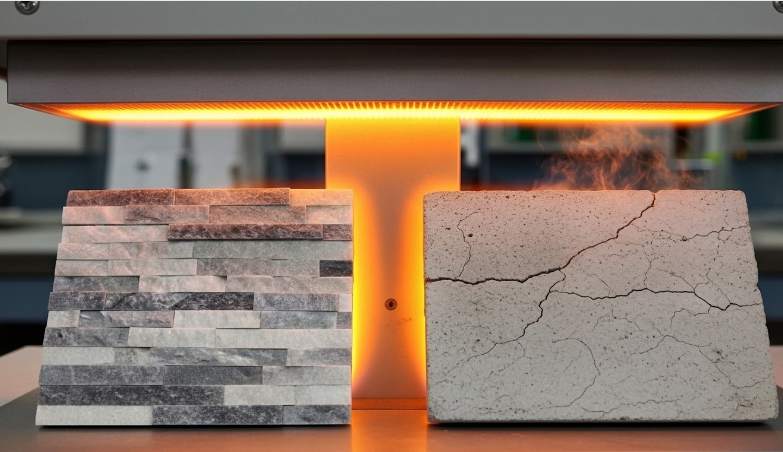
I rivestimenti in pietra sintetica spesso falliscono perché il coefficiente di dilatazione dei leganti cementizi non può eguagliare gli intensi cicli termici di un focolare, portando a fratture strutturali irreversibili.
Coefficienti di dilatazione differenziale nei compositi cementizi
La finta pietra è costituita da una miscela di cemento, aggregati leggeri e pigmenti chimici. Questi componenti reagiscono male ai gradienti termici estremi che si riscontrano in prossimità dei focolari. La pietra sintetica si espande e si contrae a una velocità diversa rispetto al substrato sottostante del caminetto, il che crea uno stress di taglio significativo sulla linea di giunzione. Nel corso del tempo, queste forze causano il pietra da delaminare o staccare dal muro interamente.
| Metrica delle prestazioni | Pietra finta (a base di cemento). | Pietra impilata naturale |
|---|---|---|
| Tasso di dilatazione termica | Alto/irregolare (incline al taglio) | Basso/Lineare (corrisponde al substrato) |
| Struttura dei pori interni | Porosità elevata (rischio vapore) | Alta densità (stabile ai minerali) |
| Integrità strutturale a 1000°F | Fragile (i leganti si degradano) | Stabile (minerali resistenti al fuoco) |
I leganti a base cementizia perdono la loro integrità strutturale se sottoposti a ripetuti cicli di riscaldamento e raffreddamento. Ciò porta a fratture superficiali visibili e sgretolamento interno. Al contrario, pannelli in pietra naturale della collezione 2026 propongono una struttura minerale monolitica. Ciò consente loro di gestire gli sbalzi termici senza la delaminazione interna comune nelle alternative prodotte.
Intrappolamento dell'umidità e pressione del vapore nella pietra ricostruita
La natura porosa di pietra fabbricata consente all'umidità microscopica di depositarsi all'interno del materiale. Quando il camino è attivo, l'acqua intrappolata si trasforma in vapore. Il rapido riscaldamento dell'umidità intrappolata crea una pressione di vapore interna che costringe la finta pietra a rompersi dall'interno verso l'esterno, un processo spesso accelerato nei climi più freddi durante la fase iniziale “riscaldamento” fase.
- I pannelli in ardesia naturale e quarzite possiedono una porosità molto inferiore, il che riduce significativamente il rischio di fessurazioni indotte dal vapore.
- I rapporti di settore del 2026 collegano i materiali finti ad alta porosità all’aumento dei costi di manutenzione a causa dei ricorrenti danni dovuti al calore e alla scheggiatura.
Degrado strutturale dovuto al ciclo termico costante
I focolari generano un intenso calore localizzato che costringe i materiali ad allungarsi. La finta pietra è priva della memoria elastica per ritornare allo stato originario senza fessurarsi. I leganti utilizzati nelle pietre sintetiche diventano fragili nel tempo se esposti a temperature superiori a 1.000 ° F. Queste crepe nei finti rivestimenti spesso espongono i componenti strutturali del focolare a perdite d'aria, compromettendoli entrambi sicurezza e riscaldamento efficienza. Stone naturale la formazione geologica ad alto calore lo rende intrinsecamente stabile per applicazioni con camini in progetti residenziali e commerciali.
Stabilità del materiale: minerali naturali e aggregati sintetici
Confrontando le prestazioni del 100% pietra naturale di cava rispetto alle alternative a base di cemento rivela un divario significativo in termini di durabilità. Naturale mantengono i pannelli in pietra il loro colore e la loro densità indipendentemente dall'esposizione al calore, mentre i pigmenti delle finte pietre spesso sbiadiscono, bruciano o rilasciano odori sgradevoli quando riscaldati.
- La resina epossidica ad alta resistenza utilizzata in Top Pannelli contabili in Source Stone garantisce un legame permanente che resiste ai movimenti termici.
- Gli appaltatori nel 2026 specificano sempre più Pietra naturale per focolari per evitare la responsabilità associata a guasti alle installazioni in finta pietra.
- Le strutture minerali naturali non subiscono la stessa degradazione chimica del cemento Portland quando sottoposte a cicli di riscaldamento 24 ore su 24, 7 giorni su 7.
Pannelli contabili in pietra impilati premium diretti in fabbrica
IL “Odore chimico” Rischio: perché le pietre sintetiche rilasciano gas quando riscaldate
Leganti a base di petrolio e pigmenti artificiali in pietra fabbricata i prodotti rilasciano spesso composti organici volatili (COV) quando esposti ad elevata energia termica, un rischio eliminato utilizzando un rivestimento minerale naturale al 100%.
Sintetico e pietre fabbricate fare affidamento su resine polimeriche e leganti chimici per tenere insieme calcestruzzo e aggregato. Questi agenti derivati dal petrolio possiedono soglie di volatilità specifiche che reagiscono male al calore intenso presente vicino a focolari o forni industriali. All’aumentare della temperatura superficiale, il calore accelera la volatilità di questi agenti, costringendoli allo stato gassoso.
Rilascio di composti organici volatili nei leganti polimerici
A differenza dei minerali naturali, questi leganti rilasciano composti organici volatili (COV) direttamente nell'ambiente di vita. Questo processo, noto come degassificazione, è una preoccupazione primaria per le applicazioni ad alto calore in cui il materiale rimane caldo per diverse ore. I costruttori professionisti ora danno priorità ai materiali che soddisfano rigorose certificazioni sulla qualità dell’aria interna, poiché gli standard per il 2026 sono stati significativamente inaspriti per quanto riguarda le emissioni domestiche consentite.
Produzione di profumi chimici dall'ossidazione dei pigmenti artificiali
Pietra ricostruita i prodotti utilizzano pigmenti di ossido di ferro integrati e coloranti chimici per imitare l'aspetto della vera pietra. L'elevata energia termica innesca l'ossidazione in questi coloranti artificiali, che spesso produce un profumo distinto, acre, metallico o plastico. Questa reazione chimica non si limita a creare un odore sgradevole; indica una rottura strutturale della finitura superficiale.
- I cicli termici causano la decomposizione chimica dei pigmenti, portando allo sbiadimento permanente della superficie nel tempo.
- I pannelli in pietra naturale derivano il loro colore dal minerale geologico composizione, rendendoli immuni agli odori basati sui pigmenti.
- Gli odori acri derivanti dall'ossidazione sintetica sono spesso difficili da rimuovere dalla tappezzeria e dai tessuti domestici.
Preoccupazioni sulla qualità dell'aria negli spazi abitativi chiusi
Gli odori chimici concentrati in piccole stanze o attorno ai caminetti influiscono sulla sicurezza e sul comfort degli ambienti interni. Moderno case sono costruiti con guarnizioni ermetiche e sistemi HVAC ad alta efficienza che possono inavvertitamente intrappolare gli odori di pietra sintetica una volta che permeano lo spazio. Questi vapori possono causare disturbi respiratori o mal di testa agli occupanti sensibili, rendendo la scelta di materiali non tossici una decisione critica per la salute.
Inerzia termica della pietra minerale naturale
Pietra naturale impilata rimane chimicamente stabile e inodore indipendentemente dalle fluttuazioni di temperatura. Poiché il materiale è costituito al 100% da materiale di cava reale, come l'ardesia e quarzite trovata nella Top Source Stone inventario: non vengono aggiunte resine, colle o riempitivi sintetici che reagiscono con il calore. Questa stabilità intrinseca garantisce che l'unico profumo prodotto da un caminetto sia il combustibile stesso, non quello rivestimento delle pareti.
- Pietra naturale è non combustibile e inerte e non rilascia particolato o gas in condizioni di calore estremo.
- I materiali provenienti da cave come l'Alaska Grey o il Carbon Black mantengono la loro integrità molecolare a temperature che scioglierebbero o brucerebbero i leganti sintetici.
- Utilizzando reale pannelli in pietra supporta un ambiente di vita sano eliminando una fonte comune di COV interni.
Indurimento e fessurazione: l'impatto strutturale delle oscillazioni di temperatura costanti
L’instabilità termica rimane la causa principale del fallimento del rivestimento, rendendo obbligatori protocolli di polimerizzazione specifici del materiale e adesivi tolleranti all’espansione per i moderni standard architettonici.
Sollecitazione differenziale termica nell'adesione del pannello
Le fluttuazioni di temperatura creano tensione interna tra il impiallaccia di pietra e il suo materiale di supporto. I rapidi cambiamenti fanno sì che questi componenti si espandano e si contraggano a velocità diverse, spesso causando microfessurazioni all’interno dei legami cementizi standard. Per prevenire la delaminazione, gli ingegneri ora danno priorità agli adesivi che mantengono una flessibilità sufficiente per assorbire lo shock termico senza perdere il contatto superficiale.
- I rapidi sbalzi di temperatura portano a microfessurazioni nei tradizionali legami cementizi rigidi.
- Il monitoraggio preciso della temperatura durante la produzione garantisce che la resina epossidica ad alta resistenza raggiunga il suo pieno potenziale strutturale.
- Gli adesivi moderni devono assorbire lo shock termico per mantenere l'integrità del pannello a lungo termine.
Danni cumulativi derivanti dagli standard di congelamento-disgelo del 2026
Le facciate esterne sono esposte a ripetuti cicli di penetrazione dell’umidità e di congelamento che, nel tempo, degradano i materiali porosi. Quando l’acqua intrappolata nella pietra o nel substrato si congela, si espande di circa il 9%, esercitando una massiccia pressione idraulica. Fonte principale Stone risolve questo problema fornendo prodotti minerali naturali al 100%. che dimostrano una resistenza significativamente più elevata a questi cicli rispetto alle alternative sintetiche ad alto contenuto di pigmenti.
- I cicli di gelo-disgelo esercitano una pressione idraulica che separa le sezioni di pietra se non sono adeguatamente sigillate.
- Naturale pannelli in pietra resistere al danno termico cumulativo meglio dei sostituti sintetici a base di cemento.
- Le tecniche di isolamento e il posizionamento strategico dei giunti soddisfano i cicli di espansione richiesti dalle attuali normative edilizie.
Mitigare i cedimenti strutturali con protocolli di polimerizzazione avanzati
I processi di produzione si concentrano su ambienti controllati per eliminare il rischio di cracking termico nella fase iniziale. La stagionatura controllata previene gli squilibri termici di idratazione che portano all'instabilità dei sistemi murari esterni. Utilizziamo la precisione della lama diamantata CNC per garantire che ogni pannello aderisca perfettamente, riducendo gli spazi in cui l'umidità tipicamente entra causando danni durante gli sbalzi di temperatura.
- Gli ambienti di stagionatura controllati prevengono gli squilibri di idratazione e l'instabilità strutturale in fase iniziale.
- L'applicazione di sigillanti a pH neutro dopo l'installazione limita l'ingresso di umidità durante i cambiamenti climatici estremi.
- I prodotti minerali naturali eliminano i problemi di dilatazione termica comune nella finta pietra vicino ad aree ad alto calore.
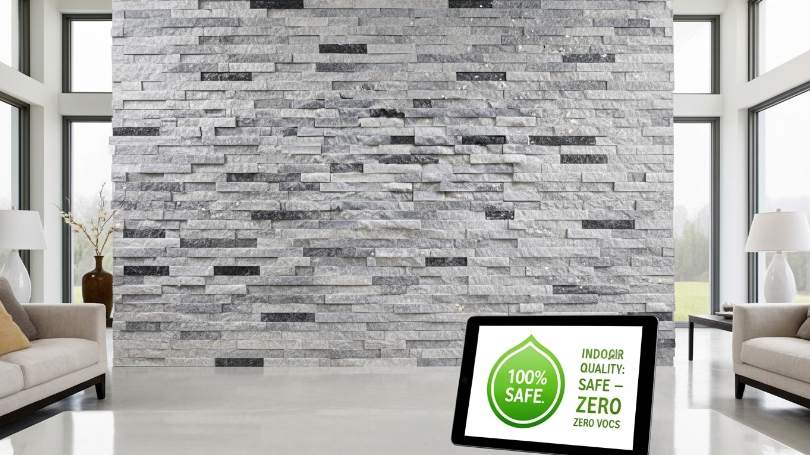
Standard di non combustibilità: soddisfare facilmente i codici di sicurezza NFPA
Naturale pannelli in pietra fornire una soluzione definitiva per l'architettura resistente al fuoco, soddisfacendo i più severi standard di non combustibilità senza gli additivi chimici o i trattamenti ignifughi richiesti dalle alternative sintetiche.
L'NFPA mantiene un sistema di classificazione a tre livelli che classifica i materiali da costruzione come non combustibili, combustibili limitati o combustibili. Sotto il 2026 protocolli di sicurezza, i pannelli in pietra naturale si qualificano come materiali non combustibili, offrendo un vantaggio significativo per le costruzioni commerciali. Gli architetti specificano spesso queste classificazioni per soddisfare i requisiti di resistenza al fuoco di costruzione nei corridoi ad alto traffico e negli atri commerciali.
Acquistando prodotti minerali naturali al 100%, i project manager eliminano la necessità di trattamenti chimici ignifughi secondari. Ciò riduce la complessità del progetto e garantisce che il profilo di sicurezza del materiale rimanga costante per tutta la vita dell’edificio.
- Direttamente dalla cava pannelli in pietra fornire un substrato coerente e non combustibile per qualsiasi rivestimento del caminetto.
- La composizione minerale naturale garantisce che non esistano punti di accensione all'interno del materiale stesso.
- I fornitori B2B danno priorità a queste valutazioni per soddisfare i requisiti assicurativi dei progetti di ospitalità su larga scala.
Protocolli di test di non combustibilità ASTM E136
ASTM E136 funge da punto di riferimento del settore per determinare il comportamento dei materiali da costruzione in condizioni di calore estremo. Durante il test standard a 750 gradi Celsius, Pietra naturale deve resistere all'accensione e dimostrare che non contribuisce ad alimentare un incendio. La normativa attuale il paesaggio privilegia i materiali che mantengono l'integrità strutturale senza sciogliersi, deformarsi o gocciolare durante l'esposizione termica.
| Norma di sicurezza | Prestazioni di pietra | Vantaggio normativo |
|---|---|---|
| ASTM E136 | Resiste all'accensione a 750°C | Semplifica l'approvazione da parte dei vigili del fuoco |
| NFPA259 | Classificazione non combustibile | Utilizzato nella costruzione resistente al fuoco |
| ASTM E84 (Classe A) | 0 Diffusione della fiamma / 0 fumo | Conforme ai codici ICC di autorizzazione zero |
Il rispetto di questi rigorosi protocolli di test semplifica il processo di approvazione con i vigili del fuoco locali e gli ispettori edili. Quando si utilizza quarzite o ardesia naturale al 100%, il materiale supera naturalmente questi requisiti, garantendo tranquillità sia all'installatore che al proprietario dell'immobile.
Soddisfa i requisiti di Classe A per i bordi dei caminetti
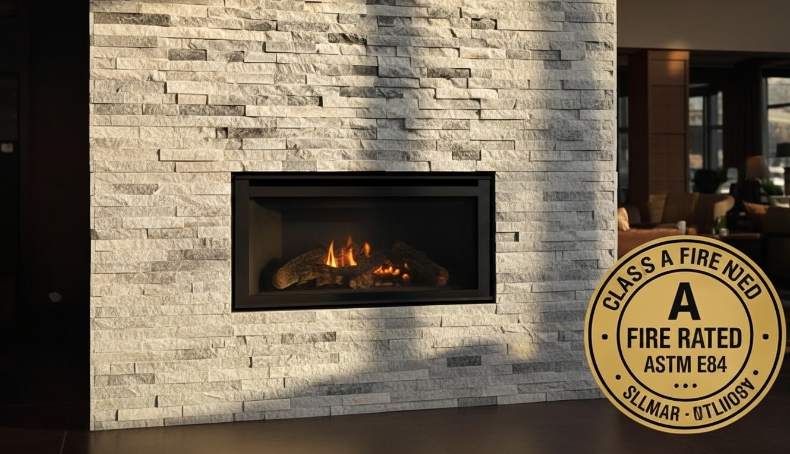
I codici di costruzione spesso impongono una classificazione antincendio di Classe A per qualsiasi materiale installato vicino a fiamme libere o fonti di calore. Pannelli di pietra impilati raggiungono naturalmente indici di propagazione della fiamma e di sviluppo del fumo di Classe A senza la necessità di rivestimenti aggiuntivi. Questa sicurezza intrinseca impedisce la fuoriuscita di gas tossici spesso associati ai manufatti impiallacciature di pietra che utilizzano leganti resinosi.
I project manager utilizzano questi documenti standard di sicurezza per soddisfare i codici residenziali ICC per i camini a distanza zero installazioni. Scegliendo un prodotto geologicamente incapace di bruciare, ti assicuri una finitura professionale in linea con il livello di sicurezza più elevato nell'edilizia moderna.
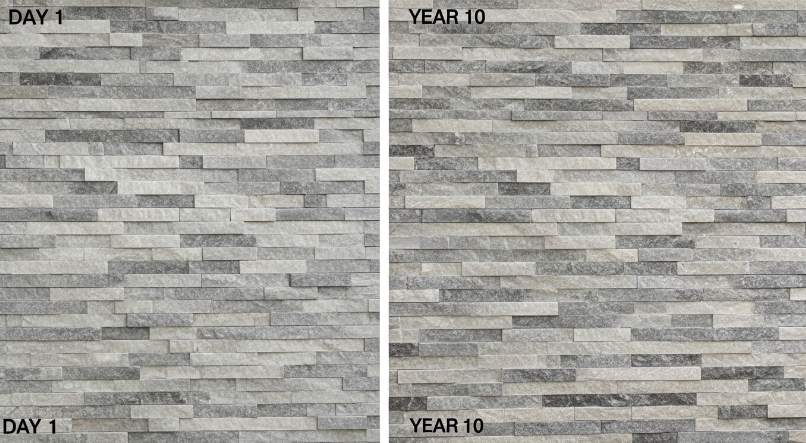
Conclusione
Naturale la pietra fornisce stabilità termica che manca alle imitazioni a base cementizia, prevenendo crepe strutturali e odori chimici pericolosi. L'utilizzo di minerali naturali al 100% garantisce che ogni caminetto soddisfi i codici di sicurezza NFPA resistendo allo stress degli sbalzi di temperatura costanti. Questi vantaggi tecnici tutelano la proprietà e la reputazione professionale dell'installatore.
Sfoglia il nostro inventario Big 10 per materiali pronti per il progetto che offrono prezzi diretti alle cave e colori batch coerenti. Contattaci oggi per richiedere un campione fisico o una revisione dati tecnici per il tuo prossimo progetto di caminetto.
Domande frequenti
La pietra ricostruita è sicura per i caminetti a gas ad alta efficienza?
Sì, fabbricato la pietra è sicura per l'uso come camino cornice per unità a gas ad alta efficienza, purché installata rispettando le distanze specificate dal produttore. Poiché la pietra ricostruita è un prodotto leggero a base di cemento, non è combustibile. Tuttavia, i caminetti ad alta efficienza generano un calore intenso; è necessario utilizzare un supporto sottile o una malta ad alta temperatura per garantire che la forza di adesione non si degradi nel tempo a causa dell'espansione termica. Non dovrebbe mai essere utilizzato come rivestimento all'interno del focolare vero e proprio.
Perché il mio camino in finta pietra si è rotto dopo un inverno?
In genere si verificano crepe nella pietra finta “ciclo termico” e infiltrazioni di umidità. Se il è stata installata la pietra in una casa stagionale o in un'area con elevate escursioni termiche, la pietra a base di cemento e il substrato sottostante si espandono e si contraggono a velocità diverse. Se l'umidità è intrappolata dietro il rivestimento, il ciclo di gelo-disgelo costringe il materiale a stressarsi e rompersi. Utilizzando una malta flessibile, modificata con polimero e garantendo a un'adeguata barriera contro l'umidità durante l'installazione sono fondamentali per prevenire questi cedimenti strutturali.
La vera pietra rilascia odori quando il camino è acceso?
Pietra naturale di per sé è chimicamente inerte e non rilascia odori. Se senti odore di qualcosa mentre il caminetto è attivo, è probabile che sia il risultato di “degassamento” da sigillanti topici, esaltatori o detergenti applicati alla pietra che non sono classificati per le alte temperature. Inoltre, l'accumulo di polvere sulla superficie della pietra può bruciarsi, creando un odore temporaneo. Utilizzare sempre sigillanti penetranti di livello professionale progettati specificamente per ambienti ad alto calore per evitare questo problema.
Qual è la resistenza al fuoco della pietra naturale accatastata?
Pietra naturale impilata (come granito, ardesia o quarzite) è classificato come materiale non combustibile di Classe A. Ha un indice di diffusione della fiamma pari a 0 e un indice di sviluppo del fumo pari a 0. Mentre il la pietra stessa non può prendere fuoco, la sua efficacia in una parete tagliafuoco dipende dallo spessore della pietra e del supporto. Uno spessore standard di 4 pollici rivestimento in pietra naturale tipicamente contribuisce in modo significativo a una valutazione di resistenza al fuoco di 2 ore se integrato in una parete in muratura adeguatamente costruita.
Posso utilizzare la vera pietra direttamente all'interno del rivestimento del focolare?
La pietra naturale deve essere utilizzata solo per il rivestimento decorativo esterno e non per il focolare interno dove avviene il contatto diretto con la fiamma. Molte pietre naturali, in particolare rocce fluviali o pietre sedimentarie come il calcare, contengono microscopiche sacche di umidità. Sotto la fiamma diretta, questa umidità si trasforma in vapore, creando una pressione interna che può far crollare la pietra “scheggiatura” o esplodere. L'interno del focolare deve essere sempre rivestito con mattoni refrattari speciali e malta refrattaria progettata per resistere allo shock termico diretto.