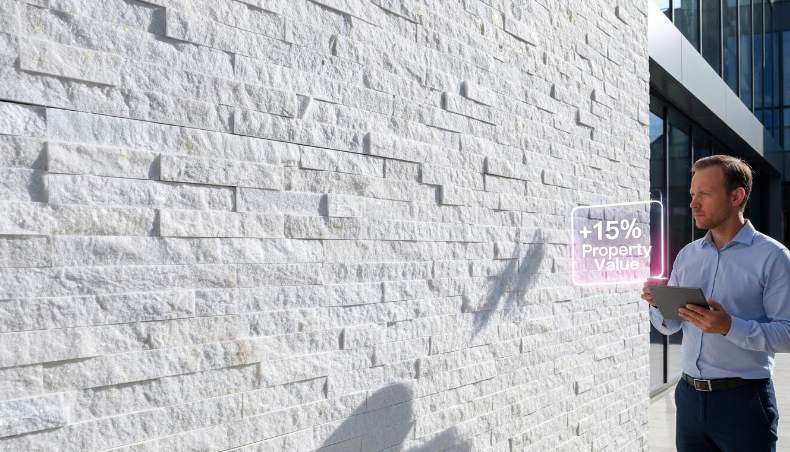
La battaglia ventennale sul ROI tra pietra naturale e finta pietra determina se un bene commerciale apprezza o soccombe alla tensione finanziaria del cedimento prematuro della facciata. Sebbene la pietra ricostruita offra risparmi immediati sui costi, la realtà a lungo termine spesso include scolorimento, infiltrazioni di umidità e un calo significativo nella valutazione della proprietà. La selezione del materiale sbagliato crea una responsabilità che ha un impatto su tutto, dalla fiducia del prestatore ai tassi di fidelizzazione degli inquilini.
Questa guida esamina le differenze tecniche nei requisiti di durabilità e manutenzione che separano questi due materiali. Analizziamo i divari di prezzo iniziali rispetto alla realtà dei cicli di sostituzione, alle riduzioni dei premi assicurativi per i minerali naturali non combustibili e all’impatto specifico dei Vera pietra sui valori di stima commerciale. Utilizza questi dati come quadro strategico per garantire che l'involucro dell'edificio rimanga una risorsa piuttosto che una spesa ricorrente.
La trappola dei costi iniziali: perché i risparmi iniziali spesso portano a perdite future
La selezione dei materiali per facciate in base al prezzo di acquisto iniziale ignora le spese di compounding del ripristino del colore basato sui raggi UV e le passività strutturali inerenti agli agenti leganti sintetici.
Pigmentazione artificiale e prezzo della degradazione UV
Colorazione sintetica dentro pannelli in pietra lavorata in genere si basa su pigmenti a livello superficiale che perdono vivacità entro pochi anni dall'esposizione diretta al sole. Entro gli standard ambientali del 2026, queste facciate richiedono spesso una riverniciatura specializzata e costosa per nascondere il nucleo di cemento opaco e grigiastro che emerge quando la tinta artificiale si degrada. Ciò crea un onere finanziario ricorrente per i proprietari di immobili che devono scegliere tra un deterioramento dell’immagine del marchio o una costante manutenzione estetica.
Pannelli in pietra naturale mantengono la loro integrità estetica indefinitamente perché il colore esiste in tutta la struttura minerale. Proveniamo il nostro materiale dalla stessa cava per garantire che ogni pannello, dalla superficie al centro, condivida lo stesso DNA geologico. Se a pannello in pietra naturale subisce una piccola scheggiatura, l'area esposta rimane identica alla superficie, eliminando la necessità di kit di ritocco o servizi di corrispondenza dei colori.
Guasti adesivi e spese di riparazione
I costi iniziali inferiori spesso derivano dall’uso di agenti leganti di qualità inferiore che compromettono il collegamento strutturale tra la pietra e il substrato. Le alternative economiche utilizzano spesso resine di bassa qualità che diventano fragili nel tempo, soprattutto nei climi gelo-disgelo. Questa fragilità porta alla caduta di pietre, creando condizioni pericolose sui muri esterni ed esponendo il proprietario dell'immobile a notevoli responsabilità e costi di riparazione.
| Metrica delle prestazioni | Finta pietra prodotta | Pietra naturale di prima qualità |
|---|---|---|
| Longevità del colore | Svanisce in 3-5 anni (sensibile ai raggi UV) | Stabilità UV permanente |
| Costo di manutenzione di 20 anni | $ 3,00 – $ 7,00 per piede quadrato | $ 0,00 – $ 2,00 per piede quadrato |
| Composizione strutturale | Aggregato di cemento poroso | Minerali naturali al 100%. |
Utilizzando resina epossidica ad alta resistenza formulata specificatamente per Pietra naturale impedisce questo ciclo di costante riattaccamento. Il nostro processo di progettazione garantisce che il legame rimanga sufficientemente flessibile da gestire l’espansione termica ma sufficientemente forte da resistere a salinità e umidità elevate. Questo investimento nella scienza dei materiali a livello di fabbrica elimina il problema “tassa nascosta” delle future riparazioni patchwork.
Preparazione strutturale e costi opportunità di lavoro
I risparmi iniziali sul prezzo dei materiali vengono spesso annullati dai complessi requisiti strutturali della muratura pesante. Mentre la tradizionale pietra a letto intero richiede basi dedicate e costosi rinforzi strutturali, i nostri pannelli naturali leggeri (8-13 libbre/piedi quadrati) eliminano completamente questi costi fondamentali. Ciò consente agli architetti di specificare la vera pietra per ristrutturazioni e costruzioni in acciaio di basso spessore dove le alternative pesanti sono fisicamente impossibili o proibitive in termini di costi.
Il sistema di interblocco a forma di Z ottimizza ulteriormente il budget riducendo i tempi di installazione di oltre il 30%. I bordi della lama diamantata CNC assicurano che ogni pezzo si adatti con precisione, mimetizzando i giunti verticali ed eliminando la necessità di un taglio specializzato della pietra in loco. Gli appaltatori passano prima al progetto successivo, riducendo il totale delle ore di manodopera fatturabili e migliorando significativamente il margine di profitto netto sia per l'installatore che per lo sviluppatore.
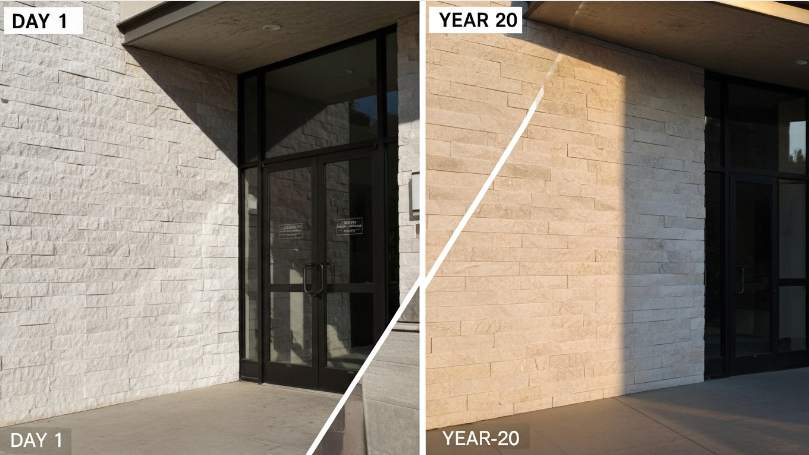
Matematica sulla manutenzione: ridipingere la finta pietra contro il “Zero cure” Realtà naturale
Autentico Pietra naturale mantiene la sua integrità strutturale ed estetica perché il colore è una caratteristica minerale permanente, mentre le faccette prodotte si basano su pigmenti chimici a livello superficiale che inevitabilmente si degradano sotto l'esposizione ai raggi UV.
Stabilità minerale naturale rispetto alla perdita di pigmento causata dai raggi UV
Pietra naturale minerali come l’ardesia e la quarzite rimangono chimicamente stabili nelle condizioni ambientali del 2026. Ciò impedisce il “lavato via” sembrano comuni nelle alternative sintetiche. Pietra ricostruita utilizza pigmenti di ossido di ferro in una base di cemento. Questi pigmenti si decompongono sotto l'esposizione diretta ai raggi ultravioletti, spesso richiedendo macchie di muratura specializzate per ripristinare il loro aspetto ogni pochi anni. Pannelli di pietra impilati elimina la necessità di ritocchi cromatici ricorrenti, garantendo che la facciata appaia identica al primo giorno dopo decenni di servizio.
| Metrica delle prestazioni | Pietra naturale di prima qualità | Finta pietra prodotta |
|---|---|---|
| Composizione del colore | Minerali naturali a tutto spessore | Coloranti all'ossido di ferro applicati in superficie |
| Resistenza UV | Stabilità intrinseca; nessuno sbiadimento | Incline allo sbiancamento dei pigmenti |
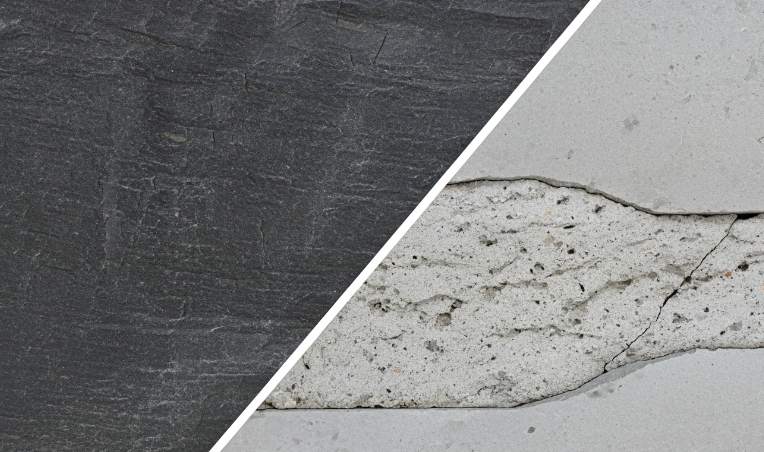
| Risposta al danno | Le scheggiature rivelano la struttura della pietra identica | Le scheggiature rivelano il nucleo di cemento grigio/bianco |
| Durata prevista | 50 – Oltre 100 anni | 20 – 30 anni (esterno) |
Costi nascosti della riparazione di rivestimenti in calcestruzzo scheggiati
La pietra naturale presenta un colore uniforme e consistenza ovunque. Una scheggiatura rivela semplicemente più pietra, rendendo i piccoli impatti praticamente invisibili. Gli impatti sulla finta pietra espongono il nucleo di cemento grigio chiaro o bianco, creando imperfezioni ad alto contrasto che richiedono un'immediata riparazione professionale o sostituzione del pannello. Evitiamo il “nucleo in cemento” problema utilizzando il 100% di materiale di cava, riducendo la necessità a lungo termine di kit di toppe per muratura artigianali.
Requisiti minimi di sigillatura per superfici in pietra naturale
Mentre la pietra finta spesso richiede una pulizia aggressiva e una riverniciatura per nascondere l'usura, è naturale pannelli in pietra necessitano solo di una protezione di base per respingere i contaminanti ambientali. Consigliamo un sigillante di alta qualità a pH neutro ogni pochi anni per prevenire la crescita organica e le macchie. Questo processo è significativamente più veloce ed economico rispetto alla riverniciatura di una facciata sintetica. La pietra naturale resiste alla pulizia ad alta pressione migliore della pietra ricostruita, che può perdere consistenza superficiale e colore se lavata troppo aggressivamente. I sistemi a pietra impilata semplificano la manutenzione programmare richiedendo solo la pulizia con una spazzola morbida e acqua per la maggior parte delle cure di routine.
Prospettive finanziarie ventennali per la manutenzione delle facciate
I dati del ROI previsti per il 2026 mostrano che il premio iniziale per Pietra naturale è controbilanciata dalla totale assenza dei cicli di ripristino richiesti dai prodotti di sintesi. La pietra naturale conserva il suo valore di stima nel corso di un ciclo di 20 anni, mentre la pietra finta in genere ha un valore “scogliera” una volta che i pigmenti superficiali iniziano a deteriorarsi. I costi di manodopera per ridipingere o ridipingere 5.000 piedi quadrati di finta pietra spesso superano la differenza di prezzo originale tra materiali sintetici e naturali. I proprietari degli immobili ottengono costi totali di proprietà inferiori selezionando pannelli naturali che aggirano il ciclo di sostituzione di 10 anni comune nei prodotti fabbricati di basso livello.
- L'approvvigionamento diretto dalle cave garantisce la consistenza dei materiali e riduce i costi iniziali di acquisizione B2B.
- I minerali naturali forniscono una resistenza intrinseca al gelo-disgelo, prevenendo i problemi di delaminazione riscontrati nei compositi di cemento poroso.
- Taglio preciso I pannelli a forma di Z utilizzano senza soluzione di continuità tecnologia per nascondere le giunture e proteggere il supporto dall'umidità.
Pietra naturale premium per un'installazione efficiente
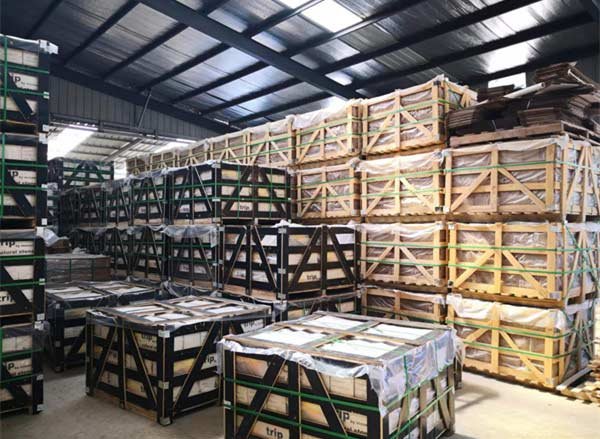
Impatto della valutazione: come la vera pietra aumenta il valore di rivendita commerciale
Pietra naturale funziona come un asset finanziario strategico che rafforza il reddito operativo netto (NOI) attraverso costi di manutenzione compressi e premi significativi nella valutazione di mercato.
Valutazione degli asset e potenziale ROI immediato
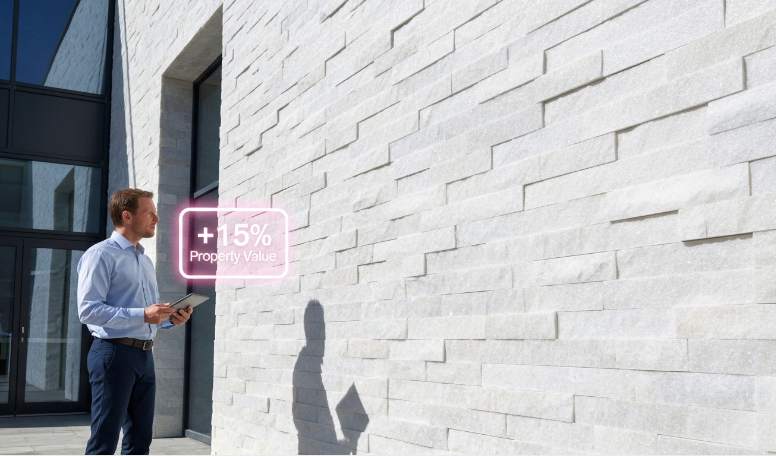
I dati di valutazione commerciale al 2026 lo confermano installazioni in pietra naturale fornire un aumento immediato del valore contabile della proprietà. Gli edifici con facciate in pietra autentica o elementi architettonici interni vedono aumenti di valore fino al 15% rispetto a quelli che utilizzano compositi sintetici o a base di cemento. Questo aumento di valutazione deriva dall’elevata appetibilità del mercato per i materiali autentici, che porta le proprietà a vendere circa il 20% più velocemente rispetto ai loro concorrenti.
Gli investitori spesso vedono la pietra naturale come un “porto sicuro” per il capitale. Mentre fabbricato impiallaccia di pietra potrebbero offrire costi di ingresso inferiori, i progetti in vera pietra attualmente recuperano quasi il 100% della loro spesa iniziale durante la rivendita. Questo elevato tasso di recupero trasforma una scelta decorativa in un gioco azionario strutturale, garantendo che l’investimento iniziale rimanga liquido nell’ambito della valutazione totale della proprietà.
Attrazione degli inquilini e tariffe di locazione premium
L’impatto psicologico dei minerali autentici nelle lobby, nei negozi al dettaglio e negli uffici direzionali si traduce direttamente in profitti. Gli inquilini associano la pietra naturale alla permanenza, alla stabilità e al marchio di alto livello, consentendo ai proprietari di imporre premi di affitto più elevati. Ciò è particolarmente evidente nei settori dell’ospitalità e della vendita al dettaglio di fascia alta, dove texture autentiche come l’ardesia o la quarzite naturale al 100% trasmettono un’esperienza di lusso che i prodotti manifatturieri non possono replicare.
- Livelli di occupazione più elevati negli asset commerciali utilizzando finiture minerali autentiche.
- Miglioramento del marchio professionale per gli inquilini aziendali, rendendo la proprietà più competitiva.
- Crescita sostenuta degli affitti guidata dal “fattore di prestigio” di materiali architettonici naturali.
Apprezzamento a lungo termine vs. deprezzamento materiale
Le faccette sintetiche standard agiscono come passività ammortizzabili, spesso richiedendo la sostituzione completa entro un ciclo di 10-15 anni a causa dello sbiadimento UV e della delaminazione strutturale. Al contrario, Pietra naturale apprezza ad una stima del 5-10% annuo se integrato nella progettazione strutturale dell’edificio. Poiché il colore è uniforme in tutto il minerale, piuttosto che in un pigmento a livello superficiale, il materiale no “invecchiare” di stile o funzionalità.
Gestione dei costi operativi e salute del portafoglio
Per i REIT e gli investitori istituzionali, il fascino della pietra naturale risiede nella sua resistenza ai fattori di stress degli ambienti ad alto traffico. La pietra autentica resiste ai graffi, alle macchie e ai danni UV, riducendo significativamente i costi di proprietà del ciclo di vita. Riducendo la frequenza delle riparazioni estetiche ed evitando costosi cicli di restauro, i proprietari mantengono più alto il loro reddito operativo netto (NOI), rendendo l'asset più attraente per gli acquirenti sofisticati.
Inoltre, la natura non combustibile dei minerali naturali offre un profilo di rischio favorevole per le compagnie assicurative. Ciò può portare a premi più bassi e migliori rating di rischio, migliorando ulteriormente la salute finanziaria del portafoglio immobiliare. Investire in materiali ad alta durabilità garantisce che la proprietà rimanga un bene funzionale piuttosto che una passività durante i trasferimenti futuri.
Cicli di sostituzione: la tua facciata necessita di una reinstallazione completa ogni 10 anni?
Pietra naturale le facciate eliminano l'ansia di sostituzione di 10 anni fornendo un ciclo di vita strutturale di 30-50 anni che resiste alla fatica del materiale comune nelle faccette sintetiche.
Longevità della pietra naturale e miti comuni sulla sostituzione
Molti costruttori credono erroneamente che le facciate commerciali richiedano una revisione totale ogni decennio. Questo malinteso spesso deriva dal fallimento dei materiali sintetici di bassa qualità. I dati del settore mostrano che le facciate degli edifici commerciali di alta qualità operano su un ciclo di 15-25 anni prima di aver bisogno di interventi anche minori come il tuckpointing. Naturale i pannelli in pietra evitano l'affaticamento del materiale riscontrato nei manufatti alternative, che spesso degradano o perdono colore entro i primi 10 anni a causa della degradazione del pigmento.
| Categoria materiale | Primo trigger di manutenzione | Ciclo di sostituzione completo |
|---|---|---|
| Naturale Pannelli in pietra (Pietra principale) | 20-25 anni (tuckpoint) | Oltre 50 anni |
| Prodotto Rivestimento in pietra | 5–8 anni (scolorimento/crepe) | 20–25 anni |
| Stucco/muratura dipinta | 3–5 anni (riverniciatura) | 15-20 anni |
Scegliere il 100% di cava la pietra assicura l'esterno mantiene la sua integrità strutturale e il suo valore estetico per decenni anziché per stagioni. Mentre la finta pietra rivela nuclei di cemento quando scheggiata, la pietra naturale mantiene la sua tonalità su tutta la lastra. Questo “Vera pietra” vantaggio significa che stai investendo in una risorsa minerale permanente, non in uno strato decorativo temporaneo.
Fattori di stress ambientale e durabilità della facciata
Fattori esterni come i cicli di gelo-disgelo e l’aria costiera determinano la frequenza con cui una facciata necessita di attenzione professionale. Gli edifici in climi estremi o nelle regioni costiere vedono i cicli di manutenzione ridotti a 10-15 anni se utilizzano materiali porosi a base di pigmenti. Minerali naturali utilizzati in pannelli in pietra resistono allo sbiadimento indotto dai raggi UV e agli agenti atmosferici chimici perché il loro colore è geologico, non additivo.
- La resistenza al gelo-disgelo standard ASTM previene la delaminazione comune nelle impiallacciature di livello inferiore.
- L'elevata resistenza alla salinità rende la quarzite e l'ardesia ideali per le regioni del Golfo ad alta umidità.
- I minerali non combustibili forniscono una barriera di sicurezza permanente senza richiedere ricorrenti riapplicazioni di prodotti ignifughi.
Programmi di ispezione di sicurezza rispetto alla reinstallazione strutturale
I requisiti normativi per i controlli delle facciate spesso creano l'idea sbagliata che una sostituzione completa sia imminente. I principali centri urbani come New York richiedono ispezioni di sicurezza ogni cinque anni per le strutture alte. Questi controlli hanno lo scopo di identificare piccole usure del sigillante o malte sciolte prima che diventino cedimenti strutturali. La manutenzione ordinaria dopo i 10 anni prevede solitamente semplici controlli di pulizia e sigillatura. Le cure preventive nel 2026 si concentrano su questi piccoli aggiustamenti, che prolungano la vita totale di una facciata in pietra a 30 anni o più.
Prestazioni dei sistemi di pannelli ad incastro leggeri
Moderno le tecniche di produzione garantiscono che i pannelli in pietra rimangono sicuri, riducendo il rischio di guasti prematuri. I nostri pannelli pesano tra 8 e 12 libbre per piede quadrato, il che riduce il carico sulle fondamenta dell'edificio. Questa riduzione del peso previene la formazione di crepe che spesso portano alla sostituzione della facciata nei progetti di muratura pesante. Utilizziamo resine epossidiche ad alta resistenza per creare un legame permanente tra la pietra e il supporto, eliminando il “spargimento di pietre” visto nei metodi più vecchi.
I pannelli a forma di Z tagliati con precisione utilizzano la tecnologia CNC della lama diamantata per creare una tenuta “maschio-femmina” interblocco. Questo design mimetizza i giunti verticali e protegge la struttura sottostante dalle infiltrazioni d'acqua. Riducendo al minimo i giunti esposti, questi sistemi prolungano significativamente l'intervallo di sostituzione, garantendo che l'edificio rimanga impermeabile alle intemperie e visivamente privo di giunture per il lungo termine.
Vantaggi assicurativi: riduzione dei premi con minerali naturali non combustibili
Naturale pannelli in pietra fungere da scudo permanente e non combustibile che riduce i profili di rischio della proprietà, consentendo ai proprietari di acquisire crediti significativi sui premi assicurativi attraverso iniziative verificate di rafforzamento della casa.
Classificazione esterna resistente al fuoco
I pannelli in pietra naturale offrono un livello di protezione antincendio che i materiali sintetici non possono eguagliare. Ardesia, quarzite e marmo fungono da scudo termico inerte, impedendo la propagazione delle fiamme attraverso l'involucro di un edificio. Poiché questi minerali si sono formati in condizioni di calore geologico estremo, non si accendono, non si sciolgono o non rilasciano gas di scarico pericolosi quando esposti a fonti di fuoco esterne. Ciò li rende la scelta preferita per gli sviluppatori che lavorano in aree urbane ad alta densità o regioni soggette a incendi.
- Ardesia, quarzite e marmo forniscono uno scudo naturale che non accende o diffonde fiamme durante l'esposizione al fuoco esterno.
- Gli standard edilizi nel 2026 hanno la priorità “temprato” esterni per prevenire cedimenti strutturali durante eventi di calore elevato.
- Pietra impilata elimina i rischi di fusione o di rilascio di gas associati ai rivestimenti sintetici o a base di polimeri.
Sconti diretti sui premi per l'indurimento della casa
Le compagnie assicurative stanno passando da valutazioni generali del rischio regionale a audit granulari specifici per proprietà. Proprietari che sostituiscono rivestimenti in legno o vinile infiammabili con rivestimenti naturali pannelli in pietra spesso si qualificano per crediti tariffari specifici. Questi sconti sono una risposta alla riduzione misurabile del rischio; le modifiche strutturali che utilizzano minerali non combustibili forniscono una misura di mitigazione permanente che rimane efficace per tutta la vita dell'edificio.
- Gli attuali modelli attuariali mostrano una riduzione del rischio fino al 75% quando i proprietari combinano la gestione della vegetazione con le facciate in pietra.
- Molti vettori ora offrono crediti tariffari specifici per modifiche strutturali che superano i minimi di sicurezza antincendio locali.
- Sostituzione di legno o vinile infiammabile con materiale naturale pannelli in pietra funge da misura di mitigazione permanente per gli audit assicurativi.
Mitigazione del rischio basata sui dati nelle zone a rischio di incendi
La modellizzazione avanzata delle catastrofi nel 2026 correla la selezione dei materiali da costruzione direttamente con i rapporti di perdita per le attività commerciali e residenziali. Proprietà caratterizzate esterni in pietra naturale mostrano costantemente costi di danno inferiori a seguito di incendi puntuali o tempeste di braci. Poiché la pietra mantiene la sua integrità strutturale sotto intenso stress termico, riduce significativamente la probabilità di una richiesta di risarcimento per perdita totale, rendendo il bene più attraente sia per i finanziatori che per i sottoscrittori conservatori.
- I dati sulle perdite mostrano che le proprietà sono naturali esterni in pietra subire meno danni perimetrali durante gli incendi mirati.
- Le valutazioni granulari del rischio consentono agli assicuratori di offrire tariffe più competitive agli edifici che utilizzano materiali ignifughi di Classe A.
- La pietra naturale mantiene la sua integrità strutturale sotto stress termico, riducendo la probabilità di un reclamo per perdita totale.
Conclusione
La scelta dei materiali per facciate in base alle prestazioni a lungo termine sposta l’attenzione dal risparmio iniziale al valore totale dell’asset. La pietra naturale elimina i costi ricorrenti di riverniciatura o sostituzione di alternative false, garantendo allo stesso tempo valutazioni commerciali più elevate grazie alla durabilità intrinseca. Questi pannelli a base minerale forniscono l’integrità strutturale e la resistenza al fuoco necessarie per proteggere gli investimenti commerciali su un orizzonte ventennale.
Esamina le specifiche tecniche nel nostro inventario Big 10 per trovare a calcolo profilo in linea con i requisiti del tuo progetto. Puoi anche contattare il nostro team per richiedere un preventivo diretto in fabbrica o una verifica visiva degli attuali lotti di cava.
Domande frequenti
La pietra naturale è molto più costosa della pietra finta?
Mentre il costo nominale del materiale della pietra naturale è generalmente superiore dal 20% al 30% rispetto alle alternative prodotte, il vero divario di prezzo si riscontra nell’installazione. La pietra naturale richiede competenze murarie specializzate e spesso rinforzi strutturali a causa del suo peso. Tuttavia, la scelta della pietra finta può portare a un problema “trappola dei costi iniziali” dove i risparmi immediati sono annullati da un ciclo di vita più breve e da una valutazione immobiliare inferiore a lungo termine.
Quanto valore aggiunge la vera pietra alla rivendita della casa?
Il rivestimento in vera pietra si classifica costantemente come uno dei miglioramenti domestici con il ROI più elevato, spesso recuperando tra il 92% e il 105% del suo costo al momento della vendita. Oltre al ritorno finanziario diretto, migliora significativamente l’attrattiva e la fiducia degli acquirenti, portando a tempi di chiusura più rapidi e offerte più competitive.
Qual è la durata media della vita media della pietra ricostruita?
Il rivestimento in pietra ricostruita ha in genere una durata media compresa tra 20 e 50 anni. A differenza della pietra naturale, che dura per secoli, la pietra finta è soggetta allo sbiadimento dei raggi UV, all'assorbimento di umidità e alla delaminazione. Nell’arco di 20 anni, l’integrità strutturale dei prodotti fabbricati potrebbe iniziare a mostrare segni significativi di deterioramento da parte degli agenti atmosferici che richiedono sostituzioni o riparazioni costose.
La pietra naturale richiede una sigillatura annuale per mantenere il valore?
No, la pietra naturale non necessita di sigillatura annuale. Per la maggior parte delle applicazioni esterne, la pietra di alta qualità deve essere sigillata solo ogni 3-7 anni per proteggerla da macchie profonde o danni causati dal sale. Le pietre ad alta densità come il granito o le pietre da campo a base di quarzo spesso non richiedono alcuna sigillatura per mantenere la loro integrità strutturale e il loro valore estetico.
Perché gli istituti di credito commerciali preferiscono gli esterni in pietra naturale?
Gli istituti di credito commerciali preferiscono la pietra naturale perché rappresenta a “permanente” asset con una preservazione del capitale superiore. La pietra naturale offre la massima resistenza al fuoco e un'estrema durabilità, il che riduce il rischio a lungo termine delle garanzie. I finanziatori comprendono che i tempi e la struttura dei materiali rimodellano i risultati del ROI e la pietra naturale garantisce che l'edificio mantenga un elevato valore di mercato per tutta la durata di un prestito di 20 o 30 anni.