Full-depth natural stone can push installed costs to $35–$50 per square foot and require structural upgrades, yet delivers strengths similar to concrete. Stacked stone veneer meets ASTM C1670 compressive strength thresholds of 2,100–3,500 psi while staying under 15 lb/sq ft, avoiding foundation work and cutting material and labor costs.
This guide examines veneer durability under freeze–thaw testing, panel thickness ranges from 0.75–2.5 inches, installation over cement board or lath, R‑values around 0.58, and cost comparisons against vinyl, brick, and polyurethane panels to help homeowners decide if it’s worth the investment.
Durability and Longevity of Stacked Stone Veneer
Stacked stone veneer, whether natural or manufactured, is engineered to remain strong, weather‑resistant, and dimensionally stable for decades. When built to ASTM and IBC standards, it maintains compressive strengths over 2,100–3,500 psi, resists freeze–thaw damage, and can achieve lifespans exceeding 20–50 years depending on the material type and exposure.
Core Strength and Material Performance
Stacked stone veneer is made in sizes that balance weight and strength. Most adhered veneer panels range from 0.75 to 2.5 inches thick and weigh less than 15 pounds per square foot when saturated, meeting building code requirements. In simple terms, this means you get a solid cladding without overloading the wall structure.
Manufactured options start with a minimum compressive strength of 2,100 psi as per ASTM C1670, with some products like Stack‑A‑Stone reaching 3,560 psi. That’s comparable to the strength used in structural concrete. Shear bond strength, which is how well the stone sticks to the wall, goes from 50 psi in entry-level products to 175 psi in top-end models under ASTM C482 tests. Water absorption remains low, with figures such as 10.2 lb/ft² well under ASTM C140 limits, helping resist moisture damage.
Natural stone has exceptionally low thermal expansion values. In practice, it barely changes size with heat or cold, which helps avoid cracking. Thermal and fire performance is equally strong — natural stone is fireproof, and manufactured units like ProVia’s veneer provide measurable insulation with an R‑value around 0.58 for one-inch thickness.
Industry Standards and Testing Protocols
Durability is proven through standardized tests. ASTM C1670 defines the required strength, absorption, freeze–thaw resistance and dimensional stability for manufactured veneers. ASTM C482 measures bond strength to the substrate. ASTM C666 and C1690 put veneers through freeze–thaw cycles to check for cracking or scaling, with compliant products losing less than 1.5% weight after 50 cycles.
Other standards, such as ASTM C140, measure weight, density, and absorption for masonry units. Building codes like IBC Section 2103.1 specify which materials can be used for masonry veneers. Natural stone must meet its own ASTM criteria for exterior use, covering absorption, flexural, and compressive strength to ensure it withstands outdoor conditions.
Service Life, Weather Resistance, and Maintenance
In the real world, natural stacked stone often lasts more than 50 years, keeping its integrity even after decades of exposure. Commercial sites show it staying intact beyond 20 years. Manufactured stone veneer has an average service life of 20 to 30 years. Dark colors may fade after 8 to 10 years in full sun, and surfaces can show wear after 12 to 15 years in harsh environments.
Freeze–thaw performance is critical in cold climates. ASTM compliant products keep changes in absorption and weight loss under 1.5%, preventing spalling. Case studies show manufactured veneer can perform well structurally but is more prone to surface wear compared to natural stone. High-end brands counter this with improved mixes and warranties up to 50 years. Good installation practices, moisture management, and optional sealants enhance both appearance and lifespan.
How Top Source Stone Ensures Quality in Durability and Longevity
Top Source Stone utilizza per le sue impiallacciature vera pietra di cava al 100%, conferendo loro colori naturali, stabili ai raggi UV e stabilità geologica. Il peso dei pannelli è compreso tra 8 e 13 libbre per piede quadrato, comodamente al di sotto della soglia strutturale che richiederebbe dei basamenti. Ogni pannello è fissato al supporto utilizzando una resina epossidica brevettata ad alta resistenza che previene la delaminazione.
Production follows a three‑stage inspection — after cutting, after assembly, and before packaging — so defects that could reduce durability are filtered out. Matching L‑shaped corner pieces protect edges from damage while preserving the design flow. For exteriors or wet areas, water‑resistant barriers and premium sealants are recommended to maximize service life. This combination of material choice, engineering, and testing ensures the stacked stone veneer delivers long-term value.
Appeal estetico e versatilità del design
Stacked stone veneer achieves its visual strength through precise thickness control, authentic natural stone textures, and curated color palettes. Modular formats like split-face panels provide 3D depth and minimal grout lines, enabling designs from rustic to modern while meeting ASTM standards for long-term appearance retention.
Core Elements of Aesthetic Impact
Stacked stone veneer balances engineered dimensions with the natural character of quarried stone. Thickness can range from the slimmer 3/4 to 1 inch profile of traditional veneers to stacked profiles up to 2.5 inches, with individual pieces reaching about 14 inches in diameter. This allows deeper textures without excessive weight.
The weight remains below 15 pounds per square foot, enabling adhered installation on standard framed walls. Stone options include granite, limestone, quartzite, slate, and sedimentary rock, each offering distinct surface patterns. Split-face and cleft cuts create three-dimensional façades that catch light and shadow.
- Formato: Dry stack and calibrated panels minimize grout joints for a masonry-like look.
- Colors: Curated palettes such as ochre, charcoal, ivory quartz, white quartz, earthen grays, and golden browns coordinate with varied architectural styles.
Technical Standards and Dimensional Control
Aesthetic longevity is supported by engineering and compliance. ASTM testing checks absorption, flexural strength, and compressive strength so veneers resist weathering. Panel systems like MSI Rockmount and Norstone Rock Panels are assembled in factories for precise joint alignment.
Edge profiles can be smooth for clean transitions or natural for a blended look. Keeping thickness to 2.5 inches or less reduces wall build-out, useful for tight spaces.
Design Versatility in Applications
Specifications allow use in both interior and exterior spaces. This includes siding, fireplaces, backsplashes, facades, garden walls, and pool surrounds. Rustic and traditional styles benefit from textured dry stack formats, while modern designs use minimal grout and sleek edges.
The 3D shadowing effect enhances feature walls, reception areas, and outdoor living spaces. Thin adhered systems are compatible with standard frames and existing substrates without requiring deep foundations.
How Top Source Stone: Meets These Standards
Top Source Stone applies advanced infrared cutting to produce panels with exact calibration, supporting seamless dry stack visuals. Owning source quarries ensures consistent material and color grading for harmony in large orders.
- Series Range: Flat, Rough, Pencil, Marble, each with defined thicknesses from 0.75 to 1.75 inches and weights from 8 to 13 pounds per square foot.
- Interlocking Panels: Z-shaped designs and matching L-shaped corners maintain visual continuity.
- Bonding: High-strength epoxy secures stone strips permanently, preventing detachment with time.
Cost Comparison: Stone Veneer vs Other Materials
Stone veneer typically costs $13–$22 per sq ft installed, placing it above vinyl or basic siding but well below the $35–$50 per sq ft of full-depth natural stone. This makes it a premium but cost-saving alternative to traditional masonry finishes.
Positioning Stone Veneer in the Cost Spectrum
| Tipo materiale | Material Cost (per sq ft) | Installed Cost (per sq ft) | Note |
|---|---|---|---|
| Natural thin stone veneer | $4–$21 | $13–$22 | Durable, masonry look with reduced weight |
| Manufactured stone veneer | $4–$20 | $13–$22 | Concrete base, varied textures |
| Full-depth natural stone | $30–$48 | $35–$50 | More than double veneer cost; heavy load |
| Polyurethane faux stone panels | $8–$19 | $10–$25 | Lightweight; simplified install |
| Vinyl/basic siding | $3–$8 | $4–$12 | Lowest cost; no masonry appearance |
Stone veneer sits in the middle of the cladding cost range. Vinyl and basic siding are cheaper but lack the texture of stone. Brick veneer and full stone are more expensive, with higher structural demands. A whole-house example shows 1,500 sq ft in full natural stone can reach $57,000–$72,000, while stone veneer on the same area is $8,250–$16,125.
Detailed Cost Metrics and Material Specs
| Tipo di prodotto | Spessore | Peso | Labor Cost (per sq ft) | Lifespan/Warranty |
|---|---|---|---|---|
| Adhered stone veneer | 1–1.5 in | 8–15 lb | $5–$12 | 50 years (manufactured) |
| Easy-install systems | Varia | Lightweight | $1.50–$3.50 | 25–50 years |
| Full-depth stone | Varia | Heavy | Higher due to complexity | 100+ years |
| Polyurethane panels (GenStone) | 1.25 in | 1–3 lb | Low install time | 25 anni |
| Manufactured veneer (Ply Gem) | 1–2 in | 5–11 lb | Moderare | 50 years |
Thinner and lighter materials reduce load, simplify handling, and speed installation. Warranty periods vary by type, with natural stone providing the longest lifespan and artificial products offering defined coverage.
Practical Considerations for Material Selection
- Masonry look without heavy load: Stone veneer delivers the appearance of full stone without foundation upgrades.
- Reduced weight: At roughly 8–15 lb/sq ft, existing walls can support it without reinforcement.
- Faster installation: Saves labor cost and shortens project timelines.
- Suitable for design goals: High-end look without full masonry budget.
- Warranty: Polyurethane ~25 years, concrete veneer ~50 years.
- Climate and load capacity: Choose materials that match local weather and wall strength.
How Top Source Stone:Supports Cost-Effective Projects
- Lightweight panels: 8–13 lb/sq ft, eliminating need for foundation upgrades.
- Interlocking design: Z-panels reduce install time and labor costs.
- Material variety: Slate, quartzite, and marble options fit different budgets and styles.
- Durable bonding: Precision cutting and epoxy adhesive reduce maintenance expenses.
By combining structural efficiency with a broad design palette, these panels allow contractors and designers to deliver premium finishes without premium masonry costs.
Enhance Your Projects with Authentic Ledger Stone
Add genuine natural stone textures that elevate any design. Our lightweight, easy-to-install ledger stone offers lasting beauty, superior quality, and versatile styles to inspire contractors, designers, and distributors alike.
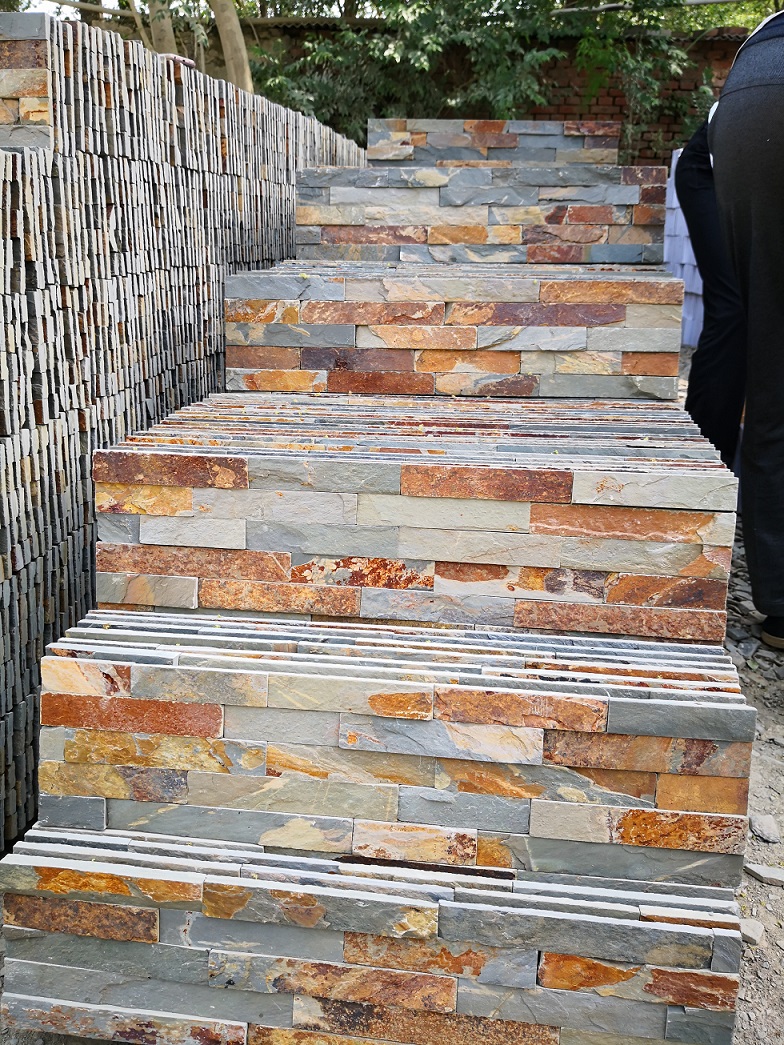
Block Name: Ledger Stone Wholesale Invitation
Installation Process and Maintenance Requirements
Stacked stone veneer systems follow structured installation processes based on substrate type, fastening schedules, mortar specifications, and environmental limits. Maintenance relies on protecting joints, keeping drainage clear, and respecting material-specific load and moisture constraints.
Core Installation Concepts and Material Categories
There are two main ways stacked stone veneer is installed. Adhered thin veneer is lighter, usually between 7 and 12.5 pounds per square foot, and can attach directly to suitable surfaces like fibrous cement board, concrete block, or over a scratch coat on metal lath. Full-depth anchored veneer is heavier and needs an open air space behind it to let water drain. It also uses overlapping weather barriers to keep moisture out. Drywall is not an option for heavy natural stone because it can’t hold the weight and may fail when exposed to moisture.
Technical Standards and Installation Specifications
Installers start with a substrate at least half an inch thick when using cement board. Cement board fastening involves screws spaced 24 inches apart, each penetrating at least two inches into the frame. For expanded metal lath, galvanized fasteners go every 6 inches vertically and 16 inches horizontally, with lath wrapped a foot around corners. Manufactured stone over lath needs a scratch coat of mortar at least half an inch thick. The bond line of mortar behind the stone ends up around a quarter to three-eighths of an inch after pressing, starting with more mortar on the back to ensure full contact.
Polymer-modified thinset mortars that meet ANSI A118.4 and A118.11 are standard for adhesion. In wet areas or outside, a waterproofing and crack isolation membrane should be used between the substrate and mortar, meeting ANSI A118.10 and A118.12. For full-depth veneer, horizontal laps in the weather barrier measure 2 to 4 inches, vertical laps 6 or more inches, and corners 16 inches or more. Work should stay within a temperature range of 40°F to 90°F to keep mortar strength consistent. Walls must be clean and free of anything that could block bonding before stone is applied.
Practical Application and Maintenance Practices
The first row of stone should be supported on a solid base like concrete or a ledge so it stays level while the mortar cures. Slightly wetting the scratch coat and back of each stone during installation helps the mortar stick better. Joints and sealants should be checked regularly, and any drainage cavity kept clear of dirt or debris. Applying a quality stone sealant in exterior or moisture-heavy areas can prevent stains. Fireplace surrounds should follow local codes on fire resistance. Avoid working in extreme temperatures or humidity to minimize issues like surface salt deposits.
How Top Source Stone Meets Installation Standards
Top Source Stone panels weigh between 8 and 13 pounds per square foot, making them suitable for installation on approved substrates without extra footings. The Z-shaped interlock design lets panels join seamlessly, with no visible grout lines, while still fitting within standard lath and mortar bed allowances. Strong epoxy adhesive bonds the stone permanently to its backing. Matching L-shaped corner pieces are supplied so projects meet wrap standards without difficult cutting on site. Installation guides for these panels recommend cement board backing when covering interior drywall, in line with substrate load requirements.
Environmental Benefits of Using Stone Veneer
Stone veneer—both natural thin cuts and manufactured versions—uses less raw stone, weighs less than full‑bed masonry, lowers transport emissions, offers thermal performance benefits, and can last decades with minimal maintenance, reducing both embodied and operational carbon over its lifecycle.
Core Environmental Advantages of Stone Veneer
Stone veneer offers material efficiency by slicing thin layers from each quarried block, creating more usable cladding from the same amount of stone and leaving less waste behind. Manufactured veneer, made from a cement and aggregate mix with mineral pigments, uses far less natural stone than traditional full‑bed masonry. The lower weight of both natural thin veneer and manufactured veneer reduces the amount of heavy lifting equipment needed and places less load on building structures. Moving lighter materials means less fuel is consumed in transport, lowering carbon emissions, especially when stone is sourced locally. At the end of their life, natural stone panels can be reused or recycled into aggregate, while manufactured products often incorporate recycled content from the start.
Relevant Technical Standards and Specifications
Durability and performance for manufactured veneer are guided by ASTM C1670/C1670M, which sets physical property and longevity requirements, and ASTM C1780, which defines installation practices to prevent early failure. Long‑lasting products mean fewer replacements over time, conserving resources and cutting embodied carbon. As an example, StoneWorks offers a 50‑year limited warranty on its manufactured stone veneer, illustrating how robust warranties align with environmental goals by extending service life.
Operational Energy and Maintenance Benefits
Natural stone veneer contributes to thermal performance by adding thermal mass and a modest insulating effect. This helps stabilize indoor temperatures, reducing energy consumption for heating and cooling systems when paired with proper wall insulation. Over decades, stone veneer requires minimal maintenance—mainly occasional washing—and unlike painted surfaces, it does not need recoating. Its resistance to UV fading and weathering means fewer repair cycles and less resource use over the building’s life.
How Top Source Stone Aligns with Environmental Standards
Our products employ thin panels of real quarried stone weighing 8‑13 pounds per square foot, reducing structural load and transport emissions compared with full‑bed stone. Ownership of quarries allows controlled quality and supports local sourcing strategies. The panelized interlocking system speeds installation, lowering on‑site energy consumption and reducing heavy‑equipment use. Precision cutting maximizes yield from each stone block, aligning with the principle of efficient resource use and minimizing waste during manufacturing.
Potential Drawbacks and Considerations
Stacked stone veneer can face moisture-related damage, structural limits on height and load, and vulnerability to harsh environmental exposure if not installed according to industry standards such as MVMA guidelines.
Material and Installation Challenges
Manufactured stone veneer is made from concrete and synthetic materials meant to mimic natural stone. While lighter and easier to install, these composites tend to chip, crack, and repeat patterns more often than natural stone. Installations that run the stone into or below ground level make it easier for water to seep in, which can lead to early failure. Guidance from industry groups recommends stopping veneer a few inches above grade. Thin stone veneer also has limits on how tall it can be used before extra support is needed, often around 10 feet. In cold climates, dry stack installations without drainage can fail when moisture freezes and expands within the wall assembly.
Industry Standards and Technical Specifications
The MVMA install guide outlines tested approaches for different wall systems and specifies requirements for barriers and flashing to keep water out. Adhered Masonry Stone Veneer works by bonding directly to a prepared wall surface. If adhesion is weak or coverage is patchy, both strength and appearance suffer. Once the veneer height goes beyond about 10 feet, the wall needs to bear more stone weight, and a structural engineer should be engaged to design safe support. Field inspections often trace failures back to missing barriers, weak support, or poor detailing around joins and grade transitions.
Environmental and Maintenance Considerations
Stacked stone surfaces can be damaged by harsh chemicals like paint thinners, de-icing salts, and some cleaning products. Prolonged freeze-thaw cycles worsen problems for dry stack walls that lack drainage because trapped moisture is constantly expanding and contracting. Severe water damage can appear soon after an installation if grading or barriers are not correct. How well the veneer lasts depends heavily on the environment; areas with high moisture or chemical exposure should have extra protections such as sealing to help prevent staining and surface wear.
How Top Source Stone Meets These Standards
Top Source Stone uses infrared cutting systems and a three-stage inspection on each panel to reduce gaps and improve interlock precision, which lowers the risk of poor adhesion. High-strength epoxy resin is applied under controlled conditions to keep stones firmly in place, even in difficult climates. The company’s installation guides detail how to keep stones above grade and correctly integrate moisture barriers in outdoor projects. Natural stone options are available to resist fading from sun and chemical exposure, offering a longer-lasting finish compared to concrete-based composites.
Homeowner Testimonials and Case Studies
Homeowner case studies reveal that stacked stone veneer delivers strong ROI, long service life, and reduced maintenance compared to other cladding, with projects benefiting from efficient installation and consistent aesthetic appeal over decades.
What Residential Users Report About Stacked Stone Veneer
- ROI: Homeowners highlight ROI rates as high as 92.9% for stone veneer remodeling projects.
- Thin veneer installation: Panels less than two inches thick reduce structural alterations and foundation requirements.
- Natural stone longevity: Granite can last over 100 years, while slate and limestone range from 75 to 100 years.
- Manufactured stone lifespan: These installations average 25–30 years, while concrete veneer averages 20–25 years.
In everyday terms, homeowners say stone veneer is like having a long-lasting coat of armor for a house—it looks good and stays intact for decades. Thinner panels make installation easier without compromising on durability, and the difference in lifespan between natural and manufactured materials helps guide choices for long-term value.
Technical Performance Data Observed in Residential Projects
- Mortar efficiency: Exterior stacked stone panels require less Type S mortar compared to full masonry.
- Low water absorption: Non-porous surfaces resist water and dirt, making cleaning simple.
- UV durability: Panels withstand sun exposure and temperature changes without visible fading.
- Weight profile: At 8–13 lbs per square foot, extra structural support is rarely needed.
Think of these panels like lightweight shields that lock into place. They need less adhesive material, resist water like a raincoat, and can face years of sunlight without losing their color. The manageable weight makes them practical for most home walls without extra building work.
Practical Applications and Maintenance Insights from Case Studies
- Uses: Commonly found on fireplace surrounds, accent walls, and exterior facades with minimal preparation.
- Installation surfaces: Work over cement board, brick, or concrete; gypsum board indoors benefits from cement board backing.
- Fire resistance: Natural stone veneer is ideal for fireplaces.
- Cleaning: Routine care uses a soft brush and water; sealing adds stain resistance.
I proprietari di case utilizzano il rivestimento in pietra impilata proprio come un'armatura decorativa: protegge e migliora le pareti. La resistenza al fuoco lo rende sicuro per stufe e caminetti, mentre la pulizia di base lo mantiene fresco. Il fatto che si attacchi a molte superfici di base significa che è versatile in tutta la casa.
In che modo la pietra Top Source soddisfa le aspettative dei proprietari di casa
- Approvvigionamento della pietra: Le cave di proprietà garantiscono uniformità cromatica per soddisfare le esigenze estetiche.
- Taglio di precisione: Il taglio a infrarossi e i motivi di incastro a forma di Z creano giunzioni senza soluzione di continuità senza malta visibile.
- Controlli di qualità: L'ispezione in tre fasi supera gli standard residenziali tipici.
- Disponibilità al trasporto: L'imballaggio resiste alle spedizioni internazionali senza danni.
The company’s manufacturing process is like tailoring a bespoke suit—it starts with carefully chosen material, cuts it to exact dimensions, checks it thoroughly, and packages it to arrive in perfect condition. This approach matches what homeowners look for: beauty, durability, and reliable delivery times.
Domande frequenti
Does stacked stone veneer add value to a home?
Yes. Manufactured and stacked stone veneer ranks among the highest return-on-investment exterior upgrades, often returning between 90 and 100 percent of installation cost over the long term, with some national reports showing up to about 150 percent. Homes finished with natural stone veneer can also sell for roughly 5 to 8 percent more compared to similar homes without it.
This performance is based on national cost-versus-value studies, including Zonda’s 2024 report, which reported a 153 percent ROI for manufactured stone veneer and a ten-year average of 94.2 percent. These gains come from both improved curb appeal and perceived build quality.
Is stacked stone veneer durable?
Yes. Natural stacked stone veneer typically lasts more than 50 years, while well-made manufactured veneer meets ASTM C1670 standards, giving it strength and weather resistance suitable for most climates.
Testing shows compressive strength of 1,800 to over 2,100 psi, minimal weight loss after 50 freeze–thaw cycles, and shear bond strength above 50 psi. These properties mean the material resists cracking, spalling, and detachment when installed correctly.
How long does stacked stone veneer last?
Manufactured stacked stone veneer generally lasts between 20 and 50 years, while natural stacked stone can exceed 50 years, often approaching a century when installed and maintained properly.
Manufacturer warranties for cultured stone often match their expected lifespan. Indoor installations such as fireplace surrounds can remain in place for decades with little change in appearance or performance.
Is stacked stone veneer waterproof?
No. Stone veneer is absorptive cladding, meaning it can take in water and does not serve as a waterproof barrier by itself. Proper installation over a water-resistive membrane and drainage system is required to keep walls dry.
Codes and specifications focus on the assembled wall system to control moisture, rather than relying on the stone surface. ASTM C1670 sets guidelines such as saturated weight limits under 15 pounds per square foot for adhered manufactured stone profiles.
Is stacked stone veneer high maintenance?
No. Stacked stone veneer requires minimal upkeep. Routine cleaning with water and a soft brush once or twice per year is usually sufficient.
In exposed areas, a protective sealer can be reapplied every three to five years. There is no need for paint or caulk cycles, and users should avoid harsh acidic cleaners or high-pressure washing to maintain surface integrity.
How Top Source Stone Ensures Quality and Longevity
We use high-strength epoxy resin adhesion designed for natural stone to prevent delamination. Each panel weighs between 8 and 13 pounds per square foot, complying with handling standards while avoiding the need for base footings.
Three inspection stages—after cutting, after assembly, and before packaging—catch defects early. By following installation guidelines that include water-resistive barriers for outdoor and wet area use, the panels deliver over 50 years of performance with minimal care.
Pensieri finali
Stacked stone veneer delivers the look and strength of full-depth masonry at a fraction of the weight and cost, while meeting industry standards for durability and performance. When installed correctly, it can withstand decades of weather and wear with minimal upkeep.
Choosing a well-engineered veneer means lower structural demands, faster installs, and lasting curb appeal that boosts long-term property value without inflating maintenance budgets.
SEO
Title: 5 Key Benefits of Stacked Stone Veneer (Is It Worth It?)
Description: Stacked stone veneer offers durable, lightweight, and cost-effective cladding with natural aesthetics, designed for long-lasting residential and commercial applications.
URL: stacked-stone-veneer-durable-cladding-homeowners
Keywords: stacked stone veneer