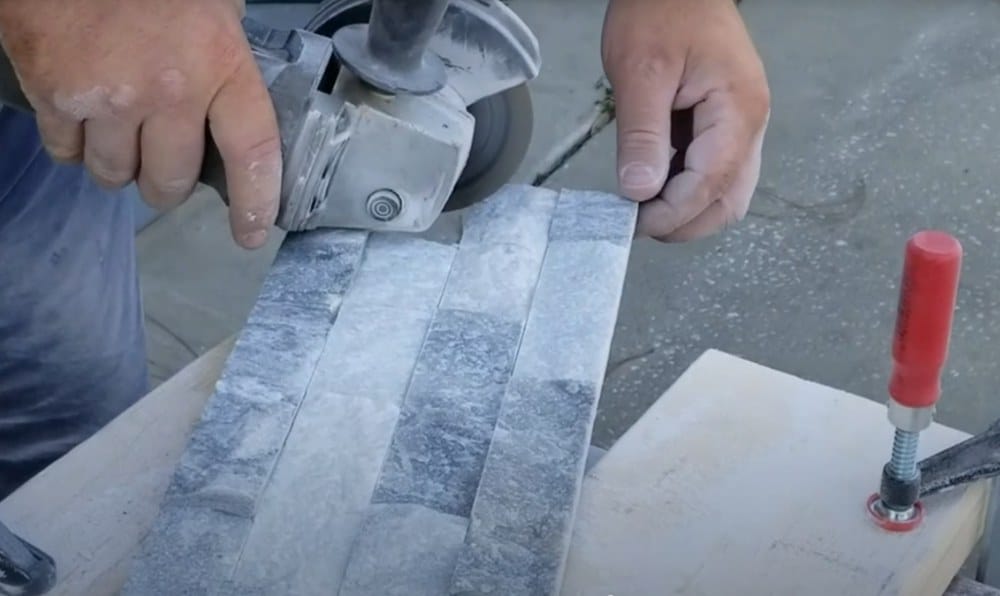
積み上げられた石を切断しても、エッジが欠けたり、煙が出たり、パネルが無駄になったりすることはありません。この初心者向けのチュートリアルでは、適切な刃の選択、水と供給量の制御、湿式鋸とグラインダーを組み合わせてクリーンで正確、安全な結果を得る方法を示します。
このガイドでは、積み上げた石材の切断に必要な工具と装置、積み上げた石材を切断するための段階的な手順、および石材を切断する際の安全に関するヒントについて説明しており、住宅所有者、DIY 愛好家、住宅請負業者が切りくずのない切断を実現し、粉塵の露出を減らし、コストのかかる再作業を回避できるように支援します。
積み上げた石の切断に必要な工具と装置
切断 積み上げられた石 主に連続リムダイヤモンドブレードを備えた湿式鋸が必要です。 95% of the cuts, delivering clean, chip-free edges with water lubrication to reduce heat and dust. Angle grinders with diamond blade attachments handle specialized curves and custom shapes, while hand tools like chisels and hammers support finishing and detail work.
In our experience, the right tool choice makes cutting stacked stone faster, cleaner, and safer. The mix below covers straight cuts, on-site shaping, and fine detailing.
Primary Cutting Tools
- ✅ Wet saw with continuous rim diamond blade: Handles about 95% of straight cuts on 積み重ねられた石のベニヤ, with water cooling for smooth, chip-free edges and better blade life.
- ✅ Angle grinder with diamond blade: Portable and precise for notches, curves, and custom shapes around outlets, corners, and fixtures.
- ✅ タングステンカーバイドの歯を備えた弓のこ: 小さなトリミングや最小限の除去に機能します。予算に優しいですが、労力がかかり、電動オプションよりも時間がかかります。
シェイプとディテールをサポートするツール
- ✅ ハンドノミとハンマー: エッジを磨き、自然な割れ目を作ります。砂岩や石灰岩などの柔らかい石に特に効果的です。
- ✅ 直角グラインダー: ダイヤモンドブレードまたはカップホイールアタッチメントを使用してエッジを整形し、滑らかにし、きれいなプロファイルを実現します。
- ✅ ロータリーハンマードリル: アンカー、留め具、照明貫通用の石材ビットで穴を開けます。
- ✅ ウェッジとフェザー: 切り込み線に沿って大きな部分を分割し、制御された自然な外観の破壊を生成します。
コストと使用上の考慮事項
DIY users often rent the heavier gear, while contractors purchase based on project frequency. The table below compares common options for cutting stacked stone。
| 🧰 Tool | 💲 Upfront Cost | 📦 Rent Available | 🚀 Best For | 🧠 Skill Needed | 💡 Notes |
| Wet saw (continuous rim) | 高い | ✅ Yes | Clean straight cuts, most panels | Low–Medium | 💡 Delivers ~95% of project cuts with minimal chipping |
| Angle grinder (diamond blade) | 中くらい | ✅ Yes | Curves, notches, on-site adjustments | Medium–High | ⚠️ Produces dust; steady hands improve accuracy |
| Hand tools / tile cutters | 低い | ✅ Sometimes | Small trims and finish work | 低い | ❌ Slow for larger cuts; good for touch-ups |
Safety and Dust Management
- ✅ Wet saws use water to suppress airborne dust, reduce heat, and extend blade life while improving cut quality.
- ⚠️ Angle grinders and hacksaws create significant dust; wear safety glasses, hearing protection, and a respirator rated N95 または P100。
- 💡 Use water-fed systems or a helper with a spray bottle to cool the blade and limit chipping on delicate edges.
Best Practices for Cutting Stacked Stone
- 💡 Choose continuous rim diamond blades on wet saws to prevent chipping and achieve smooth, factory-like edges.
- ✅ Use the wet saw for the majority of straight cuts, and reserve the angle grinder for curves, notches, and precision shapes.
- 💡 ノミとハンマーを使用した機械カットを組み合わせて、特に柔らかい石の自然なエッジ仕上げを実現します。
- 🚀 不定期のプロジェクトの場合は、プロレベルの結果を維持しながらコストを抑えるために、湿式のこぎりやグラインダーをレンタルしてください。
積み上げられた石を切断するための段階的な説明
切断 積み上げられた石のパネル 直線切断にはダイヤモンドブレードを備えた湿式鋸、曲線や精密な作業にはアングルグラインダーという 2 つのツールを使用する必要があります。成功は、適切な準備、安定した供給速度、継続的な水冷、および安全プロトコルの順守にかかっています。
このガイドを使用して、きれいで安全で再現性のある切断を計画してください。 積み上げられた石のパネル。私たちの経験では、慎重な準備と水の管理が最大の違いを生みます。
必須のツールと材料
- ✅ 主要ツール: 連続リムダイヤモンドブレードを備えた湿式鋸で、真っ直ぐな切断と最小限の欠けを実現します。
- ✅ 補助ツール: カーブ、ノッチ、狭い箇所用のダイヤモンドブレードを備えたアングルグラインダー。
- ✅ サポート機器: カット中にパネルがずれないようにするためのクランプまたは安定した作業台。
- 💡 マーキング用品: チップコントロール用のペインターテープと正確なレイアウトライン用の鉛筆。
- ⚠️ 安全装備: 手袋、目と耳の保護具、シリカ定格の防塵マスク。
段階的な切断プロセス
- 💡 やり直しを避けるために、2 回測定し、明確に印を付けてください。
- ✅ 顔の欠けを軽減するために、カットラインにペインターテープを貼ります。
- ✅ パネルが動かないようにしっかりとクランプしてください。
- 🚀 Use the wet saw for straight cuts; keep the blade continuously wet to cool, lower friction, and suppress dust.
- ✅ Feed at a steady, consistent pace; let the blade cut without forcing it.
- 💡 For curves or details, use the angle grinder in short bursts, making shallow passes and deepening gradually.
- ⚠️ When plunge cutting with the grinder, work from the back side to protect the visible face.
- ✅ Check water level and blade condition regularly for optimal performance.
Tips for Achieving Clean Cuts and Preventing Damage
- 💡 Use light pressure and let the diamonds cut; heavy force increases chipping and blade wear.
- ✅ Keep the blade wet continuously; interrupted cooling risks overheating and cracking.
- 🚀 ペインターテープは通常、顔の欠けを約 30~40%。
- ✅ 盤石なパネルの位置を確保します。動きにより不均一な切断が発生し、刃が蹴られる可能性があります。
- ⚠️ 急いではいけません。忍耐強く続けることで、より滑らかな刃先が得られ、刃の寿命が延びます。
積み上げられた石を切断する際の安全上の考慮事項
- ⚠️ 適切な個人用保護具(手袋、安全メガネ、聴覚保護具、シリカ定格防塵マスク)を着用してください。
- ⚠️ グラインダーの速度を尊重してください。多くのモデルがそれを超えています 10,000RPM、キックバックのリスクが増加します。
- ✅ クランプを使用してパネルを固定し、刃の経路に手を近づけないようにしてください。
- 💡 粉塵や水の飛沫を管理するために、作業スペースを清潔に保ち、換気を行ってください。
専門的な洞察とよくある間違い
In our experience, the wet saw should handle most work while the grinder refines details. Smart sequencing reduces total cuts and clean‑up.
- ✅ The wet saw covers about 95% of cuts with lower chip risk; the grinder complements for detail work.
- ⚠️ Skipping water cooling leads to glazed blades and rough edges.
- ❌ Forcing the blade or rushing creates chips and shortens blade life.
- 💡 Plunge cut from the back to protect the visible face on complex shapes.
- ✅ Maintain slight panel overhang to give the blade clearance and prevent binding.
| Metric | Value | Why it matters | Note |
|---|---|---|---|
| Wet saw share of cuts | ✅ 95% | Cleaner straight cuts with minimal chipping | Use continuous water flow |
| Angle grinder speed | ⚠️ > 10,000RPM | High speed increases kickback risk | Use shallow passes and firm grip |
| Tape chipping reduction | 💡 30~40% | Smoother edges on the visible face | Apply tape over the cut line |
Safety Tips When Cutting Stone
Stone cutting involves serious risks, such as amputations, silicosis from silica dust, and eye injuries from flying debris. Protecting workers requires using machine guarding, personal protective equipment, wet cutting to control dust, along with thorough training and supervision.
切断 stacked stone delivers clean lines and tight joints, but the job exposes you to sharp blades, dust, and flying chips. In our experience, the right setup and habits make a bigger difference than any single tool.
Common Hazards and Incident Data
| IconHazardIncident SnapshotWhat it means when cutting 積み上げられた石 | |||
|---|---|---|---|
| ⚠️ | Unguarded blades and kickback | で 2010年, amputations accounted for 100 of 180 recorded injuries, along with cuts and lacerations. | Use guards and two‑hand controls, keep hands clear, and secure each piece before the cut. |
| ⚠️ | Crystalline silica dust (silicosis) | Silicosis may affect 59,000 US workers over a lifetime, with about 2,000,000 workers exposed. | Plan for wet cutting and dust capture, and wear a proper respirator during dry tasks. |
| ⚠️ | Flying chips and shards | Rock fragments frequently strike eyes and face during cutting operations. | Wear safety glasses plus a face shield, and set up chip guards on saws. |
| ⚠️ | Industry injury burden | 以上 10 years, the crushed stone industry recorded 7 deaths and 1,443 non‑fatal lost‑time injuries. | Treat small jobs like big ones: controls, PPE, and supervision still apply in home and residential settings. |
Proven Safety Measures to Reduce Risk
- ✅ Machine guarding and two‑hand controls prevent reach‑in hazards and amputations. Confirm blade guards return fully after each cut and interlocks function before work.
- ✅ Wet cutting controls silica at the source. Keep a steady water flow on the blade and kerf, and manage slurry with a dedicated collection tray.
- ✅ Clamp and support the stone. Stabilize narrow pieces, use push sticks, and wait for the blade to reach full speed before feeding the cut.
- ✅ Use PPE every time:
- ✅ Safety glasses plus a face shield for chip protection.
- ✅ Respirator rated for fine dust when wet control is not possible.
- ✅ Cut‑resistant gloves and long sleeves to reduce lacerations.
- ✅ Hearing protection around saws and grinders.
- ✅ Steel‑toe boots with good traction on wet floors.
- ✅ Training, supervision, and maintenance. Review safe saw setup, blade selection, and kickback prevention, and inspect guards, switches, and mounts before shifts.
- 💡 Reduce cuts to reduce risk. 連動して積み上げられた石パネル and matching L‑shaped corners minimize field miters and shorten blade time on site.
Critical Insights on Safety Compliance and Industry Practice
- ⚠️ Many shop and jobsite stone cutters ship with limited guarding. Simple retrofits like fixed point‑of‑operation guards and two‑hand controls can close the gap fast.
- ⚠️ Compliance limits alone rarely keep exposure low when dry cutting. Pair rules with engineering controls like wet cutting and tool‑mounted vacuums to drive dust down.
- ⚠️ Crews often underestimate flying debris. Eye injuries remain common, so always add a face shield over glasses when cutting 積み上げられた石。
- 💡 Non‑fatal injuries still drive lost workdays and rework. A written program that covers planning, blade selection, housekeeping, and change‑out schedules pays back quickly.
Regulatory Standards and Best Practices
- ✅ OSHA requires effective machine guarding and safe operation on stone cutting equipment.
- ✅ MSHA tracks injury trends and silica exposure across the crushed stone sector to inform controls.
- ✅ CDC highlights silicosis cases and promotes dust control strategies like wet cutting and ventilation.
- ✅ Employers and contractors should combine engineering controls, PPE, and worker training to meet or exceed safety requirements on every cutting task.
Working safely while cutting stacked stone protects people and keeps projects on schedule. Build these controls into your standard setup, not as add‑ons.
Elevate Every Project with Premium Natural Ledger Stone
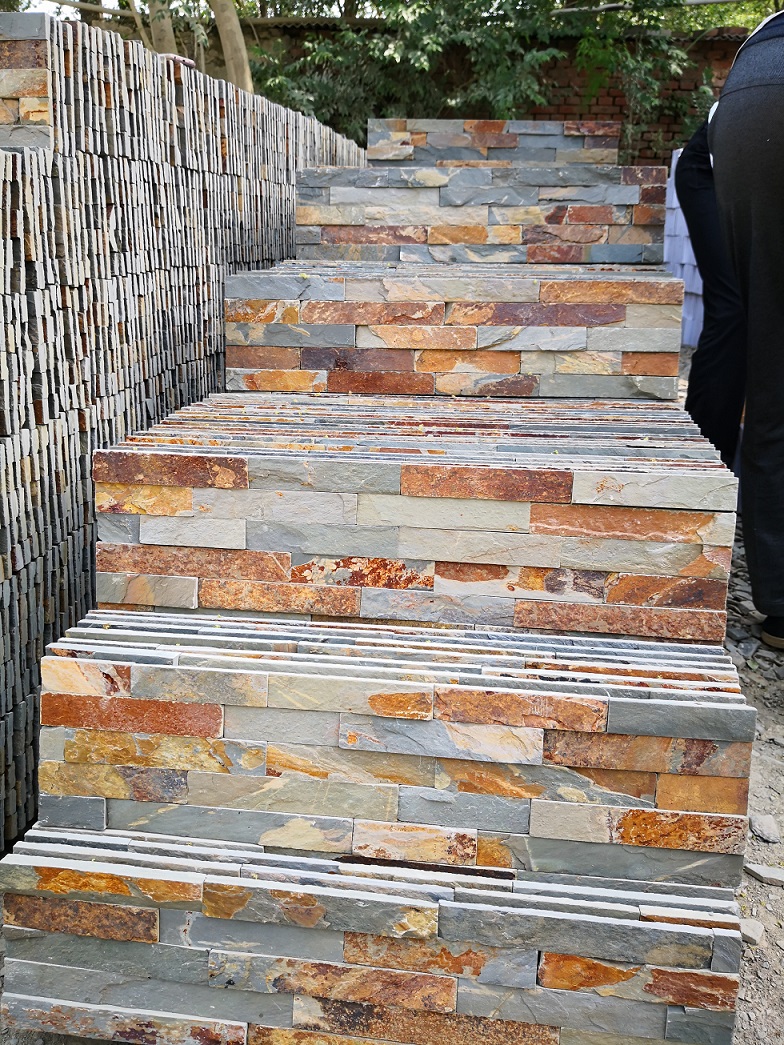
Unlock unmatched authenticity and design versatility with our expertly crafted interlocking stone panels—offering faster installations, reduced costs, and enduring beauty that will impress your clients for decades. Partner with us for factory-direct pricing and consistent top-tier quality tailored to your business needs.
How to Finish and Seal Cut Edges
Cut edges of stacked stone should be sealed using water-based penetrating sealers applied in multiple thin coats. This protects the stone from moisture, staining, and damage while preserving its natural look and breathability.
切断するとき 積み上げられた石, the saw exposes fresh pores that take in water and grime fast. In our experience, a good edge seal keeps the face looking natural while boosting durability.
Recommended Sealers and Application Techniques
Choose a penetrating sealer that fits the space and sheen you want. Most homes benefit from water‑based options, while tough exterior zones may call for solvent‑based products.
| Sealer Type | 最適な用途 | Look & Cleanup | 注意事項 |
|---|---|---|---|
| ✅ Water‑based penetrating | 内壁, most residential exteriors | Natural appearance, low VOCs, easy water cleanup | 💡 Breathable; minimal darkening |
| ⚠️ Solvent‑based penetrating | High‑traffic or harsh exterior conditions | May slightly darken stone; tougher cleanup | ❌ Use PPE; manage fumes and ventilation |
- 💡 Apply 2 to 3 thin, even coats rather than one heavy coat to avoid uneven sheen and white residue.
- 💡 Use a brush, roller, or sprayer; on vertical surfaces work from the bottom up to control drips.
- 💡 Allow 1–3 hours between coats based on temperature and humidity.
| ステップ | Amount / Time | チップ用 |
|---|---|---|
| Coats | 2–3 thin coats | ✅ Stop when the edge no longer absorbs quickly |
| Dry time between coats | 1–3 hours | ⚠️ Cool, damp conditions need more time |
Timing and Curing Considerations
Give the installation time to cure before you lock in moisture with a sealer. This step prevents haze, discoloration, and long‑term issues.
| Milestone | Minimum Wait | Why It Matters |
|---|---|---|
| After 石の取り付け → first sealing | 30 days | ✅ Avoids trapped moisture and efflorescence |
| Cure stone before stacking | 48 hours minimum | 🚀 Ensures adhesive and stone are stable |
| After sealing cut edges → stacking | 4 hours minimum | 💡 Reduces fingerprints and smudges on fresh sealer |
Sealing too early can cause discoloration, efflorescence, or even damage to the bond line. When in doubt, extend the wait window.
Why Sealing Cut Edges Is Important
Cut edges expose the stone’s porous interior, the most absorbent path for water and stains. Sealing targets that path without changing the natural face.
- ✅ Cut edges absorb fast; sealing blocks moisture, stains, and freeze‑thaw damage on exterior work.
- ✅ A penetrating barrier preserves the stone’s integrity in wet rooms and outdoor facades.
- ✅ Water‑based sealers keep the natural tone and texture without unwanted darkening.
Common Mistakes and Best Practices
- ⚠️ Do not seal right after installation; premature sealing traps moisture and causes defects. Wait about 30 days。
- ❌ Skip thick coats and puddles; use multiple thin layers for even coverage and no white haze.
- 💡 Work in small sections and keep a wet edge to prevent lap marks and streaks.
- 💡 When the sealer stops absorbing and begins to pool, lightly dab the excess with a clean cloth.
- ✅ 屋外プロジェクトの場合は、毎年監視し、毎回再シールしてください。 1~2年。屋内では定期的にチェックし、必要に応じて再度封をしてください。
私たちの経験では、 丁寧なエッジシールで積み上げた石を切断します 天候や定期的な清掃に耐えながら、工場完成のように見えます。タイミングウィンドウに従えば、一貫した自然な結果が得られます。
積み上げられた石を切断するときに避けるべきよくある間違い
The most critical cutting mistakes include overcutting stones, improper cutting techniques, inadequate measurement, and using incorrect cutting tools—all of which result in gaps, broken pieces, and unprofessional finishes that are difficult to correct without starting over. Proper planning, precise measurement, and test-fitting before mortar application are essential to achieving a seamless, professional appearance.
切断 積み上げられた石 looks simple at first, but small errors add up fast. In our experience, clean cuts start with planning, the right blade, and patient test-fitting.
Common Cutting Mistakes and Their Impact
- ⚠️ Overcutting or improper cutting creates gaps, broken pieces, and wasted material.
- ⚠️ Uneven or jagged edges leave visible joints and a poor fit between panels.
- ⚠️ Incorrect corner cuts lead to sloppy outside or inside corners that draw the eye.
- ⚠️ Rushing the cutting process results in sloppy placement, uneven joints, and weak mortar adhesion.
- ⚠️ Using the wrong cutting tools chips or burns the stone and produces inconsistent cuts.
- ⚠️ Skipping test-fitting hides problems until after mortar goes on, making fixes difficult.
Effective Prevention Techniques
- 💡 Measure each piece carefully before any cut to improve alignment and reduce misfit.
- 💡 Use proper tools like a wet saw or an angle grinder with a diamond blade for clean, precise cuts and less waste.
- 💡 Cut cornerstones at 45° (miter both pieces) for tight, clean outside corners.
- 💡 Lightly sand or dress edges before installation to remove burrs and prevent jagged joints.
- 💡 Lay out and test-fit each row dry to catch fit or edge issues before applying mortar.
- 💡 Plan your cut sequence and allow time for cutting and curing so quality does not slip.
- 💡 Use factory L-shaped corner pieces when available to avoid tricky on-site miters and save time.
Planning and Tool Selection: The Foundation of Quality Cutting
In our experience, a dry layout on the floor reveals edge conflicts and odd joints early, so you cut once and install with confidence. Choosing the right equipment boosts precision and cuts down on breakage.
| Tool | Best for | Water use | Typical blade size | 精度 | Breakage risk |
| Wet saw (continuous-rim diamond) | Straight cuts, miters, repeatable accuracy | ✅ Yes | 7–10 in | ✅ High | ❌ Low |
| Angle grinder (diamond blade) | Notches, on-wall trims, scribing | ❌ No (dry) | 4.5–5 in | ⚠️ Medium | ⚠️ Medium |
| Hand nippers + sanding stone | Micro-adjustments, edge softening | ❌ No | n/a | ✅ High (small tweaks) | ⚠️ Medium on brittle stone |
Thoughtful planning reduces rework and catches problems before mortar goes on. Accurate measurement and the right tool set trim install time and material waste.
Common Misconceptions and Their Consequences
- ⚠️ “I can hide small flaws with mortar.” Gaps and misalignments tend to stand out more over time as the wall settles.
- ⚠️ Poor cuts weaken bond lines and reduce the long-term durability of the installation.
- ⚠️ Ignoring proper technique leads to wider repairs later and a noticeable drop in visual quality.
Maintenance Tips for Your Stacked Stone Project
Proper maintenance of stacked stone involves regular cleaning with pH-neutral products, periodic sealing every 3–5 years, and routine inspections for damage. These steps can extend the lifespan of stacked stone panels by 15–20 years while keeping their natural appearance and structural integrity intact.
Clean stone looks better and lasts longer. In our experience, a simple routine beats costly restoration later.
If you just finished cutting stacked stone for an install, consistent care keeps fresh edges sharp and color true.
| タスク | 推奨周波数 | Key Spec / Method | Outcome |
|---|---|---|---|
| ✅ Dusting | High-traffic: weekly; Decorative: monthly | Soft brush or vacuum, work top-to-bottom | 🚀 Keeps debris off the surface; reduces abrasion |
| ✅ Light cleaning | 必要に応じて | pH-neutral cleaner + warm water; do not saturate ⚠️ | ✅ Maintains natural color and finish |
| ✅ Deep cleaning | When routine cleaning is not enough | Stone cleaner dwell time 3 ~ 5 分; work in 3–4 sq ft areas | ✅ Lifts embedded dirt without etching |
| ✅ Sealing | 3–5 years typical | 2 thin coats; min dry time 2時間; first time 2–3 coats; porous stones may need 3+ | 🚀 Repels water/oil; extends life up to 20年 |
| ✅ Inspection | 2 times yearly + after extreme weather | Check cracks, loose pieces, moisture, grout | 💡 Catch small issues early; avoid major repairs |
定期的な清掃の実践
Routine care keeps dust, soot, and airborne minerals from settling into pores. Start gentle and stay consistent.
- ✅ Dust high-traffic installations weekly and decorative areas monthly using a soft-bristled brush or vacuum; work top-to-bottom to avoid re-soiling lower courses.
- ✅ For light cleaning, mix a pH-neutral cleaner with warm water and wipe with a soft cloth in circular motions; do not saturate the stone to protect mortar joints.
- ❌ Avoid acid-based or high-alkaline cleaners, bleach, pressure washers, and abrasive pads that can etch or dislodge pieces.
- ⚠️ Test any new cleaner in an inconspicuous spot first for 24 hours to check for color change.
Deep Cleaning and Sealing Procedures
When routine cleaning stalls, step up to a stone-specific cleaner. Work small and give chemistry time to work.
- ✅ Apply stone cleaner, allow a dwell time of 3 ~ 5 分, and agitate with a soft brush in sections of about 3–4 sq ft。
- 💡 Rinse with clean water and towel-dry to prevent mineral spotting on darker stones.
- ✅ Seal every 3–5 years using 2 thin coats applied bottom-to-top with a pump sprayer or paint pad; allow at least 2時間 between coats.
- ⚠️ Porous stones like sandstone may need additional coverage; first-time sealing often requires 2–3 coats for full saturation.
- ✅ Quality sealers create an invisible, breathable barrier that repels water and oil, helping panels last up to 20年 with proper care.
- 💡 In our experience, multiple thin coats bond better than a single heavy coat and cure more evenly.
Inspection and Preventive Maintenance
Set a simple inspection cadence to avoid surprise repairs. Tackle small issues before they spread.
- ✅ Perform visual inspections 2 times per year and after extreme weather; look for cracks, loose stones, moisture buildup, and damaged or missing grout.
- 💡 Prioritize water-prone areas near sprinklers, under eaves, hose bibs, and around fixtures; watch for discoloration, efflorescence, vegetation growth, or insect activity.
- 🚀 Routine inspections catch problems early and help you avoid expensive restoration or replacement.
- ⚠️ If you face freeze–thaw cycles or de-icing salt exposure, increase inspection frequency and reseal high-wear zones sooner.
Common Misconceptions and Best Practices
- ❌ Not all “stone cleaners” are safe; only pH-neutral products protect the surface without etching.
- ⚠️ Pressure washing can force water into crevices and dislodge pieces; choose gentle hand cleaning instead.
- ✅ One heavy coat of sealer underperforms; apply 2 thin coats for better adhesion and coverage.
- 💡 Prevention pays off: routine cleaning and sealing cost far less than professional restoration.
Frequently Asked Questions About Cutting Stacked Stone
What is the best tool for cutting 積み上げられた石?
Use a wet tile saw with a continuous‑rim diamond blade for clean, straight cuts on panels and corner pieces. An angle grinder with a diamond blade handles notches, outlets, and small trims. In our experience, wet cutting keeps edges crisp and reduces dust.
- ✅ Wet tile saw (continuous‑rim diamond) for smooth, straight cuts
- ✅ Angle grinder (diamond blade) for notches, L‑cuts, and scribing
- ✅ Hand nippers and a rubbing stone for edge tuning and micro‑chips
- ✅ Masonry miter or bridge saw for frequent miters and production work
For our Flat and Marble Series, a fine, continuous rim gives the best edge quality. For deeper textures like the Rough Series, slow the feed and support the piece so the face stays stable.
How do I avoid chipping the stone?
- 💡 Use a continuous‑rim diamond blade, not a segmented one.
- 💡 Apply painter’s tape over the cut line to support the surface.
- 💡 Make a shallow scoring pass, then finish the cut with light, steady feed.
- 💡 Support the panel close to the blade, especially at the end of the cut.
- 💡 Cut with water to cool the blade and flush fines from the kerf.
- 💡 Dress the blade if it starts to rub or wander, and keep the stone clean of slurry.
- 💡 For Marble Series, slow down and let the blade do the work to protect the polished edges.
If a small chip appears, ease the edge with a rubbing stone so it blends into the natural texture. Many chips disappear once you install and groutless joints close up visually.
Is cutting ストーンベニア hard to do?
Most DIYers can cut 積み上げられた石 with basic masonry tools and a patient setup. Our interlocking panels simplify layout, so you make fewer cuts than with loose pieces. Plan your pattern, mark clearly, and test on an off‑cut before you cut the visible piece.
- 💡 Dry‑fit the course to locate the fewest and least visible cuts.
- 💡 Mark from the face you will see and keep reference lines square.
- 💡 For Rough Series, slow the feed so high points don’t grab the blade.
In our experience, the learning curve is short when you use a wet saw and keep the work supported and stable.
What safety gear do I need?
- ⚠️ Eye protection: safety glasses or a full face shield when grinding
- ⚠️ Hearing protection: ear plugs or muffs around saws and grinders
- ⚠️ Respiratory protection: a respirator suitable for silica dust, even when wet cutting
- ⚠️ Cut‑resistant gloves and sturdy footwear with good traction
- ⚠️ Snug clothing and no dangling items near spinning blades
- ⚠️ GFCI protection and tidy water management when using a wet saw
Work in a ventilated area, keep cords clear of the blade path, and never force the cut. Set up stable support so the panel cannot twist or drop at the end of the cut.
Can I use a regular tile saw?
Yes, if it is a wet tile saw with a continuous‑rim diamond blade and enough table travel to support the panel. Avoid snap cutters and dry tile saws meant for ceramic only. Use slow, steady feed and let the water fully cool and clear the cut.
For long panels or miters, a sliding table or bridge‑style saw makes handling easier. Remember we offer matching L‑shaped corner pieces, which reduce the need for field miters and speed up the install.
最終的な考え
Use a wet saw with a continuous‑rim diamond blade for about 95% of cuts and reserve the grinder for curves. Measure twice, tape the line, clamp securely, and feed steadily with water to keep chips down. Seal cut edges with 2–3 thin coats on the right schedule. Bake in safety—PPE, guards, dust control, and stable support—to keep quality high and downtime low.
This workflow cuts waste, limits rework, protects crews, and safeguards margin. Plan dry layouts, use interlocking panels or L‑corners to reduce field miters, and set a simple maintenance cadence with pH‑neutral cleaning and periodic resealing. Want fewer moving parts? Partner with a reliable supplier so you get matched panels, blades, and sealers on time.
SEO
Title: How To Cut 積み上げられた石: A Step-by-Step Guide for Beginners
Description: Cutting 積み上げられた石 requires the right tools, safety gear, and techniques to achieve clean, chip-free cuts and manage dust effectively for DIYers and contractors.
URL: cutting-stacked-stone-techniques-clean-safe-results
Keywords: cutting 積み上げられた石