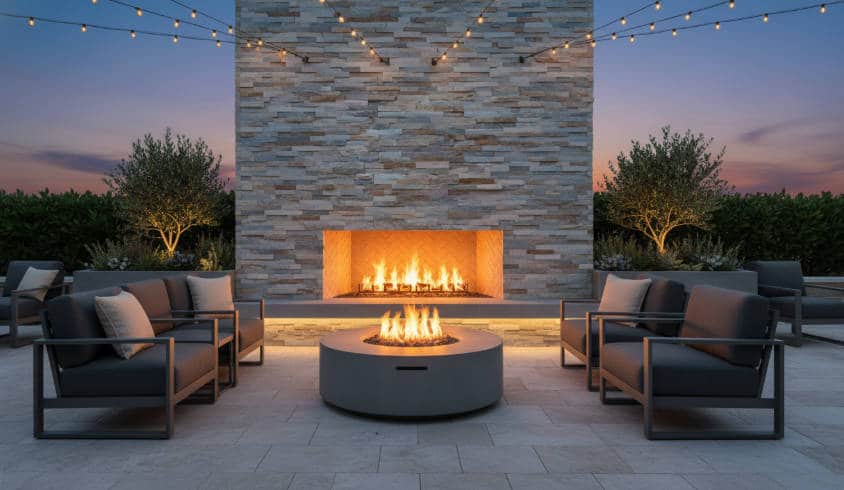
A successful outdoor fireplace install depends on precise engineering to avoid structural collapses that create significant financial and safety liabilities. Builders often struggle with stone delamination and mortar failure when they apply interior methods to exposed exterior environments. These failures do more than ruin the aesthetic; they increase long-term operational costs and risk structural damage to the primary building or patio.
We provide the technical framework for selecting materials and execution methods that survive extreme weather. This technical overview details the mechanics of freeze-thaw cycles, the necessity of specialized adhesives for 屋外の石、および煙突の基材を保護するために必要な特定の防水層。これらのプロトコルを使用して、どのような気候でも湿気の侵入、石の色あせ、藻類の繁殖を防ぎます。
屋外の暖炉にさまざまな石と接着剤が必要な理由
外観 インストーラーが石の暖炉の構築に失敗する 激しい熱膨張や 2026 年の湿度サイクルに耐えられない屋内仕様の材料を使用してください。
Standard masonry materials often fail under the extreme heat generated by active fireboxes, requiring specialized components for safety. Building a functional outdoor fireplace requires a firebox lined with firebricks capable of withstanding temperatures above 2,000°F to prevent structural cracking. While standard cement-based mortars typically crumble during intense heat cycles, refractory mortar maintains its bond. Current 2026 building standards emphasize using ceramic or stainless steel flue liners to shield the outer ストーンベニア from heat damage and corrosive byproducts.
| 特徴 | Standard Interior Grade | Top Source External System |
|---|---|---|
| Material Composition | Pigmented Concrete / フェイクストーン | 100% Natural Quartzite & スレート |
| 紫外線安定性 | Prone to fading and discoloration | Inherent stability; zero fading |
| Adhesive Tech | Standard Modified Thin-set | High-Strength Flexible Epoxy Resin |
| Thermal Limit | Low (Cracks under rapid cooling) | High (Freeze-Thaw & Heat Resistant) |
Natural Stone Durability vs. Manufactured Alternatives
自然 積み上げられた石のパネル provide superior performance in outdoor fireplace applications compared to pigment-based human-made products. 天然石パネル are non-combustible and do not release fumes when exposed to high exterior temperatures. Unlike 加工された石 which uses concrete and pigments, natural stone will not fade or discolor from high UV exposure levels. The dense composition of slate and quartzite naturally resists the thermal expansion caused by proximity to an active fire source.
- Quartzite and Slate offer the highest density for low water absorption.
- Natural cleft surfaces hide soot and environmental wear better than smooth faux alternatives.
- Sourcing from the same quarry vein ensures 95% hue uniformity across large chimney stacks.
High-Strength Epoxy Adhesives for Secure Bonding
The adhesive system used in stone panels must resist both the heat of the fire and the environmental moisture of outdoor settings. We use high-strength epoxy resin adhesives specifically formulated to maintain a permanent bond between the 石とパネル substrate. This adhesive remains flexible enough to accommodate the natural expansion and contraction of the fireplace structure. Properly formulated resins prevent stone fallout, a common issue in older exterior installations where inferior glues failed during seasonal shifts.
Moisture Management and Vapor Permeability
Outdoor fireplaces 外部の気象条件に直面する場合は、水による損傷を防ぐために慎重に材料を選択する必要があります。その間 石のパネル 本来防水性があるため、設置システムには基礎となる煙突構造を保護する防湿層が必要です。塗布されたシーラントは、 石の表面はすす汚れを防ぎ、除去を簡単にします。 湿った気候ではコケや藻類が発生します。モダンな 設置技術では石の後ろの排水面を優先します 閉じ込められた水分が凍結して接着力を損なうことがないようにします。
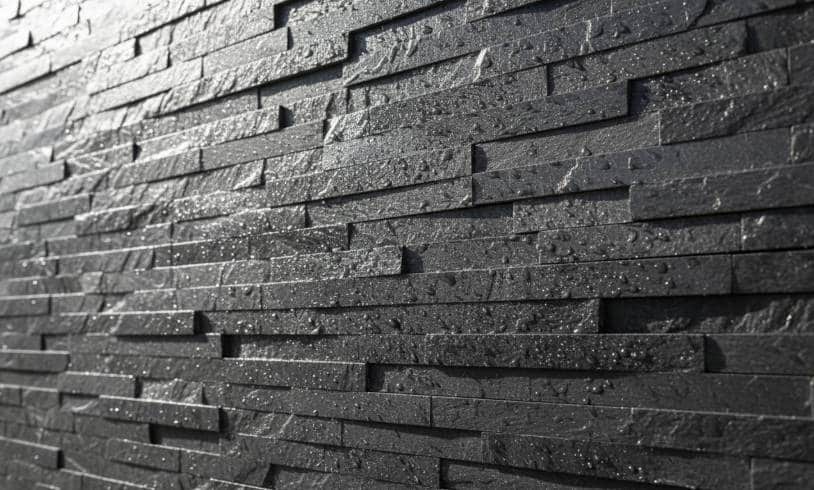
石造りの外周における凍結融解サイクルの管理
Effective freeze-thaw management relies on a two-pronged strategy: selecting materials with minimal water absorption and engineering an assembly that allows inevitable moisture to exit without causing internal pressure.
Selecting Low-Porosity Natural Stones
Density is the most critical metric when specifying stone for outdoor fireplaces in 2026 climates. Choosing high-density minerals like the Top Source Stone Sierra Blue (Quartzite) or Carbon Black (Slate) provides a natural defense against thermal expansion. These materials feature a tightly packed molecular structure that limits the space available for water to penetrate. When moisture enters a porous stone like low-grade limestone and subsequently freezes, the 9% volume expansion of ice generates enough internal force to shear the stone face, a process known as spalling.
| パフォーマンス指標 | Porous Sedimentary Stone | Top Source High-Density Stone |
|---|---|---|
| 吸収率 | High (3% – 7%+) | Ultra-Low (<0.5%) |
| 凍結融解評価 | Susceptible to delamination | ASTM-Standard Resistant |
| Joint Integrity | High expansion/contraction | Stable crystalline structure |
By prioritizing quartzite and slate over softer alternatives, specifiers reduce the risk of structural failure. Natural stone panels from Top Source Stone are sourced from specific quarry veins to ensure batch consistency, which means every panel on a fireplace surround reacts to temperature shifts at the same rate, preventing the uneven stress loads that cause cracks in mixed-batch installations.
Implementing Integrated Waterproofing Membranes
Protecting the chimney substrate is as vital as the stone itself. Apply a high-quality waterproofing barrier directly behind the ストーンベニア コア石積みへの水の移動をブロックします。この層はフェイルセーフとして機能します。たとえ湿気が石の接合部を迂回したとしても、暖炉の構造には到達しません。これらの用途には、柔軟なポリマー改質モルタルを使用します。これらの接着剤は、急激な温度変化の際にも石の微小な動きに対応できる十分な柔軟性を維持し、数十年にわたる冬のサイクルを通じて接着が損なわれないようにします。
排水システムと寝具システムの最適化
水の管理には、重力が壁から湿気を引き離すための明確な経路が必要です。炉棚や囲炉裏棚などの水平面はすべて、水が溜まるのを防ぐためにわずか 2% の傾斜を付ける必要があります。滞留水は一定の飽和源となるため、凍結融解による損傷の主な原因となります。
- Install rainscreen systems with drainage mats to allow air circulation behind the veneer.
- Maintain clean weep holes at the base of the chimney to prevent hydrostatic pressure.
- Use Z-shape interlocking panels to minimize visible vertical joints where water often accumulates.
Breathable Sealers and Seasonal Maintenance
The final layer of defense is a breathable, penetrating sealer—specifically silane-siloxane based formulas. Unlike film-forming sealers that trap moisture behind a plastic-like coating, penetrating sealers bond with the stone’s pores to repel liquid water while allowing internal vapor to escape. If moisture is trapped inside a stone by a non-breathable sealer, it will cause the stone to blow out from the inside during a hard freeze.
年間 maintenance inspections are mandatory for exterior installations. Check for hairline cracks in the mortar or jointing materials before the first frost. Small fissures allow water to enter via capillary action, where it then expands and widens the gap. Keeping the surface free of organic debris like moss also helps, as vegetation holds moisture against the stone, prolonging the saturation period and increasing the risk of freeze-related damage.
Boost Project Profits with Premium Ledger Panels
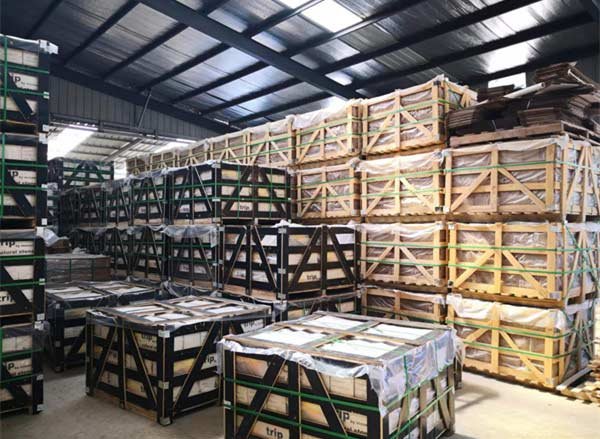
Waterproofing the Chimney Structure Before Applying Stone
Effective chimney waterproofing hinges on a dual-strategy approach: blocking bulk liquid water from the exterior while ensuring internal vapor can escape to prevent structural rot.
Outdoor fireplace failures often stem from moisture trapped between the ストーンベニア and the chimney core. In wetter climates, traditional single-barrier methods fail because they do not account for hydrostatic pressure or the porosity of the underlying masonry. Modern builds prioritize a defense-in-depth strategy, combining physical barriers with dedicated drainage systems that allow the assembly to dry quickly.
Multi-Layered Protection with Weather-Resistant Barriers
Installing a high-quality weather-resistant barrier (WRB) serves as the primary shield for the underlying chimney structure. This layer prevents bulk water penetration from driving rain. To maximize performance, we integrate rainscreen systems that create a 1/8-inch to 1/4-inch air gap. This gap breaks the capillary bond between the 石と壁, allowing any water that bypasses the stone to drain freely to the weep screed.
| Waterproofing Component | 標準設置 | 2026 Best Practice |
|---|---|---|
| Primary Barrier | Single layer Grade-D paper | Dual-layer WRB with drainage mat |
| Joint Management | Standard Mortar bond | Interlocking Z-Shape (Seamless Tech) |
| Vapor Transfer | Non-permeable poly-film | High-permeability liquid membranes |
- Shield the chimney core with high-performance barriers to resist heavy annual rainfall.
- Utilize rainscreen systems to facilitate rapid drying of the wall assembly.
- Ensure all materials meet ASTM standards for exterior moisture management.
Vapor Permeability and Moisture Management
Effective chimney protection requires more than just surface sealing. We select waterproofing membranes that offer high vapor permeability. These materials block liquid water from entering but allow internal moisture vapors to escape. If the chimney cannot “breathe,” moisture accumulates within the wall assembly, leading to internal rot or the slow degradation of concrete blocks and mortar. We focus on moisture management at the substrate level to address water that naturally bypasses even the densest natural stone veneers。
Strategic Flashing and Drainage Channel Integration
Flashing acts as the critical director of water flow. We place metal flashing at every horizontal-to-vertical transition, specifically where the 石のパネル meet the chimney cap or the roofline. These channels redirect water away from the stone interface and prevent pooling. Coordination between the flashing and the rainscreen is mandatory; without a continuous exit path, water becomes trapped behind the stone, increasing the risk of freeze-thaw damage in colder climates.
Substrate Preparation for Brick and Concrete Block
The bonding approach varies based on the porosity of the chimney substrate. Concrete blocks and bricks have high absorption rates, which can suck moisture out of the adhesive too quickly, resulting in a brittle bond. We assess substrate porosity before application, often applying specialized primers to stabilize the surface. For permanent results, we use high-strength adhesives—like heat-rated silicone or specialized epoxies—designed to maintain flexibility across the thermal expansion cycles common in outdoor fireplace environments.
- Determine the need for specialized sealers based on the absorption rate of the brick or block.
- Apply adhesives 天然石用にデザインされた to ensure a permanent bond to waterproofed surfaces.
- 安全性の遵守と構造の完全性を維持するために、不燃性要件に従ってください。
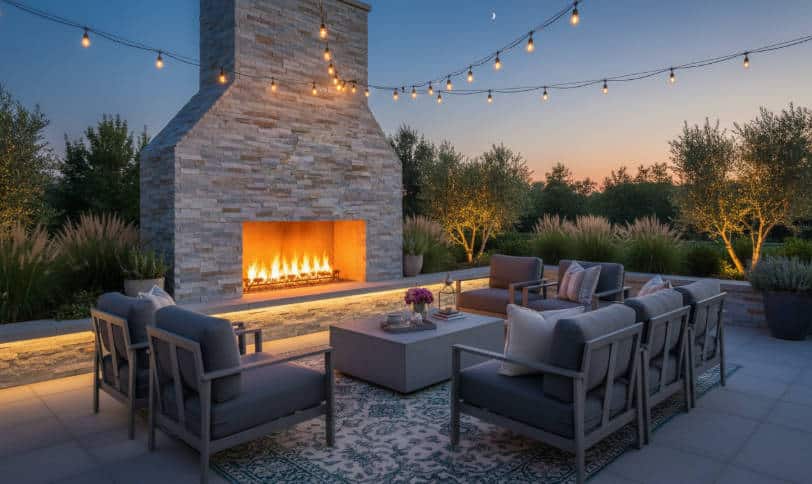
直射日光でも色褪せない石の色を選ぶ
自然 石のパネルが維持されます 顔料は局所的なものではなく地質学的なものであるため、色の完全性が保たれます。また、UV 反射性の色合いを選択すると、表面の熱吸収が減少して構造結合がさらに保護されます。
天然色素沈着 vs. コンクリート着色剤
自然 石のパネル 素材全体に色が存在するため、その外観が維持されます。人工コンクリート複合材料は多くの場合、一定の太陽放射の下で漂白または剥離する表面レベルの顔料に依存しています。 100%天然の切り石を使用することで、人工素材では得られない永続的な耐紫外線性を実現します。 トップソースストーン utilizes source control to extract materials from the same quarry vein, ensuring 95% hue uniformity across large-scale fireplace installs.
- Natural minerals maintain vibrancy without the risk of pigment bleaching or surface delamination.
- The unique textures of slate and quartzite remain consistent even after years of harsh sun exposure.
- Dense stone grades prevent the “白亜質の” appearance common in weathered artificial products.
Light-Reflective Quartzite and Marble Selections
Lighter shades are effective for high-exposure areas because they reflect sunlight and minimize heat absorption. Series like Glacier White and Arctic White reflect UV rays to keep exterior surfaces cooler, which also reduces the thermal expansion stress on the underlying adhesive. Limestone and light granite shades provide a clean aesthetic that resists the yellowing often seen in resin-heavy 加工された石。
- Lighter quartzite panels offer the best performance for 2026 outdoor projects in desert or tropical climates.
- Reflective surfaces minimize the “heat island” effect around outdoor seating areas.
- High-density white stones maintain visual clarity over decades of environmental stress.
UV Resistance in Dark Slate and Basalt Panels
Darker natural stones provide a dramatic contrast and mask the subtle effects of environmental weathering. Deep charcoal and black slate naturally hide dust and organic debris that sunlight often highlights on lighter surfaces. The dense mineral structure of basalt prevents the graying effect found in lower-quality dark materials. Strategic placement of darker panels creates bold focal points that withstand intense direct light without structural degradation.
- Carbon Black and Midnight Slate options provide deep tones that do not wash out in bright environments.
- Natural dark stone handles heat cycles better than dyed cement products.
- Texture-rich surfaces like Copper Canyon utilize natural iron oxides that are inherently UV-stable.
Protective Sealants for Color Retention
天然石 does not fade, but professional-grade sealers protect the finish from environmental pollutants. Applying a pH-neutral 天然石 sealer enhances the stone’s depth and tone while creating a barrier against acid rain and mineral deposits. Sealing creates a shield that prevents the stone surface from becoming dull due to salt spray or smog. Regular maintenance with soft brushes and water keeps the stone looking new throughout its lifespan.
- Breathable penetrating sealers allow moisture vapor to escape without trapping heat.
- Sealing should occur every 12 to 24 months for outdoor fireplaces to counter high UV exposure.
- Enhanced sealers can deepen the “濡れた表情” of the stone without using artificial dyes.
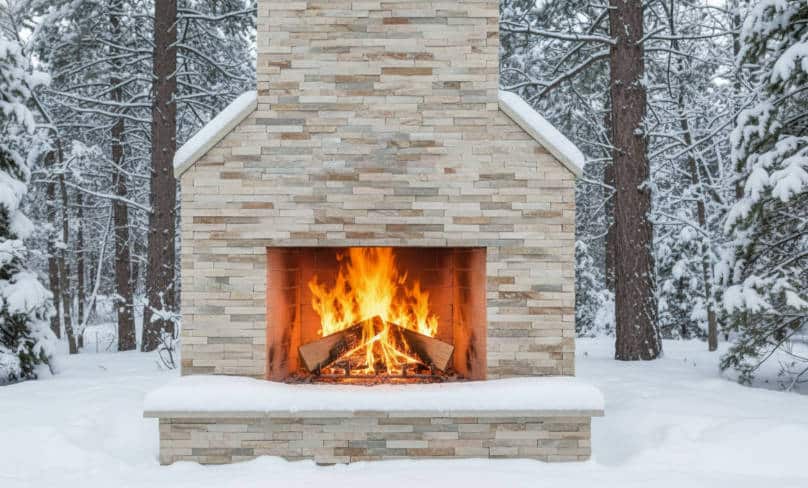
Cleaning Moss and Algae Off Outdoor Fireplace Stone
Organic growth on 外壁石 isn’t merely an aesthetic issue; it indicates localized moisture retention that can accelerate freeze-thaw damage and degrade the underlying adhesive bond.
自然の積み石 provides an ideal environment for biological spores due to its high surface area and deep textures. In shaded or humid environments, these textures trap dust and moisture, creating a micro-ecosystem for moss and algae. Left unchecked, these organisms secrete organic acids that can slowly etch softer stones and penetrate the mortar joints, leading to structural instability over several seasons.
Identifying Organic Growth on Natural Stone
Initial identification focuses on spotting green moss or dark, velvet-like algae staining. These organisms typically flourish on the North-facing side of the chimney or in areas shaded by overhanging trees where sunlight cannot effectively dry the stone after rain. Because 100% 天然石 like quartzite and slate is porous, spores take root deep within the natural clefts of the panel.
- Inspect the deep joints of Z-shape and interlocking panels where moisture lingers longest.
- Differentiate between harmless mineral efflorescence (white, powdery) and harmful organic growth (green, black, or slippery).
- Monitor the base of the fireplace where backsplash from the ground provides constant hydration for moss colonies.
Safe Cleaning Solutions for Stacked Stone
Standard household cleaners often contain acidic components or harsh surfactants that can damage natural stone or weaken the epoxy resins used in panel assembly. Effective cleaning requires agents that neutralize organic matter without altering the stone’s pH balance. Oxygen bleach solutions provide a safer, more effective alternative to standard chlorine bleach, as they break down organic stains without leaving toxic residues or causing “bleaching” of the 天然石 色。
- Apply pH-neutral stone soaps specifically formulated for slate and quartzite to preserve the natural finish.
- Use a mixture of diluted oxygen bleach and water for stubborn algae patches, allowing it to sit for 10 minutes before rinsing.
- Avoid muriatic acid or high-acid vinegars, as these can cause permanent etching and discoloration on many natural stone types.
Pressure Washing Limits for Outdoor Fireplaces
Mechanical cleaning offers rapid results, but excessive pressure can be catastrophic for ストーンベニア. High-velocity water can force its way behind the stone panels, saturating the substrate and potentially dislodging the stone from the mortar bed. We recommend keeping pressure settings well below the thresholds used for concrete driveways to maintain the integrity of the precision-cut edges.
- Keep pressure washers below 2000 PSI and use a wide-angle fan tip (25 to 40 degrees).
- Maintain a minimum distance of 12 inches from the stone surface to prevent surface erosion or “pitting.”
- Scrub intricate textured areas with a soft-bristled nylon brush to remove embedded spores manually.
Preventative Maintenance and Sealing
The most effective way to manage moss is to prevent the stone from becoming a viable habitat. Applying a high-quality, breathable penetrating sealer creates a hydrophobic barrier that prevents water from soaking into the stone’s pores. Unlike topical film-formers, penetrating sealers allow internal vapor to escape, which is critical for the thermal cycles of a fireplace.
- Apply silane/siloxane-based sealants only after the stone has dried completely for at least 48 hours.
- Incorporate a bi-annual inspection into your 2026 exterior maintenance plan to catch growth before it spreads.
- Reapply sealants every 18 to 24 months in high-moisture climates to maintain the protective barrier against organic spores.
結論
Selecting stone that resists freeze-thaw cycles and UV exposure ensures these outdoor features maintain their structural integrity and appearance over time. Waterproofing the substrate and using high-performance adhesives prevents delamination when temperatures fluctuate. High-precision natural panels provide a durable, seamless finish that protects the architectural design from the environment.
Review our latest technical specifications for freeze-thaw resistant materials or request a sample crate to verify color consistency for your next project. Our team supports landscape architects with factory-direct sourcing to ensure material performance in demanding exterior applications.
よくある質問
What is the best stone for an outdoor fireplace?
The firebox must be lined with firebricks—dense, low-porosity bricks capable of enduring temperatures exceeding 2,000°F. For the exterior veneer, granite, basalt, and slate are the best options because they have low porosity and high resistance to thermal expansion. These natural stones withstand environmental weathering better than softer stones like limestone or manufactured veneers.
Can exterior stacked stone handle heavy rain and snow?
はい、 exterior stacked stone is highly durable, but its longevity depends on proper installation. Because standard concrete blocks can crack under repeated heating and cooling, it is essential to have a proper moisture barrier and drainage plane behind the stone. This prevents water from being trapped in the substrate, which can lead to spalling or cracking during freeze-thaw cycles in winter.
屋外の石造りの暖炉をより頻繁に密閉する必要がありますか?
Yes, outdoor fireplaces should be sealed every 12 to 24 months. Unlike indoor installations, outdoor stone is exposed to UV rays, acid rain, and soot. Using a high-quality, breathable silane-siloxane sealer protects the stone from moisture penetration and prevents soot from staining the porous surface while allowing internal gases to escape.
屋外の暖炉から石が落ちるのを防ぐにはどうすればよいですか?
予防は、コアアセンブリに高温耐火モルタルを使用し、ポリマー改質シンセットをコアアセンブリに使用することから始まります。 ストーンベニア。素材が清潔であることを確認し、 “バックバタリング” モルタル被覆率100%を実現する技術です。大きくて重い石の場合は、重力や熱応力に対する構造的なサポートを提供するために、機械的な結合またはアンカーを使用する必要があります。
極端な屋外温度に最適な接着剤は?
For the firebox and structural core, high-temperature refractory mortar is mandatory, as it is engineered to resist thermal expansion without losing structural integrity. For the exterior veneer, an ANSI A118.15-compliant, polymer-modified thin-set is the industry standard. These adhesives provide the flexibility needed to handle the significant temperature differentials between the hot firebox and the cold exterior air.