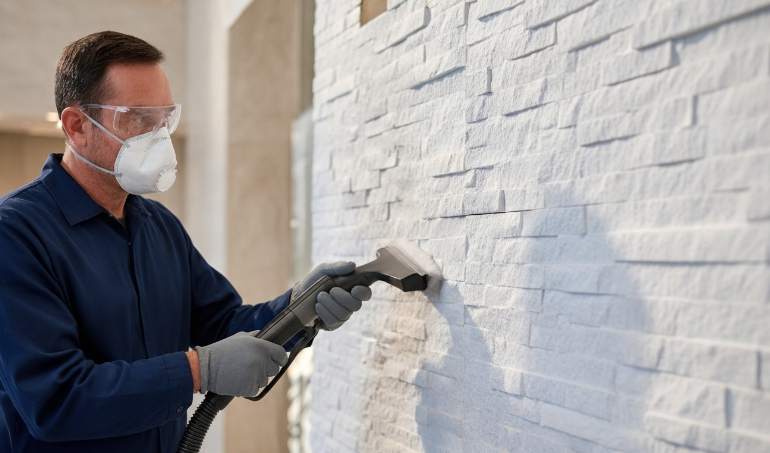
06. Maintenance & Soot Science is the frontline against pore-driven soot infiltration in natural stone; left unchecked this problem drives unexpected cleaning costs, widens maintenance downtime, and exposes facilities to air-quality complaints and regulatory risk.
This guide serves as a technical SOP for homeowners and facility managers: it explains why stone pores act like magnets for carbon and dust, flags acidic and other cleaners to avoid, and delivers a step-by-step procedure for removing heavy smoke buildup without damaging veins — the core section. You’ll also get safe methods to restore natural luster, HEPA-vacuum routines to cut airborne particulates, sealing strategies that repel future carbon ash, plus tool lists, dilution ratios, PPE checkpoints, and inspection criteria that make the work repeatable and auditable.
Why Natural Stone Pores Are Magnets for Carbon and Dust?
Porous stone adsorbs soot and fine dust via surface forces and water transport, so pick materials and specs that limit adsorption and budget for maintenance.
Micropore Adsorption: Van der Waals, Electrostatic and Capillary Forces
Micropores and narrow grain-to-grain gaps create very high internal surface area where Van der Waals attractions, electrostatic interactions and hydrogen bonding pull soot and sub-micron dust onto mineral surfaces. Water films inside those micropores act as carriers, moving suspended carbon deeper into the matrix and locking it in as liquids evaporate or oxidize the deposit. Expect rapid initial darkening on high open-porosity materials and variable performance between quarry batches unless you control sourcing.
Specify measurable material metrics up front: require open-porosity and water absorption testing per ASTM C97 on representative quarry-batch samples before approving orders, and prefer denser quartzite variants for high-soot facades. Include a maintenance allowance and inspection schedule in contract documents to address faster early-stage soiling where micropore volume is high.
- Request ASTM C97 open-porosity and water absorption data on representative quarry-batch samples before order approval.
- Specify lower-porosity materials (dense quartzite) for high-soot environments.
- Source from the same quarry vein per order to keep hue and adsorption behavior consistent.
- 予算 cleaning and inspection allowances in the project’s maintenance spec for initial darkening.
Pore Architecture and Weathering: Freeze-Thaw, Enlargement and Particle Entrapment
Freeze-thaw cycles and salt crystallization expand transitional and larger pores over time, increasing the stone’s capacity to trap particulate and dissolved carbon. Confirm laboratory or documented field results showing a ‘freeze-thaw resistant’ rating from your supplier for projects in cyclic climates, and plan for how pore enlargement will change cleaning frequency and restoration scope over the building lifecycle.
Design to reduce moisture-driven particle transport: use interlocking Z-shape or S-shape panels and matching L-corners to minimize exposed vertical joints and cut direct pathways for water and particles. Schedule condition surveys so you detect pore enlargement early and plan selective re-sealing or panel replacement where porosity increases materially.
- Verify ‘Freeze-Thaw Resistant’ performance data from supplier (lab reports or field case studies) for cold climates.
- Specify interlocking Z/S-shape panels and matching L-corners to limit exposed vertical joints; Top Source Stone offers CNC diamond-blade precision interlocks for tight fits.
- Plan condition surveys at least every 2–5 years in cyclic climates; increase frequency where salt exposure or heavy pollution accelerates weathering.
- Account for panel thickness and handling: 標準パネル at 150x600mm (6″ ×24″) and thicknesses from 1–3.5cm affect replacement logistics and weight per m².
Surface Chemistry, Weathering Crusts and Protection: Cleaning and Sealing Strategies
Weathering crusts form a chemically active surface layer rich in organic matter, iron oxyhydroxides and soot; oxidation strengthens particle retention and makes deposits harder to remove. Reduce water-borne particle transport by specifying breathable silane/siloxane water-repellent sealers that maintain vapor permeability; always test sealers on mock-up panels from the same quarry batch before full application。
Adopt a conservative cleaning protocol: remove loose debris with HEPA-equipped vacuuming (HEPA traps ~99.97% of particles ≥0.3 μm), then use low-pressure rinsing and neutral pH stone cleaners for routine maintenance. Reserve mechanical grinding or stronger chemical remediation for documented, controlled interventions and avoid acidic cleaners—train crews on SDS requirements, PPE and ventilation. Add contract clauses requiring pre-shipment visual verification of crates and an on-site maintenance schedule tailored to local pollution and salinity conditions.
- Test breathable silane/siloxane sealers on sample panels from the approved quarry batch; verify compatibility and vapor permeability.
- Vacuum loose soot with HEPA-filtered equipment before any wet cleaning to reduce airborne recirculation.
- Use neutral pH cleaners and low-pressure rinsing for routine maintenance; escalate to mechanical or chemical remediation only after documentation and testing.
- Prohibit acidic cleaners on-site without SDS review and PPE protocols; acidic products risk worker injury and surface damage.
- Include pre-shipment visual verification of finished crates and a site-specific maintenance schedule in the purchase contract; plan reseal cycles typically every 1–3 years depending on exposure.
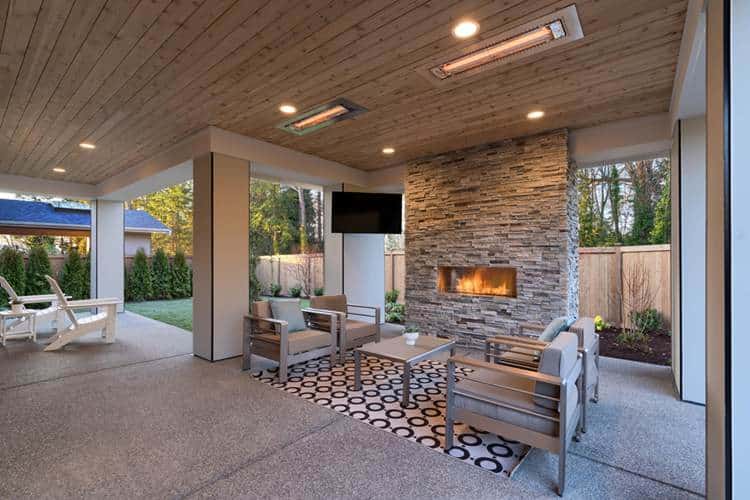
The Danger of Acidic Cleaners: What to Avoid at All Costs
Acidic cleaners rapidly alter surface chemistry on 自然の積み石, driving etching, staining, and costly panel replacement if left unchecked.
Acid–Stone Mechanisms: How acids attack stacked stone pores and minerals
方解石(大理石や石灰岩)は、pH 4 未満の溶液にさらされると目に見えるエッチングを示し、pH 0 ~ 2 の範囲の強酸では数分以内に表面物質が除去されます。珪岩および多くのスレートは、シリカ含有量が高いため、直接エッチングに対する耐性が高くなりますが、低 pH にさらされると、依然として可溶性鉱物が浸出し、鉄が移動し、接触を繰り返すと表面のくすみや変色が生じます。
Liquid moves into stone through micropores and transitional pores; acid rides capillary water and carries dissolved ions and pollutants deep into the matrix where oxidation can convert trapped iron to oxyhydroxides and bind organic carbon, accelerating dark crusts and staining. Natural cleft or split-face finishes increase exposed surface area and contact points, raising the risk of localized etching and deeper penetration compared with honed surfaces. Standard panel thicknesses (1.0–3.5 cm) do not stop these chemical changes—damage starts at the exposed face and often requires restoration or panel replacement.
Common acidic cleaners and ingredients to avoid (pH, typical effect)
Many household and commercial products contain acids with predictable pH ranges and damage profiles; operators must treat these products as high-risk around 自然の積み石. Below are the typical culprits and the effects you will see on calcite-bearing and iron-bearing materials.
- Hydrochloric (muriatic) acid — pH ~0–1: causes rapid dissolution of carbonates, severe surface etching, and harms metal fixings and grout.
- Sulfamic and strong descaler acids — pH ~1–2: remove scale but will dull and etch many 天然石 and can leach iron, producing staining.
- Acetic acid (household vinegar) and citric acid cleaners — pH ~2–3: cause slow but visible etching and surface haze on calcite-rich stones and can discolor some slates.
- Commercial lime/scale and toilet cleaners — often highly acidic; treat SDS as mandatory and avoid on any 天然石 表面。
Before using any product, read the Safety Data Sheet for active ingredient and pH, perform a 24–48 hour spot test on a hidden sample, and never apply unknown acidic products directly to stacked panels or pre-fabricated L-corners—those details protect warranty, appearance, and project timelines.
Safe cleaning and emergency mitigation protocol for stacked stone panels
Specify neutral pH (6–8) stone cleaners or diluted non-ionic detergent for routine maintenance 研磨剤、強アルカリ、酸性濃縮物をメンテナンス仕様から禁止します。メーカーの希釈率に従い、飲料水で十分にすすぎ、必要な場合にのみ低圧洗浄を使用します。圧力を約 1000 psi 未満に保ち、割れ面や接合部への機械的損傷を避けるために広角ノズルを使用します。
- 流出時の即時対応: 接触を止め、そのエリアを水で 10 ~ 15 分間洗い流し、その後、重炭酸ナトリウム溶液 (1 リットルあたり約 50 ~ 100 g の NaHCO3) を適用して残留酸を中和します。柔らかいブラシで優しくこすり、しっかりと洗い流してください。
- 乾燥と検査: 完全に乾燥するには 48 ~ 72 時間かかります (高湿度ではさらに長くなります)。影響を受けたパネルを文書化し、かみ合った Z/S ジョイントと L コーナーの色の変化、テクスチャの損失、またはエッジの弱体化を検査します。
- 修復: 表面の軽い曇りをニュートラルで処理します。 ストーンクリーナー。深いエッチングやミネラルの損失については、ホーニングやパネルの石修復専門家に依頼してください。 交換;専門家の指導の下、承認されたキレート剤のみを使用して鉄汚れに対処してください。
- プロジェクトの予防: 中性洗剤の要件をメンテナンス仕様書に書き込み、建設中の連結ジョイントに対する設置後の保護措置を要求し、現場での修正作業を回避するために出荷前の仕上げの目視検査を実施します。
収益性を高めるプレミアム積み石
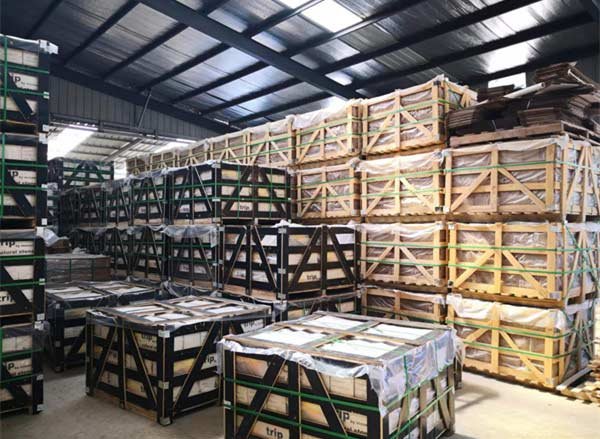
ステップバイステップ: 静脈を損傷することなく蓄積した大量の煙を除去する
制御されたすす抽出により、静脈の色相が維持され、再作業が最小限に抑えられ、B2B 出荷の同一バッチの 95% の色の一貫性が保護されます。
1. 影響を受けた静脈の洗浄前の評価とマッピング
まず、すすの密度と静脈の形状をマッピングして洗浄の優先順位を設定し、不均一な結果を回避します。顔料や酸化鉄を変えずに使用できる方法と濃度は気孔率と耐薬品性によって決まるため、石の種類 (スレート、珪岩、砂岩、大理石) を確認してください。
水滴テストと毛細管吸収チェックなどの簡単な気孔率チェックを実行し、吸収時間を記録して湿潤滞留時間と湿布サイクルを推定します。計画されたすべてのステップを含む完全なパッチ テストを非表示のパネルで実行します。続行する前に、色の変化、テクスチャの損失、または白華を記録してください。 B2B 注文の場合は、バッチ/静脈の起源を確認し、同じバッチのパネルを優先して、修理と出荷全体で最大 95% の色相均一性を維持します。
- 煤濃度ゾーンと静脈の位置を立面図にマークします。
- トレーサビリティのために、石のID、採石鉱脈、バッチ番号を記録します。
- 水滴と毛細管吸収時間を記録して、滞留ウィンドウを設定します。
- マルチプラットフォームのパッチテスト (機械的、界面活性剤、湿布) を実行し、写真を撮ります。
2. 安全性、封じ込めおよび現場管理
適切な PPE と環境制御で労働者と製品の品質を保護します。NIOSH 定格のマスク (微粒子には N95 または P100、溶剤を使用する場合は有機蒸気カートリッジを追加)、耐薬品性のニトリル手袋、および目の保護具を使用します。ダストカーテンまたは防水シートを設置し、サンディングまたはドライスクレーピング中に負圧排気を実行して、浮遊煤を捕捉し、隣接するパネルの相互汚染を防ぎます。
炭素を含んだ残留物が油や重金属を濃縮する場合、廃棄物を危険なものとして管理します。湿布やリンス液はラベルを貼った密閉容器に集め、地域の有害廃棄物の規則に従ってください。凍結状態や直射日光下での清掃は避けてください。蒸発と化学物質の滞留を制御するために、表面温度を 5 ~ 25°C に保ちます。 B2B 出荷の場合、出荷前の視覚的検証の一環として、洗浄前および洗浄後の状態を写真とビデオで文書化します。
- PPE: N95/P100 マスク;溶媒が存在する場合は、有機蒸気カートリッジを追加します。ニトリル手袋。目の保護。
- 封じ込め: ダストカーテン、乾式作業中の負圧排気。
- 廃棄物: 地域の有害廃棄物規制に従って、湿布/すすぎ液を密封してラベルを付けます。
- 環境制御: 5 ~ 25°C で動作します。直射日光や凍結を避けてください。
- 文書: 出荷前検証および保証記録用の写真/ビデオ。
3. 機械的除去: 乾式かつ低摩耗技術
表面のすすを除去し、静脈の質感を保護するために、乾燥した低摩耗の方法から始めます。柔らかいナイロン ブラシと HEPA カートリッジ (0.3 ミクロンまで捕捉) を備えた低吸引力の工業用掃除機を使用して、粒子をより深く押し込まずに遊離したカーボンを持ち上げます。静脈面にはワイヤーブラシや高速グラインダーを決して使用しないでください。これらのツールは鉱物層を摩耗させ、触感の仕上げを変化させます。
微小摩耗は、個別にテストされたパッチのみに保存してください。非常に低い圧力で不活性研磨剤を使用し、外観を再テストします。圧力すすぎが必要な場合は、圧力を 600 psi 未満に保ち、25 ~ 40° の広角ファン ノズルを取り付け、冷水のみを使用し、パネルの接合部に水が入り込まないようにノズルを顔から 30 ~ 50 cm 離してください。 Z 字型/S 字型のオス-メス インターロックと L コーナーをシールドし、パネル接合部や基板への水の侵入を防ぎます。
- 最初に乾燥させます: 柔らかいナイロン ブラシ + HEPA 真空 (0.3 μm キャプチャ)。
- 金属工具は使用しないでください。ワイヤーブラシや高速グラインダーは避けてください。
- 微小摩耗: 低圧でのみ不活性媒体を使用してパッチをテストします。
- パワーウォッシュ: <600 psi、25 ~ 40° ノズル、冷水、距離 30 ~ 50 cm。
- インターロックとL字コーナーを保護し、接合部への水の浸入を防ぎます。
4. 低pH・中性界面活性剤の選択と適用
静脈のエッチングや酸化鉄の移動を避けるために、最初の湿式段階では非イオン性または中性 pH の界面活性剤 (ターゲット pH 7 ~ 9) を選択してください。控えめな作業用希釈液(軽度から中程度のすすの場合は洗剤:水約 1:50 ~ 1:100)から開始し、パッチ テストで色素の損失や表面の軟化が見られなかった場合にのみ濃度を高めます。
石をあらかじめ濡らし、低圧スプレーまたは柔らかいブラシで溶液を塗布し、優しくかき混ぜて孔の口から煤を取り除きます。 5 ~ 10 分間接触させた後、低圧水ですすぎ、余分な水分を吸い取ります。化学湿布に移行する前に、すすぎ/吸い取りサイクルを最大 3 回繰り返します。石灰質の石(大理石、一部の石灰岩)には酸性洗剤を決して使用しないでください。また、炭素を結合する酸化した地殻には強アルカリを使用しないでください。
- クリーナーの選択: 非イオン性または中性 pH (7 ~ 9)。
- 希釈: 1:50 ~ 1:100 から開始。テスト後にのみエスカレーションしてください。
- 塗布: あらかじめ湿らせた低圧スプレーまたは柔らかいブラシを使用し、軽くかき混ぜ、5 ~ 10 分間接触させます。
- すすぎ: 低圧すすぎ、ブロット。湿布する前に最大 3 サイクル繰り返します。
- 適合性: 石灰質の石では酸を避けてください。酸化したクラストには強アルカリを避けてください。
5. 湿布の設計と深層炭素の段階的酸化抽出
機械的ステージや界面活性剤ステージが微細孔からすすを除去できない場合は、湿布を使用します。酸化炭素の場合は、過酸化水素 (3 ~ 12%) を酸化剤として使用し、カオリン、珪藻土、セルロースなどの吸収媒体と混合した酸化湿布を設計します。疎水性タールの場合は、結石の種類に合わせて処方され、テストされた溶剤を使用した湿布を使用してください。
吸収性粉末と洗浄液をピーナッツバターの粘稠度(体積比で粉末:液体がおよそ 2:1)になるまで混合し、テストによって調整します。 6 ~ 12 mm の厚さで塗り、汚れから 20 ~ 50 mm 伸ばします。蒸発を遅らせ滞留を制御するためにプラスチックで覆います。 1 サイクルあたり 24 ~ 72 時間放置し、プラスチック スクレーパーで取り除き、中性すすぎを実行し、湿布にすすが付着しなくなるまで繰り返します。アルカリ残留物を 1 ~ 2% 酢酸で中和し、その後完全に水で洗い流します。最初に、目立たない静脈でより高い過酸化物強度をテストします。より強力な酸化剤は、顔料を明るくしたり、酸化鉄を変化させたりする可能性があります。
- 湿布の種類: 酸化剤 (H2O2 3 ~ 12% + カオリン/珪藻土セルロース) またはタール用の溶剤剤。
- 混合: ピーナッツバターの粘稠度。粉末:液体の体積比は約 2:1、テストによって調整します。
- 適用: 厚さ 6 ~ 12 mm、汚れから 20 ~ 50 mm 伸ばし、プラスチックで覆います。
- 滞留: 1 サイクルあたり 24 ~ 72 時間。プラスチックスクレーパーで取り除きます。目に見える転写がなくなるまで繰り返します。
- 中和: アルカリ性残留物が存在する場合は 1 ~ 2% 酢酸ですすぎます。その後、完全に水ですすいでください。
- 注意: 色素沈着や美白のリスクを避けるために、目立たない静脈で高濃度の過酸化物をテストしてください。
6. 検査、乾燥、補修、予防仕上げ
吸水テストを繰り返し、同じ照明の下で一貫した前後の写真撮影を行って結果を検証し、洗浄前のベースラインとの視覚的な一致を確認します。シーリング、検査、または修理作業の前に、スラブの厚さと周囲の湿度に応じて 7 ~ 14 日間自然乾燥させてください。マイクロボイドの充填または色の一致した鉱物エポキシのみを実行してください 石の後の修理 完全な乾燥に達します。
通気性のある浸透シーラー (シラン/シロキサン) を選択して、水をはじき、蒸気の通過を維持しながら炭素の再吸着を減らします。一般的なカバレッジは 5 ~ 10 m²/L なので、サンプルでカバレッジをテストする必要があります。湿気を閉じ込めて煤の再発生を強制する可能性があるフィルム形成シーラーは避けてください。最初の湿潤サイクル後および 30 日後に検査して、より深いすすの移行がないことを確認します。保証、トレーサビリティ、出荷前検証のために、バッチ/静脈 ID、洗浄方法、化学物質濃度、タイムスタンプ付き画像をアーカイブします。
- 検証: 吸水を繰り返し、一定の照明の下で写真を比較します。
- 乾燥: シールや修理を行う前に 7 ~ 14 日間かかります。
- 修理: 完全に乾燥した後にのみ、色の一致した鉱物エポキシで微小空隙を充填します。
- シーリング: 通気性のあるシラン/シロキサンを使用します。テスト範囲 (約 5 ~ 10 m²/L)。フィルム形成者を避ける。
- モニタリング: 最初の湿潤サイクル後と、30 日後に再出現するかどうかを検査します。
- 記録保持: B2B トレーサビリティのために、バッチ/静脈 ID、メソッド、濃度、および前後のメディアを保存します。
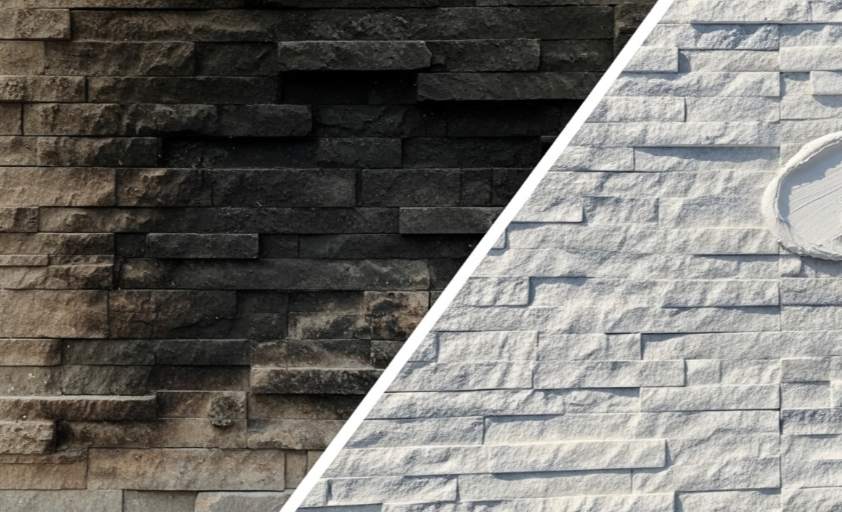
再インストールせずに石の自然な光沢をリフレッシュするにはどうすればよいですか?
埋め込まれたカーボンを抽出し、通気性のあるシーラーを選択し、文書化された定期的なメンテナンス手順に従うことで、仕上げを維持し、再取り付けのコストを回避します。
表面洗浄: 乾式および低衝撃の湿式方法
マテリアル仕様を操作します。 自然の積み石 (スレートまたは珪岩) 標準パネル 150x600mm または 150x550mm、厚さ 1.0 ~ 3.5 cm。自然な裂け目のテクスチャーと CNC ダイヤモンド カット エッジを保護するために、衝撃の少ないツールから始めます。柔らかい毛のブラシまたは HEPA 掃除機を使用して、遊離したカーボンやほこりを取り除きます。噛み合う雄/雌ジョイントや精密エッジには金属スクレーパーを決して使用しないでください。
軽い汚れの場合は、中性 pH の洗剤を塗布してください。 メーカーのストーンクリーナー 指示に従い、柔らかいブラシでかき混ぜ、薄いベニヤパネルのアンダーカットを避けるために、30 ~ 45°の角度で低圧水ですすいでください (スプレーは約 600 psi 未満に保ちます)。内装のタッチアップの場合は、湿らせたマイクロファイバークロスまたは低濃度イソプロピル溶液で拭くと、膜を残さずに光沢を取り戻すことができます。
- Tools: soft-bristle brush, HEPA-filter vacuum (99.97% at 0.3 μm), microfiber cloths, low-pressure pump sprayer.
- Avoid: metal scrapers, metal-bristle brushes, high-pressure washers on indoor installations.
Deep Cleaning and Extraction Techniques for Porous Pores
Recognize why soot embeds: micropores and Van der Waals forces draw carbon and dust into the stone matrix, and freeze-thaw cycles can enlarge pore networks, increasing retention. Simple surface washing rarely extracts particles from those pores, so plan extraction that pulls contaminants out of the matrix rather than just smearing them across the surface.
粘土ベースの湿布または吸収性複合材(吸収性マトリックスと組み合わせた中性洗剤)を使用して、埋め込まれた炭素を取り除きます。湿布を貼り、完全に乾くまでカバーし、持ち上げて、必要に応じて繰り返します。攻撃的な酸や高アルカリ性エッチング液よりも蒸気または湿布抽出を選択し、常に同じバッチのサンプル パネルで試してください (トップソースストーン 予期しない色の変化を避けるために、同じバッチの採石場の一貫性を指定します)。連動する Z/S 形状や L コーナーを掃除する場合は、パネルの裏側や下地に水が押し入らないように、上から下に作業し、低圧吸引または柔らかいブラシを使用してください。
- 抽出方法: 粘土湿布、吸収性複合材料、または制御された蒸気抽出。
- 試験プロトコル: 常に同じバッチのサンプルパネルで試験して、外観と色の変化がないことを確認します。
- 関節のケア: トップダウンできれいにします。インターロックの背後への水の移動を避けるために、低圧吸引を使用してください。
通気性の高い浸透シーラーと実用的なメンテナンススケジュール
100% に適した通気性浸透シーラー (シラン/シロキサンまたはシリコーン タイプ) を選択してください。 天然石。これらの化学物質は、湾岸および北部の気候における UV 安定性と凍結融解耐性を維持しながら、細孔への吸着を低減します。低圧ポンプ噴霧器またはブラシを使用して塗布し、1 ~ 3.5 cm のパネルに完全に浸透するように表面を飽和させます。メーカーが推奨する硬化時間を許容し、同じ採石場のサンプルで検証して、色の変化や濡れの変化がないことを確認します。
Set a maintenance cadence: inspect exposed walls every 12–24 months for loss of repellency and reapply or perform spot treatments on high-traffic zones, seams, interlocks, and L‑corners rather than resealing the entire façade prematurely. Keep field records: photograph or video every wall before and after treatment and link records to the installed batch number to monitor long-term performance and protect project consistency.
- Sealer selection: breathable silane/siloxane or siliconate 天然石用にデザインされた and UV exposure.
- Application: low-pressure sprayer or brush; saturate for full penetration on 1–3.5 cm panels; trial on same-batch sample.
- Schedule: inspect every 12–24 months; reseal high-wear areas or spot-treat; typical reseal window for 積み上げられた石 ranges 1–3 years depending on exposure.
- Recordkeeping: capture pre/post photos and tie them to the installed batch (same-batch quarry consistency) for warranty and lifecycle analysis.
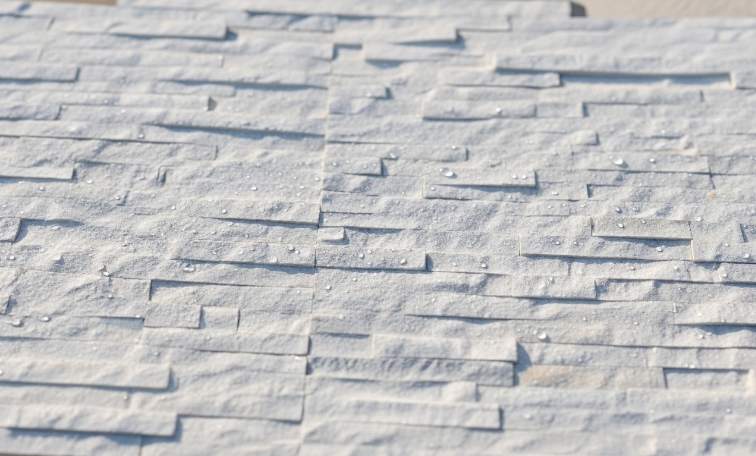
Preventative Care: Why Vacuuming with a HEPA Filter Is Critical?
HEPA vacuuming prevents submicron soot and dust from lodging in stone pores, reducing long-term staining and lowering restoration costs.
Pore-scale capture mechanisms in natural stacked stone
自然の積み石 contains micropores, transitional pores and intergranular gaps that create a large internal surface area where particles adhere through Van der Waals forces and hydrogen bonding. Water migration and capillary flow carry suspended carbon and fine dust into those pore networks; repeated freeze–thaw cycles enlarge pores over time and raise long-term retention of contaminants.
Surface oxidation produces black weathering crusts rich in organic carbon and iron oxyhydroxides that chemically bind soot, so once a crust forms you must expect more aggressive restoration. Inspect exposed façades after heavy pollution events and after seasonal freeze–thaw cycles, and remove loose surface particulates before water transport or oxidation locks them into the stone.
How a sealed HEPA vacuum extracts and contains submicron carbon/dust
Specify HEPA H13 (≥99.95% at MPPS) or H14 (≥99.995% at MPPS) filters to capture particles in the 0.1–0.3 µm range that stick to pore surfaces. Use a fully sealed filtration system with a gasketed filter chamber and a HEPA post-filter so captured particulates cannot re-enter the air stream during operation.
Choose units with cyclonic pre-separation to remove coarse dust before it loads the primary HEPA and to preserve airflow and filter life. Mobilize dust with a soft-bristled brush attachment and apply variable suction: start low to dislodge particles, then increase suction to extract lodged dust without abrading the cleft face.
Vacuuming specifications and stepwise protocol for stacked stone panels
Work to the panel specs and use non-abrasive tools. Standard panels measure 150 × 600 mm (150 × 550 mm option), with thicknesses typically 10–25 mm and premium pieces up to 35 mm. Expect flat-panel weight around 30–40 kg/m² and rough faces near 55 kg/m²; protect thin faces and interlocking profiles when you clean.
- Equipment spec: professional-grade sealed HEPA H13/H14 vacuum with cyclonic pre-separator, adjustable suction, soft-brush set and crevice tools.
- Operational tools: soft-bristled brush, crevice tool, variable-suction control, and a sealed waste container or disposable bag for material disposal.
Follow a stepwise protocol to protect the stone and interlocks. Avoid high-pressure washing that drives particles deeper into pores; reserve wet methods only for persistent residues and always test an inconspicuous area first.
- Step 1 — Dry vacuum along bed lines and vertical joints using a soft-brush attachment to remove loose surface dust.
- Step 2 — Use the crevice tool on Z/S interlocks and L-corners to extract lodged dust from male‑female connections.
- Step 3 — Avoid high-pressure washing; escalate to targeted wet cleaning only where dry methods leave residues.
- Step 4 — If residues persist, apply a pH-neutral, stone‑safe cleaner and agitate with a soft brush, then dry thoroughly.
Set service intervals and monitor filter performance to protect both surfaces and staff health. Adjust frequency by exposure and location rather than a fixed calendar.
- Indoor, low-traffic: inspect and vacuum quarterly.
- Outdoor or high-pollution façades: inspect and vacuum every 1–3 months.
- Monitor filter differential pressure; replace the HEPA element per manufacturer guidance or when airflow drops—typical H13 replacement window: 6–12 months under regular use.
The Impact of Sealing: How Protective Layers Repel Carbon Ash?
Proper sealing cuts carbon-ash ingress, reduces cleaning cycles, and preserves Top Source Stone panel performance and margins。
Sealing mechanisms vs pore adsorption: film-forming and penetrating sealer action
Penetrating sealers (silane, siloxane, siloxane-alkyl) work inside the pore network: they react with pore walls, increase surface hydrophobicity and chemically reduce capillary uptake. You can measure that effect as an increase in static contact angle (target >90° for hydrophobic behavior), a measurable reduction in water absorption per ASTM C97/C170, and a lower capillary-rise rate on lab strips. Typical active penetration ranges between 1 and 10 mm on natural stone; confirm field performance with a cross-section dye test before large-scale application.
Film-formers (acrylics, urethanes) create an external barrier that blocks airborne particles from contacting the mineral surface. Film-formers deliver stronger surface protection against dry carbon ash but change surface appearance and can trap moisture if you apply them to damp or untreated substrates. Choose penetrants when breathability and minimal color change matter; choose film-formers when you need a surface-level shield and accept a potential wet-look or texture change.
- Measurable targets: static contact angle >90°; reduced ASTM C97/C170 absorption; lower capillary-rise rate.
- Penetration: 1–10 mm (verify with cross-section dye test).
- Coverage for penetrants: ~4–12 m²/L on 自然の積み石 (porosity-dependent; account for 1–2 coats).
Surface preparation and application protocol for natural stacked stone panels
Prepare panels by removing loose debris and soot with a soft brush, then degrease with a pH-neutral cleaner. If efflorescence exists, perform a controlled acid wash (muriatic diluted 1:10), neutralize, and rinse. Allow the stone to dry 48–72 hours depending on ambient conditions; do not seal until the substrate reads dry to touch. Run a quick water-drop absorption test or a small ASTM C97 patch to establish baseline uptake and estimate coverage and coat count for the job.
Apply within 5–35°C ambient and <85% relative humidity using a low-pressure sprayer, roller or brush to ensure even penetration; back-coat L-corners and interlocking edges on Z/S-shaped panels to protect male/female joints. For penetrants use one coat for moderate exposure and two coats for high exposure sites. For film-formers apply one to two coats with flash times of 2–12 hours and expect full cure in 24–72 hours. Protect sealed panels from rain during the cure window and use トップソースストーン pre-shipment visual verification for B2B orders before crate dispatch.
- Dry time before sealing: 48–72 hours (site-dependent).
- Application window: 5–35°C; RH <85%.
- Tools: low-pressure sprayer, roller, or brush; back-coat interlocks and L-corners.
- Coats: penetrant 1–2 coats; film-former 1–2 coats with 2–12 hour flash and 24–72 hour cure.
Long-term performance, monitoring and compatibility with Top Source Stone panels
Inspect sealed surfaces annually in exposed conditions; expect re-application every 3–7 years depending on sealer chemistry, exposure severity and local salinity or humidity. Use simple water-drop tests on-site to check repellency; for R&D or formal verification, measure static contact angle and run periodic ASTM C97 water-absorption retests on service samples to quantify performance loss. Document results and link them to maintenance windows to protect project margins and warranty obligations.
Clean sealed stone with low-pressure wash (<1000 psi) and pH-neutral detergents; avoid aggressive cleaners that strip impregnators or damage CNC diamond-cut edges and interlocks on Z/S-shaped panels. For coastal or Gulf projects, select breathable penetrants to preserve freeze-thaw resistance and salt tolerance; if you choose a film-former, include a mock-up that specifies wet-look or natural finish so stakeholders approve any color change. Require PPE—nitrile gloves, eye protection, respirator for solvent systems—and attach up-to-date SDS/MDS documents to every B2B shipment to meet 2026 VOC and hazardous-material regulations.
- Maintenance interval: inspect annually; reseal every 3–7 years.
- Field checks: water-drop test; contact-angle for R&D; ASTM C97 retests on service samples.
- Cleaning: low-pressure wash <1000 psi; pH-neutral detergents only.
- Safety: nitrile gloves, eye protection, respirator for solvent systems; supply SDS/MSDS with B2B orders.
結論
Following the step-by-step cleaning method preserves the stone’s texture and natural veins while removing carbon and soot without etching or discoloring. Proper technique also protects occupants and equipment, aligns with safety guidance (including OSHA where applicable), and extends the service life of 積み上げられた石のインスタレーション。
Inspect your fireplace for stubborn soot patches and test a small, inconspicuous area before full cleaning. For dealer support, technical specifications, or factory-matched samples, contact your Top Source Stone sales representative or authorized distributor.
よくある質問
What is the best way to clean soot off textured stone?
Textured 天然石 traps soot because carbon particles adhere in micropores via Van der Waals forces and hydrogen bonds and by lodging in the stone’s pore structure; weathering and oxidized surface crust (iron oxyhydroxides and silica) further bind soot. Effective cleaning therefore must reach and extract particles from the pore network and address any oxidized crust—simple surface wiping usually leaves embedded carbon behind. Be cautious with methods that force water into pores (they can drive particles deeper); consult a stone-care professional for poultices or cleaning approaches designed to mobilize pore-adsorbed carbon.
Can I use vinegar to clean my natural stone fireplace?
The research does not evaluate vinegar specifically. 天然石 surfaces develop chemically reactive, oxidized crusts and bind organic carbon via surface chemistry; acidic cleaners like vinegar can alter these surface layers or the mineral surface chemistry. Because the RESEARCH_CONTENT emphasizes reactive surface chemistry and pore adsorption, avoid untested acidic treatments on 天然石 and consult stone-specific guidance or a professional cleaner before using vinegar.
How often should I seal my fireplace stacked stone?
RESEARCH_CONTENT links pore enlargement (freeze–thaw and weathering) and water migration with increased particle uptake. Sealing is intended to limit water movement into pores and slow that process, so frequency should be driven by exposure, signs of water penetration, and weathering rather than a fixed interval. Inspect the 積み上げられた石 for darkening, increased absorption, or surface crusting; reapply a compatible sealer when the stone no longer repels water—no specific re‑seal interval is given in the research.
How to remove smoke smell from a stone wall?
Smoke odor is caused by organic carbon and soot adsorbed in the stone pore network and by oxidized surface crusts that trap organics. Removing odor therefore requires extraction of the pore-trapped organics and remediation of the oxidized crust, plus drying to stop ongoing water-mediated transport of odorous particles. The research implies that surface-only deodorizing will be insufficient—use cleaning strategies that target pore-embedded organics (professional pore-extracting treatments) and address moisture sources.
Can I power wash my indoor natural stone fireplace?
Power washing drives large volumes of water and pressure into the pore network; according to the research, water migration can transport particles deeper and freeze–thaw can enlarge pores. For an indoor natural 石の暖炉, high-pressure washing risks pushing soot and carbon farther into the stone and altering the reactive surface crust. The RESEARCH_CONTENT therefore advises caution—avoid pressure washing that forces water into pores and favor cleaning methods that extract pore-adsorbed carbon without introducing excessive water pressure.