Hjørne & Edge Precision er forskjellen mellom å bestå sikkerhetsinspeksjoner og å møte kostbare kodebrudd, garantikrav og omarbeid på stedet som presser tidsplaner og eroderer marginer. Eksponerte eller ujevne peiskanter konsentrerer varme, fanger opp mørtel og inviterer til sluttfeil – problemer som vanligvis oppstår etter omsetning og tvinger til dyre utbedring eller juridisk hodepine for entreprenører.
Denne feltklare SOP-en går gjennom de tekniske trinnene og beslutningspunktene som profesjonelle murere og finish-snekkere er avhengige av: hvorfor utsatte kanter betyr noe, en kostnad/tid ROI-sammenligning av fabrikkens L-hjørner versus på stedet gjæring, spesifikasjonene for klaring av kjernen i brannkammeret og kompatible varmebarriereprodukter, overgangsalternativer for gipsvegger og trimdetaljer, hvorfor Z-arbeid-sømpolering og vertikale sømpaneler forhindrer. Du finner verktøylister, slipekorn, SKU-forklaringer, kodereferanser, nærbilder og en nedlastbar installasjonssjekkliste som kan brukes på arbeidsplassen.
Hvorfor eksponerte kanter kan lage eller ødelegge peisdesignet ditt?
Eksponerte kanter definerer holdbarhet, termisk sikkerhet og den opplevde kvaliteten til en peis – få materialet, skjøten og installasjonen riktig eller risiker kostbart etterarbeid.
Materiale og termisk ytelse: velg stein, tykkelse og finish for utsatte kanter
Spesifiser 100 % naturstein – skifer, kvartsitt, sandstein, granitt eller marmor – og match steinvalg til prosjektet miljø. Liste HS-koder for innkjøp: Skifer 6803.00.90 og Quartzite 6802.93.11. Bruk standard paneltykkelser på 1,0–2,5 cm for typisk finér løper og går opp til 3,5 cm for grove/premiumstykker der kantene vender mot direkte varme, belastning eller finisheksponering. Velg overflate- og kantfinish (naturlig kløft, delt overflate, sømløs finish) basert på hvor synlig og taktil kanten vil være; Finslipte/lærde ansikter skjuler håndteringsmerker bedre enn høypolert for høybrukssoner.
Skriv materialspesifikasjoner for å beskytte estetikk og ytelse: Krever kilden til samme parti fra steinbrudd for å opprettholde nyanseensartethet (~95 % innenfor en batch), beordre motstand mot fryse-tine for nordlige klimaer, og kreve UV-resistens pluss motstand mot høy saltholdighet for installasjoner ved bukten og kysten. Bruk disse oppfordringene til spesifikasjonene i anskaffelses- og innleveringspakken slik at produsenter og importører forstår forventningene til termisk holdbarhet på forhånd.
- Godkjente materialer: Skifer, Kvartsitt, Sandstein, Granitt, Marmor (100 % naturstein).
- Importer HS-koder: Skifer 6803.00.90; Kvartsitt 6802.93.11.
- Paneltykkelse: 1,0–2,5 cm standard; opptil 3,5 cm for utsatte/sterke kanter.
- Holdbarhet: krever fryse-tinevurdering for kaldt klima og UV-/saltholdighetsbestandighet for kyst-/GCC-prosjekter.
- Kvalitetsforklaring: spesifiser konsistens for samme batch-brudd for å unngå fargeskift på lange eksponerte kanter.
Kantdetaljering og skjøtestrategier: sammenlåsende profiler, hjørner og CNC-toleranser
Bruk sammenlåsende Z-Shape eller S-Shape hann-hunn-systemer der du trenger kontinuerlige synlige kanter; den mekaniske forriglingen skjuler vertikale skjøter og underlag og leses som et enkelt plan. Planlegg panelstørrelser rundt standard 150 × 600 mm (6″ × 24″) eller 150 × 550 mm (6″ × 22″) moduler og bestill alltid matchende L-hjørner fra fabrikken for ekte 90° overganger i stedet for å stole på feltgjærer for hjørneintegritet.
Kalle ut CNC diamantbladpresisjon på tegninger der skjøter må leses sømløs og målrettet installasjon toleranser: hull <1 mm og synlige sømlinjer under 2 mm. Fabrikk L-hjørner forkorter felttiden og reduserer feil – forvent opptil 50 % raskere hjørneinstallasjon og omtrent 25 % lavere arbeidskostnader sammenlignet med gjæring på stedet – så spesifiser prefabrikerte hjørner på middels til store prosjekter for å beskytte tidsplan og finishkvalitet.
- Sammenlåsende profiler: Z-Shape eller S-Shape hann-hunn for kontinuerlige løp.
- Panelstørrelser: 150 × 600 mm eller 150 × 550 mm; inkluderer matchende L-hjørner for 90° svinger.
- Kuttepresisjon: spesifiser CNC-diamantbladkanter; sikte på hull <1 mm og synlige sømmer <2 mm.
- Profilvalg: sømløs forrigling for lange synlige løp; rett kant for lineære, kontrollerte utseende.
- Brukbar tegningsnotat: ring CNC-toleranse og interlock-type på fabrikasjonstegninger og krev prefabrikerte L-hjørner for å unngå håndtering og mismatch på stedet.
Beste praksis for installasjon og varmehåndtering for utsatte kanter og ventiler
Dimensjoner og dokument mantel- og kantklaringer på konstruksjonstegninger: forleng mantelen 3–6 tommer utenfor peisåpningen for å balansere proporsjoner og gi en varmeseparasjonsbuffer. Ikke la fabrikkventilasjonen være åpen; behandle ventilasjonsåpninger som et designelement ved å integrere sekundær deksel eller metallkanaler, slik at ventilering leser tilsiktet og unngår stygge etiketter og mekaniske skjøter. Design underlag og ankre rundt panelvekter – planlegg for omtrent 30–40 kg/m² for flate paneler og omtrent 55 kg/m² for grove paneler – og spesifiser mekaniske ankre vurdert for steinbelastninger i stedet for å stole på lim alene.
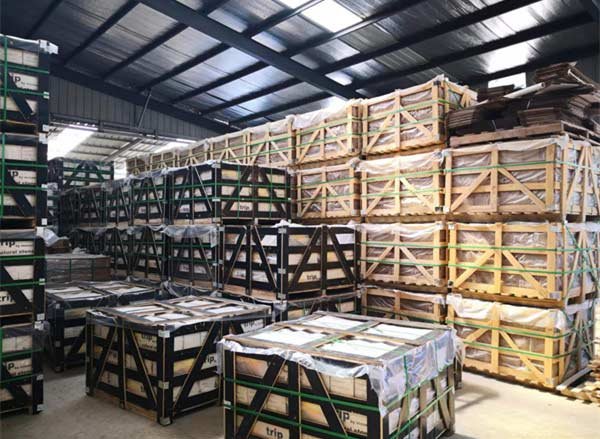
Beskytt logistikk og kvalitetssikring: planlegg løft ved hjelp av kartong- og kassedata (standardkartonger: 7–8 stk/boks; pallekasser er gjennomsnittlig 900–1000 kg brutto). Be om bilder og videoer før forsendelse i høy oppløsning, og bekreft samsvarende L-hjørner og fargeparti før du frigir endelig betaling. For dobbeltsidige eller hjørneglasspeiser som viser svarte striper ved glasskanter, spesifiser dobbelglassmontasjer eller trimprofiler for å maskere artefakten og kalle ut den løsningen i glass og stein grensesnittdetaljer.
- Mantelklaringer: strekker seg 3–6 tommer forbi åpningen; dimensjon på tegninger.
- Ventilering: skjule fabrikkventilasjon med sekundær deksel eller metallkanaler; integrere som tilsiktet detalj.
- Ankre & belastning: design for ~30–40 kg/m² (flat) eller ~55 kg/m² (grov); spesifiser mekaniske ankere som er klassifisert for steinpaneler.
- Logistikk på stedet: kartonger 7–8 stk/boks; kryssfinerkasser og bruttovekt av paller ~900–1000 kg—planlegg heiser og stillaser deretter.
- Forhåndsinstaller QA: krever HD-bilder/videoer før forsendelse og bekreftelse av fargeparti; verifiser samsvarende L-hjørner før endelig saldobetaling.
- Feilsøk glassgjenstander: spesifiser doble glass- eller trimprofiler der hjørne/dobbeltsidig glass avslører svarte striper i kantene.

Factory L-Corners vs. On-site Gjæring: En ROI-sammenligning
Velg fabrikkens L-hjørner når forutsigbare kostnader, raskere tidsplan og lavere garantirisiko slår den marginale materialpremien.
Sammenlign direkte material- og fabrikasjonskostnader per m²
Kjør en artikkelmodell som starter ved enhetsinnganger og konverterer kartonger og kasser til m². Bruk kartongspesifikasjoner og panelgeometri for å beregne utbytte og snitttap, deretter lagfrakt, tariffer og fabrikkhjørnepremier for å produsere en materialkostnad per m².
- Enhetsinnganger som skal samles inn: panelkostnad (per m²), L-hjørnepremie fra fabrikk (per hjørne eller per m²), gjæringsgodtgjørelse på stedet (ekstra paneler %) og skjæreforbruksvarer (bladlevetid, slurryavfall).
- Boks → arealkonvertering: standardbokser = 0,63 m² (7 stk) eller 0,72 m² (8 stk); grove bokser = 0,45 m² (5 stk). Bruk disse til å dimensjonere paller og kasser.
- Panelgeometri: 150×600 mm eller 150×550 mm paneler, tykkelse 10–35 mm. Beregn avlingsreduksjoner for tykkere materiale og ta hensyn til snitttap ved gjæring av hjørner på stedet.
- Fraktstørrelse: flate paneler ≈ 30–40 kg/m²; grov ≈ 55 kg/m²; kasse bruttovekt ≈ 900–1000 kg. Konverter frakttilbud per kasse til fraktkostnad per m² ved å bruke kasses bruttovekt og kasse m² dekning.
- Toll/toll: bruk HS-koder 6803.00.90 og kvartsitt 6802.93.11 ved modellering av landingskostnader for USA/Canada/EU; inkluderer tollsatser og fortollingsgebyrer.
Beregn bare material-breakeven med denne ligningen og plugg prosjektinndata: (fabrikkkostnad + L-hjørne-premie) = (Basispanelkostnad × (1 + avfall på stedet %)) + kuttekostnad på stedet. For å konvertere frakt til per m², del kassefraktkostnaden på kasse m² (bruk pallalternativer 48 eller 60 bokser → ~30,24–37,80 m² standarddekning). Bruk den frakten per m² og legg til gjeldende avgifter fra HS-koden for å få den endelige kostnaden for grunnpanelet.
Kvantifiser arbeidskraft, tidsplan og risikoforskjeller på stedet
Bygg en arbeidsmodell som skiller dyktig stein cutter hours, helper hours, and setup/cleanup. Use factory L‑corners to quantify time savings: industry data shows corner units can cut installation time roughly 50% and reduce labor cost 25% or more on typical stablet stein programs. Translate those percentages into hourly savings using local craft rates and project crew composition.
- Labor inputs: skilled cutter hours per m², helper hours per m², setup/cleanup hours per day, and hourly rates by market. Collect travel and overtime multipliers for remote sites.
- Rework drivers: color/vein mismatch at miters, inaccurate angles, and thermal stress at fireplace openings increase rework. Use same‑batch quarry consistency (Top Source: 95% hue uniformity) as a factory advantage that reduces rejects and callbacks.
- Schedule impact: factory L‑corners remove field corner cutting and fitting. Convert the percentage reduction in skilled hours to fewer site days and lower mobilization/demobilization costs.
- Safety and liability: include costs for dust control systems, HEPA vacuums, respirators, hearing protection, and any site permits. On‑site cutting raises PPE and mitigation costs; quantify these as a per‑m² add‑on when mitering on site.
Assemble a scenario sheet where Total Installed Cost = material landed cost + fabrication + shipping + (labor hours × rate) + waste allowance + site‑safety costs. Run parallel scenarios—factory L‑corners vs on‑site mitering—so you can isolate schedule days saved, labour dollars avoided, and contingency reductions driven by lower rework risk.
Logistics, waste, long‑term performance and warranty impacts on ROI
Model logistics at pallet, crate, and container level to expose carrying cost, MOQ impact, and sequencing risk. Use pallet packing options and container capacity to size orders against project cadence, and include lead time and MOQ in your carrying‑cost math so procurement decisions reflect project dates, not just unit price.
- Pallet/box math: Option A (48 boxes) → ~30.24 m²; Option B (60 boxes) → ~37.80 m² for standard panels. 20GP container capacity: 750–860 m² standard panels (25–30 pallets per container).
- Port weight limits: USA standard 17.5 t without special approval; heavy‑weight 24–26.5 t requires destination approval. Use these caps to decide whether to ship heavier rough panels or optimize for standard flat panels to avoid surcharges.
- MOQ & lead time: Minimum order and private label thresholds = 300 m². Lead time in‑stock = 10–15 days; production = 20–25 days. Convert lead time into carrying cost and project sequencing risk (delayed finishes, crew idle time).
- Quality and warranty effects: factory L‑corners shipped with same‑batch sourcing and CNC diamond‑blade precision reduce aesthetic mismatch and post‑install callbacks. Require pre‑shipment visual verification (photos/videos) to lower balance‑payment risk and claims.
Calculate lifecycle ROI by projecting net present value of reduced callbacks, lower waste disposal fees, and improved facade durability from factory precision. Build a simple NPV table: annual savings = (reduction in rework labor + fewer replacement materials + avoided warranty claims + lower disposal and permit fees); discount those savings over a reasonable warranty horizon. Use the result to justify the L‑corner premium when the NPV of avoided costs exceeds the upfront material premium.
Premium Stone Panels — Faster Installs, Higher Margins
Finishing Around the Firebox: Safety Clearances for Raw Edges
Correct clearances, non-combustible backing and tested adhesives prevent thermal failure and protect warranties while enabling a tight architectural finish.
Site assessment and clearance measurements around the firebox
Start by identifying the appliance type—wood-burning, gas, or electric—and record the manufacturer-required clearances. Measure the firebox opening precisely and set the mantel overhang to 75–150 mm (3–6 in) past each side of the opening to balance proportion and control heat spread. Map every adjacent combustible (trim, studs, joists, flooring) and mark the required clearances on your layout; confirm local code and the appliance manual before you finalize the plan. Verify substrate flatness: limit deviation to 3 mm over 1 m (0.12 in over 39 in) so full-bed panels and adhesives achieve continuous contact.
- Record appliance type and manufacturer clearance table.
- Set mantel overhang to 75–150 mm (3–6 in) beyond opening.
- Mark combustible materials and required separations per code (IRC R1001.11 where applicable).
- Measure substrate flatness; accept ≤3 mm deviation per 1 m.
Select stone panels and edge profiles compatible with firebox conditions
Specify Top Source Stone Natural Stacked Stone panels in 150×600 mm or 150×550 mm formats and choose thickness appropriate to the look and load: standard 10–25 mm, up to 35 mm for rough/premium faces. Where vertical seams or corners will be visible, select interlocking Z-Shape or S-Shape panels or matching factory L-corners to conceal joints and eliminate onsite coping. Use CNC diamond-blade precision edges for male-female fits where raw edges meet the firebox opening; tight CNC cuts reduce field rework and keep visible seams under 1–2 mm.
- Panel sizes: 150×600 mm or 150×550 mm; thickness 10–25 mm standard, ≤35 mm rough.
- Weights: flat panels ~30–40 kg/m² (8–12 lb/ft²); rough panels ~55 kg/m²—size substrate and anchors accordingly.
- Choose Z/S interlock or factory L-corners for corners and seam concealment.
- Specify CNC diamond edges for tight male-female joints at raw edges.
Prepare a non-combustible substrate and thermal backing
Install a cement backer board or fire-rated tile backer of at least 12 mm (1/2 in) directly over the framed cavity surrounding the firebox to create a non-combustible primary surface. Where a cavity exists behind the backer, pack mineral wool or equivalent non-combustible insulation 25–50 mm deep to cut conductive heat transfer. Fasten the backer with corrosion-resistant screws at 200–300 mm (8–12 in) centers and stagger joints to avoid weak lines. Clean, dry and verify the substrate is within the ≤3 mm per 1 m flatness tolerance before you apply adhesive or set panels.
- Backer: cement or fire-rated tile backer minimum 12 mm (1/2 in).
- Thermal layer: mineral wool 25–50 mm behind backer where space allows.
- Screw spacing: corrosion-resistant screws at 200–300 mm (8–12 in) centers; stagger all joints.
- Confirm substrate clean, dry, and flat (≤3 mm per 1 m) before adhesive.
Cutting, dry-fitting and mechanical fastening of raw stone edges
Trim panels and raw edges using CNC diamond tools or a diamond wet saw and hold cut tolerances to ±1 mm so joints sit tight without forcing. Dry-fit the entire assembly before adhesive application; plan a continuous 3–6 mm expansion gap at the project perimeter and lay out control joints every 900–1,200 mm to allow thermal movement. Apply heat-rated mortar or adhesive with full-bed coverage—specify a product rated to at least 540°C (≥1,000°F) or follow the appliance/manufacturer heat spec—and supplement the bond with mechanical anchors.
- Cutting tolerance: ±1 mm using CNC diamond or wet saw.
- Dry-fit and maintain 3–6 mm expansion gap; control joints every 900–1,200 mm.
- Adhesive: full-bed coverage; rated ≥540°C (≥1,000°F) or per appliance spec.
- Mechanical backup: stainless steel anchors or masonry screws spaced max 300 mm (12 in) on center and at panel edges for gravity load support.
Joint treatment, edge protection and finish sealing for heat exposure
Tool perimeter and control joints with a flexible high-temperature or intumescent sealant sized to the 3–6 mm gap so joints compress without transferring stress to the stone. Protect live or rough edges with a heat-compatible penetrating sealer formulated for quartzite or slate and allow full cure before exposing the assembly to sustained heat. Slope horizontal projections and install drip edges to avoid water pooling on mantels, and use matching L-corners for continuous texture at wrap points. Avoid organic polymer sealers adjacent to high-heat zones; select inorganic or heat-rated products specified for naturstein.
- Sealant: flexible high-temp or intumescent sized for 3–6 mm joints.
- Edge protection: penetrating stone sealer for quartzite/slate; observe manufacturer cure time before heat exposure.
- Drainage: slope mantels and add drip edges to prevent pooling.
- Material selection: use inorganic/heat-rated sealers near the firebox; avoid organic sealers at high-heat interfaces.
Verification, thermal testing and final clearance documentation
Run a staged thermal test: start with low-intensity burn cycles and log surface temperatures at 15, 30 and 60 minutes at critical locations—raw edge, joint, and substrate behind the panel. Inspect anchors, adhesive bond and joint compression after cool-down and confirm no delamination, cracking or unacceptable movement. Record final clearances, gap sizes and material specifications in a job checklist and capture high-resolution photos for handover and warranty records.
- Thermal log: temps at 15, 30 and 60 minutes at edge, joint, substrate.
- Post-test inspection: anchors, adhesive bond, joint compression; note defects.
- Documentation: final clearances, gap sizes, panel sizes/thickness, weight per m², L-corner part numbers, and maintenance/sealer schedule.
- Handover: deliver installation notes and high-resolution photos to client or dealer for warranty and future maintenance.

Transitioning to Drywall: Trim Strips vs. The Natural Ending Look
Pick trim or a natural termination based on substrate tolerance, panel geometry, and lifecycle cost—these choices drive install time, anchor design, and future repairs.
Selection criteria: when to install metal trim strips vs. a natural stone termination
Choose metal trim strips when the drywall edge or substrate is irregular, drywall thickness varies, or the design needs a defined metal reveal for contrast and protection. Trim absorbs edge damage, speeds repeatable installations, and hides small substrate variations that would otherwise force field cutting. Opt for a natural stone termination when panel edges line up with clean substrate lines and you can use matching manufactured L-corners or precision-cut panels to wrap the stone around the corner; that approach produces a continuous texture and the seamless aesthetic high-end projects demand.
Prefer interlocking Z‑Shape or S‑Shape panels where you can—these male/female, CNC diamond‑blade precision panels camouflage vertical joints, lower the need for trim, and target visible seam lines under 2 mm with gaps smaller than 1 mm when installed correctly. Plan installations around standard panel sizes (150×600 mm or 150×550 mm) and thickness ranges (1.0–2.5 cm standard; up to 3.5 cm for rough/premium) and require same-batch quarry sourcing to preserve color consistency (manufacturer data shows ~95% hue uniformity within a batch).
- Use trim if substrate irregularity or high-impact traffic exists.
- Use natural ending when panels align and matching L-corners are available.
- Prefer Z/S interlocking panels to reduce visible vertical seams.
- Confirm panel size (150×600 or 150×550 mm) and thickness before deciding on trim.
Structural and material requirements for trimmed and natural terminations
Design the wall support for stone dead load first: flat (seamless/honed) panels typically load ~30–40 kg/m²; rough or heavy textured panels load ~55 kg/m². Where stone weight exceeds local drywall capacity, add backing or a mechanical support system rated for the specific kg/m² value and specify mechanical anchors that match the substrate and local code. For 90° transitions, specify factory-matched L-corners to maintain texture continuity and cut on-site labor; factory corners reduce install time and error rates compared with mitering on site.
When you use trimmed edges, specify corrosion-resistant metals—stainless steel or aluminum—sized to cover panel thickness and allow 5–10 mm tolerance for thermal movement and installation variation. Verify the panel edge finish (natural cleft, split-face, seamless) and exact thickness before ordering trim dimensions. Finally, select anchors and adhesives rated for the project’s environmental exposure—ask for freeze–thaw resistance and high-salinity tolerance when projects sit in cold climates or coastal Gulf regions, and ensure compatibility between adhesive chemistry and naturstein type.
- Load targets: flat panels ~30–40 kg/m²; rough panels ~55 kg/m²—plan backing and anchors accordingly.
- Spesifiser L-hjørner for 90° svinger for å bevare tekstur og redusere feltskjæring.
- Trimspesifikasjon: rustfritt/aluminium dimensjonert for paneltykkelse + 5–10 mm bevegelsestoleranse.
- Krev frost-tine- og saltholdighetsbestandighet på lim og ankre når det er aktuelt.
Kantdetaljering og installasjonsarbeidsflyt for å oppnå en ren naturlig avslutning
Forbered underlaget: confirm the drywall plane and shim to a continuous plane within 3 mm over 2 m; install backing where you expect mechanical anchors because stone can exceed drywall capacity. Start your layout with straight-edge rectangular panels for linear dry-stack runs and dry-fit all pieces before adhesive. Use the CNC diamond‑blade precision edges on Z/S interlocking series to align male/female joints and aim for gaps smaller than 1 mm and visible seam lines under 2 mm.
Install pre-fabricated L-corners first to lock texture continuity, then set field panels into interlocks so vertical joints fall into the male/female recesses. Leave a 2–5 mm grout or a flexible movement joint where substrate or thermal movement is likely; install a minimal metal reveal only where you need a crisp, durable edge or where code requires non-combustible protection. Verify final coverage and edge alignment with a straightedge and document batch numbers and crate photos on site so future repairs match the same quarry batch.
- Prep: shim drywall plane ≤3 mm over 2 m; add backing for anchors when required.
- Layout: dry-fit panels; use CNC-cut Z/S panels for tight male/female joint alignment.
- Corners: set factory L-corners first, then work field panels into interlocks.
- Finish: leave 2–5 mm flexible joint where movement expected, or use a slim metal reveal for a protected crisp edge.
- Verify: check alignment with a straightedge and record batch numbers for future matching.
Løser “Raw Edge” Problem with Manual Honing and Polishing
Consistent manual honing prevents field rejects, preserves same-batch color, and protects dealer margins by delivering installation-ready L-corners and interlocks.
Inspect and quantify raw-edge defects before surface work
Start every rework with a standardized inspection sheet and the right measurement tools. Measure and record panel ID, size (150x600mm or 150x550mm), thickness (standard 1.0–2.5 cm; up to 3.5 cm for rough panels), and estimated weight (approx. 30–40 kg/m² flat; 55 kg/m² rough). Log environmental readings when relevant: moisture meter values and any packaging damage that could affect edge work or crate integrity.
- Inspection tools: digital caliper, straightedge, feeler gauges, low-mag handheld loupe, moisture meter, tape measure.
- Defect map: note chipping, micro-cracks, delamination, thin lips, uneven bevels with linear location and severity for each panel.
- Baseline acceptance: hue uniformity ≥95% per batch, visible edge deviation ≤2 mm per linear meter, maximum burr radius before honing 0.5–1.5 mm.
Classify corrective action by measured severity to control cost and risk: light touch hone where edge radius or burrs fall inside target, moderate repair when honing plus color-matched epoxy fill restores continuity, heavy intervention when you must trim and replace the panel or re-cut the edge with a CNC diamond-blade to meet interlock tolerances.
Manual honing protocol: grit progression, tooling, and technique
Follow a progressive abrasive sequence and keep water as the constant. Use resin-bond diamond hand pads or plates with wet lubrication and select grits to match material hardness—suggested series: coarse 60/120 → medium 220/400 → fine 800/1500, and finish with 1500+ for polishing. Adjust dwell and grit steps for quartzite, which requires longer contact time per stage than slate. Choose flexible backing and 50–100 mm pad widths for edge work to preserve geometry and reach interlocks without overcutting.
- Tooling: resin-bond diamond hand pads, flexible backing, variable-speed backing pad or hand-guided motion; maintain constant water flow to suppress dust and control heat.
- Technique: make consistent linear passes along the edge, keep the pad flat to preserve profile, perform 5–15 controlled passes per grit stage, and monitor edge radius to hold 0.5–1.5 mm rounding unless the project calls for a sharper finish.
- Pressure and timing: apply even, moderate pressure; avoid localized gouging; increase contact time on quartzite versus slate.
- Safety: wear an N95/FFP2 respirator for dry tasks, gloves, and eye protection; contain wet slurry to protect crate packaging and neighboring finished panels.
Polishing, sealing, and quality verification for installation-ready edges
Finish edges to a controlled sheen that matches adjoining faces and interlocks. Complete polishing with a fine diamond pad (≥1500 grit) or a material-appropriate polishing slurry and verify consistent sheen across Z/S interlocks and L-corners. Confirm CNC diamond-blade precision interfaces remain true: test that male-female interlocks seat without gaps and that seam camouflaging shows no visible stepped gaps at a 1.5 m viewing distance.
- Polish step: final pass with ≥1500 grit or equivalent slurry; equalize sheen across adjacent profiles and corners.
- Sealing: apply a breathable, stone-specific penetrating sealer when required; choose formulas rated for high salinity and humidity for Gulf climates.
- Fit verification: verify interlocks seat and gaps fall below visual tolerance; confirm edge straightness target ≤2 mm per linear meter.
Use a final QC checklist and document results before shipment. Require hue uniformity ≥95% per crate, no visible micro-chips, consistent surface sheen, and photographic or video evidence of each reworked panel. Mark reworked panels, pack in 5-ply export cartons with matching L-corners where needed, and include inspection records to preserve same-batch quarry consistency and protect dealer margins.
- QC checklist: hue uniformity ≥95% per crate; edge straightness ≤2 mm/m; absence of visible micro-chips; consistent sheen across panels; HD photos/videos logged.
- Logistics: mark reworked panels, use 5-ply export cartons, include inspection records and matching L-corners; preserve pre-shipment visual verification to protect margins.

Why Z‑Panels are Superior for Avoiding Vertical Corner Seams
Z‑Panels use CNC male‑female interlocks and factory L‑corners to remove stepped vertical joints, cutting on‑site labor and long‑term seam visibility risk.
Interlocking Z‑Shape Mechanism: Male‑Female Joint Design and Seam Concealment
Toppkilde Stone cuts male‑female edges with CNC diamond‑blade precision so Z‑ and S‑shaped panels lock consistently across runs. The interlocking profile hides the substrate and eliminates the stacked, ‘tråkket’ vertical gaps you see when installers butt straight‑edge panels together; when engaged correctly the seam reads as a continuous face instead of a vertical line.
Confirm profile compatibility before ordering and on site: our interlocking series ships in standard rectangle and interlock formats and pairs with matching factory L‑corners at 90° to preserve texture and color continuity at plane transitions.
- Applicable panel formats: 150 × 600 mm (6″ × 24″) og 150 × 550 mm (6″ × 22″).
- Thickness range: 1.0–3.5 cm (standard panels 1.0–2.5 cm; rough/premium up to 3.5 cm).
- Use matching factory L‑corners for all 90° outside transitions to maintain texture and hue alignment.
Site Controls and Installation Practices to Prevent Visible Corner Seams
Specify same‑batch quarry material for each run and verify the delivery against order photos — Top Source Stone targets ~95% hue uniformity per batch to avoid perceived seam lines from color variation. Dry‑fit every Z‑panel before adhesive: confirm full male‑female engagement, remove grit or mortar from the interlock, and check that clips or fasteners seat without forcing the joint.
Plan for panel mass and substrate capacity. Flat panels weigh about 30–40 kg/m²; rough faces can reach ~55 kg/m². Confirm load capacity and fastening method before installation, align and seat panels flush along the entire length, and avoid offsetting horizontal courses that recreate vertical stepping at corners. Target installation tolerances: gaps <1 mm and visible seam lines under 2 mm.
- Pre‑install checklist: verify batch hue, dry‑fit panels, clear interlocks, confirm substrate load, and confirm fastening pattern.
- Use built‑in metal clips where available to reduce drilling and alignment errors at vertical edges.
- Install factory L‑corners first to set course lines and ensure the wrap‑around finish reads continuous.
Material and Performance Advantages That Sustain a Seamless Corner Appearance
Toppkilde Stone supplies 100% natural slate and quartzite engineered for architectural use; the material exhibits inherent UV stability so color does not fade and make seams more visible. The stone meets high salinity, humidity and freeze‑thaw resistance expectations for Gulf and northern climates, which preserves mechanical interlock integrity over time and reduces joint movement that exposes seams.
CNC precision edges limit long‑term joint drift; maintain that advantage by inspecting adhesive and mortar joints regularly and addressing any voids quickly. When the project priority is continuous corner wrap and minimal vertical seam visibility, specify Z/S interlocking systems and matching factory L‑corners rather than standard rectangles to cut installation risk and protect the finished appearance.
- Durability note: choose freeze‑thaw resistant quartzite/slate for cold climates and high‑salinity formulations for coastal projects.
- Maintenance actions: inspect adhesive/mortar annually, clean interlocks before resealing, and replace damaged L‑corner units rather than patching seams.
Konklusjon
Correctly finishing exposed edges secures required clearances, keeps installers and occupants safe, and prevents premature stone or mortar failure. It also ensures compliance with OSHA and applicable building codes while preserving the long-term performance of the fireplace assembly.
Review your fleet’s current setup for edge details and clearance checks, and update specifications where gaps appear. Contact Top Source Stone to request a certified product catalog, sample pack, or technical data sheets for the Naturlig stablet stein serie.
Ofte stilte spørsmål
How to finish stone edges around a firebox opening?
Treat the exposed stone edge as a deliberate design element: either frame it with a secondary cowling or metal trim to make the cut edge read as an intentional finish, or use a projecting mantel (generally 3–6 inches past the opening) to visually balance and conceal the joint. Whichever approach you choose, precise proportioning and material selection matter—use appropriate finishing and protective treatments so the edge endures thermal stress and doesn’t look unfinished.
Do I need special corner pieces for fireplace stone?
Not always, but corners are high‑visibility areas that require deliberate solutions and precision. Multi‑sided or corner fireplaces often demand corner‑specific detailing (or commercial corner glazing solutions in double‑sided applications) so the junctions don’t read as unfinished; plan the corner treatment up front and execute it precisely to avoid exposed, unrefined edges.
Hvordan skjule den kuttede kanten på et utvendig hjørne?
Make the cut edge intentional: conceal it with a trim or cowling, integrate a metal accent that intentionally contrasts, or extend a mantel or surround slightly past the opening so the joint is masked. The key is precision and finishing—choose a solution that reads as purposeful and use appropriate materials/finishes so the corner holds up and looks professional.
Can I use metal trim with stacked stone fireplace?
Yes—metal trim or cowling can be used intentionally with stablet stein to create an industrial or finished detail. Metal ducting and cowling are examples of how metal can turn a raw element into a design statement. Ensure the metal is integrated with precise proportions and detailing, and select finishes and installation methods that tolerate the fireplace environment.
Best way to cut a 45-degree miter on ledger stone?
Because exposed corners are make‑or‑break details, prioritize precision and finish: plan the joint geometry carefully and use professional stone cutting and installation if you need a clean 45° miter. Precise execution and appropriate finishing are more important than shortcuts, since visible inaccuracies will undermine the overall look.