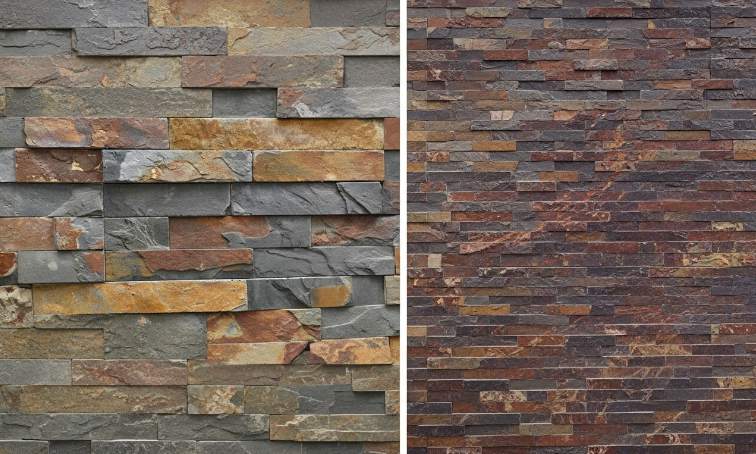
Opieczętowanie & Maintenance strategies directly influence the lifecycle costs and warranty integrity of large-scale natural stone installations. For B2B distributors, failing to address mineral porosity and moisture evaporation leads to surface delamination and permanent staining, causing significant financial loss during the maintenance cycle.
We analyze sub-surface protection using our ASTM-standard freeze-thaw resistance and 95% hue uniformity benchmarks. This technical guide explores how penetrating sealers safeguard CNC diamond-blade edges and natural cleft textures, ensuring your inventory maintains its premium architectural value across diverse global climates.
Is Sealing Mandatory for All Types of Natural Stacked Stone?
Sealing is optional for dry interiors but vital for exterior walls, wet zones, and porous minerals to prevent staining, oxidation, and freeze-thaw damage in modern architectural projects.
Environmental Exposure and Mineral Porosity Factors
Installation location dictates the sealing requirement more than the stone itself. For interior feature walls in low-traffic, dry environments, the 100% natural minerals in Top Panele z kamienia źródłowego maintain their structural integrity without chemicals. But, once the stone faces moisture, the mineralogy of the specific slab determines the risk level.
- Porous Minerals: Limestone and certain travertine varieties act as natural sponges, requiring a barrier to prevent deep-set organic staining.
- Oxidation Risks: Iron-rich slate varieties can develop rust spots when installed in humid or water-exposed environments without an impregnating sealer.
- High-Moisture Zones: Installations around pools, fountains, and outdoor kitchens face constant exposure to chemicals, oils, and minerals that can degrade the surface.
- Interior Maintenance: Sealing remains a secondary choice for dry-stack interior walls, primarily used to simplify dusting and routine cleaning.
Leveraging Freeze-Thaw Resistance and Humidity Protection
For B2B distributors serving the USA and Canada, freeze-thaw resistance is a non-negotiable performance metric. While Top Source Stone quartzite and slate are naturally dense, sealing prevents moisture from entering the microscopic fissures of the natural cleft texture, where ice expansion could cause delamination over multiple seasons.
- Northern Climates: Sealers enhance the inherent durability of quartzite and slate panels against extreme temperature cycles.
- Jednolitość odcienia: Applying a sealer helps maintain the 95% batch hue uniformity by blocking UV-related surface shifts on sun-exposed exterior facades.
- Modular Joint Defense: Penetrating sealers protect the male-female connections of Z-shape and S-shape interlocking joints from salt and moisture ingress in high-salinity coastal regions.
- Pollutant Barrier: A protective layer safeguards CNC diamond-blade edges and rugged textures from airborne soot and pollutants in urban commercial zones.
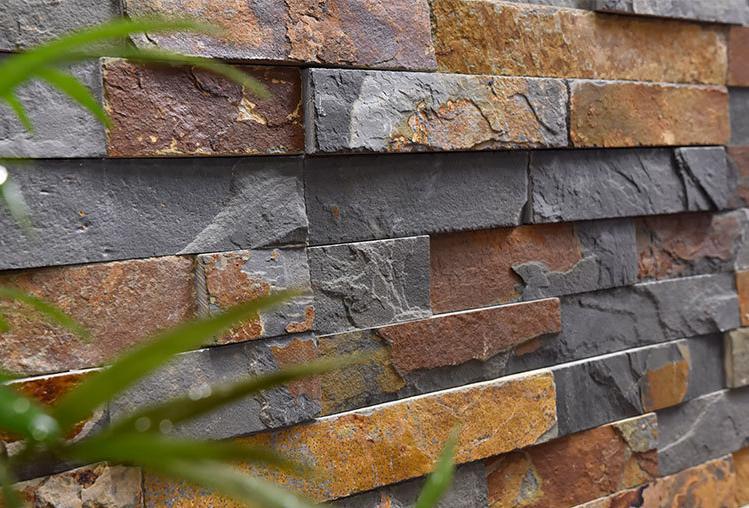
Penetrating vs. Topical Sealers: Which One Does Your Project Need?
Penetrating sealers provide 25-year sub-surface protection without altering texture, while topical sealers offer high-gloss aesthetics and oil resistance but require frequent re-application.
| Performance Criteria | Penetrating Sealers | Topical Sealers |
|---|---|---|
| Trwałość | 5 to 25 Years | 1 to 3 Years |
| Wygląd | Natural Matte (Invisible) | Glossy or Matte Film |
| Odporność na poślizg | Maintains Original Texture | Can Become Slippery |
| Breathability | High (Vapor Permeable) | Low (Traps Moisture) |
Comparing Sub-Surface Absorption and Film-Forming Layers
Penetrating sealers work by utilizing small silane or siloxane molecules that migrate deep into the stone’s capillary structure. These molecules chemically bond to the interior pores, creating a hydrophobic zone that repels liquid water while allowing water vapor to escape. This breathability prevents spalling and internal pressure buildup, which is vital for exterior ściany handlowe.
Topical sealers function differently by forming a protective film on the stone surface. While this layer provides excellent resistance against oil and grease—making it suitable for indoor commercial cafeterias—it can trap moisture behind the film. In exterior applications, this often leads to whitening or peeling during temperature fluctuations.
- 10-Year Cost Efficiency: Penetrating sealers have higher upfront costs but lower long-term labor expenses due to fewer re-application cycles.
- Slip Resistance: Penetrating formulas do not alter the surface friction coefficient, ensuring safety on high-traffic walkways.
- Maintenance Cycle: Facility managers typically schedule penetrating sealer inspections every 5 years, compared to annual touch-ups for topical finishes.
Selecting Protection for High-Texture Natural Stone Panels
Protecting deeply textured products like our Rough Series or Natural Cleft finishes requires specific attention to shadow and depth. Topical sealers often pool in the recessed areas of split-face stone, creating an artificial plastic sheen that ruins the 3D architectural effect. We recommend penetrating sealers for these textures to keep the stone’s rugged, organic appearance intact.
For our best-sellers like Alaska Gray (Quartzite) and Carbon Black (Midnight Slate), the sealer must account for mineral composition. Slate contains iron-rich minerals that can oxidize if exposed to heavy moisture. A high-quality impregnating sealer prevents water ingress that triggers rust spotting without darkening the stone’s base hue significantly.
- UV Stability: Our 100% natural quartzite maintains color integrity under intense sun, but sealing adds a layer of protection against environmental pollutants.
- Z-Shape Interlocking Systems: Sealing the modular joints in high-salinity regions (like the GCC or coastal USA) prevents salt crystallization within the interlocking edges.
- Freeze-Thaw Resistance: Penetrating sealers allow the internal stone structure to expand and contract during extreme winter cycles without cracking the protective barrier.
Premium Natural Stone Panels for High-Impact Projects
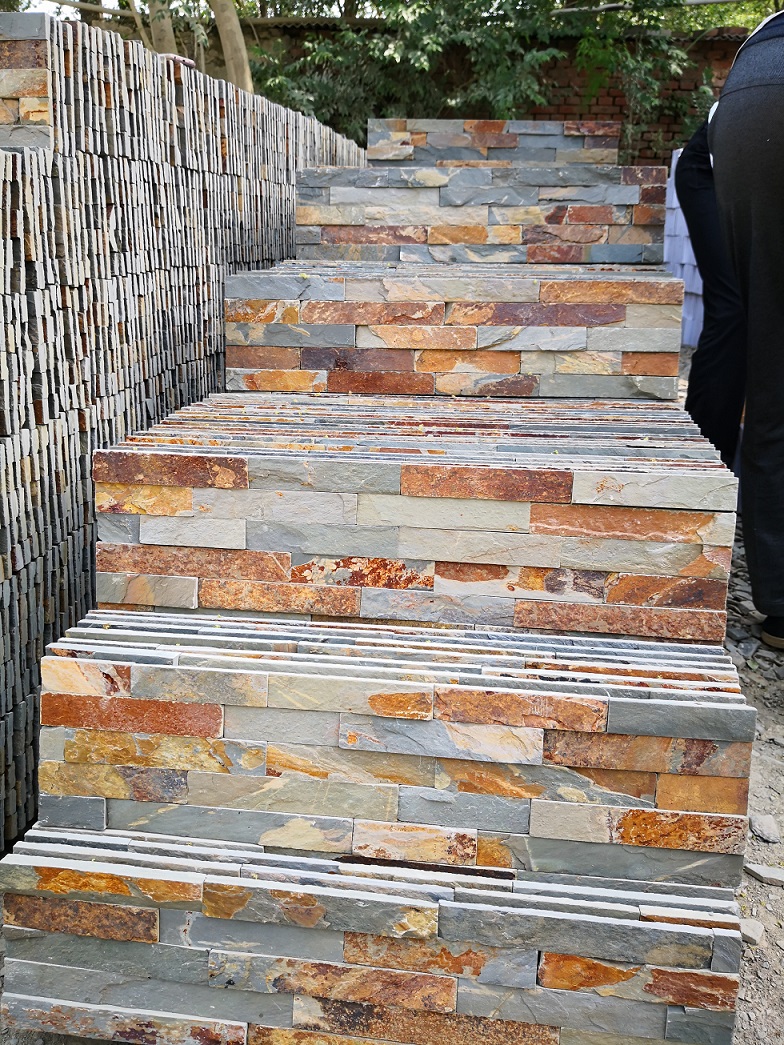
Why You Must Wait 28 Days Before Applying the First Coat of Sealer?
Sealing too early traps residual moisture, leading to white hazing and peeling. A 28-day wait ensures the substrate reaches equilibrium for a permanent, professional bond.
The Science of Substrate Moisture Evaporation
New mortar beds and concrete substrates contain significant volumes of “batch water” required for the chemical hydration process. This water needs a clear path to evaporate. If you apply a sealer prematurely, you effectively lock this moisture within the stone and substrate, creating a pressure cooker effect that destroys the finish.
- Cloudy Hazing (Blush): Trapped vapor reacts with acrylic sealers, creating a milky white “blush” that usually requires chemical stripping to fix.
- CO2 Gas Bubbles: Polyurethane sealers react with water to produce carbon dioxide gas, which forces permanent bubbles and surface defects into the coating.
- Moisture Testing: For projects in high-humidity zones, tape a plastic sheet to the wall for 24 hours. If condensation appears under the plastic, the substrate is still too wet for sealing.
Preserving Inherent Freeze-Thaw and UV Stability
Najlepszy kamień źródłowy quartzite and slate are engineered for high-durability environments, meeting strict ASTM standards for freeze-thaw resistance. Applying a sealer to a “green” or uncured substrate creates a moisture-trapping barrier that can cause the stone to spall or delaminate when temperatures drop and the trapped water expands.
- Maximum Penetration: A dry, cured substrate allows penetrating sealers to reach their intended depth, fully protecting the stone’s mineral structure and UV stability.
- Warranty Integrity: Commercial installers adhere to the 28-day standard because sealing damp masonry often voids manufacturer warranties due to predictable adhesion failure.
- Aesthetic Uniformity: Waiting for a full cure protects the 95% hue uniformity of our Kamień naturalny batches by preventing localized water-stain discoloration and efflorescence.
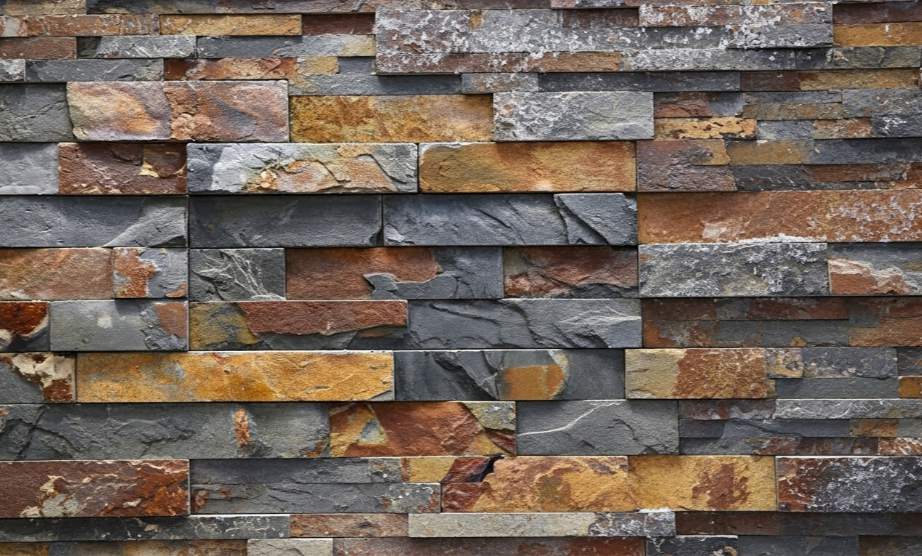
How to Apply Sealer to Deeply Textured Ledger Stone Surfaces Correctly?
Apply multiple thin coats using a low-pressure sprayer to saturate deep crevices. Dabbing away excess liquid prevents surface hazing and maintains the kamień jest naturalny breathability.
Sealing deeply textured panele z kamienia naturalnego requires a different approach than flat tile. The irregular, high-cleft surface of kamień księgowy creates pockets where liquid can pool, leading to uneven curing or a milky residue if handled incorrectly.
Multi-Coat Application for Irregular Stone Profiles
Success depends on building protection through saturation rather than thickness. Forcing too much sealer into the stone in a single pass often results in “blushing,” where trapped moisture turns the sealer white.
- Light Passes: Apply several thin layers to allow the sealer to migrate into mineral pores without flooding the surface.
- Dab Excess: Use a lint-free cloth to remove liquid from recessed pockets or “doliny” in the stone profile to prevent hazing.
- Dwell Time: Wait 1 to 4 hours between coats. The stone must be dry to the touch before the next application.
- Saturation Check: If the sealer begins to sit on the surface rather than soaking in, the stone has reached its limit and no further coats are needed.
Sprayer Techniques for Rough Series Ledger Panels
Our Rough Series panels feature thickness variations from 1cm up to 3.5cm. Reaching the internal “nooks” of these heavy-textured quartzite and slate materials is nearly impossible with a standard roller.
- Tool Choice: A low-pressure landscape sprayer provides uniform coverage across the entire depth of the 3.5cm profile.
- Kontrola wilgoci: Ensure the stone is 100% dry. This preserves the 95% hue uniformity of our original quarry batches and prevents mineral spotting.
- Sealer Type: Use penetrating (impregnating) sealers. These maintain the split-face finish and natural UV stability of the minerals.
- Detailing: Use a soft-bristle brush to work the sealer into CNC diamond-blade edges and interlocking Z-shape joints for a seamless architectural finish.
Properly applied penetrating sealers protect the wall from freeze-thaw cycles and salt air without changing the physical texture of the Kamień naturalny. This method ensures the installation looks as intended for years while protecting the underlying substrate from water penetration.
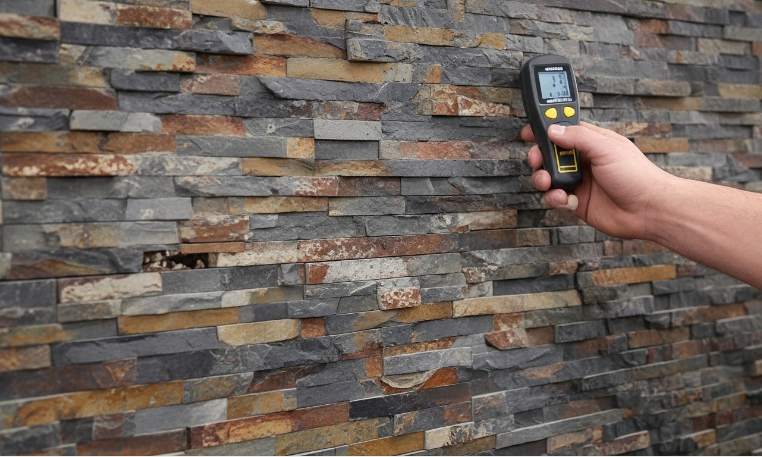
Enhancing the Color: How to Bring Out the Natural Mineral Veining
Use penetrating color-enhancing sealers to saturate stone pores and darken the base. Sourcing same-batch materials ensures sharp, uniform contrast between the base stone and natural mineral veins.
The Role of Penetrating Sealers in Mineral Contrast
Chemical enhancers pull deep tones out of the stone by soaking into the pores and shifting the material’s refractive index. This mimics the vibrant, high-contrast appearance of wet stone but makes the effect permanent once the carrier solvent evaporates.
- Refractive Shift: Enhancers soak deep into the structure to change how light reflects, highlighting hidden mineral details.
- Visual Contrast: This process darkens slate or quartzite backgrounds, making white quartz or silver veins appear much sharper.
- UV Stability: High-end formulas protect these intensified colors from sun bleaching, which is vital for 2026 architectural projects.
- No Surface Film: Unlike topical coatings, these products leave no synthetic plastic sheen, preserving the natural texture.
Achieving Uniformity Through Same-Batch Quarry Consistency
Color enhancement only works effectively when the raw material is geologically consistent. If a project uses stones mixed from different quarry layers, the sealer will react differently to each piece, creating a messy, disjointed visual across the wall.
- Jednolitość odcienia: Top Source Stone maintains a 95% hue uniformity by sourcing materials strictly from the same quarry vein per order.
- Density Standards: Our 100% natural mineral composition provides the necessary density for penetrating sealers to bond permanently without patchy absorption.
- Direct Source Control: Sourcing directly from the mountain prevents the “patchwork” effect common in wholesale lots gathered from multiple different geological sites.
Applying multiple light coats ensures the sealer reaches every crevice of the split-face surface. For deeply textured kamień księgowy, we recommend dabbing away any excess that doesn’t absorb within 15 minutes to prevent a hazy residue from forming on the surface.
Long-term Maintenance: Cleaning Protocols for Interior vs. Exterior Walls
Interior stone maintenance focuses on dust control and pH-neutral cleaners. Exterior protocols prioritize low-pressure softwashing and joint inspection to protect against UV exposure and moisture retention.
Gentle Care and Dust Management for Indoor Ledger Stone
Indoor natural stone walls don’t face the elements, but their deep-textured surfaces catch household dust and skin oils. Maintaining the aesthetic requires physical debris removal and chemical neutrality to protect the natural mineral finish.
- Dust Removal: Use microfiber cloths or vacuum brush attachments to pull dust from deep-textured natural cleft surfaces.
- Cleaning Agents: Apply mild detergent solutions or pH-neutral stone soaps with soft brushes to prevent mineral etching.
- Grout Sanitation: Address grout lines in high-moisture areas like bathrooms using a baking soda paste to eliminate mold and bacterial buildup.
- Humidity Control: Maintain stable indoor humidity levels to prevent salt efflorescence on slate or quartzite panels.
Preserving Exterior Durability with ASTM-Standard Weather Resistance
Najlepsze źródło Wyroby z kamienia leverage the inherent UV stability and high salinity resistance of quartzite and slate. Exterior maintenance must support these material strengths while preventing water-related damage through proper drainage and low-impact cleaning.
- Softwashing: Use low-pressure settings (100-400 psi) to remove algae and dirt. High-pressure washing risks forcing water into the render and underlying structure.
- Joint Inspection: Clear debris from Z-shape interlocking joints to ensure proper drainage and prevent moisture retention between panels.
- Environmental Protection: Rely on the inherent material properties of slate and quartzite to maintain color vibrancy in coastal regions without heavy chemical additives.
- Freeze-Thaw Maintenance: Ensure stone remains free of heavy organic growth before winter cycles to maximize the stone’s ASTM-standard freeze-thaw resistance.
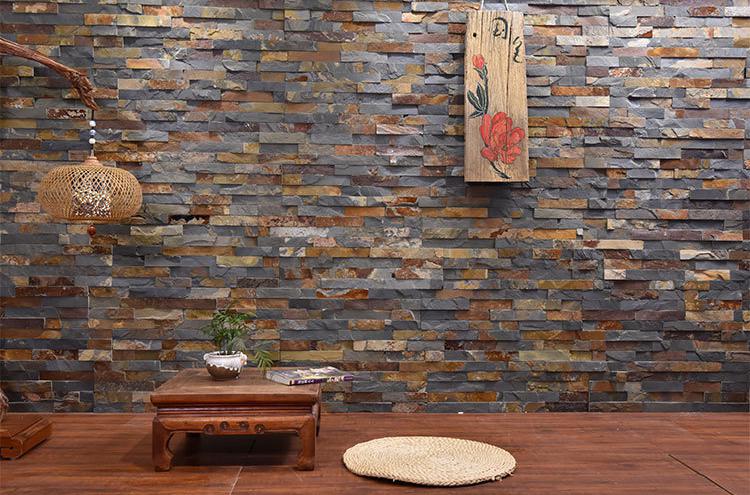
Why Re-Sealing is the Key to a 50-Year Commercial Life Cycle?
Periodic re-sealing blocks moisture and pollutants from compromising internal stone structures, preventing minor weathering from becoming structural failure and significantly reducing long-term replacement costs.
Routine maintenance stops moisture and salt from compromising the stone’s internal structure. In commercial settings, re-sealing every few years blocks environmental pollutants and maintains surface integrity. This proactive approach stops minor weathering from becoming a structural failure, which lowers long-term repair costs compared to full material replacement in the current market.
Mitigating Structural Decay from Environmental Exposure
External factors like moisture and humidity degrade kamienne ściany over time. Unprotected stone eventually absorbs airborne pollutants that cause deep-seated, permanent staining that cleaning alone cannot fix.
- Freeze-Thaw Cycles: Water penetration triggers expansion and contraction cycles that lead to surface spalling and structural cracks.
- Mineral Erosion: High salinity in regions like the Middle East or coastal Australia accelerates the breakdown of the stone’s face.
- Pollutant Absorption: Porous surfaces trap industrial exhaust and organic matter, leading to internal discoloration.
Maintaining ASTM-Standard Freeze-Thaw Resistance in Natural Stone
We utilize 100% natural Quartzite and Slate to ensure inherent UV stability. While the stone is naturally durable, penetrating sealers preserve the specific freeze-thaw resistance required for Northern US and Canadian climates.
- Integralność materiału: Top Source Stone products rely on high-density minerals that resist fading even under intense UV exposure.
- Spójność partii: Regular sealing protects the same-batch quarry consistency, preventing environmental wear from creating patchy visual shifts across large walls.
- Climate Protection: Sealing ensures the stone meets strict ASTM standards for exterior performance in extreme temperature fluctuations.
Często zadawane pytania
How long should I wait after installation before applying a sealer?
Wait a minimum of 28 days for the mortar to fully cure before sealing. Applying sealer too early traps moisture inside the wall system, which leads to efflorescence, poor sealer adhesion, and potential stone cracking during freeze-thaw cycles.
How many coats of sealer do natural stone panels typically require?
Bardzo naturalny kamień ułożony requires at least two coats of penetrating sealer. Highly porous materials like limestone or certain quartzites may need additional layers. If the stone absorbs the first coat instantly, apply a second coat while the first is still damp for optimal protection.
Will sealing the stone change its natural color or texture?
Standard penetrating sealers provide protection without changing the appearance. However, color-enhancing sealers will darken the stone and highlight the mineral veining to create a “mokry wygląd.” Since this effect is permanent, always test the product on a scrap piece before full application.
How often do exterior stacked stone walls need to be re-sealed?
Exterior walls generally require re-sealing every one to three years. Surfaces with heavy UV exposure or high humidity may need more frequent maintenance. Monitor the wall for water beading; if water soaks into the stone rather than rolling off, it is time to reapply the sealer.
What are the best cleaning agents for maintained stone surfaces?
Use pH-neutral cleaners specifically przeznaczony do kamienia naturalnego to avoid stripping the sealer or etching the minerals. Avoid vinegar, bleach, or abrasive pads. For daily maintenance, a soft brush and clean water are sufficient to remove dust and environmental debris.
Ostatnie przemyślenia
Choosing same-batch quarry sources eliminates the unpredictable sealer absorption found in mixed-lot wholesale inventory. Our ASTM-standard quartzite and slate provide the exact mineral density required for a permanent bond with penetrating sealers. This technical synergy between material integrity and protection safeguards your commercial reputation against callbacks and structural weathering.
Verify our 95% hue uniformity and CNC-precision interlocking system by requesting a physical sample kit. We support your growth with trial orders starting at 300 metrów kwadratowych and full private-label packaging options. Contact our team to receive the current stock list of our “Wielka 10” best-sellers and secure consistent inventory for your next project.