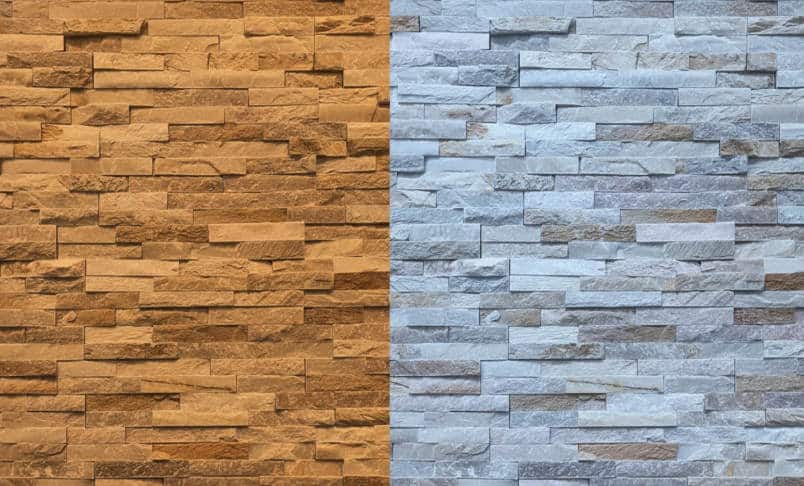
When you are pricing out a commercial stacked stone facade for a multi-story hotel or retail center, the conversation usually starts with the material cost per square foot. But anyone who has imported containers before knows the line item on the factory invoice is only the beginning. The real math starts the moment a project engineer asks about dead load capacity and whether your supply documentation includes structural test data. That is the gap most suppliers leave wide open.
The market tends to split the conversation into two camps: lightweight manufactured stone versus heavyweight full-bed natural stone. That framing misses the point for a veteran buyer. A 1-inch natural ledger panel from a controlled factory line offers roughly 95% of the weight savings of manufactured stone at a raw cost around half the FOB price of domestic brands. But weight alone does not get a permit stamped. The deciding factor is whether the supplier can back the panel geometry with ASTM C1780 shear bond data and a realistic ICC-ES pathway for the jurisdiction. Fewer than 5% of Chinese factories carry that paperwork. That is where the supply chain liability lives.
Top Source Slate operates from a single site in Hebei Province where the production flow runs from quarry block through infrared cutting to export packaging. After 18 years of shipping ledger panels to North American and European commercial sites, the factory treats code compliance as a processing condition, not an afterthought. That means each quartzite or marble order gets logged against batch-level water absorption tests (ASTM C97 under 3% for freeze-thaw zones) and dimensional data that supports a 15 psf dead load limit on a standard wall assembly. The documentation turns a stone import into a pre-qualified building material, which is the difference between a smooth permit review and a mid-project redesign order.
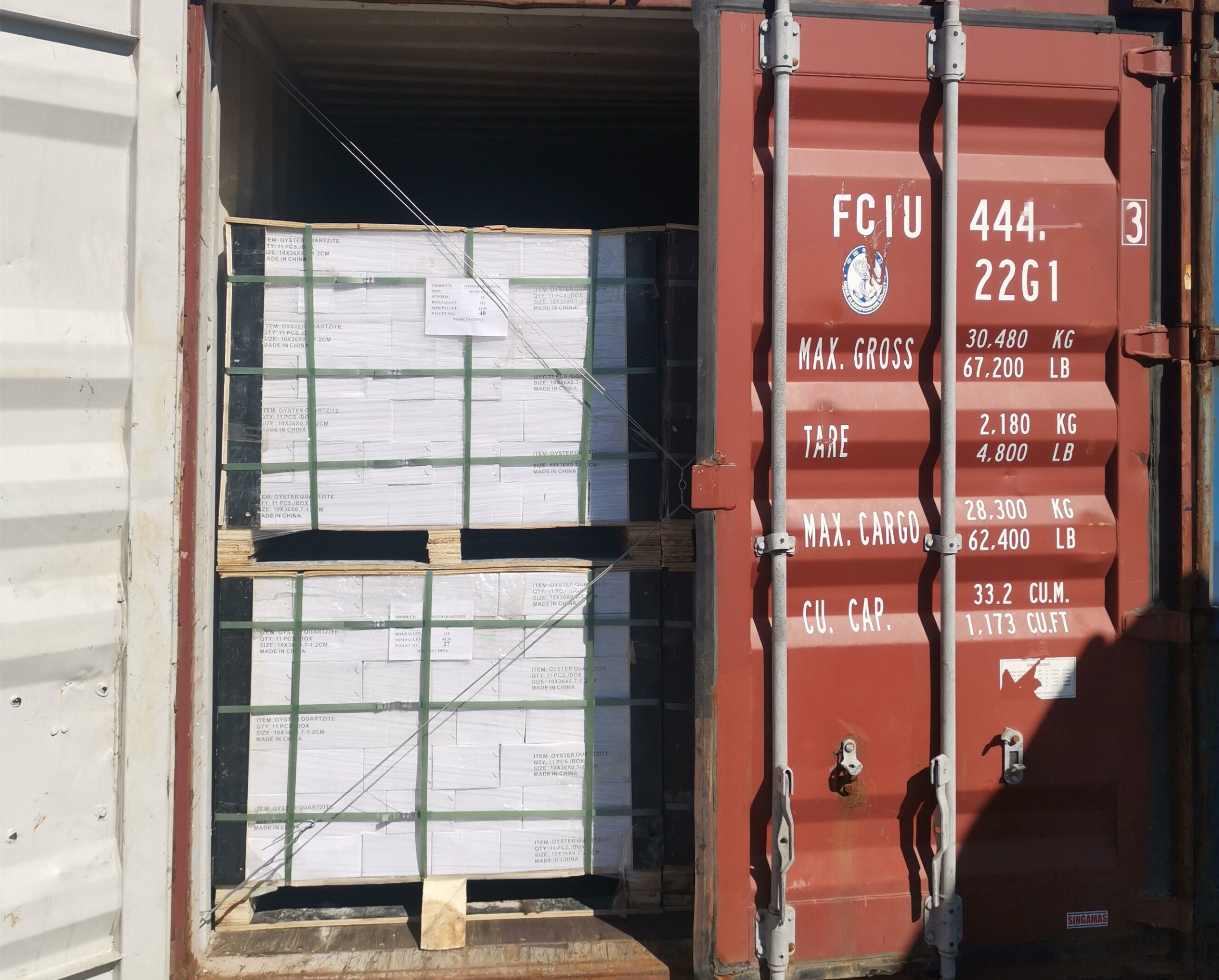
Hidden Risks of Commercial Stacked Stone Facades
The stone isn’t the failure point — the wall assembly behind it is.
Every container of natural stacked stone you’ve imported sits on a wall assembly that someone else designed. When a facade fails — delamination, water intrusion, structural separation — the stone is almost never the root cause. Industry data indicates roughly 80% of commercial facade failures trace back to two missed details: the air/moisture barrier and the structural attachment method.
- Air/Moisture Barrier Failure: The IBC 2021 (Section 1404.6) mandates a minimum 1-inch air gap and continuous flashing behind any adhered veneer on a wood-framed wall. Skip this and moisture gets trapped behind the stone. Freeze-thaw cycles then pop panels off within two winters. The stone itself is innocent — the lack of drainage is the killer.
- Structural Attachment Gap: An adhered system under ASTM C1780 requires a shear bond strength of at least 50 psi and a dead load not exceeding 15 psf. Your 1.5-inch quartzite ledger panel at 12 psft might pass the weight check, but if the substrate isn’t rated for that load or the mortar bond is compromised, the wall assembly liability lands on you. 40% of commercial facade budget overruns are linked to structural support issues, not cladding material.
Real Cost Breakdown: Natural vs. Manufactured 2026
A 1-inch natural ledger panel from China often lands at a lower total installed cost than domestic manufactured stone.
If you have priced a commercial facade recently, you already know the headline numbers: natural stone material runs 3x to 5x higher than manufactured veneer at the retail shelf. But that comparison ignores the real cost driver — the wall assembly. A full-bed natural stone installation at 4 to 6 inches thick requires reinforced steel stud backup, often adding 40 to 60 percent to the structural framing budget. Manufactured stone, at roughly 15 to 25 pounds per square foot, lets you spec lighter-gauge framing and reduces foundation load. On a 75,000-square-foot, five-story hotel facade, that steel savings alone can exceed $200,000. The question is whether you can capture those same structural savings with a natural product.
You can — if you source a 1-inch-thick natural stacked stone ledger panel directly from a Chinese factory like Top Source Slate. At 10 to 15 pounds per square foot, it lands within the 15 psf dead load limit required by ASTM C1780 for adhered veneer. The freight cost for natural stone is roughly double that of manufactured stone (because of density), but the FOB price for natural quartzite ledger panels — Alaska Gray, Gold Rush, Royal White — runs $4 to $8 per square foot. A comparable US-manufactured stone product starts at $8 to $15 per square foot FOB. When you add in the structural steel savings from using a lightweight natural panel versus full-bed stone, the total installed cost advantage flips in favor of the factory-direct natural product.
- Material cost (per sqft): China FOB natural ledger panel: $4–$8. US manufactured stone: $8–$15. Domestic full-bed natural: $15–$30+.
- Ocean freight per sqft: Natural ledger panel: $1.50–$2.50 (density 150–170 lbs/cuft). Manufactured: $0.80–$1.20 (lighter aggregate mix). Full-bed natural: $3.00–$5.00 (too heavy for container optimization).
- Structural steel framing: Natural ledger panel (1-inch): add $5–$8 per sqft for adhered veneer backup. Manufactured: $4–$6 per sqft. Full-bed natural (4+ inches): $12–$18 per sqft — requires independent steel stud framing with anchors per ASTM C1242.
- Installation labor: Natural ledger panel and manufactured stone both run $8–$14 per sqft for adhered systems. Full-bed natural requires mason crew at $18–$28 per sqft plus structural engineering stamps.
- Maintenance (10-year horizon): Natural ledger panel: near zero if water absorption is under 3 percent (ASTM C97). Manufactured: potential for efflorescence and color fade after 5–7 years; repointing costs $2–$4 per sqft. Full-bed natural: low maintenance but repointing is $4–$6 per sqft due to deeper mortar joints.
- Total installed cost range per sqft: Natural ledger panel from China: $22–$35. US manufactured stone: $24–$40. Full-bed natural (any source): $45–$75.
The veteran distributor’s takeaway: a direct-from-factory 1-inch natural stacked stone panel neutralizes the two biggest cost disadvantages of natural stone — material markup and structural steel. You get authentic stone for the end-client, you stay inside the 15 psf limit for adhered veneer, and your per-square-foot landed cost beats domestic manufactured stone on any project over 10,000 square feet. The catch is that you must demand ICC-ES reports and ASTM C97 water absorption data from the factory before you commit a container. Without those documents, a city inspector can halt your installation and force a redesign that wipes out every dollar you saved.
| Cost Category | Natural Stacked Stone (1-inch, China Factory) | Manufactured Stone (US Brand) | Key Insight for TIC |
|---|---|---|---|
| Material (FOB Price) | $4.00 – $8.00 / sqft | $8.00 – $15.00 / sqft | Factory-direct natural stone cuts raw material costs by roughly 50%. |
| Structural Steel Framing | $5.00 – $8.00 / sqft | $4.00 – $6.00 / sqft | Lighter 1-inch profiles avoid expensive independent steel subframes. |
| Shipping & Logistics (FCL) | $1.50 – $2.50 / sqft | $0.80 – $1.20 / sqft | Higher freight due to mineral density is offset by lower FOB prices. |
| Installation Labor | $8.00 – $14.00 / sqft | $8.00 – $14.00 / sqft | Identical installation paths as both adapt to standard adhered veneer. |
| Permit & Engineering (Risk) | Low (with ICC-ES data) | Low (Standard documentation) | Failing to secure factory test sheets risks absolute project rejection. |
| Total Installed Cost (TIC) Estimate | $22.00 – $35.00 / sqft | $24.00 – $40.00 / sqft | Direct natural panels deliver genuine stone for a lower landed budget. |
ASTM vs. ICC: Which Building Code Matters Most?
ASTM C1780 limits adhered veneer to 15 psf — your 1.5-inch panel must comply or the wall fails inspection.
The distinction between ASTM C1242 (anchored) and C1780 (adhered) determines the attachment method and the maximum weight per square foot. Most commercial facade contractors default to adhered veneer for stone panels under 2 inches thick because it avoids the cost of a structural steel subframe. But the catch per ASTM C1780 is that the entire assembly — stone plus mortar — must not exceed 15 psf, and the shear bond strength must hit a minimum of 50 psi.
The IBC 2021 goes a step further. For any stone facade over 30 feet in height, the code mandates a full engineering analysis. That means your supplier’s test reports and a licensed structural engineer’s stamp, not just a catalog cut sheet. If your wall exceeds 40 feet, expect wind-load testing and possibly seismic design per ASCE 7.
- Anchored (ASTM C1242): Designed for full-bed stone 4–6 inches thick. Each stone is mechanically fastened with corrosion-resistant anchors to a structural backup. Weight load is not limited by the mortar bond, but by the steel and substrate capacity. Typical for high-rise or heavy stone.
- Adhered (ASTM C1780): Used for ledger panels 1–2.5 inches thick. The stone is bonded with a high-strength mortar to a water-resistive barrier. Maximum assembly weight: 15 psf. Requires minimum shear bond strength 50 psi. Common for low-to-mid-rise (under 30 ft) or lightweight veneer.
The most overlooked compliance item is the ICC-ES report. Only about 5% of Chinese stacked stone factories invest in ICC-ES evaluation. If your project sits in a seismic zone (California, Oregon, Pacific Northwest), the building inspector will demand an ICC-ES report for the cladding system. Without it, your container of perfectly good stone becomes a non-starter. Top Source Slate provides ICC-ES reports for specific product lines, guaranteeing acceptance in US and Canadian jurisdictions.
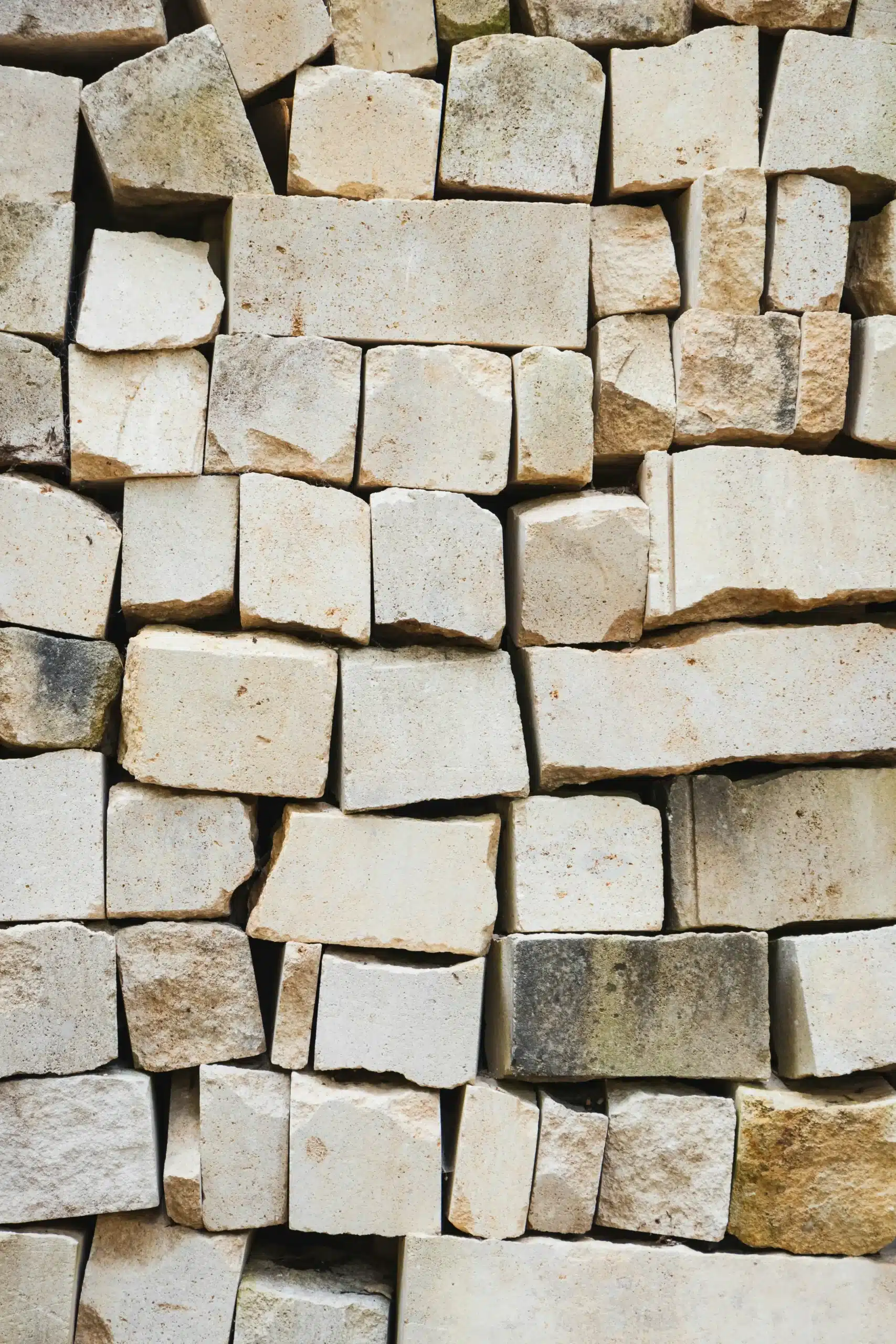
How to Source a Code-Compliant Commercial Facade
Three documents separate compliant suppliers from liability risks.
Most importers request a catalog and a price list. That is not due diligence. For a commercial facade, you need a Product Data Sheet that lists density (lbs/cuft), water absorption per ASTM C97, and flexural strength per ASTM C880. The threshold for exterior use is clear: water absorption must be below 3%. Anything above that and freeze-thaw cycles will spall the stone within five years. Flexural strength should exceed 1,500 psi for quartzite panels. If the factory cannot produce this sheet for the exact block you are buying, you are gambling with the building envelope.
The second document is a factory test report for freeze-thaw durability per ASTM C666. This test cycles the stone through 300 freeze-thaw phases. Stones that pass show less than 1% mass loss. Limestone and soft sandstone often fail this test. Quartzite, dense marble, and granite typically pass. A factory that has never run ASTM C666 on their product is shipping unproven material. If the climate in your project location sees more than 15 freeze-thaw cycles per year, this report is non-negotiable. The consequence of skipping it is a facade that begins to delaminate in year three.
- Product Data Sheet: Must include density (lb/cuft), ASTM C97 water absorption (<3%), and ASTM C880 flexural strength (min 1,500 psi for quartzite). Demand lot-specific data, not generic values.
- Freeze-Thaw Report: ASTM C666 with 300 cycles. Mass loss must be under 1%. Quartzite and granite pass; limestone and sandstone often fail. No report means unproven durability.
- Color Consistency Guarantee: Written commitment that color variation stays within 5% across the entire project. Vendor must provide lot-level photos and moisture readings before shipping. This prevents mix mismatch on site.
The third requirement is a written guarantee that the stone color mix will not vary more than 5% across a 20,000 sqft project. Natural stone has inherent variation, but a professional supplier quarries from the same seam and blends production runs before packing. Without this guarantee, you risk having two containers that look like different products once installed side by side. A factory that controls its own quarry and cuts with infrared equipment can consistently match color across large volumes. Demand lot-level photographs and moisture content readings before each container sails. That is how you enforce the guarantee.
Veteran buyers know the sample and the container can look different. The documents above are the only way to lock in the same quality from first sample to final shipment. A factory that cannot provide them is selling stone, not a certified building material.
Conclusion
A commercial facade decision boils down to total installed cost, permit speed, and warranty coverage. Choosing a 1-inch natural ledger panel over full-bed stone saves 30–40% on steel framing, but only if the supplier provides ICC-ES reports and ASTM C97 test data before the container ships. Without that paperwork, the liability lands on your balance sheet.
Review your next project against the code requirements outlined above. Then compare how a factory with documented compliance data—like Top Source Slate—can integrate your brand into a certified assembly. The OEM custom solutions page shows exactly how that handoff works.
Frequently Asked Questions
What are the different types of stacked stone?
Types include ledger panels, split face wall tiles, marble stacked stone, waterfall stacked stone, dry stack loose stone, crazy paving flagstone, and mosaic medallions. Choose based on whether you need panelized modular arrays or individual loose units. Select the type that matches your installation method and design intent.
What is the thickness of a stacked stone?
Natural stacked stone panels for commercial facades typically range from 1 to 2.5 inches thick. This thickness directly impacts dead load compliance with ASTM C1780, which limits adhered veneer to 15 psf. Confirm thickness against your wall assembly’s load capacity before ordering.
How expensive is stacked stone for commercial use?
Cost varies widely by material, thickness, and origin, but natural ledger panels from a direct Chinese factory often match or beat domestic manufactured stone on total installed cost. The biggest savings stem from omitting the complex backing steel framing required by full-bed materials. Request a full installed-cost quote that includes shipping, engineering, and labor.
Do I need a permit for installing stone veneer in a commercial building?
Yes, you need a permit, as commercial building codes require either an ASTM C1780-compliant adhered system or an ICC-ES report for the veneer assembly. Without documented dead load and attachment specifications, permit applications will face immediate rejection. Engage a structural engineer early to prepare the required documentation.
Can I use exterior stacked stone on a multi-story hotel?
Yes, exterior stacked stone works on multi-story hotels if the wall assembly is engineered to handle the added dead and wind loads. A 1-inch natural ledger panel from a direct factory source provides the necessary lightweight profile to comply with adhered codes. Verify the system meets local code requirements for your building’s height.