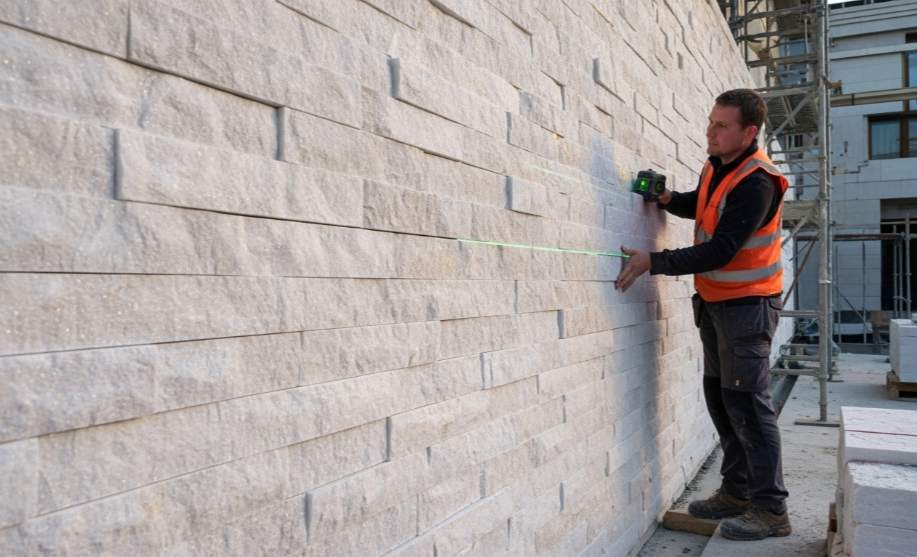
Das Beherrschen der Geheimnisse nahtloser Ecken ist die einzige Möglichkeit, zu verhindern, dass dünne Furnieranwendungen langweilig aussehen und den Projektwert schmälern. Durch unsachgemäße Bearbeitung der Außenkanten werden Untergrundlücken und rohe Plattenprofile sichtbar, was zu hohen Garantieansprüchen und erhöhten Arbeitskosten für Installateure und Großhändler führt.
Wir lösen dieses Problem durch werkseitig vorgefertigte L-Ecken mit CNC-Diamantschneidepräzision und 95-prozentiger Farbtongleichmäßigkeit. Durch die Beschaffung von Komponenten aus derselben Steinbruchader bewahren diese Einheiten die architektonische Integrität und reduzieren gleichzeitig die Installationszeit vor Ort im Vergleich zu manuellen Gehrungsschnitten um 50 Prozent.
Warum bestimmen Ecken die Qualität Ihres gesamten Steinprojekts?
Ecken offenbaren oder verbergen die Beschaffenheit des Materials. Durch die ordnungsgemäße Ausführung entsteht eine strukturelle Illusion von Mauerwerk, die den architektonischen Wert direkt steigert und den Fachmann hervorhebt Steinarbeiten aus dünnem Furnier Anwendungen.
Visuelle Authentizität und der Plane-Break-Effekt
Konstrukteure und Prüfer konzentrieren sich auf Ecken, weil sie eine wichtige Rolle spielen natürlich Bruch in der visuellen Einheitlichkeit. Bei diesem Ebenenwechsel landet das Auge auf natürliche Weise. Wenn die Eckausführung schlampig ist, zeigt sich das dünne Profil des Furniers, was eher auf eine oberflächennahe Anwendung als auf strukturelles Mauerwerk hinweist. Professionelle Übergänge verdecken die Plattenkanten und sorgen so dafür, dass die Durch die Installation bleibt das Gewicht und die Präsenz authentischen Steins erhalten.
Die Präzision an diesen Schwerpunkten bestimmt den langfristig wahrgenommenen Wert des Projekts. Ein Kamin oder eine Fassade, bei der der Untergrund an der Ecke sichtbar ist, verliert sofort seinen luxuriösen Reiz. Indem Sie die Naht dort abdecken, wo zwei Ebenen aufeinandertreffen, erzeugen Sie den Eindruck von massivem Mauerwerk mit voller Tiefe. Dieses Detail unterscheidet einen durchschnittlichen Auftragnehmer von einem Spezialisten.
Passende L-Corner-Technologie für strukturelle Synchronisierung
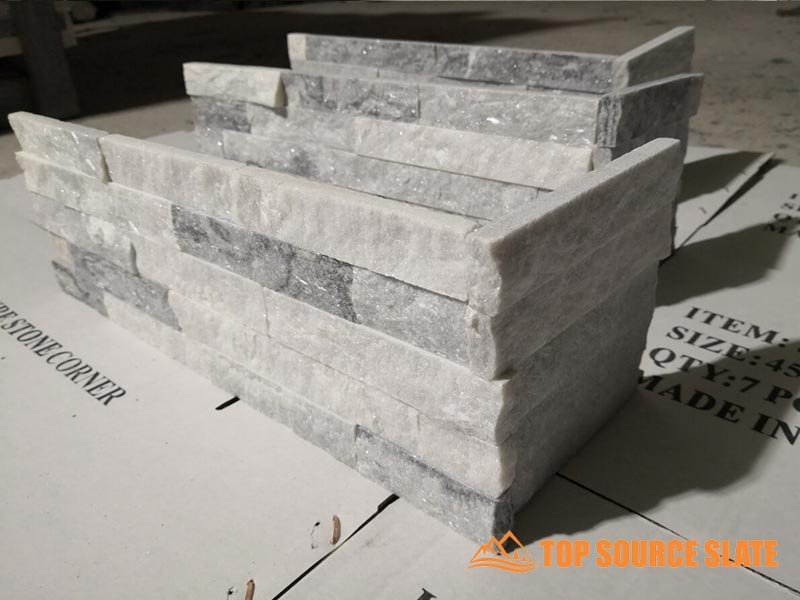
Das Schneiden von Gehrungen vor Ort führt häufig zu ungleichmäßigen Fugen und nicht übereinstimmenden Texturen. Spitze Quellstein löst dieses Problem durch vorgefertigte 90-Grad-L-Ecken, die für eine strukturelle Synchronisierung entwickelt wurden. Wir beziehen diese Komponenten aus dem gleichen Steinbruch wie die Flachbildschirme, um eine 95-prozentige Farbtongleichmäßigkeit über die gesamte Charge hinweg zu gewährleisten und so das fleckige Aussehen zu vermeiden, das bei der Eckbeschaffung von Drittanbietern üblich ist.
- Arbeitseffizienz: Vorgefertigte Einheiten reduzieren die Installationszeit vor Ort um 50 % und machen spezielle Gehrungssägenkenntnisse überflüssig.
- CNC-Präzision: Diamantklingenkanten sorgen für einen festen Sitz “männlich weiblich” Verriegelung, die vertikale Fugen tarnt und verhindert “Reißverschlusseffekt.”
- Abmessungen: Passende Ecken erhältlich in 6″ X 24″ oder 6″ x22″ Formate passend zur Standard-Ledgestone-Serie.
- Nahtlose Technologie: Die ineinandergreifende Struktur verbirgt das Verlegeuntergrund und beseitigt sichtbare “trat” Lücken in der endgültigen Fassade.
Durch die Verwendung werkseitig hergestellter Ecken werden die Gewinnspannen von Groß- und Händlern durch die Reduzierung von Materialverschwendung und Baustellenfehlern geschützt. Diese Einheiten bieten eine umlaufende Oberfläche, die einen Block in voller Tiefe imitiert und ein professionelles Ergebnis liefert, das einer genauen Prüfung in stark frequentierten Gewerbe- und Wohnumgebungen standhält.
Die Profi-Wahl: Effizienzvorteile werkseitig vorgefertigter L-Ecken
Werksseitige L-Ecken reduzieren die Installationszeit um 50 % und die Arbeitskosten um 25 %. Das CNC-Diamantschneiden gewährleistet eine nahtlose Textursynchronisierung und eliminiert den „Reißverschlusseffekt“.’ häufig beim manuellen Fräsen vor Ort.
| Effizienzmetrik | Werkseitig vorgefertigte L-Ecken | Manuelles Site-Cutting |
|---|---|---|
| Installationsgeschwindigkeit | 50 % Reduzierung der Vor-Ort-Stunden | Hoch (erfordert individuelle Gehrungsschnitte) |
| Arbeitskosten | Um bis zu 25 % gesenkt | Premium (Erfordert Steinmetzmeister) |
| Materialverschwendung | 90 % Reduzierung (kein Ausschuss vor Ort) | Hoch (10–15 % Bruch-/Verschnittverlust) |
| Präzision & Fit | CNC-Diamantpräzision (90°) | Variabel (anfällig für menschliches Versagen) |
Beschleunigte Installation und Reduzierung der Arbeitskosten
Standardmäßige Diagonalschnittmethoden auf einer Baustelle verbrauchen übermäßig viele abrechenbare Stunden und erfordern ein hohes Maß an Fachwissen im Maurerhandwerk. Unsere vorgefertigten L-Ecken umgehen diesen Engpass, indem sie als montagefertige Einheiten geliefert werden. Diese Komponenten verkürzen die gesamte Installationszeit um 50 %, da die Teams ihre Zeit mit dem Einrichten verbringen Stein statt Messen und Schleifwinkel.
Auch Projektentwickler profitieren von parallelen Bauabläufen. Wir fertigen die Eckelemente im Werk, während Ihr Team den Untergrund für die Baustelle vorbereitet. Dieser überlappende Zeitplan komprimiert die Projektzeitleiste. Durch den Einsatz modularer Montage senken Auftragnehmer den gesamten Arbeitsaufwand um 25 % und minimieren die Materialverschwendung um 90 %. im Vergleich zu traditionell Verfahren zum Schneiden von Mauerwerk.
Architektonische Integrität durch CNC-Diamantschneidepräzision
Manuelle Feldschnitte führen häufig dazu, dass “Reißverschlusseffekt”– unebene Fugen und sichtbare Stufenspalten, die das sichtbar machen Stein als Furnier. Wir lösen dieses Problem, indem wir CNC-Diamantschneidkanten verwenden, die eine strikte 90-Grad-Ausrichtung gewährleisten. Diese industrielle Präzision sorgt dafür, dass die Ecke wie ein massiver, vollflächiger Steinblock aussieht und nicht wie zwei Teile, die an einer Naht zusammentreffen.
- Chargenkonsistenz: Wir beziehen Eckelemente aus demselben Steinbruch wie die Flachpaneele, um eine 95-prozentige Farbgleichmäßigkeit zu gewährleisten.
- Strukturelle Stabilität: Die Werksverbindungen sind UV-stabil und frost- und tausalzbeständig und erfüllen die Klimastandards 2026 für extreme nördliche und küstennahe Umgebungen.
- Visuelle Kontinuität: Präzise geschnittene Finger ermöglichen eine umlaufende Textursynchronisation, die mit manuellen Schnitten nicht reproduziert werden kann.
- Toleranzkontrolle: Die CNC-Automatisierung gewährleistet eine 90-Grad-Genauigkeit, die eine Ausrichtungsabweichung bei langen vertikalen Übergängen verhindert.
Die Wahl vorgefertigter Einheiten schützt die architektonische Absicht des Entwurfs. Diese Ecken sorgen für einen nahtlosen Übergang zwischen den Wandebenen und bewahren so die luxuriöse Ästhetik, die von anspruchsvollen Gewerbe- und Privatkunden erwartet wird.
Premium-Stapelstein für architektonische Anforderungen
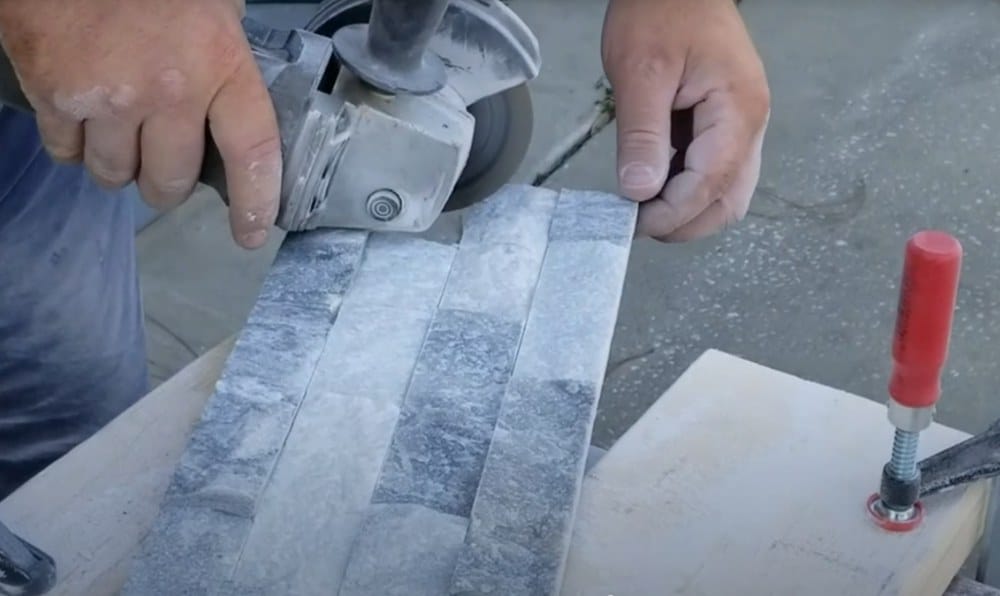
Wie führt man perfekte Gehrungsschnitte vor Ort aus (falls erforderlich)?
Verwenden Sie eine 44,9-Grad-Rückenschräge und Diamanttrennscheiben mit durchgehendem Rand, um enge, professionelle Ecken zu erstellen, wenn vorgefertigte L-Ecken nicht für Wandübergänge verwendet werden.
Während Top-Quelle Stein bietet Passende L-förmige Ecken für jede Serie, um den Arbeitsaufwand vor Ort um 50 % zu reduzieren. Bestimmte Architekturentwürfe erfordern individuelle Gehrungen vor Ort. Erzielen Sie ein Finish auf Werksniveau Natursteinplatten erfordert eine spezielle Sägekalibrierung und Materialhandhabung, um zu vermeiden, dass die Kante des Furniers sichtbar wird.
Winkelkalibrierungs- und Rückseitenabschrägungstechniken
Die Präzision an den Ecken bestimmt, ob die Installation wie ein authentisches Vollbett aussieht Stein oder ein dünnes Furnier. Die meisten Site-Fehler treten auf, weil Installateure versuchen einen flachen 45-Grad-Schnitt auf unregelmäßigen Flächen Wandflächen.
- Einstellung der hinteren Abschrägung: Stellen Sie die Gehrungssäge auf 44,9 Grad ein. Durch diese leichte Anpassung wird sichergestellt, dass die Sichtfläche des Steins primären Kontakt hat, was zu einer engeren sichtbaren Naht führt und gleichzeitig einen kleinen inneren Spalt für dünnflüssigen Mörtel lässt.
- Opferzaun: Befestigen Sie einen Sperrholzzaun am Sägebett. Dies bietet einen spielfreien Referenzpunkt für den Klingenweg und unterstützt die Stein zu verhindern “Ausfälle” am Ende des Schnitts.
- Überprüfung: Führen Sie vorab Probeschnitte an Schrottstücken gleicher Dicke durch, um die Rechtwinkligkeit zu überprüfen Verarbeitung vollständig 6″ x24″ Panels.
Professionelles Schneiden vor Ort mit Präzision der Diamantklinge
Natürliche Materialien wie Schiefer und Quarzit reagieren anders auf die Reibung der Klinge als Keramik oder Holz. Die Beibehaltung der Integrität der Spaltflächenstruktur während des Schnitts ist für ein hochwertiges architektonisches Finish von entscheidender Bedeutung.
- Klingentyp: Wählen Sie Diamanttrennscheiben mit durchgehendem Rand anstelle segmentierter Trennscheiben. Der durchgehende Rand verhindert Absplitterungen auf der natürlichen Spaltoberfläche und ahmt die CNC-Diamantklingenpräzision nach, die in unserer Fabrik verwendet wird.
- Materialauswahl: Ziehen Sie Stücke aus derselben Kiste, um die Konsistenz der gleichen Steinbruchcharge zu gewährleisten. Diese Synchronisierung von Farbe und Textur ist am Eckübergang von entscheidender Bedeutung, wo das Auge auf natürliche Weise nach Brüchen in der Ader sucht.
- Der Bump Cut: Benutzen Sie die “Beulenschnitt” Methode zur Feinabstimmung. Klopfen Sie den Stein in der unteren Position vorsichtig gegen die rotierende Klinge, um hauchdünne Materialmengen abzustreifen und eine nahtlose Passform zu gewährleisten.
Um diese technischen Komplexitäten zu vermeiden, empfehlen wir unsere projektfertigen L-Ecken. Sie bieten eine werkseitig gefertigte 90-Grad-Umhüllung, die eine Textursynchronisation gewährleistet und die Notwendigkeit eines aufwändigen Schneidens vor Ort überflüssig macht.
Überlappende Verbindungen: Die “Stoßverbindung” Technik für Anfänger
Stoßfugen überlappen Steinplatten zur Schaffung von 90-Grad-Ecken ohne aufwändige Gehrungsschnitte. Diese zugängliche Technik bietet Heimwerkern und Heimwerkern ein professionelles, gewebtes Finish Anfänger-Installateure.
Eine stumpfe Verbindung ist die praktischste Art der Endbearbeitung Steinecken wenn keine Nasssäge oder kein Präzisions-Gehrungswerkzeug verfügbar ist. Durch Überlappung der Kante eines Steinplatte Über das Ende einer anderen Wand entsteht eine strukturelle 90-Grad-Kurve, die die Integrität der Wand schützt und gleichzeitig eine klare Ästhetik beibehält.
Ausführen des alternierenden Eckenmusters
Das Ziel einer erfolgreichen Stoßfuge besteht darin, rohe Kanten zu verbergen und eine zu schaffen “gewebt” Aussehen, das traditionelles Mauerwerk nachahmt. Durch die Einhaltung einer bestimmten mechanischen Reihenfolge bleibt die Ecke über die gesamte Wandhöhe stabil und optisch ausgewogen.
- Positionierung: Platzieren Sie das erste Paneel so, dass das Ende perfekt bündig mit der Kante der Untergrundecke abschließt.
- Überlappend: Stellen Sie das senkrechte Feld so ein, dass es das erste überlappt. Der Rohschnitt des ursprünglichen Steins wird vollständig verdeckt.
- Abwechselnd: Wechseln Sie die Überlappungsrichtung in jeder Reihe, um ein ineinandergreifendes Erscheinungsbild zu erzeugen, das einem Vollsteinbett nachempfunden ist.
- Staffelung: Versetzen Sie die Fugen über die Wandoberfläche, um durchgehende vertikale Linien zu vermeiden, die die Installation schwächen.
Gewährleistung nahtloser Lücken mit CNC-Diamantklingenkanten
Die Präzision des Steins selbst bestimmt, wie fest die endgültige Verbindung aussieht. Während der traditionelle handgeschliffene Stein oft verschwindet “Tageslichtlücken,” Die Technik auf Fabrikebene stellt sicher, dass diese überlappenden Teile bündig sitzen und so ein architektonisches High-End-Finish ergeben.
- Präzisionskanten: Wir verwenden die CNC-Diamantklingenkanten von Top Source Stone, um sicherzustellen, dass die überlappenden Flächen ohne sichtbare Lücken aufeinander treffen.
- Farbabstimmung: Durch die Beschaffung von Platten aus derselben Steinbruchader wird eine Farbgleichmäßigkeit von 95 % gewährleistet, sodass der Übergang zwischen den beiden Teilen unsichtbar ist.
- Versiegelung: Tragen Sie an der Kontaktstelle hochfestes Epoxidharz auf, um das Eindringen von Feuchtigkeit zu verhindern und die Naht zu verstärken.
- Texturausrichtung: Passen Sie die an natürliche Spaltfläche des Steins bis zum Eckübergang, um die Illusion eines massiven, schweren Blocks zu erzeugen.
Durch die Konzentration auf diese technischen Details können Installateure ein professionelles Ergebnis erzielen, das den Wert des Projekts schützt, ohne den Arbeitsaufwand für maßgeschneiderte Gehrungsarbeiten vor Ort.
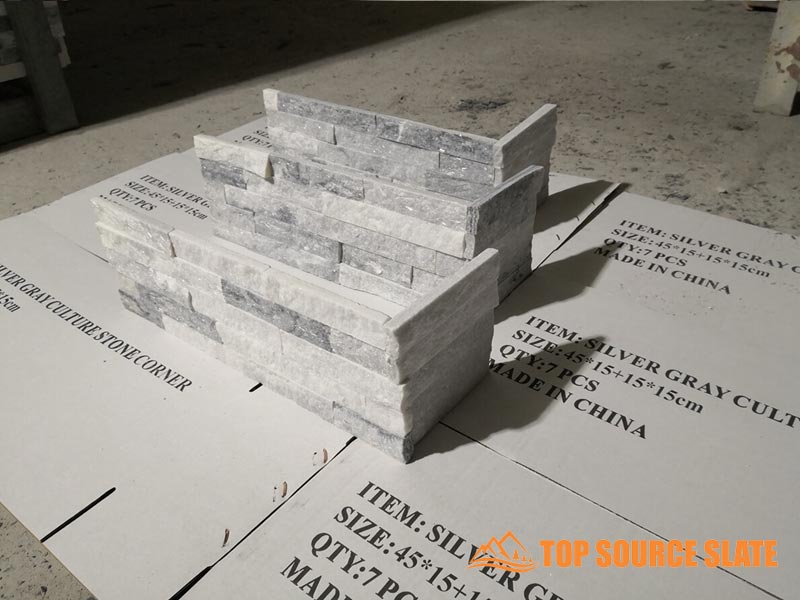
Lösung der Innenecklücke: Überlappungs- und Gehrungsoptionen
Erzielen Sie professionelle Innenecken, indem Sie zwischen detaillierten Gehrungsschnitten oder effizienten Überlappungsverbindungen wählen und dabei CNC-Präzisionsplatten verwenden, um sichtbare Lücken und freiliegende Substrate zu vermeiden.
Vergleich der Gehrungsgenauigkeit und der Effizienz überlappender Verbindungen
Innenecken fungieren als Brennpunkte, die den wahrgenommenen Wert eines Gebäudes definieren Steininstallation. Auftragnehmer wählen Verbindungsmethoden basierend auf der Steinbeschaffenheit und der erforderlichen Baugeschwindigkeit aus. Während Gehrungen für ein traditionelles, fertiges Aussehen sorgen, eignen sich überlappende Verbindungen besser für bestimmte Kollektionen mit hoher Textur.
- Gehrungsschnitte: Installateure neigen den Stein im 45-Grad-Winkel, um einen kontinuierlichen Texturfluss über die Ecke hinweg aufrechtzuerhalten, was für lineare oder glattflächige Paneele unerlässlich ist.
- Überlappende Stoßverbindungen: Bei dieser Methode wird eine Platte bündig mit der Oberfläche einer anderen Platte platziert. Dies funktioniert am besten für Steine mit hoher Textur wie unsere Rough-Serie, bei denen natürliche Dickenschwankungen die Ausrichtung der Gehrung erschweren.
- Blattwinkelversatz: Durch die Einstellung der Sägeblätter auf 44,9 Grad statt genau auf 45 Grad wird sichergestellt, dass die Vorderkanten eng anliegen und innere Lücken und Untergrund verdeckt werden.
Gewährleistung nahtloser Passungen mit CNC-Diamantschneidepräzision
Standardmäßige Werksschnitte führen oft dazu “Reißverschlusseffekt” oder nicht übereinstimmende Farben an der Ecke. Top-Quelle Stone minimiert diese Risiken vor Ort durch den Einsatz automatisierter Fertigung um die Plattenabmessungen zu stabilisieren, bevor sie die Kiste erreichen.
- CNC-Diamantschneiden: Die automatisierte Präzision sorgt für eine 95-prozentige Farbtongleichmäßigkeit und perfekt gerade Kanten und ermöglicht so dichte Stoßfugen, die keine manuellen Spachtelmassen erfordern.
- Same-Charge-Steinbruchbeschaffung: Um Farbveränderungen an Übergängen zu verhindern und Eckverbindungen quasi unsichtbar zu machen, ziehen wir pro Auftrag Materialien aus der gleichen Steinbruchader.
- Kompatibilität mit L-Ecken: Unsere werkseitig gefertigten 90-Grad-Eckelemente machen manuelles Gehrungsschneiden vor Ort überflüssig und reduzieren die Kosten Installationsaufwand um 50 % für großvolumige B2B-Projekte.
Wie stellt man die horizontale Ausrichtung über Eckübergänge hinweg sicher?
Erstellen Sie eine lasernivellierte Basislinie und verwenden Sie sie Top-Quellensteine CNC-gefräste L-Ecken. Das Arbeiten nach außen von den Ecken gewährleistet parallele Steinverläufe und eliminiert sichtbare Steine “trat” Lücken an Übergängen.
Um die lineare Konsistenz über eine 90-Grad-Kurve hinweg aufrechtzuerhalten, ist mehr als nur ein ruhiges Auge erforderlich. Jegliche Abweichung an der Ecke verstärkt sich, wenn Sie sich über die flache Wand bewegen, was zu ungleichmäßigen Verläufen führt, die die architektonische Ästhetik beeinträchtigen. Professionelle Installateure konzentrieren sich auf die Vorbereitungsphase, um das Auftreten dieser sich anhäufenden Fehler zu verhindern.
Festlegung einer einheitlichen Basislinie und Kontrolllinien
Das Fundament der horizontalen Ausrichtung beginnt am tiefsten Punkt der Anlage. Wenn die erste Reihe auch nur um ein paar Millimeter abdriftet, wird die “Reißverschlusseffekt” wird deutlich deutlich, sobald Sie Augenhöhe erreichen. Wir empfehlen, eine einzige horizontale Referenz einzurichten, die alles umschließt Wandflächen bevor der erste Stein den Untergrund berührt.
- Referenz-Setup: Stellen Sie am tiefsten Punkt eine 2026-Standard-Laserwaage ein, um eine gleichmäßige horizontale Referenz auf jeder Wandfläche zu schaffen.
- Vertikale Überwachung: Markieren Sie digitale Kontrolllinien oder schlagen Sie Schlagschnurlinien in vertikalen Abständen von 12 Zoll ein, um die Kurshöhe während des Aufstiegs konstant zu halten.
- Bodenentschädigung: Schneiden Sie die untere Steinreihe so zu, dass sie sich der Bodenneigung anpasst, und halten Sie dabei die Oberkante der ersten Reihe perfekt eben.
- Trockensitzprüfung: Verlegen Sie die ersten beiden Lagen trocken um die Ecke, um sicherzustellen, dass die ineinandergreifenden Verbindungen bündig abschließen und keine vertikale Verschiebung aufweist.
Verwendung von CNC-Präzisions-L-Ecken zur Textursynchronisierung
Bei vor Ort zugeschnittenen Gehrungen treten häufig Strukturlücken und Farbunterschiede auf, da die beiden Steinstücke ursprünglich nicht zusammengefügt waren. Top Source Stone löst dieses Problem durch die Bereitstellung werkseitig vorgefertigter L-Ecken. Diese Einheiten sorgen dafür, dass die Stein ist natürlich Der Charakter fließt um die Ecke, als wäre er ein fester Vollbettblock.
- Visuelle Kontinuität: Wir verwenden vorgefertigte, passende L-Ecken, um die Farb- und Textursynchronisation bei 90-Grad-Übergängen sicherzustellen.
- Modulare Passform: CNC-Diamantklingenkanten sorgen für klare Linien, die perfekt zum Standard 6 passen×24-Zoll-Flachbildschirme.
- Nahtmanagement: Wechseln Sie „lang-kurz“ ab’ Versetztes Installationsmuster mit vorgefertigten Ecken, um vertikale Nähte aufzubrechen und den horizontalen Fluss aufrechtzuerhalten.
- Arbeitseffizienz: Die nahtlose Technologie macht komplexe Gehrungsberechnungen und manuelles Schleifen überflüssig und reduziert die Arbeitszeit vor Ort um 50 %.
Montieren Sie immer zuerst die Eckstücke. Indem Sie die Ecke festlegen und nach außen in das Feld vorarbeiten, stellen Sie sicher, dass alle notwendigen Anpassungen in der Mitte der Wand erfolgen, wo sie weniger sichtbar sind, und nicht am kritischen Brennpunkt der Ecke selbst.
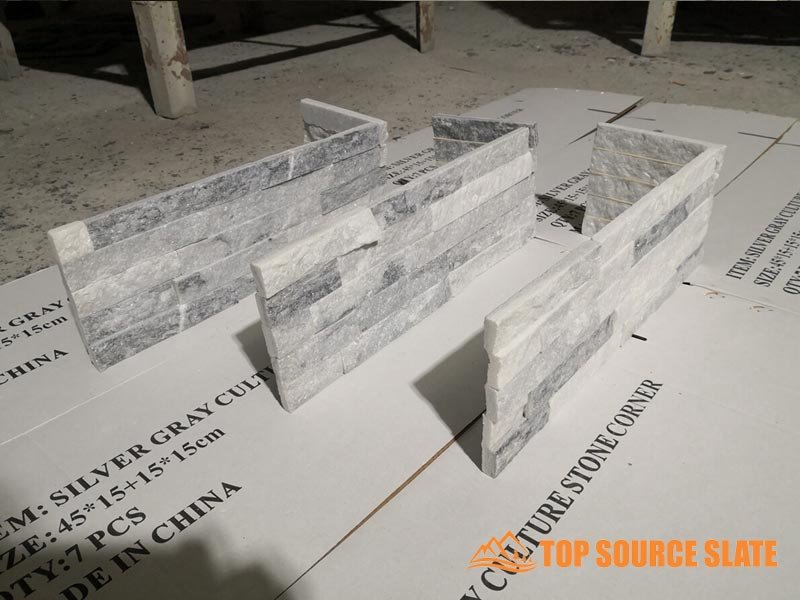
Fertigstellen der Kante: Rohschnitte polieren, um sie an das natürliche Gesicht anzupassen
Entfernen Sie Sägespuren mit Diamantpads der Körnung 60–320 und reproduzieren Sie dann mit Drahtbürsten und Meißeln die geteilte Flächenstruktur für einen nahtlosen architektonischen Übergang.
Standortmodifizierte Kanten legen häufig das glatte Innere frei “Herz” des Steins, der im Vergleich zur werkseitig präparierten Oberfläche künstlich aussieht. Wenn Installateure Platten auf bestimmte Abmessungen zuschneiden oder individuelle Gehrungen erstellen, müssen sie diese Rohschnitte mechanisch verschmelzen, um die ästhetische Integrität der Elemente zu wahren Top Source Stone-Installation.
Abgestufte Schleifsequenzen zur Kantenglättung
Das Hauptziel des Schleifens besteht darin, die vertikalen Rillen zu beseitigen, die nasse Sägeblätter hinterlassen. Ein fließender Übergang verhindert das “Reißverschlusseffekt” wo die Schnittkante auf die natürliche Spaltoberfläche trifft. Für ein professionelles Finish nutzen Sie den folgenden Ablauf:
- Diamantpads mit Körnung 60: Schwere Rillen abschleifen und die Ebene ausrichten mit den angrenzenden Steinplatten schneiden.
- Körnung 120 bis 220: Machen Sie die scharfen Ecken des Schnitts weicher, um das leicht verwitterte Aussehen nachzuahmen Naturstein.
- 320er Körnung: Schaffen Sie ein taktiles Gefühl, das unseren werkseitig erstellten Standards entspricht, ohne den Stein zu stark zu polieren, sodass eine reflektierende Oberfläche entsteht.
- Technik: Arbeiten Sie in kurzen, kreisenden Bewegungen, um flache Stellen oder Vertiefungen im Material zu vermeiden.
Nachbildung der natürlichen Spaltstruktur auf freiliegenden Schnitten
Das Schleifen sorgt für die Glätte, aber es fehlt die Robustheit “Gespaltenes Gesicht” Charakter, der für einen luxuriösen Look unerlässlich ist. Installateure müssen die Kante manuell bearbeiten, um die CNC-Diamantklingen-Präzisionskanten unserer Standard-Z-Form- und L-Eck-Einheiten widerzuspiegeln.
- Drahtbürsten: Tragen Sie eine robuste Drahtbürste auf die geschliffene Kante auf, um weichere Mineralien herauszuziehen und die kristalline Struktur von Quarzit oder Schiefer freizulegen.
- Steinmeißelarbeit: Schneiden Sie die obere Ecke des Schnitts vorsichtig in einem flachen Winkel ab. Dies reproduziert das raue Tiefen- und Schattenprofil werkseitiger Split-Face-Paneele.
- Farbabstimmung: Versiegeln Sie die modifizierte Kante mit einem pH-neutralen Steinverbesserer. Dies gewährleistet die “Gleicher Steinbruch” Die Farbkonsistenz bleibt über die gesamte Wandfläche gleichmäßig.
Richtig bearbeitete Kanten verwandeln eine Standardfurnierarbeit in ein architektonisches High-End-Element. Durch die Befolgung dieser mechanischen Schritte können Händler und Installateure eine Ecke garantieren, die wie solide und handbehauen aussieht Stein statt einer dünnen Platte Produkt.
Häufig gestellte Fragen
Kann ich professionelle Ecken ohne eine herkömmliche Gehrungslade erzielen?
Ja. Installateure können eine Handsäge mit abgeschrägten und feinen Zähnen oder eine individuelle Pappschablone verwenden, um den Schnitt zu führen. Markieren Sie die Wand direkt mit einem Winkeleisen, um eine präzise Passform zu gewährleisten. Allerdings müssen Sie die Kanten anschließend mit Schleifpapier glätten, um gezackte Linien zu entfernen, die sichtbare Lücken erzeugen.
Was sind die wichtigsten Techniken für die Installation von Steinecken?
Bei Projekten kommen typischerweise drei Methoden zum Einsatz: vorgefertigte L-Ecken, Gehrungsschnitt oder die Webtechnik. Top Source Stone bietet werkseitig hergestellte 90-Grad-L-Ecken für jede Serie, um die Installation zu beschleunigen und die Farbsynchronisierung über den Wandübergang hinweg sicherzustellen.
Sind für gestapelte Steinplatten spezielle Eckstücke erforderlich?
Um ein nahtloses, ineinandergreifendes Erscheinungsbild zu erzielen, sind spezielle L-Ecken unerlässlich. Diese Komponenten werden so hergestellt, dass sie sich um 90-Grad-Winkel wickeln, wobei die Z-förmige oder S-förmige Modularität des Systems erhalten bleibt und gleichzeitig der Installationsuntergrund und die vertikalen Fugen verdeckt werden.
Wie kaschiere ich rohe Schnittkanten an einer Außenecke?
Die effektivste Methode besteht darin, die Gehrung im 45,5-Grad-Winkel statt genau im 45-Grad-Winkel zu schneiden. Durch diesen leichten Überschnitt wird sichergestellt, dass die Außenflächen eng anliegen und die Schnittkante in der Verbindung versenkt wird. Wenn noch offene Kanten sichtbar sind, können Sie sie durch Polieren mit einem Diamantpolierpad an die natürliche Spaltflächenstruktur anpassen.
Wie schneidet man eine Gehrung auf dickem Naturstein am genauesten?
Für einen Doppelgehrungsschnitt verwenden Sie eine Nasssäge. Führen Sie den ersten 45-Grad-Schnitt aus, drehen Sie das Steinstück um und machen Sie den umgekehrten Schnitt für den Rückweg. Wenn Sie das Rücklaufstück etwa 1/8 Zoll länger als die erforderliche Tiefe schneiden, können Sie dünnflüssige Mörtellinien verbergen und ein saubereres Erscheinungsbild erzielen.
Abschließende Gedanken
Präzise Ecken unterscheiden ein hochwertiges Architekturprojekt von einer preisgünstigen Furnieranwendung. Wenn man sich auf die manuelle Feldernte verlässt, besteht das Risiko eines Materialverlusts von 15 % und die Kosten sind hoch “Reißverschlusseffekt” Behauptungen, die den Ruf Ihres Händlers schädigen. Unsere CNC-gefertigten L-Ecken sichern Ihren Gewinn, indem sie die Arbeitszeit halbieren und gleichzeitig eine Farbkonsistenz von 95 % über die gesamte Charge hinweg gewährleisten.
Sichern Sie sich Ihre Marktposition mit unseren gestapelten Steinplatten, die innerhalb von 15 Tagen versandfertig sind. Wir empfehlen eine Probebestellung von 300 Quadratmetern, um unsere fugenlose Verbundtechnik und Frost-Tau-Widerstandsfähigkeit aus erster Hand zu testen. Senden Sie uns eine E-Mail, um einen detaillierten Katalog anzufordern oder ein Private-Label-Branding für Ihr Vertriebsnetz zu arrangieren.