Las señales de alerta de los proveedores de piedra chinos son el primer punto de control que los compradores deben bloquear antes de aprobar un proveedor, un presupuesto o un espacio de producción. Su contenedor de piedras apiladas valorado en 50.000 dólares aterriza en el puerto. La muestra de preproducción tenía un aspecto perfecto: color uniforme, uniones estrechas y hendiduras naturales. ¿Pero el envío a granel? Bloque de cantera diferente. Corte diferente. El color es dos tonos más claro y la textura es suave donde debería ser rugosa. Ahí es cuando te golpea el costo real de saltarte la investigación de antecedentes básica. Ahí es cuando empiezas a pensar en banderas rojas proveedores de piedra chinos escóndete detrás de catálogos brillantes y cotizaciones rápidas.
La brecha entre la aprobación de muestras y la producción en masa es donde la mayoría de los compradores pierden dinero. Un fabricante legítimo obtiene márgenes del 5 al 15%. ¿Una cotización un 50% por debajo del mercado? Eso no es un trato. Es una advertencia. Según datos del sector, tres de cada cinco empresas constructoras se han encontrado con documentación de materiales falsificada. La pérdida promedio de $133,000 por fraude de facturas debería hacerle detenerse antes de firmar cualquier contrato. Las muestras gratuitas casi siempre se seleccionan cuidadosamente. Las muestras pagadas del lote de producción real son la única forma confiable de evaluar la consistencia del color y la tolerancia de calidad.
He pasado años auditando fábricas de piedra en toda China, desde Hebei hasta Fujian. La diferencia entre un fabricante real y una empresa comercial no siempre es obvia en un sitio web o en una cotización de precio FOB. Pero aparece en el contenedor. Esto es lo que debe buscar antes de realizar un depósito.
Trampa 1: El “Demasiado bueno para ser verdad” Estafa de precios
Una cotización un 50% por debajo del mercado significa que se están tomando atajos, o usted es el objetivo.
Obtiene una cotización por piedra apilada a $ 8 por pie cuadrado FOB. El siguiente más bajo es $16. Su primer instinto podría ser que ha encontrado un trato. Pero los fabricantes legítimos de piedra operan con márgenes de entre el 5% y el 15% después de los costos del bloque en bruto, el corte, la mano de obra y el embalaje. Un precio que es la mitad del precio del mercado no proviene de la eficiencia: proviene de la sustitución de materiales, paletas con bajo peso o fraude directo en las facturas.
- Las matemáticas no mienten: A 8 dólares el pie cuadrado, el proveedor perdería dinero con la piedra auténtica incluso antes de salir de la fábrica. La única forma de alcanzar esa cifra es cambiar a un compuesto de hormigón que imite la piedra natural pero que pese un 30% menos y se desgaste mal en dos años.
- Pérdida promedio por fraude de facturas: 133.000 dólares por incidente según datos de la industria. La estafa funciona así: una cotización baja se gana su confianza en un pedido de prueba pequeño, luego, para el contenedor completo, le envían una factura modificada con diferentes datos bancarios justo antes del pago. Una de cada tres empresas constructoras se ha topado con documentación falsificada.
Esto es lo que se ha observado en auditorías en una docena de países: los proveedores que ofrecen un 50% por debajo del mercado casi nunca sobreviven a una inspección de terceros. No pueden producir registros de origen de las canteras, su proceso de aprobación de muestras omite la comparación de lotes y su tolerancia de calidad es lo que quepa dentro del contenedor antes del cierre de la aduana. Si está comparando cotizaciones FOB y una se encuentra muy por debajo del grupo, márquelo inmediatamente.
| Bandera roja | La realidad | El riesgo | La solución | Información sobre costos |
|---|---|---|---|---|
| Precio 50% por debajo del precio del mercado | Los fabricantes legítimos operan con márgenes del 5 al 15%. Un descuento del 50% es matemáticamente imposible sin tomar atajos. | Alta probabilidad de sustitución de material, fraude de facturas o estafa total. Recibirá compuesto de hormigón en lugar de piedra natural. | Solicite un desglose de costos detallado. Compare cotizaciones de 3 a 5 fabricantes directos. Si una cotización es drásticamente más baja, exija una auditoría de fábrica. | Pérdida promedio por fraude de facturas: $133,000 por incidente. Tasa de incumplimiento de pago del 11% en transacciones transfronterizas. |
| Desglose de precios vago | Un proveedor transparente proporciona una división clara: costo de materia prima, tarifa de procesamiento, embalaje y logística. Una sola suma global esconde un relleno. | Los costos ocultos emergen más tarde: recargos inesperados por embalaje, carga o documentación. Su costo final excede la cotización. | Exigir por escrito un desglose del precio FOB o CIF. Compare cada línea de pedido con los puntos de referencia de la industria. | El umbral de descuento del 20 % es el punto en el que se debe iniciar una auditoría. El 99% de las violaciones de seguridad en las empresas Global 2000 están relacionadas con proveedores de bajo costo. |
| Sin flexibilidad de cantidad mínima de pedido (MOQ) | Los verdaderos fabricantes tienen mínimos para cubrir las tiradas de producción. Un proveedor que acepta pedidos de cualquier tamaño probablemente sea una empresa comercial que reúne múltiples fuentes. | Inconsistencia de color entre lotes. Las empresas comerciales no pueden controlar la selección de bloques de cantera, lo que provoca variaciones de color entre envíos. | Solicite fotos de 10 lotes de producción consecutivos del mismo color. Un fabricante directo como Top Source Slate mantiene un archivo de gama de colores de su propia cantera. | Las pérdidas globales por violaciones de la cadena de suministro se proyectan en 138 mil millones de dólares para 2031. La falta de coincidencia de colores por sí sola puede costar más de 50 000 dólares por contenedor en retrabajos y devoluciones. |
Trampa 2: Fraude de sustitución de materiales
3 de cada 5 empresas constructoras denuncian documentación de materiales falsificada.
Un proveedor le cotiza cuarcita natural hendida. Llega el contenedor y los paneles son un compuesto de hormigón con alto contenido de pigmentos moldeado en un molde de goma. La diferencia de peso es el primer indicio: la piedra real apilada pesa entre 8 y 13 libras por pie cuadrado, mientras que los materiales compuestos suelen pesar menos de 7 libras. Pero cuando pesas un palé, el contenedor ya está en el muelle y la factura vence.
- La mecánica de sustitución: El compuesto de hormigón imita la textura de la superficie lo suficientemente bien como para pasar una verificación visual a partir de fotografías. La proporción de aglutinante y los pigmentos de óxido de hierro cuestan aproximadamente un 40% menos que la piedra natural aserrada en cantera. Para un contenedor de 20 toneladas, esa diferencia de margen financia el fraude.
- Detección mediante prueba de densidad: Las pruebas de absorción de agua y gravedad específica aparente ASTM C97 exponen los compuestos de inmediato. La piedra natural absorbe menos del 1% en peso; Los compuestos de hormigón absorben entre un 5% y un 8%. Una sola prueba de laboratorio cuesta entre 150 y 250 dólares por muestra, algo barato en comparación con un recipiente de piedra falsa.
- Verificación de composición química: El análisis de fluorescencia de rayos X (XRF) identifica hidratos de silicato de calcio exclusivos de los aglutinantes de cemento Portland. Registros de cuarcita natural >90 % SiO₂; Los compuestos de hormigón muestran altos picos de calcio y aluminio, ausentes en la piedra de cantera.
Exija un informe de laboratorio independiente (SGS o Bureau Veritas) sobre la muestra de preproducción antes de que comience la producción, no después. Especifique en su contrato que cualquier desviación de la composición de la piedra natural provoca el rechazo a coste del proveedor. Un importador con el que trabajé detectó una sustitución de esta manera: su muestra pagada pasó la inspección visual, pero el escaneo XRF mostró niveles de calcio que ninguna cantera podría producir.
| Bandera roja | Cómo se ve | Cómo detectar | Impacto en los costos |
|---|---|---|---|
| Compuesto de hormigón aprobado como piedra natural. | Hormigón con alto contenido de pigmentos vendido como piedra 100% natural; sustitución de señales de palets más ligeros | Pese las paletas: la piedra real pesa entre 8 y 13 libras por pie cuadrado; Requiere densidad de laboratorio de terceros. & prueba de composición | Pérdida potencial de más de $50 000 por contenedor si la sustitución no se detecta antes de la instalación |
| Documentación material falsificada | Los proveedores proporcionan informes de pruebas o certificados falsos que afirman la composición de la piedra natural. | Verificar la documentación con resultados de laboratorios independientes; 3 de cada 5 empresas constructoras se encuentran con este fraude | Responsabilidad legal, retrasos en proyectos y daños a la reputación por material no conforme |
| Muestras gratuitas cuidadosamente seleccionadas | Muestras gratuitas enviadas desde un lote separado de alta calidad que no es representativo de la producción a granel. | Pague entre $20 y $50 por un corte de muestra del lote de producción real; solicitar fotos por lotes | La aprobación falsa provoca discrepancias en el color y rechazo en el momento de la entrega; los costos de retrabajo pueden exceder los $10 000 |
| Sin opción de inspección por parte de terceros | El proveedor rechaza o retrasa la inspección independiente antes del envío | Insistir en una inspección de SGS o Bureau Veritas ($300–$500 por contenedor); alejarse si se le niega | Sin inspección, un solo contenedor no conforme puede acabar con su margen de beneficio |
Trampa 3: Certificaciones falsas (ISO/ASTM)
3 de cada 5 empresas constructoras informan documentos de materiales falsificados; verifique cada certificado manualmente.
Un certificado ISO 9001 enmarcado en la pared de un proveedor no significa nada si el número de identificación no se remonta a un organismo acreditado. La mayoría de los blogs te dicen que “pedir certificación” – ese es un consejo inútil. La verdadera verificación es hacer una referencia cruzada del número de certificado en el directorio global IAF CertSearch o en la base de datos ANAB. No haga clic en los enlaces que le envíe el proveedor; abra una nueva pestaña del navegador y busque el registrador usted mismo. Si el número de certificado no aparece, o si incluye el nombre de una empresa diferente, ha descubierto una falsificación.
Para proyectos industriales que requieren cumplimiento con ASTM C615 o C1703, exija un Certificado de prueba de material tipo 3.2. Un MTC Tipo 3.2 significa que un inspector externo independiente (no el propio equipo de control de calidad de la fábrica) presenció el muestreo y las pruebas con números de lote específicos. Revise los resultados con respecto a las normas ASTM en cuanto a resistencia a la compresión (mínimo 13 000 psi para granito), absorción de agua (por debajo del 0,40 %) y densidad. Si el proveedor no puede producir un MTC Tipo 3.2 en un plazo de cinco días hábiles, o no está fabricando lo que afirma o no controla su propia producción.
- Paso de verificación ISO: Vaya a iaf.nu → CertSearch → ingrese el ID del certificado del documento del proveedor → confirme que el nombre de la empresa, el alcance y la fecha de vencimiento coincidan exactamente.
- Bandera roja a tener en cuenta: Si el proveedor dice “nuestra ISO está pendiente de renovación” u ofrece un PDF granulado sin número de registro, trátelo como si no tuviera ninguna certificación.
- Requerimiento del MTC por tipo de proyecto: El tipo 3.1 (autodeclaración de fábrica) es aceptable para trabajos comerciales básicos; El tipo 3.2 (testimonio de terceros) es obligatorio para infraestructura gubernamental, fachadas de gran altura y cualquier proyecto que requiera revestimiento resistente al fuego.
Trampa 4: Fraude de facturas de pago
El fraude de facturas tiene un promedio de $133 000 por incidente; verifique cada cambio bancario.
La falta de coincidencia de nombres de cuentas bancarias es el fraude de pago más común en las importaciones de piedra. El proveedor envía una factura con datos bancarios ligeramente modificados (un número de cuenta diferente o un cambio menor de nombre) justo antes de la fecha de envío. Según datos de la industria, el 11% de los acuerdos transfronterizos experimentan fallas en los pagos debido a este tipo de estafas. La pérdida promedio por incidente es de $133,000. Verifique siempre las instrucciones de pago mediante una llamada telefónica o una videollamada por separado con un contacto conocido. No confíe únicamente en el correo electrónico.
Los métodos de pago seguros son su única defensa. Para pedidos por primera vez, utilice un Carta de Crédito (L/C) o un servicio de depósito en garantía. Estos protegen a ambas partes y garantizan que los fondos se liberen sólo después de la inspección. Evite el 100% T/T por adelantado. En su lugar, negocie un 30/70 o 50/50. división de pago: un depósito para iniciar la producción y el saldo contra los documentos de envío. Una tarifa de inspección por parte de un tercero de entre $300 y $500 por el primer contenedor es un precio pequeño en comparación con una pérdida de $50 000.
- Verificar a través del segundo canal: Llame al proveedor utilizando un número de teléfono conocido para confirmar los detalles de la cuenta bancaria antes de transferir fondos.
- Utilice carta de crédito o depósito en garantía: Para los primeros pedidos, estos instrumentos liberan el pago solo después de que un tercero verifique los documentos de envío.
- Negociar la división del pago: Rechace 100% T/T por adelantado. Oferta de depósito del 30%, 70% contra copia del conocimiento de embarque o después de la inspección.
Trampa 5: No hay auditoría de fábrica ni recorrido en video en vivo
Si no le muestran la fábrica, no son el fabricante.
Cada fabricante legítimo que he auditado en 12 países puede programar un recorrido en video en vivo dentro de las 24 horas. Una empresa comercial no puede. Darán excusas: “el gerente no está”, “es un día festivo”, “tenemos que preparar la fábrica para su visita”. Una fábrica real con máquinas cortadoras, inventario de bloques en bruto y una línea de embalaje no tiene nada que ocultar. Lo guiarán a través de todo el proceso en tiempo real, a menudo en WeChat o WhatsApp.
La diferencia entre una fábrica y una empresa comercial no se trata solo de márgenes de precios. Una empresa comercial abastece de varias fábricas para llenar un contenedor. Eso significa que los bloques de piedra provienen de diferentes canteras, diferentes lotes y, a veces, diferentes regiones. La variación de color entre esos bloques está garantizada. Un fabricante directo controla la selección del bloque de cantera, el programa de corte y el archivo de la gama de colores. Si su proveedor no puede mostrarle un vídeo de su propia línea de producción, le está comprando a un intermediario sin control sobre la coherencia de los lotes.
- Lista de verificación de auditoría de fábrica: Solicite un recorrido en video en vivo por el patio de piedra en bruto, las máquinas cortadoras, el área de secado y la línea de empaque. Solicite ver el muelle de recepción, el horno y el laboratorio de control de calidad. Si dudan u ofrecen un vídeo pregrabado, es una señal de alerta.
- Costo de inspección de terceros: Una inspección previa al envío realizada por SGS o Bureau Veritas cuesta entre 300 y 500 dólares por contenedor. Compare eso con la pérdida promedio de $133,000 por fraude de facturas incidente o el costo de un contenedor de 50.000 dólares de piedra que no coincide. La inspección se amortiza 100 veces.
No confíe únicamente en fotografías o certificados. Se han visto certificados ISO falsos exhibidos en las paredes de las oficinas y luego verificados en los registros internacionales como completamente inventados o pertenecientes a una empresa totalmente ajena.
Trampa 6: Inconsistencia de color entre lotes
La variación de color entre lotes puede acabar con un proyecto.
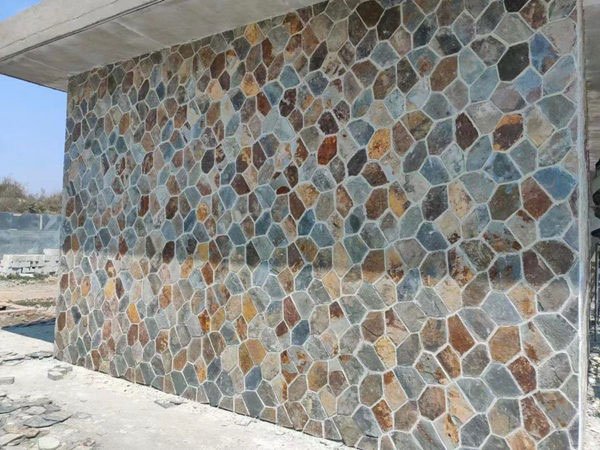
Abres el segundo contenedor, sacas un panel de la fila superior e inmediatamente sabes que algo anda mal. Se supone que la piedra es "Mezcla de Otoño".’ — la misma mezcla cálida de ocre y carbón que usted aprobó en el panel de muestra hace tres meses. Pero este lote se inclina hacia el verde grisáceo. Tampoco sutil. Compruebas los paneles del primer contenedor apilados en el almacén. Uno al lado del otro, parecen dos productos diferentes.
Este no es un problema raro: es estructural. Las empresas comerciales no poseen canteras. Compran bloques en bruto de múltiples proveedores para cumplir con un pedido, y cada bloque de cantera tiene una composición mineral ligeramente diferente. Incluso dentro de la misma cantera, el color varía según la profundidad y la dirección de la veta. Un comerciante no tiene ningún incentivo para mantener un archivo de gama de colores porque no tiene garantía de repetición del suministro de la misma fuente.
- Causa principal: Los comerciantes obtienen bloques de 3 a 5 canteras diferentes por pedido para obtener descuentos por volumen o cumplir con los plazos de entrega. Cada bloque produce matices distintos.
- Ventana de detección: La variación del color aparece solo después de que comienza la producción, demasiado tarde para un comprador primerizo que pagó un depósito basado en una muestra gratuita seleccionada cuidadosamente.
Para mitigar estas discrepancias de color, los compradores B2B deben implementar un estricto protocolo de retención de muestras de producción antes de finalizar las transferencias bancarias:
- Paso 1: Antes de firmar cualquier contrato, solicite fotografías de diez lotes de producción consecutivos del color elegido, fechados y con los números de lote visibles en las etiquetas de la paleta. Si el proveedor no puede producir este registro, no controla la coherencia del lote.
- Paso 2: Pague por muestras cortadas de su producción real, no del inventario o de las exhibiciones de la sala de exposición. Espere pagar entre $ 20 y $ 50 por panel de contabilidad completo más envío. Las muestras gratuitas casi siempre se seleccionan cuidadosamente a partir de material visualmente ideal que no representa una producción masiva.
- Paso 3: Exija que el proveedor conserve una muestra maestra sellada de cada lote de producción durante al menos 12 meses e incluya esta cláusula en su acuerdo de compra: “El proveedor debe conservar un panel de tamaño completo por lote como estándar de referencia; no coincidir con los pedidos posteriores dentro de la tolerancia visual aceptable (definida por comparación mutua de humedad bajo luz natural) desencadena el reemplazo a costo del proveedor.”
La dura verdad: un fabricante directo con su propia cantera y archivo de gama de colores, como Top Source Slate, puede garantizar la repetibilidad porque cada bloque proviene de coordenadas conocidas en su depósito de origen. Una empresa comercial no puede hacer esa promesa porque no controla de dónde provienen los bloques del próximo mes.
Trampa 7: Embalaje y logística deficientes
Entre un 5 y un 10 % de roturas en un contenedor se acumulan rápidamente cuando se paga por todo el envío.
Los contenedores han llegado con un 8% de la piedra destrozada porque el proveedor utilizó cajas delgadas de madera contrachapada y se saltó los refuerzos internos. La piedra apilada es pesada (un promedio de 8 a 13 libras por pie cuadrado), lo que significa que el embalaje de madera de calidad inferior que colapsa bajo el movimiento marítimo continuo convierte el revestimiento de piedra de primera calidad en chatarra que no se puede vender antes de llegar.
El segundo costo oculto reside en los términos de envío. Muchos proveedores cotizan precios FOB (gratis a bordo) que cubre únicamente el transporte de la mercancía al puerto y al buque. Todo lo que sigue (flete marítimo, seguros, despacho de aduanas, transporte terrestre por carretera) llega a su P.&L. Cuando un proveedor presiona CIF (costo, seguro, flete), agrupa esos costos en un solo número, pero a menudo agrega un margen de beneficio del 10 al 20 % sobre lo que pagaría reservando directamente con un agente de carga.
- Verificación de la realidad FOB: Obtenga una cotización de flete por separado de su propio transportista antes de aceptar cualquier precio CIF. Ha habido diferencias de 2.000 dólares en un solo contenedor de 20 pies.
- Brecha de seguro: CIF sólo cubre el riesgo marítimo básico al valor de factura. Si necesita cobertura por daños en tierra o el costo total de reemplazo, debe contratar un seguro adicional usted mismo.
- Trampa de aprobación de muestra: Un proveedor que toma atajos en el embalaje también tomará atajos en la tolerancia de calidad durante la producción. La muestra de preproducción puede parecer perfecta, pero las tiradas de producción en masa mal empaquetadas llegarán dañadas.
Conclusión
Un proveedor que supera los siete controles es raro. Los que sí lo hacen son fabricantes directos con su propio control de cantera, un protocolo de retención de muestras documentado y la voluntad de absorber el costo de la inspección de terceros para el primer contenedor. Esa combinación elimina el riesgo de fraude por sustitución de materiales y variación del color del lote antes de que cualquiera de los dos llegue a su muelle.
Ejecute estas tres preguntas de sí/no en su lista corta antes de comprometerse con una orden de compra. ¿Ofrece el proveedor muestras pagadas del lote de producción real, no piezas seleccionadas de forma gratuita? ¿Pueden mostrarle un archivo de gama de colores de su propia cantera que abarque al menos tres años? ¿Aceptarán una inspección de SGS o de Bureau Veritas de un tercero a entre 300 y 500 dólares por contenedor como condición de venta? Si alguna respuesta es no, sigue buscando. Una fábrica que supera los tres merece una conversación más profunda sobre la hoja de especificaciones de su próximo proyecto y el precio FOB.
Preguntas frecuentes
¿Cómo verifico a un proveedor de piedra chino antes de realizar un pedido?
Solicite un recorrido en video por la fábrica en vivo y verifique su licencia comercial, certificaciones de exportación y un informe de auditoría de terceros. Solicite una muestra de preproducción que coincida con las especificaciones de su pedido al por mayor, no una pieza de exposición. Nunca omita una auditoría de fábrica, incluso si las muestras parecen buenas.
¿Cuáles son las estafas más comunes en la importación de piedras?
Fraude de facturas, donde los estafadores alteran los detalles de pago a mitad del pedido, y sustitución de materiales, donde el envío a granel utiliza piedra inferior de una cantera diferente. Ambos pueden costarle más de 50.000 dólares por contenedor. Verifique siempre los datos bancarios por teléfono antes del pago.
¿Cuánto debo pagar por una muestra de piedra apilada?
Espere pagar entre $ 10 y $ 30 por pieza más envío, y muchas fábricas genuinas reembolsan el costo de la muestra en su primer pedido al por mayor. Si un proveedor cobra más de 50 dólares por muestra, eso es una señal de alerta. Evite pagar tarifas elevadas por muestras a proveedores desconocidos.
¿Cuál es el mejor plazo de pago para importadores primerizos?
Utilice un depósito del 30 % mediante T/T y el 70 % después de su propia inspección en la fábrica o contra los documentos de envío. Nunca pague el 100% por adelantado y evite PayPal para grandes sumas. Para los primeros pedidos, insista en el pago contra los documentos de envío.
¿Puedo confiar en un proveedor que ofrece un 50% por debajo del precio de mercado?
No. Los fabricantes legítimos operan con márgenes del 5 al 15 %, por lo que un descuento del 50 % significa que se están tomando atajos o que usted es la marca. Si un acuerdo parece demasiado bueno para ser verdad, casi siempre lo es.