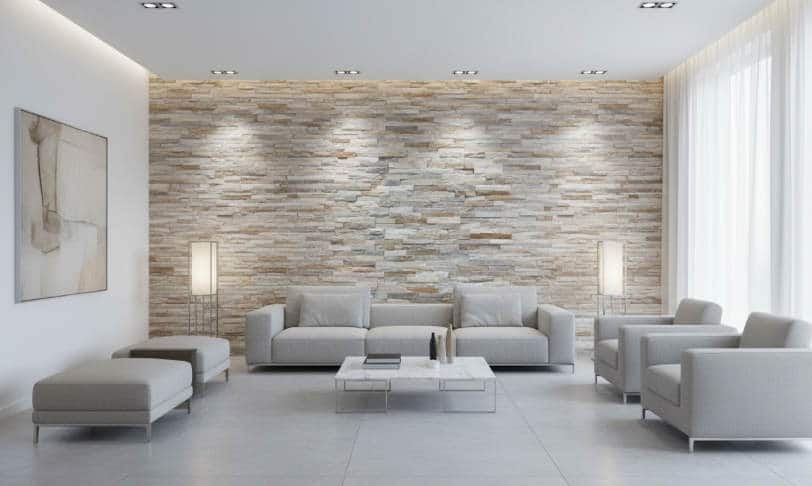
Iluminación & Shadow Play sirve como base técnica para convertir una chimenea de piedra apilada estándar en un punto focal arquitectónico de alto valor. Cuando los diseñadores ignoran la interacción entre la luz y la textura, corren el riesgo de aplanar la profundidad natural de la piedra y perder la estética premium que los clientes esperan de una mampostería costosa. Una iluminación mal ejecutada a menudo resalta las uniones de la instalación o crea un deslumbramiento intenso, lo que en última instancia disminuye la calidad percibida de todo el proyecto de diseño de interiores.
Este La guía establece un procedimiento operativo estándar para optimizar la chimenea. visuales a través de la ubicación precisa de los accesorios y la selección de la temperatura del color. Analizamos la física de la luz rasante para mejorar el relieve de la piedra, determinamos las clasificaciones Kelvin específicas requeridas para diferentes minerales de piedra y proporcionamos especificaciones de posicionamiento exactas para la iluminación empotrada. Estos técnicos Los protocolos garantizan que cada instalación de iluminación. Maximiza la textura del material mientras se integra perfectamente con sistemas de atenuación inteligentes para un rendimiento constante.
Por qué la iluminación representa el 50 % del impacto visual de su chimenea
La iluminación efectiva transforma una imagen bidimensional. muro de piedra en una característica arquitectónica de alto relieve al amplificar las hendiduras minerales naturales y la profundidad de las sombras inherentes a la cuarcita y la pizarra reales.
La iluminación estándar de una habitación a menudo aplana la apariencia de piedra natural, eliminando las intrincadas texturas que hacen que el ledgestone sea deseable. en profesional Instalaciones B2B Para 2026, vemos un cambio hacia jerarquías científicas de iluminación que tratan la chimenea como un elemento escultórico en lugar de un simple revestimiento de pared. Una iluminación adecuada revela las auténticas variaciones minerales y gradientes de color que definen las fuentes de cantera de alta calidad.
Capas estratégicas para profundidad visual
Actual Los estándares de diseño enfatizan un sistema de tres niveles para evitar que la piedra se acumule. de parecer plano bajo luces genéricas del techo. Al separar la luz ambiental, de trabajo y de acento, se controla cómo el ojo percibe las dimensiones físicas de la piedra. Esta superposición garantiza que la chimenea siga siendo un punto focal incluso cuando las luces de la habitación principal estén atenuadas.
- Recomendamos una jerarquía de 300 a 500 lúmenes ambientales y de 50 a 100 lúmenes de acento para crear un acabado profesional.
- La iluminación en capas resalta las hendiduras y crestas únicas de piedra apilada que queda oculta bajo estándar luces de la habitación.
- Las tiras de LED ocultas colocadas a lo largo de la repisa o el techo revelan las auténticas variaciones minerales en pizarra y cuarcita.
Impacto de la textura y el juego de sombras
La elección entre la Serie Rough y la Serie Flat dicta cómo interactúa la luz con la superficie de la piedra. Los paneles de grandes dimensiones dependen de la luz rasante para proyectar sombras espectaculares, lo que enfatiza el acabado resistente y dividido del material. Sin estas sombras, incluso las más premium piedra natural puede perder su valor percibido y su peso arquitectónico.
- Los paneles de la serie Rough utilizan superficies de grandes dimensiones para proyectar sombras espectaculares, añadiendo una sensación resistente y tradicional.
- Serie de lápiz Las instalaciones se benefician de una iluminación lineal que sigue la línea de la piedra. flujo horizontal, creando una sensación de movimiento.
- La ubicación estratégica de la luz garantiza el 100% piedra real la textura es el punto focal en lugar de las costuras de instalación.
Temperatura de color y autenticidad del material
Hacer coincidir las clasificaciones LED Kelvin con las específicas tipos de piedra es fundamental para mantener la autenticidad material. Las temperaturas de color incorrectas a menudo hacen piedra natural parecen compuestos de hormigón artificial al eliminar los degradados de color naturales. El uso del espectro correcto garantiza que los rojos terrosos, dorados y grises profundos conserven su vitalidad procedente de la cantera.
- Los cálidos tonos ámbar de 2700 K realzan los rojos y dorados terrosos que se encuentran en la pizarra y arenisca natural.
- La moderna iluminación blanca fría se adapta a la serie Marble, proporcionando una apariencia limpia y sofisticada para vestíbulos residenciales de alta gama.
- Las temperaturas de color incorrectas pueden hacer que los colores sean auténticos. La piedra aparece como compuestos de hormigón artificiales al eliminar los naturales. gradientes de color.
La proporción de dominancia 70/30
Lograr el un ambiente acogedor perfecto requiere equilibrar la chimenea brillan contra la iluminación de la habitación circundante. En instalaciones premium, la chimenea debe dominar el campo visual sin que la habitación parezca oscura o parecida a una cueva. Este equilibrio se gestiona mediante proporciones precisas que priorizan la chimenea como fuente de luz principal en el área inmediata.
- Instalaciones profesionales mantener una chimenea del 70% predominio del brillo al tiempo que se limita la intensidad superior al 30%.
- La tecnología de atenuación inteligente permite a los propietarios ajustar los niveles según la hora del día, preservando el peso visual de la piedra.
- Las proporciones de iluminación precisas garantizan que la chimenea siga siendo el ancla principal de la habitación sin verse dominada por la luz ambiental general.
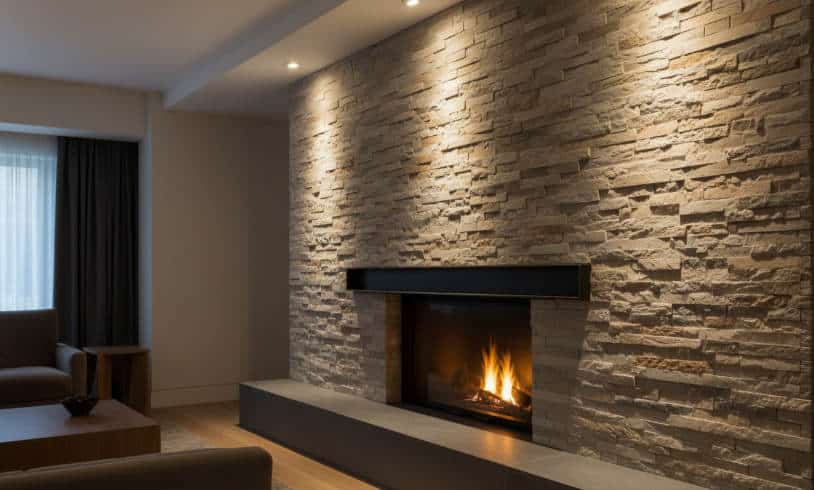
Luz rasante versus luz directa: ¿cuál mejora la profundidad de la piedra?
La luz rasante transforma una superficie de piedra estática en una característica arquitectónica dinámica al aprovechar el contraste de las sombras para revelar una textura que la iluminación directa estándar generalmente aplana.
Luz rasante: acentuando la textura y las sombras naturales
Colocar las fuentes de luz en un ángulo agudo con respecto a la piedra, a menudo llamado rasante de pared: es el estándar de la industria para instalaciones de alto relieve. Esta técnica obliga a la luz a deslizarse por la superficie, creando largas sombras que enfatizan el grosor de 1,75 pulgadas que se encuentra en nuestros paneles premium de la serie Rough. Al resaltar los picos y valles físicos de la roca, la luz rasante crea un efecto tridimensional que cambia a medida que el espectador se mueve por la habitación.
- El juego de sombras revela la superficie de altas dimensiones de la serie Rough, enfatizando su profundidad estructural.
- La iluminación de ángulo estrecho identifica picos minerales únicos que la luz directa a menudo aplana.
- Los diseñadores utilizan esta técnica para convertir piedras apiladas en un punto focal que cambia de carácter a lo largo del día.
Iluminación directa: superficies suavizadas para imágenes limpias
La luz directa incide perpendicularmente sobre la superficie de la piedra, lo que minimiza las sombras y pone en primer plano el color inherente y los patrones minerales de la piedra. Recomendamos este enfoque para la Serie Flat o la Serie Marble donde la consistencia del color es el objetivo principal del diseño. En espacios más pequeños, la iluminación directa evita que las sombras intensas hagan que la pared parezca imponente o que la habitación parezca cerrada.
| Técnica de iluminación | Distancia de la pared | Resultado visual |
|---|---|---|
| Rastrillar (pasar por la pared) | 6 a 12 pulgadas | Textura maximizada & Profundidad |
| Directo (lavado de pared) | 3 pies o más | Color uniforme & Sombras suaves |
- La iluminación frontal funciona mejor para la serie Flat, donde la coherencia del color es la principal prioridad.
- La luz directa evita las sombras intensas en habitaciones compactas y mantiene una sensación de amplitud.
- Este método oculta menores costuras de instalación lavando toda la pared in even, bright light.
Matching Light Angles to Stone Series Profiles
The physical profile of the stone determines the most professional finish. Rough Series panels require side-angle lighting to showcase the natural split-face character of the rock. Without this angular light, the stone can lose its rugged appeal in photos and real-world viewing. In contrast, Slate Flat Series panels often look better under soft, direct light that brings out subtle veining and the la piedra natural sheen without creating distracting dark pockets.
- Rough Series panels require side-angle lighting to showcase split-face character.
- Serie de lápiz stones benefit from raking light to emphasize fine, linear rows.
- Marble Flat Series panels utilize soft, direct light to highlight subtle mineral veining.
Positioning Fixtures for 2026 Architectural Standards
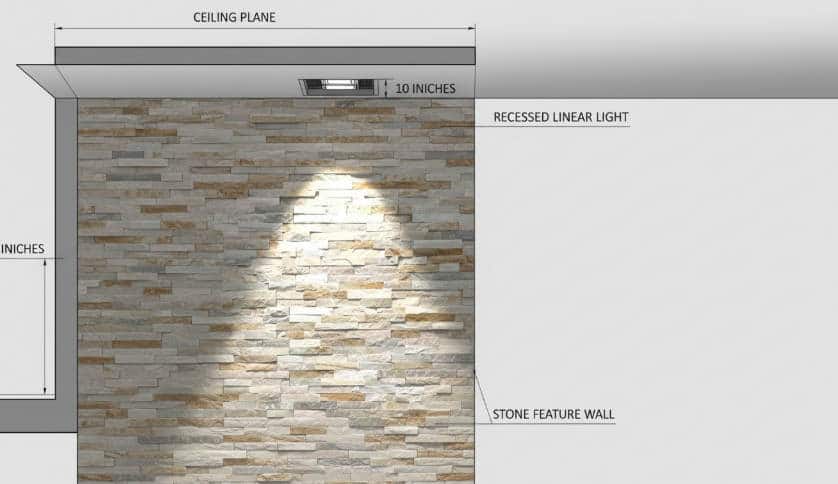
Strategic placement ensures the stone looks authentic under all conditions. For effective grazing, we recommend placing recessed lights 6 to 12 inches from the wall. This proximity creates the ideal angle for shadows to cast downward across the stone face. Many modern installations now utilize adjustable gimbal lights, allowing contractors to fine-tune the shadow depth after the stone is installed to account for specific mineral variations in that batch.
- Place recessed lights 6 to 12 inches from the wall for the ideal grazing angle.
- Use adjustable gimbal lights to fine-tune shadow depth after installation.
- Wall-mounted sconces add ambient glow while raking across the stone texture from the side.
Paneles de larguero de piedra apilados directos de fábrica de primera calidad
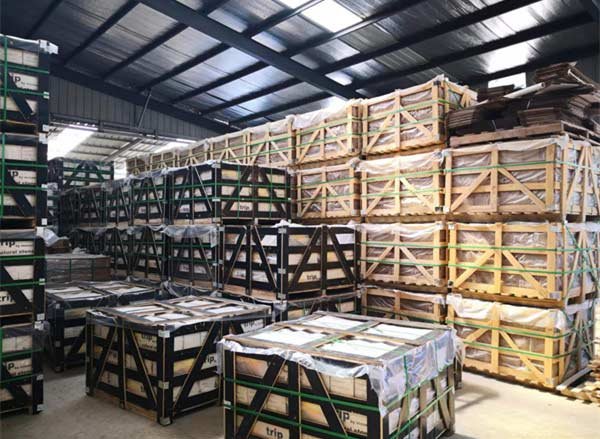
LED Color Temperatures: Warm Amber vs. Modern Cool White
Selecting the correct Kelvin rating prevents color distortion and ensures the natural mineral pigments of the stone align with the intended architectural atmosphere.
Warm amber lighting between 2700K and 3000K serves as the industry standard for residential comfort and rustic appeal. We recommend these lower Kelvin ratings for our Rough Series and high-texture ledgestone. These tones mimic traditional firelight, which deepens shadows and emphasizes the rugged, split-face profiles found in natural quarries. By utilizing warm spectrum LEDs, designers reduce harsh glare on uneven stone surfaces, creating a welcoming environment that highlights the earthy reds, tans, and oranges of the material.
Enhancing Detail with Modern Cool White
Cool white lighting, ranging from 4000K to 5000K, provides the clarity required for modern architectural styles and high-traffic commercial spaces. This spectrum highlights the precision and clean lines of our Flat Series and Pencil Series, making it the preferred choice for minimalist lobbies and retail environments. Cooler temperatures replicate natural daylight, which is essential for showcasing the authentic gray and blue undertones in slate and quartzite materials without adding artificial warmth.
| Color Temperature (Kelvin) | Recommended Collection | Visual Impact |
|---|---|---|
| 2700K – 3000K (Warm) | California Gold, Golden Honey | Amplifies earthy iron oxides; adds depth to rough textures. |
| 4000K – 4500K (Neutral) | Gris Alaska, Azul Sierra | Maintains true-to-life slate tones; ideal for transitional spaces. |
| 5000K+ (Cool/Daylight) | Glacier White, blanco real Mármol | Prevents yellowing; ensures “crisp” white aesthetics in modern builds. |
Selecting Light for Specific Stone Collections
Matching LED temperature to specific stone species is vital to maintaining material authenticity. For our Marble Series, such as Royal White, we advise against warm lighting as it can make the stone appear aged or yellowed. Cool white keeps the marble looking crisp and expensive. Conversely, multi-color slate installations require warm lighting to pull out the rich reds and tans that define the material’s character. Current 2026 design standards favor color-switching LEDs, allowing distributors to offer clients a dynamic system that adapts the stone’s appearance from morning daylight to evening mood lighting.
Functional Lighting for Indoor and Outdoor Stone
Lighting choices influence both visual impact and structural longevity. For piedra al aire libre facades, amber LEDs improve visibility during adverse weather like fog or heavy rain, while indoor accent lighting benefits from dimmable systems to transition from functional brightness to ambient mood. Technical considerations include:
- Heat Management: Modern LEDs emit minimal heat, protecting the high-strength epoxy resins used in our panel assembly from thermal degradation.
- Dimmable Integration: Layered systems allow for 70% fireplace glow dominance while overhead intensity remains at 30% for a balanced aesthetic.
- Outdoor Durability: High-Kelvin LEDs used in commercial exteriors must account for glare reduction to maintain safety in high-traffic retail environments.
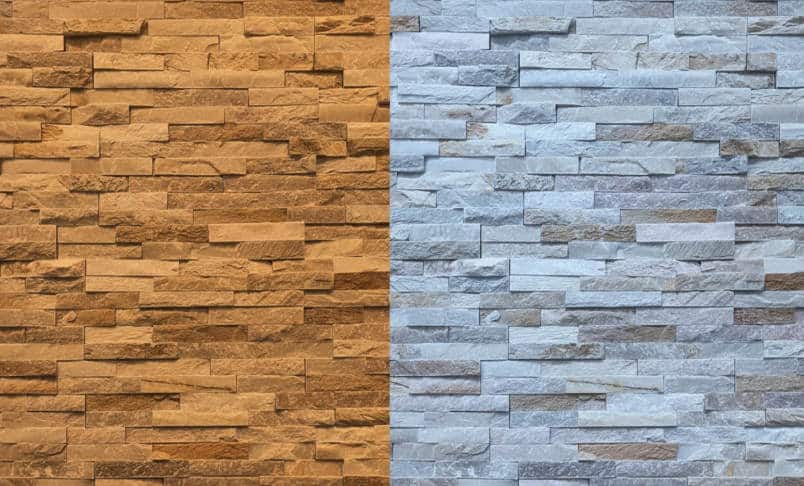
How to Position Recessed Lights to Avoid Awkward Seam Shadows
Precise placement of recessed fixtures determines whether a fireplace looks like a monolithic architectural feature or a collection of individual panels.
Establishing Optimal Wall Clearance
Standard lighting protocols for 2026 dictate that recessed fixtures should sit approximately 3 feet from the stone surface. This distance allows the light beam to spread naturally before it hits the texture, preventing “puntos calientes” that over-illuminate the top of the wall while leaving the bottom in shadow. When fixtures sit too close to the wall, the steep angle of light catches the top edges of the Z-shape interlocking panels, creating harsh vertical shadows that expose the very installation seams our CNC diamond-blade precision aims to hide.
| Placement Strategy | Distance from Wall | Visual Effect on Stone |
|---|---|---|
| Wall Washing | 30 to 36 Inches | Uniform glow; hides seams; ideal for Flat Series. |
| Wall Grazing | 12 to 24 Inches | High contrast; emphasizes Rough Series depth. |
| Incorrect (Too Close) | < 10 Inches | Harsh “scalloping”; exposes Z-shape joints. |
Maintaining this clearance ensures the light wash covers the interlocking points evenly. Our male-female connection system relies on uniform illumination to maintain the illusion of a continuous stone slab. By following these clearance standards, architects ensure that the 95% hue uniformity of our quarry-sourced stone remains consistent across the entire vertical span.
Applying the Ceiling Height Spacing Rule
Consistency in horizontal spacing eliminates dark “dead zones” between light pools. The industry-standard formula requires spacing fixtures at exactly half the ceiling height. For a standard 8-foot residential ceiling, place fixtures 4 feet apart. This creates overlapping illumination zones that smooth out the light levels across the piedra natural surface. In commercial spaces with 10-foot ceilings, we recommend 5-foot spacing to prevent shadows from forming in the lower thirds of the fireplace wall.
- Use 4-foot spacing for 8-foot ceilings to ensure paneles de piedra receive uniform light intensity.
- Maintain symmetrical layout relative to the fireplace centerline to anchor the visual weight.
- Avoid overcrowding fixtures, which can wash out the natural color shifts of materials like California Gold or Golden Honey.
Utilizing 30-Degree Beam Angles for Wall Washing
Adjustable gimbals are essential for high-end instalaciones de piedra. Setting the fixtures to a 30 to 45-degree tilt toward the stone surface allows the light to “skim” the ridges. This technique highlights the natural split-face characteristics of our Rough Series—which can reach thicknesses of 3.5cm—without casting deep, distracting shadows into the recesses of the panels. A skimming light emphasizes the 100% natural minerals and quartzite crystals within the stone, making the surface “shimmer” rather than look flat.
For the Flat Series, wider beam spreads create a smooth, gallery-like glow. This softer approach hides micro-seams and works best for modern, minimalist designs. By directing the light beam at an angle rather than straight down, installers avoid the “efecto cueva” where the ceiling is bright but the actual stone focal point remains dim.
Aligning Fixtures with Panel Layout
Strategic placement relative to the stone installation prevents light from catching on the edges of the interlocking system. We advise coordinating with installers to ensure recessed lights do not sit directly above a vertical seam line. Instead, center fixtures over the main body of a panel de piedra. This allows the light to fade naturally as it reaches the interlocking edges, effectively camouflaging the transition points between the 6″ x24″ modules.
Special attention must be paid to corner transitions. Our matching L-corners are pre-fabricated for 90-degree wraps, and they should receive secondary light bounce or dedicated accenting. Ensuring the light doesn’t “cut off” at the corner keeps the fireplace looking like a solid, structural element. This professional finish is critical for Proyectos B2B where the seamless architectural look is the primary selling point for the end client.
Smart Lighting: Integrating Dimmers for the Perfect Cozy Vibe
Precision dimming transforms a static stone installation into a dynamic architectural feature by allowing the user to manipulate the ratio between shadow depth and surface highlights.
Effective fireplace lighting in 2026 relies on the ability to modulate intensity based on the time of day and the specific texture of the masonry. Smart dimming systems provide the granular control necessary to shift a muro de piedra from a bright, clean daytime backdrop to a dramatic, shadow-heavy focal point in the evening. This flexibility ensures that the 100% natural minerals in Top Source Stone panels—whether slate or quartzite—maintain their premium visual impact regardless of external lighting conditions.
Customizing Stone Shadows with Variable Brightness
Brightness control allows for the intentional manipulation of visual depth. By lowering light levels, you emphasize the deep recesses and split-face textures found in our Rough Series panels. This creates a rugged, high-contrast appearance where shadows define the fireplace’s character. For polished surfaces, such as the Marble Series or the clean lines of the Flat Series, dimming eliminates harsh hotspots and prevents glare that can otherwise obscure the natural veining.
- Lower light levels amplify the three-dimensional relief of piedra natural, making the fireplace the dominant room feature.
- Controlled intensity prevents visual “flattening” on sealed or polished stone surfaces.
- Variable output helps installers balance natural light from nearby windows with artificial accent sources.
Voice and App Integration for Instant Scene Changes
Modern smart dimmers utilize Wi-Fi and Bluetooth to bridge the gap between architectural masonry and home automation. Professionals now design “Fireplace Mode” scenes that can be triggered via Amazon Alexa or Google Assistant. These presets automatically adjust the accent lights to the optimal 50-100 lumen range, ensuring the stone is showcased perfectly without the user needing to leave the sofa. This integration supports a unified environment where the fireplace lighting works in tandem with other room lamps.
- Voice commands allow for hands-free atmosphere adjustments during social gatherings.
- Mobile applications provide remote management, allowing users to pre-set the mood before entering the room.
- Smart grouping ensures that fireplace accent lighting transitions seamlessly with main overhead dimming.
Circadian Scheduling for 2026 Interior Environments
Automated scheduling aligns fireplace illumination with human biological rhythms. In the 2026 design landscape, interior lighting is no longer static; it evolves as the day progresses. Programmed dimmers can be set to gradually soften the stone wall’s illumination as evening approaches, promoting relaxation through reduced blue light exposure. Sunrise settings can also be utilized to brighten the muro de piedra in the morning, providing a gentle wake-up call through natural-looking light reflection.
- Automated evening softening mimics the natural transition to sleep, enhancing the “cozy” psychological effect of the stone.
- Sunrise programming utilizes the stone’s surface to diffuse light naturally for morning routines.
- Smart scheduling improves home security by making the property appear occupied even when residents are away.
Balancing Energy Use with Visual Warmth
Beyond the aesthetic benefits, smart dimmers provide tangible technical advantages for the longevity of the lighting hardware. Reducing power flow to fireplace LEDs lowers heat output, which is critical for fixtures installed in tight, recessed spots above a heat-producing fireplace. This practice extends the lifespan of the LED chips and reduces the frequency of maintenance in hard-to-reach areas. For B2B clients and developers, this aligns with sustainable building goals while maintaining the luxury feel of stacked stone masonry.
- Dimming reduces energy consumption without sacrificing the high-end visual appeal of the stone.
- Lower thermal stress on light fixtures leads to fewer bulb failures in permanent stone installations.
- Efficient power management supports green building certifications for large-scale residential projects.
Conclusión
Integrating strategic lighting with piedra natural elevates the interior environment by revealing the intricate depth and shadows of the masonry. This approach ensures the natural clefts and CNC-precision edges of the panels appear intentional and high-end. Careful placement prevents awkward shadows and allows the authentic colors of the quartzite or slate to remain consistent across the entire feature wall.
Browse our current stone collections to see how different textures respond to various lighting setups. Contact our factory team to discuss volume sourcing or to request physical samples for your mood boards.
Preguntas frecuentes
What is the best lighting for a stacked stone fireplace?
The gold standard for piedra apilada is a layered, three-tier lighting system. This includes ambient lighting (300-500 lumens), task lighting (100-200 lumens), and specific accent lighting (50-100 lumens). Using 2700K warm bulbs with precise dimming controls allows the stone texture to be highlighted while ensuring the fireplace flame remains the dominant visual element in the room.
Where should recessed lights be placed over a stone wall?
Recessed lights should be placed 6 to 12 inches away from the face of the muro de piedra to create a “wall grazing” effect. By positioning the fixtures close to the wall and directing the light downward, you create high-contrast shadows in the stone’s crevices, which emphasizes the rugged, three-dimensional depth of the material.
Does warm or cool light look better on natural stone?
Warm light, specifically in the 2700K range, is significantly better for piedra natural. This temperature enhances the organic earth tones—such as tans, browns, and reds—found in the stone and aligns with the natural glow of the fireplace. Cool lighting should be avoided as it often makes piedra natural appear flat, clinical, or unnaturally blue.
How to avoid glare on sealed stone fireplace surfaces?
To eliminate glare on sealed surfaces, use indirect lighting techniques and fixtures equipped with deep baffles or anti-glare louvers. Positioning the lights at an acute grazing angle rather than a direct perpendicular angle helps direct reflections away from the viewer’s line of sight. Additionally, using a matte or satin finish sealer instead of high-gloss will diffuse light more evenly.
Can LED strips be hidden within the stone texture?
Yes, modern frameless installations often incorporate concealed LED accent strips within the stone structure. These can be hidden in “shadow gaps,” underneath mantel overhangs, or within recessed channels (lintels) built into the stone layout. Utilizing low-profile COB (Chip on Board) LED strips provides a continuous glow without the visible “dots” often seen with traditional LED tape.