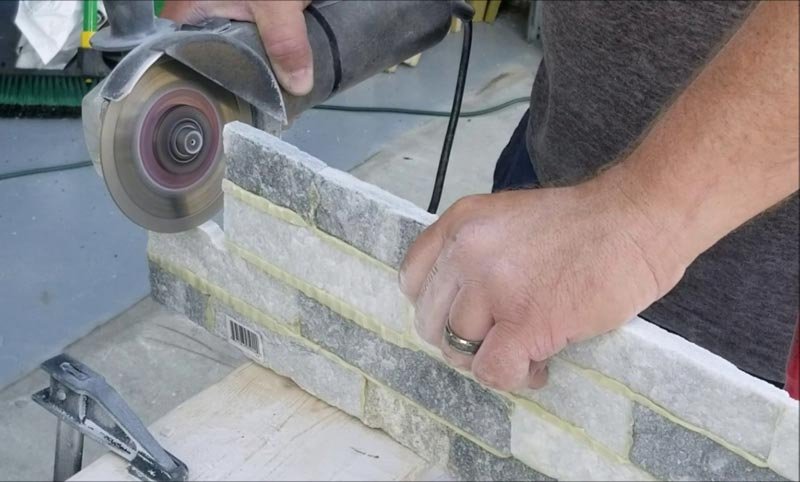
Adhiriéndose a cómo instalar piedra apilada Los protocolos del fabricante son la principal defensa contra la delaminación y la responsabilidad estructural. La preparación inadecuada del sustrato para paneles pesados de 12,5 lb/pie cuadrado provoca fallas por corte, lo que obliga a los contratistas a absorber costosos costos de remediación del sitio y reclamos de garantía.
hacemos cumplir ASTM C270 (Tipo S) y ANSI A118.15 estándares para garantizar resultados sin delaminación. Utilizando respaldo calibrado aserrado a máquina (+/- 2 mm) y Eficiencia de la esquina en L elimina los huecos que atrapan la humedad, lo que reduce la mano de obra en el sitio en un 50 % y garantiza una vida útil comercial de 20 años.
Preparación del sustrato: paneles de yeso, paneles de cemento y mampostería
La preparación del sustrato determina la vida útil de 20 años de piedra natural. Utilice listones reforzados para marcos de madera y morteros modificados con polímeros para la unión directa de mampostería y garantizar una delaminación cero.
| Tipo de sustrato | Preparación requerida | Norma Técnica |
|---|---|---|
| Estructuras de madera/paneles de yeso | WRB de 2 capas + listón metálico + capa rayada | ASTM C1063/E2556 |
| Albañilería / Hormigón | Contaminantes del chorro de arena; vínculo directo | ANSI A118.4/A118.15 |
| Paneles de origen superior | Respaldo calibrado aserrado a máquina | +/- Tolerancia de 2 mm |
Refuerzo estructural para paneles de yeso y madera contrachapada
La adhesión directa a paneles de yeso revestidos de papel es la causa principal de falla estructural. Paneles de piedra natural Pesan entre 7 y 12,5 libras por pie cuadrado, una carga que los paneles de yeso estándar no pueden soportar sin refuerzo mecánico. Con marco de madera. paredes interiores y exteriores requieren un sistema multicapa para evitar la infiltración de humedad y fallas por corte.
- Barrera resistente al agua: Aplique dos capas de WRB Grado D (ASTM E2556) para proteger la estructura de madera contra la humedad durante el proceso de curado del mortero.
- Listón de metal galvanizado: Sujete un listón de 2,5 a 3,4 libras en los montantes cada 6 pulgadas verticalmente para proporcionar una unión mecánica para el peso de la piedra.
- Capa rayada: Cree un lecho de 1/2 pulgada de espesor con mortero tipo S. Marque la superficie horizontalmente una vez que esté dura como la huella del pulgar para mejorar el agarre físico para la aplicación final.
Estándares de unión directa y precisión de respaldo calibrada
Los sustratos limpios de mampostería y paneles de cemento ofrecen la ruta de instalación más eficiente al permitir la unión directa. Los contaminantes de la superficie actúan como inhibidores de la unión, por lo que es obligatorio eliminar toda la pintura, los selladores y los agentes desmoldantes para lograr una unión química exitosa con el mortero.
- Eliminación de contaminantes: Arenar o raspar mecánicamente las superficies de concreto para exponer el agregado poroso antes de aplicar una capa delgada modificada con polímeros.
- Respaldo calibrado: Paneles de piedra de origen superior Utilice un respaldo aserrado a máquina con una tolerancia de +/- 2 mm. Esta precisión garantiza un contacto 100% entre el mortero y la piedra y elimina los puntos huecos comunes en las alternativas partidas a mano.
- Especificación adhesiva: Utilice una capa delgada de alto rendimiento ANSI A118.15 para paneles de cemento. Estos morteros soportan el peso de la cuarcita y el mármol de alta densidad al tiempo que resisten la expansión térmica.
- Eficiencia de la esquina en L: Para pilares y extremos de paredes, utilice esquineros prefabricados de una sola pieza. Esto elimina los cortes manuales a inglete de 45 grados y reduce los costos de mano de obra en el sitio en un 50 %.
Mezcla de mortero: por qué el tipo S es la única opción para proyectos B2B
Type S mortar provides the 1,800 PSI compressive strength and lateral bond durabilidad requerida para revestimientos de piedra comerciales de carga pesada y fachadas exteriores de alto tránsito.
Resistencia a la compresión estructural y normas ASTM C270
La mampostería comercial exige un equilibrio específico de rigidez y flexibilidad que las capas delgadas estándar a menudo no logran proporcionar en aplicaciones de capa gruesa. El mortero tipo S actúa como base estructural para trabajos pesados 6×24 paneles, ofreciendo la resistencia lateral necesaria para soportar cargas de viento y estrés ambiental. Nos centramos en esta norma porque se alinea con los estrictos requisitos de los códigos de construcción internacionales 2026 para fachadas de gran altitud o alta exposición.
- Fuerza compresiva: Mínimo de 1800 PSI, superando al Tipo N para aplicaciones de carga.
- Enlace de flexión: La alta proporción de cal a cemento permite que la pared se adapte a la expansión térmica sin agrietarse.
- Alineación de código: Cumple con ASTM C270 para carillas de mampostería de piedra exceder los 15 pies de altura.
- Integridad del sustrato: Esencial para la capa base sobre listones de metal galvanizado en paredes con estructura de madera o vigas de acero.
Maximización del área de unión con respaldo calibrado aserrado a máquina
La falla de la adherencia generalmente comienza en los espacios. Mientras que la piedra partida a mano crea huecos desiguales que atrapan el agua, nuestros paneles utilizan un respaldo aserrado a máquina para garantizar que el lecho de mortero haga pleno contacto. Esta elección de ingeniería es fundamental para proyectos B2B donde la velocidad de la mano de obra y la responsabilidad a largo plazo son las principales preocupaciones. La superficie plana permite que el mortero Tipo S se una directamente con nuestra resina epóxica de grado marino, creando una unidad estructural unificada.
- Precisión calibrada: Parte posterior aserrada a máquina con una tolerancia de +/- 2 mm para una encapsulación del mortero del 100 %.
- Cero bolsas de aire: Elimina los huecos donde se acumula el agua, evitando la delaminación por congelación-descongelación.
- Retorno de la inversión de la instalación: Los respaldos planos eliminan la necesidad de nivelación manual, lo que acelera las instalaciones comerciales de gran volumen.
- Enlace químico: Complementa la resina epoxi interna de grado marino para una máxima seguridad entre la piedra y el panel.
Los mayoristas y directores de proyectos deben priorizar estos puntos de referencia técnicos para evitar los problemas comunes. “efecto cremallera” visto en instalaciones inferiores. Usar el mortero adecuado no es una sugerencia; es la base para el desempeño de 20 a 30 años en el sector B2B.
El “Untar con mantequilla” Técnica: Garantizar una cobertura del 95%
La aplicación de mantequilla con mortero modificado con polímeros garantiza una cobertura del 95 %, eliminando los huecos que atrapan la humedad y que provocan el desprendimiento de piedras en ciclos extremos de congelación y descongelación.
Aplicar una capa delgada y uniforme de mortero modificado con polímeros en la parte posterior de cada panel de piedra antes de la colocación es un paso no negociable para proyectos comerciales. Esta capa de unión física llena los poros microscópicos de la piedra natural, creando un puente químico y mecánico entre el sustrato y el panel. Sin este paso, incluso los más altos piedra de calidad corre el riesgo de fallar bajo presión hidráulica o expansión térmica.
| Métrica técnica | Solo paleta estándar | Protocolo de mantequilla |
|---|---|---|
| Cobertura de mortero | 65% – 75% | 95% – 100% |
| Formación del vacío | Alto (trampas de agua) | Casi cero |
| Estándar de bonos | ASTM C270 (Tipo S) | ANSI A118.4/A118.15 |
Mitigar la formación de huecos y la presión hidráulica
Espacios de aire detrás piedra natural son la causa principal de fallas en la instalación. En aplicaciones exteriores, estas bolsas atrapan la humedad que se expande durante los ciclos de congelación y descongelación, lo que provoca desconchados o delaminación completa. Para proyectos B2B donde la responsabilidad a largo plazo es una preocupación, establecer una línea de vínculo continua es la única opción. forma de distribuir la piedra Peso de 8 a 13 libras/pie cuadrado en todo el sustrato.
- Eliminar bolsillos: La aplicación de mantequilla elimina las bolsas de aire internas que causan “efecto cremallera” deslizamiento del panel.
- Succión inmediata: La técnica crea un agarre instantáneo entre el lecho de mortero y el panel, fundamental para la verticalidad. revestimiento de paredes.
- Cumplimiento de ANSI: La aplicación de mortero según los estándares ANSI A118.4 garantiza que la unión mecánica soporte la carga de corte de pizarra o cuarcita pesada.
Aprovechando el respaldo calibrado para una máxima adherencia
Arriba Source Stone fabrica paneles con un respaldo calibrado aserrado a máquina, manteniendo una estricta tolerancia de +/- 2 mm. Esta superficie plana permite que la capa de mantequilla se mantenga consistente en todo el 6″x24″ formato modular. Las piedras irregulares y no calibradas a menudo requieren una cantidad excesiva de mortero para rellenarse. “valles” en la parte posterior de la piedra, lo que aumenta los costos de material y ralentiza el equipo de instalación.
- Contacto de precisión: La parte posterior aserrada a máquina garantiza un contacto total del mortero con el sustrato, sin dejar espacio para la entrada de humedad.
- Eficiencia Laboral: Las superficies uniformes requieren menos manipulación del mortero en el sitio, lo que reduce directamente las horas de mano de obra por pie cuadrado.
- Alineación al ras: El respaldo calibrado evita variaciones de altura inducidas por bolsas de aire, manteniendo los paneles perfectamente nivelados y enmascarando las uniones verticales.
Al combinar morteros modificados con polímeros con una superficie de piedra calibrada, Los instaladores cierran la brecha entre la piedra. y el tablero de cemento o sustrato de mampostería de manera efectiva. Esta sinergia es lo que mantiene la integridad estructural en entornos climáticos extremos o de mucho tráfico.
Eleve sus proyectos con piedra natural de rápida instalación
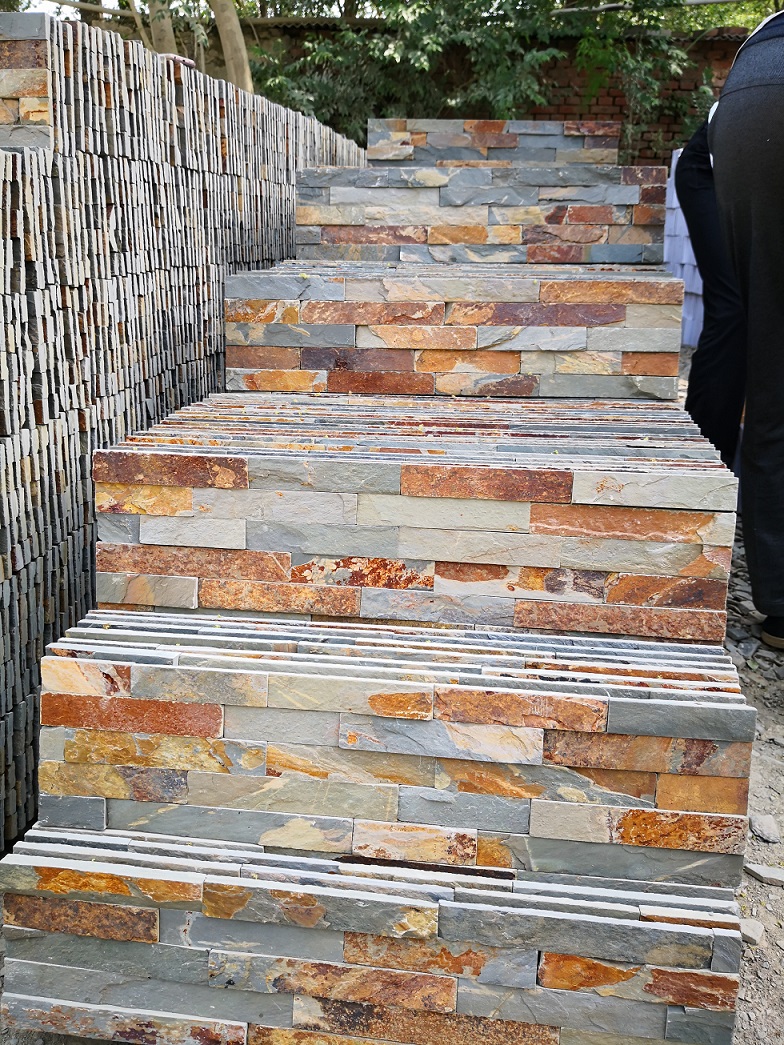
Manejo de la variación natural: ajuste en seco para lograr equilibrio de color
El ajuste en seco combina cambios tonales de múltiples cajas y escalona las juntas para eliminar las costuras visibles, asegurando un acabado arquitectónico cohesivo antes de la aplicación final del mortero.
Inventario asombroso de juntas y cajas de mezcla
Exitoso La instalación se basa en la aleatorización visual.. Sacar de una sola caja a menudo crea “bloqueo de color” donde los grupos tonales parecen antinaturales. Mezcle el inventario en el piso para ver toda la gama de piedra natural antes de que el mortero llegue al sustrato.
- Mezcla de cajas: Dibuje paneles de al menos tres cajas diferentes simultáneamente para distribuir cambios tonales sutiles en toda la superficie del proyecto.
- Gestión de costuras: Costuras verticales compensadas entre filas para romper la rejilla modular y mantener una natural “apilados” estético.
- Distribución de textura: Identifique colores atípicos o en alto relieve y distribúyalos uniformemente para evitar “puntos calientes” o cúmulos oscuros.
- Verificación de tolerancia: Confirme el entrelazado de los módulos en forma de Z o rectangulares para garantizar un ajuste perfecto y sin espacios antes de aplicar el mortero.
Consistencia del color del lote y verificación previa al envío
Reducimos la mano de obra in situ mediante la clasificación a nivel de fábrica. Nuestro modelo de cantera a contenedor garantiza que la variación de color se mantenga dentro de parámetros arquitectónicos predecibles, lo que ahorra a los instaladores horas de tiempo de diseño del piso y reduce el desperdicio de material.
- Clasificación de fábrica: Utilice la fuente superior Protocolos de consistencia del color por lotes de Stone para evitar paredes irregulares resultados y garantizar la uniformidad de grado comercial.
- Verificación visual: Revise fotografías y videos en HD de nuestra Verificación previa al envío para planificar el diseño y la distribución tonal antes de que el contenedor llegue al sitio.
- Respaldo aserrado a máquina: Confíe en un respaldo calibrado con tolerancias de +/- 2 mm para mantener un plano nivelado y garantizar un contacto total con el mortero.
- Integridad mineral: Nosotros seleccionar piedra desde capas de estratos profundos para mantener la intensidad del color contra la exposición a los rayos UV y la intemperie extrema durante ciclos a largo plazo.
Secretos de corte: sierras húmedas versus amoladoras angulares para bordes limpios
Las sierras húmedas brindan precisión para paneles rectos, mientras que las amoladoras angulares manejan recortes. Las esquinas prefabricadas en forma de L eliminan el 20 % del desperdicio de material y reducen la mano de obra en el sitio en un 50 %.
Elegir entre sierras húmedas de precisión y amoladoras versátiles
La selección de herramientas dicta la estética final de una instalación comercial. Las sierras húmedas con hoja de diamante producen los bordes más rectos para paneles rectangulares y en forma de Z, deteniendo eficazmente el “efecto cremallera” donde los huecos desiguales arruinan el flujo visual de una pared. Esta precisión es obligatoria para mantener filas niveladas en fachadas de gran escala.
- Sierras mojadas: Lo mejor para ingletes de 45 grados cortes y panel primario guarnición.
- Amoladoras angulares: Necesario para que las hojas de mampostería realicen cortes circulares alrededor de plomería o cajas eléctricas.
- Densidad del material: Piedra de alta densidad procedente de capas de cantera de estratos profundos resiste mejor el desconchado durante el corte a alta velocidad que las alternativas porosas.
- Estándares conjuntos: Mantener un espesor mínimo de junta de 1/4 de pulgada garantiza que la unión del mortero cumpla con los requisitos ANSI A118.15.
Obtenemos piedra con una estructura cristalina no porosa para garantizar que los bordes permanezcan nítidos. Esta densidad evita el desconchado común en materiales de baja calidad, lo que a menudo conduce a costosos retrabajos y lotes rechazados en proyectos de alta visibilidad.
Eficiencia de las esquinas en L para eliminar el corte a inglete manual
El corte a inglete manual es la principal mano de obra en cualquier proyecto de piedra natural. Es lento, genera mucho polvo y conlleva un alto riesgo de rotura. La utilización de unidades prefabricadas transforma una tarea compleja de albañilería en un conjunto modular simple.
- Formato: 6×12 + 6×Unidades de esquina en forma de L fabricadas en fábrica de 12 pulgadas.
- Adhesivo: La resina epoxi de grado marino evita el desprendimiento de piedras durante el transporte de cargas pesadas o los ajustes finales de la sierra húmeda.
- Tolerancias: El respaldo calibrado aserrado a máquina (+/- 2 mm) garantiza un contacto total con el mortero.
- Métricas de retorno de la inversión: Elimina el 20 % del desperdicio de material y reduce los requisitos de mano de obra en el sitio en un 50 %.
Estas esquinas brindan una apariencia monolítica en pilares y extremos de paredes sin la fragilidad de las ingletes cortadas en el campo. La parte posterior aserrada a máquina elimina las bolsas de aire, lo que protege la integridad de la unión en ambientes extremos de congelación y descongelación y garantiza una vida útil de 20 a 30 años.
Lechada versus apilamiento seco: diferencias estéticas y de mantenimiento
Seco instalación de pila utiliza geometría autoalineante para eliminar la neblina de lechada y el mantenimiento, ofreciendo un acabado arquitectónico de alto relieve preferido para fachadas comerciales a gran escala.
Profundidad visual y juego de sombras en mampostería seca
El apilamiento en seco enfatiza la variación natural y la hendidura de la piedra. creando líneas de sombra profundas. Este método resalta las texturas rugosas de la pizarra y la cuarcita, proporcionando el acabado arquitectónico 3D popular en exterior moderno diseño. Los arquitectos eligen este aspecto para evitar la apariencia plana y apagada que se produce cuando la lechada llena el huecos naturales de la piedra.
Mantenimiento de paredes apiladas en seco es significativamente menor que las alternativas con lechada. Debido a que no hay líneas de lechada que puedan agrietarse, decolorarse o albergar moho, la superficie permanece limpia con sólo quitar el polvo ocasionalmente o enjuagar a baja presión. Para proyectos B2B, esto se traduce en menores costos de administración de instalaciones a largo plazo y una estética más limpia que no se degrada con el tiempo.
Geometría en forma de Z para un enclavamiento sin costuras y sin lechada
Paneles en forma de Z de piedra de Top Source Utilice geometría autoalineante para enmascarar las uniones verticales. Este sistema de enclavamiento modular elimina la necesidad de lechada tradicional y evita la “efecto cremallera” común en paneles rectangulares inferiores. Al eliminar la fase de lechada, las cuadrillas evitan las manchas de mortero en la cara de la piedra, que a menudo requieren una costosa limpieza química posterior a la instalación.
- Respaldo aserrado a máquina: Una parte trasera calibrada con una tolerancia de +/- 2 mm garantiza un contacto total con el mortero, eliminando las bolsas de aire que provocan la delaminación.
- Epoxi de grado marino: Las piedras están unidas con resina de alta resistencia para resistir la expansión térmica y el tránsito de cargas pesadas.
- Eficiencia Laboral: Las unidades de enclavamiento prefabricadas reducen las horas de mano de obra en el sitio hasta en un 50 % en comparación con la albañilería tradicional colocada a mano.
- Resiliencia climática: Los sistemas sin lechada permiten el movimiento natural, lo que los hace altamente resistentes al desconchado en ambientes extremos de congelación y descongelación.
Los mayoristas y minoristas se benefician del almacenamiento de estos sistemas de enclavamiento porque sirven tanto para protectores contra salpicaduras interiores de alta gama como para productos de gran escala. revestimiento exterior. La naturaleza autoalineante de la forma de Z diseño garantiza que incluso en paredes comerciales masivas, el acabado permanezca consistente sin roturas visibles de paneles o fallas en las juntas.
Limpieza posterior a la instalación: eliminación de eflorescencias y neblina de mortero
Limpie los residuos de mortero inmediatamente para detener la turbidez. Seleccione piedra de estratos profundos y de alta densidad para bloquear la migración de humedad y los depósitos de sal que causan eflorescencia.
Identificación de las causas de la neblina y la eflorescencia del mortero
La neblina de mortero no es sólo polvo; Es un residuo cementoso que cura y se adhiere al texturas irregulares de piedra natural. Si las cuadrillas esperan demasiado, el residuo sufre un proceso de endurecimiento químico que hace que extracción difícil sin riesgo de dañar la piedra rostro. La eflorescencia se manifiesta como depósitos de sal en polvo de color blanco. Esto sucede cuando la humedad se mueve a través del mortero, reacciona con sales alcalinas y se evapora en la superficie.
La gestión de estos problemas requiere un estricto cumplimiento de los plazos de instalación y los estándares de materiales. Los contratistas deben tratar limpieza como fase de la instalación en lugar de una idea de último momento posterior al proyecto.
- Limpieza de ventanas: Retire el exceso de mortero en lotes de 8 a 10 pies cuadrados para mantenerse dentro de la vida útil de 20 a 60 minutos.
- Control de humedad: Las normas ASTM C270 para mortero Tipo S requieren proporciones de agua precisas para evitar activar las sales que causan manchas en la superficie.
- Desencadenantes químicos: La eflorescencia ocurre típicamente en ambientes con alta humedad donde el agua externa activa los alcaloides internos del mortero.
Aprovechamiento de minerales de alta densidad para prevenir la retención de humedad
La prevención es más eficaz a nivel de la cantera. Arriba Piedra fuente obtiene materiales exclusivamente de capas de estratos profundos. Estos minerales poseen una estructura cristalina de alta densidad con una absorción de agua casi nula. Por proporcionando piedras eso no “esponjarse” humedad, cortamos el mecanismo de transporte primario de sales, reduciendo significativamente el riesgo de eflorescencia en proyectos exteriores.
Nuestro proceso de ingeniería también aborda la línea de unión. Usamos adhesivos especializados que no dejan espacio para los huecos donde la humedad y las sales generalmente se acumulan detrás del revestimiento.
- Integridad de materiales: Los paneles de cuarcita y pizarra de baja porosidad resisten naturalmente la migración de sal.
- Estándar adhesivo: Los enlaces de resina epoxi de calidad marina eliminan los huecos internos entre la piedra y el respaldo.
- Protocolo de mantenimiento: Utilice sólo cepillos suaves y limpiadores con pH neutro para proteger la piedra acabado y la unión adhesiva.
- Resiliencia climática: Los minerales de alta densidad previenen el desconchado en ambientes costeros de aire salado y de congelación y descongelación.
Protegiendo los márgenes de su proyecto
Optar por piedra barata y partida a mano genera responsabilidad a largo plazo debido a la delaminación y la “efecto cremallera” en alta visibilidad paredes. Nuestro respaldo calibrado aserrado a máquina y nuestra resina epóxica de grado marino eliminan estos riesgos al garantizar un 100% de contacto con el mortero y estabilidad estructural en climas extremos. Invertir en estándares técnicos verificados en fábrica protege su reputación profesional y evita la costosa remediación del sitio, común con las alternativas no calibradas.
Revisa nuestro “10 grandes” best-sellers como Alaska Grey o Glacier White para ver cómo nuestros sistemas modulares en forma de Z y rectángulos lineales agilizan las instalaciones comerciales de gran volumen. Proporcionamos verificación visual completa previa al envío mediante fotografías y videos en HD para que pueda aprobar la consistencia del color del lote antes de que el contenedor salga de nuestra cantera. Comuníquese con nuestro equipo para analizar sus requisitos de marca privada o para calcular sus ahorros en costos de destino utilizando nuestra estrategia de envío de carga pesada de 26,5 toneladas.
Preguntas frecuentes
¿Puedo instalar revestimiento de piedra apilada directamente sobre una pared de ladrillos existente?
Puede instalar paneles sobre ladrillo si la superficie está limpia, sin pintar y estructuralmente en buen estado. Recomendamos aplicar una capa base de mortero tipo S de 1/2 pulgada sobre la malla de alambre para asegurar la adhesión. Si el ladrillo está pintado o sellado, se deben utilizar sujetadores mecánicos y listones metálicos para evitar que la piedra se delamine.
¿Es posible instalar paneles de larguero de piedra natural directamente sobre paneles de yeso interiores?
Los paneles de yeso no pueden soportar el peso de 8 a 13 libras por pie cuadrado de la piedra natural. Debe reemplazar el panel de yeso con un tablero de respaldo de cemento de 1/2 pulgada o instalar el tablero de respaldo directamente sobre los montantes. Utilice un adhesivo modificado con polímero que cumpla con los estándares ANSI A118.15. Nuestro respaldo calibrado aserrado a máquina garantiza un 100% de contacto con el mortero para eliminar las bolsas de aire durante este proceso.
¿Cómo corto los paneles de piedra sin que los bordes se astillen o agrieten?
Utilice una sierra para azulejos húmeda con un disco de diamante para todos los cortes primarios. El flujo continuo de agua reduce el estrés térmico, lo que evita que los bordes frágiles de la pizarra y la cuarcita se rompan. Mientras que una amoladora angular funciona para muescas pequeñas, la sierra húmeda sigue siendo el estándar de la industria para obtener bordes limpios y profesionales que mantienen la integridad entrelazada del panel.
¿Debo dejar una junta de lechada o un espacio entre los paneles modulares de piedra?
No. Nuestros paneles entrelazados en forma de Z están diseñados para una apariencia de apilamiento seco y de ajuste perfecto. Junte los paneles firmemente entre sí para enmascarar las uniones verticales y crear una pared sin costuras. Deje solo un espacio de 1/2 pulgada en las esquinas interiores o en las transiciones a diferentes materiales para adaptarse al movimiento natural del edificio y la expansión térmica.
¿Pueden los paneles Top Source Stone soportar áreas de alto calor como los alrededores de la chimenea?
Sí. Nuestros paneles están compuestos 100% de piedra natural, lo que los hace naturalmente incombustibles. Utilizamos una resina epoxi de calidad marina de alta resistencia para unir las piedras individuales. Este adhesivo garantiza que permanezcan adheridos al panel incluso durante los ciclos térmicos repetidos comunes en aplicaciones de chimeneas residenciales y comerciales.
¿Cómo administro instalaciones en esquina sin realizar cortes a inglete complejos?
Ofrecemos unidades de esquina prefabricadas en forma de L para nuestras principales colecciones, incluidas Alaska Grey y Glacier White. Estas unidades de una sola pieza eliminan la necesidad de realizar cortes manuales a inglete de 45 grados. El uso de estas esquinas reduce el desperdicio de material en un 20 % y ayuda a los contratistas a ahorrar aproximadamente un 50 % en costos de mano de obra en comparación con las esquinas fabricadas en el sitio.