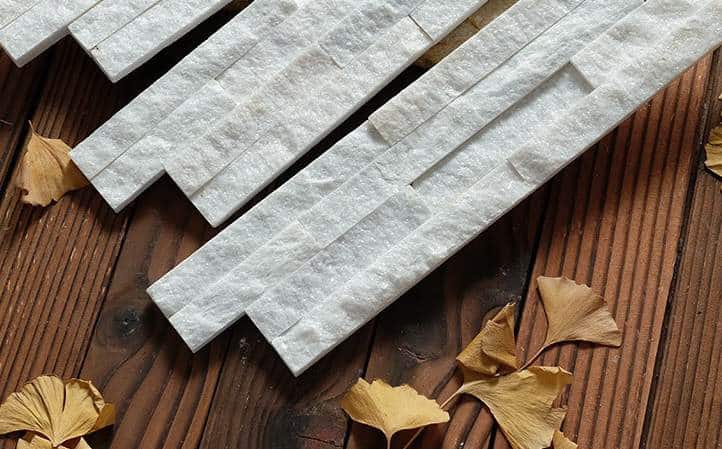
La adquisición mayorista de **Paneles de contabilidad** a menudo colapsa con una tasa de rotura del 20% y rechazos del sitio causados por elementos visibles. “cremallera” costuras. La selección de carillas no estándar genera penalizaciones por puertos pesados y lotes de colores no coincidentes, lo que erosiona directamente los márgenes B2B.
Resolvemos estas ineficiencias utilizando un 6 que cumple con ASTM C170.″x24″ sistema modular y una estrategia de carga optimizada de 17,5 toneladas en el puerto de EE. UU. Nuestros paneles en forma de Z adheridos con epoxi garantizan la consistencia del color del lote y la integridad estructural, lo que reduce el stock muerto y acelera la instalación profesional.
Evolución de la piedra: de roca suelta a paneles entrelazados
Modular paneles de piedra reemplazó la mampostería colocada a mano uniendo piedra natural a soportes de alta resistencia, reduciendo el tiempo de instalación y eliminando la necesidad de bases estructurales pesadas.
El cambio de mampostería colocada a mano a sistemas modulares
La mampostería tradicional consiste en colocar piedras individuales. en mortero uno a uno. Este proceso es lento y requiere mano de obra altamente especializada para garantizar que la pared permanezca vertical y estéticamente equilibrada. Debido a que la piedra de espesor total conlleva un peso inmenso, estos proyectos a menudo requieren costosas zapatas estructurales para evitar que la pared se hunda o se corte con el tiempo.
- Peso unitario: 8 a 12 libras/pie cuadrado (aproximadamente 30 a 40 kg/m2).
- Compatibilidad del sustrato: Tableros de soporte de cemento estándar o bloques de mampostería.
- Composición del material: Pizarra, cuarcita o granito 100% natural.
- Velocidad de instalación: paneles ensamblados en fábrica instale 3-4 veces más rápido que la roca suelta.
Los mayoristas se benefician de este cambio modular a través de un inventario predecible y tasas de daños más bajas. En lugar de enviarlo suelto, piedra irregular, Top Source Stone paletiza uniforme 6″x24″ unidades que maximizan el volumen del contenedor y simplifican los cálculos en el lugar de trabajo para revestimientos comerciales a gran escala.
Ingeniería de precisión con paneles sin costuras en forma de Z
Moderno paneles de contabilidad Utilice un diseño en forma de Z con muescas para resolver el problema. “cremallera” Problema de costura común en carillas rectangulares. Esta geometría permite paneles para entrelazar como piezas de un rompecabezas, ocultando juntas verticales y manteniendo una apariencia continua de apilamiento seco en amplios espacios. Este sistema se basa en uniones adhesivas de alta resistencia que resisten la expansión térmica y la humedad mejor que las uniones tradicionales basadas solo en cemento.
- Geometría de enclavamiento: Configuraciones sin costuras en forma de Z y forma de S.
- Agente adhesivo: Sistema pegado de alta resistencia diseñado para resistir el clima.
- Métricas de calidad: Cumple con las líneas base ASTM C170 (resistencia a la compresión) y ASTM C97 (absorción).
- Opciones de borde: Esquinas en L a juego opcionales para eliminar el corte a inglete en el sitio.
El abastecimiento directo de cantera garantiza la uniformidad del color de los lotes, un factor crítico para los distribuidores B2B. Al controlar la materia prima desde el principio, evitamos la apariencia desigual y desigual que se produce cuando los minoristas mezclan envíos de diferentes canteras. Este control técnico protege los márgenes de los distribuidores al reducir los rechazos de los clientes y la repetición del trabajo en el sitio.
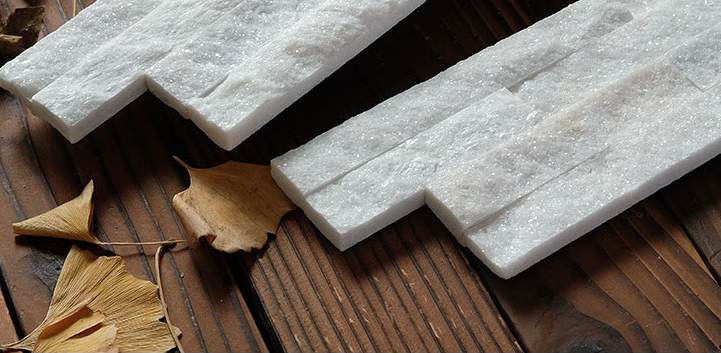
Diseños en forma de Z versus diseños en forma de S: reducción de las costuras visibles
Las formas entrelazadas de Z y S ocultan las juntas verticales para crear una apariencia monolítica, siempre que Los instaladores escalonan los paneles. y utilice lotes clasificados en fábrica para lograr uniformidad del color.
Mecánica visual de bordes en forma de Z y forma de S
Los paneles de larguero rectangulares estándar a menudo fallan estéticamente al revelar una “red” de costuras verticales, conocido en la industria como efecto cremallera. Las geometrías en forma de Z y S resuelven esto imitando el Patrones de rotura irregulares que se encuentran en la piedra natural.. Estos bordes tipo rompecabezas permiten que uno 6″x24″ panel para anidar en el siguiente, ocultando efectivamente la línea de transición del ojo humano.
La angularidad de la forma de Z proporciona un enclavamiento duro que sobresale con materiales resistentes como la pizarra o la cuarcita de cara dividida. Las juntas en forma de S ofrecen transiciones más suaves, que normalmente utilizamos para acabados pulidos o de mármol donde se requiere un flujo visual fluido. El éxito depende del escalonamiento horizontal; Los instaladores deben evitar repetir el mismo patrón de costura en toda la fachada para mantener la ilusión de la piedra colocada a mano.
- Dimensiones estándar: 6″ x24″ (aprox. 150 mm x 600 mm)
- Brecha objetivo: Línea de costura visible de menos de 2 mm.
- Lógica visual: El entrelazado geométrico enmascara líneas de lechada verticales
Precisión en forma de Z sin costuras y corte por infrarrojos
La precisión en la fabricación determina si un “sin costura” El diseño realmente funciona en el sitio. Utilizamos equipos de corte por infrarrojos para mantener exactamente 6″x24″ tolerancias. Si un panel tiene un error de incluso 1/16 de pulgada, el error acumulativo crea líneas de labios y sombras que destruyen la apariencia monolítica. Los sistemas de pegamento de alta resistencia garantizan que estos complejos patrones en Z permanezcan rígidos durante el proceso de envío optimizado de 17,5 toneladas en el puerto de EE. UU.
Más allá del corte, la consistencia del color del lote es la principal protección contra “irregular de” paredes. Los proyectos B2B a gran escala requieren protocolos de clasificación de alto nivel para garantizar que los paneles dentro del mismo envío compartan tonos geológicos compatibles. Proporcionamos verificación visual previa al envío mediante fotografías y videos para que los mayoristas puedan confirmar la alineación de las juntas y la uniformidad del color antes de realizar el pago del saldo.
- Cumplimiento básico: ASTM C170 (Resistencia a la compresión) y ASTM C97 (Absorción)
- Protocolo de control de calidad: Verificación visual previa al envío (Fotos/Video)
- Estándar de clasificación: Numeración de lotes de alto nivel para evitar la discontinuidad del color
- Apoyo: Sistema industrial pegado de alta resistencia para la integridad del patrón Z

Pegamento vs. Unión de cemento: ¿Qué proceso de fábrica dura más?
Las resinas epóxicas aplicadas en fábrica superan a las uniones de cemento en panel de corte Peso de 8 a 12 libras/pie cuadrado mientras mantiene una flexibilidad crítica en entornos de congelación y descongelación.
Mecánica estructural de adhesivos de fábrica.
El mortero tipo S sirve como base tradicional de la industria con una resistencia a la compresión de 1,800 psi, pero agrega un volumen significativo a los 6×Estructura de 24 paneles. Las uniones de cemento rígido a menudo tienen problemas con la expansión térmica, lo que provoca grietas en aplicaciones exteriores. Los adhesivos aplicados en fábrica crean una unión cohesiva que soporta los cambios de temperatura mejor que el respaldo de concreto pesado.
- Peso estándar: 8 a 12 libras/pie cuadrado para carillas de perfil delgado.
- Fuerza compresiva: 1.800 psi (línea base tipo S).
- Capacidad Logística: 756–864 m2 por contenedor de 20GP.
- Requisito de sustrato: ANSI A118.15 capa delgada modificada con polímero.
Los sistemas con respaldo de pegamento mantienen un perfil más delgado, lo que aumenta directamente la eficiencia de su envío. Al reducir la carga muerta, estos paneles permiten a los mayoristas maximizar el volumen de los contenedores sin exceder los límites de peso en carretera durante la última milla de entrega.
Estándares de resina epoxi de alta resistencia
Piedra de origen superior Utiliza un sistema de resina epoxi especializado formulado para pizarra y cuarcita 100% natural. Estas resinas resisten la penetración de humedad y rayos UV, lo que mitiga los riesgos de delaminación observados en tecnologías adhesivas más antiguas. La unión de fábrica El proceso garantiza que cada piedra Cumple con los requisitos de alta densidad para durabilidad comercial.
- Estándares de prueba: Equivalente a ASTM C170 (Compresión) y ASTM C97 (Absorción).
- Especificaciones de servicio pesado: Capacidad de 55kg/m2 para paneles serie Rough.
- Protocolo de Calidad: Verificación visual previa al envío (Fotos/Videos).
- Gama de materiales: Pizarra, Cuarcita, Arenisca, Granito y Mármol.
Verificamos la aplicación del pegamento en todos los puntos de contacto críticos antes de que el producto salga de las instalaciones. Esto evita que “rotura en la punta” común durante el transporte marítimo y el manejo brusco en el lugar de trabajo. La elección de un sistema adherido con epoxi protege sus márgenes al reducir significativamente la tasa de desperdicio del 15 al 25 % típica de los paneles de cemento de bajo nivel.
Precios directos de fábrica en paneles de contabilidad premium
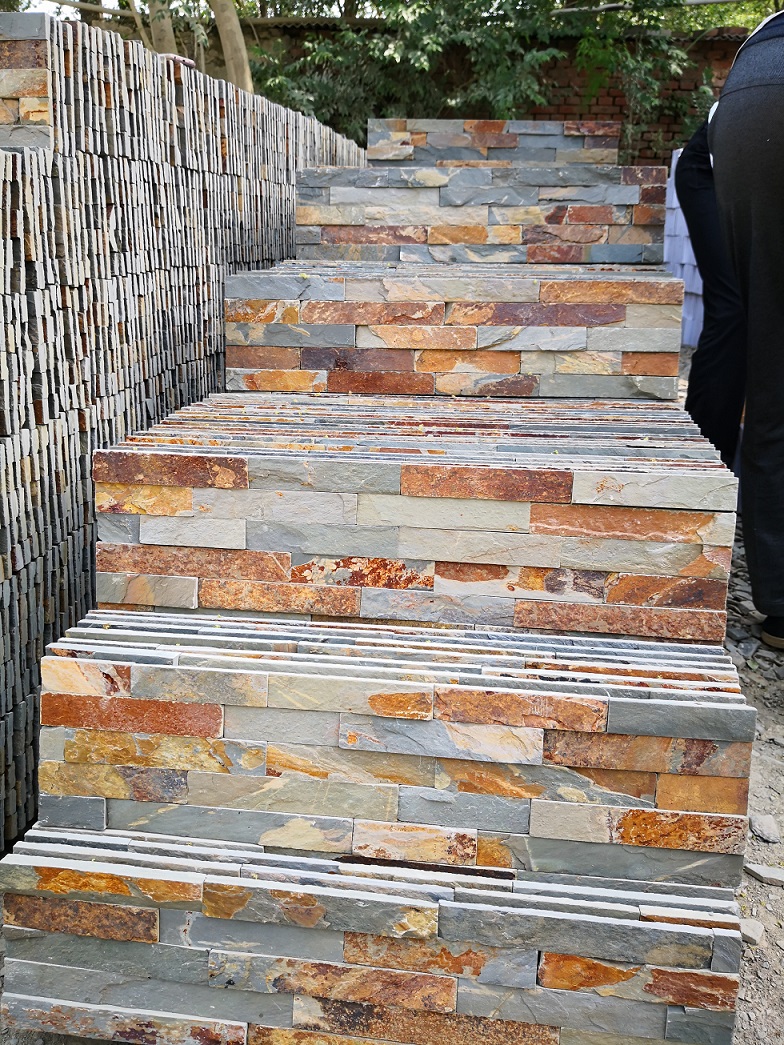
Estandarizando el 6″x24″ Panel para la gestión global de inventarios
el 6″x24″ El estándar maximiza la utilización de contenedores para los límites de peso de los puertos de EE. UU. y al mismo tiempo garantiza una instalación perfecta y sin lechada a través de una geometría entrelazada en forma de Z.
| Métrica técnica | 6″ x24″ Especificación |
|---|---|
| Dimensión nominal | 150 mm x 600 mm |
| Peso promedio | 8 a 12 libras/pie cuadrado (dependiendo del material) |
| Límite de carga del puerto de EE. UU. | 17,5 toneladas (optimizado) |
| Capacidad del contenedor | 756–864 m2 (20 paletas) |
| Embalaje estándar | 7 a 8 piezas por caja de exportación |
Eficiencia geométrica en diseño arquitectónico
El formato modular de 150 mm x 600 mm elimina las conjeturas para los contratistas. Las dimensiones uniformes reducen drásticamente los desperdicios de corte en fachadas comerciales y muros de contención a gran escala, proporcionando una apariencia predecible. tasa de instalación que manual “auricular” piedra no puede coincidir.
Nuestro diseño entrelazado en forma de Z resuelve el fallo estético más común: las costuras verticales visibles. Estos paneles encajan como piezas de un rompecabezas, creando un acabado sin lechada que permanece visualmente continuo a lo largo de amplias paredes decorativas o alrededores de chimeneas.
- Dimensiones: Estricto 6″ x24″ Módulos para un fácil cálculo del área.
- Entrelazar: Bordes sin costuras en forma de Z para ocultar “cremallera” pauta.
- Control de lotes: Los protocolos de clasificación de alto nivel evitan variaciones de color irregulares.
Optimización logística para los límites de peso de los puertos de EE. UU.
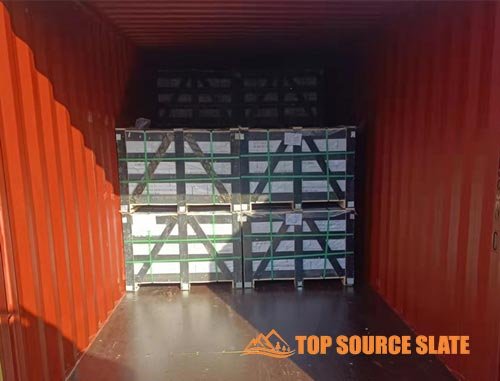
Envío piedra natural requiere equilibrar el volumen con la masa. Las normas viales norteamericanas suelen imponer un umbral estricto de 17,5 toneladas en los principales puertos. Optimizamos nuestro 20GP carga de contenedores para alcanzar este límite exacto, lo que garantiza que los mayoristas eviten sanciones importantes y al mismo tiempo maximicen el valor del inventario.
La gestión estratégica del volumen nos permite embalar 20 pallets por contenedor. Al utilizar cajas de exportación de 3 a 5 capas que contienen de 7 a 8 piezas, mantenemos la integridad estructural durante el tránsito transoceánico. Este sistema protege los márgenes de los distribuidores al minimizar las tasas de rotura del 15 al 25 % típicas de envíos no estándar y mal embalados.
- Carga estándar: 17,5 toneladas para el cumplimiento del puerto de EE. UU.
- Producir: 756–864 m2 por contenedor de 20GP.
- Embalaje: 48 a 60 cajas por palet para garantizar la estabilidad.
- Códigos SA: Pizarra (6803.00.90) y Cuarcita (6802.93.11) para una clasificación aduanera clara.
El control directo de la cantera en nuestras instalaciones de Hebei nos permite hacer cumplir estos estándares desde el primer corte. Esto proporciona a los compradores B2B 100 % de transparencia mediante la verificación visual previa al envío, lo que garantiza la coherencia de los lotes necesaria para las especificaciones arquitectónicas de alto nivel.

Reducir “Rotura en la punta”: Embalaje de esquina especializado
Las esquinas prefabricadas en forma de L y las cajas de 5 capas eliminan el 20 % de desperdicio que se observa con el corte a inglete manual y, al mismo tiempo, se mantienen dentro de los límites de peso en carretera de EE. UU. de 17,5 toneladas.
Mitigar la fragilidad de los bordes y el desperdicio de instalación
El corte manual a inglete in situ acaba con los márgenes de los mayoristas. Cuando Los instaladores intentan cortar pizarra quebradiza o cuarcita en un ángulo de 45 grados sin precisión de fábrica, el desperdicio de material frecuentemente alcanza entre el 10 y el 20%. Estos puntas de piedra carecen de soporte estructural y se rompen fácilmente bajo la vibración de una sierra húmeda estándar.
Más allá de la tasa de desperdicio, las esquinas cortadas en el campo rara vez cumplen con los requisitos de adhesión de mortero ASTM C270. Si el ángulo no está perfectamente nivelado, la unión se debilita. Esto crea espacios que permiten la intrusión de agua, lo que eventualmente conduce a la delaminación y “cremallera” Líneas que arruinan la continuidad visual de un 6.×24 panel de libro mayor instalación.
Unidades prefabricadas en forma de L y cajas de exportación de 5 capas
Eliminamos la necesidad de realizar cortes diagonales riesgosos al suministrar unidades de esquina en forma de L producidas en fábrica. Utilizamos resina epoxi de alta resistencia para unir estas esquinas de forma permanente, asegurando que permanezcan intactas durante todo el ciclo logístico. Nuestros protocolos de embalaje y carga se centran en tres estándares técnicos:
- Embalaje: Cartones de exportación reforzados de 3 a 5 capas con amortiguación interna para amortiguar las puntas entrelazadas en forma de Z.
- Optimización del peso del puerto de EE. UU.: Los contenedores tienen un límite de 17,5 toneladas por 20GP para evitar la compresión de los palés y el aplastamiento de piedras durante el tránsito por carretera.
- Especificaciones del adhesivo: Unión permanente de la punta mediante epoxi de grado industrial para evitar que se desprenda durante la manipulación en el sitio.
Los contenedores estándar a menudo alcanzan los límites de volumen antes que los de peso, pero la piedra densa ocurre lo contrario. Al restringir las cargas útiles a 17,5 toneladas para los distribuidores norteamericanos, nos aseguramos de que las paletas inferiores en un envío de 20 paletas no colapsen bajo el peso del pila superior. Este control logístico mantiene los índices de rotura por debajo del 2%, frente al 10% de media que se observa en lotes a granel mal embalados.
Emparejamiento de paneles en diferentes lotes: el desafío del control de lotes
La estandarización de rangos tonales en más de 500 pies cuadrados requiere clasificación a nivel de fábrica y numeración de lotes para evitar la discontinuidad visual en revestimientos arquitectónicos a gran escala.
Variabilidad geológica y el riesgo de discontinuidad visual
Piedra natural es un producto geológico crudo. La pizarra, la cuarcita y la arenisca cambian en la composición mineral según la profundidad o veta específica de la cantera. Sin intervención de fábrica, mezclar diferentes lotes de extracción crea una “irregular de” efecto de pared que interrumpe la intención arquitectónica y crea visible “cremallera” líneas en las costuras.
Los datos sugieren que los riesgos de uniformidad estética aumentan significativamente para cualquier superficie que exceda los 500 pies cuadrados. Mantener la armonía visual y al mismo tiempo cumplir con los estándares de desempeño estructural requiere un nivel de selección de materias primas que los proveedores minoristas a menudo omiten para reducir costos.
- Umbral de superficie: Los riesgos de desajuste alcanzan su punto máximo en proyectos que superan los 500 pies cuadrados.
- ASTM C568: Estándar de absorción (<3%) debe cumplirse sin comprometer la combinación tonal.
- Cambios de minerales: Los cambios de composición ocurren naturalmente según la ubicación de la cantera en Hebei.
- Porcentaje de averías: Las alternativas sin clasificar presentan tasas de rechazo in situ entre 2 y 3 veces mayores.
Consistencia del color del lote y verificación visual previa al envío
Piedra de origen superior gestiona la deriva del color en la fuente. Como fábrica de origen directo de cantera, implementamos protocolos de clasificación en la etapa inicial de extracción. Clasificamos las materias primas en lotes de clasificación clara, media y oscura antes de ensamblar los paneles del libro mayor. Esto garantiza que cada contenedor entregado a un mayorista contenga una gama tonal coherente.
Eliminamos las conjeturas de las adquisiciones internacionales a través de la transparencia. Los grandes pedidos B2B se cumplen utilizando piedras del mismo ciclo de extracción. Esta estrategia maximiza la armonía tonal y protege los márgenes de nuestros distribuidores al reducir las quejas a nivel del sitio y el desperdicio de material.
- Clasificación de niveles: Clasificación manual en lotes claros, medios y oscuros en las instalaciones de Hebei.
- Verificación visual: Fotos y vídeos de alta resolución del lote específico proporcionados antes del envío.
- Sincronización de inventario: Los pedidos grandes están bloqueados en un único ciclo de extracción para garantizar la coherencia.
- Grado de calidad: Selección de Grado A siguiendo estándares de alta densidad equivalentes a ASTM C170.
Los mayoristas se benefician de este control directo de fábrica porque elimina el riesgo de los intermediarios de mezclar inventarios de fuentes dispares. La verificación previa al envío sirve como control de calidad final, asegurando que el producto coincida con la muestra aprobada antes de realizar el pago del saldo.
Logística: Cómo colocar más de 10,000 pies cuadrados en un contenedor de 20 pies
Alcanzar más de 10.000 pies cuadrados requiere aprobación de carga pesada de 26,5 toneladas y perfiles delgados, mientras que los envíos a puertos de EE. UU. priorizan una estrategia de 17,5 toneladas legales en carretera para maximizar los márgenes mayoristas regionales.
| Métrica de logística | Puerto de EE. UU. optimizado | Aprobación de peso pesado |
|---|---|---|
| Carga útil objetivo | ~17,5 toneladas | 24 – 26,5 toneladas |
| Área total de la cara | 756 m² (8,137 pies²) | 864 m²+ (9.300 – 10.000+ pies²) |
| Relación de embalaje | 7-8 piezas/cartón | 8 piezas/caja (perfil plano) |
| Estrategia de paletas | 20 paletas (estándar) | 20 paletas (alta densidad) |
Optimización de la densidad de carga útil para materiales de revestimiento pesados
Paneles de piedra están fundamentalmente limitados en peso. Un contenedor ISO estándar de 20 pies proporciona aproximadamente 1,170 pies cúbicos de volumen, pero piedra natural alcanza el límite máximo de carga útil mucho antes de que se llene ese espacio. Para maximizar los pies cuadrados por envío, nos centramos en la densidad del material y la geometría física de los 6″x24″ formato modular.
- Códigos SA: Clasificamos los envíos en Pizarra (6803.00.90) o Cuarcita (6802.93.11) para garantizar un despacho de aduana y un cálculo de derechos precisos.
- Protección de bordes: El uso de cajas de exportación de 3 a 5 capas evita que las esquinas frágiles de piedra natural contra el desconchado durante el apilado de alta densidad.
- Alineación de cajas: La orientación longitudinal de las cajas dentro del contenedor minimiza los huecos. Esto evita los cambios durante las transferencias intermodales y reduce las tasas de rotura por debajo del 2%.
- Anidamiento vertical: Apilar paneles verticalmente dentro de las cajas protege el área de la cara del daño por compresión al mismo tiempo que permite cálculos precisos del área de la cara por pie cúbico.
Estrategia de paletas y optimización del peso del puerto de EE. UU.
El envío a América del Norte requiere un equilibrio específico entre el volumen del contenedor y los límites de peso legales en carretera. mientras un El contenedor puede contener físicamente más piedra., exceder las 17,5 toneladas a menudo genera fuertes multas o requiere chasis de tres ejes especializados para el transporte por carretera, lo que reduce los márgenes de los concesionarios.
- Estrategia de 17,5 toneladas: Este peso de carga cumple con la mayoría de las normas viales norteamericanas de 2026, lo que permite una entrega estándar sin equipo auxiliar.
- Opciones de carga pesada: Para regiones con mayor tolerancia de infraestructura, podemos cargar hasta 26,5 toneladas. Esta es la única manera de alcanzar efectivamente el umbral de más de 10,000 pies cuadrados en un solo contenedor de 20GP.
- Configuración de paleta: Un diseño de 20 paletas maximiza el área interna del piso del contenedor. Cargamos de 48 a 60 cajas por palet dependiendo de si la piedra es una “Bruto” o “Plano/Lápiz” perfil.
- Verificación visual: Proporcionamos fotografías y videos previos al envío del refuerzo y la integridad de la caja. Esto garantiza que la carga esté segura antes de realizar el pago del saldo, protegiendo el flujo de caja del comprador B2B.
Esta precisión logística permite a Top Source Stone entregar cuarcita y pizarra natural de grado A directamente desde la cantera a mayoristas internacionales con total transparencia. Eliminamos las conjeturas al hacer coincidir la estrategia de carga con las regulaciones portuarias regionales específicas.
Pensamientos finales
Los paneles de contabilidad de bajo nivel conllevan un costo oculto en forma de tasas de rotura y rechazo del sitio del 15% al 25%. Nuestro sistema adherido con epoxi, directo de fábrica, elimina estas pérdidas al proporcionar una integridad estructural que sobrevive al ciclo logístico de 17,5 toneladas de los puertos de EE. UU. Estandarización según ASTM 6″x24″ unidades protege sus márgenes y garantiza que sus clientes nunca enfrentar el “irregular de” muro Problemas comunes con lotes de canteras sin nivelar.
Solicite un kit de muestra de nuestro “10 grandes” inventario, incluidos los más vendidos como Alaska Grey y Carbon Black, para verificar nuestro ajuste de precisión en forma de Z. Ofrecemos pedidos de prueba de 300 m2 con verificación visual previa al envío para que pueda inspeccionar el lote específico antes de realizar el pago del saldo. Póngase en contacto con nuestro equipo mayorista hoy para analizar el embalaje de marca privada y la optimización de los costos de destino para su región.
Preguntas frecuentes
¿Cuál es la dimensión estándar de los paneles de larguero de piedra natural?
Arriba Source Stone estandariza los paneles modulares a las 6″ x24″ (aproximadamente 150 mm x 600 mm). Este tamaño optimiza el peso de carga del contenedor para las regulaciones portuarias de EE. UU. y se maneja fácilmente durante la instalación vertical. El espesor varía desde 0,75″ a 1,5″ dependiendo del relieve del perfil.
¿Cuántos paneles se incluyen en una caja de venta al por mayor estándar?
Estándar 6″ x24″ Los paneles se envían con 7 a 8 piezas por caja para estilos planos o tipo lápiz. Los paneles rugosos o en alto relieve utilizan 5 piezas por caja debido a su mayor peso. Empacamos de 48 a 60 cajas por palé, optimizadas para los límites de peso en carretera de América del Norte de 17,5 toneladas por contenedor de 20 GP.
¿Existe una diferencia funcional entre los paneles de larguero y la piedra apilada?
Los términos describen lo mismo. chapa de piedra natural sistema. El panel de libro mayor se refiere al formato modular preensamblado, mientras que piedra apilada describe la estética sin lechada y con juntas ajustadas. Los proveedores los utilizan indistintamente para verticales. aplicaciones de revestimiento.
¿Pueden los instaladores aplicar paneles de larguero directamente sobre paneles de yeso interiores?
Los instaladores pueden aplicar paneles a paneles de yeso imprimados para interiores. proyectos de menos de 10 pies utilizando mortero de capa delgada modificado con polímeros. Para aplicaciones exteriores o paredes interiores que excedan los 10 pies, los códigos de construcción requieren tableros de soporte de cemento o sustratos de mampostería para soportar el peso, que promedia entre 8 y 13 libras por pie cuadrado.
¿Qué herramientas proporcionan los cortes más limpios para el revestimiento de piedra natural?
Para cortes rectos se necesita una sierra húmeda de mesa con un disco de diamante de borde continuo. Para muescas y salidas, utilice una amoladora angular con disco de diamante. El corte húmedo mantiene la precisión y garantiza el cumplimiento de las normas de seguridad del polvo de sílice de OSHA.
¿Cómo crean los paneles en forma de Z una apariencia de pared sin costuras?
Los paneles en forma de Z utilizan un entrelazado geométrico para ocultar las costuras verticales. Para lograr un acabado profesional, nivele perfectamente la primera hilera y escalone los paneles siguiendo un patrón de unión continuo. Este diseño rompe las líneas de la cuadrícula y mantiene los anchos de las juntas por debajo de 2 mm para una textura continua.
¿Los paneles de piedra natural son adecuados para zonas con altas temperaturas como las chimeneas?
Sí, piedra natural No es combustible y resistente al calor, lo que lo hace ideal para entornos de chimeneas y chimeneas. Recomendamos adhesivos resistentes al calor y un calibre 1/16.″ microespacio entre paneles para acomodar una expansión térmica mínima.