Vasthouden aan hoe gestapelde steen te installeren fabrikantprotocollen vormen de belangrijkste verdediging tegen delaminatie en structurele aansprakelijkheid. Onjuiste ondergrondvoorbereiding voor zware panelen van 12,5 lb/sqft leidt tot breuk door afschuiving, waardoor aannemers gedwongen worden dure saneringskosten en garantieclaims op zich te nemen.
Wij dwingen af ASTM C270 (type S) En Ansi A118.15 standaarden om resultaten zonder delaminatie te garanderen. Gebruikmakend machinaal gezaagde rug (+/- 2 mm) En Efficiëntie van de L-hoek elimineert vochtophopende holtes, waardoor de arbeid op locatie met 50% wordt verminderd en tegelijkertijd een commerciële levensduur van 20 jaar wordt gegarandeerd.
Voorbereiding van de ondergrond: gipsplaat, cementplaat en metselwerk
De voorbereiding van de ondergrond bepaalt de levensduur van 20 jaar natuursteen. Gebruik versterkte latten voor houten frames en polymeer-gemodificeerde mortels voor directe verlijming van metselwerk om ervoor te zorgen dat er geen delaminatie optreedt.
| Substraattype | Vereiste voorbereiding | Technische standaard |
|---|---|---|
| Houtskeletbouw/gipsplaten | 2-laags WRB + metalen lat + kraslaag | ASTM C1063 / E2556 |
| Metselwerk / Beton | Zandstraalverontreinigingen; directe band | ANSI A118.4 / A118.15 |
| Topbronpanelen | Machinaal gezaagde achterkant | +/- 2 mm tolerantie |
Structurele versterking voor gipsplaten en multiplex
Directe hechting op gipsplaat met papieren bekleding is een primaire oorzaak van structureel falen. Natuurstenen panelen wegen tussen de 7 en 12,5 lbs per vierkante voet, een belasting die standaard gipsplaat niet kan dragen zonder mechanische versterking. Houten frame binnen- en buitenmuren vereisen een meerlaags systeem om vochtinfiltratie en afschuiffalen te voorkomen.
- Waterbestendige barrière: Breng twee lagen klasse D WRB (ASTM E2556) aan om het houten frame te beschermen tegen vocht tijdens het uithardingsproces van de mortel.
- Gegalvaniseerde metalen lat: Bevestig een lat van 2,5 lb tot 3,4 lb elke 15 cm verticaal in noppen om een mechanische verbinding te creëren voor het gewicht van de steen.
- Kraslaag: Creëer een 1/2-inch dik bed met behulp van Type S-mortel. Scoor het oppervlak horizontaal zodra het moeilijk is om de fysieke grip voor de uiteindelijke toepassing te verbeteren.
Directe Bond-standaarden en gemeten steunprecisie
Schone metselwerk- en cementplaatsubstraten bieden het meest efficiënte installatietraject omdat directe verlijming mogelijk is. Oppervlakteverontreinigingen werken als bindingsbrekers, dus het verwijderen van alle verf, afdichtingsmiddelen en vormlosmiddelen is verplicht voor een succesvolle chemische binding met de mortel.
- Verwijdering van verontreinigingen: Zandstraal of mechanisch schuur betonoppervlakken om het poreuze aggregaat bloot te leggen voordat u polymeer-gemodificeerde thinset aanbrengt.
- Gemeten steun: Top Source Stone-panelen gebruik een machinaal gezaagde rug met een tolerantie van +/- 2 mm. Deze precisie garandeert 100% mortel-op-steen contact en elimineert de holle plekken die vaak voorkomen bij handgesplitste alternatieven.
- Zelfklevende specificatie: Gebruik ANSI A118.15 high-performance thinset voor cementplaat. Deze mortels beheersen het gewicht van kwartsiet en marmer met een hoge dichtheid en zijn tegelijkertijd bestand tegen thermische uitzetting.
- L-hoekefficiëntie: Gebruik voor zuilen en wandeinden geprefabriceerde hoekelementen uit één stuk. Dit elimineert handmatige versteksneden van 45 graden en verlaagt de arbeidskosten ter plaatse met 50%.
Mengmortel: waarom Type S de enige keuze is voor B2B-projecten
Type S-mortel biedt een druksterkte van 1.800 PSI en een zijdelingse hechting duurzaamheid vereist voor zwaar belaste commerciële steenfineer en drukbezochte buitengevels.
Structurele druksterkte en ASTM C270-normen
Commercieel metselwerk vereist een specifiek evenwicht tussen stijfheid en flexibiliteit, waar standaard dunne sets vaak niet in slagen bij dikbedtoepassingen. Type S-mortel fungeert als structurele fundering voor zware 6×24 panelen, die de zijdelingse weerstand bieden die nodig is om windbelasting en omgevingsstress te weerstaan. We concentreren ons op deze norm omdat deze aansluit bij de strenge eisen van de internationale bouwvoorschriften van 2026 voor gevels op grote hoogte of aan hoge blootstelling.
- Druksterkte: Minimaal 1.800 PSI, beter dan Type N voor dragende toepassingen.
- Buigzame band: Door de hoge kalk-cementverhouding kan de muur thermische uitzetting opvangen zonder te barsten.
- Code-uitlijning: Voldoet aan ASTM C270 voor fineer van steenmetselwerk meer dan 15 voet hoog.
- Substraatintegriteit: Onmisbaar voor de kraslaag over gegalvaniseerde metalen latten op houten frame- of stalen wanden.
Maximaliseer het hechtoppervlak met machinaal gezaagde rug
Het falen van de hechting begint meestal bij de gaten. Terwijl met de hand gespleten steen ongelijke holtes creëert die water vasthouden, gebruiken onze panelen een machinaal gezaagde achterkant om ervoor te zorgen dat het mortelbed volledig contact maakt. Deze technische keuze is van cruciaal belang voor B2B-projecten waarbij arbeidssnelheid en langetermijnaansprakelijkheid voorop staan. Dankzij het vlakke oppervlak kan de Type S-mortel zich rechtstreeks hechten aan onze epoxyhars van maritieme kwaliteit, waardoor een uniforme structurele eenheid ontstaat.
- Gemeten precisie: Machinaal gezaagde rug met een tolerantie van +/- 2 mm voor 100% mortelinkapseling.
- Geen luchtzakken: Elimineert holtes waar water zich ophoopt, waardoor delaminatie bij bevriezing en dooi wordt voorkomen.
- Installatie-ROI: Flatbacks maken handmatig nivelleren overbodig, waardoor commerciële installaties met grote volumes worden versneld.
- Chemische binding: Vult de interne epoxyhars van maritieme kwaliteit aan voor maximale veiligheid van steen tot paneel.
Groothandelaars en projectmanagers moeten prioriteit geven aan deze technische benchmarks om het gemeenschappelijke te vermijden “Zipper -effect” gezien in inferieure installaties. Het gebruik van de juiste mortel is geen suggestie; het is de basis voor prestaties over twintig tot dertig jaar in de B2B-sector.
De “Back-boteren” Techniek: Verzekeren van 95% dekking
Back-boteren met polymeer-gemodificeerde mortel zorgt voor een dekking van 95%, waardoor vochtophopende holtes worden geëlimineerd die het loslaten van stenen veroorzaken tijdens extreme vries-dooicycli.
Aanbrengen van een dunne, gelijkmatige laag polymeergemodificeerde mortel op de achterkant van elk stenen paneel vóór het plaatsen is een niet-onderhandelbare stap voor commerciële projecten. Deze fysieke verbindingslaag vult de microscopische poriën van de huid natuursteen, waardoor een chemische en mechanische brug ontstaat tussen het substraat en het paneel. Zonder deze stap zelfs de hoogste kwaliteit steen risico op falen onder hydraulische druk of thermische uitzetting.
| Technische statistiek | Alleen standaardspaan | Back-Buttering-protocol |
|---|---|---|
| Mortel dekking | 65% – 75% | 95% – 100% |
| Leegte formatie | Hoog (watervangers) | Bijna nul |
| Bond standaard | ASTM C270 (type S) | ANSI A118.4 / A118.15 |
Vermindering van holtevorming en hydraulische druk
Luchtspleten achter natuursteen zijn de voornaamste oorzaak van het mislukken van de installatie. Bij buitentoepassingen houden deze zakken vocht vast dat uitzet tijdens vries-dooicycli, wat leidt tot afbladderen of volledige delaminatie. Voor B2B-projecten waarbij aansprakelijkheid op lange termijn een probleem is, is het opzetten van een doorlopende obligatielijn de enige oplossing manier om de stenen te verdelen Gewicht van 8–13 lbs/m2 over het substraat.
- Elimineer zakken: Door het back butteren worden interne luchtbellen verwijderd die dit veroorzaken “Zipper -effect” paneel slippen.
- Onmiddellijke zuiging: De techniek zorgt voor een onmiddellijke grip tussen het mortelbed en het paneel, cruciaal voor verticaal gevelbekleding.
- ANSI-naleving: Het aanbrengen van mortel volgens de ANSI A118.4-normen zorgt ervoor dat de mechanische verbinding de schuifbelasting van zware leisteen of kwartsiet aankan.
Gebruikmakend van een afgemeten steun voor maximale hechting
Bovenkant Source Stone produceert panelen met een machinaal gezaagde achterkant, met behoud van een strikte tolerantie van +/- 2 mm. Dit vlakke oppervlak zorgt ervoor dat de back-boterlaag consistent blijft over de hele 6″x24″ modulair formaat. Onregelmatige, niet-gemeten stenen vereisen vaak overmatige mortel om te vullen “valleien” aan de achterkant van de steen, wat de materiaalkosten verhoogt en het installatieteam vertraagt.
- Precisiecontact: Machinaal gezaagde ruggen zorgen voor 100% mortelcontact met de ondergrond, waardoor er geen ruimte is voor vochtindringing.
- Arbeidsefficiëntie: Voor uniforme oppervlakken is ter plaatse minder mortelmanipulatie nodig, waardoor de arbeidsuren per vierkante meter direct worden verminderd.
- Gelijkmatige uitlijning: De afgemeten achterkant voorkomt door luchtzakken veroorzaakte hoogtevariaties, waardoor de panelen perfect vlak blijven en verticale naden worden gemaskeerd.
Door polymeer-gemodificeerde mortels te combineren met een uitgemeten steenoppervlak, installateurs overbruggen de opening tussen de steen en het cementplaat- of metselwerksubstraat effectief. Deze synergie zorgt ervoor dat de structurele integriteit behouden blijft in omgevingen met veel verkeer of extreme weersomstandigheden.
Geef projecten een boost met snel plaatsende natuursteen
Omgaan met natuurlijke variaties: Dry-fitting voor kleurbalans
Droogpassen combineert tonale verschuivingen van meerdere kratten en spreidt de voegen uit om zichtbare naden te elimineren, waardoor een samenhangende architecturale afwerking wordt gegarandeerd vóór de definitieve toepassing van de mortel.
Verbijsterende verbindingen en mengkratteninventaris
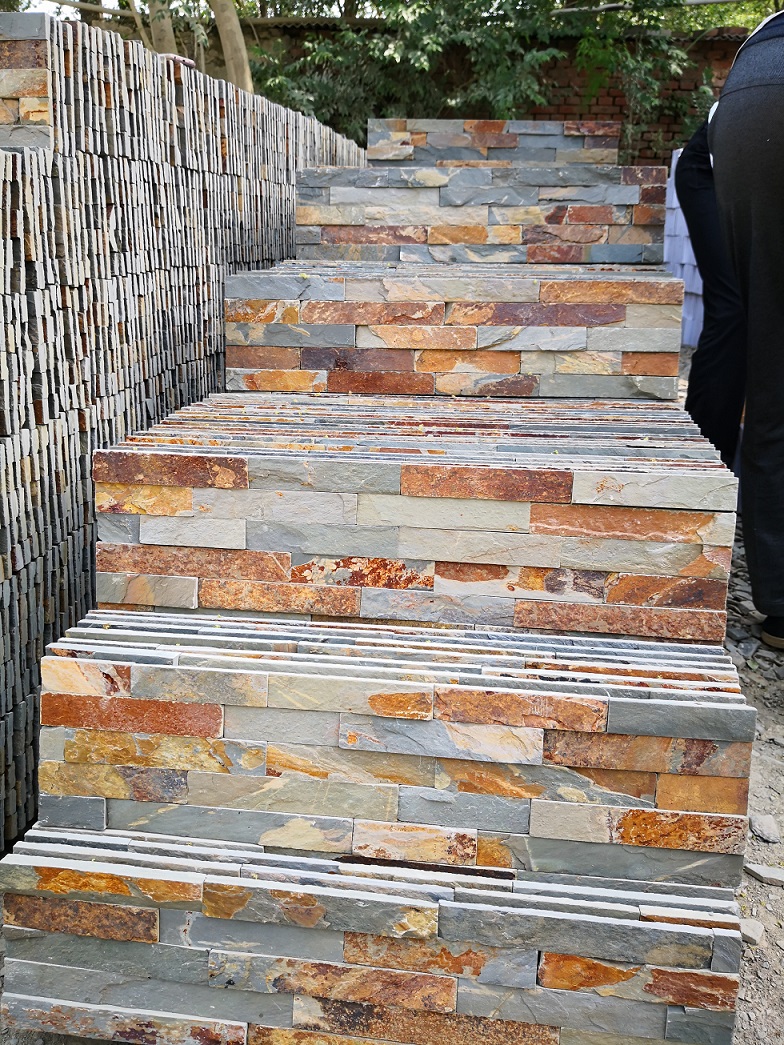
Succesvol installatie is afhankelijk van visuele randomisatie. Uit één krat trekken ontstaat vaak “kleurblokkering” waar toonclusters er onnatuurlijk uitzien. Meng de inventaris op de vloer om het volledige bereik van de natuursteen te zien voordat de mortel de ondergrond raakt.
- Kratmenging: Teken tegelijkertijd panelen uit minimaal drie verschillende kratten om subtiele toonverschuivingen over het gehele projectoppervlak te verdelen.
- Naadbeheer: Verplaats verticale naden tussen rijen om het modulaire raster te doorbreken en een natuurlijk “gestapeld” stijlvol.
- Textuurdistributie: Identificeer kleuren met een hoog reliëf of uitschieters en verdeel ze gelijkmatig om te voorkomen dat ze zwaar zijn “hete plekken” of donkere clusters.
- Tolerantiecontrole: Bevestig de onderlinge vergrendeling van Z-vormige of rechthoekige modules om een goede pasvorm zonder gaten te garanderen voordat u mortel aanbrengt.
Consistentie van batchkleuren en verificatie vóór verzending
We verminderen de arbeid ter plaatse door sortering op fabrieksniveau. Ons Quarry-to-Container-model zorgt ervoor dat de kleurvariatie binnen voorspelbare architecturale parameters blijft, waardoor installateurs uren aan vloerinlegtijd besparen en materiaalverspilling verminderen.
- Fabriekssortering: Gebruik Topbron Stone’s batchkleurconsistentieprotocollen om vlekkerige muren te voorkomen resultaten en zorgen voor commerciële uniformiteit.
- Visuele verificatie: Bekijk HD-foto's en -video's van onze pre-shipment verificatie om de lay-out en toonverdeling te plannen voordat de container de locatie bereikt.
- Machinaal gezaagde rug: Vertrouw op een afgemeten steun met een tolerantie van +/- 2 mm om een vlak vlak te behouden en 100% mortelcontact te garanderen.
- Minerale integriteit: Wij steen selecteren uit diepe lagen om de kleurlevendigheid te behouden tegen UV-blootstelling en extreme verwering gedurende langdurige cycli.
Snijgeheimen: natte zagen versus haakse slijpmachines voor schone randen
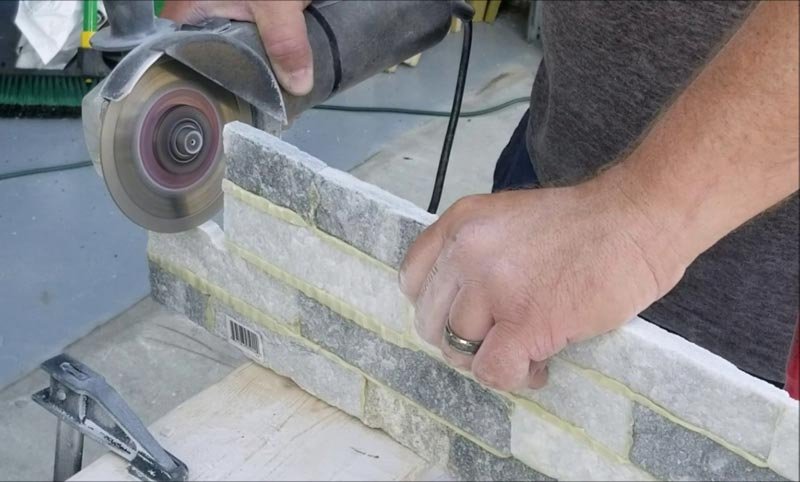
Natte zagen zorgen voor precisie voor rechte panelen, terwijl haakse slijpers uitsparingen verwerken. Geprefabriceerde L-vormige hoeken elimineren 20% materiaalverspilling en verminderen de arbeid ter plaatse met 50%.
Kiezen tussen precisie-natzagen en veelzijdige slijpmachines
De gereedschapskeuze bepaalt de uiteindelijke esthetiek van een commerciële installatie. Natte zagen met diamantbladen produceren de meest rechtse randen voor Z-vormige en rechthoekige panelen, waardoor de vervorming effectief wordt tegengegaan “Zipper -effect” waar ongelijkmatige gaten de visuele stroom van een muur verpesten. Deze precisie is verplicht voor het handhaven van vlakke rijen langs grootschalige gevels.
- Natte zagen: Beste voor verstek van 45 graden sneden en primair paneel trimmen.
- Haakse slijpmachines: Noodzakelijk voor metselwerkbladen om cirkelvormige sneden rond leidingen of elektriciteitskasten te maken.
- Materiaaldichtheid: steen met hoge dichtheid uit diepe steengroevelagen is beter bestand tegen afbrokkelen tijdens snijden op hoge snelheid dan poreuze alternatieven.
- Gezamenlijke normen: Het handhaven van een minimale voegdikte van 1/4 inch zorgt ervoor dat de mortelverbinding voldoet aan de ANSI A118.15-vereisten.
We kopen steen met een niet-poreuze kristallijne structuur om ervoor te zorgen dat de randen scherp blijven. Deze dichtheid voorkomt het afbrokkelen dat vaak voorkomt bij materialen van lage kwaliteit, wat vaak leidt tot kostbaar herwerk en afgekeurde batches bij projecten met hoge zichtbaarheid.
Efficiëntie in L-hoeken om handmatig verstekzagen te elimineren
Handmatig verstekzagen is de belangrijkste arbeidsinspanning bij elk natuursteenproject. Het is langzaam, veroorzaakt veel stof en brengt een groot risico op breuk met zich mee. Door gebruik te maken van geprefabriceerde eenheden wordt een complexe metselwerkopdracht omgezet in een eenvoudige modulaire montage.
- Formaat: 6×12 + 6×12 inch in de fabriek gemaakte L-vormige hoekeenheden.
- Kleefstof: Epoxyhars van maritieme kwaliteit voorkomt het loslaten van stenen tijdens het transport van zware lasten of bij laatste aanpassingen aan de natte zaag.
- Toleranties: Machinaal gezaagde achterkant (+/- 2 mm) zorgt voor 100% mortelcontact.
- ROI-statistieken: Elimineert 20% materiaalverspilling en vermindert de arbeidsbehoefte op locatie met 50%.
Deze hoeken zorgen voor een monolithisch uiterlijk op pilaren en muuruiteinden zonder de kwetsbaarheid van in het veld gezaagde verstekken. De machinaal gezaagde achterkant verwijdert luchtbellen, wat de integriteit van de verbinding beschermt in extreme vries-dooi-omgevingen en een levensduur van 20-30 jaar garandeert.
Grouting versus droge stapeling: esthetische en onderhoudsverschillen
Droog stapel installatie maakt gebruik van zelfuitlijnende geometrie om troebelheid en onderhoud te elimineren, en biedt een architecturale afwerking met hoog reliëf die de voorkeur heeft voor grootschalige commerciële gevels.
Visuele diepte en schaduwspel in drooggestapeld metselwerk
Droog stapelen benadrukt de natuurlijke variatie en spleet van steen door diepe schaduwlijnen te creëren. Deze methode benadrukt de ruige texturen van leisteen en kwartsiet, waardoor de architectonische 3D-afwerking ontstaat die populair is moderne buitenkant ontwerp. Architecten kiezen voor deze look om het vlakke, gedempte uiterlijk te vermijden dat ontstaat wanneer grout de vloer vult natuurlijke uitsparingen van de steen.
Onderhoud voor drooggestapelde muren is aanzienlijk lager dan groutalternatieven. Omdat er geen voegen zijn die kunnen barsten, verkleuren of schimmel kunnen herbergen, blijft het oppervlak schoon met slechts af en toe afstoffen of spoelen onder lage druk. Voor B2B-projecten vertaalt dit zich in lagere facilitaire beheerkosten op de lange termijn en een schonere esthetiek die in de loop van de tijd niet verslechtert.
Z-vormgeometrie voor naadloze voegenvrije verbindingen
Top Source Stone Z-vormige panelen gebruik zelfuitlijnende geometrie om verticale naden te maskeren. Dit modulaire interlocksysteem elimineert de noodzaak van traditioneel voegen en voorkomt dat “Zipper -effect” gebruikelijk in inferieure rechthoekige panelen. Door de voegfase te elimineren, vermijden de teams mortelvlekken op het stenen oppervlak, waarvoor na de installatie vaak dure chemische reiniging nodig is.
- Machinaal gezaagde rug: Een afgemeten achterkant met een tolerantie van +/- 2 mm zorgt voor 100% mortelcontact, waardoor luchtzakken worden geëlimineerd die tot delaminatie leiden.
- Epoxy van maritieme kwaliteit: Stenen zijn gebonden met zeer sterke hars om thermische uitzetting en zware belasting te weerstaan.
- Arbeidsefficiëntie: Geprefabriceerde in elkaar grijpende eenheden verminderen de arbeidsuren ter plaatse met wel 50% in vergelijking met traditioneel met de hand gezet metselwerk.
- Klimaatbestendigheid: Groutvrije systemen zorgen voor natuurlijke beweging, waardoor ze zeer goed bestand zijn tegen afbrokkelen in extreme vries-dooi-omgevingen.
Groothandelaren en detailhandelaren profiteren van het op voorraad hebben van deze in elkaar grijpende systemen, omdat ze zowel hoogwaardige binnenspatten als grootschalige buitenbekleding. Het zelfuitlijnende karakter van de Z-vorm ontwerp zorgt ervoor dat zelfs op massieve commerciële muren de afwerking consistent blijft zonder zichtbare paneelbreuken of voegfouten.
Reiniging na installatie: Uitbloeiingen en mortelnevel verwijderen
Mortelresten onmiddellijk verwijderen om waas te voorkomen. Selecteer stenen met een hoge dichtheid in diepe lagen om vochtmigratie en zoutafzettingen die uitbloeiingen veroorzaken te blokkeren.
De oorzaken van mortelwaas en uitbloei identificeren
Mortelnevel is niet alleen maar stof; Het is een cementachtig residu dat uithardt en zich hecht aan de ondergrond onregelmatige texturen van natuursteen. Als bemanningen te lang wachten, ondergaat het residu een chemisch verhardingsproces verwijderen moeilijk zonder risico op schade aan de steen gezicht. Uitbloeiingen manifesteren zich als witte, poederachtige zoutafzettingen. Dit gebeurt wanneer vocht door de mortel beweegt, reageert met alkalische zouten en op het oppervlak verdampt.
Het beheersen van deze problemen vereist strikte naleving van installatietijdlijnen en materiaalnormen. Aannemers moeten behandelen reiniging als fase van de installatie in plaats van een bijzaak na het project.
- Ramen schoonmaken: Verwijder overtollige mortel in batches van 8-10 vierkante meter om binnen de verwerkingstijd van 20 tot 60 minuten te blijven.
- Vochtbeheersing: ASTM C270-normen voor Type S-mortel vereisen nauwkeurige waterverhoudingen om te voorkomen dat de zouten worden geactiveerd die oppervlaktevlekken veroorzaken.
- Chemische triggers: Uitbloeiingen komen doorgaans voor in omgevingen met veel vocht, waar extern water interne mortelalkaloïden activeert.
Gebruikmaken van mineralen met een hoge dichtheid om vochtretentie te voorkomen
Preventie is het meest effectief op steengroeveniveau. Bovenkant Bron Steen haalt materialen uitsluitend uit diepe lagen. Deze mineralen bezitten een kristallijne structuur met hoge dichtheid en vrijwel geen waterabsorptie. Door stenen leveren dat niet “spons op” vocht, hebben we het primaire transportmechanisme voor zouten afgesloten, waardoor het risico op uitbloeiingen bij buitenprojecten aanzienlijk wordt verminderd.
Ons engineeringproces richt zich ook op de verbindingslijn. We gebruiken gespecialiseerde lijmen die geen ruimte laten voor de holtes waar vocht en zouten zich gewoonlijk achter het fineer verzamelen.
- Materiële integriteit: Kwartsiet- en leisteenpanelen met een lage porositeit zijn op natuurlijke wijze bestand tegen zoutmigratie.
- Zelfklevende standaard: Epoxyharsverbindingen van maritieme kwaliteit elimineren interne holtes tussen de steen en de achterkant.
- Onderhoudsprotocol: Gebruik uitsluitend zachte borstels en pH-neutrale schoonmaakmiddelen bescherm de steen afwerking en de lijmverbinding.
- Klimaatbestendigheid: Mineralen met een hoge dichtheid voorkomen afbrokkelen in zoute lucht- en vries-dooiomgevingen aan de kust.
Bescherming van uw projectmarges
Kiezen voor goedkope, met de hand gespleten steen zorgt voor langdurige aansprakelijkheid door delaminatie en de “Zipper -effect” op hoge zichtbaarheid muren. Onze machinaal gezaagde rug en epoxyhars van maritieme kwaliteit elimineren deze risico's door 100% mortelcontact en structurele stabiliteit in extreme klimaten te garanderen. Investeren in door de fabriek geverifieerde technische standaarden beschermt uw professionele reputatie en voorkomt het dure herstel van de locatie dat vaak voorkomt bij niet-gecontroleerde alternatieven.
Beoordeel onze “Grote 10” bestsellers zoals Alaska Grey of Glacier White om te zien hoe onze modulaire Z-vormige en lineaire rechthoekige systemen commerciële installaties met grote volumes stroomlijnen. We bieden volledige visuele verificatie vóór verzending via HD-foto's en -video's, zodat u de kleurconsistentie van de batch kunt goedkeuren voordat de container onze steengroeve verlaat. Neem contact op met ons team om uw private label-vereisten te bespreken of om de besparingen op uw landkosten te berekenen met behulp van onze verzendstrategie voor zware ladingen van 26,5 ton.
Veelgestelde vragen
Kan ik gestapeld steenfineer rechtstreeks op een bestaande bakstenen muur plaatsen?
U kunt panelen op baksteen installeren als het oppervlak schoon, ongeverfd en structureel gezond is. We raden aan om een 1/2-inch kraslaag Type S-mortel over de draadlat aan te brengen om de hechting te garanderen. Als de steen geverfd of verzegeld is, moet u mechanische bevestigingsmiddelen en metalen latten gebruiken om te voorkomen dat de steen delamineert.
Is het mogelijk om natuurstenen grootboekpanelen rechtstreeks op de gipsplaat aan de binnenkant te installeren?
Gipsplaten kunnen het gewicht van 8-13 lbs per vierkante voet natuursteen niet dragen. U moet de gipsplaat vervangen door een 1/2-inch cementsteunplaat of de steunplaat direct over de noppen installeren. Gebruik een met polymeer gemodificeerde thinset die voldoet aan de ANSI A118.15-normen. Onze machinaal gezaagde rug garandeert 100% mortelcontact om luchtbellen tijdens dit proces te elimineren.
Hoe zaag ik de stenen panelen zonder dat de randen barsten of barsten?
Gebruik voor alle primaire zaagsneden een natte tegelzaag met een diamantzaagblad. De continue waterstroom vermindert de thermische spanning, waardoor wordt voorkomen dat de broze randen van leisteen en kwartsiet breken. Terwijl een haakse slijper werkt voor kleine inkepingen, blijft de natte zaag de industriestandaard voor schone, professionele randen die de in elkaar grijpende integriteit van het paneel behouden.
Moet ik een voeg of opening tussen de modulaire steenpanelen laten?
Nee. Onze in elkaar grijpende Z-vormige panelen zijn ontworpen voor een strak, droog gestapeld uiterlijk. Plaats de panelen stevig tegen elkaar om verticale naden te maskeren en een naadloze muur te creëren. Laat slechts een opening van 1/2 inch vrij bij binnenhoeken of overgangen naar verschillende materialen om natuurlijke beweging van het gebouw en thermische uitzetting op te vangen.
Kunnen Top Source Stone-panelen bestand zijn tegen gebieden met veel hitte, zoals de omlijsting van open haarden?
Ja. Onze panelen bestaan uit 100% natuursteen, waardoor ze van nature niet brandbaar zijn. We gebruiken een zeer sterke epoxyhars van maritieme kwaliteit om de afzonderlijke stenen te verbinden. Deze lijm zorgt ervoor dat ze aan het paneel blijven hechten, zelfs tijdens de herhaalde thermische cycli die gebruikelijk zijn bij residentiële en commerciële haardtoepassingen.
Hoe beheer ik hoekinstallaties zonder ingewikkelde versteksneden uit te voeren?
Voor onze grote collecties, waaronder Alaska Grey en Glacier White, leveren wij geprefabriceerde L-vormige hoekelementen. Deze units uit één stuk elimineren de noodzaak van handmatig verstekzagen van 45 graden. Het gebruik van deze hoeken vermindert de materiaalverspilling met 20% en helpt aannemers ongeveer 50% te besparen op de arbeidskosten in vergelijking met op locatie vervaardigde hoeken.