Corner & Edge Precision is the difference between passing safety inspections and facing costly code violations, warranty claims, and on-site rework that push schedules and erode margins. Exposed or uneven fireplace edges concentrate heat, trap mortar, and invite finish failure—issues that typically appear after turnover and force expensive remediation or legal headaches for contractors.
この現場対応SOPでは、プロの石工や仕上げ大工が頼りにする技術的な手順と意思決定ポイントを説明します。露出エッジが重要な理由、工場のLコーナーと現場の留め継ぎのコスト/時間ROIの比較、コアの火室クリアランス仕様と互換性のある遮熱製品、乾式壁の移行オプションとトリムの詳細、手動ホーニングと研磨のワークフロー、Zパネルが垂直コーナーの継ぎ目を防ぐ理由。工具リスト、研磨砥粒、SKU コールアウト、コードリファレンス、クローズアップ写真、現場で使用できるダウンロード可能な取り付けチェックリストが含まれています。
なぜ露出したエッジが暖炉のデザインを成功させるか失敗させるか?
Exposed edges define durability, thermal safety, and the perceived quality of a fireplace—get material, jointing, and installation right or risk costly rework.
Material and thermal performance: choose stone, thickness, and finishes for exposed edges
Specify 100% natural stone—Slate, Quartzite, Sandstone, Granite, or Marble—and match the stone selection to the project environment. List HS codes for procurement: Slate 6803.00.90 and Quartzite 6802.93.11. Use standard panel thicknesses of 1.0–2.5 cm for typical veneer エッジが直接熱、負荷、または仕上げ露出に面するラフ/プレミアムピースの場合は、最大 3.5 cm まで実行およびステップします。エッジの見え方と触感に基づいて、表面とエッジの仕上げ (自然な裂け目、分割面、シームレス仕上げ) を選択します。ホーニング/レザー仕上げの面は、使用頻度の高いゾーンではハイポリッシュよりも取り扱い跡を隠すことができます。
美観と性能を保護するために材料仕様を作成します。色相の均一性 (バッチ内で最大 95%) を維持するために採石場と同じバッチで調達することを要求し、北部の気候では凍結融解耐性を義務付け、湾岸および沿岸の施設では UV および高塩分耐性を要求します。これらの仕様呼び出しを調達および提出パッケージで使用して、製造業者と輸入業者が熱耐久性の期待を事前に理解できるようにします。
- Approved materials: Slate, Quartzite, Sandstone, Granite, Marble (100% 天然石)。
- Import HS codes: Slate 6803.00.90; Quartzite 6802.93.11.
- Panel thickness: 1.0–2.5 cm standard; up to 3.5 cm for exposed/heavy-use edges.
- Durability: require freeze-thaw rating for cold climates and UV/salinity resistance for coastal/GCC projects.
- Quality callout: specify same-batch quarry consistency to avoid color shifts on long exposed-edge runs.
Edge detailing and joint strategies: interlocking profiles, corners, and CNC tolerances
Use interlocking Z-Shape or S-Shape male-female systems where you need continuous exposed-edge elevations; the mechanical interlock hides vertical joints and substrate and reads as a single plane. Plan panel sizes around the standard 150 × 600 mm (6″ ×24″)または150×550mm(6″ ×22″) modules and always order matching factory L-corners for true 90° transitions rather than relying on field miters for corner integrity.
Call out CNC diamond-blade precision on drawings where joints must read seamless and target installation tolerances: gaps <1 mm and visible seam lines under 2 mm. Factory L-corners shorten field time and reduce error—expect up to 50% faster corner installation and roughly 25% lower labor cost versus on-site mitering—so specify pre-fab corners on mid-to-large projects to protect schedule and finish quality.
- Interlocking profiles: Z-Shape or S-Shape male-female for continuous runs.
- Panel sizes: 150 × 600 mm or 150 × 550 mm; include matching L-corners for 90° turns.
- Cutting precision: specify CNC diamond-blade edges; aim for gaps <1 mm and visible seams <2 mm.
- Profile choice: seamless interlock for long visible runs; straight-edge for linear, controlled looks.
- Actionable drawing note: call CNC tolerance and interlock type on fabrication drawings and require pre-fab L-corners to avoid on-site coping and mismatch.
Installation and heat-management best practices for exposed edges and vents
マンテルと端のクリアランスの寸法を測って、建築図面に記録します。マンテルを暖炉の開口部から 3 ~ 6 インチ延長して、比率のバランスを取り、熱分離のバッファーを提供します。工場の通気口を露出したまま放置しないでください。二次カウリングまたは金属ダクトを統合することで通気口をデザイン要素として扱うことで、通気口が意図的であると判断し、見苦しいラベルや機械的接合部を回避します。パネルの重量に合わせて下地とアンカーを設計し、フラット パネルの場合は約 30 ~ 40 kg/m 2、粗いパネルの場合は約 55 kg/m 2 を計画し、接着剤のみに依存するのではなく、石の荷重に耐えられる機械式アンカーを指定します。
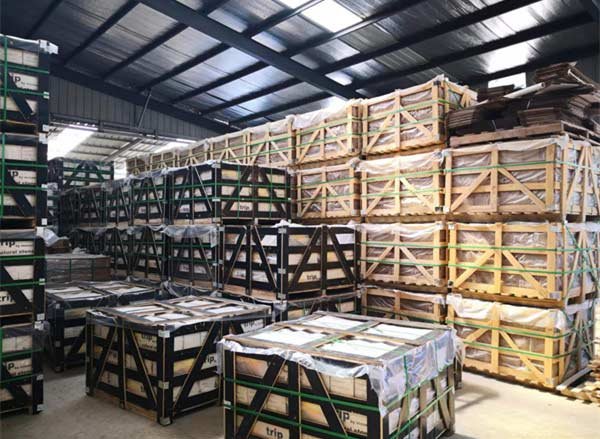
Protect logistics and QA: plan lifts using carton and crate data (standard cartons: 7–8 pcs/box; pallet crates average 900–1,000 kg gross). Request high-definition pre-shipment photos and videos and verify matching L-corners and color lot before releasing final payment. For double-sided or corner glass fireplaces that show black bars at glass edges, specify double-glass assemblies or trim profiles to mask the artifact and call out that solution in the glazing and stone interface details.
- Mantel clearances: extend 3–6 inches beyond opening; dimension on drawings.
- Venting: conceal factory venting with secondary cowling or metal ducting; integrate as intentional detail.
- Anchors & 荷重: ~30 ~ 40 kg/m² (平坦) または ~55 kg/m² (粗) の設計。定格のメカニカルアンカーを指定する 石のパネル。
- オンサイト物流: カートン 7 ~ 8 個/箱。合板製の箱とパレットの総重量は約 900 ~ 1,000 kg です。それに応じてリフトと足場を計画してください。
- インストール前QA: 出荷前のHD写真/ビデオとカラーロットの確認が必要です。最終的な残高の支払い前に、L コーナーが一致していることを確認してください。
- グレージング アーティファクトのトラブルシューティング: 二重ガラスを指定するか、コーナー/両面ガラスのエッジに黒いバーが現れるトリム プロファイルを指定します。

工場での L コーナーとオンサイトの留め継ぎ: ROI の比較
Choose factory L‑corners when predictable cost, faster schedule, and lower warranty risk beat the marginal material premium.
Compare direct material and fabrication costs per m²
Run a line‑item material model that starts at unit inputs and converts cartons and crates into m². Use carton spec and panel geometry to calculate yield and kerf loss, then layer freight, tariffs, and factory corner premiums to produce a landed material cost per m².
- Unit inputs to collect: panel cost (per m²), factory L‑corner premium (per corner or per m²), on‑site mitre allowance (extra panels %), and cutting consumables (blade life, slurry disposal).
- Box → area conversion: standard boxes = 0.63 m² (7 pcs) or 0.72 m² (8 pcs); rough boxes = 0.45 m² (5 pcs). Use these to size pallets and crates.
- Panel geometry: 150×600 mm or 150×550 mm panels, thickness 10–35 mm. Calculate yield reductions for thicker material and account for kerf loss when mitering corners on site.
- Freight sizing: flat panels ≈ 30–40 kg/m²; rough ≈ 55 kg/m²; crate gross weight ≈ 900–1000 kg. Convert shipping quote per crate to shipping cost per m² using crate gross weight and crate m² coverage.
- Customs/tariffs: use HS codes slate 6803.00.90 and quartzite 6802.93.11 when modeling landed cost for USA/Canada/EU; include duty rates and customs clearance fees.
Compute material‑only breakeven with this equation and plug project inputs: (Factory cost + L‑corner premium) = (Base panel cost × (1 + on‑site waste %)) + on‑site cutting cost. To convert freight to per‑m², divide crate shipping cost by crate m² (use pallet options 48 or 60 boxes → ~30.24–37.80 m² standard coverage). Use that shipping per‑m² and add applicable duties from the HS code to get final landed base panel cost.
Quantify labor, schedule and on‑site risk differences
Build a labor model that separates skilled stone cutter hours, helper hours, and setup/cleanup. Use factory L‑corners to quantify time savings: industry data shows corner units can cut installation time roughly 50% and reduce labor cost 25% or more on typical 積み上げられた石 programs. Translate those percentages into hourly savings using local craft rates and project crew composition.
- Labor inputs: skilled cutter hours per m², helper hours per m², setup/cleanup hours per day, and hourly rates by market. Collect travel and overtime multipliers for remote sites.
- Rework drivers: color/vein mismatch at miters, inaccurate angles, and thermal stress at fireplace openings increase rework. Use same‑batch quarry consistency (Top Source: 95% hue uniformity) as a factory advantage that reduces rejects and callbacks.
- Schedule impact: factory L‑corners remove field corner cutting and fitting. Convert the percentage reduction in skilled hours to fewer site days and lower mobilization/demobilization costs.
- Safety and liability: include costs for dust control systems, HEPA vacuums, respirators, hearing protection, and any site permits. On‑site cutting raises PPE and mitigation costs; quantify these as a per‑m² add‑on when mitering on site.
総設置コスト = 資材の陸揚げコスト + 製造 + 輸送 + (労働時間 × レート) + 廃棄許容量 + 現場の安全コストとなるシナリオ シートを作成します。工場の L コーナーとオンサイトの留め継ぎのシナリオを並行して実行することで、スケジュールの日数を節約し、人件費を回避し、再作業リスクの低下による不測の事態の削減を分離できます。
物流、廃棄物、長期的なパフォーマンスと保証が ROI に与える影響
Model logistics at pallet, crate, and container level to expose carrying cost, MOQ impact, and sequencing risk. Use pallet packing options and container capacity to size orders against project cadence, and include lead time and MOQ in your carrying‑cost math so procurement decisions reflect project dates, not just unit price.
- Pallet/box math: Option A (48 boxes) → ~30.24 m²; Option B (60 boxes) → ~37.80 m² for standard panels. 20GP container capacity: 750–860 m² standard panels (25–30 pallets per container).
- Port weight limits: USA standard 17.5 t without special approval; heavy‑weight 24–26.5 t requires destination approval. Use these caps to decide whether to ship heavier rough panels or optimize 標準フラット パネルの場合は、追加料金を回避できます。
- MOQ & リードタイム: 最小注文およびプライベートラベルのしきい値 = 300 m²。在庫のリードタイム = 10 ~ 15 日。生産 = 20 ~ 25 日。リードタイムを運搬コストとプロジェクト順序のリスク(終了の遅れ、スタッフのアイドル時間)に変換します。
- 品質と保証の効果: 同一バッチ調達で出荷される工場出荷時の L コーナーと CNC ダイヤモンドブレードの精度により、美的不一致と設置後のコールバックが軽減されます。残高支払いのリスクと請求を軽減するために、出荷前の視覚的確認(写真/ビデオ)を要求します。
コールバックの減少、廃棄物処理料金の削減、および改善の正味現在価値を予測して、ライフサイクル ROI を計算します。 ファサードの耐久性 from factory precision. Build a simple NPV table: annual savings = (reduction in rework labor + fewer replacement materials + avoided warranty claims + lower disposal and permit fees); discount those savings over a reasonable warranty horizon. Use the result to justify the L‑corner premium when the NPV of avoided costs exceeds the upfront material premium.
Premium Stone Panels — Faster Installs, Higher Margins
Finishing Around the Firebox: Safety Clearances for Raw Edges
Correct clearances, non-combustible backing and tested adhesives prevent thermal failure and protect warranties while enabling a tight architectural finish.
Site assessment and clearance measurements around the firebox
Start by identifying the appliance type—wood-burning, gas, or electric—and record the manufacturer-required clearances. Measure the firebox opening precisely and set the mantel overhang to 75–150 mm (3–6 in) past each side of the opening to balance proportion and control heat spread. Map every adjacent combustible (trim, studs, joists, flooring) and mark the required clearances on your layout; confirm local code and the appliance manual before you finalize the plan. Verify substrate flatness: limit deviation to 3 mm over 1 m (0.12 in over 39 in) so full-bed panels and adhesives achieve continuous contact.
- Record appliance type and manufacturer clearance table.
- Set mantel overhang to 75–150 mm (3–6 in) beyond opening.
- Mark combustible materials and required separations per code (IRC R1001.11 where applicable).
- Measure substrate flatness; accept ≤3 mm deviation per 1 m.
Select stone panels and edge profiles compatible with firebox conditions
Specify Top Source Stone Natural Stacked Stone panels in 150×600 mm or 150×550 mm formats and choose thickness appropriate to the look and load: standard 10–25 mm, up to 35 mm for rough/premium faces. Where vertical seams or corners will be visible, select interlocking Z-Shape or S-Shape panels or matching factory L-corners to conceal joints and eliminate onsite coping. Use CNC diamond-blade precision edges for male-female fits where raw edges meet the firebox opening; tight CNC cuts reduce field rework and keep visible seams under 1–2 mm.
- Panel sizes: 150×600 mm or 150×550 mm; thickness 10–25 mm standard, ≤35 mm rough.
- Weights: flat panels ~30–40 kg/m² (8–12 lb/ft²); rough panels ~55 kg/m²—size substrate and anchors accordingly.
- Choose Z/S interlock or factory L-corners for corners and seam concealment.
- Specify CNC diamond edges for tight male-female joints at raw edges.
Prepare a non-combustible substrate and thermal backing
Install a cement backer board or fire-rated tile backer of at least 12 mm (1/2 in) directly over the framed cavity surrounding the firebox to create a non-combustible primary surface. Where a cavity exists behind the backer, pack mineral wool or equivalent non-combustible insulation 25–50 mm deep to cut conductive heat transfer. Fasten the backer with corrosion-resistant screws at 200–300 mm (8–12 in) centers and stagger joints to avoid weak lines. Clean, dry and verify the substrate is within the ≤3 mm per 1 m flatness tolerance before you apply adhesive or set panels.
- Backer: cement or fire-rated tile backer minimum 12 mm (1/2 in).
- Thermal layer: mineral wool 25–50 mm behind backer where space allows.
- Screw spacing: corrosion-resistant screws at 200–300 mm (8–12 in) centers; stagger all joints.
- Confirm substrate clean, dry, and flat (≤3 mm per 1 m) before adhesive.
Cutting, dry-fitting and mechanical fastening of raw stone edges
Trim panels and raw edges using CNC diamond tools or a diamond wet saw and hold cut tolerances to ±1 mm so joints sit tight without forcing. Dry-fit the entire assembly before adhesive application; plan a continuous 3–6 mm expansion gap at the project perimeter and lay out control joints every 900–1,200 mm to allow thermal movement. Apply heat-rated mortar or adhesive with full-bed coverage—specify a product rated to at least 540°C (≥1,000°F) or follow the appliance/manufacturer heat spec—and supplement the bond with mechanical anchors.
- Cutting tolerance: ±1 mm using CNC diamond or wet saw.
- Dry-fit and maintain 3–6 mm expansion gap; control joints every 900–1,200 mm.
- Adhesive: full-bed coverage; rated ≥540°C (≥1,000°F) or per appliance spec.
- Mechanical backup: stainless steel anchors or masonry screws spaced max 300 mm (12 in) on center and at panel edges for gravity load support.
Joint treatment, edge protection and finish sealing for heat exposure
Tool perimeter and control joints with a flexible high-temperature or intumescent sealant sized to the 3–6 mm gap so joints compress without transferring stress to the stone. Protect live or rough edges with a heat-compatible penetrating sealer formulated for quartzite or slate and allow full cure before exposing the assembly to sustained heat. Slope horizontal projections and install drip edges to avoid water pooling on mantels, and use matching L-corners for continuous texture at wrap points. Avoid organic polymer sealers adjacent to high-heat zones; select inorganic or heat-rated products specified for 天然石。
- Sealant: flexible high-temp or intumescent sized for 3–6 mm joints.
- Edge protection: penetrating stone sealer for quartzite/slate; observe manufacturer cure time before heat exposure.
- Drainage: slope mantels and add drip edges to prevent pooling.
- Material selection: use inorganic/heat-rated sealers near the firebox; avoid organic sealers at high-heat interfaces.
Verification, thermal testing and final clearance documentation
Run a staged thermal test: start with low-intensity burn cycles and log surface temperatures at 15, 30 and 60 minutes at critical locations—raw edge, joint, and substrate behind the panel. Inspect anchors, adhesive bond and joint compression after cool-down and confirm no delamination, cracking or unacceptable movement. Record final clearances, gap sizes and material specifications in a job checklist and capture high-resolution photos for handover and warranty records.
- Thermal log: temps at 15, 30 and 60 minutes at edge, joint, substrate.
- Post-test inspection: anchors, adhesive bond, joint compression; note defects.
- Documentation: final clearances, gap sizes, panel sizes/thickness, weight per m², L-corner part numbers, and maintenance/sealer schedule.
- Handover: deliver installation notes and high-resolution photos to client or dealer for warranty and future maintenance.

Transitioning to Drywall: Trim Strips vs. The Natural Ending Look
Pick trim or a natural termination based on substrate tolerance, panel geometry, and lifecycle cost—these choices drive install time, anchor design, and future repairs.
Selection criteria: when to install metal trim strips vs. a natural stone termination
Choose metal trim strips when the drywall edge or substrate is irregular, drywall thickness varies, or the design needs a defined metal reveal for contrast and protection. Trim absorbs edge damage, speeds repeatable installations, and hides small substrate variations that would otherwise force field cutting. Opt for a natural stone termination when panel edges line up with clean substrate lines and you can use matching manufactured L-corners or precision-cut panels to wrap the stone around the corner; that approach produces a continuous texture and the seamless aesthetic high-end projects demand.
Prefer interlocking Z‑Shape or S‑Shape panels where you can—these male/female, CNC diamond‑blade precision panels camouflage vertical joints, lower the need for trim, and target visible seam lines under 2 mm with gaps smaller than 1 mm when installed correctly. Plan installations around standard panel sizes (150×600 mm or 150×550 mm) and thickness ranges (1.0–2.5 cm standard; up to 3.5 cm for rough/premium) and require same-batch quarry sourcing to preserve color consistency (manufacturer data shows ~95% hue uniformity within a batch).
- Use trim if substrate irregularity or high-impact traffic exists.
- Use natural ending when panels align and matching L-corners are available.
- Prefer Z/S interlocking panels to reduce visible vertical seams.
- Confirm panel size (150×600 or 150×550 mm) and thickness before deciding on trim.
Structural and material requirements for trimmed and natural terminations
Design the wall support for stone dead load first: flat (seamless/honed) panels typically load ~30–40 kg/m²; rough or heavy textured panels load ~55 kg/m². Where stone weight exceeds local drywall capacity, add backing or a mechanical support system rated for the specific kg/m² value and specify mechanical anchors that match the substrate and local code. For 90° transitions, specify factory-matched L-corners to maintain texture continuity and cut on-site labor; factory corners reduce install time and error rates compared with mitering on site.
When you use trimmed edges, specify corrosion-resistant metals—stainless steel or aluminum—sized to cover panel thickness and allow 5–10 mm tolerance for thermal movement and installation variation. Verify the panel edge finish (natural cleft, split-face, seamless) and exact thickness before ordering trim dimensions. Finally, select anchors and adhesives rated for the project’s environmental exposure—ask for freeze–thaw resistance and high-salinity tolerance when projects sit in cold climates or coastal Gulf regions, and ensure compatibility between adhesive chemistry and 天然石 type.
- Load targets: flat panels ~30–40 kg/m²; rough panels ~55 kg/m²—plan backing and anchors accordingly.
- Specify L-corners for 90° turns to preserve texture and reduce field cutting.
- Trim spec: stainless/aluminum sized for panel thickness + 5–10 mm movement tolerance.
- Require freeze–thaw and salinity resistance on adhesives and anchors when applicable.
Edge detailing and installation workflow to achieve a clean natural ending
Prep the substrate: confirm the drywall plane and shim to a continuous plane within 3 mm over 2 m; install backing where you expect mechanical anchors because stone can exceed drywall capacity. Start your layout with straight-edge rectangular panels for linear dry-stack runs and dry-fit all pieces before adhesive. Use the CNC diamond‑blade precision edges on Z/S interlocking series to align male/female joints and aim for gaps smaller than 1 mm and visible seam lines under 2 mm.
Install pre-fabricated L-corners first to lock texture continuity, then set field panels into interlocks so vertical joints fall into the male/female recesses. Leave a 2–5 mm grout or a flexible movement joint where substrate or thermal movement is likely; install a minimal metal reveal only where you need a crisp, durable edge or where code requires non-combustible protection. Verify final coverage and edge alignment with a straightedge and document batch numbers and crate photos on site so future repairs match the same quarry batch.
- Prep: shim drywall plane ≤3 mm over 2 m; add backing for anchors when required.
- Layout: dry-fit panels; use CNC-cut Z/S panels for tight male/female joint alignment.
- Corners: set factory L-corners first, then work field panels into interlocks.
- Finish: leave 2–5 mm flexible joint where movement expected, or use a slim metal reveal for a protected crisp edge.
- Verify: check alignment with a straightedge and record batch numbers for future matching.
解決する “Raw Edge” Problem with Manual Honing and Polishing
Consistent manual honing prevents field rejects, preserves same-batch color, and protects dealer margins by delivering installation-ready L-corners and interlocks.
Inspect and quantify raw-edge defects before surface work
Start every rework with a standardized inspection sheet and the right measurement tools. Measure and record panel ID, size (150x600mm or 150x550mm), thickness (standard 1.0–2.5 cm; up to 3.5 cm for rough panels), and estimated weight (approx. 30–40 kg/m² flat; 55 kg/m² rough). Log environmental readings when relevant: moisture meter values and any packaging damage that could affect edge work or crate integrity.
- Inspection tools: digital caliper, straightedge, feeler gauges, low-mag handheld loupe, moisture meter, tape measure.
- Defect map: note chipping, micro-cracks, delamination, thin lips, uneven bevels with linear location and severity for each panel.
- Baseline acceptance: hue uniformity ≥95% per batch, visible edge deviation ≤2 mm per linear meter, maximum burr radius before honing 0.5–1.5 mm.
Classify corrective action by measured severity to control cost and risk: light touch hone where edge radius or burrs fall inside target, moderate repair when honing plus color-matched epoxy fill restores continuity, heavy intervention when you must trim and replace the panel or re-cut the edge with a CNC diamond-blade to meet interlock tolerances.
Manual honing protocol: grit progression, tooling, and technique
Follow a progressive abrasive sequence and keep water as the constant. Use resin-bond diamond hand pads or plates with wet lubrication and select grits to match material hardness—suggested series: coarse 60/120 → medium 220/400 → fine 800/1500, and finish with 1500+ for polishing. Adjust dwell and grit steps for quartzite, which requires longer contact time per stage than slate. Choose flexible backing and 50–100 mm pad widths for edge work to preserve geometry and reach interlocks without overcutting.
- Tooling: resin-bond diamond hand pads, flexible backing, variable-speed backing pad or hand-guided motion; maintain constant water flow to suppress dust and control heat.
- Technique: make consistent linear passes along the edge, keep the pad flat to preserve profile, perform 5–15 controlled passes per grit stage, and monitor edge radius to hold 0.5–1.5 mm rounding unless the project calls for a sharper finish.
- Pressure and timing: apply even, moderate pressure; avoid localized gouging; increase contact time on quartzite versus slate.
- Safety: wear an N95/FFP2 respirator for dry tasks, gloves, and eye protection; contain wet slurry to protect crate packaging and neighboring finished panels.
Polishing, sealing, and quality verification for installation-ready edges
Finish edges to a controlled sheen that matches adjoining faces and interlocks. Complete polishing with a fine diamond pad (≥1500 grit) or a material-appropriate polishing slurry and verify consistent sheen across Z/S interlocks and L-corners. Confirm CNC diamond-blade precision interfaces remain true: test that male-female interlocks seat without gaps and that seam camouflaging shows no visible stepped gaps at a 1.5 m viewing distance.
- Polish step: final pass with ≥1500 grit or equivalent slurry; equalize sheen across adjacent profiles and corners.
- Sealing: apply a breathable, stone-specific penetrating sealer when required; choose formulas rated for high salinity and humidity for Gulf climates.
- Fit verification: verify interlocks seat and gaps fall below visual tolerance; confirm edge straightness target ≤2 mm per linear meter.
Use a final QC checklist and document results before shipment. Require hue uniformity ≥95% per crate, no visible micro-chips, consistent surface sheen, and photographic or video evidence of each reworked panel. Mark reworked panels, pack in 5-ply export cartons with matching L-corners where needed, and include inspection records to preserve same-batch quarry consistency and protect dealer margins.
- QC checklist: hue uniformity ≥95% per crate; edge straightness ≤2 mm/m; absence of visible micro-chips; consistent sheen across panels; HD photos/videos logged.
- Logistics: mark reworked panels, use 5-ply export cartons, include inspection records and matching L-corners; preserve pre-shipment visual verification to protect margins.

Why Z‑Panels are Superior for Avoiding Vertical Corner Seams
Z‑Panels use CNC male‑female interlocks and factory L‑corners to remove stepped vertical joints, cutting on‑site labor and long‑term seam visibility risk.
Interlocking Z‑Shape Mechanism: Male‑Female Joint Design and Seam Concealment
トップソース Stone cuts male‑female edges with CNC diamond‑blade precision so Z‑ and S‑shaped panels lock consistently across runs. The interlocking profile hides the substrate and eliminates the stacked, ‘段差のある’ vertical gaps you see when installers butt straight‑edge panels together; when engaged correctly the seam reads as a continuous face instead of a vertical line.
Confirm profile compatibility before ordering and on site: our interlocking series ships in standard rectangle and interlock formats and pairs with matching factory L‑corners at 90° to preserve texture and color continuity at plane transitions.
- Applicable panel formats: 150 × 600 mm (6″ ×24″) and 150 × 550 mm (6″ ×22″)。
- Thickness range: 1.0–3.5 cm (standard panels 1.0–2.5 cm; rough/premium up to 3.5 cm).
- Use matching factory L‑corners for all 90° outside transitions to maintain texture and hue alignment.
Site Controls and Installation Practices to Prevent Visible Corner Seams
Specify same‑batch quarry material for each run and verify the delivery against order photos — Top Source Stone targets ~95% hue uniformity per batch to avoid perceived seam lines from color variation. Dry‑fit every Z‑panel before adhesive: confirm full male‑female engagement, remove grit or mortar from the interlock, and check that clips or fasteners seat without forcing the joint.
Plan for panel mass and substrate capacity. Flat panels weigh about 30–40 kg/m²; rough faces can reach ~55 kg/m². Confirm load capacity and fastening method before installation, align and seat panels flush along the entire length, and avoid offsetting horizontal courses that recreate vertical stepping at corners. Target installation tolerances: gaps <1 mm and visible seam lines under 2 mm.
- Pre‑install checklist: verify batch hue, dry‑fit panels, clear interlocks, confirm substrate load, and confirm fastening pattern.
- Use built‑in metal clips where available to reduce drilling and alignment errors at vertical edges.
- Install factory L‑corners first to set course lines and ensure the wrap‑around finish reads continuous.
Material and Performance Advantages That Sustain a Seamless Corner Appearance
トップソース Stone supplies 100% natural slate and quartzite engineered for architectural use; the material exhibits inherent UV stability so color does not fade and make seams more visible. The stone meets high salinity, humidity and freeze‑thaw resistance expectations for Gulf and northern climates, which preserves mechanical interlock integrity over time and reduces joint movement that exposes seams.
CNC precision edges limit long‑term joint drift; maintain that advantage by inspecting adhesive and mortar joints regularly and addressing any voids quickly. When the project priority is continuous corner wrap and minimal vertical seam visibility, specify Z/S interlocking systems and matching factory L‑corners rather than standard rectangles to cut installation risk and protect the finished appearance.
- Durability note: choose freeze‑thaw resistant quartzite/slate for cold climates and high‑salinity formulations for coastal projects.
- Maintenance actions: inspect adhesive/mortar annually, clean interlocks before resealing, and replace damaged L‑corner units rather than patching seams.
結論
露出したエッジを正しく仕上げることで、必要なクリアランスを確保し、設置者と占有者の安全を確保し、早期の作業を防止します。 石やモルタルの破損。また、暖炉アセンブリの長期的な性能を維持しながら、OSHA および該当する建築基準への準拠も保証します。
エッジの詳細とクリアランスのチェックについてフリートの現在の設定を確認し、ギャップが発生する箇所の仕様を更新します。認定製品カタログ、サンプル パック、または技術データ シートをリクエストするには、Top Source Stone にお問い合わせください。 天然石積み石 シリーズ。
よくある質問
火室の開口部の周りの石のエッジを仕上げるにはどうすればよいですか?
露出したものを治療する 意図的なデザインとしてのストーンエッジ element: either frame it with a secondary cowling or metal trim to make the cut edge read as an intentional finish, or use a projecting mantel (generally 3–6 inches past the opening) to visually balance and conceal the joint. Whichever approach you choose, precise proportioning and material selection matter—use appropriate finishing and protective treatments so the edge endures thermal stress and doesn’t look unfinished.
Do I need special corner pieces for fireplace stone?
Not always, but corners are high‑visibility areas that require deliberate solutions and precision. Multi‑sided or corner fireplaces often demand corner‑specific detailing (or commercial corner glazing solutions in double‑sided applications) so the junctions don’t read as unfinished; plan the corner treatment up front and execute it precisely to avoid exposed, unrefined edges.
出隅のカットエッジを隠すにはどうすればよいですか?
Make the cut edge intentional: conceal it with a trim or cowling, integrate a metal accent that intentionally contrasts, or extend a mantel or surround slightly past the opening so the joint is masked. The key is precision and finishing—choose a solution that reads as purposeful and use appropriate materials/finishes so the corner holds up and looks professional.
Can I use metal trim with stacked stone fireplace?
Yes—metal trim or cowling can be used intentionally with 積み上げられた石 to create an industrial or finished detail. Metal ducting and cowling are examples of how metal can turn a raw element into a design statement. Ensure the metal is integrated with precise proportions and detailing, and select finishes and installation methods that tolerate the fireplace environment.
台帳石に 45 度のマイターをカットする最良の方法は?
Because exposed corners are make‑or‑break details, prioritize precision and finish: plan the joint geometry carefully and use professional stone cutting and installation if you need a clean 45° miter. Precise execution and appropriate finishing are more important than shortcuts, since visible inaccuracies will undermine the overall look.