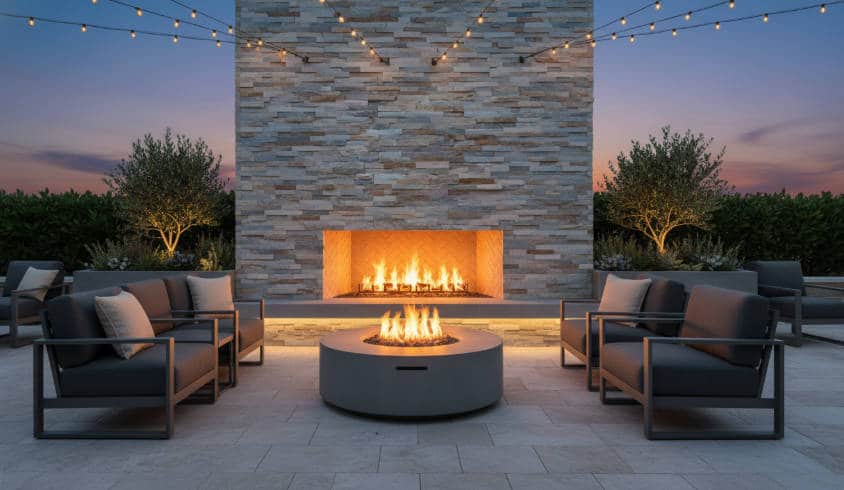
Pomyślna instalacja kominka zewnętrznego zależy od precyzyjnej inżynierii, która pozwoli uniknąć zawaleń konstrukcyjnych, które powodują znaczne obciążenia finansowe i związane z bezpieczeństwem. Konstruktorzy często borykają się z rozwarstwianiem się kamienia i uszkodzeniem zaprawy, gdy stosują metody wewnętrzne w odsłoniętych środowiskach zewnętrznych. Te niepowodzenia nie tylko rujnują estetykę; zwiększają długoterminowe koszty operacyjne i stwarzają ryzyko uszkodzenia konstrukcji głównego budynku lub tarasu.
Zapewniamy ramy techniczne dotyczące wyboru materiałów i metod wykonania, które przetrwają ekstremalne warunki pogodowe. W tym przeglądzie technicznym szczegółowo opisano mechanikę cykli zamrażania i rozmrażania oraz potrzebę stosowania specjalistycznych klejów kamień zewnętrznyoraz specjalne warstwy hydroizolacyjne niezbędne do ochrony podłoża komina. Użyj tych protokołów, aby zapobiec przenikaniu wilgoci, blaknięciu kamienia i rozwojowi glonów w każdym klimacie.
Dlaczego kominki zewnętrzne wymagają innego kamienia i klejów
Zewnętrzny konstrukcje kominków z kamienia zawodzą, gdy instalatorzy stosować materiały przeznaczone do stosowania w pomieszczeniach zamkniętych, które nie są w stanie przetrwać intensywnej rozszerzalności cieplnej i cykli wilgotności w roku 2026.
Standardowe materiały murarskie często zawodzą pod wpływem ekstremalnego ciepła wytwarzanego przez aktywne paleniska, co wymaga specjalistycznych komponentów dla bezpieczeństwa. Zbudowanie funkcjonalnego kominka zewnętrznego wymaga paleniska wyłożonego cegłami szamotowymi, które wytrzymują temperatury powyżej 2000°F, aby zapobiec pękaniu strukturalnemu. Podczas gdy standardowe zaprawy cementowe zazwyczaj kruszą się podczas intensywnych cykli cieplnych, zaprawy ogniotrwałe zachowują swoje wiązanie. Obecne standardy budowlane z 2026 r. kładą nacisk na stosowanie ceramicznych lub ze stali nierdzewnej wkładów kominowych w celu osłony zewnętrznej okleina kamienna przed uszkodzeniami cieplnymi i żrącymi produktami ubocznymi.
| Funkcja | Standardowa klasa wnętrza | Najlepszy system zewnętrzny źródłowy |
|---|---|---|
| Skład materiału | Beton Pigmentowany / Sztuczny kamień | 100% naturalny kwarcyt & Łupek |
| Stabilność UV | Skłonny do blaknięcia i przebarwień | Wrodzona stabilność; zerowe blaknięcie |
| Technika klejenia | Standardowy zmodyfikowany cienki zestaw | High-Strength Flexible Epoxy Resin |
| Thermal Limit | Low (Cracks under rapid cooling) | High (Freeze-Thaw & Heat Resistant) |
Natural Stone Durability vs. Manufactured Alternatives
Naturalny ułożone kamienne panele provide superior performance in outdoor fireplace applications compared to pigment-based human-made products. Naturalne panele kamienne are non-combustible and do not release fumes when exposed to high exterior temperatures. Unlike wyprodukowany kamień which uses concrete and pigments, natural stone will not fade or discolor from high UV exposure levels. The dense composition of slate and quartzite naturally resists the thermal expansion caused by proximity to an active fire source.
- Quartzite and Slate offer the highest density for low water absorption.
- Natural cleft surfaces hide soot and environmental wear better than smooth faux alternatives.
- Pozyskiwanie z tego samego kamieniołomu zapewnia 95% jednolitość odcienia w dużych kominach.
Wytrzymałe kleje epoksydowe zapewniające bezpieczne łączenie
Klej system stosowany w płytach kamiennych musi być odporny zarówno na ciepło ognia, jak i wilgoć otoczenia na zewnątrz. Używamy klejów na bazie żywicy epoksydowej o wysokiej wytrzymałości, specjalnie opracowanych w celu utrzymania trwałego połączenia pomiędzy kamień i panel podłoże. Klej ten pozostaje wystarczająco elastyczny, aby pomieścić naturalne rozszerzanie i kurczenie się kominka struktura. Odpowiednio dobrane żywice zapobiegać kamieniom opad, częsty problem w starszych instalacjach zewnętrznych, gdzie gorsze kleje zawiodły podczas sezonowych zmian.
Zarządzanie wilgocią i przepuszczalność pary
Kominki zewnętrzne stawić czoła zewnętrznym warunkom pogodowym, które wymagają starannego doboru materiałów, aby zapobiec uszkodzeniom spowodowanym przez wodę. Chwila kamienne panele są naturalnie wodoodporne, system instalacyjny wymaga bariery dla wilgoci, aby chronić znajdującą się pod spodem konstrukcję komina. Uszczelniacze nałożone na Powierzchnia kamienia zapobiega osadzaniu się sadzy i ułatwia usuwanie mchów lub alg w wilgotnym klimacie. Nowoczesny Techniki montażu preferują płaszczyzny drenażowe za kamieniem aby zapewnić, że uwięziona wilgoć nie zamarznie i nie pogorszy wiązania kleju.
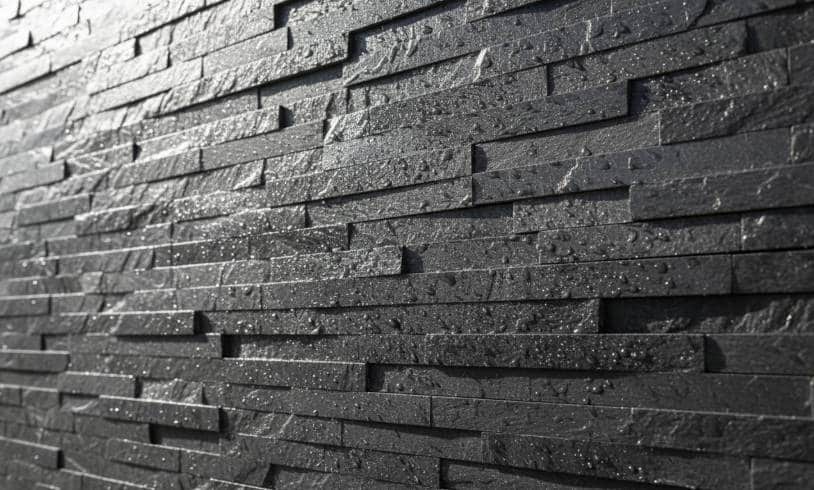
Zarządzanie cyklami zamrażania i rozmrażania w zewnętrznym otoczeniu kamienia
Skuteczne zarządzanie zamrażaniem i rozmrażaniem opiera się na dwutorowej strategii: wyborze materiałów o minimalnej absorpcji wody i zaprojektowaniu zestawu, który umożliwi odprowadzanie nieuniknionej wilgoci bez powodowania ciśnienia wewnętrznego.
Wybór kamieni naturalnych o niskiej porowatości
Gęstość jest najbardziej krytyczną miarą przy określaniu kamień do kominków zewnętrznych in 2026 climates. Choosing high-density minerals like the Top Source Stone Sierra Blue (Quartzite) or Carbon Black (Slate) provides a natural defense against thermal expansion. These materials feature a tightly packed molecular structure that limits the space available for water to penetrate. When moisture enters a porous stone like low-grade limestone and subsequently freezes, the 9% volume expansion of ice generates enough internal force to shear the stone face, a process known as spalling.
| Metryka wydajności | Porous Sedimentary Stone | Top Source High-Density Stone |
|---|---|---|
| Absorption Rate | High (3% – 7%+) | Ultra-Low (<0.5%) |
| Ocena zamrażania i rozmrażania | Susceptible to delamination | ASTM-Standard Resistant |
| Joint Integrity | High expansion/contraction | Stable crystalline structure |
By prioritizing quartzite and slate over softer alternatives, specifiers reduce the risk of structural failure. Natural stone panels from Top Source Stone are sourced from specific quarry veins to ensure batch consistency, which means every panel on a fireplace surround reacts to temperature shifts at the same rate, preventing the uneven stress loads that cause cracks in mixed-batch installations.
Implementing Integrated Waterproofing Membranes
Protecting the chimney substrate is as vital as the stone itself. Apply a high-quality waterproofing barrier directly behind the okleina kamienna aby zablokować migrację wody do rdzenia muru. Ta warstwa działa jako zabezpieczenie przed awarią; nawet jeśli wilgoć ominie spoiny kamienia, nie może dotrzeć do konstrukcji kominka. Do tych zastosowań używamy elastycznych zapraw modyfikowanych polimerami. Kleje te pozostają wystarczająco giętkie, aby dostosować się do mikroruchów kamienia podczas szybkich zmian temperatury, zapewniając, że wiązanie pozostanie nienaruszone przez dziesięciolecia cykli zimowych.
Optymalizacja systemów drenażowych i ściółkowych
Zarządzanie wodą wymaga wolnej ścieżki, aby grawitacja mogła odciągnąć wilgoć od ściany. Każda pozioma powierzchnia, taka jak gzyms kominkowy lub półka paleniska, powinna mieć niewielkie nachylenie 2%, aby zapobiec zastojowi wody. Stojąca woda jest głównym katalizatorem uszkodzeń spowodowanych zamarzaniem i rozmrażaniem, ponieważ zapewnia stałe źródło nasycenia.
- Install rainscreen systems with drainage mats to allow air circulation behind the veneer.
- Maintain clean weep holes at the base of the chimney to prevent hydrostatic pressure.
- Use Z-shape interlocking panels to minimize visible vertical joints where water often accumulates.
Breathable Sealers and Seasonal Maintenance
The final layer of defense is a breathable, penetrating sealer—specifically silane-siloxane based formulas. Unlike film-forming sealers that trap moisture behind a plastic-like coating, penetrating sealers bond with the stone’s pores to repel liquid water while allowing internal vapor to escape. If moisture is trapped inside a stone by a non-breathable sealer, it will cause the stone to blow out from the inside during a hard freeze.
Coroczny maintenance inspections are mandatory for exterior installations. Check for hairline cracks in the mortar or jointing materials before the first frost. Small fissures allow water to enter via capillary action, where it then expands and widens the gap. Keeping the surface free of organic debris like moss also helps, as vegetation holds moisture against the stone, prolonging the saturation period and increasing the risk of freeze-related damage.
Boost Project Profits with Premium Ledger Panels
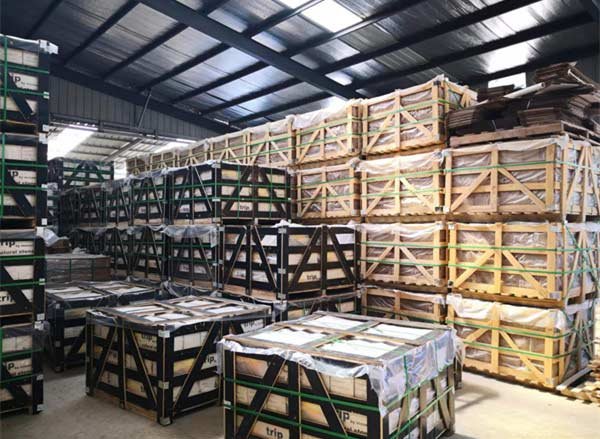
Waterproofing the Chimney Structure Before Applying Stone
Effective chimney waterproofing hinges on a dual-strategy approach: blocking bulk liquid water from the exterior while ensuring internal vapor can escape to prevent structural rot.
Outdoor fireplace failures often stem from moisture trapped between the okleina kamienna and the chimney core. In wetter climates, traditional single-barrier methods fail because they do not account for hydrostatic pressure or the porosity of the underlying masonry. Modern builds prioritize a defense-in-depth strategy, combining physical barriers with dedicated drainage systems that allow the assembly to dry quickly.
Multi-Layered Protection with Weather-Resistant Barriers
Installing a high-quality weather-resistant barrier (WRB) serves as the primary shield for the underlying chimney structure. This layer prevents bulk water penetration from driving rain. To maximize performance, we integrate rainscreen systems that create a 1/8-inch to 1/4-inch air gap. This gap breaks the capillary bond between the kamień i ściana, allowing any water that bypasses the stone to drain freely to the weep screed.
| Waterproofing Component | Instalacja standardowa | 2026 Best Practice |
|---|---|---|
| Primary Barrier | Single layer Grade-D paper | Dual-layer WRB with drainage mat |
| Joint Management | Standard Mortar bond | Interlocking Z-Shape (Seamless Tech) |
| Vapor Transfer | Non-permeable poly-film | High-permeability liquid membranes |
- Shield the chimney core with high-performance barriers to resist heavy annual rainfall.
- Utilize rainscreen systems to facilitate rapid drying of the wall assembly.
- Ensure all materials meet ASTM standards for exterior moisture management.
Vapor Permeability and Moisture Management
Effective chimney protection requires more than just surface sealing. We select waterproofing membranes that offer high vapor permeability. These materials block liquid water from entering but allow internal moisture vapors to escape. If the chimney cannot “breathe,” moisture accumulates within the wall assembly, leading to internal rot or the slow degradation of concrete blocks and mortar. We focus on moisture management at the substrate level to address water that naturally bypasses even the densest natural stone veneers.
Strategic Flashing and Drainage Channel Integration
Flashing acts as the critical director of water flow. We place metal flashing at every horizontal-to-vertical transition, specifically where the kamienne panele meet the chimney cap or the roofline. These channels redirect water away from the stone interface and prevent pooling. Coordination between the flashing and the rainscreen is mandatory; without a continuous exit path, water becomes trapped behind the stone, increasing the risk of freeze-thaw damage in colder climates.
Substrate Preparation for Brick and Concrete Block
The bonding approach varies based on the porosity of the chimney substrate. Concrete blocks and bricks have high absorption rates, which can suck moisture out of the adhesive too quickly, resulting in a brittle bond. We assess substrate porosity before application, often applying specialized primers to stabilize the surface. For permanent results, we use high-strength adhesives—like heat-rated silicone or specialized epoxies—designed to maintain flexibility across the thermal expansion cycles common in outdoor fireplace environments.
- Determine the need for specialized sealers based on the absorption rate of the brick or block.
- Apply adhesives przeznaczony do kamienia naturalnego to ensure a permanent bond to waterproofed surfaces.
- Follow non-combustibility requirements to maintain safety compliance and structural integrity.
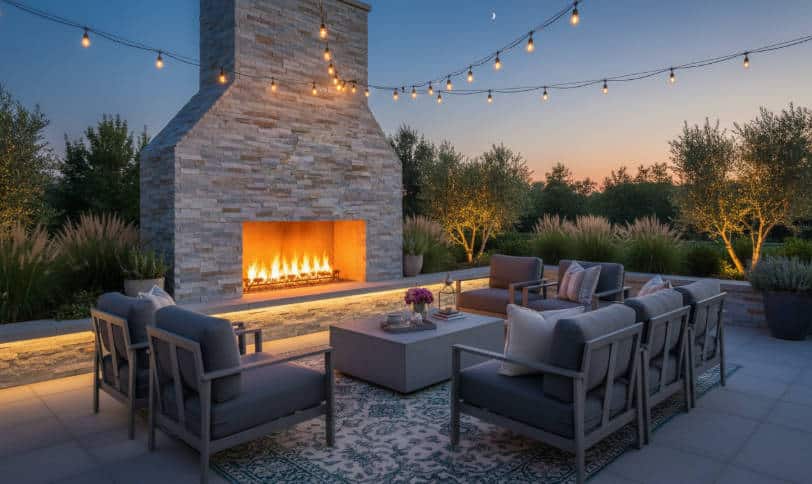
Choosing Stone Colors That Won’t Fade in Direct Sunlight
Naturalny kamienne panele utrzymują color integrity because pigments are geological rather than topical, and selecting UV-reflective shades further protects the structural bond by reducing surface heat absorption.
Natural Pigmentation vs. Concrete Colorants
Naturalny kamienne panele retain their appearance because the color exists throughout the entire material. Man-made concrete composites often rely on surface-level pigments that bleach or peel under constant solar radiation. Using 100% natural quarried stone offers permanent UV resistance that artificial materials cannot match. Najlepszy kamień źródłowy utilizes source control to extract materials from the same quarry vein, ensuring 95% hue uniformity across large-scale fireplace installs.
- Natural minerals maintain vibrancy without the risk of pigment bleaching or surface delamination.
- The unique textures of slate and quartzite remain consistent even after years of harsh sun exposure.
- Dense stone grades prevent the “kredowy” appearance common in weathered artificial products.
Light-Reflective Quartzite and Marble Selections
Lighter shades are effective for high-exposure areas because they reflect sunlight and minimize heat absorption. Series like Glacier White and Arctic White reflect UV rays to keep exterior surfaces cooler, which also reduces the thermal expansion stress on the underlying adhesive. Limestone and light granite shades provide a clean aesthetic that resists the yellowing often seen in resin-heavy wyprodukowany kamień.
- Lighter quartzite panels offer the best performance for 2026 outdoor projects in desert or tropical climates.
- Reflective surfaces minimize the “heat island” effect around outdoor seating areas.
- High-density white stones maintain visual clarity over decades of environmental stress.
UV Resistance in Dark Slate and Basalt Panels
Darker natural stones provide a dramatic contrast and mask the subtle effects of environmental weathering. Deep charcoal and black slate naturally hide dust and organic debris that sunlight often highlights on lighter surfaces. The dense mineral structure of basalt prevents the graying effect found in lower-quality dark materials. Strategic placement of darker panels creates bold focal points that withstand intense direct light without structural degradation.
- Carbon Black and Midnight Slate options provide deep tones that do not wash out in bright environments.
- Natural dark stone handles heat cycles better than dyed cement products.
- Texture-rich surfaces like Copper Canyon utilize natural iron oxides that are inherently UV-stable.
Protective Sealants for Color Retention
Kamień naturalny does not fade, but professional-grade sealers protect the finish from environmental pollutants. Applying a pH-neutral Kamień naturalny sealer enhances the stone’s depth and tone while creating a barrier against acid rain and mineral deposits. Sealing creates a shield that prevents the stone surface from becoming dull due to salt spray or smog. Regular maintenance with soft brushes and water keeps the stone looking new throughout its lifespan.
- Breathable penetrating sealers allow moisture vapor to escape without trapping heat.
- Sealing should occur every 12 to 24 months for outdoor fireplaces to counter high UV exposure.
- Enhanced sealers can deepen the “mokry wygląd” of the stone without using artificial dyes.
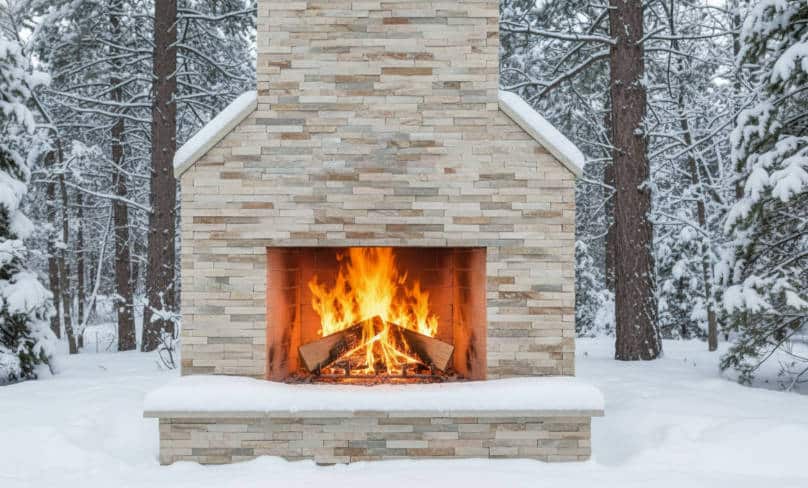
Cleaning Moss and Algae Off Outdoor Fireplace Stone
Organic growth on kamień zewnętrzny isn’t merely an aesthetic issue; it indicates localized moisture retention that can accelerate freeze-thaw damage and degrade the underlying adhesive bond.
Naturalny kamień ułożony provides an ideal environment for biological spores due to its high surface area and deep textures. In shaded or humid environments, these textures trap dust and moisture, creating a micro-ecosystem for moss and algae. Left unchecked, these organisms secrete organic acids that can slowly etch softer stones and penetrate the mortar joints, leading to structural instability over several seasons.
Identifying Organic Growth on Natural Stone
Initial identification focuses on spotting green moss or dark, velvet-like algae staining. These organisms typically flourish on the North-facing side of the chimney or in areas shaded by overhanging trees where sunlight cannot effectively dry the stone after rain. Because 100% Kamień naturalny like quartzite and slate is porous, spores take root deep within the natural clefts of the panel.
- Inspect the deep joints of Z-shape and interlocking panels where moisture lingers longest.
- Differentiate between harmless mineral efflorescence (white, powdery) and harmful organic growth (green, black, or slippery).
- Monitor the base of the fireplace where backsplash from the ground provides constant hydration for moss colonies.
Safe Cleaning Solutions for Stacked Stone
Standard household cleaners often contain acidic components or harsh surfactants that can damage natural stone or weaken the epoxy resins used in panel assembly. Effective cleaning requires agents that neutralize organic matter without altering the stone’s pH balance. Oxygen bleach solutions provide a safer, more effective alternative to standard chlorine bleach, as they break down organic stains without leaving toxic residues or causing “bleaching” of the Kamień naturalny color.
- Apply pH-neutral stone soaps specifically formulated for slate and quartzite to preserve the natural finish.
- Use a mixture of diluted oxygen bleach and water for stubborn algae patches, allowing it to sit for 10 minutes before rinsing.
- Unikaj kwasu murowego lub octu o wysokiej kwasowości, ponieważ mogą one powodować trwałe trawienie i przebarwienia na wielu rodzajach kamienia naturalnego.
Limity mycia ciśnieniowego dla kominków zewnętrznych
Czyszczenie mechaniczne daje szybkie rezultaty, ale nadmierny nacisk może mieć katastrofalne skutki okleiny kamienne. Woda o dużej prędkości może to wymusić daleko za kamiennymi panelami, nasycając podłoże i potencjalnie wypierając kamień z zaprawy. Zalecamy utrzymywanie ustawień ciśnienia znacznie poniżej progów stosowanych w betonowych podjazdach, aby zachować integralność precyzyjnie przyciętych krawędzi.
- Utrzymuj myjki ciśnieniowe poniżej 2000 PSI i używaj szerokokątnej końcówki wentylatora (25 do 40 stopni).
- Zachowaj minimalną odległość 12 cali od powierzchni kamienia, aby zapobiec erozji powierzchni lub “wżery.”
- Scrub intricate textured areas with a soft-bristled nylon brush to remove embedded spores manually.
Preventative Maintenance and Sealing
The most effective way to manage moss is to prevent the stone from becoming a viable habitat. Applying a high-quality, breathable penetrating sealer creates a hydrophobic barrier that prevents water from soaking into the stone’s pores. Unlike topical film-formers, penetrating sealers allow internal vapor to escape, which is critical for the thermal cycles of a fireplace.
- Apply silane/siloxane-based sealants only after the stone has dried completely for at least 48 hours.
- Incorporate a bi-annual inspection into your 2026 exterior maintenance plan to catch growth before it spreads.
- Reapply sealants every 18 to 24 months in high-moisture climates to maintain the protective barrier against organic spores.
Wniosek
Selecting stone that resists freeze-thaw cycles and UV exposure ensures these outdoor features maintain their structural integrity and appearance over time. Waterproofing the substrate and using high-performance adhesives prevents delamination when temperatures fluctuate. High-precision natural panels provide a durable, seamless finish that protects the architectural design from the environment.
Review our latest technical specifications for freeze-thaw resistant materials or request a sample crate to verify color consistency for your next project. Our team supports landscape architects with factory-direct sourcing to ensure material performance in demanding exterior applications.
Często zadawane pytania
What is the best stone for an outdoor fireplace?
The firebox must be lined with firebricks—dense, low-porosity bricks capable of enduring temperatures exceeding 2,000°F. For the exterior veneer, granite, basalt, and slate are the best options because they have low porosity and high resistance to thermal expansion. These natural stones withstand environmental weathering better than softer stones like limestone or manufactured veneers.
Can exterior stacked stone handle heavy rain and snow?
Tak, exterior stacked stone is highly durable, but its longevity depends on proper installation. Because standard concrete blocks can crack under repeated heating and cooling, it is essential to have a proper moisture barrier and drainage plane behind the stone. This prevents water from being trapped in the substrate, which can lead to spalling or cracking during freeze-thaw cycles in winter.
Czy muszę częściej uszczelniać kamienny kominek zewnętrzny?
Yes, outdoor fireplaces should be sealed every 12 to 24 months. Unlike indoor installations, outdoor stone is exposed to UV rays, acid rain, and soot. Using a high-quality, breathable silane-siloxane sealer protects the stone from moisture penetration and prevents soot from staining the porous surface while allowing internal gases to escape.
Jak zapobiec spadaniu kamienia z kominka zewnętrznego?
Prevention starts with using high-temperature refractory mortar for the core assembly and a polymer-modified thin-set for the okleina kamienna. Ensure the substrate is clean and use a “smarowanie pleców” technique to achieve 100% mortar coverage. For larger, heavier stones, mechanical ties or anchors should be used to provide structural support against gravity and thermal stress.
Best adhesive for extreme outdoor temperatures?
For the firebox and structural core, high-temperature refractory mortar is mandatory, as it is engineered to resist thermal expansion without losing structural integrity. For the exterior veneer, an ANSI A118.15-compliant, polymer-modified thin-set is the industry standard. These adhesives provide the flexibility needed to handle the significant temperature differentials between the hot firebox and the cold exterior air.