Usuwanie mgły z zaprawy to krytyczny etap po instalacji, który określa, czy projekt spełnia standardy architektoniczne, czy też wymaga kosztownych przeróbek. Kiedy instalatorzy pozostawiają pozostałości cementu na kamieniu o spękanej powierzchni, głęboka, nieregularna tekstura zatrzymuje materiał, zamieniając cechę premium w obciążenie, które może opóźnić przekazanie projektu i zmniejszyć wartość nieruchomości. Nieusunięcie tych osadów za pomocą odpowiednich środków chemicznych często prowadzi do trwałego trawienia powierzchni, zmuszając wykonawców do poniesienia kosztów wymiany całych paneli rejestrów.
W niniejszym przewodniku ustanowiono protokół techniczny dotyczący utrzymania integralności strukturalnej i estetycznej ułożone kamienne powierzchnie. Badamy mechanikę rutynowego odsysania pyłu, różnice chemiczne między środkami czyszczącymi o neutralnym pH a niszczycielskimi kwasami oraz specyficzne zastosowanie past okładowych do usuwania głęboko osadzonych plam olejowych z kamienia. Procedury te stanowią standardową procedurę operacyjną dla zarządców obiektów i instalatorzy, aby zapewnić kamień akcenty pozostają trwałymi aktywami, a nie obciążeniami konserwacyjnymi.
Magnes kurzu: zarządzanie teksturą głębokiej podzielonej twarzy
Głębokość tekstury jest cechą charakterystyczną najwyższej jakości półek, ale wysokość reliefu wynosząca 1,75 cala wymaga proaktywnej strategii mechanicznej ekstrakcji, aby zapobiec matowieniu pyłu atmosferycznego naturalny minerał kamienia przejrzystość.
Odkurzanie gruzu z głębokich szczelin
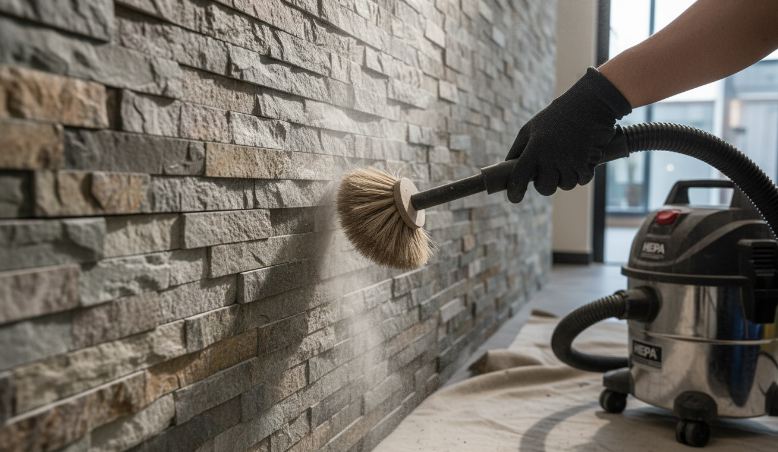
Seria Rough obejmuje kamienie o głębokości dochodzącej do 1,75 cala, tworząc naturalne kieszenie, w których z czasem osiada unoszący się w powietrzu pył. W przypadku instalacji wewnętrznych w 2026 r. specjaliści zajmujący się konserwacją będą używać odkurzaczy warsztatowych wyposażonych w nasadki z miękkimi szczotkami, aby odciągać kurz z tych wielkogabarytowych powierzchni bez ryzyka zarysowania naturalnej powierzchni mineralnej. Metoda ta jest szczególnie skuteczna przy czyszczeniu złączy w kształcie litery Z, w których najczęściej gromadzą się cząstki stałe.
W przypadku wąskich szczelin występujących w panelach Pencil Series samo odkurzanie może nie wystarczyć. Zbiorniki na sprężone powietrze pomagają usunąć drobne cząstki z tych ciasnych przestrzeni, umożliwiając podciśnieniu wychwytywanie zanieczyszczeń po dotarciu na powierzchnię. To podejście wykorzystujące dwa narzędzia pozwala zachować głębokie, reliefowe linie cienia, które powodują rozszczepienie powierzchni kamień jest preferowanym wyborem w przypadku ścian charakterystycznych.
Stosowanie roztworów czyszczących o neutralnym pH
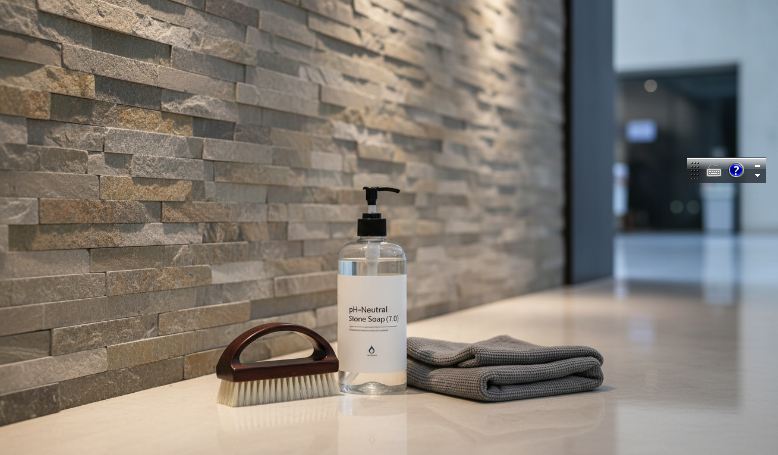
Naturalny łupek, kwarcyt i marmur wymagają szczególnej równowagi chemicznej, aby uniknąć wytrawiania powierzchni lub trwałego odbarwienia. Odradzamy używanie kwaśnych środków czyszczących lub myjek wysokociśnieniowych, ponieważ powodują one uszkodzenie kamień jest naturalny patyna i może osłabić wysokowytrzymałe wiązanie epoksydowe stosowane w fabrycznie montowanych panelach. Zamiast tego zmieszaj łagodne mydło kamienne o neutralnym pH z ciepłą wodą w celu rutynowej konserwacji.
Aby oczyścić uporczywe miejsca w wytrzymałym profilu kamiennym, wymieszaj roztwór szczotką z miękkim włosiem. Dzięki temu mydło może dotrzeć do nierównych głębokości wytrzymałego profilu kamiennego, nie uszkadzając wykończenia. Po zakończeniu mieszania lekkie spłukanie czystą wodą i szybkie polerowanie na sucho zapobiegnie tworzeniu się plam wodnych na ciemniejszych kamieniach, takich jak Midnight Slate.
Uszczelnianie powierzchni w celu uproszczenia konserwacji
Zastosowanie wysokiej jakości, oddychającego, penetrującego uszczelniacza działa jak bariera zapobiegawcza przed wiązaniem pyłu i wchłanianiem cieczy. Instalatorzy powinni zastosować ten uszczelniacz natychmiast po roku 2026 faza instalacji, aby chronić autentyczny kolor kamienia i ułatwiają cykle czyszczenia. W przypadku elewacji zewnętrznych okresowe ponowne uszczelnienie kamienia utrzymuje odporność na promieniowanie UV i zapobiega blaknięciu w obszarach o dużym naświetleniu.
Zalecamy stosowanie matowych uszczelniaczy do “Ostra seria” aby zachować naturalną, nieodblaskową estetykę, jednocześnie znacznie ułatwiając czyszczenie głębokich tekstur. Uszczelniona powierzchnia zapobiega osadzaniu się mikroskopijnego pyłu w porach kamienia, zapewniając skuteczność zwykłego odkurzania lub szczotkowania na sucho przez lata.
Techniki szczotkowania na sucho ścian teksturowanych
Regularna konserwacja na sucho zapobiega zamianie drobnego pyłu w błoto lub brud w warstwach kamienia, gdy zmiesza się z wilgocią otoczenia. Umożliwiają to miotełki z mikrofibry z długą rączką personelowi konserwacyjnemu, aby dotrzeć do ścian o dużym wpływie w obiektach komercyjnych lobby lub wspaniałe pokoje mieszkalne, bezpiecznie. Metoda ta zapewnia szybki sposób na utrzymanie efektu wizualnego ściany bez konieczności czyszczenia na bazie wody.
- Zamiataj kamienną powierzchnię ruchem w dół, aby usunąć osadzony kurz na podłogę i ułatwić jego zebranie.
- Utrzymuj liniowy przepływ serii Pencil, szczotkując wzdłuż poziomych włókien 10-12 ułożony kamień wydziwianie.
- W obszarach o dużym natężeniu ruchu należy co miesiąc szczotkować na sucho, aby zapobiec gromadzeniu się tłustych cząstek kurzu.
Rutynowe odkurzanie: odkurzacze sklepowe a odkurzacze z mikrofibry
Skuteczna konserwacja naturalny kamień ułożony wymaga dopasowania mechanicznego działania narzędzia czyszczącego do określonej głębokości reliefu profilu kamiennego, aby zapobiec długotrwałemu gromadzeniu się osadu.
Odkurzanie za pomocą miękkiej szczoteczki w celu głębokiej ekstrakcji tekstury
Odkurzacze warsztatowe o dużej sile ssania, wyposażone w nasadki z miękkimi szczotkami, zapewniają najskuteczniejszą metodę czyszczenia zaznaczeń o dużej teksturze, takich jak serie Rough i Pencil Series kamienne panele. W przeciwieństwie do płaskich powierzchni, profile te charakteryzują się znacznymi różnicami głębokości, które wychwytują cząstki stałe poza zasięgiem tradycyjnych metod wycierania. Normy jakości powietrza w pomieszczeniach na rok 2026 kładą nacisk na stosowanie odkurzaczy z filtrem HEPA w środowiskach komercyjnych, aby zapewnić całkowite zatrzymanie wychwyconego pyłu kamiennego i alergenów środowiskowych, a nie ich recyrkulację.
- Użyj szczotek próżniowych z naturalnym włosiem, aby usunąć kurz ze szczelin o głębokości 1,75 cala znajdujących się w panelach Rough Series, nie zarysowując przy tym powierzchni z kamienia naturalnego.
- 10 do 12 rzędów cienki kamień paski z serii Pencil korzystają ze skoncentrowanego ssania, które podnosi zanieczyszczenia z ciasnych, poziomych połączeń tam, gdzie zawodzą ręczne odkurzacze.
- Zastosowanie dwóch narzędzi — mieszanie szczelin suchym pędzlem i jednoczesne odkurzanie — zapewnia maksymalne usuwanie zanieczyszczeń z płaskorzeźbowych półek.
Mikrofibra elektrostatyczna do powierzchni polerowanych i płaskich
Narzędzia z mikrofibry służą jako podstawowe rozwiązanie w zakresie konserwacji maszyn z serii Flat i Marble, gdzie kontakt z powierzchnią jest stały, a szczeliny są minimalne. Narzędzia te wykorzystują elektryczność statyczną do wychwytywania drobnych cząstek na powierzchni paneli Arctic White lub szlifowanych marmurów, zapobiegając ponownemu rozprowadzaniu kurzu po ścianie. Ta metoda czyszczenia na sucho pozwala zachować naturalne matowe wykończenie materiałów łupkowych i kwarcytowych bez ryzyka plam wodnych lub pozostałości środków chemicznych.
- Elektrostatyczne ściereczki do kurzu z mikrofibry wychwytują mikroskopijne cząsteczki, które z czasem mogą zmatowić wygląd wypolerowanego kamienia.
- Mikrofibra najlepiej sprawdza się w codziennym utrzymaniu w holach komercyjnych i pomieszczeniach handlowych o dużym natężeniu ruchu, gdzie wymagana jest szybka i cicha konserwacja.
- Korzystanie z wysuwanych pałeczek z mikrofibry umożliwia zespołom konserwacyjnym bezpieczne czyszczenie wysokich ścian budynków mieszkalnych z podłogi, zmniejszając potrzebę stosowania drabin i rusztowań.
Wybór narzędzi konserwacyjnych w oparciu o profil kamienia
Wybór między odkurzaniem a odkurzaniem zależy całkowicie od konkretnej tekstury i linii cieni instalacja z ułożonego kamienia. Mocno teksturowane “rozdwojona twarz” kamienie wymagają mechanicznej siły podnoszenia odkurzacza, aby zapobiec osadzaniu się szarego pyłu w głębokich, poziomych zagłębieniach. Z drugiej strony panele niskoprofilowe umożliwiają szybkie czyszczenie za pomocą mikrofibry, co czyni je bardziej opłacalnymi w przypadku instalacji komercyjnych na dużą skalę.
- Aby temu zapobiec, kamienie o mocnej fakturze wymagają mechanicznego odsysania “siwienie,” gdzie nagromadzony kurz przesłania naturalny kolor kamienia.
- Płaskie panele lepiej nadają się do szybkiego odkurzania mikrofibrą, która zapewnia wykończenie bez smug na szlifowanym lub polerowanym kamieniu powierzchnie.
- Wykonawcy powinni zapewnić klientom wielopoziomowy plan konserwacji: cotygodniowe odkurzanie mikrofibrą powierzchni ogólnych i kwartalne głębokie czyszczenie z użyciem odkurzacza w przypadku teksturowanych spoin.
Wysokiej jakości panele kamienne układane bezpośrednio w fabryce
Usuwanie białej mgły zaprawy natychmiast po instalacji
Skuteczne usuwanie zmętnienia zależy wyłącznie od interwencji mechanicznej, zanim spoiwo cementowe osiągnie trwałe wiązanie chemiczne na powierzchni kamienia.
Wstępne przetarcie wilgotną gąbką: czas pierwszego przejścia
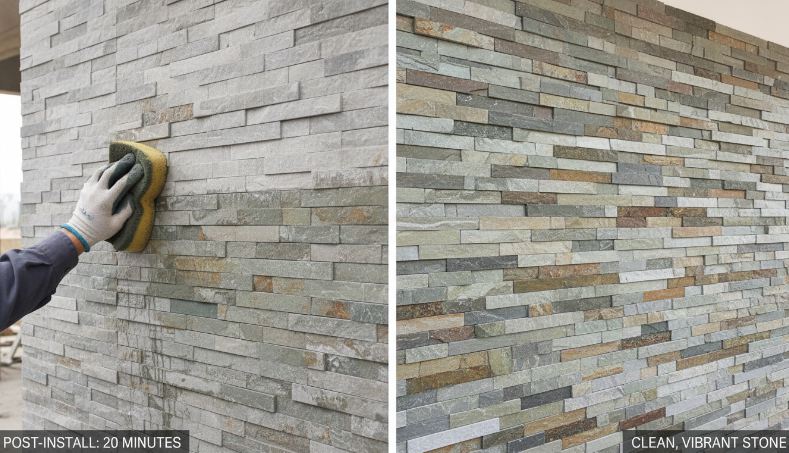
Protokoły natychmiastowego usuwania traktują priorytetowo wychwytywanie resztek zaprawy, zanim ulegną one pełnemu związaniu chemicznemu z powierzchnią kamienia. Zalecamy wytrzeć nadmiar zaprawy z powierzchni kamienną twarz w ciągu 20 do 30 minut od aplikacji. Zapobiega to stwardnieniu cząstek w naturalnych szczelinach łupka lub kwarcytu, co sprawia, że późniejsze usuwanie jest znacznie bardziej pracochłonne i ryzykowne.
| Faza sprzątania | Krytyczny moment | Podstawowe narzędzie |
|---|---|---|
| Wstępne usunięcie filmu | 20–30 minut po instalacji | Zwilżona gąbka murarska |
| Polerowanie na sucho | Po wyschnięciu powierzchni | Ściereczka z mikrofibry |
| Głębokie czyszczenie szczelin | Podczas wstępnego czyszczenia | Miękka szczotka nylonowa |
- Użyj lekko zwilżonej gąbki murarskiej, aby podnieść folię, nie zanieczyszczając spoin kamiennych ani podłoża epoksydowego.
- Monitoruj temperaturę otoczenia, ponieważ standardy instalacyjne z 2026 r. wskazują krótszy czas utwardzania w środowiskach suchych lub o wysokiej temperaturze.
- Wycieraj w jednym kierunku, aby wyciągnąć zaprawę, zamiast wirować ją z powrotem w pory kamienia.
Zapobieganie gromadzeniu się pozostałości w głęboko podzielonych teksturach
Zróżnicowane głębokości serii Rough i Pencil wymagają specjalnych działań mechanicznych, aby usunąć zamglenie z zagłębionych obszarów. Standardowe wycieranie na płasko często pomija “doliny” fakturze split-face, pozostawiając białe smugi, które stają się widoczne dopiero po całkowitym wyschnięciu ściany.
- Włóż nylonową szczoteczkę o miękkim włosiu w głębokie szczeliny serii Rough, aby usunąć uwięzione cząsteczki zaprawy.
- Zamiast wycierać wgłębienia w panelach Pencil Series, należy je przetrzeć, aby uniknąć wpychania mokrej zaprawy głębiej w teksturę.
- Często zmieniaj wodę do czyszczenia, aby mieć pewność, że usuniesz zamglenie, a nie ponownie rozprowadzisz rozcieńczony szary film.
Polerowanie świeżą wodą w celu usunięcia pozostałości na wczesnym etapie
Wtórna faza polerowania czystą wodą często eliminuje potrzebę stosowania agresywnych środków chemicznych, jeśli jest wykonywana wkrótce po pierwszym przetarciu. Ten krok dotyczy mikroskopijnych cząstek cementu, które pozostają na powierzchni po pierwszym przejściu.
- Po odparowaniu wilgoci z pierwszej chusteczki wykonaj drugie przejście czystą, suchą ściereczką z mikrofibry.
- Zastosuj lekki okrągły nacisk, aby wypolerować wszelkie pozostałe sypkie białe smugi panele łupkowe lub kwarcytowe.
- Upewnij się, że powierzchnia kamienia jest gładka w dotyku, co oznacza, że cząsteczki cementu zostały całkowicie usunięte.
Bezpieczne środki czyszczące po instalacji zgodne ze standardami z 2026 r
Jeżeli po fazie wodnej nadal utrzymują się pozostałości, specjalne bezkwasowe roztwory utrzymują integralność kamienia. Obecne trendy branżowe zmierzają w kierunku chemii o neutralnym pH, aby zapobiec trawieniu powierzchni powszechnie powodowanemu przez tradycyjne kwasy muratowy lub fosforowy.
- Wybierz środki do usuwania zamgleń o neutralnym pH, specjalnie oznakowane do stosowania na naturalnym marmurze lub łupku, aby zapobiec trawieniu.
- Najpierw przetestuj dowolny dostępny na rynku środek do usuwania zamgleń na kawałku panelu, aby upewnić się, że nie reaguje on z żywicą epoksydową o wysokiej wytrzymałości stosowaną w naszych panelach łączących.
- Po zniknięciu zamglenia dokładnie spłucz leczony obszar czystą wodą, aby usunąć wszystkie chemiczne środki powierzchniowo czynne.
Dokładne czyszczenie: środki czyszczące o neutralnym pH kontra niszczące, ostre kwasy
Konserwacja kamienia architektonicznego w 2026 roku opiera się na zachowaniu stabilności molekularnej powierzchni minerału; agresywne chemiczne środki czyszczące często powodują więcej uszkodzeń strukturalnych niż zanieczyszczenia, które próbują usunąć.
Skuteczny protokoły konserwacji kamienia naturalnego układanego w stosy wymagają odejścia od “silniejszy jest lepszy” mentalność. Profesjonalni menadżerowie obiektów i eksperci od renowacji kamienia przedkładają obecnie zgodność chemiczną nad moc surowego rozpuszczalnika. Użycie niewłaściwego środka na ścianie premium, takiego jak łupek sadzy węglowej lub kwarcyt biały lodowcowy, prowadzi do nieodwracalnych zmian na powierzchni, których nie naprawi żadna ilość polerowania.
Zachowanie integralności kamienia za pomocą roztworów o neutralnym pH
Standardowe protokoły konserwacji muszą skupiać się na środkach czyszczących o neutralnym pH, aby chronić delikatny skład mineralny naturalnego kamienia półkowego. Formuły te bezpiecznie usuwają kurz i oleje organiczne, nie wywołując reakcji chemicznej w wrażliwych materiałach, takich jak Najlepszy kamień źródłowy Seria Marmur. Ponieważ te środki czyszczące mają pH 7,0 w skali, nie trawią kamień lub usuń to, co naturalne patyna ochronna, która rozwija się z biegiem czasu.
| Czystsza chemia | Docelowe zanieczyszczenie | Uderzenie kamienia |
|---|---|---|
| pH neutralne (7,0) | Codzienny kurz, tłusta skóra, lekki brud | Zerowe ryzyko; konserwuje podłoże z żywicy epoksydowej |
| Odtłuszczacz alkaliczny | Silny tłuszcz, sadza, resztki jedzenia | Głęboko oczyszcza pory; bezpieczny dla większości kamieni |
| Łagodny kwaśny roztwór | Wykwity, zgorzelina mineralna, rdza | Ograniczone użycie; trawi marmur i wapień |
Poza kamienną powierzchnią, środki czyszczące o neutralnym pH chronią konstrukcję znajdującą się za panelem. Żywice epoksydowe o wysokiej wytrzymałości stosowane w podkładach blokujących Panele w kształcie Z i S może ulec degradacji pod wpływem agresywnych rozpuszczalników. Utrzymanie neutralnego środowiska gwarantuje, że kleje te pozostaną giętkie i mocne, zapobiegając poluzowaniu się poszczególnych kamieni w jednostce modułowej.
Zagrożenia strukturalne związane z ostrymi, kwasowymi środkami czyszczącymi
Twarde kwasy, takie jak kwas solny lub fosforowy, stanowią poważne zagrożenie dla trwałości strukturalnej i estetycznej forniru naturalnego. Chociaż te chemikalia skutecznie rozpuszczają osady nieorganiczne, atakują również węglan wapnia znajdujący się w wielu kamieniach. Ta reakcja tworzy “akwaforta”— matowe plamy, które wyglądają jak plamy po wodzie, ale w rzeczywistości są fizycznymi zagłębieniami, w których kamień się rozpuścił.
- Kwasowe pozostałości uwięzione w głębokich teksturach serii Rough mogą powodować “rozkwiecony,” wtórny wykwit, który pojawia się w postaci białego proszku kilka tygodni po czyszczeniu.
- Powtarzająca się ekspozycja na kwas usuwa naturalna żywotność kamienia, co prowadzi do wybielonego lub wyblakłego wyglądu, który niszczy “Spójność kamieniołomu w tej samej partii.
- Żrące ciecze migrują do łączących się ze sobą połączeń paneli, wgryzając się w pory kamienia i osłabiając modułowe punkty połączeń.
Dopasowanie chemii czyszczącej do określonych zanieczyszczeń
Profesjonalna strategia czyszczenia wymaga zidentyfikowania zanieczyszczenia przed wyborem środka chemicznego. Łagodne roztwory kwasowe rezerwujemy wyłącznie do problemów nieorganicznych, takich jak kamień mineralny lub osady z twardej wody, i zazwyczaj tylko do tego celu zastosowania zewnętrzne na bardziej sprężystych kamieniach jak kwarcyt lub granit. Do wnętrz akcentujące ściany tam, gdzie przeważa olej i pył, odtłuszczacze o neutralnym pH zapewniają niezbędną siłę nośną bez ryzyka uszkodzenia powierzchni.
Zastosowanie wysokiej jakości, oddychającego uszczelniacza po cyklu głębokiego czyszczenia pozostaje najlepszym sposobem na zminimalizowanie przyszłej interwencji chemicznej. Uszczelniacze wypełniają mikropory kamienia, umożliwiając osadzanie się brudu na powierzchni, skąd można go usunąć zwykłą wilgotną ściereczką z mikrofibry. To proaktywne podejście całkowicie eliminuje potrzebę agresywnego szorowania i ostrej chemii.
Dlaczego mycie ciśnieniowe kamienia wewnętrznego to okropny pomysł
Woda pod wysokim ciśnieniem wytwarza siłę hydrauliczną, która omija bariery powierzchniowe i nasyca ubytki w ścianach, co prowadzi do ukrytego wzrostu pleśni i nieodwracalnych fizyczna degradacja kamienia naturalnego twarz.
Chociaż mycie ciśnieniowe jest standardową praktyką w przypadku zewnętrznych podjazdów lub ciężkiego muru, zastosowanie tej metody polega na zastosowaniu tej metody wewnętrzne ściany akcentujące to przepis na niepowodzenie konstrukcji. Strumienie pod wysokim ciśnieniem działają jak klin, wtłaczając ciecz w mikropęknięcia i przez podłoże. W przeciwieństwie do ścian zewnętrznych zaprojektowanych z płaszczyznami drenażowymi i otworami odwadniającymi, zespołom ścian wewnętrznych brakuje wentylacji wymaganej do wyschnięcia po ich nasyceniu.
Infiltracja wilgoci i uszkodzenie wnęki ściennej
Woda napędzana wysokim PSI nie tylko osadza się na powierzchni kamienia; wnika bezpośrednio do wnęki ściennej. Ten wilgoć pozostaje uwięziona za kamiennymi panelami, gdzie rozpoczyna się powolny proces niszczenia, który często jest niewidoczny, dopóki szkody nie będą poważne.
- Woda omija powierzchnię kamienia i nasyca izolację z włókna szklanego oraz przewody elektryczne, stwarzając zagrożenie pożarowe i zmniejszając wydajność cieplną.
- Uwięziona wilgoć tworzy idealną pożywkę dla pleśni za panelami, które mogą pogorszyć jakość powietrza w pomieszczeniach.
- Nasycone kołki drewniane i płyty gipsowo-kartonowe są narażone na szybkie gnicie i degradację strukturalną, co może prowadzić do zawalenia się okleina kamienna.
Erozja powierzchniowa i nieodwracalne odpryskiwanie
Kamień naturalny, zwłaszcza bardziej miękkie warianty, takie jak wapień lub niektóre łupki, nie są w stanie wytrzymać skoncentrowanego uderzenia myjki ciśnieniowej. Siła fizycznie zmienia teksturę kamienia i niszczy jego unikatowość, naturalne wykończenie szczelinowe, które tworzy ułożony kamień pożądany.
- Strumienie pod wysokim ciśnieniem powodują wewnętrzną erozję kamieni, w wyniku czego powstaje szorstka, nierówna powierzchnia, na której z biegiem czasu gromadzi się więcej kurzu i brudu.
- Intensywne działanie wody prowadzi do odprysków, w wyniku których powierzchnia kamienia łuszczy się, odpryskuje lub złuszcza się warstwami, odsłaniając niezniszczone i niedopasowane minerały wewnętrzne.
- Mycie pod ciśnieniem często pozostawia trwałe ślady wytrawiania lub “tygrysie paski” które rujnują estetykę ściany.
Ryzyko wykwitów i trawienia chemicznego
Przesycenie kamienne panele powoduje reakcje chemiczne w minerałach i zaprawie. Gdy woda ostatecznie próbuje migrować z powrotem na powierzchnię i odparować, niesie ze sobą rozpuszczone sole, które krystalizują w kontakcie z powietrzem.
- Nadmierna absorpcja wody sprzyja wykwitom, pojawieniu się białych, sypkich pozostałości soli, które są trudne do usunięcia z teksturowanego kamienia łupanego.
- Proces ten często usuwa ochronną patynę i istniejące uszczelniacze, pozostawiając kamień bardzo podatny na przyszłe plamy na bazie oleju i wody.
- Wbijanie środków czyszczących głęboko w kamień pod wysokim ciśnieniem może spowodować trwałe oparzenia chemiczne, wżery lub niepożądane skutki zmiany koloru w naturalnym żyła.
Naruszone kleje i stabilność panelu
Wibracje mechaniczne i siła strumienia o ciśnieniu 3000 PSI działają na najsłabsze punkty instalacji: linie łączenia. Utrzymanie integralności żywicy epoksydowej i cienkiej warstwy ma kluczowe znaczenie dla długoterminowego bezpieczeństwa.
- Ekstremalne ciśnienie może usunąć lub osłabić używaną żywicę epoksydową o wysokiej wytrzymałości produkują blokujące się panele w kształcie Z i S.
- Woda wymuszona za panele naruszają wiązanie pomiędzy kamieniem a płytą cementową lub podłożem murowym, co prowadzi do rozwarstwienia.
- Luźne lub wibrujące kamienie powstałe w wyniku uderzenia ciśnienia stwarzają bezpośrednie zagrożenie dla bezpieczeństwa i wymagają kosztownych, specjalistycznych napraw.
Używanie pasty okładowej do usuwania głębokich plam oleju z kamienia
Czyszczenie okładami pozostaje najskuteczniejszą, nieniszczącą metodą ekstrakcji osadzonych olejów z porowatości Kamień naturalny poprzez odwrócenie kierunku przepływu kapilarnego.
Mechanizm działania kapilarnego w ekstrakcji ropy naftowej
Czyszczenie okładami opiera się na fizycznej zasadzie działania kapilarnego, które polega na wyciąganiu osadzonych zanieczyszczeń z mikroskopijnych porów kamienia. Pasta działa poprzez ponowne upłynnienie głęboko stwardniałego oleju i wciągnięcie go do ośrodka chłonnego w miarę wysychania mieszaniny. Ta metoda okazuje się niezbędna w przypadku materiałów porowatych, takich jak marmur lub jasny kwarcyt, gdzie płynne środki do czyszczenia powierzchni nie mogą dotrzeć wystarczająco głęboko, aby rozwiązać problem.
| Metoda naprawy | Głębokość ekstrakcji | Uderzenie powierzchniowe |
|---|---|---|
| Odtłuszczanie powierzchni | Powierzchowne (<1mm) | Bezpieczny, jeśli ma neutralne pH |
| Kwaśne mycie | Umiarkowany (1-2mm) | Wysokie ryzyko (trawienie) |
| Ekstrakcja pasty okładowej | Głęboki (5-10mm) | Bezpieczny / nieniszczący |
Obecne standardy branżowe z 2026 r. faworyzują niekwasowe środki chemiczne, które usuwają oleje bez uszkadzania struktury mineralnej kamienia. Top Source Stone określa w 100% naturalne minerały w naszym produkcie ułożone kamienne panele, co wymaga podejścia o neutralnym pH, aby zachować integralność strukturalną i spójność kolorów na powierzchni ściany.
Nakładanie pasty w celu uzyskania maksymalnej absorpcji
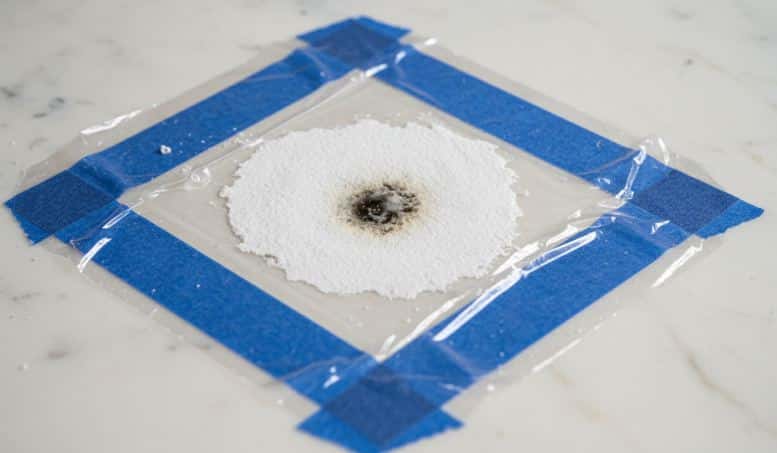
Właściwe zastosowanie gwarantuje, że okład pozostanie w kontakcie z plamą wystarczająco długo, aby zakończyć transfer środków chemicznych. Zalecamy nałożenie warstwy pasty o grubości 1/4 cala bezpośrednio na dotkniętą powierzchnię kamienia. Przykrycie obszaru folią i oklejenie krawędzi spowalnia proces parowania, dając rozpuszczalnikowi więcej czasu na rozkład oleju.
- Utrzymuj czas przebywania od 24 do 48 godzin, aby upewnić się, że środek kamienia jest w pełni zabezpieczony.
- Upewnij się, że krawędzie plastikowej folii są szczelne, aby wcisnąć rozpuszczalnik w pory.
- Należy unikać poruszania plastra w fazie schnięcia, aby zapobiec mechanicznemu uszkodzeniu pasty.
Bezpieczne usuwanie i odzyskiwanie powierzchni
Usunięcie wysuszonego okładu wymaga ostrożności, aby zapobiec fizycznym otarciom kamiennej powierzchni. Do usunięcia stwardniałej pasty użyj plastikowego lub drewnianego skrobaka, a nie metalowych narzędzi, które mogą porysować wykończenie. Po usunięciu większości materiału pozostałe pozostałości należy oczyścić wodą destylowaną i środkiem do czyszczenia kamienia o neutralnym pH, aby przywrócić pierwotny wygląd.
Sprawdź usuwanie plam dopiero po kamieniu całkowicie wyschło. Wilgotny kamień często wydaje się ciemniejszy niż otoczenie, co może prowadzić do fałszywych wniosków na temat powodzenia wydobycia. Jeśli pozostanie słaby cień, powtórz proces, nakładając nową pastę.
Uszczelnianie zapobiegawcze po usunięciu plam
Proces okładu pozostawia otwarte i wrażliwe pory kamienia, co wymaga natychmiastowej ochrony. Po oczyszczeniu i wyschnięciu kamienia nałóż wysokiej jakości uszczelniacz penetrujący, aby zapobiec przyszłej absorpcji oleju. Skoncentruj wysiłki związane z uszczelnianiem na obszarach o dużym natężeniu ruchu lub kuchenne odpryski gdzie najprawdopodobniej występuje kontakt ze smarem.
Regularna konserwacja za pomocą uszczelniaczy dostosowanych do kamienia zmniejsza potrzebę stosowania agresywnych okładów w przyszłości. Dla dealerów i instalatorów B2B korzystających z Top Source Wyroby z kamieniapodkreślamy, że uszczelnienie jest ostatnim, niepodlegającym negocjacjom krokiem w każdym projekcie renowacji kamienia, mającym na celu ochronę długoterminowej estetyki naturalnego materiału.
Wniosek
Użycie odpowiednich narzędzi do powierzchni teksturowanych i usunięcie pozostałości po montażu, takich jak zamglenie zaprawy, natychmiast gwarantuje, że kamień zachowa swój pierwotny wygląd. Trzymanie się roztworów o neutralnym pH i odpowiednich technik napylania pozwala zachować integralność strukturalną płyt łupkowych i kwarcytowych, jednocześnie zapobiegając trwałemu uszkodzeniu powierzchni. Te etapy konserwacji zapewniają profesjonalne wykończenie, które podkreśla autentyczną jakość materiału przez wiele lat.
Możesz ocenić swoje obecne środki czystości, aby upewnić się, że spełniają wymagane standardy bezpieczeństwa instalacje z kamienia naturalnego. Jeśli potrzebujesz specyfikacji technicznych lub chcesz zobaczyć nasz aktualny asortyment, skontaktuj się z naszym zespołem, aby uzyskać profesjonalny katalog.
Często zadawane pytania
Jaki jest najlepszy codzienny środek czyszczący do kamienia naturalnego?
Najlepszym codziennym środkiem czyszczącym jest środek o neutralnym pH Środek do czyszczenia kamienia opracowany specjalnie do naturalnego muru. Można także użyć mieszaniny ciepłej wody i kilku kropli łagodnego, niekwasowego płynu do mycia naczyń. Unikaj środków czyszczących zawierających cytrynę, ocet lub wybielacz, ponieważ mogą one z czasem wytrawić powierzchnię kamienia i rozbić uszczelniacze.
Czy można używać białego octu do czyszczenia paneli księgi głównej?
Nie, nigdy nie należy używać białego octu panele księgi głównej. Ocet jest bardzo kwaśny i powoduje reakcję chemiczną zwaną trawieniem Naturalne kamienie jak wapień, trawertyn i marmur. Reakcja ta powoduje trwałe zmatowienie powierzchni i może powodować “wżery,” pogarszając integralność strukturalną i estetykę paneli.
Jak usunąć białą zaprawę z rozłupanego kamienia licowego?
Aby usunąć białą mgłę zaprawy, użyj specjalistycznego środka “środek do usuwania zamgleń fug” lub łagodny roztwór kwasu amidosulfonowego przeznaczony do murów. Roztwór nanieść i energicznie wyszorować sztywną nylonową szczotką (unikać szczotek drucianych, które mogą pozostawiać metalowe fragmenty). Zawsze najpierw wykonaj mały test płatkowy i dokładnie spłucz czystą wodą, aby zneutralizować powierzchnię.
Jak odkurzyć szorstką wewnętrzną ścianę z akcentem kamienia?
Najskuteczniejszym sposobem odkurzania szorstkiego kamienia jest użycie odkurzacza z nasadką z miękką szczoteczką, która wyciąga kurz z głębokich szczelin. W przypadku uporczywych miejsc użyj pojemnika ze sprężonym powietrzem lub wysokiej jakości ściereczki do kurzu z mikrofibry. Na początku unikaj używania mokrych szmatek, ponieważ może to zamienić kurz w błoto i wepchnąć go głębiej w pory kamienia.
Czy można myć pod ciśnieniem kamień ułożony na zewnątrz?
Tak, ale należy zachować ostrożność. Utrzymuj ciśnienie poniżej 1500 PSI i używaj szerokokątnej końcówki wentylatora (zwykle 25 lub 40 stopni). Aby temu zapobiec, trzymaj dyszę w odległości co najmniej 12 cali od powierzchni “ślady różdżki” lub trawienie. Unikaj bezpośredniego wysokiego nacisku na spoiny, ponieważ może to spowodować usunięcie zaprawy lub podłoża klejącego kamienne panele.
Jak usunąć Thinset z lica kamiennego forniru?
Jeśli cienki zestaw jest jeszcze mokry, natychmiast wyczyść go wilgotną gąbką i czystą wodą. Jeśli wyschło, użyj drewnianego patyka lub sztywnego plastikowego skrobaka, aby delikatnie usunąć kawałki. W przypadku pozostałych pozostałości nałóż profesjonalny środek do usuwania powłoki cementowej i wyszoruj nylonową szczoteczką. Nigdy nie używaj metalowych skrobaków, ponieważ porysują i uszkodzą kamienną powierzchnię.