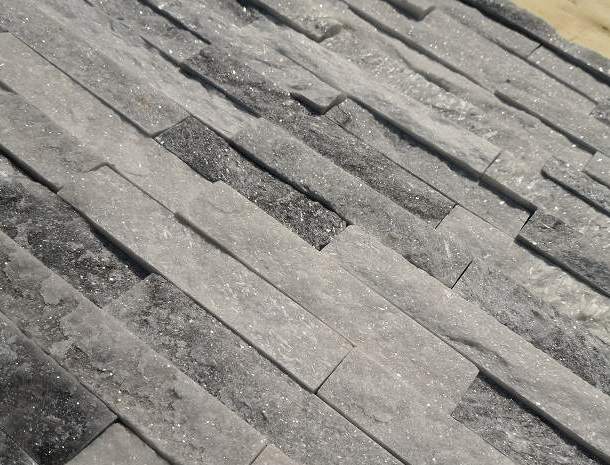
Stacked Stone HS Code: Avoid 25% Tariffs & Customs Delays

Großhandel mit gestapelten Steinen, Hersteller China
Lesezeit: 20 Min  | Wortanzahl: 5436

Inhaltsverzeichnis

You know the correctstacked stone HS codeis the difference between aclean customs clearanceand a container sitting on demurrage at LA/Long Beach. But what most 2026 guides get wrong is that they treat the tariff like a simple lookup table. They give you a number, quote a duty rate, and move on. That works if you are importing a commodity like steel rebar. It does not work for natural stone panels because US Customs does not just validate the HS code; it validates the material science behind the code. Containers have been flagged for weeks because the packing list said ‘stone veneerand the CBP lab test showed a cement binder, triggering a full reclassification audit. That is the gap this guide addresses.

My firm works with importers who cut their teeth on Alibaba but now need to protect a five-figure margin on a single 40HQ container. The core issue is not finding the HS code for natural stone ledger panels—that is Google work. The core issue is preventing a misclassification that adds 25% Section 301 tariff you did not budget for, or worse, a shipment hold because your supplier squatted on HTS 6810.99 to avoid the trade war tax. I am going to walk through the specific 10-digit codes for quartzite, slate, and granite, but more importantly, I will show you how to force the correct classification on your supplier’s commercial invoice before the vessel leaves port. That is the only way to ensure your landed cost calculator actually reflects reality.

Großhandel mit gestapelten Steinen, Hersteller China

HTS Chapter 68: Stacked Stone Classification

Natural stacked stone ledger panels from China carry a 6.5% standard duty plus a 25% Section 301 tariff. A 40HQ container at $18,000 CIF lands between $1,170 and $5,670 in duties alone — enough to erase a 5% margin if you misclassify.

You already know the generic answer: stacked stone falls under Chapter 68. But the difference between clearing customs in 24 hours and watching a container sit at Long Beach for two weeks comes down to getting the 10-digit code right and understanding where your supplier is cutting corners. The following walks through the classification logic that actually matters for a bulk FCL order.

The correct HTS code for natural quartzite, sandstone, or limestone ledger panels is 6802.99.0090 — that coversother stoneand carries a 6.5% standard duty rate. If your panels are pure granite, use 6802.93.00.90 at 3.7%. Slate veneer classifies under 6803.00.5000 at 0% standard duty. Every single one of these is subject to the 25% Section 301 tariff if shipped from China. The exception is cultured stone (cement-based) under HTS 6810.99.0000, which carries 6.5% duty but zero Section 301 exposure. That distinction matters far more than most buyers realize.

Quartzite / Sandstone / Limestone: HTS 6802.99.0090 — 6.5% duty + 25% Section 301

Granite: HTS 6802.93.00.90 — 3.7% duty + 25% Section 301

Slate: HTS 6803.00.5000 — 0% duty + 25% Section 301

Cultured (Cement-based): HTS 6810.99.0000 — 6.5% duty, NO Section 301

Here is where the generic guides fail you. Thecultured stone trapis real: many Chinese suppliers intentionally classify natural stone panels under HTS 6810 to avoid the 25% Section 301 surcharge. US Customs can and does reclassify shipments on arrival. If your container gets flagged, you face reclassification to 6802.99.0090 plus the 25% tariff, administrative penalties, and demurrage fees that run $200-$400 per day at LA/LB. I have seen a $50,000 container turn into a $68,000 problem because the supplier used the wrong code on the commercial invoice. The fix is simple: request the supplier’s exact 10-digit HTS code in writing before you book the container, and cross-reference it against the official USITC HTS PDF. If the code starts with 6810 and your panels are natural stone, stop the order.

The Section 301 tariff is not optional. As of 2026, Chinese stacked stone falls under List 4A, which requires the Chapter 99 subheading 9903.88.15 on the entry summary. This is separate from the standard duty line. Your customs broker files both lines. If the entry summary omits the Chapter 99 code, CBP holds the cargo until you file a post-entry amendment. That process takes 3-5 business days minimum. On a 40HQ container with a CIF value of $18,000, the total duty stack looks like this: standard duty at 6.5% equals $1,170, Section 301 at 25% equals $4,500, MPF at 0.3464% capped at approximately $600, and HMF at 0.125% equals $22.50. Your customs broker fee adds $150-$350. Total government fees land between $5,842 and $6,042 — not including drayage or warehousing. If you modeled only the 6.5% duty in your landed cost, you just lost 25% margin overnight.

Stacked stone has a hidden advantage that most buyers overlook: the Section 301 loophole for slate. Slate panels under HTS 6803.00.5000 carry a 0% standard duty rate. While they are still subject to the 25% Section 301 tariff, the base duty is zero. A buyer importing slate veneer instead of quartzite reduces the tariff burden from 31.5% (6.5% + 25%) to 25% (0% + 25%). On a $20,000 container, that is $1,300 in savings. But you must ensure the commercial description readsNatural slate ledger panelnotStone veneer panel— the latter invites reclassification to 6802.99 and the 6.5% duty. Precision in the packing list and commercial invoice is not administrative trivia; it is the difference between paying 25% or 31.5%.

The documentation requirements for a stacked stone FCL shipment are straightforward but unforgiving. You need five documents: a commercial invoice with the 10-digit HTS code and country of origin, a packing list with exact weight in kilograms and pallet dimensions, a bill of lading, a certificate of origin (Form A for China, though most stone does not qualify for GSP preference), and a customs bond of $10,000-$20,000. The single biggest documentation failure is the missingManufacturing Statement— US Customs may request evidence proving the panels are natural stone and not concrete-based cultured stone. The standard pack includes a Material Composition Certificate that lists the quarry location, the mineral composition by percentage, and the processing method. Request this from any supplier before shipment. If they cannot provide it, you are exposed to a reclassification audit that takes 30-60 days to resolve.

One practical test separates experienced buyers from first-timers: the internal lab report. Customs labs test imported stone to confirm classification. Natural stone under HTS 6802 must show a natural crystalline structure under X-ray diffraction (XRD) analysis. Cement-based cultured stone under HTS 6810 has a distinct amorphous structure. The factory provides an XRD report with every container — it is a one-page document that proves 100% natural composition and kills any reclassification risk at the border. Most supplier factories will not offer this. If you ask for a Third-Party Material Composition Certificate from SGS or Bureau Veritas and they hesitate, that is a red flag. The test costs approximately $200-$400 and takes 3-5 days. For a 40HQ container valued at $18,000, that is a 1-2% insurance premium against a potential $5,000+ Section 301 reclassification penalty.

Let me give you a real cost scenario so you can build your landed cost model accurately. A 40HQ container carries approximately 10,000 square feet of quartzite ledger panels. At a CIF value of $18,000, the standard duty is $1,170 (6.5%). The Section 301 tariff adds $4,500 (25%). MPF caps at approximately $600. HMF adds $22.50 (0.125%). Broker fee runs $250. Drayage from the port to your warehouse runs $500-$700. Total import cost stack: $6,542 to $6,742. Divide by 10,000 square feet, you are paying $0.65 to $0.67 per square foot in import fees alone — before you factor in the product cost. If your supplier quoted $2.50 per square foot FOB, your total landed cost per square foot lands at approximately $3.15 to $3.17. If you quoted your customer $3.60 per square foot, your margin is 12-13%. If you misclassified and Customs hits you with the full Section 301 plus penalties, that margin disappears.

The final piece is verifying your supplier’s HS code before you pay. Do not accept a verbal answer. Request a screenshot of their customs filing copy or the HS code field on their commercial invoice. Cross-reference it with the official HTS PDF from the USITC website. If the code does not start with 68, they are likely misclassifying. If the code is 6810.99.0000 and your product is natural stone, that is a deliberate tariff avoidance strategy that will backfire on you at the border. The correct approach is to tell your supplier:I need the HTS code you will use on the commercial invoice for my natural quartzite ledger panels. Please confirm it is 6802.99.0090 and include the Chapter 99 subheading 9903.88.15 for Section 301.If they push back or offer a different code, you have your answer about their compliance practices.

Below are the most common questions I get from buyers at the consideration stage. These are the exact points you need to verify before signing a container contract.

What is the HS Code 7002390090? That code is for glass tubes, not stone. It does not apply to stacked stone panels. The correct start for any natural stone product is Chapter 68 — specifically 6802 or 6803. If a supplier quotes 7002390090 for your stone order, stop and ask for a corrected code immediately.

What is the HS code 6802.93? This covers worked granite. If your stacked stone panels are 100% granite (for example, Crystal White or Absolute Black), use HTS 6802.93.00.90 at a 3.7% duty rate. For quartzite, sandstone, or limestone panels, use 6802.99.00.90 at 6.5%. Mixing stone types in one shipment means you default to 6802.99.00.90 for the entire lot — do not split the HTS code across different line items unless you have separate packing for each stone type.

What is the duty rate for slate ledger panels? Slate panels under HTS 6803.00.5000 are duty-free at 0% standard duty. However, they are still subject to the 25% Section 301 tariff if originating from China. This gives slate a cost advantage over quartzite or sandstone, which carry the 6.5% standard duty on top of Section 301. Use this in your product mix strategy if margin pressure is high.

How can I verify my supplier’s HS code? Request a screenshot of their customs filing copy or the HS code field on their commercial invoice. Cross-reference the full 10-digit code against the official HTS PDF from the USITC. If the code does not start with 68, the product is likely classified incorrectly. If the code is 6810 and the product is natural stone, you have a compliance problem that will surface at the border.

What is a Harmonized Tariff Schedule (HTS) code? The HTS is the 10-digit code used by US Customs and Border Protection to determine duty rates on imported goods. The first 6 digits are the Harmonized System (HS) code used globally. For import into the United States, you must use the full 10-digit HTS number on your entry documentation. The 10-digit code determines not only the duty rate but also whether Section 301 tariffs apply and whether any product-specific restrictions or quotas are in place.

Here is what I want you to do after reading this: go back to your supplier and ask for their exact 10-digit HTS code for the product you are ordering. If they quote 6802.99.0090 for quartzite panels and confirm the Chapter 99 subheading for Section 301, you are dealing with a compliant factory. If they hesitate, offer 6810, or cannot explain the classification logic, you have identified a risk that will cost you real money at the border. The HTS code is not a technicality — it is the single most important line on your commercial invoice.

Miniature stacked stone boxes in various colors for decoration

Section 301 Tariffs on Chinese Stone

Natural quartzite ledger panels at CIF $18,000 face $5,670 in total tariffs if Section 301 applies. That’s a 31.5% tax hit on your container cost.

Let’s cut through the bad information. The correct HTS for your stacked stone shipment determines whether you pay 6.5% or get hit with a 31.5% total tax bill. Misclassify by one digit and your container sits at LA/Long Beach while demurrage fees pile up. Here’s exactly what you need to know.

Natural quartzite, sandstone, and limestone ledger panels: HTS 6802.99.0090 at 6.5% standard duty plus 25% Section 301 tariff if shipped from China. This is the code for most split-face stacked stone products on the market. No thickness restrictions for standard cladding panels.

Granite stacked stone panels: HTS 6802.93.00.90 at 3.7% standard duty plus 25% Section 301 tariff. Only use this if your panels are 100% granite. Mixed-rock blends must use 6802.99.

Slate ledger panels: HTS 6803.00.5000 at 0% standard duty but still subject to 25% Section 301 tariff. The duty-free classification saves you money, but your commercial invoice must clearly statenatural slate ledger panelto avoid reclassification to 6802.99 at 6.5%.

The cultured stone loophole: Many suppliers ship cement-based products under HTS 6810.99.0000 at 6.5% with no Section 301 risk. If a factory quotes you 30% below market, they’re likely shipping cultured stone labeled as natural. US Customs can reclassify this and hold your container for lab testing. Request a Material Composition Certificate upfront to confirm 100% natural stone composition.

For every FCL shipment, demand the supplier’s exact 10-digit HTS code on the commercial invoice. Cross-reference it with the official HTS PDF from USITC. If the code doesn’t start with 68, you’re looking at a different product category entirely.

The Section 301 tariff requires a Chapter 99 subheading on your entry summary. For List 4A goods from China, that’s 9903.88.15. Miss this, and your container gets flagged. Your broker handles this, but verify they include it before filing.

Document requirements for every container: commercial invoice with 10-digit HTS code and country of origin, packing list with exact weight in kilograms and piece count, bill of lading, certificate of origin, and a customs bond minimum $10,000 to $20,000.

Landed cost calculation for a 40HQ container of 10,000 sq.ft. quartzite ledger panels at CIF value $18,000:

    • Standard duty (6.5%): $1,170
    • Section 301 tariff (25%): $4,500
    • MPF (0.3464%, max ~$600): ~$600
    • HMF (0.125%): ~$22.50
    • Customs broker fee: $150-$350
  • Total tariff and fees: $6,292 to $6,492

That pushes your landed cost per sq.ft. from $1.80 to $2.45 before drayage and warehousing. If your buyer is paying $3.00/sq.ft., your margin just dropped from 40% to 18%. Model the worst case before signing the contract.

Internal lab testing is your defense against audit. The factory provides X-ray diffraction analysis with every container proving 100% natural quartzite composition. This pre-empts Customs reclassification audits that can delay your shipment by 2-4 weeks. Most suppliers cannot provide this. If they hesitate, that’s your red flag.

The bottom line: correct classification saves you money and prevents holds. Use 6802.99.0090 for quartzite, sandstone, limestone. Use 6803.00.5000 for slate. Verify with XRD reports. And always budget for the full 25% Section 301 tariff until exclusions prove otherwise.

FAQ: Importing Stacked Stone from China

What is the HS Code 7002390090? That’s for glass tubes, not stone. Do not use it. Your stacked stone code starts with 68, not 70.

What is the HS code 6802.93? HTS for worked granite panels. Use 6802.93.00.90 at 3.7% duty for 100% granite stacked stone. Quartzite, sandstone, limestone use 6802.99.00.90 at 6.5%.

What is the duty rate for slate ledger panels? Duty-free under HTS 6803.00.5000. But still subject to 25% Section 301 tariff if from China.

How can I verify my supplier’s HS code? Request their commercial invoice screenshot showing the 10-digit code. Cross-reference with USITC’s HTS PDF. If it doesn’t start with 68, they’re likely misclassifying.

What is a Harmonized Tariff Schedule (HTS) code? The 10-digit code US Customs uses to determine duty rates. The first 6 digits (HS code) are global. For US import, you need all 10 digits.

Package of high-quality stacked stone panels for walls

Required Customs Documents for Stone

Every FCL shipment of stacked stone needs five documents: a commercial invoice with the 10-digit HTS code and country of origin, a packing list with exact weight in kilograms and piece count per pallet, a bill of lading, a certificate of origin (Form A for China — though most stone doesn’t qualify for reduced GSP rates), and a customs bond ranging from $10,000 to $20,000 minimum.

The most common documentation gap is the manufacturing statement. US Customs may request evidence proving the panels are natural stone and not concrete. The factory includes a Material Composition Certificate with every container to pre-empt this check. If your supplier can’t provide one, ask for a third-party report from SGS or Bureau Veritas before you book the container.

Landed Cost: Duty + Brokerage + Drayage

A 40HQ container of quartzite ledger panels valued at $18,000 CIF will pay between $1,170 and $5,670 in US import taxes depending on your Section 301 strategy.

Natural stacked stone ledger panels fall under Chapter 68 of the HTSUS (Harmonized Tariff Schedule of the United States). The specific 10-digit code depends on the rock type, not the shape or size. For quartzite, sandstone, or limestone ledger panels, the correct classification is 6802.99.0090 (“Other stone”) at 6.5% ad valorem. If your supplier ships pure granite panels (e.g., “Crystal White” stacked stone), use 6802.93.00.90 at 3.7% duty. Slate panels go under 6803.00.5000 — duty-free at the standard rate but fully subject to Section 301 tariffs. Get this wrong and your broker files a Post Entry Amendment, costing you time and broker fees.

Here is the critical distinction most generic guides miss: the “Culture Stone” trap. Many Chinese factories ship cement-based cultured stone under HTS 6810.99.0000 (6.5% duty, no Section 301). If your product is natural stone but the supplier uses 6810 to avoid the 25% surcharge, US Customs can reclassify it upon arrival. The importer — not the factory — pays the penalty. Demand a Material Composition Certificate on the packing list stating “100% natural quartzite” before you issue a PO. If the supplier hesitates, you just found the red flag.

A real-world consequence: A distributor I consulted imported 2,400 sq.ft. of “stacked stone” classified as 6810. CBP lab-tested the material, found natural calcite and quartz, and reassigned it to 6802.99.0090 plus Chapter 99 9903.88.15 for Section 301. The back-duty bill was $4,800 plus a $2,500 broker amendment fee. Force the correct 10-digit code on the commercial invoice upfront.

The Section 301 reality: As of 2026, nearly all natural stacked stone from China is subject to List 4A tariffs at 25%. This is applied on top of the standard duty. You must include Chapter 99 subheading 9903.88.15 on your entry summary. Slate (6803.00.5000) gets a partial break — the standard duty is 0%, but the Section 301 surcharge still applies. A buyer importing slate veneer can reduce the tariff burden from 31.5% to 25%, a meaningful difference on a $25,000 container.

Landed cost model for a 40HQ container:

    • Product: 10,000 sq.ft. quartzite ledger panels
    • CIF value: $18,000
    • Standard duty (6.5%): $1,170
    • Section 301 surcharge (25%): $4,500
    • MPF (0.3464%, max ~$600): 600 $
    • HMF (0.125%): $22.50
    • Customs bond: $350 per entry (continuous bond: ~$1,500 annual)
    • Broker fee: $ 200
    • Total import taxes & fees (without 301): $2,342
  • Total import taxes & fees (with 301): $6,842

If you are working on a 5% net margin ($900 on a $18,000 cost), failing to budget for Section 301 eliminates your profit entirely. Always model the worst-case tariff scenario before signing the container contract.

Fee Category Rate / Amount Calculation Basis Impact on $18,000 CIF
Standard Duty 3.7%–6.5% Ad valorem on CIF value $666 – $1,170
Section 301 Tariff 25 % Ad valorem on CIF value (List 4A) $4,500
MPF (Merchandise Processing Fee) 0.3464% (max ~$600) Ad valorem on CIF value, capped ~$62 (capped at $600)
HMF (Harbor Maintenance Fee) 0.125% Ad valorem on CIF value $22.50
Customs Broker Fee $150 – $350 Flat per entry $150 – $350
Drayage (Port to Warehouse) $400 – $700 Flat per container $400 – $700
Explore Our Product Collection.
Browse this product, solution, or service page to explore relevant offerings.

Entdecken Sie unsere Produkte →

CTA-Bild

Internal Lab Test: Natural vs. Cultured Stone

For a 40HQ container of stacked stone, misclassification can cost you more than the 25% Section 301 tariff. It can cost you 3 weeks of demurrage. Here is the exact playbook to avoid that.

You are past the point of browsing Alibaba listings. You are now calculating the landed cost on a 10,000 sq.ft. container of quartzite ledger panels. The first thing you need is the correct 10-digit HTS code. Get this wrong, and your container sits at the Port of Los Angeles while you pay daily storage fees.

The core classification for natural quartzite, sandstone, and limestone stacked stone panels is HTS 6802.99.0090. The general duty rate is 6.5% ad valorem. But that is only half the story. Every shipment from China also carries a 25% Section 301 tariff under subheading 9903.88.15. Do not let a supplier quote you a price based only on the 6.5% standard duty—your total tariff liability is 31.5% on the CIF value.

Here is the breakdown by material type, because your supplier will likely try to lump everything under one code:

    • Quartzite, Sandstone, Limestone: HTS 6802.99.0090. Standard duty: 6.5%. Section 301: 25%. Combined effective rate: 31.5%. This covers the majority of stacked stone ledger panels.
    • Granite Panels: HTS 6802.93.00.90. Standard duty: 3.7%. Section 301: 25%. Combined: 28.7%. Only use this if the entire panel is 100% homogeneous granite, not a mix of rock types.
    • Slate Ledger Panels: HTS 6803.00.5000. Standard duty: 0%. Section 301: 25%. Combined: 25%. This is the only natural stone with a zero standard duty rate. But do not assume duty-free means tariff-free—your broker must still file the Chapter 99 subheading.
  • Cultured / Cement-Based Stone: HTS 6810.99.0000. Standard duty: 6.5%. Section 301: 0%. Combined: 6.5%. This is the trap. Many suppliers will classify a natural stone panel under 6810 to avoid the 25% tariff. If US Customs reclassifies it as natural stone, you face penalties up to the value of the goods.

Run a real-world scenario. At a CIF value of $18,000 for 10,000 sq.ft. of quartzite panels, the standard duty is $1,170. The Section 301 tariff adds another $4,500. Total customs duties: $5,670. Add the Merchandise Processing Fee (MPF) of 0.3464% (capped at roughly $600) and the Harbor Maintenance Fee (HMF) of 0.125% ($22.50). Your total customs fees approach $6,300. That is a 35% premium on your CIF price. If your margin was 20%, the 25% Section 301 tariff alone destroys it.

The documents you need to carry this classification correctly are non-negotiable. Every commercial invoice must list the 10-digit HTS code, the country of origin, and a clear material description (e.g.,100% natural quartzite ledger panel). Your packing list must include exact weight in kilograms, piece count, and pallet dimensions. You will also need a Customs Bond—expect $10,000 to $20,000 minimum for the first entry.

The single most important verification step: request a screenshot of your supplier’s customs filing form or the exactHS Codefield from their commercial invoice. Do not accept a verbal confirmation. Cross-reference the 6-digit HS code against the USITC HTS database. If the code does not start with 6802 or 6803, your supplier is likely misclassifying to reduce their tariff burden—and transferring that risk to you.

When you ask your factory,What is your HTS code for this quartzite panel?, if they hesitate or give you a one-size-fits-all code, that is a red flag. A reliable supplier, like our factory, includes the correct HTS 6802.99.0090 classification on every export document, along with a Material Composition Certificate to pre-empt a Customs lab test. That certificate proves the panel is natural stone, not cultured cement, and justifies the Chapter 68 classification.

Abschluss

Getting your stacked stone HS code right is a direct line to protecting your margin and avoiding demurrage at LA/LB. Whether you classify quartzite under 6802.99.0090 at 6.5% plus 25% Section 301 or slate under 6803.00.5000 duty-free plus that same 25% surcharge, each percent of duty miscalculation cuts into the 5% profit you might be targeting on a 40HQ container. The real risk isn’t the code itself—it’s trusting a supplier’s packing list without verifying material composition, which can trigger a Customs lab hold and a reclassification audit that adds weeks to your lead time.

Before you sign that container contract, confirm your supplier’s 10-digit HTS code, demand a Material Composition Certificate for natural stone, and model your total landed cost including MPF ($600 cap) and HMF (0.125%). We include the correct HTS 6802.99.0090 classification on every export document for our natural quartzite ledger panels—so you can skip the guesswork and focus on scaling your distribution. Check our product specs to see how we remove the customs friction for your next order.

Häufig gestellte Fragen

What is the HS Code 7002390090?

That HS code belongs to glass products, not natural stone. If your supplier uses it for stacked stone, it is a misclassification that will trigger customs delays and penalties. Always request a Chapter 68 code for natural stone shipments.

What is the HS code 6802.93?

HS code 6802.93 covers granite stone products. It only applies if your panels are pure granite; mixed-rock blends must use 6802.99 to avoid misclassification. Confirm the rock composition with your supplier before using 6802.93.

What is the duty rate for slate ledger panels?

Slate ledger panels are duty-free under HTS code 6803.00.5000. However, ensure your material is true natural slate, not cultured stone, to qualify for the zero rate. Verify material classification with your customs broker before shipping.

How can I verify my supplier’s HS code?

Request the exact 10-digit HTS code on the commercial invoice and cross-reference it with US Customs rulings. Misclassification is a top audit risk, so compare the material description to the code’s. When in doubt, consult a licensed customs broker before filing entry.

What is a Harmonized Tariff Schedule (HTS) code?

The Harmonized Tariff Schedule (HTS) is the US version of the global HS system used to classify imported goods. It determines the duty rate and regulatory requirements for your stacked stone shipment. Use the correct HTS code to avoid delays and penalties.

Suchen Sie nach einem zuverlässigen Hersteller von gestapelten Steinen?

Fordern Sie ein kurzes Angebot an

Du bist uns sehr wichtig, Wir freuen uns, dass Sie sich die Zeit genommen haben, uns zu schreiben. Wir werden uns innerhalb von 24 Stunden umgehend bei Ihnen melden. Einen schönen Tag noch!

Chat öffnen
Hallo👋, willkommen, fragen Sie uns alles🎉
Hallo 👋! Willkommen auf unserer Seite🎉
Wenn Sie Hilfe benötigen, antworten Sie einfach auf diese Nachricht. Wir sind online und helfen Ihnen gerne weiter.