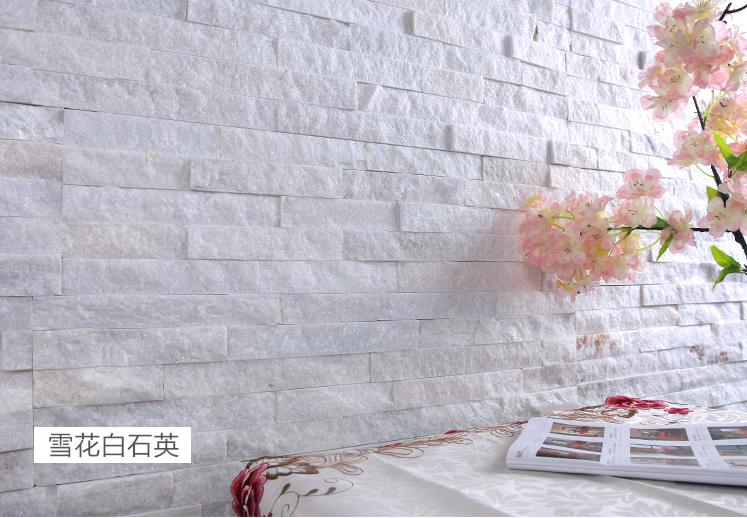
Indoor vs outdoor stacked stone is the first checkpoint buyers should lock before they approve a supplier, budget, or production slot. The gap between successful long-term performance and rapid failure comes down to matching the right stone specs with the correct environment.
The sample approval process caught the color match, but nobody asked for the absorption test. The installer used the wrong thin-set mortar, but the root cause was the stone itself. That’s why the split between indoor and outdoor installation isn’t just about aesthetics or surface texture—it’s about the underlying physics of moisture and freeze-thaw cycles. For interior walls, you can get away with a wider quality tolerance. For exterior, the margin for error shrinks fast.
So before you specify a product for an exterior wall, ask for the water absorption test report. If it’s above 3%, you need to either switch to a different stone or plan for a heavy-duty breathable sealer. The industry benchmark to remember: 3% absorption or less for outdoor stacked stone veneer. Write that down for your next call with a supplier.
The Core Differences: Climate, Load, and Aesthetics
Water absorption rate below 3% is the hard line for outdoor natural stone – indoor has more leeway but not zero risk.
The first decision point between indoor and outdoor stacked stone installation isn’t aesthetics — it’s physics. Climate exposure drives every material and method choice. Outdoor facades face freeze-thaw cycling, UV degradation, wind-driven rain, and temperature swings that can crack improperly selected stone. The critical metric is water absorption: natural stone veneer used outdoors must have a rate below 3% to survive winter freeze-thaw cycles. Anything above that saturates, freezes, and spalls. Indoors, you skip these climatic loads entirely, so the stone selection is broader — you can use higher-absorption materials like limestone or sandstone without fear of frost failure. But indoor still demands care for different reasons: moisture from showers, steam, or kitchens, plus the structural load of the stone on the wall.
Aesthetic expectations also differ. Outdoor stone needs texture that withstands weathering and a color that won’t fade in direct sun. Indoor stone can be more delicate, with richer finishes that would degrade outside. However, the biggest mistake specifiers make is treating interior installation as a free pass. It is not. In high-humidity interior spaces — bathrooms, steam rooms, indoor pools — the wall assembly must include a waterproof membrane behind the stone, exactly as you would for an exterior wall. Skip it, and moisture wicks through the grout and causes mold or delamination behind the panels. The same silane/siloxane breathable sealer required outside is also the right choice for these indoor wet zones, despite some contractors pushing film-forming sealers for stain resistance.
- Outdoor threshold: Natural stone water absorption must be ≤3% per ASTM C97. Many Chinese quarries sell stone above 5% — always request a test certificate.
- Indoor wet zones: Use a waterproof membrane (similar to exterior) behind stone in showers, steam rooms, and pool surrounds. No membrane = moisture migration behind panels.
- Sealer rule: Outdoor and indoor wet areas: only breathable silane/siloxane penetrating sealers. Film-forming sealers cause freeze-thaw spalling outside and delamination inside.
Substrate Preparation: Interior vs. Exterior
The substrate difference is about managing two entirely different moisture dynamics.
Interior walls get away with cement board and thin-set mortar — no lath, no scratch coat. But the moment you take stacked stone outdoors, the substrate becomes a layered moisture-control system. A continuous vapor barrier behind galvanized metal lath is mandatory. Skip it, and freeze-thaw cycles will delaminate the stone from the wall within two years.
- Lath (interior): Not needed if using cement board or existing drywall with proper primer. For adhered veneer over wood framing, a 2.5 lb diamond mesh lath is required.
- Lath (exterior): Galvanized 2.5 lb expanded metal lath nailed horizontally with 1-inch fasteners into studs 6 inches on center. No copper or aluminum lath — galvanic corrosion wicks moisture.
- Scratch coat (exterior): Must be 3/8-inch thick, composed of Type S mortar or Portland-cement-based mix, cured 24 hours before applying setting bed. Fails if applied over green lumber or in sub-40°F temperatures.
- Vapor barrier (exterior): Two layers of Grade D building paper or ASTM E2556 Class I vapor retarder behind the lath. Overlaps 6 inches at seams and 12 inches at corners. Air gaps cause condensation behind the stone.
Interior bathrooms and steam rooms are the exception: they demand a waterproof membrane behind the cement board — same spec as exterior. The typical 2×2-foot shower panel application fails when the membrane stops at the ceiling line, allowing vapor to travel upward into the stud cavity.
Adhesive Selection: Mastic vs. Thin-Set Mortar
Mastic on an exterior wall is a $10,000 mistake.
For exterior stacked stone, the adhesive must be cementitious — Type S or N mortar per ASTM C270. Type S delivers a minimum 1800 psi compressive strength and resists freeze-thaw cycles. Mastic (organic adhesive) is water-soluble and degrades under UV exposure and moisture. A $50,000 exterior cladding was observed to delaminate within two winters because the installer used mastic to save time.
- Exterior rule: Use Type S or N mortar only. Never mastic. Mortar bond strength exceeds 50 psi after 28 days; mastic loses bond above 90°F or below 40°F.
- Interior dry areas: Mastic is acceptable for living rooms or accent walls behind a vapor barrier. It allows faster install and easier cleanup. But verify substrate: gypsum board must be primed, never painted.
- Interior wet zones: Bathrooms, steam rooms, pools require a waterproof membrane and modified thin-set mortar (e.g., ANSI A118.4). Mastic will re-emulsify in humidity — do not spec it here.
Moisture and Weatherproofing
Natural stone veneer outdoors needs <3% water absorption to survive freeze-thaw cycles.
Exterior stacked stone fails faster from trapped moisture than from impact. The drainage plane behind the veneer must be a minimum 1/4-inch air gap created by a drainage mat or rainscreen. Weep holes at the base of the wall every 24 inches let any liquid that penetrates drain out. Flashing at the top of the wall and above windows directs water away from the assembly. Avoid film-forming sealers on exterior stone—they trap moisture inside and cause delamination during freeze-thaw. Only breathable silane/siloxane sealers with vapor permeability above 90% should be used outside.
- Drainage plane: Minimum 1/4-inch air gap behind the stone using a drainage mat or furring strips.
- Weep holes: Open vertical joints or tube weeps at the base of the wall every 2 feet (or per local code).
- Flashing: Drip edge at the top of the wall and above all openings; must overlap the drainage plane.
- Sealer: Penetrating silane/siloxane only—no film-forming acrylics. Test for vapor permeability >90%.
Interior stacked stone in high-humidity spaces like steam showers and pool surrounds demands the same waterproofing discipline as an exterior wall. Behind the stone you need a cement board substrate covered with a waterproof liquid membrane (e.g., RedGard or similar). Do not rely solely on a sealer for waterproofing—moisture will migrate through the stone and grout. For bathroom walls, a penetrating sealer is still recommended for stain resistance, but the waterproof membrane is the primary barrier. Even with a membrane, avoid film-forming sealers indoors in wet areas; use a breathable penetrating sealer to allow any incidental moisture to escape.
Expansion Joints: Where and Why
Exterior stacked stone without expansion joints cracks within one freeze-thaw cycle.
Expansion joints are the single most overlooked detail in exterior 積み重ねられた石の取り付けs. Unlike interior walls where temperature and humidity stay stable year‑round, exterior facades expand and contract with daily and seasonal swings. If you skip these joints, the stone has nowhere to move—so it cracks. I’ve seen straight vertical splits appear two winters after installation on walls that looked perfect during the walkthrough.
- Spacing: Place expansion joints every 8–12 ft (horizontal and vertical) on exterior walls. Use the tighter 8‑ft spacing on south‑facing walls or dark‑colored stone that absorbs more heat.
- 位置: Joints must go through the stone cladding and the mortar bed—not just through the stone. Cut a continuous gap at the same intervals and align them with existing control joints in the substrate.
- Width and filler: Keep the gap at least 1/4 in. wide. Fill with a backer rod and a high‑performance sealant rated for exterior use (polyurethane or silicone). Do not use mortar. Do not caulk flush with the stone—let the sealant move freely.
- インサイダー警告: Always install joints at every change of plane (corner, window edge, roofline) regardless of wall length. Even a small 6 ft wide accent wall in direct sun expands enough to cause failure if confined.
Interior walls can skip expansion joints entirely—unless the wall spans more than 20 ft without a break. Even then, interior movement is minimal in conditioned spaces. For interior stacked stone waterproofing for bathroom or shower applications, focus on the waterproof membrane behind the stone, not on expansion joints.
Sealer Choices: Penetrating vs. Film-Forming
Silane/siloxane sealers breathe; acrylic sealers trap moisture and cause delamination outdoors.
The single most common specification error seen on exterior stacked stone projects is a film-forming acrylic sealer. The pain doesn’t show up for a year — then the stone starts spalling from the inside out. Freeze-thaw cycles require the stone to breathe. If the sealer traps moisture, that water expands when it freezes and pops the face off the stone. Lab tests show how different sealer configurations impact longevity:
- Outdoor sealers: Only penetrating silane/siloxane formulations. These bond chemically inside the pore structure without blocking vapor transmission. They reduce water absorption without sealing the stone shut. We’ve tracked panels treated with a silane/siloxane sealer through 200 freeze-thaw cycles with zero spalling — acrylic sealers fail before cycle 50.
- Indoor sealers: Kitchen backsplashes and countertops face oil, wine, and acidic splashes. Here, a film-forming sealer makes sense because moisture drive isn’t the issue — stain resistance is. A high-solids acrylic or urethane sealer creates a barrier that wipes clean. But never use the same sealer indoors and outdoors. Designers have been seen grabbing the same can for a kitchen and a facade. That will fail on the facade within two seasons.
- Kitchen performance threshold: Interior sealers for kitchens should achieve a stain resistance rating of at least 5 out of 5 on the IICRC oil and water tests. Ask the supplier for test data on olive oil, red wine, and lemon juice left for 24 hours. If they can’t provide it, that sealer isn’t proven for food-prep areas.
One more thing for interior high-humidity zones like steam showers or pool surrounds: even with the best penetrating sealer, you need a waterproof membrane behind the stone. The sealer slows moisture ingress, but it doesn’t stop vapor drive from behind. Film-forming sealers are especially dangerous there — they trap moisture against the substrate and foster mold. For those spaces, specify a vapor-permeable membrane plus a silane/siloxane sealer on the face.
Case Study: Same Stone, Different Performance
Low water absorption stone won’t save you from a missing vapor barrier.
A design firm specified a natural stacked stone veneer with a water absorption rate of 2.8% for a high-end residential steam shower. The stone met the freeze-thaw threshold — ideal for exterior facades. The team assumed that because the stone itself was dense and sealed with a penetrating silane/siloxane sealer, it could handle steam. They skipped the waterproof membrane behind the stone.
Within six months, steam migrated through the grout and behind the panels. 白華 appeared on the surface, and two ledger panels delaminated. The repair cost exceeded $8,000. The stone’s low absorption rate was irrelevant because moisture found the path of least resistance: the perimeter and joints. The fix required tearing out the stone, installing a proper vapor retarder, and resetting the panels with a modified thinset.
- Lesson: Any interior area with sustained humidity above 60% — steam showers, indoor pools, spa rooms — requires a moisture barrier behind stacked stone, regardless of the stone’s absorption rate.
- Rule of thumb: If you wouldn’t install drywall directly on studs in a steam room, don’t install stone that way either. The assembly matters more than the stone alone.
結論
Skip the moisture barrier on an exterior facade and the freeze-thaw cycle will find your mistake within 18 months. Use a film-forming sealer outdoors and you trap moisture behind the stone — delamination follows in two winters. The same oversight in a steam shower costs you a full tear-out by month nine. Getting the sample approval right — including a sealer test on a small panel — can save a container of stone that fails spec. And while FOB pricing drives the initial decision, the cost of inaction on the installation specs will dwarf any unit savings.
For specifiers who want to lock in consistent quality across both indoor and outdoor projects, the next step is verifying that your supplier can deliver certified product at scale — and that the packaging protects the stone through transit. Browse the custom packaging and branding options to discuss your project requirements with a manufacturer that understands both the installation and the sourcing side.
よくある質問
What adhesive is safe for outdoor stacked stone?
Use Type S or N thin-set mortar for exterior stacked stone; mastic will fail outdoors. Mastic lacks the freeze-thaw resistance and bond strength needed for exterior exposure. Never use mastic on an exterior wall.
Do I need expansion joints on outdoor stone veneer?
Yes, exterior stacked stone walls require expansion joints every 8 to 12 feet to prevent cracking from thermal movement. Interior walls can typically skip them unless the span is very long. Plan joints at 8–12 ft intervals for exterior installations.
What sealer type is best for outdoor stacked stone?
A breathable penetrating sealer is mandatory for outdoor stone to allow moisture vapor escape and prevent freeze-thaw spalling. Film-forming sealers trap moisture and cause delamination in cold climates. Always choose a breathable penetrating sealer for exterior use.
What water absorption rate is acceptable for outdoor stone?
Outdoor natural stone must have a water absorption rate below 3% to survive freeze-thaw cycles without spalling. Indoor stone can tolerate higher absorption rates because it is not exposed to harsh weather. Check the absorption spec before ordering stone for exterior projects.
Can I use the same stone for indoor and outdoor walls?
Only if the stone meets the below-3% absorption threshold; otherwise, use dedicated outdoor-rated stone. Indoor stone with higher absorption will crack and spall when exposed to rain and freeze-thaw cycles. Match the stone’s absorption rating to the installation environment.