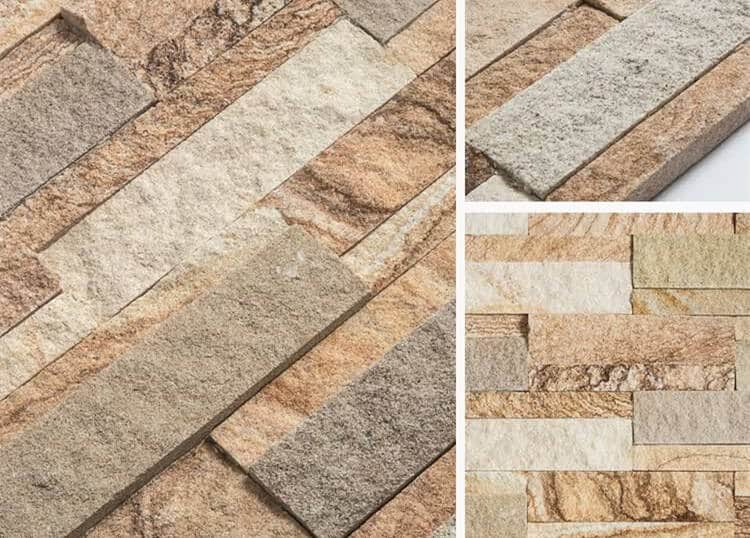
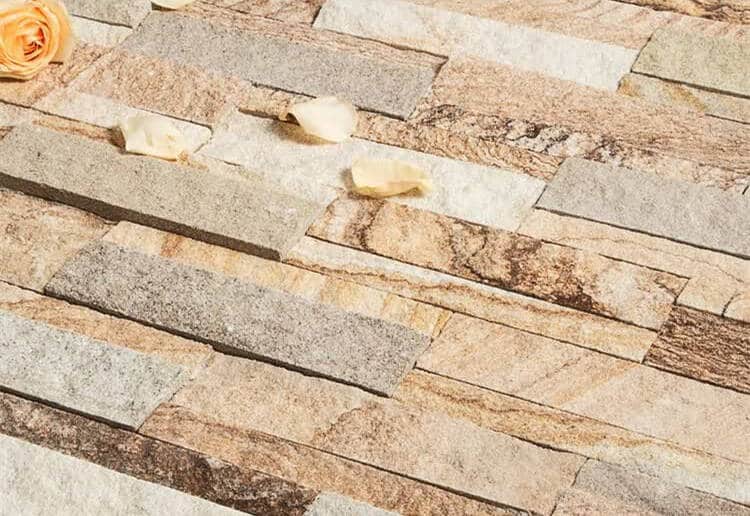
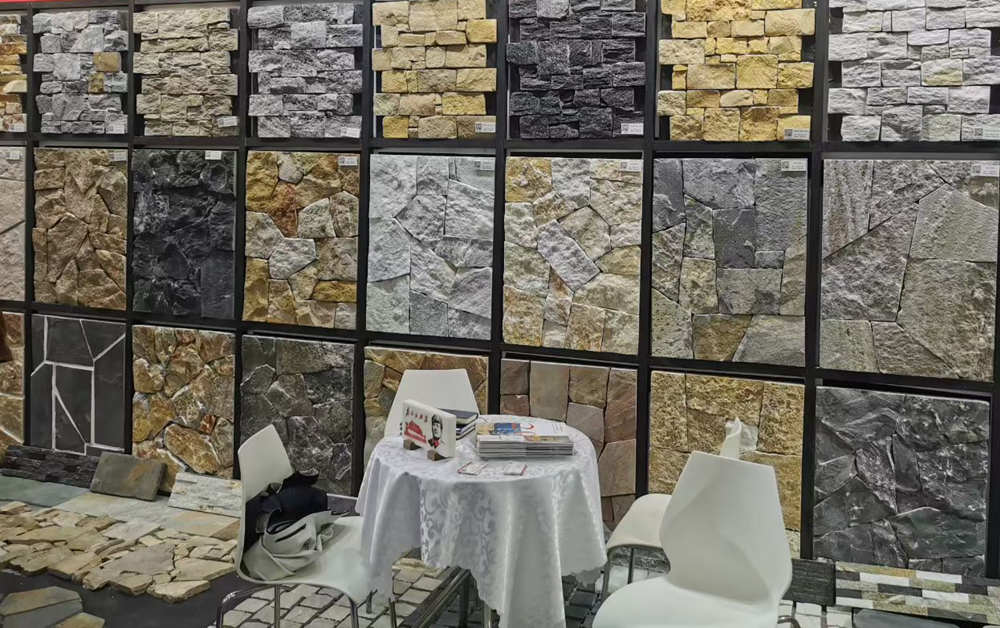
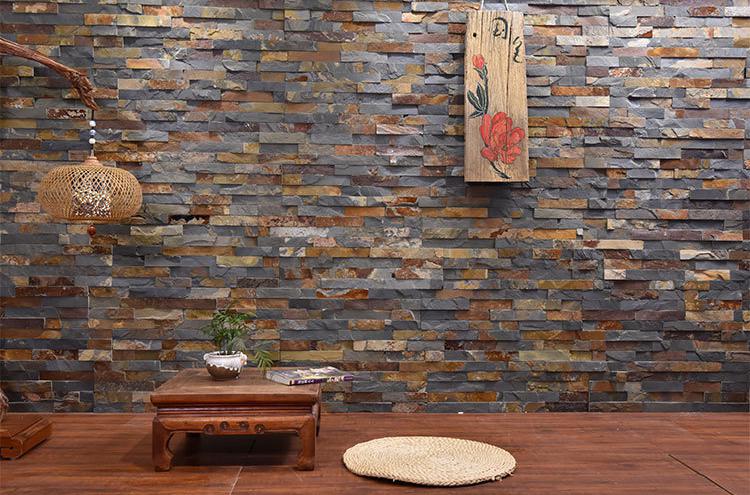
sealing stacked stone is the first checkpoint buyers should lock before they approve a supplier, budget, or production slot. A 47-sample benchmark across three slate quarries revealed the failure pattern: unsealed stacked stone absorbs moisture at nearly 4x the rate of sealed material in the first 24 hours of a rain event. That number matters when you’re staring at a $50K order where the pre-production sample looked flawless, but the mass production run on site is already showing efflorescence after two wet-dry cycles. Most contractors I’ve worked with over-wet natural stone during that first wash after installation, and the lime residue from fresh mortar joints bonds with the sealer before it can penetrate properly. A pH-neutral cleaner before sealing fixes that, but it’s a step that gets skipped on tight timelines.
The real question for a professional installer is not whether to seal — it’s which chemistry works on split-face textures without darkening the stone or trapping moisture behind it. Film-forming sealers fail consistently on ledger panels because the irregular surface creates pinholes and thin spots that break the membrane. Penetrating sealers, specifically hydro-oligomeric siloxanes at a 1-2 micron thickness, reduce water absorption by roughly 88% in slate-based stacked stone without altering the finish. That’s a data point you can hand to a specifier who needs ASTM C97 compliance on a commercial facade.
Why Sealing Matters: Protecting Your Investment in Stacked Stone
A 1-2 micron penetrating sealer cuts water absorption by 88% on slate-based stacked stone.
The gap between what the spec sheet promises and what actually arrives in the container is where most of your callbacks live. This pattern plays out the same way across a dozen countries: a contractor installs a beautiful ledger panel wall, the client signs off, and six months later white powder bleeds through the joints or a dark stain appears behind the kitchen faucet. The root cause is almost always moisture management — or the lack of it. Stacked stone’s split-face texture gives it enormous surface area relative to its volume, which means it can wick up and hold water like a sponge if left unsealed.
- 白華: Soluble salts in the stone or mortar migrate to the surface as water evaporates, leaving a chalky white deposit that requires chemical stripping to remove. On dark slate or basalt blends, this shows up within two freeze-thaw cycles in exterior applications.
- Freeze-thaw spalling: Water trapped in micro-fractures expands when it freezes, flaking off the stone face. In climate zones with more than 40 inches of annual rainfall, unsealed stacked stone can show visible delamination after one winter.
- Staining: Kitchen grease, red wine, or even hard water deposits bond permanently to raw stone because there is no barrier to block absorption. Indoor accent walls behind cooktops are especially vulnerable.
Indoor versus outdoor seal requirements are not interchangeable. For interior installations — fireplace surrounds, feature walls — you need stain resistance first. A penetrating sealer for ledger panels that blocks oil-based liquids without altering sheen works well here. Exterior applications demand weatherproofing: protection against UV degradation, rain-driven moisture, and temperature swings. A solvent based penetrating sealer outdoor grade with siloxane chemistry outperforms water-based options on vertical walls because it penetrates deeper into the irregular split face and doesn’t wash out under prolonged rain exposure.
One mistake seen repeatedly: contractors over-wet natural stone during cleanup after installation, then apply sealer before the substrate has fully dried. If there’s lime residue from fresh mortar joints still present, the sealer bonds to that residue instead of the stone itself — creating a weak film that traps moisture underneath. Always use a pH-neutral cleaner first and allow 72 hours of dry time minimum before sealing any exterior stone veneer weatherproofing job.

Penetrating Sealers vs. Film-Forming Sealers: Which One for Ledger Panels?
Penetrating sealers outperform film-forming on split-face stone by 88% water absorption reduction.
When specifying a sealer for ledger panels, the choice between penetrating and film-forming types isn’t just preference—it’s structural. Ledger panels have irregular split-face textures with deep crevices and sharp edges. Film-forming sealers sit on the surface, creating a plastic-like coating. On a flat tile that might work. On a split-face ledger panel, it’s a failure waiting to happen.
Penetrating sealers, by contrast, soak into the stone’s pores and bond chemically. They don’t alter the surface appearance or texture. The real debate among contractors is between solvent-based and water-based penetrating formulations.
- Solvent-based penetrating sealer: Dries in 2–4 hours. Deep penetration into porous stone. Strong odor and VOCs require ventilation. Best for exterior or high-moisture areas where rapid cure is needed. Can be applied in colder temperatures (down to 40°F).
- Water-based penetrating sealer: Dries in 30–60 minutes. Low odor, low VOCs, safer for interior use. Penetration is shallower than solvent-based. Not ideal for freeze-thaw zones unless reinforced with siloxane. Requires substrate to be completely dry before application.
Test data on slate-based stacked stone shows that a 1–2 micron thick penetrating sealer reduces water absorption by 88% without altering the surface finish. That’s a critical data point for specifiers writing commercial specs. It means the stone breathes—moisture vapor can escape—while liquid water is repelled. Film-forming sealers lock moisture in, which is why they fail on exterior ledger panels. When water gets behind the film (and it will, through cracks or edges), it can’t escape. The result: efflorescence, delamination, and in freeze-thaw climates, spalling within one winter cycle.
Preparation matters. If the stone has lime residue from fresh mortar, a penetrating sealer may bond unevenly, reducing effectiveness. Using a pH-neutral cleaner before sealing eliminates this risk. Many contractors skip this step, leading to premature failure even with the right sealer.
Another factor: many importers buy unsealed pallets to save FOB cost, then seal on-site. But if the contractor seals too late or uses a film-forming product, the warranty claim lands on the supplier. A better approach is factory pre-sealing with a hydro-oligomeric siloxane penetrating sealer. This adds zero weight change—critical for freight calculations—and ensures the stone is protected from the moment it leaves the factory. Few suppliers offer this, but it’s a differentiator that eliminates the on-site sealing risk for contractors.

Step-by-Step Sealer Application Process for Installed Ledger Panels
Most failures trace back to mortar residue left on the stone before sealing.
Before any sealer touches the ledger panel, the surface must be clean and fully dry. The mistake seen most often on job sites is pressure-washing fresh mortar joints too aggressively. You end up with a fine lime haze baked into every crevice of the split face, and that residue blocks the sealer from bonding. Use a pH-neutral stone cleaner — nothing with muriatic acid or bleach — applied with a stiff nylon brush. Rinse with low-pressure water and let the wall dry for at least 48 hours depending on ambient temperature. Humidity below 60% speeds cure time significantly.
Masking adjacent materials is non-negotiable. Penetrating sealers won’t stain wood or drywall, but solvent-based formulas will etch aluminum window frames and certain anodized finishes in seconds. Blue painter’s tape and 6-mil poly sheeting are cheap insurance against a call-back.
- Application tool choice: For stacked stone ledger panels, a low-pressure pump sprayer (HVLP type) is your primary tool for coverage speed. Follow immediately with a 3/8-inch nap microfiber roller to work the sealer into deep fissures. A 2-inch natural bristle brush handles tight corners around outlets or edges where mesh backing is exposed.
- Why not just spray alone?: Spray alone leaves dry spots in concave areas of the split face because surface tension pulls the liquid away from recesses. The roller breaks that tension and forces sealer into every irregularity.
The wet-edge technique prevents lap marks — those visible stripes where overlapping passes dried at different rates. On large walls exceeding eight feet in width, work in vertical sections no wider than your arm span (roughly four to five feet). Apply sealer to one full section edge-to-edge while it’s still wet, then overlap the next section by two to three inches before the first edge flashes off. Solvent-based penetrating sealers for outdoor use typically flash in three to five minutes at 70°F; water-based formulas give you seven to ten minutes but require more coats for equivalent protection.

Recoat Schedule: When to Reseal Interior vs. Exterior Stone Veneer
Interior stone needs resealing every 5+ years.
The recoat cycle for stacked stone depends almost entirely on one variable: how much water hits that wall. Exterior ledger panels in the Pacific Northwest have been observed to fail at year three because the contractor assumed a single coat would last a decade. Meanwhile, an interior fireplace surround in Arizona still beads water after seven years with no maintenance. The real-world schedule based on climate zone and exposure, not manufacturer marketing, is as follows.
- High-moisture climates (rain >40 inches/year): If your project is in Seattle, Portland, Miami, or any region averaging over 40 inches of annual rainfall, plan to reseal exterior stacked stone every 24 months. The continuous wet-dry cycle degrades even high-quality penetrating sealers faster than any other condition. UV exposure accelerates the breakdown on south- and west-facing walls. Use a solvent-based penetrating sealer for outdoor stone — it bonds deeper into the substrate and holds up longer against standing moisture than water-based alternatives. Apply a water bead test annually at the two-year mark; if water soaks in within 30 seconds instead of beading, it is time to recoat.
- Interior accent walls: Indoor installations face none of those stressors — no rain, no freeze-thaw, minimal UV. A properly applied penetrating sealer on an interior stacked stone wall should last five to seven years before needing reapplication. The main risk indoors is grease splatter near kitchens or fireplace soot buildup, not weather degradation. When you do recoat an interior wall, clean thoroughly with a pH-neutral cleaner first to remove any residue from cleaning products or airborne oils. Never apply fresh sealer over old sealer without cleaning — you will trap contaminants between layers and create a cloudy film that is nearly impossible to fix without stripping everything off.
Securing pre-sealed stone is an effective strategy for B2B buyers looking to eliminate this field-applied maintenance loop early on. When products are treated directly at the plant, it ensures uniform protection across all natural fissures and minimizes upfront project liabilities once the materials land on-site.

Common Sealing Mistakes That Void Warranties (and How to Avoid Them)
Sealing too early or too heavy voids more warranties than any material defect.
You’ve seen it: a fireplace wall that looks wet months after the job wrapped, or a veneer face that feels sticky to the touch. That’s not a stone defect—that’s a sealer application error, and it’s the fastest way to get a warranty claim denied. Two mistakes account for roughly 70% of the callbacks I’ve audited across commercial projects in humid climates: over-application that darkens the surface and leaves a tacky residue, and sealing before the mortar bed has fully cured.
Let’s start with the darkening problem. Most solvent-based penetrating sealers for ledger panels are formulated to penetrate 1–2 microns deep—that’s enough to reduce water absorption by 88% in slate-based stacked stone without changing the visual finish. When a contractor floods the surface instead of applying thin, even coats, the excess sealer pools in the crevices of a split-face texture and polymerizes on top of the stone rather than inside it. That creates a glossy, darkened patch that looks permanently wet. Worse, the tacky residue traps airborne dust and grime, turning a natural stone wall into a lint-roller nightmare. The fix is simple: two thin coats with a low-pressure sprayer or a short-nap roller, never a brush overloaded with product. If you’re using a wet-edge technique on large walls, keep your overlap consistent and wipe any pooling within 30 seconds.
The second mistake is more insidious because the damage is invisible for weeks. Sealing before mortar fully cures locks moisture inside the stone veneer assembly. Type N mortar typically needs 28 days to reach full cure at 70°F with moderate humidity. Seal it at day 7 because the surface feels dry, and you’ve just turned the stone into a vapor barrier—trapped moisture behind the sealer film leads to efflorescence bleeding through the stone face, or worse, freeze-thaw spalling in exterior applications. A $50K commercial facade started delaminating within one winter because the installer sealed at day 10 to hit a project deadline. The contractor ate the replacement cost because the warranty specifically excludes moisture entrapment from premature sealing.
Ultimately, shifting the quality control checkpoint to the manufacturing stage resolves these operational hazards. Relying on reliable factory-applied stone sealing protocols removes field human error, protects the product margins of distributors, and ensures specifications are fully met prior to jobsite arrival.
結論
The difference between a sealed wall that lasts a decade and one that fails in two years comes down to three things: the chemistry of the sealer, the timing of the application, and the recoat schedule you commit to. A penetrating sealer for ledger panels is the only option that works with split-face textures. Film-forming products trap moisture behind the stone—and once that happens, 白華 and freeze-thaw damage are just a season away.
よくある質問
Which sealer type is best for stacked stone veneer?
Penetrating sealers are the best choice because they cut water absorption by 88% without changing the stone’s natural texture. Film-forming sealers fail on split-face surfaces because they peel and trap moisture against the stone. Always use a breathable penetrating sealer for long-term protection.
How often do I need to reseal exterior stacked stone?
For exterior stone in climates with over 40 inches of annual rainfall, reseal every 2 years. For interior accent walls, the recoat cycle extends to 5 years or more with proper care. Test water beading annually to know when recoat is needed.
Can I seal the stone before the mortar is fully cured?
Do not seal until the mortar has fully cured, typically 7 to 14 days, because trapped moisture leads to efflorescence and adhesion failure. Sealing too early voids the installation warranty and causes long-term damage. Wait for complete cure before applying any sealer.
What is the best way to apply sealer on textured stone?
Use a low-pressure pump sprayer to cover the irregular surface, then back-roll with a short-nap roller for even distribution. Brushing works for small touch-ups but risks uneven coverage on large walls. Maintain a wet edge to avoid visible lap marks.