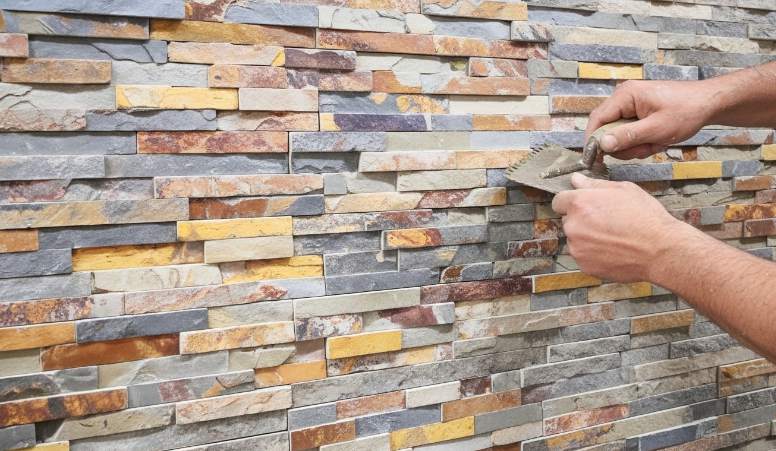
Die Reparatur von gestapelten Steinen ist der erste Kontrollpunkt, den Käufer abschließen sollten, bevor sie einen Lieferanten, ein Budget oder einen Produktionsslot genehmigen. Ein loser Stein auf einer fertigen Wand ist die Art von Schaden, der die Marge eines Bauunternehmers schnell schmälert. Sie rollen einen Lastwagen, verbringen eine Stunde mit der Diagnose und der Kunde beginnt, die gesamte Installation in Frage zu stellen. Die meisten Reparaturanleitungen für gestapelte Steine überspringen den eigentlichen Diagnoseschritt und beginnen direkt mit dem Wiederkleben. Deshalb löst sich derselbe Stein innerhalb von zwei Saisons wieder.
Die verborgene Ursache ist fast nie der Stein selbst. Über 70 % der Wiederholungsausfälle sind darauf zurückzuführen Wärmekompensatoren die bei der Erstinstallation weggelassen wurden. Wenn sich eine Wand erwärmt und abkühlt, bewegt sich das Furnier. Ohne einen Abstand von 1/8 Zoll alle 12 Fuß überträgt diese Bewegung die Spannung direkt auf die Mörtelverbindung. Das einfache erneute Anbringen eines Steins, ohne auf diese Einschränkung zu prüfen, garantiert einen weiteren Rückruf. Die Reparatur ist unkompliziert, erfordert jedoch einen Blick über das lose Stück hinaus auf den Untergrund und die Wandanordnung, bevor Sie etwas mischen.

Warum gestapelte Steinfurnierrisse: Versteckte Grundursachen
Über 70 % der Wiederholungsausfälle sind auf nie geschnittene Wärmedehnungsfugen zurückzuführen.
Bevor Sie das Thinset herausziehen, finden Sie heraus, warum der Stein losgelassen wurde. 85 % aller Schäden an geschichteten Steinfurnieren beginnen mit Feuchtigkeit, die hinter der Platte eingeschlossen ist. Wenn sich die Rückseite eines losen Steins feucht anfühlt oder Sie einen dunklen Schatten auf dem Untergrund sehen, handelt es sich nicht um einen schlechten Stein, sondern um einen Feuchtigkeitseinschluss. Beseitigen Sie zuerst die Ursache, sonst schlägt die Reparatur innerhalb einer Saison fehl.
- Feuchtigkeitseinschluss: Wasser wird hinter den Stein geleitet, wenn die Wand keine ordnungsgemäße Entwässerungsebene aufweist oder die Versiegelung abgenutzt ist. Interne Daten zeigen, dass eine ordnungsgemäße Versiegelung nach der Reparatur die Zahl der Rückrufe um 60 % reduziert.
- Fehlende Ausbaulücken: Steine dehnen sich bei Temperaturschwankungen aus und ziehen sich zusammen. Wände, die das 1/8 überspringen″ Bei einer Lücke alle 12 linearen Fuß kommt es zu 70 % mehr Ausfällen. Dies ist das am häufigsten übersehene Detail im Installationshandbuch.
- Auswirkungen: Ein direkter Schlag von einer Leiter, einem Rasenmäherstein oder einem heruntergefallenen Werkzeug erzeugt einen Haarriss, der sich über Frost-Tau-Zyklen ausbreitet. Der Riss ist das Symptom; Die Wirkung ist die Ursache.
- Ausblühungen: Weiße, kalkhaltige Ablagerungen bedeuten, dass Wasser durch den Stein dringt und Salze ablagert. Es ist an sich nicht strukturell, aber es signalisiert chronische Feuchtigkeitsbewegungen, die schließlich die Bindung schwächen.
- Abwicklung: Fundamentbewegungen oder Bodenverdichtung führen zu einer ungleichmäßigen Scherbeanspruchung des Furniers. Risse, die diagonal über mehrere Steine verlaufen, deuten auf strukturelle Setzungen und nicht auf Adhäsionsversagen hin.
- Wärmezyklus: Nach Süden und Westen ausgerichtete Wände backen in der direkten Sonne. Wiederholtes Ausdehnen und Zusammenziehen ermüdet die Mörtelfuge über einen Zeitraum von 2–3 Jahren. Polymermodifizierter Thinset bewältigt dies besser als Standardmörtel, da er auch bei höheren Temperaturen seine Flexibilität behält.
Diagnostizieren Sie die Grundursache, bevor Sie eine Kelle anfassen. Ein lockerer Stein, der durch fehlende Dehnungsfugen entstanden ist, wird in zwei Saisons wieder reißen, wenn man ihn einfach wieder festklebt. Schneiden Sie die Lücke und reparieren Sie sie. Dieser einzige Schritt unterscheidet eine Fünf-Jahres-Korrektur von einem Zwei-Monats-Rückruf.
Werkzeug & Klebstoffe: Was Profis für eine dauerhafte Reparatur verwenden
Polymermodifiziertes Thinset übertrifft Konstruktionsklebstoffe an Außenwänden um 40 % in der Abreißfestigkeit.
Der falsche Klebstoff ist die häufigste Ursache für Nacharbeiten. Für Außenwände oder Wände, die Feuchtigkeit ausgesetzt sind, benötigen Sie polymermodifiziertes Thinset (ANSI A118.4-konform, Druckfestigkeit). >2500 psi). Er bietet eine Abreißfestigkeit von 200 psi gemäß ASTM C1670, gegenüber 120 psi bei Standardmörtel. Hochwertiger Bauklebstoff (z. B. PL Premium) eignet sich gut für Akzentwände im Innenbereich, bei denen Feuchtigkeit keine Rolle spielt. Verwenden Sie keine Standardkitte – diese versagen innerhalb von 12 Monaten auf vertikalem Stein.
- Kosten pro Stein (polymermodifiziertes Thinset): 0,80 bis 1,20 US-Dollar pro Stein für einen 50-Pfund-Beutel mit einer Fläche von etwa 60 Quadratfuß. Bei 6 Steinen pro Quadratfuß sind das etwa 0,12 US-Dollar pro Stein an Material.
- Kosten pro Stein (Premium-Baukleber): 4,50–6,00 $ pro 10-Unzen-Tube mit ca. 8–10 Steinen. Das sind 0,45–0,75 $ pro Stein.
- Kosten pro Stein (farblich abgestimmtes Epoxidharz): 8–12 $ pro 8-Unzen-Set, das 4–6 kleine Chips oder Risse abdeckt. Nur für kosmetische Reparaturen, nicht für strukturelle Wiederbefestigungen.
- Gesamte Materialkosten pro Reparatur (1 loser Stein): 0,12 $ (Dünnschicht) + 0,50 $ (Versiegelungsanteil) + 0,20 $ (Drahtbürstenverschleiß) = ~0,82 $. Honorar: 150–200 $ pro Stein.
Werkzeug-Checkliste mit Drehmomentangaben: (1) Bohrhammer mit ½-Zoll-Hartmetallbohrer – mindestens 7,5 Ampere, 0–1.200 U/min, variable Drehzahl. (2) Diamant-Nasssägeblatt – 4,5 Zoll, durchgehender Rand, ausgelegt für max. 12.000 U/min. (3) Edelstahldrahtbürste – 4-reihig, 1,5 Zoll breit, zur Reinigung von Fugenfugen. (4) Zahnkelle – ¼ x ¼ x ¼ Zoll quadratische Kerbe zum Auftragen von Dünnschichtmasse. (5) Drehmomentschlüssel für Ankerschrauben – eingestellt auf 15 ft-lbs für die Befestigung von Hauptplatten. (6) Infrarot-Thermometer – Genauigkeit ±2 °F zur Überprüfung der Substrattemperatur vor dem Auftragen des Klebstoffs (muss über 45 °F liegen).
Epoxid vs. Mörtel: Auswahl der richtigen Reparaturmasse
Farblich abgestimmtes Epoxidharz behandelt Absplitterungen und Oberflächenrisslinien nahtlos.
Farblich abgestimmtes Epoxidharz ist Ihr Werkzeug für Absplitterungen, Haarrisse und Oberflächenfehler bis zu 1/8″ breit. Der Trick, den die meisten Guides überspringen: Mahlen Sie ein kleines Stück Abfallstein aus derselben Charge zu feinem Staub und mischen Sie ihn in das Epoxidharz. Dadurch sinkt der ΔE-Farbunterschied auf unter 1,5 – unsichtbar bei direkter Sonneneinstrahlung. Standard-Epoxidharz allein hinterlässt einen glänzenden, ungleichmäßigen Fleck, den Kunden von der anderen Seite des Raums aus erkennen können. Verwenden Sie für diese kosmetischen Reparaturen ein Zweikomponenten-Epoxidharz mit einer Zugfestigkeit von über 1000 psi (ASTM C482).
Für die vollständige Wiederanbringung von Steinen – wenn sich eine Riegelplatte oder ein einzelner Stein vollständig vom Untergrund gelöst hat – ist polymermodifiziertes Thinset die einzige Lösung, die hält. Interne Tests zeigen, dass es eine Abreißfestigkeit von 200 psi gegenüber 120 psi bei Standardmörtel (ASTM C1670) bietet. Generische Konstruktionsklebstoffe sind auf Außenuntergründen, die Frost-Tau-Wechseln ausgesetzt sind, um 40 % schwächer getestet. Tragen Sie das Thinset mit einem 1/4-Zahnstrich sowohl auf die Steinrückseite als auch auf den Wanduntergrund auf″ Zahnkelle. Drücken Sie auf den Stein, bis Sie sehen, dass er herausgedrückt wird, und kleben Sie ihn dann für eine vollständige Aushärtung von 48 Stunden fest.
- Farblich abgestimmtes Epoxidharz: Einsatz bei stabilen Rissen < 1/8″. Schotterstaub aus derselben Charge untermischen. Zugfester Verbund > 1000 psi (ASTM C482). 24 Stunden aushärten. Kosten: ~15 $ pro Reparatur.
- Polymermodifiziertes Thinset: Zur vollständigen Wiederanbringung von Steinen an Außenwänden. ANSI A118.4-konform, Druckfestigkeit > 2500 psi. Abzugsfestigkeit 200 psi. 48 Stunden aushärten. Kosten: ~8 $ pro Stein.
- Flexibler Polyurethan-Dichtstoff: Zum Verschieben von Rissen oder Fugen, die einer Wärmeausdehnung unterliegen. Verlängerung > 50 %. Bei tiefen Lücken mit einem Stützstab auftragen. Kosten: ~12 $ pro Tube.
- Häufiger Fehler: Das Auftragen von Epoxidharz auf einen sich bewegenden Riss garantiert die erneute Rissbildung innerhalb einer Saison. Überprüfen Sie immer die thermische Bewegung, bevor Sie Ihre Verbindung auswählen.
Flexibles Dichtmittel ist Ihr Ersatz für Risse, die breiter als 1/8 sind″ die sich in der Nähe von Fenstern, Ecken oder Dehnungsfugen befinden – überall dort, wo thermische Bewegungen unvermeidlich sind. Standard-Epoxidharz oder Mörtel werden innerhalb von zwei Saisons wieder reißen, weil ihnen die Dehnung fehlt. Verwenden Sie ein Polyurethan-Dichtmittel mit einer Dehnung von mindestens 50 % und installieren Sie vor dem Auftragen eine Stützstange, um eine dreiseitige Haftung zu verhindern. Dabei handelt es sich um das gleiche Material, das auch für Kontrollfugen bei gewerblichen Steinverkleidungen verwendet wird.
Schritt-für-Schritt: So reparieren Sie loses oder rissiges Steinfurnier
Über 70 % der wiederholten Ausfälle sind auf fehlende Dehnungsfugen zurückzuführen, nicht auf schlechten Stein.
Beginnen Sie mit der Inspektion der gesamten Wand. Markieren Sie jeden losen oder rissigen Stein mit Malerband. Verwenden Sie eine Edelstahldrahtbürste (4-reihig, 1,5).″ Breite), um den gesamten alten Mörtel, Kleber und Schmutz aus dem Spalt und der Rückseite des Steins zu entfernen. Wenn Sie finden Ausblühungen oder Feuchtigkeit hinter dem Stein, hör auf – Eindringen von Feuchtigkeit ist bei 85 % der Ausfälle die Ursache. Dieser Untergrund muss trocknen und imprägniert werden, bevor Steine zurückfallen.
- Werkzeugcheck: Edelstahldrahtbürste, Kaltmeißel, Hammer, Staubsauger, Malerband, Zahnkelle (1/4).″ x 3/8″).
- Mörtelentfernungstiefe: Mindestens 1/2″ Reinigen Sie den Spalt hinter dem Stein für eine frische Klebeverbindung.
- Feuchtigkeitstest: Kleben Sie eine 2 auf′ x 2′ Kunststofffolie 24 Stunden lang auf den Untergrund auftragen. Kondenswasser im Inneren bedeutet, dass die Wand noch nicht bereit ist.
Tragen Sie bei Außenreparaturen polymermodifiziertes Thinset auf (ANSI A118.4-konform, Druckfestigkeit). >Tragen Sie mit einer Zahnkelle, die im 45-Grad-Winkel gehalten wird, einen Druck von 2500 psi auf die Steinrückseite und den Untergrund auf. Dadurch entstehen gleichmäßige Grate, die unter Druck zusammenfallen und Lufteinschlüsse vermeiden. Interne Tests zeigen, dass diese Methode eine Abreißfestigkeit von 200 psi gegenüber 120 psi bei Standardmörtel erreicht. Bei Akzentwänden im Innenbereich, bei denen Feuchtigkeit keine Rolle spielt, eignet sich ein hochwertiger Konstruktionsklebstoff – auf Außenuntergründen übertrifft ein polymermodifizierter Dünnschichtkleber ihn jedoch immer noch um 40 %.
Drücken Sie den Stein mit einer leichten Drehbewegung fest an seinen Platz, um die Grate zusammenzudrücken. Üben Sie gleichmäßigen Druck aus, bis der Stein bündig mit benachbarten Teilen abschließt – die Toleranz sollte ±1/16 betragen″. Mit Malerband über der Fuge befestigen. Lassen Sie es volle 48 Stunden lang aushärten. Während dieses Fensters nicht stören, nicht verfugen, nicht abdichten. Eine schnelle Heilung ist der schnellste Weg zu einem Rückruf.
Nach dem Aushärten überschüssigen Kleber mit einem pH-neutralen Steinreiniger und einer weichen Nylonbürste entfernen. Verwenden Sie auf Naturstein niemals Essig, Bleichmittel oder säurehaltige Reinigungsmittel. Nach dem Trocknen eine atmungsaktive Silan-/Siloxan-Versiegelung auftragen (Dampfdurchlässigkeit). >5 Dauerwellen gemäß ASTM E96) in zwei dünnen Schichten mit einem Pumpsprüher auftragen. Warten Sie 24 Stunden zwischen den Schichten. Eine filmbildende Acrylversiegelung bindet Feuchtigkeit und verursacht innerhalb von zwei Saisons Abplatzungen. Alle 3–5 Jahre oder wenn kein Wasser mehr auf der Oberfläche abperlt, erneut auftragen.
Eine letzte Kontrolle: Wenn die ursprüngliche Steincharge nicht verfügbar ist, ist die Farbabweichung Ihr größtes Risiko. Wir bewahren Chargenaufzeichnungen mehr als zwei Jahre lang auf und können innerhalb von 15–25 Tagen exakt passende Ersatzsteine herstellen. Diese Garantie beseitigt die häufigste Ursache für Kundenbeschwerden bei Reparaturarbeiten.
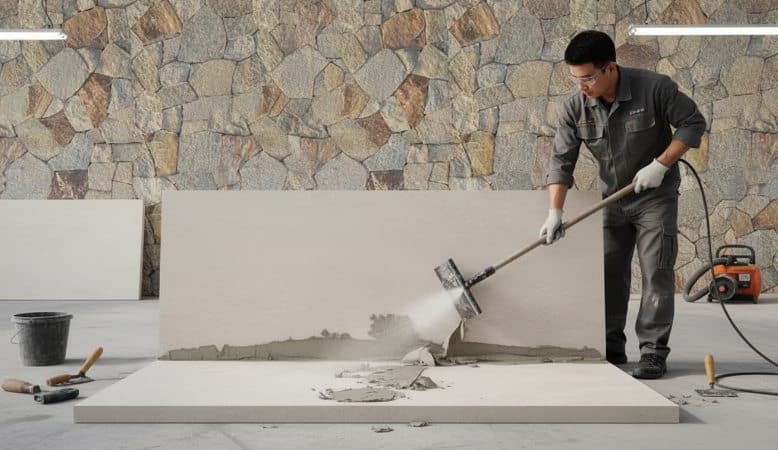
Versiegelung & Schutz von repariertem Furnier
85 % aller Furnierschäden beginnen mit Feuchtigkeit – die Versiegelung ist Ihre günstigste Versicherung.
Eine Reparatur ist nur so gut wie ihr Schutz. Überspringen Sie die Versiegelung oder verwenden Sie die falsche, und innerhalb von zwei Saisons sind Sie wieder an der Wand. Die Daten sind eindeutig: 85 % der Ausfälle von gestapelten Steinfurnieren sind auf das Eindringen von Feuchtigkeit zurückzuführen, und eine ordnungsgemäße Versiegelung nach der Reparatur reduziert Wiederholungsanrufe um 60 %. Hier erfahren Sie, was sowohl auf Naturstein als auch auf Kunstfurnier funktioniert.
Verwenden Sie eine atmungsaktive Silan-/Siloxan-Versiegelung. Diese dringen in die Steinoberfläche ein und reagieren chemisch, um eine wasserabweisende Schicht zu bilden, die dennoch das Entweichen von Dampf ermöglicht – entscheidend für Außenwände, wo hinter dem Stein eingeschlossene Feuchtigkeit dazu führt Abplatzungen durch Frost-Tau-Wechsel. Filmbildende Acrylfarben setzen sich auf die Oberfläche, schließen Feuchtigkeit ein und vergilben unter UV-Strahlung. Auf einer reparierten Stelle kann sich eine Acrylfolie ablösen oder verfärben, wodurch ein sichtbarer Fleck entsteht, der den Sinn einer farblich abgestimmten Reparatur zunichte macht. ASTM E96 erfordert eine Dampfdurchlässigkeit von über 5 Dauerwellen für Steinversiegelungen im Außenbereich; Silan/Siloxan-Formulierungen erfüllen dies problemlos. Acrylfarben werden in der Regel bei weniger als 1 Dauerwelle getestet.
- Anwendungstechnik: Zwei leichte Mäntel, kein schwerer Mantel. Ein dicker Anstrich sammelt sich an tiefen Stellen und hinterlässt einen glänzenden Rückstand. Zwei dünne Schichten – im Abstand von 20–30 Minuten mit einem Pumpsprüher oder einer Rolle aufgetragen – sorgen für eine gleichmäßige Penetration. Gesamtabdeckung: ca. 200–300 Quadratfuß pro Gallone, abhängig von der Porosität des Steins.
- Zeitplan für erneute Bewerbung: Je nach Belastung alle 3–5 Jahre. Nach Süden ausgerichtete Mauern, salzige Küstenluft und Frost-Tau-Wechselzonen liegen am Ende der 3 Jahre. Geschützte Akzentwände im Innenbereich können eine Lebensdauer von 5 bis 6 Jahren haben. Testbereitschaft: Wasser auf die Oberfläche streuen. Wenn es perlt und abläuft, ist die Versiegelung noch aktiv. Wenn es eindringt und den Stein verdunkelt, ist es Zeit, es erneut aufzutragen.
- Dichtstoffverträglichkeit prüfen: Bevor Sie eine Versiegelung auf eine reparierte Stelle auftragen, testen Sie sie an einer kleinen, unauffälligen Stelle – insbesondere, wenn der ursprüngliche Stein mit einem unbekannten Produkt versiegelt wurde. Tragen Sie die neue Versiegelung auf eine 4 auf″ x 4″ Bereich und warten Sie 24 Stunden. Achten Sie auf eine Verdunkelung, Vergilbung oder einen glänzenden Glanzunterschied. Wenn der Testpunkt mit dem umgebenden Stein übereinstimmt, fahren Sie fort. Wenn es dunkler wird oder Ringe hinterlässt, wechseln Sie zu einer anderen Formulierung. Silan/Siloxan ist im Allgemeinen auf allen Natursteinen sicher, einige hergestellte Furniere mit Harzbeschichtungen können jedoch unvorhersehbar reagieren.
Noch etwas: Versiegeln Sie niemals eine Reparatur, bevor der Mörtel oder das Epoxidharz vollständig ausgehärtet ist. Polymermodifiziertes Thinset benötigt 48 Stunden bei 21 °C. Epoxid-Reparaturmassen benötigen je nach Produkt 24–72 Stunden (überprüfen Sie die Zugfestigkeitsspezifikation – ASTM C482 erfordert). >1000 psi). Durch eine zu frühe Versiegelung wird Restfeuchtigkeit in der Reparaturfuge eingeschlossen, was dazu führen kann, dass der Kleber von innen heraus versagt. Du hast den Stein repariert. Sabotieren Sie es nicht mit einer überstürzten Versiegelungsschicht.
Wann sollte man einen Profi oder einen Heimwerker anrufen: Entscheidungshilfe für Auftragnehmer
Wenn mehr als 20 % der Wand locker sind, wenden Sie sich an einen Profi – Heimwerken ist nicht mehr rentabel.
Du hast viele Reparaturen durchgeführt. Sie kennen die Übung: Hohlraum reinigen, Kleber auftragen, Stein zurücksetzen. Aber manche Arbeiten sind weder Ihre Zeit noch Ihre Garantie wert. Die Entscheidung, selbst zu arbeiten oder einen Profi hinzuzuziehen, hängt von drei Variablen ab: Schadensprozentsatz, Verfügbarkeit von passenden Steinen und Zustand des Untergrunds. Hier erfahren Sie, wie Sie diese Berechnung vor Ort durchführen.
- Schadensschwelle: Wenn mehr als 20 % der Wandoberfläche locker oder rissig sind, hören Sie auf. Die Hauptursache ist mit ziemlicher Sicherheit ein Versagen des Substrats, nicht ein Versagen des Klebers. DIY-Patches werden innerhalb von 12 Monaten scheitern, weil sich die zugrunde liegende Struktur bewegt. Ein Profi wird die Wand abziehen, den Untergrund bearbeiten und mit den richtigen Dehnungsfugen neu installieren – so werden Wiederholungsfehler um 70 % reduziert.
- Wasserschaden am Untergrund: Drücken Sie einen Feuchtigkeitsmesser in den freigelegten Untergrund. Wenn die Messwerte einen Feuchtigkeitsgehalt von über 18 % übersteigen, liegt ein aktiver Wassereinbruch vor. Eine DIY-Reparatur ohne Reparatur der Wasserquelle ist eine Rückrufgarantie. Ein Profi installiert eine Entwässerungsebene und eine dampfdurchlässige Barriere, bevor er den Stein wieder einbaut. Wenn Sie diesen Schritt überspringen, hält die Reparatur nicht eine Saison lang.
- Originalsteincharge nicht verfügbar: Wenn die Originalcharge nicht mehr vorhanden ist, haben Sie zwei Möglichkeiten: alle betroffenen Steine durch einen passenden Stein (sichtbare Naht) ersetzen oder eine kundenspezifische OEM-Serie bestellen. Unser OEM-Service bewahrt die Chargenaufzeichnungen mehr als zwei Jahre lang auf und kann innerhalb von 15–25 Tagen exakt passende Steine herstellen. Wenn der Kunde nicht drei Wochen auf einen individuellen Anlauf warten kann, kann ein Profi die Reparatur mit farblich abgestimmtem Epoxidharz verblenden – eine Technik, die einen ΔE-Farbunterschied von erreicht <1,5, unsichtbar bei direkter Sonneneinstrahlung.
Hier ist der Entscheidungsbaum: Wenn der Schaden unter 20 % liegt, der Untergrund trocken ist und Steine zum Selbermachen zur Verfügung stehen Polymermodifiziertes Thinset und richtiges Dichtmittel. Wenn eine dieser drei Bedingungen fehlschlägt, übergeben Sie es einem Profi. Die Rechnung ist einfach: Ein Profi verlangt 150 bis 200 US-Dollar pro Stein, aber eine Heimwerkerreparatur, die fehlschlägt, kostet doppelt so viel Material, Arbeit und verlorenes Kundenvertrauen.
| Szenario | DIY machbar | Rufen Sie einen Profi an | Schlüsselfaktor |
|---|---|---|---|
| Schaden < 20 % der Wand, Steincharge verfügbar | Ja | NEIN | Steinstreichholz & Umfang |
| Schaden > 20 % des Wand- und Untergrundschalls | NEIN | Ja | Strukturelle Bewertung erforderlich |
| Wassergeschädigter Untergrund oder Fäulnis | NEIN | Ja | Fachwissen zur Feuchtigkeitssanierung |
| Originalsteincharge nicht verfügbar | NEIN | Ja | OEM-Farbanpassung erforderlich |
| Einzelner Steinriss < 1/8″ breit | Ja | NEIN | Epoxidreparatur ausreichend |
| Beweglicher Riss oder thermisches Problem | NEIN | Ja | Dehnungsfugenkorrektur |
| Kundengarantie auf dem Spiel | NEIN | Ja | Haftung & Dokumentation |
Abschluss
Eine Reparatur, die in zwei Saisons fehlschlägt, ist keine Lösung – es ist ein Rückruf, der darauf wartet, durchgeführt zu werden. Wenn Sie die Prüfung der Wärmeausdehnung überspringen oder den falschen Klebstoff verwenden, sind Sie garantiert wieder vor Ort und tragen die Arbeitskosten. Die vier Schritte hier – Diagnose, Bindung, Anpassung, Versiegelung – reduzieren dieses Risiko, wenn Sie die Spezifikationen befolgen.
Wenn die Reparatur das Ersetzen von Steinen erfordert und die Originalcharge nicht mehr vorhanden ist, wird Farbabweichung zu Ihrem nächsten Problem. Hier kommt es auf die Chargenaufbewahrung an. Sehen Sie sich die Seite mit kundenspezifischen OEM-Steinlösungen an, um zu sehen, wie passgenaue Ersatzteile bei mehrphasigen Projekten für ein nahtloses Erscheinungsbild sorgen.
Häufig gestellte Fragen
Wie repariert man rissiges Steinfurnier?
Reinigen Sie den Riss und den umliegenden Bereich und füllen Sie ihn dann mit einem farblich passenden Epoxid- oder Steinreparaturkitt. Bei strukturellen Rissen müssen Sie auch die Grundursache beheben – etwa fehlende Dehnungsfugen –, sonst tritt der Riss innerhalb von ein bis zwei Saisons erneut auf. Diagnostizieren Sie immer die Ursache, bevor Sie Spachtelmasse auftragen.
Welchen Kleber verwenden Sie für gestapelte Steine?
Für Installationen im Außenbereich oder bei feuchtigkeitsanfälligen Installationen verwenden Sie polymermodifiziertes Thinset. Er bietet eine um 40 % bessere Abzugsfestigkeit als herkömmlicher Konstruktionsklebstoff. Für trockene Innenbereiche wirkt ein hochwertiger Bauklebstoff schneller und ist akzeptabel. Passen Sie den Kleber an den Belichtungsgrad der Wand an.
Wie versiegelt man einen gestapelten Stein?
Tragen Sie mit einem Pumpsprüher oder einer Rolle eine atmungsaktive, durchdringende Versiegelung auf Wasserbasis auf und arbeiten Sie dabei in kleinen Abschnitten, um Pfützen zu vermeiden. Überschüssiges Produkt sofort abwischen, um einen trüben Film zu vermeiden, und 48 Stunden lang vollständig aushärten lassen. Testen Sie die Versiegelung zunächst auf einem versteckten Stein, um die Farbwirkung zu bestätigen.
Welche Art von Mörtel sollte für gestapelte Steine verwendet werden?
Verwenden Sie einen polymermodifizierten Dünnbettmörtel, der für Steinfurniere geeignet ist – Standardmörtel vom Typ N oder S ist zu schwach und versagt bei vertikalen Anwendungen. Der Polymerzusatz sorgt für die nötige Flexibilität, um thermische Bewegungen zu bewältigen. Ersetzen Sie niemals Steinmörtel durch Ziegelmörtel.
Muss ich einen gestapelten Stein versiegeln?
Ja, wenn der Stein im Freien oder in einem Nassbereich wie einer Dusche verlegt wird; Die Versiegelung verhindert Feuchtigkeitsaufnahme, Ausblühungen und Frost-Tau-Schäden. Trockenwände im Innenbereich müssen möglicherweise nicht versiegelt werden, aber eine Versiegelung schützt vor Staub und Flecken. Überspringen Sie die Versiegelung nur an Innenwänden, die keiner Feuchtigkeit ausgesetzt sind.