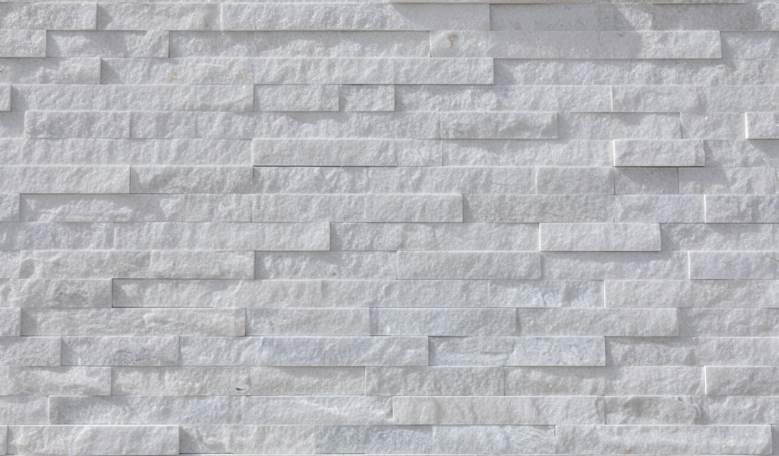
source stacked stone La Chine est le premier point de contrôle que les acheteurs doivent verrouiller avant d'approuver un fournisseur, un budget ou un créneau de production. Si vous cherchez à source stacked stone from China for the first time, the real challenge isn’t finding a supplier — it’s figuring out who actually owns the factory and who is just forwarding your inquiry with a 30% markup. Every week, I talk to importers who thought they had a direct deal, only to discover their “manufacturer” was a trading company operating out of a shared office in Foshan. The difference isn’t just price; it’s control over quality, color consistency, and lead time.
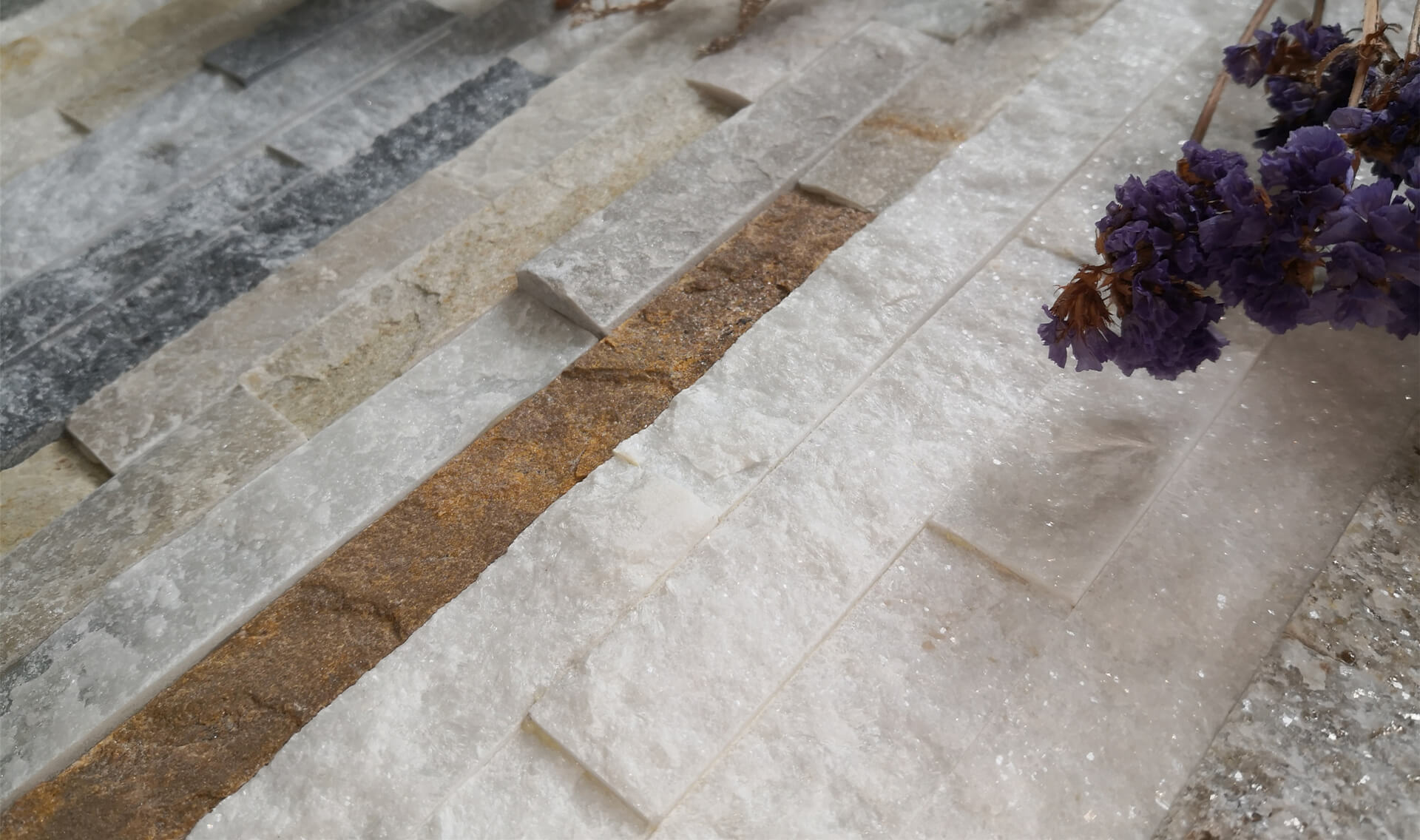
Take color matching as an example. A wholesale stacked stone manufacturer China like Top Source Slate will have a dedicated color-range archive from their own quarry and a production-sample retention protocol that locks the exact blend before bulk cutting begins. Trading companies rarely hold that archive. They order from whichever factory has open capacity that week, which is exactly how you end up with two containers of “Ice Grey” quartzite that look like entirely different materials side by side. That risk alone can eat your margin faster than any shipping surcharge.
Why Source Stacked Stone from China?
Points clés à retenir : Sourcing stacked stone directly from a Chinese manufacturer reduces per-unit cost by 30–50% versus trading companies. Expect FOB prices of $8–$18/m² for standard 6×24 in. quartzite ledger panels. The number-one hidden risk is color inconsistency between batches—insist on a color-range archive from the quarry and a signed production-sample retention protocol before placing bulk orders.
China produces roughly 40 percent of the world’s natural stone. The concentration of advanced manufacturing capability in Hebei province means you can source quartzite, slate, marble, and sandstone from the same region, often from the same factory. Top Source Slate has 18 years of export experience and ships to over 20 countries. Sourcing from a factory-direct manufacturer instead of a middleman allows global distributors to buy into a consistent production process that they can verify, replicate, and scale safely worldwide.
Step 1: Locate a Verified Manufacturer
The buyer’s deepest fear isn’t price—it’s receiving a container of mismatched, off-spec stone that kills their margin and reputation. Here is the exact process to eliminate that risk.
You’re a novice importer looking at Alibaba and seeing 50 listings for “stacked stone manufacturer.” Half are trading companies marking up 20-30%. The other half are real factories. The difference isn’t just price—it’s accountability. A factory controls the quarry, the cutting, and the QC. A trading company controls nothing. If your shipment arrives with the wrong color run, a trading company will blame the factory. A direct manufacturer has to fix it. Follow this checklist to filter middlemen:
- Live Floor Verification: Request a live video tour of the factory floor. Ask them to walk past the cutting line and show you the raw block inventory. Legitimate manufacturers in Hebei will have no problem showing you their infrared machinery.
- Color-Range Archive: Natural stone varies by quarry block and by season. Ask the supplier for photos of 10 consecutive production batches of the same color (e.g., Rustic Gold Rush) to map out acceptable variation margins.
- Independent Third-Party Auditing: Spend $300–$500 for a third-party inspection (SGS, Bureau Veritas) on your first container to verify dimensions, cohérence des couleurs, and packaging integrity before releasing balances.
Step 2: Request Samples and Compare Pricing
Free samples are a red flag for serious buyers. A legitimate manufacturer knows that a 2-inch chip tells you nothing about color consistency across a 200 m² production run. Pay for the full panel — it’s the cheapest insurance you’ll buy.
Arrêtons de parler des « échantillons gratuits ». Si un fournisseur vous propose des échantillons gratuits de pierres empilées, il vous envoie la pièce la plus belle de l'ensemble de sa carrière, ce qui est inutile pour correspondre à une commande groupée. Des échantillons payants, coûtant entre 20 $ et 50 $, vous achètent un panneau de grand livre complet (6 × 24 pouces) à partir du lot de production réel. C'est le seul moyen d'effectuer une véritable inspection visuelle et d'évaluer correctement l'ajustement des bords en Z emboîtables. Chez Top Source Slate, une couleur ou un design personnalisé peut être assorti et cet échantillon expédié dans les 3 jours car nous contrôlons directement les lignes de découpe.
Parlons maintenant de ce que vous payez réellement lorsque vous passez de l’échantillon au conteneur. Le prix que vous verrez indiqué dépendra entièrement du commerce Incoterm paramètres :
- FOB (franco à bord) : Le prix départ usine plus le chargement sur le navire au port chinois. Pour un panneau de rebord en quartzite standard de 6 × 24 pouces, comptez entre 8 et 18 $/m². Vous êtes propriétaire du risque et du fret à partir du port.
- CIF (Coût, Assurance, Fret) : Le fournisseur propose un prix qui comprend l'expédition et l'assurance jusqu'à votre port de destination. Comparez le CIF du fournisseur à votre propre calculateur de fret pour voir s'il augmente les marges d'expédition.
- LDP (droits débarqués acquittés) : The supplier handles everything — shipping, customs clearance, duties, and delivery to your warehouse. Only use LDP if you have zero experience with customs brokers.
For a detailed template on what to write in your sample request email — including how to demand a production-sample retention protocol — read our guide on Comment demander des échantillons de pierres empilées. Send a specific request for a 6×24 in. quartzite panel in a named color, with a request for the infrared-cut edge verification photo.
Step 3: Verify Quality Control and Production
Most suppliers inspect a panel once. We inspect every panel twice before it touches a crate. That double pass is the difference between a <2% rejection rate and a container full of headaches.
The number-one hidden risk in sourcing stacked stone from China isn’t price. It’s color rendering gaps and dimensional drift between batches. A trading company buys from three different quarries to fill your order, then tells you “stone is a natural product.” That’s a failure of process. A direct manufacturer controls the entire chain, from block selection to the final box.
Here is the three-tier QC protocol that separates a factory from a middleman. If a supplier cannot walk you through these three stages, you are not dealing with a real manufacturer:
- Raw Material Sorting: Every quarry block is inspected for natural fissures, color veins, and structural integrity before it enters the cutting line. Blocks that fail are rejected on the spot.
- Infrared Precision Cutting: The factory uses automated infrared cutting equipment to achieve sub-millimeter precision, completely eliminating the uneven gaps and wavy layouts that plague hand-cut stone.
- Two-Pass Final Inspection: An in-house team inspects every single panel twice for color match, edge finish, and thickness grid, immediately pulling panels with structural gaps or surface glue residues.
Step 4: Arrange Packaging and Shipping
The biggest hidden cost in sourcing stacked stone isn’t the stone — it’s the shipping and packaging failure that turns a $10/m² product into a $15/m² headache.
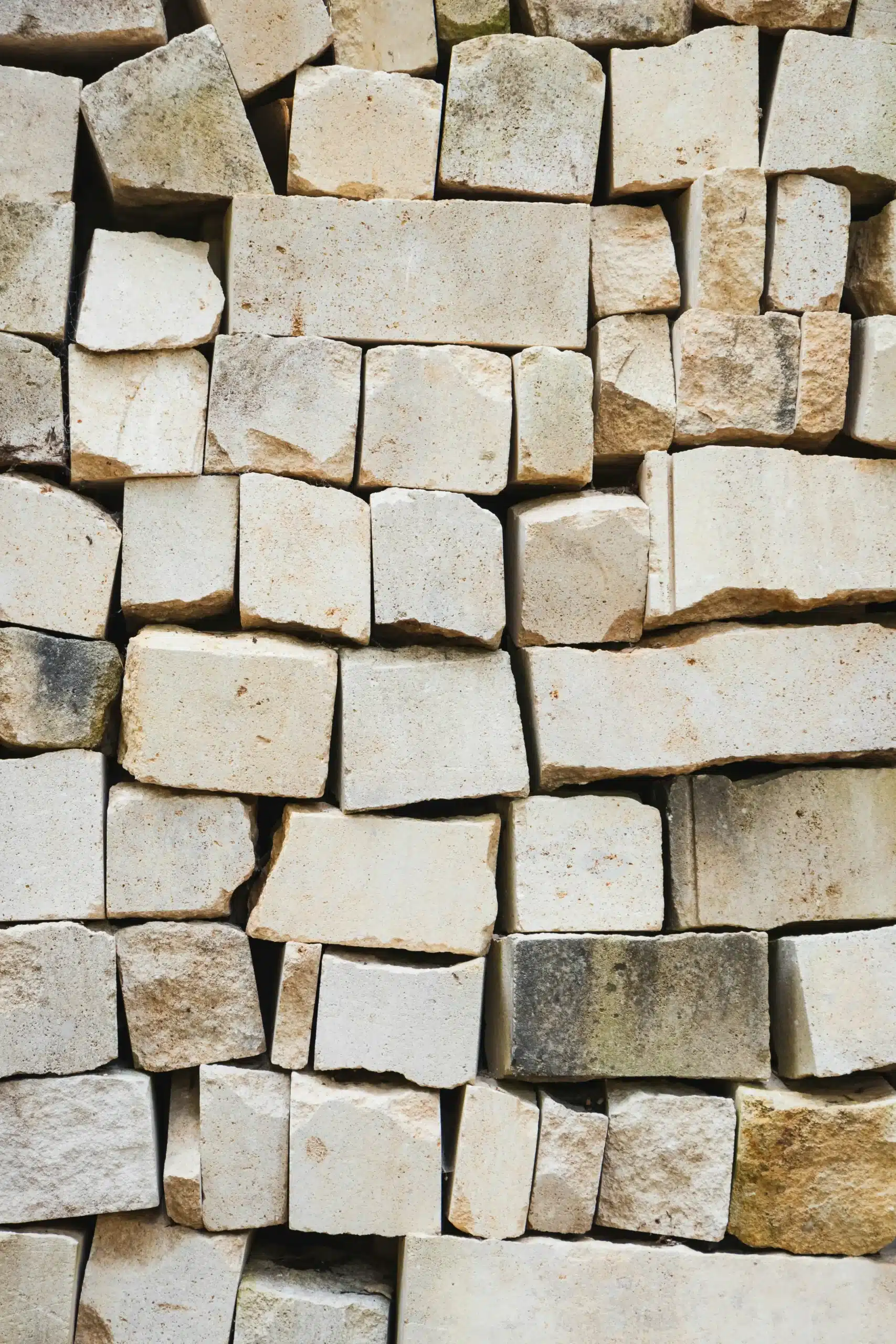
Standard packaging for stacked stone panels from a professional manufacturer like Top Source Slate follows a specific protocol. It’s not just a box and some bubble wrap. The sequence is: corrugated box (inner protection for each panel), then a plywood crate (structural rigidity), then palletization (forklift access), and finally container airbags and steel wire reinforcement (load shifting prevention).
- Container Payload Capacity: A standard 20ft FCL holds 200–300 m² of ledger panels. A 40ft HC holds 400–600 m². Plan your order volume around these numbers to avoid paying for half-empty slots.
- Load Securing Protocols: The factory uses pneumatic airbags and wire reinforcement to prevent panels from shifting during transit. Skipping this step risks 5–10% breakage on arrival.
- ISPM-15 Fumigation: All solid plywood crates must display visible heat-treated stamps. Ship without it, and your container faces mandatory port quarantine re-packing at your cost ($300–$600 minimum).
For a deeper breakdown of logistics timelines, port documentation, and carrier selection, see the full guide on shipping stacked stone from China.
Step 5: Customs Clearance & HS Code
Si votre fournisseur expédie sans certificat de fumigation pour la caisse en contreplaqué, votre conteneur reste au port pendant 3 semaines. Ce retard coûte plus cher que la pierre elle-même.
Le Code HS Le choix de vos panneaux de pierre empilés dépend entièrement du matériau et non de la forme. Vous devez bien faire les choses, car une erreur de classification déclenche une retenue douanière et une pénalité de 15 % aux États-Unis. Pour les panneaux de quartzite naturel, d'ardoise ou de marbre, le code correct est 6802.21 (pierre naturelle, polie ou autrement travaillée). Pour la pierre reconstituée ou de culture (fausse pierre à base de ciment qui est intrinsèquement exonérée des surtaxes de la liste 4A section 301), le code passe à 6810.19.
The real hidden cost is not the duty — it is the documentation consistency. Request a formal Certificat d'origine (Form A for EU, GSP for US) to qualify for reduced duty rates. Without it, you pay the full Most-Favored-Nation rate, which adds 2–4% to your landed cost. For a 40ft HC container (400–600 m²), that is an extra $400–$1,200 you did not budget for. For a detailed breakdown of specific HS codes and duty rates by country, read our full guide: Stacked Stone HS Code: Import Duties & Customs Clearance for 2026.
Conclusion
Sourcing stacked stone from China is a proven path to better margins, but only when you prioritize factory-direct partnerships that offer transparent pricing, rigorous quality control, and consistent color matching. Les étapes de ce guide (de la vérification du fabricant à l'obtention d'un protocole d'échantillon signé) sont conçues pour éliminer les risques qui font trébucher les importateurs novices.
Consultez le catalogue de produits sur Top Source Slate pour comparer les panneaux de registre en quartzite standard et les options OEM personnalisées qui correspondent parfaitement aux exigences de votre marché cible.
Foire aux questions
Quels sont les inconvénients des pierres empilées ?
Les principaux inconvénients sont la variation de couleur entre les lots et les coûts de main-d'œuvre d'installation plus élevés en raison des formes irrégulières. Vous devez également sceller régulièrement la pierre naturelle pour éviter les taches et les dommages causés par l’humidité. Demandez toujours un échantillon de production et un budget pour une installation professionnelle.
Quelle est la différence entre la pierre empilée et la pierre ledgestone ?
La pierre empilée se compose de pièces rectangulaires uniformes disposées en rangées serrées, tandis que la pierre de ledgestone comporte des pièces plus longues et plus variées avec un rebord horizontal prononcé. Ledgestone crée un aspect plus robuste et rustique. Choisissez selon que vous souhaitez une finition élégante ou texturée.
Combien coûte la pose de pierres empilées sur une cheminée ?
Pour un foyer standard, attendez-vous à payer entre 800 $ et 2 500 $ pour le matériau en pierre seul, plus 1 000 $ à 2 500 $ pour une installation professionnelle. Le coût total du projet varie généralement de 1 800 $ et plus. Obtenez d’abord un devis pour les matériaux, puis tenez compte des tarifs de main-d’œuvre locaux.
Quels sont les différents types de stackstone ?
Les types courants comprennent le quartzite, l’ardoise, le calcaire, le basalte et la pierre de culture manufacturée. Le quartzite et l’ardoise sont les plus populaires pour leur durabilité et leur gamme de couleurs naturelles. Faites correspondre le type de pierre à votre climat et à votre application pour de meilleurs résultats.
Combien de temps dure une pierre empilée ?
La pierre naturelle empilée peut durer de 50 à 100 ans ou plus lorsqu’elle est correctement installée et scellée. La durée de vie dépend du type de pierre, des conditions climatiques et du fait que l'installation comprend ou non une barrière contre l'humidité appropriée. Le rescellement annuel prolonge considérablement la durée de vie dans les climats de gel-dégel.