Source Stacked Stone from China: Cut Costs Without Quality Risk

wholesale stacked stone manufacturer China
Czas czytania: 20 minut  |. Liczba słów: 5426

Spis treści

source stacked stone China is the first checkpoint buyers should lock before they approve a supplier, budget, or production slot. If you are looking to source stacked stone from China for the first time, the real challenge isn’t finding a supplier — it’s figuring out who actually owns the factory and who is just forwarding your inquiry with a 30% markup. Every week, I talk to importers who thought they had a direct deal, only to discover their “manufacturer” was a trading company operating out of a shared office in Foshan. The difference isn’t just price; it’s control over quality, color consistency, and lead time.

Take color matching as an example. A wholesale stacked stone manufacturer China like Top Source Slate will have a dedicated color-range archive from their own quarry and a production-sample retention protocol that locks the exact blend before bulk cutting begins. Trading companies rarely hold that archive. They order from whichever factory has open capacity that week, which is exactly how you end up with two containers of “Ice Grey” quartzite that look like entirely different materials side by side. That risk alone can eat your margin faster than any shipping surcharge.

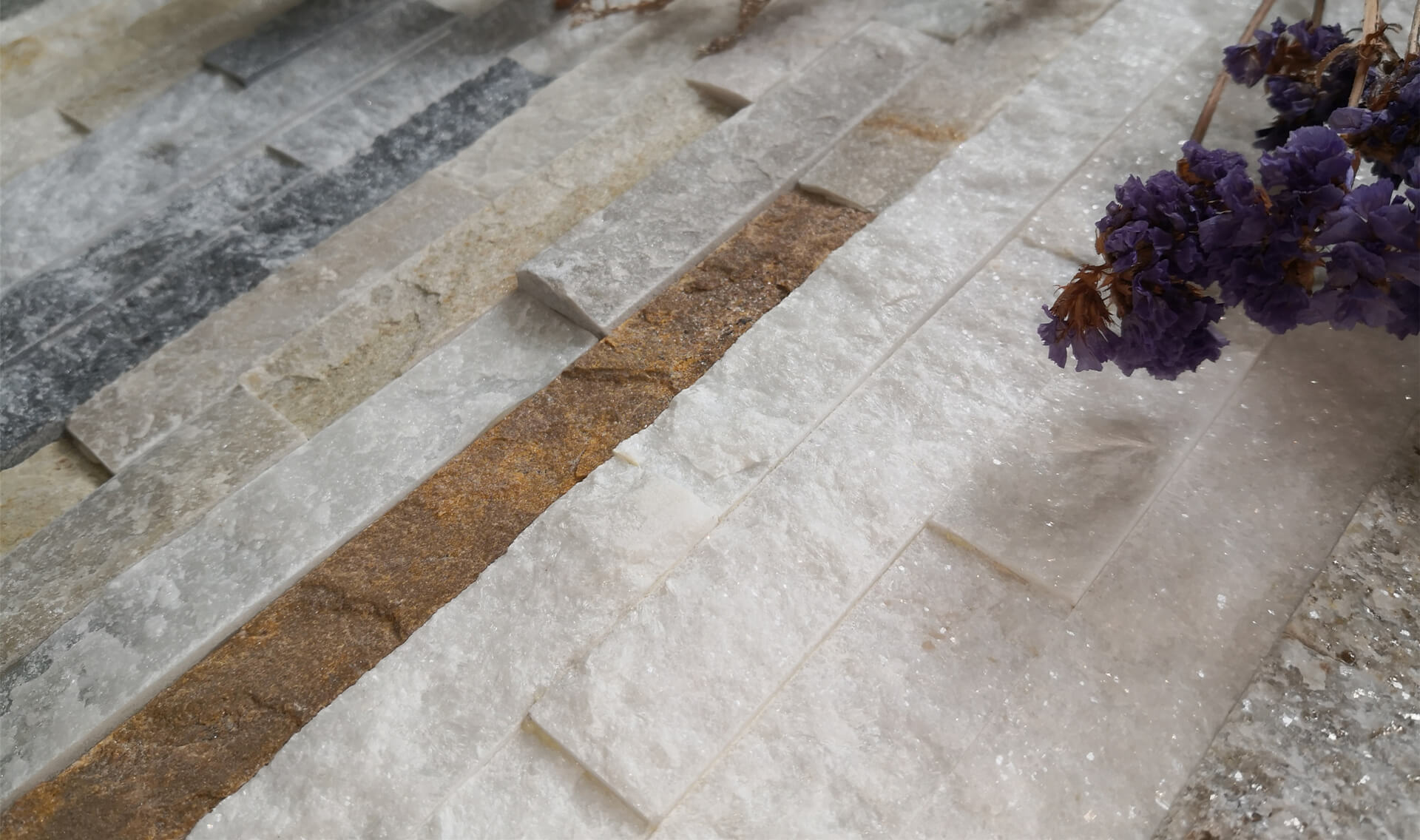
Top Source Slate showcasing premium stacked stone products

Why Source Stacked Stone from China?

If you are reading this, you already know the math works. A direct purchase from a Chinese stacked stone manufacturer like Top Source Slate can cut your unit cost by 30 to 50 percent compared to buying through a domestic distributor or a trading company. But the reason most novice importers fail isn’t price. It’s inconsistency. The stone arrives, and the color doesn’t match the sample. The thickness varies by 3 mm from panel to panel. The container gets held at customs because the HS code was wrong. This guide exists to make sure that does not happen to you.

Kluczowe wnioski: Sourcing stacked stone directly from a Chinese manufacturer reduces per-unit cost by 30–50% versus trading companies. Expect FOB prices of $8–$18/m² for standard 6×24 in. quartzite ledger panels. The number-one hidden risk is color inconsistency between batches—insist on a color-range archive from the quarry and a signed production-sample retention protocol before placing bulk orders.

China produces roughly 40 percent of the world’s natural stone. The concentration of advanced manufacturing capability in Hebei province means you can source quartzite, slate, marble, and sandstone from the same region, often from the same factory. Top Source Slate has 18 years of export experience and ships to over 20 countries. But longevity alone does not guarantee quality. What separates a reliable manufacturer from a middleman is what happens inside the factory walls before your container is loaded.

When you evaluate a wholesale stacked stone manufacturer China, the first thing to verify is whether they own the production line. A trading company will show you a polished website and a catalog of products they do not make. A direct manufacturer will have a dust-covered workshop, infrared cutting equipment, and a QC station where every panel gets inspected. The difference in markup is 20 to 30 percent. The difference in quality control is night and day.

Start by requesting a live video tour of the factory floor. A legitimate manufacturer will not hesitate to walk you through their operation. Ask to see the raw block inventory — this tells you whether they control the quarry relationship or just buy finished panels from a third party. Check for Alibaba Gold Supplier status and a verifiable business license. But do not stop there. Cross-reference the company name with export records on sites like ImportGenius or Panjiva. If they have shipped stacked stone containers to buyers in your region consistently over several years, that is a signal worth trusting.

Once you identify a candidate factory, the next step is to request samples and compare pricing. Do not ask for free samples alone — a free sample set typically includes two or three small pieces that cannot represent the full color range of a production batch. Invest in paid samples that include full-size 6×24 in. panels. Expect to pay $20 to $50 per sample set, including shipping. A factory that can produce a custom color match and ship the sample within three days — like Top Source Slate does — demonstrates production agility and serious intent.

When comparing pricing, understand the difference between FOB, CIF, and LDP. FOB (Free on Board) means the price covers the goods loaded onto the vessel at the Chinese port. CIF (Cost, Insurance, Freight) includes shipping and insurance to your destination port. LDP (Landed Duty Paid) includes everything — shipping, insurance, duties, and delivery to your warehouse. For a novice importer, starting with FOB pricing gives you the most control over logistics. A standard 6×24 in. quartzite ledger panel from a direct manufacturer runs $8 to $18 per square meter FOB. Add $800 to $1,200 for container loading and inland trucking to the port.

Container capacity is predictable: a 20-foot FCL holds 200 to 300 square meters, and a 40-foot HC holds 400 to 600 square meters. Typical MOQ is 100 to 200 square meters per color per shape. Top Source Slate offers a low MOQ of 100 square meters, which is rare among direct manufacturers and ideal for a distributor testing a new market. Production lead time runs 18 to 25 days for standard products and 30 to 45 days for custom sizes or finishes.

Quality control is where the stacked stone import from China steps can go wrong if you do not have the right checkpoints in place. The industry standard for a serious manufacturer is a three-tier QC process: raw material sorting, infrared precision cutting, and final visual inspection. Top Source Slate uses infrared cutting equipment that holds tolerance under 1 mm and eliminates visible glue or drilled holes on the stone surface — a detail most trading companies never mention because they do not control the production process. Their in-house QC team inspects every panel twice before packing, which keeps rejection rates at destination under 2 percent. Most trading companies skip this step entirely and ship whatever the sub-factory produces.

Before you place a bulk order, insist on a signed production-sample retention protocol. The factory should keep a sealed sample from your approved pre-production run and use it as the color and thickness benchmark for the entire batch. This is the only way to guarantee that the stone arriving at your warehouse matches what you approved. If the factory resists this request, consider it a red flag.

Packaging matters more than most buyers realize. Standard export packaging for stacked stone panels includes a corrugated inner box, a plywood crate, a pallet, and reinforcement with wire and airbags to prevent shifting during transit. Top Source Slate uses airbags inside the container to lock the pallets in place — a simple measure that dramatically reduces breakage. A 20-foot container typically holds 200 to 300 square meters of ledger panels. Verify the packaging specification in writing before production starts, and request photos of the loaded container before the seal is applied.

Customs clearance comes down to getting the HS code right. For stacked stone ledger panels, the correct classification is typically under HS code 6810.19 (articles of artificial stone) or 6802.21 (natural stone, worked). The duty rate to the United States ranges from 0 to 8 percent depending on the material and whether the stone is classified asworked” Lub “further worked.The European Union applies rates between 2 and 5 percent. The wrong HS code can delay your container at the port for weeks and incur storage fees. Confirm the code with a licensed customs broker in your country before the goods ship.

If a supplier quotes you 50 percent below the market average, they are cutting corners on wall thickness, color sorting, or packaging. Always request caliper verification photos of the panel thickness for every batch. A standard ledger panel should be 1 to 2 cm thick with no more than 2 mm variation across the batch.

There is one question every novice buyer asks: Is this supplier real or am I being scammed? The answer is in the details. A real manufacturer posts factory photos on Google Maps, has export records you can verify independently, and responds to technical questions about infrared cutting tolerance and QC protocols without hesitation. A trading company talks about “jakość” I “servicein vague terms and cannot show you the inside of their production line. Top Source Slate is a direct manufacturer in Hebei with 18 years of export history, CE and ISO 9001 certifications in process, and a product line that includes 6×24 in. quartzite ledger panels, Royal White marble stacked stone, and granite Z-clad.

The OEM stacked stone panels supplier market is crowded. The supplier that wins your business should offer low MOQ, fast sample turnaround, double QC inspection, and transparent pricing. Top Source Slate checks all those boxes because they own the factory floor. When you source from a manufacturer instead of a middleman, you are not just saving 30 to 50 percent. You are buying a production process that you can verify, replicate, and scale. That consistency is what protects your margin and your reputation on every project.

FAQ: Source Stacked Stone China

Jakie są wady kamienia ułożonego w stos? Hand-stacked loose stone requires skilled labor and installation is slow. Ledger panels with an interlocking Z-shape reduce labor time by roughly 60 percent and deliver consistent results even with less experienced installers. For exterior applications in freeze-thaw climates, ensure the stone has been tested for moisture absorption — natural stacked stone can crack if water penetrates and freezes inside the panel.

What is the difference between stacked stone and ledgestone? Stacked stone has clean, linear, modern lines with uniform bed depths. Ledgestone has irregular, layered, rustic surfaces with varying projection. Both are available in quartzite, marble, slate, and sandstone. Top Source Slate manufactures both styles and can produce custom color blends to match existing installations.

How much does it cost to put stacked stone on a fireplace? Material cost at FOB pricing runs $8 to $18 per square meter. Labor in the US typically adds $20 to $30 per square meter. Total installed cost lands between $55 and $80 per square meter. By sourcing factory-direct from China, you cut the material cost in half compared to buying through a domestic distributor.

What are the different types of stackstone? Common materials include slate, limestone, sandstone, quartzite, and marble. Finishes include splitface, natural cleft, honed, and multi-color blends. Top Source Slate offers over 10 color options including Rustic Gold Rush, Ice Grey, and Royal White marble. The interlocking Z-shape edge is standard on all ledger panels for seamless installation.

How long does a stacked stone last? Natural stacked stone installed correctly lasts 50 years or more. Ledger panel systems reduce moisture penetration compared to loose stone, which extends the lifespan. Factories that run freeze-thaw cycling tests — as Top Source Slate does — can confirm durability for exterior applications in cold climates. Ask for test reports before you order.

Step 1: Locate a Verified Manufacturer

The buyer’s deepest fear isn’t price—it’s receiving a container of mismatched, off-spec stone that kills their margin and reputation. Here is the exact process to eliminate that risk.

You’re a novice importer looking at Alibaba and seeing 50 listings for “stacked stone manufacturer.” Half are trading companies marking up 20-30%. The other half are real factories. The difference isn’t just price—it’s accountability. A factory controls the quarry, the cutting, and the QC. A trading company controls nothing. If your shipment arrives with the wrong color run, a trading company will blame the factory. A direct manufacturer has to fix it.

Here is the step-by-step process to source stacked stone from China without getting burned. Follow this sequence exactly.

Step 1: Verify the manufacturer, not the listing. Alibaba Gold Supplier status costs money to maintain, but it’s not a guarantee. Request a live video tour of the factory floor. Ask them to walk past the cutting line and show you the raw block inventory. If they hesitate or offer pre-recorded videos, that’s a red flag. A real manufacturer in Hebei, like Top Source Slate, will have no problem showing you the infrared cutting equipment and the QC station. They want you to see it because it proves they are not a middleman.

Step 2: Insist on a color-range archive. This is the single most important step that most novice buyers skip. Natural stone varies by quarry block and by season. Ask the supplier for photos of 10 consecutive production batches of the same color (e.g., Rustic Gold Rush). If they can’t show you a range of acceptable variation, you will get a container of stone that looks like five different products. A factory with 18+ years of export experience will have this archive ready. If they don’t, walk away.

Step 3: Match production samples, not sales samples. The sales sample they send you is the best piece from the best block. It’s a marketing tool. What you need is a production sample—a piece cut from the same block that will go into your container. Ask for a signed protocol that the production sample will be retained and matched against every panel before packing. This is standard practice at factories with in-house QC teams. Trading companies will not do this because they don’t control the production line.

Step 4: Understand the real cost structure. Factory-direct FOB pricing for a standard 6×24 in. quartzite ledger panel runs $8–$18/m². Add $800–$1,200 for container loading. A trading company will quote you $12–$24/m² for the same product. The markup hides in the “service fee.” Always request a CIF quote (Cost, Insurance, Freight) to your nearest port so you can compare total landed cost. Don’t let them hide the shipping line item.

Step 5: Lock down the QC protocol in writing. Before you place a bulk order, agree on the inspection criteria. A factory with a dedicated QC team will inspect every panel twice before packing—once after cutting, once before crating. They should have a documented rejection rate (target <2%). Ask for photos of the QC checklist. If the supplier cannot provide a written QC protocol, you are gambling with your container. Most trading companies skip this step entirely.

Step 6: Verify packaging and container loading. Standard packaging for stacked stone panels is corrugated box + plywood crate + pallet + container airbags and wire reinforcement. This prevents shifting during transit. A 20ft container holds 200–300 m² of ledger panels. Ask for photos of the loaded container before it seals. If the packaging looks loose or the crates are not strapped to the pallet, expect breakage. A factory that exports to 20+ countries will have this down to a science.

Step 7: Use a third-party inspection for your first order. Even with a trusted factory, pay $300–$500 for a third-party inspection (SGS, Bureau Veritas) on your first container. This is cheap insurance. The inspector will check dimensions, spójność koloru, and packaging integrity. If the factory is legitimate, they will welcome the inspection. If they push back, you have your answer.

The bottom line: Sourcing stacked stone from China is a margin play—30-50% savings versus domestic suppliers—but only if you do the vetting work. Skip the steps above, and you will lose those savings to rejects, delays, and color mismatches. Follow them, and you will build a reliable supply chain that delivers consistent product container after container.

Step 2: Request Samples and Compare Pricing

Free samples are a red flag for serious buyers. A legitimate manufacturer knows that a 2-inch chip tells you nothing about color consistency across a 200 m² production run. Pay for the full panel — it’s the cheapest insurance you’ll buy.

Let’s cut the nonsense about “free samples.” If a supplier offers you free samples of stacked stone, they are either a trading company using a generic stock photo or they are sending you the single best-looking piece from their entire quarry — which is useless for matching a bulk order. Here is the reality: free samples typically cover 2–3 small pieces, roughly the size of your palm. You cannot verify color range, thickness variation, or the interlocking Z-edge fit from a fragment.

Paid samples, priced between $20 and $50, buy you a full ledger panel (6×24 in.) from the actual production batch. This is the only way to perform a real visual inspection. Lay it next to your project mockup. Check the edge precision. Hold it up to natural light. A manufacturer that charges for samples is signaling that they have a consistent product to protect — not a random pile of rocks to offload. At Top Source Slate, a custom color or design can be matched and that sample shipped within 3 days. That turnaround exists because the company controls the quarry and the cutting line; there is no need to wait for a middleman to approve the request.

Now, let’s talk about what you are actually paying for when you move from sample to container. The price you see quoted will depend entirely on the Formuły handlowe:

    • FOB (Free on Board): This is the factory gate price plus loading onto the vessel at the Chinese port. For a standard 6×24 in. quartzite ledger panel, expect $8–$18/m². You own the risk and freight from the port onward.
    • CIF (Cost, Insurance, Freight): The supplier quotes a price that includes shipping and insurance to your destination port. This is convenient, but you are paying a markup on the freight leg — typically 10–15% above what a freight forwarder would charge you directly.
  • LDP (Landed Duty Paid): The supplier handles everything — shipping, customs clearance, duties, and delivery to your warehouse. This is rare for stacked stone because duty rates vary by material (0–8% to the US). Only use LDP if you have zero experience with customs brokers.

Here is the insider move most guides skip: request the FOB price and a separate freight quote from a forwarder you trust. Then compare it to the supplier’s CIF quote. If the supplier’s CIF is less than 10% above your own freight calculation, they are being transparent. If it is 25% higher, they are padding margins on the shipping line — a common trick trading companies use to hide their 30–50% markup on the stone itself.

For a detailed template on what to write in your sample request email — including how to demand a production-sample retention protocol — read our guide on How to Request Stacked Stone Samples. Do not send a one-liner asking for a “catalog.” Send a specific request for a 6×24 in. quartzite panel in a named color, with a request for the infrared-cut edge verification photo. That is how you separate a manufacturer from a reseller in one email.

Step 3: Verify Quality Control and Production

Most suppliers inspect a panel once. We inspect every panel twice before it touches a crate. That double pass is the difference between a <2% rejection rate and a container full of headaches.

The number-one hidden risk in sourcing stacked stone from China isn’t price. It’s color inconsistency and dimensional drift between batches. A trading company buys from three different quarries to fill your order, then tells youstone is a natural product.That’s not an excuse—it’s a failure of process. A direct manufacturer controls the entire chain, from block selection to the final box.

Here is the three-tier QC protocol that separates a factory from a middleman. If a supplier cannot walk you through these three stages, you are not dealing with a manufacturer.

    • Raw Material Sorting: Every quarry block is inspected for natural fissures, color veins, and structural integrity before it enters the cutting line. Blocks that fail are rejected on the spot—they never become your product.
    • Infrared Cutting: The factory uses infrared cutting equipment to achieve sub-millimeter precision. This eliminates the uneven gaps and wavy edges that plague hand-cut stone. The result is a consistent 1–2 cm thickness across every panel in your order.
  • Final Inspection (x2): A dedicated in-house QC team inspects every single panel for color match, edge finish, and surface integrity. If it passes, it gets inspected again before packing. Panels with glue residue, surface holes, or chipped edges are pulled. This two-pass system keeps destination rejections under 2%.

Most trading companies skip the raw material sorting and outsource the cutting to a third workshop. They rely on a single visual check at the warehouse, which misses drift in thickness and color. If you want to verify a supplier’s process before committing to a bulk order, use the Stacked Stone Factory Audit Checklist during your video tour or on-site visit.

Jak pozyskać ułożony kamień z Chin
Browse this product, solution, or service page to explore relevant offerings.

Explore Our Products →

Obraz CTA

Step 4: Arrange Packaging and Shipping

The biggest hidden cost in sourcing stacked stone isn’t the stone — it’s the shipping and packaging failure that turns a $10/m² product into a $15/m² headache.

Let’s cut through the noise. You’ve found a factory, approved samples, and placed an order. Now the real test begins: getting that container from Hebei to your warehouse without broken corners, moisture stains, or a two-week port detention fee.

Standard packaging for stacked stone panels from a professional manufacturer like Top Source Slate follows a specific protocol. It’s not just a box and some bubble wrap. The sequence is: corrugated box (inner protection for each panel), then a plywood crate (structural rigidity), then palletization (forklift access), and finally container airbags and steel wire reinforcement (load shifting prevention).

Here’s what the packaging spec actually means for your bottom line:

    • Container capacity: A standard 20ft FCL holds 200–300 m² of ledger panels. A 40ft HC holds 400–600 m². Plan your order volume around these numbers to avoid paying for half-empty containers.
    • Load securing: The factory uses airbags and wire reinforcement to prevent panels from shifting during transit. If a supplier skips this step, expect 5–10% breakage on arrival.
  • Fumigation: Plywood crates must have an ISPM-15 stamp. Ship without it, and your container sits at the destination port for fumigation — at your cost, typically $300–$600 plus demurrage fees.

Insider warning: If a supplier quotes packaging costs 30% below market average, they’re likely using thinner plywood or skipping the airbags. Always request a packaging video before shipment. A real manufacturer will send it within 24 hours. A trading company will stall.

For a deeper breakdown of logistics timelines, port documentation, and carrier selection, see the full guide on shipping stacked stone from China.

Step 5: Customs Clearance & HS Code

If your supplier ships without a fumigation certificate for the plywood crate, your container sits at port for 3 weeks. That delay costs more than the stone itself.

. HS code for your stacked stone panels depends entirely on the material, not the shape. You need to get this right because a misclassification triggers a customs hold and a 15% penalty bond in the US. For natural quartzite, slate, or marble ledger panels, the correct code is 6802.21 (natural stone, polished or otherwise worked). For reconstituted or cultured stone (cement-based aggregate), the code shifts to 6810.19. Most novice importers default to 6810.19 because they assumeman-madeapplies, but if you are importing natural quartzite from a factory like Top Source Slate, you want 6802.21. The duty rate difference is negligible — 0–8% to the US, 2–5% to the EU — but the classification determines whether your shipment clears in 2 days or 2 weeks.

    • HS Code 6802.21: Natural stone (quartzite, slate, marble, granite). Duty to US: 4.2–8%. Duty to EU: 2–5%.
    • HS Code 6810.19: Reconstituted/cultured stone. Duty to US: 0–3.9%. Duty to EU: 0–2%.
  • Insider warning: If your supplier quotes 50% below market on natural quartzite but ships under 6810.19, they are either cutting corners on material or misdeclaring to save duty. Request a material composition certificate before you pay the deposit.

The real hidden cost is not the duty — it is the documentation. Every plywood crate in your container must be heat-treated and stamped with an ISPM-15 fumigation mark. No stamp, no entry. The factory’s standard packaging (corrugated box + plywood crate + pallet) already includes this, but you must verify the stamp is visible on the crate exterior before loading. Also request a Świadectwo pochodzenia (Form A for EU, GSP for US) to qualify for reduced duty rates. Without it, you pay the full Most-Favored-Nation rate, which adds 2–4% to your landed cost. For a 40ft HC container (400–600 m²), that is an extra $400–$1,200 you did not budget for.

For a detailed breakdown of specific HS codes and duty rates by country, read our full guide: Stacked Stone HS Code: Import Duties & Customs Clearance for 2026.

Wniosek

Sourcing stacked stone from China is a proven path to better margins, but only when you prioritize factory-direct partnerships that offer transparent pricing, rigorous quality control, and consistent color matching. The steps in this guide—from verifying the manufacturer to securing a signed sample protocol—are designed to eliminate the risks that trip up novice importers.

Review the product catalog at Top Source Slate to compare standard quartzite ledger panels and custom OEM options that match your target market requirements.

Często zadawane pytania

Jakie są wady kamienia ułożonego w stos?

The main disadvantages are color variation between batches and higher installation labor costs due to the irregular shapes. You also need to seal natural stone regularly to prevent staining and moisture damage. Always request a production sample and budget for professional installation.

What is the difference between stacked stone and ledgestone?

Stacked stone consists of uniform, rectangular pieces laid in tight rows, while ledgestone has longer, more varied pieces with a pronounced horizontal ledge. Ledgestone creates a more rugged, rustic look. Choose based on whether you want a sleek or a textured finish.

How much does it cost to put stacked stone on a fireplace?

For a standard fireplace, expect to pay between $800 and $2,500 for the stone material alone, plus $1,000 to $2,500 for professional installation. Total project cost typically ranges from $1,800 to. Get a material quote first, then factor in local labor rates.

What are the different types of stackstone?

Common types include quartzite, slate, limestone, basalt, and manufactured cultured stone. Quartzite and slate are the most popular for their durability and natural color range, while cultured stone offers a. Match the stone type to your climate and application for best results.

How long does a stacked stone last?

Natural stacked stone can last 50 to 100 years or more when properly installed and sealed. The lifespan depends on the stone type, climate conditions, and whether the installation includes a proper moisture. Annual resealing extends the life significantly in freeze-thaw climates.

Szukasz niezawodnego producenta kamienia ułożonego w stos?

Poproś o szybką wycenę

Jesteś dla nas bardzo ważny, Dziękujemy za poświęcenie czasu na napisanie do nas. Skontaktujemy się z Tobą bardzo szybko w ciągu 24 godzin. Miłego dnia!

Otwórz czat
Witaj👋, witaj, pytaj nas o cokolwiek🎉
Cześć 👋! Witamy na naszej stronie 🎉
jeśli potrzebujesz pomocy, po prostu odpowiedz na tę wiadomość, jesteśmy online i gotowi do pomocy.