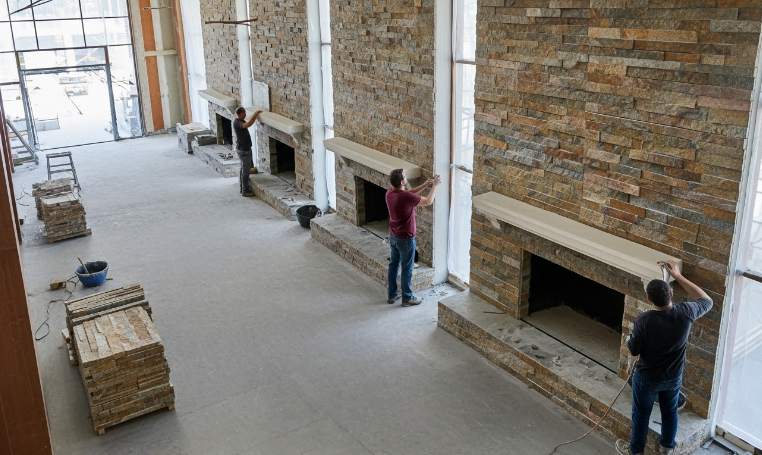
Precise Mantel & Hearth Integration serves as the primary safeguard for structural stability and fire code compliance in masonry design. Mounting heavy timber to the irregular profile of stacked stone creates specific mechanical risks that often lead to sagging fixtures or dangerous heat clearances. Ignoring these tolerances during the build phase results in failed safety inspections and significant liability for installers. Successful installations require strict adherence to clearance ratios and specialized mounting techniques to ensure the assembly remains stable under high thermal stress.
This guide outlines the standard operating procedures for attaching mantels to uneven stone veneers without compromising the wall’s integrity. We explain the scribing technique used to eliminate gaps and provide the data points needed to calculate mantel height based on firebox BTU output. The following sections also detail material selection for hearths and the specific methods for sealing transitions between wood and stone. This documentation provides the technical framework necessary to achieve a flush, secure fit on rugged surfaces.
Why the Mantel-Stone Junction is the Most Critical Design Detail?
The junction where heavy timber meets 天然石 serves as the primary structural and safety interface, determining whether a fireplace maintains its integrity or suffers from sagging, heat damage, and unsightly gaps over time.
Structural Stability and Load Management
This junction is the critical support point where the sheer weight of a mantel meets the stone veneer and the underlying substrate. In 2026 residential builds, we prioritize load-bearing precision at this specific interface to prevent the mantel from pulling away from the facade. 天然石パネル, such as those sourced from high-density quartzite or slate veins, provide the rigid foundation necessary for heavy timber or stone shelves.
- We use mechanical fastening systems, including lag bolts and threaded metal posts, to ensure the mantel transfers its weight directly into the wall studs rather than relying on the decorative stone for support.
- Properly engineered junctions distribute downward pressure across the wall surface, which prevents the cracking of individual stone units or the delamination of the veneer。
- トップソース Stone recommends using Z-Shape interlocking panels to provide a flatter, more consistent mounting surface for brackets compared to traditional irregular loose stone.
Aesthetic Value and Visual Flow
The transition between the rugged texture of 積み上げられた石 and the smooth surface of a mantel defines the overall craftsmanship of the installation. A messy junction with visible gaps or excessive mortar ruins the high-end appeal of natural materials. Professional installers use the junction to hide structural anchors, ensuring the floating effect remains clean and minimalist.
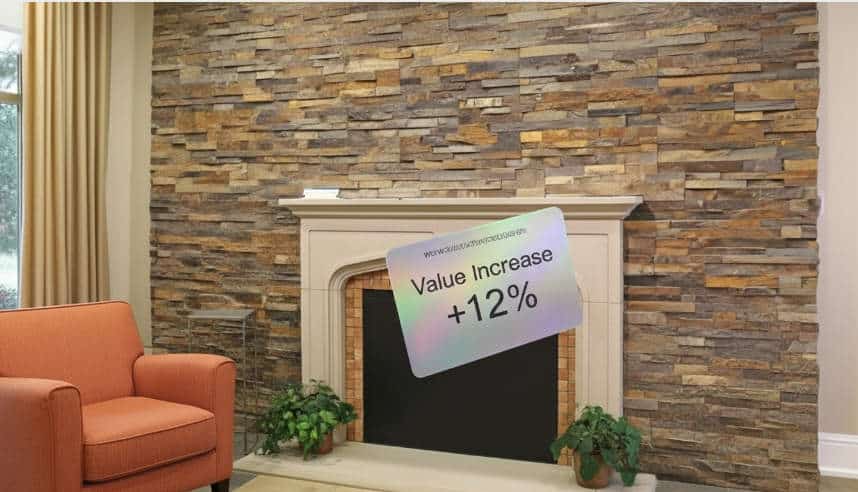
Eliminating visible gaps at the junction point creates a custom-built appearance that directly impacts property value. By employing techniques like scribing, installers trace the specific profile of the natural cleft stone onto the back of the wood mantel. This allows for a flush fit that makes the wood appear as if it grew directly out of the stone face. Precise alignment here is vital for maintaining the visual continuity of premium materials like Midnight Slate or Alaska Gray.
Thermal Resistance and Fire Safety
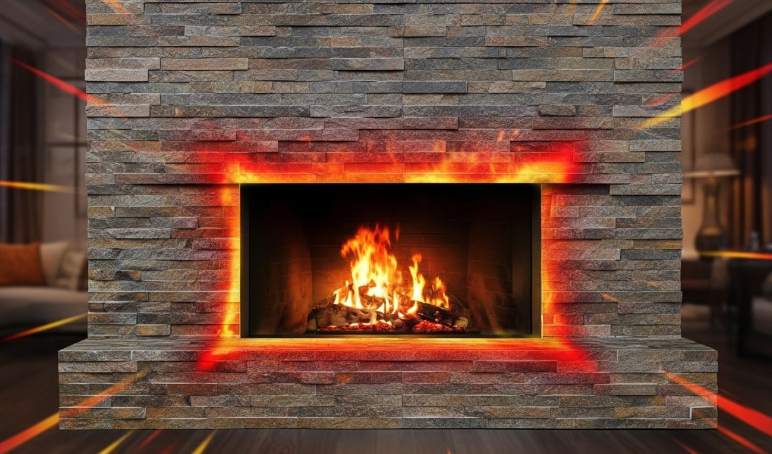
The junction manages the delicate interface between combustible mantel materials and the non-combustible stone barrier. 天然石 panels function as a heat shield, protecting the wood from the high BTU output of modern gas or wood-burning units. Strategic sealing at this point prevents hot air from rising behind the veneer, which significantly reduces the risk of hidden heat damage to the wall framing.
- Designers follow strict safety clearances, typically a minimum of 12 inches above the firebox, to ensure the junction remains at a safe temperature.
- Using flexible, heat-resistant sealants at the junction accommodates the natural expansion and contraction of wood while maintaining an airtight thermal barrier.
- The junction design maximizes heat reflection into the room, utilizing the stone’s thermal mass to improve the fireplace’s overall heating efficiency.
Floating Mantels: How to Secure Heavy Wood to a Stone Facade?
Reliable floating mantel installations on natural stone surfaces require a shift from chemical adhesives to high-strength mechanical fastening systems that bypass the decorative facade to engage the building’s structural framing.
Securing heavy wood mantels to stone in 2026 requires high-strength mechanical fasteners to manage significant shear loads and prevent sagging. We use lag bolts, wedge anchors, or threaded metal posts to establish a permanent bond with the underlying masonry or concrete. These threaded metal rods offer a stable internal support system that allows solid timber mantels to slide directly onto the hardware, providing pull-out resistance that chemical adhesives cannot match for heavy natural 石材の用途。
| Hardware Type | Load Capacity (Shear) | ベストユースケース |
|---|---|---|
| Threaded Metal Rods | 150+ lbs | Solid Timber / Rough Premium Panels |
| Wedge Anchors | 100 – 150 lbs | Concrete / Masonry Backing |
| Lag Bolts (into Studs) | 80 – 120 lbs | 2×6 Wood Structural Framing |
Strategic Anchor Placement in Structural Substrates
The longevity of the mantel installation depends on anchoring into the structural framing rather than just the decorative stone layer. Installers should target mortar joints or the structural cement board to avoid unnecessary stress or cracking of individual 石のパネル. Engaging the primary weight-bearing anchors directly with 2×4または2×6 wood studs is non-negotiable for safety.
- Use high-accuracy stud finders during the framing stage to map out anchor points before 石の取り付け。
- Ensure masonry hardware reaches the structural substrate to account for the 8-13 lbs per square foot weight of the stacked stone。
- For hollow-core mantels, install a 3/8-inch thick angle iron bolted to the concrete block behind the stone for maximum stability.
Bracket Integration for Uneven Stacked Stone Textures
Natural variations in stone thickness, particularly in “ラフシリーズ” panels, require brackets that can adapt to high-dimension surfaces. Friction-fit bracket designs help installers manage varying depths of natural stone, which can range from 0.75 to 1.75 inches. Shimming the bracket base allows the wood mantel to sit level and flush against the Z-shape interlocking panel system without visible gaps. Adjustable bracket systems prevent the wood from tilting forward, even when mounted against the deep textures and dramatic shadows of 天然石。
Installation Benchmarks and Weight Calculations
Following standardized installation heights and load limits ensures the fireplace remains both safe and aesthetically balanced. We calculate the total load-bearing capacity by combining the mantel’s weight with the specific stone facade weight, which averages 30-40kg/m² for standard panels. Precision drilling with diamond-tipped masonry bits prevents chipping of the natural quartzite or slate while creating clean holes for the support posts.
- Maintain a standard mounting height of 54 inches from the floor for optimal visual proportions.
- Utilize CNC diamond-blade precision during stone cutting to ensure tight “男性-女性” interlocking around the mantel brackets.
- Verify local NFPA fire safety codes for clearance between the firebox and the bottom of the wood mantel.
Scale Your Business with Factory-Direct Ledger Panels
Choosing the Right Hearth Material to Complement Stacked Stone
A high-performance hearth serves as both a thermal buffer and a visual anchor, requiring materials that balance 2026 non-combustibility standards with the rugged profile of natural veneer panels。
Selecting a hearth material requires more than simple color matching. We prioritize 天然石 for its inherent thermal stability, especially when dealing with high-BTU fireplace outputs. Unlike synthetic or composite materials that may off-gas or degrade under repetitive heat cycles, 天然石 maintains its structural integrity. For B2Bプロジェクト, this reliability reduces long-term liability and maintenance costs for property owners.
Prioritizing Heat Resistance and Non-Combustible Standards
Current safety protocols demand hearth materials that exceed local non-combustibility requirements. We recommend 天然石 slabs that provide a sufficient thermal barrier for the underlying subfloor. This prevents heat transfer to combustible structural members, a critical factor in wood-framed residential construction.
- Select natural quartzite or slate materials that remain stable at high temperatures without cracking or delaminating.
- Avoid “偽物” or resin-based 石製品 that can scorch or release odors when exposed to consistent heat.
- Verify that the hearth thickness meets the minimum R-value required for the specific fireplace insert or firebox being installed.
Coordinating Textures with Cleft and Polished Finishes
The visual success of a fireplace depends on the tactile relationship between the horizontal hearth and the vertical facade. Natural cleft finishes work best when mirroring the rugged, multidimensional surface of our “ラフシリーズ” 積み上げられた石. This creates a cohesive, rustic appearance that hides wear and tear in high-traffic areas.
For modern installations, honed or polished slabs provide a sharp contrast to “フラットシリーズ” 石のパネル. These smooth surfaces create a clean transition that suits transitional and contemporary architectural styles. When choosing between deep-textured stone and smooth surfaces, we weigh the aesthetic goals against the ease of maintenance, as smoother surfaces are simpler to clear of ash and debris.
Matching Color Palettes for Visual Cohesion
Designers often aim for a monolithic look by aligning the hearth stone with the dominant base color of the veneer panels. Using a carbon black slate hearth with our Midnight Slate panels, for example, creates an integrated assembly that appears carved from a single block. Alternatively, contrasting tones like a black slate hearth against Glacier White quartzite veneer define the fireplace footprint and add architectural depth.
- Use penetrating 天然石 sealants to deepen the color of the hearth, ensuring it matches the vibrancy of the wall stone.
- Source hearth slabs from the same quarry layers to maintain hue uniformity across the entire fireplace unit.
- Utilize earth-toned hearths to bridge the gap between rustic stacked stone and neutral interior flooring.
Optimizing Weight and Installation Efficiency
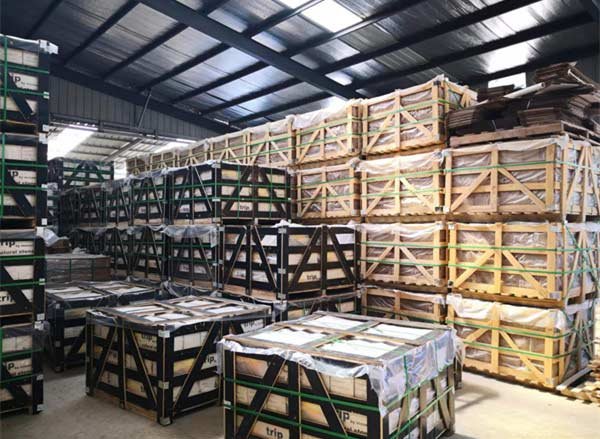
The industry is moving toward thinner, more efficient stone slabs that complement the lightweight nature of 1cm to 2.5cm stacked stone panels. We specify 1-inch to 1.5-inch thick stone slabs to reduce the total structural load on the floor joists while maintaining the massive appearance of a solid stone base. This approach simplifies logistics and reduces the need for additional floor reinforcement.
Efficiency on the job site is further improved by using factory-cut hearth stones. These pre-dimensioned pieces eliminate the need for heavy on-site cutting, which reduces dust and labor costs during the final assembly phase. We coordinate the hearth height precisely with the bottom row of 石のパネル to eliminate awkward gaps or visible mortar lines, ensuring a professional, flush finish.
の “Scribing” Technique: How to Fit a Mantel to Uneven Texture?
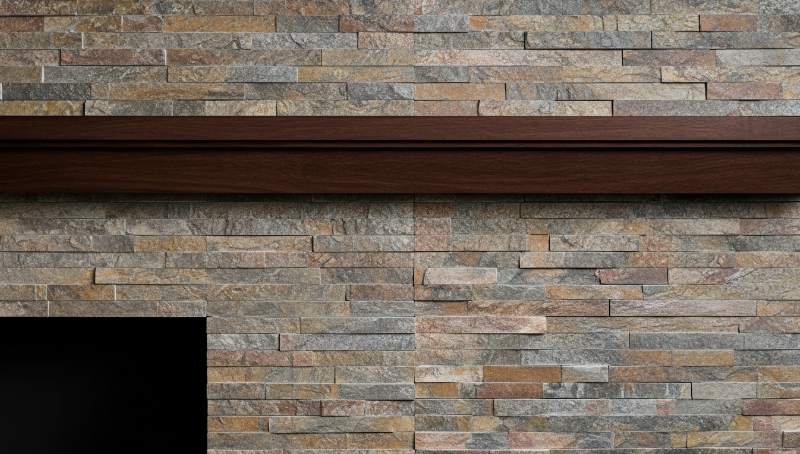
Precision scribing transforms a standard mantel installation into a high-end architectural feature by mechanically matching the wood profile to the 100% natural stone texture, eliminating the need for unsightly fillers or thick caulk lines.
Core Principles of Scribing for Stone Surfaces
Scribing transfers the irregular profile of a natural stone wall—such as the heavy textures found in Top Source Stone’s natural cleft or split-face panels—onto a flat mantel board. This process creates a seamless connection where the wood appears to grow out of the stone rather than sitting on top of it. In 2026 luxury fireplace designs, flush fits are the expected standard. Installers avoid using thick grout lines or oversized trim pieces at the wood-to-stone junction, as these compromise the clean lines of modern architectural stone.
| 設置方法 | Visual Aesthetic | Longevity & メンテナンス |
|---|---|---|
| Professional Scribing | Seamless, custom-carved edge | Highest; allows for natural wood movement without gaps |
| Caulk/Grout Filling | Visible 1/4″ 1/2まで″ transition lines | Medium; filler often cracks due to thermal expansion |
| Shadow Gap (Untrimmed) | Industrial, floating appearance | Low; attracts dust and debris in recessed stone pockets |
Essential Tools and Tracing Methods
Achieving a precise trace requires simple tools used with high discipline. The goal is to capture every peak and valley of the stacked stone accurately so the final cut mirrors the surface topography perfectly.
- A standard carpenter’s compass or a simple pencil and scrap wood block act as the primary tracing guides for gaps under 1/8 inch.
- Keeping the scribe tool perfectly horizontal and parallel to the mantel edge prevents distortion during the profile transfer.
- Applying masking tape to the wood surface allows for clearer pencil lines and protects the mantel’s finish from tool scuffs during tracing.
Executing the Back-Bevel Cut
The cutting technique determines how tightly the wood sits against the prominent edges of the stone. Simply cutting a vertical line often leaves gaps because the interior mass of the wood hits the stone before the visible edge does.
- Installers use a jigsaw to follow the scribed line, employing a back-bevel angle to ensure the front edge of the mantel touches the stone first.
- Removing more material from the rear of the wood piece allows the visible front edge to tuck deeply into the stone’s natural recesses.
- Leaving the pencil line slightly visible during the initial cut provides a safety margin for fine-tuning with a sander or block plane later.
Final Fitting and Detail Adjustments
The final stage involves iterative testing. Real stone—especially varieties like Top Source Stone’s 100% natural quartzite or slate—features unique projections that require individual material removal from the mantel back.
- Dry-fitting the mantel multiple times helps identify specific high points on the stone facade that require deeper relief in the wood.
- Belt sanders or oscillating tools refine the edge to achieve a light-tight fit against the irregular stone textures.
- Successful scribing creates the architectural illusion that the masonry was built around the wood, resulting in a professional-grade integration.
Safety First: Calculating Mantel Height Based on BTU Output
Structural fireplace safety in 2026 requires a precise calculation of thermal plumes, where the vertical clearance of a combustible mantel is dictated by both NFPA 211 standards and the specific BTU load of the heating unit.
Professional installation protocols prioritize the National Fire Protection Association (NFPA) 211 standards to ensure residential safety. We start with a baseline mandate of a 12-inch vertical distance between the firebox opening and the bottom of any combustible wood mantel. This gap serves as the primary defense against pyrolysis, the chemical decomposition of wood caused by long-term heat exposure.
Local building departments frequently enforce the “protrusion rule,” which adds complexity to the installation. For every inch the mantel shelf extends beyond the face of the stone facade, installers must typically add an additional inch of vertical height. This prevents the mantel from acting as a heat trap for rising convective air. Verification of the stacked stone substrate is also vital; the mounting hardware must bite into a stable, flat surface to prevent sagging, which could compromise these calculated safety margins over time.
| Fireplace Heat Output (BTU) | Standard Vertical Clearance | Recommended Stone Transition |
|---|---|---|
| Standard (Up to 30,000 BTU) | 12 Inches | Standard Natural Stacked Stone Panels |
| High Output (30,000 – 45,000 BTU) | 15 – 18 Inches | Quartzite or Slate (High Thermal Mass) |
| Ultra High (45,000+ BTU) | Manufacturer Specific (20″+) | Non-Combustible Stone Lintel Header |
Adjusting Vertical Gaps for High BTU Fireplace Units
Gas units that exceed 40,000 BTUs produce intense thermal plumes that can scorch or warp a wood mantel even at the standard 12-inch height. In 2026, manufacturer-specific data sheets take precedence over general codes. These documents often specify clearance ratios that account for the unit’s maximum heat output and the specific airflow patterns of the fireplace design.
- Thermal deflection calculations help determine if a non-combustible stone header is required.
- High-BTU units often require “heat shields” or specific stone thicknesses to dissipate energy before it reaches the wood transition.
- Precision-cut 6″ ×24″ 石のパネル provide the necessary non-combustible buffer to meet modern insurance requirements.
Thermal Considerations for Textured Stone Surfaces
The physical texture of the stone impacts how heat distributes around the mantel. Deeply textured 元帳パネル, like those in the Top Source Stone Rough Series, create micro-turbulence in the rising hot air. This turbulence can concentrate heat at the leading edge of the mantel, making the selection of stone material a functional decision rather than a purely aesthetic one.
Natural stones such as Quartzite and Slate act as thermal masses. They absorb heat during operation and release it slowly, which stabilizes the temperature at the mantel junction. To ensure a safer transition in high-heat applications, we recommend using a non-combustible stone lintel from our Flat Series. This provides a more predictable airflow pattern and a superior mounting surface compared to installing wood directly against the irregular voids of a heavy-textured 石垣。
How to Seal the Transition Between Stone and Wood Surfaces?
Successful stone-to-wood transitions rely on high-elasticity sealants that decouple the wood’s seasonal movement from the rigid stone facade, preventing stress fractures at the junction.
Flexible Sealants for Structural Movement
Natural wood mantels are hygroscopic, meaning they expand and contract significantly as ambient humidity levels fluctuate. In contrast, natural stone panels from Top Source Stone remain entirely rigid. Applying a traditional cement-based grout at this junction is a mistake; the lack of elasticity will lead to hairline cracks within the first seasonal cycle.
- Select sanded ceramic tile caulk or specialized wood-to-stone flexible sealants that offer at least 25% movement capability.
- Avoid rigid adhesives or epoxy-based grouts that cannot absorb the kinetic energy of shifting wood.
- Choose a sealant color that matches the darker tones of the stone’s natural cleft to make the joint disappear into the texture.
Surface Preparation and Taping Techniques
Porous stones like slate and quartzite easily absorb liquid components from sealants, which can lead to permanent staining or “picture framing” around the mantel. Clean surfaces are mandatory for a long-term bond, particularly when dealing with the dust generated during the installation of stacked stone。
- Use a vacuum and stiff brush to remove all fine debris and loose fragments from the transition gap.
- Apply high-quality painter’s tape to both the wood mantel edge and the stone face to define a precise boundary.
- Verify the stone substrate is completely dry, as moisture trapped in the pores will prevent the sealant from adhering.
Smoothing and Finishing the Joint
The aesthetic quality of the transition depends on the finishing technique. A raw bead of caulk looks like a repair, whereas a smoothed, recessed joint looks like a planned architectural detail. Professional installers use a wet-tooling method to ensure the sealant fills the irregular profile of the stone.
- Inject the sealant deep into the junction using a caulk gun to ensure full contact with both materials.
- Mist the sealant bead with a mild soap-and-water solution to facilitate effortless smoothing with a wet finger or a profiling tool.
- Pull the masking tape away while the material is still wet to prevent “skinning” and jagged edges.
Penetrating Sealers for Stone Protection
Protecting the stone surface itself is as important as sealing the junction. While our natural stacked stone is inherently durable, a penetrating sealer provides an invisible barrier against moisture and soot, especially in fireplace applications. These sealers do not change the light-reflecting properties of the stone, maintaining the authentic matte finish preferred in modern B2Bプロジェクト。
- Apply a high-quality penetrating (impregnating) sealer that allows the stone to breathe while repelling oils and water.
- Avoid topical film-forming sealers that create a synthetic gloss or “濡れた表情” which can peel over time.
- Schedule reapplication according to the 2026 maintenance standards to preserve the vibrancy of the stone’s natural minerals.
結論
Successful fireplace design requires balancing precise scribing techniques with strict adherence to BTU safety clearance codes. Using CNC-cut panels and pre-fabricated L-corners ensures a seamless transition that preserves the structural integrity of the natural stone facade. These technical details prevent heat damage and eliminate visible gaps for a durable, professional architectural finish.
Review our current inventory to select textures and color-matched corners for your upcoming project specifications. You can contact our team to request a technical data sheet or a stone sample kit for your architectural library.
よくある質問
Do you need a hearth when using natural stone veneer?
Yes, if you are installing a functional wood-burning or gas fireplace, a non-combustible hearth extension is required by building codes (typically NFPA 211 standards) regardless of the wall facing material. While 天然石ベニヤ is itself non-combustible, the hearth protects the surrounding flooring from heat radiation and flying embers. For electric fireplaces or purely decorative walls, a hearth is optional but often recommended for aesthetic balance.
How to attach a heavy wood mantel to a stone wall?
To ensure structural integrity, a heavy wood mantel must be anchored directly into the wall studs or masonry substrate rather than the ストーンベニア itself. The industry standard involves installing a steel mounting bracket or heavy-duty lag bolts into the framing before the stone is applied. This allows the stone to be laid around the mounting hardware, ensuring the load-bearing precision necessary to support the weight of the timber safely over time.
Can I use a stone mantel with natural stacked stone panels?
Absolutely. Integrating a stone mantel with 天然石積み上げパネル creates a high-end, seamless aesthetic. Because both materials share similar thermal expansion properties, they perform well together in high-heat environments. However, due to the significant weight of a solid stone mantel, you must use specialized masonry anchors or a ledger board system that transfers the weight to the building’s structural frame rather than relying on the adhesive bond of the panels.
What is the code-required distance between firebox and mantel?
Standard building codes generally require a minimum clearance of 6 inches between the top of the firebox opening and the start of a combustible mantel. Furthermore, for every inch the mantel protrudes from the wall, an additional inch of vertical clearance is typically required. For example, a mantel with a 6-inch depth would require 12 inches of clearance above the firebox. Always verify specific requirements with your local municipality and the fireplace manufacturer’s listing.
How to seal the gap between the mantel and the stone?
To achieve a professional finish, use a high-temperature, flexible silicone sealant or a color-matched masonry caulk. Because natural stone has an irregular surface, “scribing” the mantel to the stone profile during installation provides the tightest fit. For any remaining minor gaps, applying a bead of flexible sealant accommodates the natural thermal expansion and contraction of the different materials while preventing smoke or debris from accumulating behind the mantel.