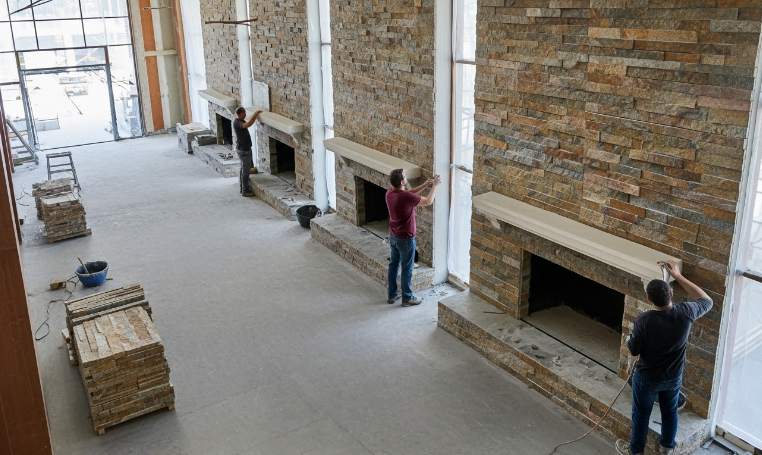
Nauwkeurige mantel & Haardintegratie dient als de primaire waarborg voor structurele stabiliteit en naleving van de brandvoorschriften bij het ontwerpen van metselwerk. Het monteren van zwaar hout op het onregelmatige profiel van gestapelde steen brengt specifieke mechanische risico's met zich mee die vaak leiden tot doorzakkende bevestigingen of gevaarlijke warmte-afstanden. Het negeren van deze toleranties tijdens de bouwfase resulteert in mislukte veiligheidsinspecties en aanzienlijke aansprakelijkheid voor installateurs. Succesvolle installaties vereisen een strikte naleving van de spelingsverhoudingen en gespecialiseerde montagetechnieken om ervoor te zorgen dat de constructie stabiel blijft onder hoge thermische spanningen.
In deze handleiding worden de standaardprocedures beschreven voor het bevestigen van mantels aan oneffenheden steenfineer zonder afbreuk te doen aan de muur integriteit. We leggen de krastechniek uit die wordt gebruikt om gaten te elimineren en geven de gegevenspunten die nodig zijn om de schoorsteenmantelhoogte te berekenen op basis van de BTU-uitvoer van de vuurhaard. In de volgende paragrafen wordt ook de materiaalkeuze voor haarden en de specifieke methoden voor het afdichten van overgangen tussen hout en steen gedetailleerd beschreven. Deze documentatie biedt het technische raamwerk dat nodig is om een vlakke, veilige pasvorm op ruige oppervlakken te bereiken.
Waarom is de mantel-steenverbinding het meest kritische ontwerpdetail?
Het kruispunt waar zwaar hout samenkomt natuursteen fungeert als de primaire structurele en veiligheidsinterface en bepaalt of een haard zijn integriteit behoudt of na verloop van tijd last krijgt van verzakking, hitteschade en lelijke gaten.
Structurele stabiliteit en belastingbeheer
Deze kruising is het kritische steunpunt waar het enorme gewicht van een schoorsteenmantel de steenfineer en de onderliggende ondergrond. Bij woningbouw in 2026 geven we prioriteit aan draagprecisie op dit specifieke grensvlak om te voorkomen dat de schoorsteenmantel van de gevel wegtrekt. Natuurstenen panelen, zoals die afkomstig zijn van kwartsiet- of leisteenaders met een hoge dichtheid, bieden de stevige basis die nodig is voor zware houten of stenen planken.
- We gebruiken mechanische bevestigingssystemen, waaronder houtdraadbouten en metalen palen met schroefdraad, om ervoor te zorgen dat de schoorsteenmantel zijn gewicht rechtstreeks naar de schoorsteenmantel overbrengt muurstijlen in plaats van te vertrouwen op de decoratieve steen voor ondersteuning.
- Goed ontworpen verbindingen verdelen de neerwaartse druk over het muuroppervlak, waardoor scheuren van individuen worden voorkomen stenen eenheden of delaminatie van het fineer.
- Topbron Stone raadt aan om Z-vormige in elkaar grijpende panelen te gebruiken om een vlakker, consistenter montageoppervlak voor beugels te bieden in vergelijking met traditionele onregelmatige losse steen.
Esthetische waarde en visuele stroom
De overgang tussen de ruige textuur van gestapelde steen en het gladde oppervlak van een schoorsteenmantel definieert het algehele vakmanschap van de installatie. Een rommelige kruising met zichtbare gaten of overmatige mortel ruïneert de hoogwaardige aantrekkingskracht van natuurlijke materialen. Professionele installateurs gebruiken de verbinding om structurele ankers te verbergen, waardoor het zwevende effect schoon en minimalistisch blijft.
Door zichtbare gaten op het verbindingspunt te elimineren, ontstaat een op maat gemaakt uiterlijk dat een directe invloed heeft op de waarde van het onroerend goed. Door technieken als inkerven te gebruiken, traceren installateurs het specifieke profiel van de natuurlijke gespleten steen op de achterkant van de houten schoorsteenmantel. Dit zorgt voor een vlakke pasvorm waardoor het hout eruitziet alsof het rechtstreeks uit het stenen oppervlak is gegroeid. Nauwkeurige uitlijning is hier essentieel voor het behouden van de visuele continuïteit van hoogwaardige materialen zoals Midnight Slate of Alaska Grey.
Thermische weerstand en brandveiligheid
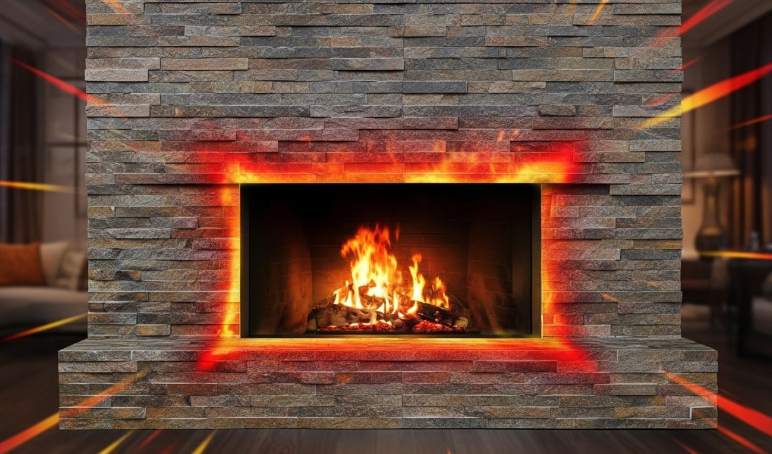
De verbinding beheert het delicate grensvlak tussen brandbare mantelmaterialen en de niet-brandbare stenen barrière. Natuursteen panelen fungeren als hitteschild en beschermen het hout tegen de hoge BTU-opbrengst van moderne gas- of houtverbrandingseenheden. Strategische afdichting op dit punt voorkomt dat warme lucht achter het fineer opstijgt, waardoor het risico op verborgen hitteschade aan het muurframe aanzienlijk wordt verminderd.
- Ontwerpers volgen strikte veiligheidsafstanden, doorgaans minimaal 30 cm boven de vuurhaard, om ervoor te zorgen dat de verbinding op een veilige temperatuur blijft.
- Door gebruik te maken van flexibele, hittebestendige afdichtingsmiddelen op de verbindingsstukken wordt de natuurlijke uitzetting en samentrekking van hout opgevangen, terwijl een luchtdichte thermische barrière behouden blijft.
- Het verbindingsontwerp maximaliseert de warmtereflectie in de kamer, door gebruik te maken van de de thermische massa van steen om de algehele verwarming van de haard te verbeteren efficiëntie.
Zwevende mantels: hoe zwaar hout aan een stenen gevel bevestigen?
Betrouwbare zwevende mantel installaties op natuursteen oppervlakken vereisen een verschuiving van chemische lijmen naar mechanische bevestigingssystemen met hoge sterkte die de decoratieve gevel omzeilen om in de structurele omlijsting van het gebouw te passen.
Om zware houten schoorsteenmantels in 2026 aan steen te bevestigen, zijn mechanische bevestigingsmiddelen met hoge sterkte nodig om aanzienlijke schuifbelastingen op te vangen en doorzakken te voorkomen. We gebruiken lagbouten, wigankers of metalen palen met schroefdraad om een permanente verbinding met het onderliggende metselwerk of beton tot stand te brengen. Deze metalen draadstangen bieden een stabiel intern ondersteuningssysteem waardoor massief houten mantels direct op het beslag kunnen worden geschoven, wat een uittrekweerstand biedt die chemische lijmen niet kunnen evenaren voor zware natuurlijke materialen. steen toepassingen.
| Hardwaretype | Laadvermogen (afschuiving) | Beste use case |
|---|---|---|
| Metalen staven met schroefdraad | 150+ pond | Massief hout / ruwe premiumpanelen |
| Wigankers | 100 – 150 pond | Beton/metselwerk steun |
| Vertragingsbouten (in noppen) | 80 – 120 pond | 2×6 Houtconstructies |
Strategische plaatsing van anker in structurele substraten
De levensduur van de schoorsteenmantelinstallatie hangt af van de verankering in de structurele omlijsting en niet alleen van de decoratieve steenlaag. Installateurs moeten zich richten op mortelverbindingen of de structurele cementplaat om onnodige spanning of barsten van het individu te voorkomen stenen panelen. De primaire gewichtdragende ankers rechtstreeks vastzetten met 2×4 of 2×6 houten noppen zijn niet onderhandelbaar vanwege de veiligheid.
- Gebruik zeer nauwkeurige noppenzoekers tijdens de framefase om de ankerpunten eerder in kaart te brengen steeninstallatie.
- Zorg ervoor dat het metselwerk de structurele ondergrond bereikt om rekening te houden met de 8-13 lbs per vierkante voet gewicht van de gestapelde steen.
- Voor mantels met holle kern installeert u een 3/8-inch dik hoekijzer dat met bouten aan het betonblok achter de steen is vastgeschroefd voor maximale stabiliteit.
Beugelintegratie voor ongelijkmatig gestapelde steentexturen
Natuurlijke variaties in steendikte, vooral in “Ruwe serie” panelen vereisen beugels die zich kunnen aanpassen aan oppervlakken met grote afmetingen. Wrijvingsbeugel ontwerpen helpen installateurs bij het beheren van verschillende diepten van natuursteen, die kan variëren van 0,75 tot 1,75 inch. Door de beugelbasis op te vullen, kan de houten schoorsteenmantel waterpas en vlak tegen de muur zitten Z-vormig in elkaar grijpend paneel systeem zonder zichtbare gaten. Verstelbare beugelsystemen voorkomen dat het hout naar voren kantelt, zelfs wanneer het tegen de diepe texturen en dramatische schaduwen wordt gemonteerd natuursteen.
Installatiebenchmarks en gewichtsberekeningen
Het volgen van gestandaardiseerde installatiehoogtes en belastingslimieten zorgt ervoor dat de haard zowel veilig als esthetisch in balans blijft. Het totale draagvermogen berekenen we door het gewicht van de schouw te combineren met het specifieke stenen gevelgewicht, dat voor standaardpanelen gemiddeld 30-40 kg/m² bedraagt. Nauwkeurig boren met steenboren met diamantpunten voorkomt het afbrokkelen van het natuurlijke kwartsiet of leisteen, terwijl er schone gaten voor de steunpalen ontstaan.
- Handhaaf een standaard montagehoogte van 54 inch vanaf de vloer voor optimale visuele verhoudingen.
- Maak gebruik van de precisie van het CNC-diamantblad tijdens het zagen van stenen om een goede dichtheid te garanderen “man-vrouw” in elkaar grijpend rond de schoorsteenmantelbeugels.
- Controleer de lokale NFPA-brandveiligheidscodes voor de ruimte tussen de vuurhaard en de onderkant van de houten schoorsteenmantel.
Schaal uw bedrijf op met fabrieksgerichte grootboekpanelen
Het juiste haardmateriaal kiezen als aanvulling op gestapelde steen
Een hoogwaardige haard dient zowel als thermische buffer als als visueel anker, en vereist materialen die de onbrandbaarheidsnormen van 2026 in evenwicht brengen met het robuuste profiel van natuurlijk hout. fineer panelen.
Het selecteren van een haardmateriaal vereist meer dan alleen maar kleurafstemming. Wij geven prioriteit natuursteen vanwege de inherente thermische stabiliteit, vooral als het gaat om open haarden met een hoog BTU-vermogen. In tegenstelling tot synthetische of composietmaterialen die bij herhaalde hittecycli kunnen ontgassen of degraderen, natuursteen behoudt zijn structurele integriteit. Voor B2B-projectenDeze betrouwbaarheid vermindert de aansprakelijkheid op lange termijn en de onderhoudskosten voor vastgoedeigenaren.
Prioriteit geven aan hittebestendigheid en niet-brandbare normen
De huidige veiligheidsprotocollen vereisen haardmaterialen die de lokale niet-brandbaarheidseisen overschrijden. Wij raden aan natuursteen platen die voldoende thermische barrière vormen voor de onderliggende ondervloer. Dit voorkomt warmteoverdracht naar brandbare structurele onderdelen, een kritische factor in woningbouw met houtskeletbouw.
- Selecteer natuurlijke kwartsiet- of leisteenmaterialen die bij hoge temperaturen stabiel blijven zonder te barsten of te delamineren.
- Voorkomen “nep” of op harsbasis stenen producten die kunnen verschroeien of geuren kunnen vrijgeven bij blootstelling aan constante hitte.
- Controleer of de dikte van de haard voldoet aan de minimale R-waarde die vereist is voor de specifieke inzethaard of vuurhaard die wordt geïnstalleerd.
Coördinerende texturen met gespleten en gepolijste afwerkingen
Het visuele succes van een haard hangt af van de tactiele relatie tussen de horizontale haard en de verticale gevel. Natuurlijke gespleten afwerkingen werken het beste als ze het ruige, multidimensionale oppervlak van onze spiegels weerspiegelen “Ruwe serie” gestapelde steen. Dit creëert een samenhangend, rustiek uiterlijk dat slijtage in gebieden met veel verkeer verbergt.
Voor moderne installaties zorgen gezoete of gepolijste platen voor een scherp contrast “Platte serie” stenen panelen. Deze gladde oppervlakken creëren een strakke overgang die past bij overgangs- en hedendaagse architecturale stijlen. Bij de keuze tussen steen met een diepe textuur en gladde oppervlakken wegen we de esthetische doelstellingen af tegen het onderhoudsgemak, omdat gladdere oppervlakken eenvoudiger te verwijderen zijn van as en vuil.
Bijpassende kleurenpaletten voor visuele cohesie
Ontwerpers streven vaak naar een monolithische uitstraling door de haard uit te lijnen steen met de dominante basiskleur van de fineerpanelen. Door bijvoorbeeld een haard van carbonzwarte leisteen te gebruiken met onze Midnight Slate-panelen, ontstaat een geïntegreerd geheel dat uit één blok lijkt te zijn gesneden. Als alternatief definiëren contrasterende tinten zoals een zwarte leistenen haard tegen Glacier White kwartsietfineer de voetafdruk van de haard en voegen architectonische diepte toe.
- Gebruik penetrerend natuursteen afdichtingsmiddelen om de kleur van de haard te verdiepen, zodat deze overeenkomt met de levendigheid van de muursteen.
- Gebruik haardplaten uit dezelfde steengroevelagen om de tintuniformiteit over de gehele haardeenheid te behouden.
- Gebruik aardetinten haarden om de kloof tussen rustiek te overbruggen gestapelde steen en neutraal interieur vloerbedekking.
Optimalisatie van gewicht en installatie-efficiëntie
De industrie evolueert naar dunnere, efficiëntere stenen platen die het lichtgewicht karakter van gestapelde stenen panelen van 1 cm tot 2,5 cm aanvullen. We specificeren stenen platen van 1 tot 1,5 inch dik om de totale structurele belasting op de vloerbalken te verminderen, terwijl het massieve uiterlijk van een massieve stenen basis behouden blijft. Deze aanpak vereenvoudigt de logistiek en vermindert de behoefte aan extra vloerversterking.
De efficiëntie op de bouwplaats wordt verder verbeterd door het gebruik van in de fabriek gesneden haardstenen. Deze vooraf gedimensioneerde stukken elimineren de noodzaak van zwaar zagen ter plaatse, waardoor de stof- en arbeidskosten tijdens de eindmontagefase worden verminderd. De haardhoogte stemmen wij nauwkeurig af op de onderste rij stenen panelen om lastige gaten of zichtbare mortellijnen te elimineren, waardoor een professionele, vlakke afwerking wordt gegarandeerd.
De “Schrijven” Techniek: hoe pas je een schoorsteenmantel aan op een ongelijkmatige textuur?
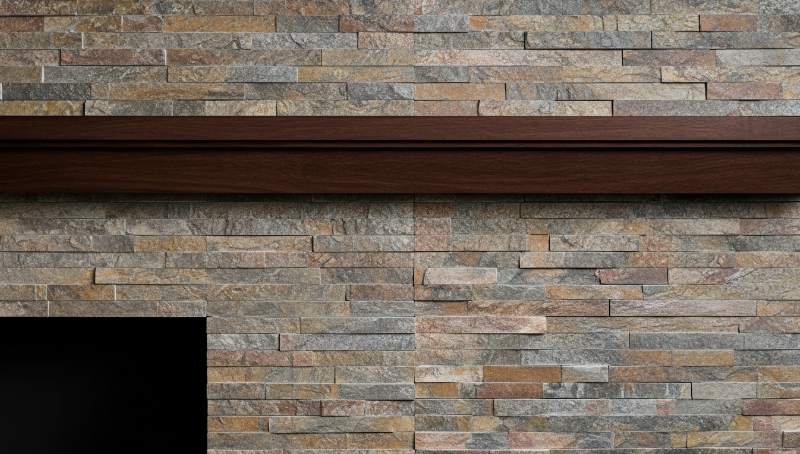
Nauwkeurig schrijven transformeert een standaard mantelinstallatie in een architectonisch hoogstaand kenmerk door het houtprofiel mechanisch aan te passen aan de 100% natuursteentextuur, waardoor de noodzaak voor lelijke vulstoffen of dikke kitlijnen wordt geëlimineerd.
Kernprincipes van het schrijven voor stenen oppervlakken
Door te schrijven wordt de onregelmatig profiel van een natuursteen muur – zoals de zware texturen die te vinden zijn in de natuurlijke gespleten of gespleten panelen van Top Source Stone – op een vlakke schoorsteenmantel. Door dit proces ontstaat een naadloze verbinding waarbij het hout eruit lijkt te groeien steen in plaats van er bovenop te zitten ervan. In 2026 luxe ontwerpen van open haarden, vlakke pasvormen zijn de verwachte standaard. Installateurs vermijden het gebruik van dikke voegen of te grote sierstukken op de overgang van hout naar steen, omdat deze de strakke lijnen van moderne architectonische steen aantasten.
| Installatiemethode | Visuele esthetiek | Levensduur & Onderhoud |
|---|---|---|
| Professioneel schrijven | Naadloze, op maat gesneden rand | Hoogste; zorgt voor natuurlijke beweging van het hout zonder gaten |
| Kalfateren / voegen vullen | Zichtbaar 1/4″ tot 1/2″ overgangslijnen | Medium; vulmiddel barst vaak als gevolg van thermische uitzetting |
| Schaduwopening (niet getrimd) | Industriële, zwevende uitstraling | Laag; trekt stof en vuil aan in verzonken stenen zakken |
Essentiële hulpmiddelen en traceringsmethoden
Voor het verkrijgen van een nauwkeurig spoor zijn eenvoudige hulpmiddelen nodig die met hoge discipline worden gebruikt. Het doel is om elke piek en vallei van de berg vast te leggen gestapelde steen nauwkeurig, zodat de laatste snede ontstaat weerspiegelt perfect de oppervlaktetopografie.
- Een standaard timmermanskompas of een eenvoudig potlood en sloophoutblok fungeren als de primaire traceergeleiders voor openingen van minder dan 1/8 inch.
- Door het aftekengereedschap perfect horizontaal en evenwijdig aan de rand van de schoorsteenmantel te houden, wordt vervorming tijdens de profieloverdracht voorkomen.
- Het aanbrengen van afplaktape op het houtoppervlak zorgt voor duidelijkere potloodlijnen en beschermt de afwerking van de schoorsteenmantel tegen slijtage door gereedschap tijdens het overtrekken.
De achterwaartse schuine snede uitvoeren
De snijtechniek bepaalt hoe strak het hout tegen de prominente randen van de steen zit. Door simpelweg een verticale lijn te snijden, ontstaan er vaak gaten omdat de inwendige massa van het hout de steen raakt voordat de zichtbare rand dat doet.
- Installateurs gebruiken een decoupeerzaag om de getekende lijn te volgen, waarbij ze een afschuiningshoek aan de achterkant gebruiken om ervoor te zorgen dat de voorkant van de schoorsteenmantel als eerste de steen raakt.
- Door meer materiaal van de achterkant van het stuk hout te verwijderen, kan de zichtbare voorkant diep in de natuurlijke uitsparingen van de steen worden verborgen.
- Door de potloodlijn tijdens de eerste snede enigszins zichtbaar te laten, ontstaat er een veiligheidsmarge om later fijn af te stemmen met een schuurmachine of blokschaaf.
Laatste montage en detailaanpassingen
De laatste fase omvat iteratief testen. Echte steen, vooral varianten zoals het 100% natuurlijke kwartsiet of leisteen van Top Source Stone, heeft unieke projecties die individuele materiaalverwijdering van de achterkant van de schoorsteenmantel vereisen.
- Door de schoorsteenmantel meerdere keren droog te plaatsen, kunnen specifieke hoge punten op de stenen gevel worden geïdentificeerd die een dieper reliëf in het hout vereisen.
- Bandschuurmachines of oscillerende gereedschappen verfijnen de rand om een lichtdichte pasvorm tegen de onregelmatige steentexturen te verkrijgen.
- Succesvol inschrijven creëert de architecturale illusie dat het metselwerk rond het hout is gebouwd, wat resulteert in een professionele integratie.
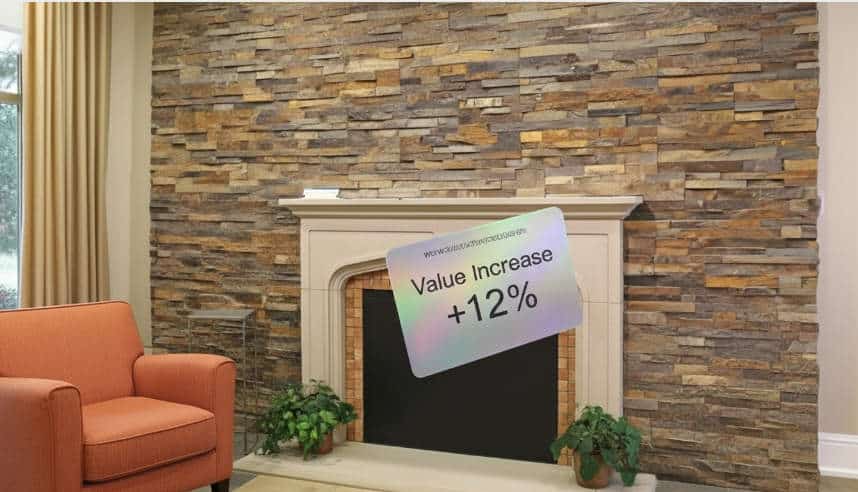
Veiligheid voorop: schoorsteenhoogte berekenen op basis van BTU-uitvoer
Structurele veiligheid van open haarden in 2026 vereist een nauwkeurige berekening van thermische pluimen, waarbij de verticale afstand van een brandbare schoorsteenmantel wordt bepaald door zowel de NFPA 211-normen als de specifieke BTU-belasting van de verwarmingseenheid.
Professionele installatieprotocollen geven prioriteit aan de 211-normen van de National Fire Protection Association (NFPA) om de veiligheid van woningen te garanderen. We beginnen met een basismandaat van een verticale afstand van 30 cm tussen de opening van de vuurhaard en de onderkant van een brandbare houten schoorsteenmantel. Deze opening dient als de primaire verdediging tegen pyrolyse, de chemische afbraak van hout veroorzaakt door langdurige blootstelling aan hitte.
Lokale bouwafdelingen handhaven regelmatig de regels “uitsteekselregel,” wat de installatie ingewikkelder maakt. Voor elke centimeter dat de schoorsteenmantel buiten de gevel van de stenen gevel uitsteekt, moeten installateurs doorgaans een extra centimeter verticale hoogte toevoegen. Dit voorkomt dat de schoorsteenmantel fungeert als warmtevanger voor opstijgende convectielucht. Verificatie van de gestapeld stenen substraat is ook van vitaal belang; het bevestigingsmateriaal moet in een stabiel, vlak oppervlak bijten om doorzakken te voorkomen, wat deze berekende veiligheidsmarges in de loop van de tijd in gevaar zou kunnen brengen.
| Warmteafgifte van open haarden (BTU) | Standaard doorvaarthoogte | Aanbevolen steenovergang |
|---|---|---|
| Standaard (tot 30.000 BTU) | 12 inch | Standaard natuurstenen panelen |
| Hoge output (30.000 – 45.000 BTU) | 15 – 18 inch | Kwartsiet of leisteen (hoge thermische massa) |
| Ultrahoog (45.000+ BTU) | Fabrikantspecifiek (20″+) | Niet-brandbare stenen lateikop |
Verticale openingen aanpassen voor open haarden met een hoog BTU
Gaseenheden van meer dan 40.000 BTU's produceren intense thermische pluimen die een houten schoorsteenmantel kunnen verschroeien of kromtrekken, zelfs op de standaardhoogte van 30 cm. In 2026 hebben fabrikantspecifieke databladen voorrang op algemene codes. Deze documenten specificeren vaak de spelingsverhoudingen die rekening houden met de maximale warmteafgifte van de unit en de specifieke luchtstroompatronen van het ontwerp van de haard.
- Thermische doorbuigingsberekeningen helpen bepalen of een niet-brandbare stenen header vereist is.
- Hoge BTU-eenheden hebben dit vaak nodig “hitteschilden” of specifieke steendiktes om energie af te voeren voordat deze de houtovergang bereikt.
- Precisiegesneden 6″ x 24″ stenen panelen zorgen voor de noodzakelijke niet-brandbare buffer om aan de moderne verzekeringseisen te voldoen.
Thermische overwegingen voor gestructureerde stenen oppervlakken
De fysieke textuur van de steen heeft invloed op de manier waarop de warmte zich rond de schoorsteenmantel verspreidt. Diep gestructureerd grootboekpanelen, zoals die in de Top Source Stone Rough Series, creëren microturbulentie in de opstijgende hete lucht. Deze turbulentie kan de warmte concentreren aan de voorkant van de schoorsteenmantel, waardoor de keuze van steenmateriaal een functionele beslissing wordt in plaats van een puur esthetische beslissing.
Natuurstenen zoals kwartsiet en leisteen fungeren als thermische massa. Ze absorberen warmte tijdens bedrijf en geven deze langzaam af, waardoor de temperatuur op de schoorsteenmantelverbinding wordt gestabiliseerd. Om een veiligere overgang bij toepassingen met hoge temperaturen te garanderen, adviseren wij het gebruik van een niet-brandbare stenen latei uit onze Flat Series. Dit zorgt voor een voorspelbaarder luchtstroompatroon en een superieur montageoppervlak vergeleken met het plaatsen van hout direct tegen de onregelmatige holtes van een zwaar gestructureerd oppervlak. stenen muur.
Hoe de overgang tussen stenen en houten oppervlakken afdichten?
Succesvolle steen-naar-hout-overgangen zijn afhankelijk van afdichtingsmiddelen met een hoge elasticiteit die de seizoensbeweging van het hout loskoppelen van de stijve stenen gevel, waardoor spanningsbreuken op de kruising worden voorkomen.
Flexibele afdichtingsmiddelen voor structurele beweging
Natuurlijke houten mantels zijn hygroscopisch, wat betekent dat ze aanzienlijk uitzetten en krimpen als de luchtvochtigheid in de omgeving fluctueert. Daarentegen natuursteenpanelen van Top Bronsteen blijft volledig stijf. Het aanbrengen van een traditionele cementgebaseerde voeg op deze kruising is een vergissing; het gebrek aan elasticiteit zal binnen de eerste seizoenscyclus tot haarscheurtjes leiden.
- Selecteer geschuurde keramische tegelkit of gespecialiseerde flexibele hout-op-steen afdichtingsmiddelen die een bewegingsvrijheid van ten minste 25% bieden.
- Vermijd harde lijmen of voegmiddelen op epoxybasis die de kinetische energie van verschuivend hout niet kunnen absorberen.
- Kies een kleur kit die past bij de donkere tinten van de natuurlijke spleet van de steen, zodat de voeg in de textuur verdwijnt.
Oppervlaktevoorbereiding en taptechnieken
Poreuze stenen zoals leisteen en kwartsiet absorberen gemakkelijk vloeibare componenten uit afdichtingsmiddelen, wat kan leiden tot permanente vlekken of “inlijsten van foto's” rond de schoorsteenmantel. Schone oppervlakken zijn essentieel voor een langdurige hechting, vooral als het gaat om het stof dat ontstaat tijdens het verlijmen installatie van gestapelde steen.
- Gebruik een stofzuiger en een stijve borstel om al het fijne vuil en losse fragmenten uit de overgangsopening te verwijderen.
- Breng schilderstape van hoge kwaliteit aan op zowel de rand van de houten schoorsteenmantel als het stenen oppervlak om een nauwkeurige grens af te bakenen.
- Controleer of de stenen ondergrond volledig droog is, omdat vocht dat in de poriën zit, verhindert dat de kit hecht.
Het gladmaken en afwerken van de voeg
De esthetische kwaliteit van de overgang is afhankelijk van de afwerkingstechniek. Een ruwe kitrand ziet eruit als een reparatie, terwijl een gladde, verzonken verbinding eruit ziet als een gepland architectonisch detail. Professionele installateurs gebruiken een natbewerkingsmethode om ervoor te zorgen dat de kit het onregelmatige profiel van de steen vult.
- Injecteer het afdichtmiddel diep in de verbinding met een kitpistool om volledig contact met beide materialen te garanderen.
- Besproei de kitrups met een milde zeep- en wateroplossing om moeiteloos gladstrijken met een natte vinger of een profileergereedschap te vergemakkelijken.
- Trek de afplaktape weg terwijl het materiaal nog nat is om te voorkomen dat “villen” en gekartelde randen.
Doordringende afdichtingsmiddelen voor steenbescherming
Het beschermen van de stenen oppervlak zelf is net zo belangrijk als afdichting van de kruising. Terwijl onze natuursteen is inherent duurzaambiedt een doordringende sealer een onzichtbare barrière tegen vocht en roet, vooral bij open haardtoepassingen. Deze afdichtingsmiddelen veranderen de lichtreflecterende eigenschappen van de steen niet, waardoor de authentieke matte afwerking behouden blijft die de voorkeur geniet in de moderne tijd B2B-projecten.
- Breng een hoogwaardige penetrerende (impregnerende) sealer aan die de steen laat ademen en tegelijkertijd olie en water afstoot.
- Vermijd plaatselijke filmvormende sealers die een synthetische glans creëren “natte uitstraling” die na verloop van tijd kunnen loslaten.
- Plan heraanvraag volgens de 2026 onderhoudsnormen om de levendigheid van het natuursteen te behouden mineralen.
Conclusie
Succesvol haardontwerp vereist een evenwicht tussen nauwkeurige schrijftechnieken en strikte naleving van de BTU-veiligheidscodes. Het gebruik van CNC-gesneden panelen en geprefabriceerde L-hoeken zorgt voor een naadloze overgang waarbij de structurele integriteit van de natuurstenen gevel behouden blijft. Deze technische details voorkomen schade door hitte en elimineren zichtbare gaten voor een duurzame, professionele architectonische afwerking.
Bekijk onze huidige inventaris om texturen en op kleur afgestemde hoeken te selecteren voor uw toekomstige projectspecificaties. U kunt contact opnemen met ons team om een technisch gegevensblad of een steenmonsterpakket voor uw architectuurbibliotheek aan te vragen.
Veelgestelde vragen
Heeft u een haard nodig bij het gebruik van natuursteenfineer?
Ja, als dat zo is het installeren van een functionele hout- of gashaard, is een niet-brandbare haarduitbreiding vereist door bouwvoorschriften (meestal NFPA 211-normen), ongeacht het materiaal van de muurbekleding. Terwijl Natuurlijke stenen fineer is zelf onbrandbaar, de haard beschermt de omliggende vloer tegen hittestraling en rondvliegende sintels. Voor elektrische haarden of puur decoratieve muren is een haard optioneel, maar vaak aanbevolen vanwege het esthetische evenwicht.
Hoe bevestig je een zware houten schoorsteenmantel aan een stenen muur?
Om de structurele integriteit te garanderen, moet een zware houten schoorsteenmantel rechtstreeks in de muurstijlen of het metselwerk worden verankerd in plaats van in de ondergrond stenen fineer zelf. De industrienorm omvat het installeren van een stalen montagebeugel of zware houtdraadbouten in het frame voordat de steen wordt aangebracht. Hierdoor kan de steen rond het bevestigingsmateriaal worden gelegd, waardoor de dragende precisie wordt gegarandeerd die nodig is om het gewicht van het hout in de loop van de tijd veilig te dragen.
Kan ik een stenen schouw gebruiken met natuurstenen panelen?
Absoluut. Integratie van een stenen schoorsteenmantel met natuurlijke gestapelde stenen panelen creëert een hoogwaardige, naadloze esthetiek. Omdat beide materialen vergelijkbare thermische uitzettingseigenschappen delen, presteren ze samen goed in omgevingen met veel hitte. Vanwege het aanzienlijke gewicht van een massieve stenen schoorsteenmantel moet u echter speciale metselankers of een grootboekbordsysteem gebruiken dat het gewicht overbrengt naar het structurele frame van het gebouw, in plaats van te vertrouwen op de lijmverbinding van de panelen.
Wat is de door de norm vereiste afstand tussen vuurhaard en schoorsteenmantel?
Standaard bouwvoorschriften vereisen over het algemeen een minimale afstand van 15 cm tussen de bovenkant van de vuurhaardopening en het begin van een brandbare schoorsteenmantel. Bovendien is voor elke centimeter die de schoorsteenmantel uit de muur steekt, doorgaans een extra centimeter verticale speling vereist. Een schoorsteenmantel met een diepte van 6 inch zou bijvoorbeeld 12 inch vrije ruimte boven de vuurhaard vereisen. Controleer altijd de specifieke vereisten bij uw plaatselijke gemeente en de lijst van de fabrikant van de haard.
Hoe de opening tussen de schoorsteenmantel en de steen afdichten?
Voor een professionele afwerking gebruikt u een flexibele siliconenkit voor hoge temperaturen of een metselwerkkit in bijpassende kleur. Omdat natuursteen een onregelmatig oppervlak heeft, “schrijven” de schouw op het steenprofiel tijdens de montage zorgt voor de strakste aansluiting. Voor eventuele resterende kleine openingen kan het aanbrengen van een rups flexibel afdichtmiddel de natuurlijke thermische uitzetting en samentrekking van de verschillende materialen opvangen, terwijl wordt voorkomen dat rook of vuil zich achter de schoorsteenmantel ophoopt.