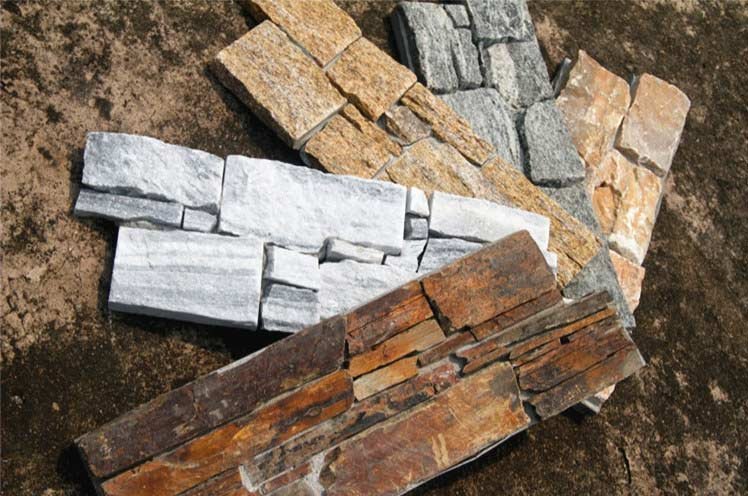
Nauwkeurige Z-vormige paneeluitlijning is de enige manier om zichtbare verticale naden te vermijden die kostbare architecturale afkeuringen en vertragingen op de bouwplaats veroorzaken. Terwijl traditionele steenbekleding de arbeidsoverhead verhoogt, versnellen in elkaar grijpende modulaire systemen de installatie met 38% en beschermen ze de marges van aannemers tegen stijgende financieringskosten bij grootschalige ontwikkelingen.
Om een naadloze wandafwerking te bereiken zijn met diamanten gekalibreerde randen en een kleuruniformiteit van 95% afkomstig uit dezelfde steengroeve nodig. We vergelijken installatieprotocollen met het standaard modulaire precisiesysteem van 6 inch bij 24 inch om ervoor te zorgen dat de gezamenlijke toleranties onder de 2 mm blijven en het rastereffect elimineren dat typisch is voor goedkope materialen.
Wat maakt Z-vormige panelen de beste optie voor grote projecten?
Z-vorm panelen versnellen de installatie met 38% en gebruiken in elkaar grijpende CNC-gesneden randen om zichtbare naden te elimineren, waardoor ze de meest efficiënte keuze zijn voor grootschalige commerciële gevels.
Arbeidsefficiëntie en snelle schaalvergroting voor commerciële gevels
Grootschalige ontwikkelingen in 2026 vragen om snelheid om de financieringskosten beheersbaar te houden. Traditionele stenen bekleding projecten lopen vaak vast vanwege de hoge arbeidsintensiteit van handmatige uitlijning. De installatie van Z-panelen gaat 38% sneller omdat de modulaire, in elkaar grijpende geometrie het giswerk wegneemt. Wij leveren deze systemen specifiek aan groothandelaars om hun aannemersklanten te helpen uitgestrekte oppervlakken te bestrijken met kleinere bemanningen en minder vermoeidheid.
- Snelheidsvoordeel: De installatie werkt aanzienlijk sneller dan standaard lineaire steen, waardoor er weken worden bespaard op de tijdlijnen voor gebouwen met een hoge bezettingsgraad.
- Arbeidsintensiteit: In elkaar grijpende vormen vereenvoudigen de verticale en horizontale uitlijning, waardoor teams professionele resultaten kunnen bereiken zonder gespecialiseerde metselvaardigheden.
- Financiële gevolgen: Minder stilstand bij de bouw verlaagt de rente op projectfinanciering en maakt een snellere omzetgeneratie mogelijk door eerdere bezetting.
Digitaal precisiesnijden en de naadloze man-vrouwverbinding
Zichtbare verticale naden kunnen de esthetiek van een hoogwaardige commerciële gevel verpesten “rooster” look die massaproductie schreeuwt. Wij lossen dit probleem op fabrieksniveau op. Onze CNC-diamantbladranden creëren een nauwkeurige man-vrouwverbinding die verbindingen camoufleert en zorgt voor een goede afdichting tegen de elementen. Door de productie uit één enkele steengroeveader blijft de kleur zelfs op een muur van honderden meters consistent.
- Snijprecisie: CNC-diamantzaagbladen zorgen voor een consistente pasvorm en strakke lijnen over honderden vierkante meter.
- Gezamenlijke camouflage: Het man-vrouw-vergrendelingssysteem verbergt verticale voegen en beschermt de ondergrond tegen blootstelling aan vocht.
- Tintuniformiteit: Door per bestelling uit dezelfde steengroeve te komen, wordt een kleurconsistentie van 95% gegarandeerd, waardoor onregelmatige verhogingen op grote muren worden voorkomen.
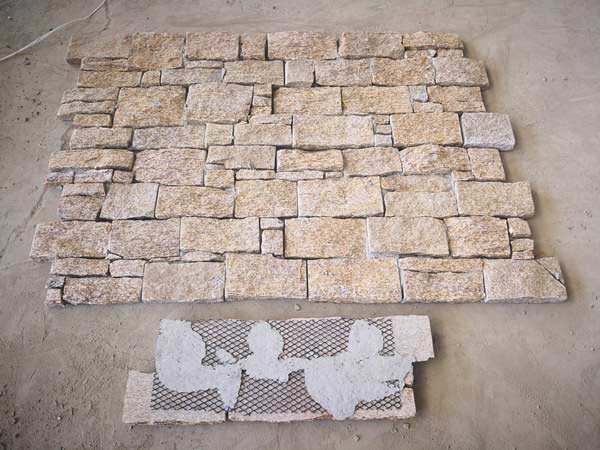
De geometrie van een naadloze muur: hoe in elkaar grijpende logica werkt
De Z-vormige geometrie maakt gebruik van offset mannelijk-vrouwelijke verbindingen om verticale naden te elimineren, waardoor een continu drooggestapeld uiterlijk ontstaat door lineaire patronen te verstoren en het installatiesubstraat te verbergen.
Visuele camouflage door Z-vormgeometrie
Standard rectangular panels create a predictable grid that highlights every joint. We use Z-shape geometry to replace these straight vertical lines with staggered edges. These staggered “fingers” nest into adjacent panels, preventing the human eye from tracking repetitive seams across a large facade or commercial interior.
- Pattern Disruption: Staggered interlocking edges break up the visual flow, making it difficult to spot individual panel borders compared to rectangular “fragmentarisch” layouts.
- Substrate Protection: The interlocking overlap ensures the installation substrate remains completely hidden, even if minor settling occurs.
- Textural Masking: Natural cleft finishes provide organic depth and shadow, which naturally masks the transition points between modular interlocking pieces.
CNC-diamantbladprecisie en mannelijk-vrouwelijke verbindingen
Een naadloze pasvorm is afhankelijk van productietoleranties. We maken gebruik van CNC-diamantzaagsneden om een flinterdunne randprecisie en 95% kleuruniformiteit over een enkele batch te behouden. Hierdoor kan ons man-vrouw verbindingssysteem functioneren zonder de “stapte” gaten die vaak voorkomen bij handgesneden producten.
- Gestandaardiseerde afmetingen: Modulaire afmetingen van 6 inch bij 24 inch (150 x 600 mm) zorgen voor een consistente installatiesnelheid en geometrische uitlijning.
- Steengroevecontrole: Wij bron steen per bestelling uit dezelfde steengroeveader om ervoor te zorgen dat kleurtinten en mineraalpatronen op één lijn liggen over de in elkaar grijpende voegen.
- Precisietechniek: Dankzij de CNC-gesneden randen kunnen de stenen strak worden uitgelijnd, waardoor een hoogwaardige dry-stack-afwerking ontstaat zonder dat er zichtbare mortel of voeg nodig is.
Premium natuursteen voor professionele projecten
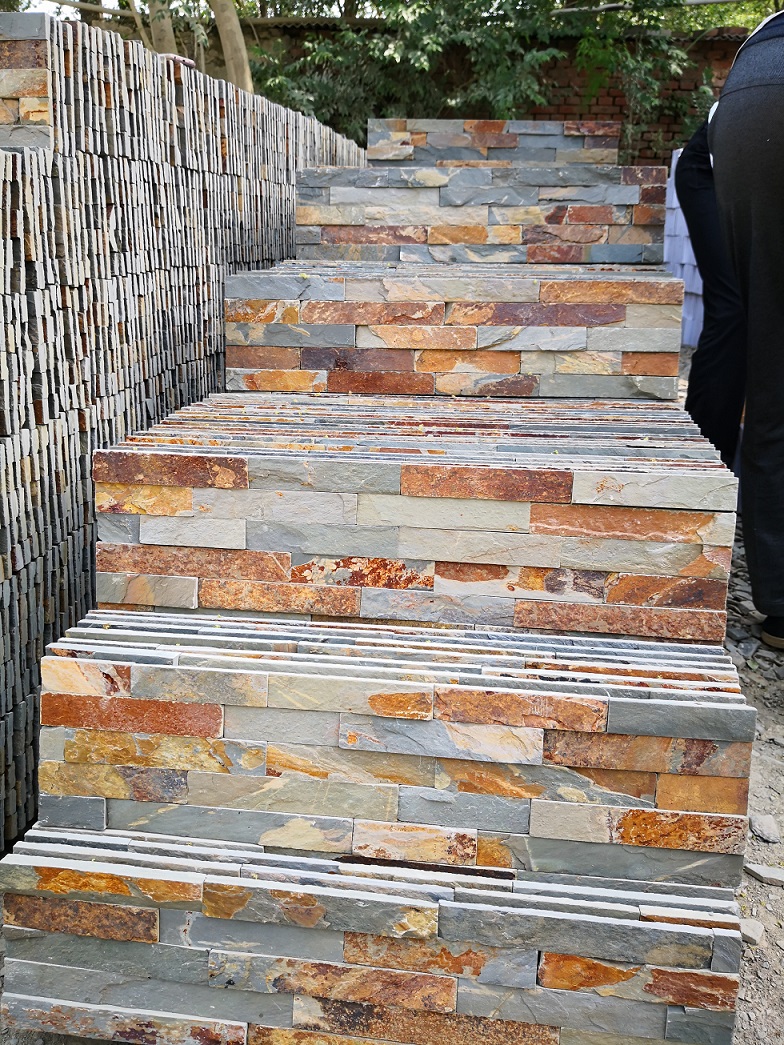
Waar te beginnen? Beheer van de eerste rij en duizelingwekkende patronen
Het centreren van de eerste rij zorgt voor visuele symmetrie, terwijl de in elkaar grijpende Z-vorm en berekende verspringing de “Zipper -effect” voor een naadloze, professionele architectonische afwerking.
De basis van uitlijning: centreren en nivelleren van de startrij
De eerste cursus dicteert het succes van de hele gevel. Voordat u lijm aanbrengt, Installateurs moeten de lay-out verifiëren om de muur te garanderen ends with a full or half-panel rather than an unbalanced sliver at the top. This level of planning separates professional B2B installations from amateur efforts.
- Visual Symmetry: Center the first panel on the keyway for even course counts, or the half-panel unit for odd counts.
- Level Reference: Snap a chalk line along the top edge of the first row to prevent cumulative alignment errors that drift as you stack.
- Structural Anchoring: Align trimmed ends directly over framing studs to support the 30-40kg/m² load of natuursteen.
- Trim Calculation: Cut the first course panels so the final row at the peak results in a balanced element.
Staggering Patterns and the Z-Shape Interlocking Logic
Bovenkant Source Stone Z-shape panels utilize a precision male-female connection to camouflage the substrate and hide vertical joints. Achieving a seamless look requires breaking the visual grid through strategic horizontal staggering. This prevents the eye from catching repetitive patterns that signal a modular product rather than custom masonry.
- Course Offsets: Remove 16 to 24 inches (equivalent to one or two stud cavities) from the starting panel of each new course.
- Zipper Effect Prevention: Ensure vertical seams never align diagonally across the facade by varying the starting panel lengths.
- CNC-precisie: Leverage the CNC diamond-blade edges to ensure tight fits that eliminate “staircase” patterns where seams align vertically.
- Connection Integrity: Maintain consistent contact at the “man-vrouw” joints to preserve the 95% hue uniformity across the batch.
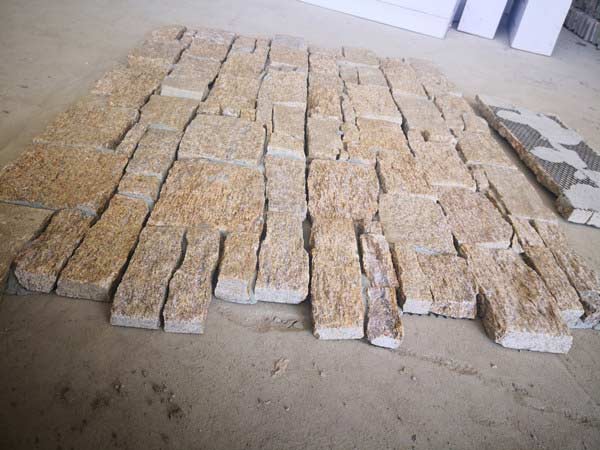
Hoe zichtbare verticale naden tussen panelen minimaliseren?
Bereik een naadloze afwerking door verticale verbindingen te spreiden en CNC-precisie in elkaar grijpende Z-panelen te gebruiken om verbindingen onder de 2 mm te houden.
| Technische factor | Naadloze prestatiestandaard |
|---|---|
| Paneelgeometrie | In elkaar grijpend Z-vormig / S-vormig systeem |
| Randprecisie | CNC diamantbladkalibratie |
| Tintconsistentie | 95% uniformiteit (groeveader van dezelfde partij) |
| Gezamenlijke tolerantie | Strakke openingen gecontroleerd onder 2,0 mm |
Strategische lay-out en gezamenlijke duizelingwekkende technieken
Effectieve installateurs voorkomen visuele onderbrekingen door de lay-out te plannen voordat de lijm de ondergrond raakt. Deze handmatige fase elimineert de “Zipper -effect” waar verticale naden diagonaal over de gevel uitgelijnd zijn, een veelgemaakte fout bij goedkope installaties.
- Dry-fit panelen: Leg stukken op de vloer willekeurige steen texturen en meng kleurtinten uit verschillende dozen.
- Verspringende gewrichten: Verplaats verticale verbindingen met minimaal 2-3 inch tussen rijen om lineaire patronen te verbreken.
- Natte binding aanpassing: Tik aangrenzende panelen tegen elkaar met een rubberen hamer terwijl de lijm nat is om zichtbare lijnen te minimaliseren.
- Volledige dekking: Breng lijm aan op beide muur en het paneel terug om de steen te verzekeren stevig op zijn plaats gedrukt zonder holtes.
CNC-precisie en in elkaar grijpende modulaire geometrie
Factory engineering removes the guesswork from on-site labor. We utilize CNC diamond-blade edges to ensure every panel meets strict modular specifications, providing a flush finish that camouflages the installation substrate entirely.
- Male-female connections: Use Z-shape interlocking systems that hide the vertical path of the joint.
- Quarry consistency: Bron panels from the same quarry vein per order to maintain 95% hue uniformity across large-scale projects.
- Precision edges: Rely on CNC-cut lines to maintain the industry standard of less than 2mm for visible gaps during curing.
- Matching L-corners: Use pre-fabricated 90-degree corners to sync texture and color at wall transitions, avoiding awkward versteksneden.
Can You Trim Z-panels Without Losing the Interlock Connection?
Bij het trimmen van Z-panelen wordt de mechanische vergrendeling aan de snijzijde verwijderd. Slimme installateurs verbergen deze randen aan de randen of gebruiken bijpassende L-hoeken om een naadloze architectonische afwerking te behouden.
Veldmaaistrategieën en de interlockgrens
Het doorsnijden van het Z-profiel elimineert de man-vrouwverbinding die nodig is voor een naadloze overlap. Wanneer je deze verwijdert “tanden,” je verliest de geometrische puzzelpassing die het substraat verbergt. Professionele installateurs beheren dit door de lay-out zo te plannen dat er geen snee randen komen alleen voor waar de steen een deurkozijn, raam of muurhoek raakt.
Om de structurele en visuele integriteit van de muur te behouden, volgt u deze zaagprotocollen:
- Strategische plaatsing: Reserve vertical cuts for the start or end of a horizontal row to keep the interlock active across the main surface.
- Tool Selection: Use a wet saw with a diamond blade to ensure clean edges that align flush against trim or molding.
- Staggering Pattern: Maintain horizontal staggering so that trimmed panels do not align their seams vertically, avoiding the “rits-effect.”
- Dry-Fitting: Lay panels out on the floor to identify where trimming will occur before applying adhesive.
Precision Manufacturing and L-Corner Integration
Topbron Stone uses CNC diamond-blade precision to ensure every Z-shape panel fits tightly, which reduces the need for aggressive site adjustments. By relying on factory-controlled dimensions, you minimize the risk of gaps that often plague hand-cut stone. For 90-degree transitions, we recommend using pre-fabricated L-corners rather than attempting to miter cut interlocking panels in the field.
- Bijpassende L-hoeken: We provide pre-made corners for every model to navigate turns without destroying the interlocking fingers of the flat panels.
- Naadloze technologie: Our interlocking series camouflages the installation substrate even if a panel requires a minor perimeter trim.
- Tintuniformiteit: We source from the same quarry vein per order, ensuring that cut pieces used at the edges still match the color profile of the central wall.
- Batchconsistentie: We maintain 95% hue uniformity within a single batch to prevent “fragmentarisch” looks when panels are cut and rearranged.
Best Practices for Leveling and Shimming Modular Stone
Effective shimming for stone projects involves using moisture-resistant plastic shims and limiting stacks to four pieces per foot to maintain plumb alignment and structural stability.
Natuurstenen panelen are heavy, typically weighing 30-40kg per square meter. If the first row isn’t perfectly level, cumulative alignment errors will ruin the facade. Installers often make the mistake of using wood shims that rot or compress, leading to wall failure over time.
Load-Bearing Shim Selection and Placement Logic
Selecting the right material is the difference between a permanent installation and a liability. High-density plastic shims are non-negotiable for modular stone because they do not absorb moisture or decay.
- Materiaal: Use high-density plastic shims instead of wood to prevent compression and moisture-related rot.
- Stack Limit: Limit shim packs to four pre-cut pieces to maintain load-bearing integrity under the weight of standard panelen.
- Orientation: Position shims in opposite directions to create a flat, even surface when adjusting for uneven substrates.
- Trimming: Cut away excess shim material with a utility knife after tightening anchor bolts for a clean, professional finish.
CNC Diamond-Blade Precision for Alignment Control
Precision manufacturing at the source reduces the need for aggressive shimming. Our Z-shape panels feature CNC diamond-blade edges that ensure a tight “man-vrouw” interlock, camouflaging vertical joints and speeding up the installatieproces.
- Edge Quality: CNC diamond-blade edges provide a consistent fit, reducing the need for shimming between vertical joints.
- Benchmarks: Establish level lines using pre-fabricated L-corners at wall transitions to synchronize texture and color.
- Securing: Tighten anchor bolts to specific torque requirements once the shim pack achieves plumb alignment.
- Layering: Sandwich thinner shims between thicker ones within the pack to protect them from damage under extreme loads.
Once the shim pack is positioned and the anchor bolts are secured, verify the alignment with a level one final time. A stable, plumb foundation ensures the rest of the modular stenen panelen lock together without visible gaps or structural shifting.
Het vermijden van de “Grid Look”: The Horizontal Staggering Secret
Offsetting panels horizontally prevents vertical joint alignment. Interlocking Z-shape panels automate this process, using CNC precision to hide seams across the muur gezicht naturally.
The Visual Impact of Offset Joint Placement
Aligning vertical seams creates a visible “rooster” that makes natuursteen look like artificial wallpaper. This repetition breaks the illusion of a solid stone structure and highlights the modular nature of the installation rather than the material itself.
- Visual Disruption: Staggering panels horizontally disrupts the eye’s path and mimics the random layout of traditional dry-stack masonry.
- De “Zipper” Prevention: We recommend starting every second or third row with a cut panel to ensure no two vertical joints line up directly above each other.
- Standard Offset: Professional installers typically use a 33% or 50% staggered layout to avoid “staircase” patterns where seams align diagonally across the facade.
Precision Interlocking Design for a Seamless Wall
Topbronsteen Z-Shape and S-Shape models utilize a male-female interlocking system to camouflage vertical connections. This geometry provides a “built-in” stagger that reduces the need for complex manual measurements while maintaining high architectural standards.
- CNC-precisie: Diamond-blade cutting ensures that even when staggered, the 8″ x 22″ panels fit tightly to eliminate visible substrate gaps.
- Batchcontrole: We source stone from the same quarry vein per order to maintain 95% hue uniformity, preventing “fragmentarisch” color blocks that make joints more obvious.
- Modular Efficiency: The interlocking edges allow for 38% faster installation than standard rectangular panels by simplifying alignment on large commercial surfaces.
By combining strategic offset placement with precision-engineered panel shapes, dealers can provide clients with a finish that hides the mechanical reality of the installation. This technical approach ensures the wall appears as a singular, hand-crafted stone surface.
Veelgestelde vragen
How do I install Z-shaped interlocking panels for large-scale commercial projects?
Commercial installers use two primary methods: a combination of high-strength stone adhesive with Z-clips for mechanical support, or a pure Z-clip fastening system. For our modular Z-shape panels, dry-fit the pieces first to verify pattern consistency. Apply mortar to the substrate and slide the male-female connections together to hide the installation surface and ensure a tight fit.
Why are the vertical seams visible on some stacked stone installations?
Visible seams usually result from light stone colors, improper adhesive matching, or imprecise manual cuts. To prevent this, we use CNC diamond-blade precision cutting on all Z-shape edges to ensure a tighter fit. Using a color-matched epoxy instead of generic caulk also helps the joint blend into the natural variations of the slate or quartzite.
Do I need to stagger the panels, and what is the recommended offset?
Staggering is essential to avoid an artificial grid look. Offset your vertical joints by at least 2 to 3 inches from the row below. For the most natural appearance, start every other row with a panel cut to a different length. This creates a random masonry pattern that conceals the modular nature of the stone.
What tools should I use to cut the ends of Z-panels for wall transitions?
A wet saw with a diamond blade is the standard tool for 2026 stenen metselwerk to ensure clean, chip-free edges. Cut slowly and support the panel fully to avoid vibration damage. Do not use routers or spiral cutters, as these tools lack the torque and blade type required for 100% natuursteen materials.
Should the installation move from the bottom up or top down?
Always install heavy natural stone panels from the bottom up. This allows the first row to rest on the floor or a leveled starter strip, providing the structural support for subsequent courses. This method prevents the panels from sliding or sagging before the adhesive fully cures.
Are these natural stone panels suitable for fireplace surrounds?
Ja, natuursteen like our Quartzite and Slate is non-combustible and withstands high heat. Because these panels are freeze-thaw resistant and UV stable, they maintain their structural integrity and color in both high-temperature interior environments and extreme outdoor climates.
Laatste gedachten
Cheap stacked stone often forces contractors to waste hours on manual sorting and grinding just to hide visible substrate gaps. We eliminate this labor bottleneck by using CNC diamond-blade edges and same-quarry vein sourcing to guarantee 95% hue uniformity. Choosing precision-engineered Z-panels secures 38% faster installation for your clients while protecting your reputation from costly “raster-look” complaints.
Stop relying on digital photos and verify the interlocking precision for yourself. We recommend ordering a sample kit from our stone cladding to test the fitment and natural cleft depth firsthand. Contact our B2B team today to discuss your trial order and secure territory protection for your wholesale region.