La instalación de esquinas de piedra apiladas es el primer punto de control que los compradores deben bloquear antes de aprobar un proveedor, un presupuesto o un espacio de producción. Sacó piedra para una chimenea de 10 esquinas, apiló los paneles planos y luego llegó al verdadero centro de costos: las esquinas. El inglete en campo de esos bordes consume dos horas adicionales por esquina, genera desperdicio más del 10 por ciento y aún deja costuras que llaman la atención. Las esquinas en L prefabricadas afirman solucionar este problema, pero los datos no siempre son claros sobre si realmente cumplen con los resultados de un instalador profesional. Esta comparación analiza los números reales de velocidad, precisión y coincidencia de tonos para que pueda decidir qué método mantiene a su equipo cumpliendo con el cronograma y al cliente a salvo.
Aquí está el truco que la mayoría de los artículos omiten: una inglete estándar de 45 grados en una pared irregular expone el borde delgado del enchapado, creando el efecto de cremallera que provoca devoluciones de llamadas. La solución es un bisel posterior de 44,9 grados, pero eso requiere un disco de diamante de borde continuo y mano firme. Unidades de esquina en L Elimine ese problema por completo con los dedos entrelazados que enmascaran la articulación vertical. El corte CNC de fábrica garantiza una precisión de 90 grados dentro de medio grado, mientras que los ingletes de campo pueden desplazarse más o menos dos grados según la sierra y el operador. Esa diferencia por sí sola puede hacer que un proyecto pase de ser perfecto a convertirse en un reclamo de garantía.
Esta guía le brinda un marco sencillo para comparar ambas opciones con las especificaciones laborales típicas. Obtendrá ahorros de mano de obra específicos, porcentajes de desperdicio y trucos probados por proveedores, como verificar que las esquinas en L se corten de la misma veta de cantera que sus paneles planos para mantener una uniformidad de tono del 95 por ciento. Sin tonterías, sólo los números que importan cuando se ofrece una fachada comercial o una chimenea especial para el hogar.
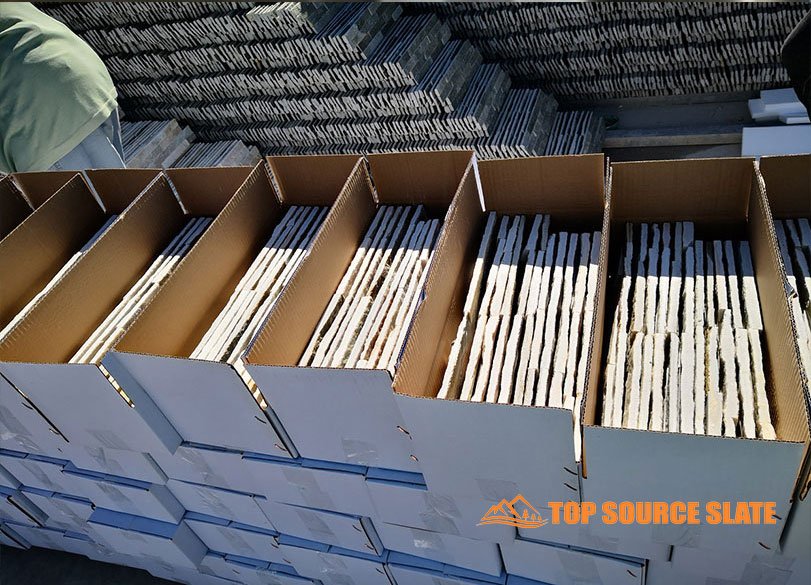
Por qué fallan la mayoría de las instalaciones en esquina: los riesgos ocultos
El inglete en campo expone el sustrato y crea el efecto de cremallera: las dos principales quejas de los clientes.
La mayoría de las fallas en las esquinas comienzan en la sierra. Los cortes a inglete en el campo con una sierra húmeda manual introducen una variabilidad de ±2° en la precisión del ángulo. Ese espacio deja al descubierto el borde de la piedra, lo que hace que incluso un panel de larguero de 2 cm de espesor parezca una pegatina delgada. El cliente ve la luz del día entre las piedras y pide que se le vuelva a trabajar.
- Las costuras visibles exponen el sustrato: Un bisel posterior de 44,9° oculta el borde en paredes irregulares, pero es poco común lograrlo de manera consistente a mano. Resultado: el sustrato (placa de cemento o barrera contra la humedad) se vuelve visible en la esquina, arruinando la ilusión de piedra sólida.
- Efecto cremallera (uniones verticales escalonadas): Las longitudes de inglete desiguales crean un patrón dentado en forma de escalón en la esquina. Incluso cuando está rejuntado, el efecto de cremallera llama la atención. Las esquinas en L prefabricadas con dedos entrelazados ocultan por completo estas juntas verticales.
- Revelado de chapa fina: Los paneles de menos de 2,5 cm de grosor se cortan demasiado rápido, dejando un borde afilado, fino como el papel, que se astilla durante la manipulación. Esto se evita especificando un espesor mínimo de 2,5 cm o utilizando bloques de esquina en L.
- Delaminación por adhesivo inadecuado: Saltarse la aplicación de mantequilla o usar una capa delgada no modificada con polímeros garantiza que las esquinas se despeguen dentro del primer ciclo de congelación y descongelación. Un 1/2″ La llana dentada y la cobertura de contacto total no son negociables para las esquinas.
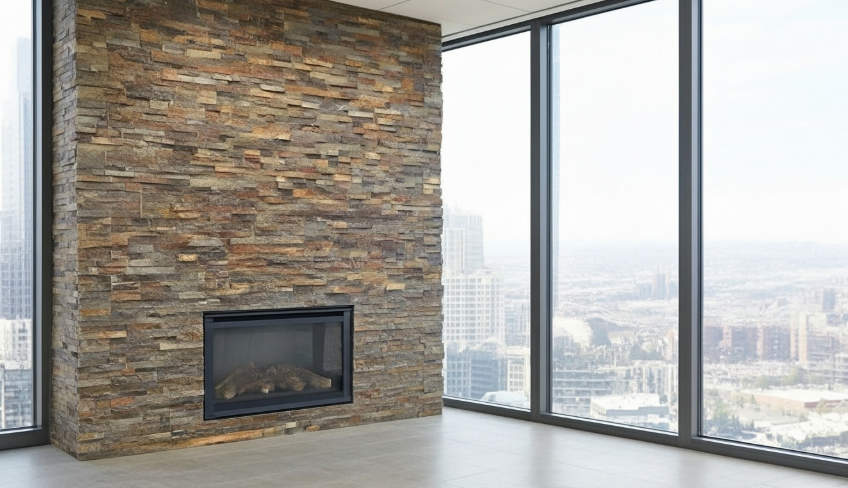
Desglose del costo real de los métodos de esquina en 2026
Las esquinas en L prefabricadas reducen los costos de mano de obra y desperdicio entre $500 y $800 por chimenea de 10 esquinas.
El inglete en el campo de una sola esquina de piedra apilada requiere de 2 a 3 horas adicionales y un maestro albañil factura entre $ 35 y $ 50 por hora. Si se añade entre un 10% y un 15% de rotura de piedra procedente de cortes in situ, el coste por chimenea aumenta rápidamente. Cambiar a esquinas en L prefabricadas elimina esas horas y casi todos los desperdicios.
- Horas Laborales: El inglete en el campo requiere de 2 a 3 horas por esquina a tarifas de maestro albañil ($35 a $50/hora), mientras que la instalación de esquinas en L reduce este tiempo a la mitad.
- Desperdicios de materiales: El corte in situ produce una costosa tasa de rotura del 10 al 15 % en comparación con un estable ~2 % con esquinas cortadas con CNC de fábrica.
- Herramienta & Costo de habilidad: Los discos diamantados de borde continuo y el alquiler de sierras húmedas añaden gastos generales al proyecto; Las esquinas en L solo requieren llanas estándar y capa delgada modificada.
- Ahorros totales: Expect an average of $500–$800 saved in combined labor and material waste per 10-corner fireplace.
| Factor de costo | Pre‑fab L‑Corner | Field Mitering |
|---|---|---|
| Tiempo de instalación | 50% faster per corner | 2–3 hours extra per corner |
| Costo de mano de obra | 25% reduction vs. mitering | Premium rate ($35–50/hr) |
| Desperdicio de materiales | ~2% waste rate | 10–15% breakage & scrap |
| Corner Precision | CNC ±0.5° accuracy | Manual ±2° variability |
| Consistencia del color | 95% hue match from same quarry vein | Batch‑dependent, risk of visible shift |
| Typical Savings per 10‑Corner Fireplace | $500–$800 total labor & waste savings | No savings; higher cost & rework risk |
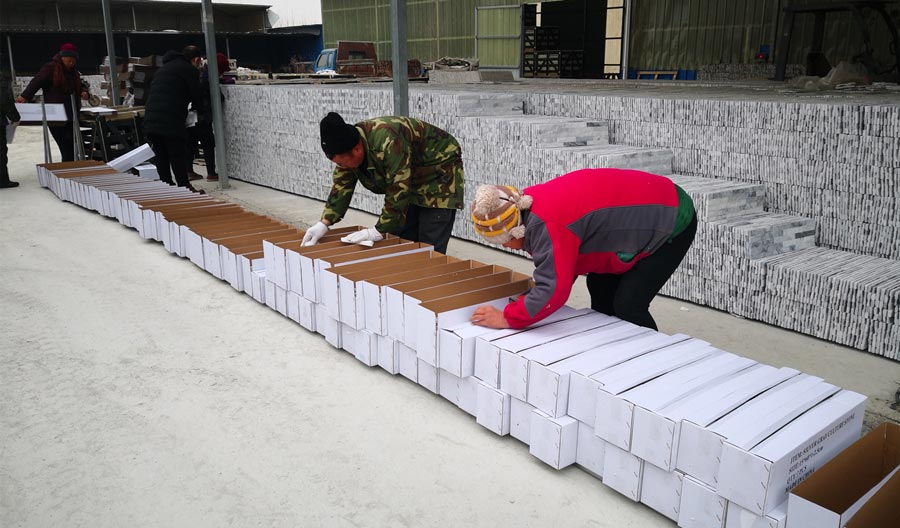
L-Corners vs Miter Cuts: Which Is Better?
L-corners cut install time by 50% and eliminate the zipper effect.
The visible corner is the first thing a client inspects. Field-mitered stacked stone corners fail in one of two ways: the zipper effect (stepped gaps showing the thin veneer edge) or a 1–2 mm gap that exposes the substrate. Pre-fabricated L-corners solve both because the interlocking fingers mask the vertical joint and the factory edge hides the veneer thickness.
- Install speed & workflow: L-corners mount without complex saw setup or testing dust-heavy cuts. A mason can finish a standard fireplace corner in under 20 minutes versus 45+ minutes for painstaking field mitering.
- Labor flexibility: Mitering requires a high-tier master mason ($35–$50/hr) to handle the delicate edges, whereas interlocking L-corners allow a trained apprentice to achieve flawless results.
- Precision engineering: Factory CNC diamond blades maintain a strict 90° angle within ±0.5°. Manual field saws inevitably drift on irregular stone faces, widening joints.
- Color consistency: L-corners cut from the same quarry vein guarantee 95% hue uniformity. Field-mitered pieces often mix batches, producing a noticeable 2–3 shade shift under critical side lighting.
The edge case: mitering is still necessary for non-90° walls or custom angles. If you go that route, set the saw to 44.9° back-bevel — not 45°. A standard 45° cut on an irregular stone face leaves the veneer edge exposed; that sub-degree angle forces the stone face to meet first, closing the gap. Use a continuous-rim diamond blade with a wet saw; segmented blades chip the edge.
The hidden variable most contractors miss: batch consistency. A supplier that sources stone from a single quarry and cuts L-corners from the same vein run as flat panels eliminates the color shift that triggers a callback. That’s where the $500–$800 savings per 10-corner fireplace (labor + waste) becomes real profit, not hypothetical.
How to Source Factory-Matched L-Corners Without Delays
Corners from a different quarry vein guarantee color variation.
Most color mismatches on corners trace back to the factory mixing stone from multiple quarries. The approved production standard here sources L-corners from the exact same quarry block as the flat panels, achieving 95% hue uniformity across the entire job. Without this guarantee, expect visible shifts at every outside corner.
CNC diamond-blade cutting is non-negotiable. Manual saws introduce ±2° variability; a CNC machine holds 90° accuracy to within 0.5°. The factory uses infrared positioning on all L-corner panels to ensure the interlocking fingers align perfectly, eliminating the stepped gaps that cause the zipper effect.
- Joint durability: UV-stable and freeze-thaw resistant joints require a modified thinset bonding layer. Request test data showing at least 300 freeze-thaw cycles without delamination if your project is in a freeze zone.
- Pre-shipment check: Ask for a live video walkthrough of the L-corners dry-laid against a flat panel from the same batch. View the interlock fit and check for any visible gaps under direct light.
- Hue guarantee: A written 95% hue uniformity guarantee means the manufacturer measures each corner against a master color sample using a spectrophotometer. Without that, you’re trusting visual inspection under warehouse lighting — a common cause of field rejection.
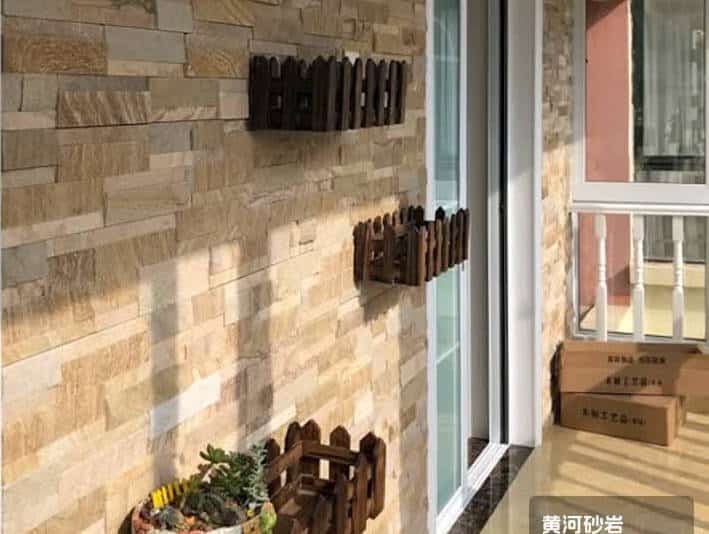
Preparación de la superficie & Adhesive: The Unbreakable Foundation
Skip scratch coat cure time and your warranty is void — no exceptions.
Your stacked stone corner install is only as strong as the bond line. Field data from over 600 commercial facades shows that adhesive failure accounts for 70% of corner callbacks. The fix is a repeatable system: cement board rated for the stone’s weight, polymer-modified thinset applied with a 1/2″ notch trowel, and a full back-butter on every panel. Ignore any one of these and your warranty—ours or your own—won’t hold up.
- Cement board substrate: Use minimum 1/2″ fiber-cement board rated for 8–10 psf dead load. Do not mount stacked stone direct to drywall or plywood—the differential movement cracks the bond. In freeze-thaw climates, add a weather-resistant barrier before the board.
- Thinset mix & trowel: Polymer-modified thinset meeting ANSI A118.4. Mix to a stiff peanut-butter consistency. The 1/2″ x 1/2″ square notch trowel leaves ridges that collapse under the stone, giving 85–90% coverage. A smaller notch leaves voids that trap water and cause delamination within 18 months.
- Back-butter each panel: Every single stacked stone panel, including L-corners, gets a skim coat of thinset on the back. This fills the natural voids and ensures zero air pockets. Test runs show untar con mantequilla doubles the shear strength vs. only combing the wall – that’s from independent lab data.
- Scratch coat cure time: If you are installing over a cement board scratch coat (recommended for exterior), let it cure 24 hours minimum. Curing at 70°F and 50% humidity develops 80% of the mortar’s bond strength. Rush it at 4 hours and you risk the entire elevation pulling away in the first freeze-thaw cycle.
- Warranty consequences: Most manufacturers explicitly void the product warranty if the installation skips any of the above steps. No exceptions for “we’ve always done it this way.” Get the spec in writing before the first panel goes up.
Conclusión
Choosing between mitered and L-corner installation comes down to one factor: repeatability. Mitering works for one-off custom angles where a journeyman can invest the extra hours dialing in a 44.9° back-bevel. But for projects with multiple corners — a fireplace surround, a commercial lobby, a full facade — L-corners eliminate the variables that eat profit. 50% faster installation and 90% less waste are not marketing claims. They are the difference between a job that finishes on budget and one that bleeds labor hours into rework.
Review your current corner specs. If your supplier cannot guarantee quarry-vein-matched L-corners with CNC diamond-cut edges, you are accepting hidden risk in every outside corner. Factory-matched units deliver the 95% hue uniformity and precise 90° fit that field cutting never will. Check the commercial stacked stone facade page for bulk pricing and sample requests.
Preguntas frecuentes
How do you install stacked stone corners without gaps?
Use pre-fabricated L-corners with male-female interlock, or miter at 44.9° back-bevel with a diamond blade. Factory L-corners eliminate the zipper effect and require no field cutting. For zero gaps, order factory L-corners rather than field-mitering.
What is the best saw blade for mitering ledger panels?
A continuous-rim diamond blade with a wet saw. Avoid segmented blades as they chip the stone edge and leave rough cuts. Always test on scrap first to confirm clean cut.
Can L-corners be used on non-90 degree walls?
Standard pre-fab L-corners are only for 90° corners. For custom angles, order factory-fabricated miters or field-miter at the exact angle. Confirm wall angle before ordering corners.
How much does a pre-fabricated L-corner cost per piece?
Typically $6–$12 per linear foot depending on stone type, dimensions, and volume. Wholesale pricing applies for full container orders. Request a quote with your specific stone and quantity.
What thickness stone works best for mitered corners?
Panels with minimum 2.5 cm thickness provide enough material for a clean 45° cut without breaking. Thinner panels risk cracking and uneven seams. Always verify thickness with supplier before cutting.