ROI over de volledige wand & Het ontwerp maakt een onderscheid tussen showklare afwerkingen en kostbare inspectievertragingen, hogere transportkosten en afschrijvingen op taxaties die de marges van ontwikkelaars aantasten. Huiseigenaren jagen op drama en gepercipieerde waarde, terwijl bouwers en ontwikkelaars prioriteit geven aan voorspelbare budgetten, snelle sluitingen en meer verkoop. de keuze tussen steen van vloer tot plafond en een gedeeltelijke beschot vormt de impact, het planningsrisico en de uiteindelijke verkoopprijs.
Deze gids dient als een praktische SOP: hij behandelt het drama van de vloer tot plafond natuurstenen statement-muur, hoe steen van volledige hoogte de waargenomen kamerhoogte verandert, waarom beschothaarden passen bij moderne boerderijbudgetten, en een kernkostenanalyse met kosten/ft²-bereiken plus een compacte vergelijking van materialen, arbeid en tijdlijn. Het bevat ook structurele controles, benchmarks voor wederverkoopherstel en veelgestelde vragen over de volledige hoogte stenen open haard kosten, ROI van gedeeltelijke stenen open haard, hoogte van gestapelde stenen open haard en structurele vereisten voor stenen open haard.
Het drama van de vloer-tot-plafond natuurstenen statement-muur
Steen op volledige hoogte levert meetbare marktverbetering op, maar vereist technische ondersteuning, klimaatspecifieke selectie en strakke logistiek om marges en planningen te beschermen.
Ontwerpimpact- en prestatiecriteria voor stenen muren van volledige hoogte
Steen van vloer tot plafond verankert open ruimtes door één enkel verticaal focusvlak te creëren. Gebruik het achter zitplaatsen, open haarden, toegangstrappen, keukenaccenten of spabadkamers om zichtlijnen en circulatie te controleren. Kies voor getextureerde split-face of dry-stack-afwerkingen waar u diepte en schaduw wilt; plan gerichte verlichting en zichtlijnen om contrastrijke verblinding te verminderen en de waargenomen schaal in balans te houden.
Houd al vroeg rekening met de dode belasting: platte panelen voegen grofweg 30-40 kg/m² toe en ruwe panelen ongeveer 55 kg/m², dus neem deze cijfers mee in akoestische en structurele berekeningen. Specificeer steenkwaliteiten voor het milieu: selecteer een hoog zoutgehalte en een hoge luchtvochtigheid stenen voor Gulf-projecten en vorst-dooibestendig kwartsiet voor noordelijke klimaten. Combineer afwerkingen om de visuele temperatuur onder controle te houden (warm hout met warme steen, helderwitte of minimalistische oppervlakken met koele steen) om visuele overbelasting te voorkomen en de architectonische aanwezigheid van het materiaal te behouden.
Materiaalkeuze en productspecificaties voor continue verticale installaties
Selecteer steen op toon, textuur en duurzaamheid: kwartsiet, leisteen, zandsteen en natuurlijk gestapeld (ledgestone) dekken de meeste specificaties. Gebruik in elkaar grijpende Z-vormige of S-vormige mannelijke/vrouwelijke systemen voor lange verticale trajecten om verticale voegen te verbergen en een continue textuur te behouden; CNC-diamantbladprecisie op in elkaar grijpende panelen zorgt voor consistente naden en strakke mannelijke/vrouwelijke pasvormen.
- Standaard paneelafmetingen: 150×600 mm (6″×24″) of 150×550 mm (6″×22″).
- Dikte: standaard 10–25 mm; ruw/premium tot 35 mm.
- Gewicht voor belastingberekeningen: vlakke panelen ≈ 30–40 kg/m² (8–12 lbs/ft²); ruwe panelen ≈ 55 kg/m².
- Hoeken: bestel bijpassende voorgevormde L-hoeken voor strakke 90°-overgangen en doorlopende textuur.
- Kleurcontrole: inkoop van steengroeven in dezelfde batch levert ~95% kleuruniformiteit op grote muren op.
- Import-/exportclassificatie: gebruik HS-codes Slate 6803.00.90 en Quartzite 6802.93.11 voor douanepapieren.
Installatiebeperkingen, procedures ter plaatse en inkooplogistiek
Controleer vóór aanschaf of de ondergrond en de back-up in staat zijn om dode lasten te dragen: ontwerp met 30–40 kg/m² voor vlakke panelen en 55 kg/m² voor ruwe panelen als standaardwaarden. Voor hoge muren zijn naast polymeer-gemodificeerde thinset ook mechanische ankers nodig; specificeer mechanische ondersteuning wanneer de muurhoogte groter is dan 2,5 m of waar de lokale code secundaire verankering vereist. Gebruik waar mogelijk betonnen metselwerksteunen omdat deze de ankerkrachten verdelen en zorgen voor een stijvere montage met een langere levensduur; vraag naar Eindige Elementen Analyse (FEA) op grote, slanke panelen of panelen met verschillende stijfheid.
- Bevestiging: polymeer-gemodificeerde thinset voor typische interieurs plus mechanische ankers voor hoge of ruwe panelen; ontwerp ankers met een veiligheidsfactor van 4:1 en begin bij lange stukken met ankers op de kwartpunten boven en onder.
- Thermisch/beweging: detailleer bewegingsvoegen en gebruik flexibele, UV-stabiele afdichtingsmiddelen volgens lokale regelgeving om uitzetting over volledige hoogte op te vangen.
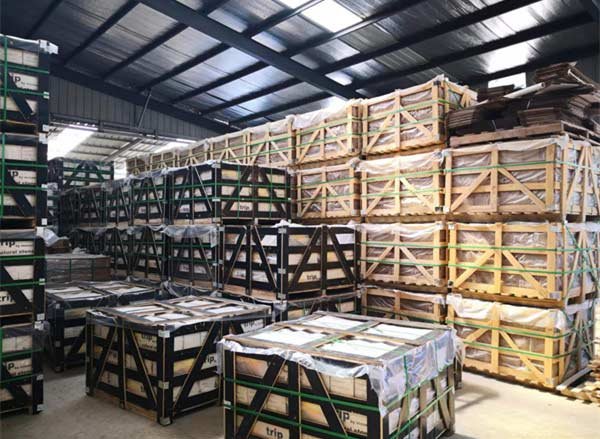
- Behandeling/verpakking: dozen bevatten 7 stuks (0,63 m²) of 8 stuks (0,72 m²); ruwe panelen 5 stuks/doos (0,45 m²); brutogewicht multiplexkrat ~900–1000 kg - plan kraan- of vorkheftrucktoegang voor lossen.
- Logistiek: MOQ en proefbestelling instellen op 300 m² (mix & wedstrijd toegestaan). Palletopties: 48 of 60 dozen; 20GP containercapaciteit ~750–860 m² voor standaardpanelen (480–540 m² voor ruwe panelen).
- Commerciële voorwaarden: verzending op voorraad binnen 10-15 dagen; productie 20–25 dagen voor een 20GP; betaling T/T 30% aanbetaling, 70% vóór verzending met foto-/videoverificatie vóór verzending.
- Indeling ter plaatse: podiumpanelen om zichtbare naden te minimaliseren, installeer eerst bijpassende L-hoeken als de continuïteit van de verpakking belangrijk is, en kies dry-stack of minimale grout om bij de beoogde esthetiek te passen.

Hoe steen op volledige hoogte de waargenomen hoogte van een kamer beïnvloedt
Steen op volledige hoogte trekt de aandacht en zorgt voor een aantrekkelijker verkoopresultaat, maar vereist technische ankers, substraatverificatie en paneelplanning om de verticale illusie te beschermen.
Verticale continuïteit: visuele hoogtewinst berekenen met steen van vloer tot plafond
Steen op volledige hoogte creëert een ononderbroken verticaal vlak dat het oog naar boven trekt; plaats een dekking van vloer tot plafond op de primaire muur om de waargenomen plafondhoogte en architectonische impact te maximaliseren. Ontwerpers gebruiken deze techniek op focale muren, open haarden en trapovergangen in de woonkamer, omdat een ononderbroken natuurlijke textuur de ruimte verankert en voor bewoners en kopers als extra hoogte fungeert.
Plan de naden met standaard paneellengtes (150 × 600 mm of 150 × 550 mm). Minder horizontale naden over de verticale overspanning verminderen de visuele onderbrekingen: bijvoorbeeld een 3,00 m (9'10”) plafond accepteert vijf lagen van 600 mm (600 × 5 = 3.000 mm) zonder smalle bovenlaag; een 2,70 m (8'10”) plafond levert vier volledige vakken van 600 mm en een rest van 300 mm, dus snij een bijgesneden bovenste paneel of specificeer een aangepaste lengte om een dunne bovenband te vermijden die de waargenomen hoogte comprimeert. Houd rekening met het eigen gewicht bij het dimensioneren van ankers en back-ups: vlakke panelen wegen ≈ 30–40 kg/m²; ruwe panelen ≈ 55 kg/m² – controleer de ondergrond en bevestigingen op deze belastingen voordat u een dekking van vloer tot plafond kiest.
- Gebruik modules van 150×600 mm of 150×550 mm als basis voor het aantal lagen en de plaatsing van de naden.
- Bereken de lagen: totale wandhoogte (mm) ÷ paneellengte (mm) → plan een bijgesneden of aangepast paneel voor de rest < één volledige cursus.
- Ontwerpankers en steun voor 30–55 kg/m² afhankelijk van paneelprofiel; bevestig de substraatcapaciteit voordat u bestelt.
Materiaal- en textuurkeuzes die de waargenomen hoogte verbeteren
Kies steen en afwerking om de verticale perceptie te bevorderen: kwartsiet en leisteen geven scherpe lineaire texturen en werken goed met verticaal uitgelijnde aderen, terwijl gespleten of naadloze afwerkingen de schaduwdiepte beheersen. Geef de paneeldikte op aan de hand van het beoogde visuele effect. Top Source-panelen hebben een doorsnede van 10–25 mm (1,0–2,5 cm) voor een slank, verfijnd vlak en tot 35 mm (3,5 cm) voor een dieper reliëf; gebruik spaarzaam dieper reliëf, omdat een zware textuur de verticale weergave kan onderbreken en het liftende effect kan verminderen.
Kies voor lichtere, contrastarme tinten of stenen met verticale nerven om plafonds visueel op te tillen, en dring aan op consistentie van dezelfde batch steengroeve (≈95% tintuniformiteit) in de hele installatie om fragmentarische kleurverschuivingen te voorkomen die de verticale stroming onderbreken. Geef de voorkeur aan smalle banen en verticaal uitgelijnde voegen in plaats van brede horizontale banden, zodat het oog een ononderbroken verticaal ritme langs de muur volgt.
- Voorkeursmaterialen: kwartsiet, leisteen voor lineaire textuur; afwerkingen: natuurlijke gespleten, split-face, naadloos.
- Diktegeleiding: 10–25 mm voor slanke vlakken; tot 35 mm voor dieper reliëf – beperk zwaar reliëf op primaire verticale wanden.
- Kleurcontrole: vereisen steengroeve-inkoop van dezelfde batch (~95% kleuruniformiteit) voor elke vloer tot plafond-run.
- Gezamenlijke strategie: gebruik smalle verticale voegen of gespreide verticale coursing; vermijd brede horizontale banden die de visuele as verkorten.
Installatiedetails die de hoogte versterken: oriëntatie, vergrendelingen, hoeken en verlichting
Oriënteer panelen en verbindingen om verticale lijnen te benadrukken; specificeer Z-vormige of S-vormige in elkaar grijpende panelen met man-vrouwverbindingen om naden te camoufleren en de doorlopende textuur te behouden bij lange verticale banen. Vereist precisieranden met CNC-diamantbladen en bijpassende geprefabriceerde L-hoeken om strakke passingen bij overgangen te bereiken. Deze elementen verwijderen zichtbare onderbrekingen bij hoeken en behouden een schoon verticaal vlak.
Ontwerp mechanische en zelfklevende bevestigingen voor het werkelijke paneelgewicht (30–55 kg/m²) en bevestig de sterkte van de ondergrond. Gebruik ankers met een conservatieve veiligheidsfactor (ontwerp ankers op 4:1; analyseer steenspanningen met een factor 5:1 bij het dimensioneren van ankerlay-outs). Geef de voorkeur aan stevige steunen zoals betonmetselwerk voor grote installaties met volledige muren, omdat deze de ankerkrachten verdelen en de stijfheid vergroten; gebruik eindige-elementenanalyse voor complexe omstandigheden of omstandigheden met differentiële stijfheid. Integreer van bovenaf strijkende of verborgen aan het plafond gemonteerde LED-strips om de opwaartse schaduw te accentueren, en voer controles ter plaatse uit: verifieer de levering van dezelfde batch, droog de kritieke verticale trajecten droog en lijn de eindafsluitingen uit vóór de definitieve bevestiging om de verticale illusie te beschermen.
- Interlockspecificatie: Z-vormige/S-vormige mannelijk-vrouwelijke panelen met CNC-diamantbladranden en bijpassende L-hoeken.
- Anker & back-up: maatankers voor een belasting van 30–55 kg/m²; gebruik een veiligheidsfactor van 4:1 voor ankers en houd rekening met een veiligheidsfactor van 5:1 voor steenspanningsanalyse; geef de voorkeur aan een back-up van beton/metselwerk voor runs op volledige hoogte.
- Verlichting: specificeer verborgen, naar boven gerichte LED-strips om opwaartse schaduw te creëren en de waargenomen hoogte te verbeteren.
- Controlelijst voor de locatievolgorde: bevestig kratten van dezelfde batch bij aankomst, leg kritische verticale lagen droog, pas de paneeluitsnede aan om smalle bovenlagen te voorkomen, plaats vervolgens de definitieve ankers en lijm volgens de ontworpen lay-out.
Premium gestapelde steen — snellere installatie
Waarom beschotshaarden perfect zijn voor moderne boerderijbudgetten
Dun paneel natuurlijke gestapelde steen met in elkaar grijpende profielen vermindert de vracht-, snij- en afwerkingskosten terwijl de authentieke boerderijesthetiek behouden blijft.
Kies de steensoort en paneelspecificaties die passen bij het budget en de authenticiteit
Kies steen op duurzaamheid en installatiekosten: kwartsiet of leisteen geven de beste prestaties op de lange termijn en zijn bestand tegen vorst-dooi- en UV-blootstelling, terwijl zandsteen zorgt voor de getextureerde boerderijlook tegen lagere materiaalkosten. Dring aan op consistentie van steengroeves van dezelfde batch (Topbronsteen rapporteert ~95% tintuniformiteit) om zichtbare kleurverschuivingen over meerdere haarden te voorkomen.
Specificeer de paneelgeometrie en -dikte om de arbeid onder controle te houden. Gebruik standaard rechthoeken (150 x 600 mm of 150 x 550 mm) voor drooggestapelde lay-outs, en kies voor Z- of S-vormige in elkaar grijpende panelen als u verborgen verticale verbindingen nodig heeft en minder afwerkingswerk nodig heeft. Standaarddiktes bedragen 1,0–2,5 cm bij ongeveer 30–40 kg/m²; ruwe of premium oppervlakken tot 3,5 cm wegen ~55 kg/m² – houd daar rekening mee bij het substraatontwerp en de vrachtberekeningen.
- Paneelafmetingen: 150 x 600 mm (6″ x 24″) of 150 x 550 mm (6″ x 22″).
- Dikte/gewicht: 1,0–2,5 cm ≈ 30–40 kg/m²; tot 3,5 cm ≈ 55 kg/m².
- Afwerkingsopties: natuurlijke gespleten/gespleten voorkant voor voelbare diepte; in elkaar grijpende naadloze afwerking om zichtbare verbindingen en afwerkingsarbeid te minimaliseren.
- Bestel bijpassende L-hoeken om ter plaatse verstekwerk en kleurverschillen te voorkomen.
Bereken materiaalhoeveelheden en logistiek om de projectkosten onder controle te houden
Converteer het gemeten beschotoppervlak naar dozen met behulp van de regels voor doosdekking: standaard dozen verzenden 7 stuks = 0,63 m² of 8 stuks = 0,72 m²; ruw gestapelde dozen verzenden 5 stuks = 0,45 m². Meet het gezichtsgebied, voeg 7-10% afval toe voor insnijdingen en onthullingen en verdeel het vervolgens door de gekozen dekking van de doos om het aantal dozen te krijgen; inclusief bijpassende L-hoeken en overgangsstukken in het totaal.
Plan pallets en containers om vracht per eenheid te minimaliseren: Optie A-pallets (48 dozen) bestrijken ≈ 30,24 m²; Optie B (60 dozen) ≈ 37,80 m². Een 20GP-container kan 25–30 pallets laden en ongeveer 750–860 m² standaardpanelen leveren. Let op gewichtslimieten – VS. havens beperken zich gewoonlijk tot ~17,5 ton zonder speciale goedkeuringen en stemmen de palletplanning op elkaar af om gewichtsboetes te voorkomen. Volg de commerciële regels van Top Source Stone: proef/private-label MOQ = 300 m², verzending op voorraad 10–15 dagen, productie 20–25 dagen voor 20GP.
- Doosdekking: 7 stuks = 0,63 m²; 8 stuks = 0,72 m²; ruwe dozen 5 stuks = 0,45 m².
- Palletopties: 48 dozen ≈ 30,24 m²; 60 dozen ≈ 37,80 m².
- 20GP-capaciteit: ~25–30 pallets; maximale dekking ~750–860 m² (standaardpanelen).
- MOQ & doorlooptijd: 300 m² proef/private label; op voorraad 10–15 dagen; productie 20-25 dagen.
- Betaling & verificatie: T/T 30% aanbetaling, 70% vóór verzending; vraag vóór verzending foto's/video's aan van voltooide kratten.
Optimaliseer installatiemethoden om de arbeids- en structurele kosten te verlagen
Specificeer in elkaar grijpende Z- of S-vormige panelen met CNC-diamantbladprecisie om verticale verbindingen te verbergen, de uitlijning te versnellen en de afwerkingstijd ter plaatse te verkorten. Gebruik bijpassende prefab L-hoeken om deze te elimineren versteksneden en behoud een continue textuur rond omhullende haarden; Dat reduceert de arbeidsuren en verlaagt de retoucheerkosten.
Ontwerp ondergrond en bevestigingsmiddelen voor verwachte statische belastingen: houd rekening met 30–40 kg/m² met standaardpanelen van 1–2,5 cm en tot 55 kg/m² voor ruwe/premium oppervlakken. Controleer of de achterkant, ankers en lijmen geschikt zijn voor deze belastingen en raadpleeg een bouwkundig ingenieur bij overspanningen van meer dan 3 meter of bij installatie op hogere verdiepingen. Geef de voorkeur aan dry-stack- of thin-set-methoden met verdunner panelen om grote structurele versterking te voorkomen en de installatie te behouden uur af. Bundel steengroevemateriaal uit dezelfde partij en projectklare volledige oplossingscomponenten om herwerk op de locatie te verminderen en kleur- en textuurcontinuïteit voor meerdere haarden te garanderen.
- Gebruik in elkaar grijpende Z/S-profielen en CNC-gesneden randen om verbindingen te verbergen en de veldaanpassing te versnellen.
- Installeer prefab L-hoeken om verstekwerk te verwijderen en arbeid te besparen op wikkeldetails.
- Ontwerp voor belasting: 30–40 kg/m² (standaard); tot 55 kg/m² (ruw). Controleer de ankers, lijmen en het back-upsysteem dienovereenkomstig.
- Geef de voorkeur aan drooggestapeld of dun gestapeld met panelen van 1–2,5 cm om structurele versterking te voorkomen en de arbeidsuren te verminderen.
- Bestel steen uit dezelfde batch en Project-Ready-componenten om te voorkomen dat kleuren ter plaatse niet overeenkomen en dat er opnieuw moet worden gewerkt.

Kostenanalyse: materiaal- en arbeidsdelta voor gedeeltelijke versus volledige muren
Kwantificeer materiaal-, logistieke en arbeidsdelta's vroegtijdig om de prijzen vast te leggen, MOQ-gestuurde inkoop in te stellen en de break-even tussen gedeeltelijke en volledige constructies te identificeren.
Definieer reikwijdte, meetbasis en technische aannames
Meet en noteer elk oppervlak nauwkeurig in m² en behandel gedeeltelijke wandelementen (hoogte x breedte) gescheiden van doorlopende volledige wandpartijen. Maak een lijst van alle openingen, rendementen en onthullingen als afzonderlijke regelitems, zodat bij de berekeningen van de start en de verspilling het trimmen van de omtrek en hoekverliezen worden vastgelegd in plaats van deze in één gebiedscijfer te middelen.
Paneelformaat en -dikte vooraf opgeven: gebruik 150 × 600 mm (6″ × 24″) of 150 × 550 mm (6″ × 22″) panelen, standaarddikteklasse 1,0–2,5 cm, en tot 3,5 cm voor ruwe/premium profielen. Registreer het substraattype en verifieer het toegestane eigen gewicht ten opzichte van de paneelmassa (vlakke panelen ≈ 30–40 kg/m²; ruwe panelen ≈ 55 kg/m²). Definieer de afwerkings- en randvoorwaarden (rechte rechthoek, Z/S-verbinding, bijpassende L-hoeken) en vergrendel de projectbeperkingen: consistentie van dezelfde batch steengroeve, blootstelling aan vries-dooi en een hoog zoutgehalte, leveringsvenster en MOQ (300 m²).
- Meetbasis: netto m² voor velddekking; vermeld gedeeltelijke gebieden en alle openingen afzonderlijk.
- Paneelspecificaties: 150×600 of 150×550 mm; dikte 1–2,5 cm standaard; tot 3,5 cm voor ruw.
- Structurele controle: gebruik het paneelgewicht ~30–55 kg/m² om de maximale belasting en de verankeringsstrategie te bevestigen.
- Projectbeperkingen: inkoop van dezelfde batch, blootstellingsklasse, leveringstermijn, minimumhoeveelheid 300 m².
Materiaalafname, verpakking en logistieke calculus
Converteer netto m² naar dozen met gebruik van een doosdekking: 0,63 m² (7 stuks/doos) of 0,72 m² (8 stuks/doos). Bereken de benodigde dozen = plafond(required_m² ÷ box_coverage) en vertaal de dozen vervolgens naar pallets met behulp van palletconfiguraties (48 dozen ≈ 30,24 m² standaard; 60 dozen ≈ 37,80 m² standaard). Plan containerladingen op basis van een 20GP-capaciteit van ongeveer 750–860 m² voor standaardpanelen, en pas deze aan als u ruwe panelen specificeert (lagere dekking per container).
Voeg de zaag-/afvaltoeslag expliciet toe per hoogte: basislijn volledige muren 5-10% afval; snij-intensieve gedeeltelijke muren gebruiken 8–15% en documenteren de grondgedachte. Verdeel vracht en handling per m² op basis van het bruto palletgewicht (~900–1.000 kg) en bestemming gewichtslimieten (Amerikaanse havenstandaard 17,5 ton); deel de totale vracht door geladen m² om vracht/m² te krijgen. Pas HS-codes (leisteen 6803.00.90; kwartsiet 6802.93.11) toe voor taken en neem het krattype (begassingvrij multiplex of massief hout) op in de vrachtprijs. Gebruik de onderstaande checklist om conversies en kosten vast te leggen.
- Dozen = plafond(vereiste_m² ÷ 0,63 of 0,72).
- Pallets = plafond(dozen ÷ pallet_box_count); palletopties: 48 of 60 dozen.
- Containercapaciteit (20GP) ≈ 750–860 m² standaard; aanpassen voor ruwe panelen.
- Vrachttoewijzing = (totale vracht voor container ÷ geladen m²) + behandelingstoeslag; gebruik het brutogewicht van de pallet ~900–1.000 kg voor havenberekeningen.
- Importkostenregel: product_cost + vracht_alloc + invoerrechten (gebruik HS-code) + krattoeslag (multiplex/fumigatievrij hout).
Kader voor arbeidsschatting en tracking van productiviteit
Verdeel de arbeid in afzonderlijke taken en schat de uren per m² voor elk: voorbereiding van de ondergrond, montage van steigers/hoogwerkers, lay-out en droogmontage, aanbrengen van lijm/mortel, plaatsing van panelen, aanbrengen van hoeken/sierlijsten, voegen/voegen en opruimen. Leg de samenstelling en het gereedschap van de bemanning expliciet vast (installateurs, voorman, steigerbouwers en mechanische lifters) en plan mechanisch tillen wanneer panelen of assemblages de ~30 kg/m² overschrijden of wanneer ruwe panelen van 55 kg/m² worden gehanteerd.
Gebruik een tijdallocatiemodel waarbij installateursuren = Σ(taak_tijd_per_m² × oppervlakte). Pas verschillende task_time-vermenigvuldigers toe voor volledige muren (continue verticale doorgangen, minder randuitsnijdingen) versus gedeeltelijke muren (randafsnijden, aangepaste uitsnijdingen). Voer een proefinstallatie van één dag uit om de werkelijke m²/ploeg en de updatepercentages te meten. Pas risicovermenigvuldigers toe op het model: werken op hoogte +10–25% arbeid; uitgebreide randwerkzaamheden aan gedeeltelijke muren +15–40% per strekkende meter blootgestelde omtrek. Houd de gerealiseerde uren per taak bij bij het afsluiten om toekomstige biedingen te verbeteren.
- Typische taken: substraat voorbereiden, steiger, lay-out, lijm, plaatsing, trimmen, wijzen, opruimen.
- Bemanning: installateurs, voorman, steigerbouwers, lifters; mechanisch tillen nodig >30 kg/m² panelen.
- Model: installateursuren = Σ(taak_tijd_per_m² × oppervlakte) met vermenigvuldigers voor gedeeltelijke versus volledige muren.
- Kalibratie: voer een proefdag uit; update m²/uur en taaktijden; bespaar werkelijke uren per taak bij het afsluiten.
Selectie van installatiemethode en de directe kostenimpact ervan
Kiezen paneelsystemen om arbeid en afval ter plaatse te controleren. Rechthoekige panelen vereisen meer trimwerk en produceren zichtbare verticale verbindingen, waardoor de uitlijning en richttijd toenemen. Z/S-in elkaar grijpende panelen maken gebruik van een man-vrouw-pasvorm die de verticale naadafwerking en de blootstelling aan de ondergrond, de uitlijning van het snijden en het aanwijswerk vermindert. Specificeer bijpassende L-hoeken om verstekzagen bij terugvoer te elimineren en verspilling en afwerkingstijd op hoeken te verminderen.
Houd rekening met dikte en gewicht: dikkere of ruwe panelen verhogen het lijm-/mortelverbruik, vereisen zwaardere ankers of mechanische bevestigingen en verhogen de handlingarbeid. Maak gebruik van de precisie van het CNC-diamantblad voor voorgesneden vergrendelingen en L-hoeken; verwacht een betekenisvolle vermindering van de hoeveelheid snijarbeid en afval ter plaatse. Typische verbeteringen variëren van 15 tot 35% kortere snijtijd en 10 tot 20% minder afval, afhankelijk van de complexiteit van het project. Weeg elke hogere materiaalpremie voor in elkaar grijpende of geprefabriceerde hoeken af tegen de meetbare arbeidsbesparingen en afvalvermindering om het meest kosteneffectieve paneeltype te kiezen voor het productiviteitsprofiel van uw bemanning.
- Rechthoek: meer trimmen, zichtbare verticale voegen, hogere richttijd.
- Z/S-interlock: verkort de uitlijn- en afwerkingstijd; verbergt blootstelling aan substraat.
- L-hoeken: minder verstekwerk en afdekken ter plaatse; verbetert de kleur/textuurmatch bij retourzendingen.
- CNC-kanten: kortere aanpassingstijd op locatie met ~15–35% en minder uitval met ~10–20% (projectafhankelijk).
Kostenmodel, gevoeligheidsanalyse en verificatiecontrolepunten
Gebruik een transparante basisformule en vul deze in met leveranciers- en logistieke gegevens: total_project_cost = material_cost + vracht + import_duties + domestic_handling + labor_cost + access_equipment + onvoorziene uitgaven (aanbevolen 5-15%). Bereken de materiaalkosten op basis van de eenheidsprijs/m² van de leverancier, de benodigde dozen, de pallet- en ladingskosten en de vrachttoewijzing per m² met behulp van palletgewichten en containerbeladingsfactoren.
Voer gevoeligheidsscenario's uit om break-evendrempels bloot te leggen: varieer de materiaalprijs ±10–20%, het arbeidsloon ±15–30% en afvalbanden voor gedeeltelijke (8–15%) versus volledige muren (5–10%). Implementeer verificatiecontrolepunten: visuele verificatie vóór verzending (foto's/video's), mockuppaneel op locatie en een QA-checklist voor voeguitlijning, vlakheid en kleuruniformiteit (streef naar 95% tintuniformiteit binnen een batch). Leg bij het afsluiten de as-built hoeveelheden en de werkelijke arbeidsuren per taak vast en bereken de gerealiseerde kostendelta tussen gedeeltelijke en volledige scenario's voor geleerde lessen en toekomstige biedingen.
- Basisformule: total_project_cost = materiaal + vracht + invoerrechten + afhandeling + arbeid + toegang + onvoorziene uitgaven (5–15%).
- Materiaalkosten invullen: leverancier $/m² × vereiste_m² + pallets/karton overhead + vracht_alloc/m².
- Gevoeligheid: materiaal ±10–20%, arbeid ±15–30%, afvalbanden per muurtype om break-even te vinden.
- Verificatie: foto's/video vóór verzending, mockup ter plaatse, QA-checklist (uitlijning, vlakheid, 95% kleuruniformiteit, controles van anker/belasting).
- Closeout: registreer as-built hoeveelheden, werkelijke arbeidsuren per taak, en bereken de gerealiseerde kostendelta voor toekomstige schattingen.

Structurele overwegingen voor het ondersteunen van massieve stenen muren
Enorm stenen muren structurele eisen veranderen; zorg ervoor dat de ladingen, ankers en het vochtpad direct aan de voorkant worden geplaatst om de planning, marge en prestaties op de lange termijn te beschermen.
Belastingsanalyse en ondersteuningscapaciteit
Begin met nauwkeurige cijfers voor het eigen vermogen: standaard platte gestapelde stenen panelen wegen ongeveer 30–40 kg/m² (8–12 lb/ft²), terwijl ruwe/premium panelen ongeveer 55 kg/m² wegen. Bereken de totale muurbelasting als dode belasting van het paneel x wandoppervlak, en voeg vervolgens rekeningen toe voor ankers, voegmortel en afwerkingen. Pas een minimale veiligheidsfactor van 1,5 toe in niet-seismische gebieden en 2,0 waar seismisch ontwerp van toepassing is; wanneer ankers het systeem beheersen, ontwerp dan met een ankerveiligheidsfactor van ongeveer 4:1 en voer eindige-elementencontroles uit voor lange, slanke stenen of stenen met gemengde stijfheid.
- Gebruik waar mogelijk de ondergrond die de verdeelde belasting draagt: beton of gewapend metselwerk.
- Upgrade ingelijste wanden: zorg voor een technische steun of doorlopende multiplex/OSB-bekleding op maat voor fineerbelasting bij bevestiging aan houten stijlen.
- Vertrouw niet op systemen met uitsluitend lijm voor wanden van vloer tot plafond of lange ononderbroken overspanningen; plan een verticale belastingoverdracht naar de primaire constructie (stalen hoekbalk of plank van gewapend beton).
- Schakel voor elke klus een bouwkundig ingenieur in muur gebruiken >10 m² ruwe panelen, uitkragende delen, of wanneer u de zijdelingse weerstandselementen van het gebouw wijzigt.
Bevestigingsmethoden, bevestigingsmiddelen en ankerlay-out
Specificeer mechanische ankers die zijn ontworpen voor zwaar fineer en lokaal corrosierisico: gebruik AISI 316 roestvrij staal voor kust- of golfprojecten en thermisch verzinkt staal voor locaties met minder corrosie. Plaats ankers om een ononderbroken belastingspad te creëren van fineer naar de back-up, en verklein de afstand bij panelen met een ruwe structuur of dikker dan 3,0 cm (bovenkant). Bron Steen ruwe panelen oplopen tot ~3,5 cm).
- Typische afstand: verticaal ≤300 mm (12 inch), horizontaal ≤600 mm (24 inch); verklein de afstand voor ruwe panelen of grote stukken.
- Minimale inbedding: 50 mm in beton of penetratie over de volledige dikte met moer en sluitring in stalen frame; gebruik alleen door de fabrikant goedgekeurde epoxy-ankers in holle ondergronden.
- Combineer hechting met mechanische retentie op binnenmuren van vloer tot plafond: gebruik een polymeer-gemodificeerde thinset- of cementlijm die compatibel is met natuursteenen installeer doormechanische ankers op de gespecificeerde afstand.
- Gebruik voor in elkaar grijpende Z- of S-vormige panelen de man-vrouw-passing om de schuifkracht op ankers te verminderen, maar toch ankers aan paneelranden en hoeken te lokaliseren; specificeer altijd bijpassende L-hoeken om het lastpad bij muurovergangen te behouden.
Beweging, vochtbeheer en detaillering
Beheers vocht en beweging voordat u steen zet. Zorg voor een drainage-/ventilatieholte (luchtspleet van 10-20 mm) met goot- en gootgaten aan de onderkant om water te verwijderen. Plaats bewegingsvoegen waar het systeem verschillende ondergronden ontmoet en op regelmatige afstanden: verticale voegen elke 3-4 m en horizontale voegen op vloerlijnen of elke verdieping; maat voegbreedte per fabrikant en verwachte beweging en steun ze met een gebonden steunstaaf en flexibel afdichtmiddel om thermische en hygische uitzetting op te vangen.
- Water afsluiten met RVS druipranden, dorpelpannen en doorslabben bij ramen, vloerovergangen en vlakwijzigingen.
- Specificeer cementsteunplaten of versterkt metselwerk als voorkeurssubstraten waar vocht en steengewicht een probleem zijn; voeg een dampremmende laag toe als de lokale regelgeving of het gebruik van de ruimte dit vereist.
- Zorg voor ruimte rondom de omtrek om thermische bewegingen op te vangen en dicht de controlevoegen af met een neutraal uithardende, steencompatibele elastomere kit.
- Voor complexe of lange overspanningen dient u de detaillering te verifiëren met FEA- of werkplaatstekeningen die de gootstukken, het luchtpad van de holte, de ankerlocaties en de verbindingsafmetingen tonen vóór fabricage en verzending.
Waarom een stenen open haard met volledige muur 90% van de kosten terugkrijgt bij wederverkoop
Indien gespecificeerd en ontworpen volgens ASTM-duurzaamheid en correcte structurele belastingen, van vloer tot plafond natuursteen functioneert als een waardeanker dat ongeveer 90% van de geïnstalleerde kosten behoudt.
Materiële prestatiestatistieken die waarde op de lange termijn behouden
Kies kwartsiet of leisteen voor locaties die te maken krijgen met vries-dooicycli of blootstelling aan schurende stoffen; deze materialen vertonen een superieure hardheid en slijtvastheid vergeleken met zachtere zandsteen. Specificeer steen die voldoet aan de ASTM-tests voor vries-dooibestendigheid en die inherente UV-stabiliteit plus een hoge zout-/vochtigheidsbestendigheid vereist voor Golf- of kustklimaten om langdurige degradatie en zichtbaar falen te voorkomen. Voor een consistent uiterlijk van grote muren moet u de steen uit dezelfde steengroeve halen en aandringen op de consistentie van dezelfde batch steengroeve om de tintuniformiteit boven de 95% over het hele installatiegebied te houden.
- Paneelafmetingen: 150 x 600 mm (6″ x 24″) of 150 x 550 mm (6″ x 22″) — specificeer de module vroeg in tekeningen.
- Dikte: standaard 10–25 mm; tot 35 mm voor premium ruwe stukken; selecteer de dikte op basis van structurele capaciteit en gewenste diepte.
- Gewicht: ~30–40 kg/m² voor platte panelen (~8–12 lb/ft²); ~55 kg/m² voor ruwvoer gestapelde samenstellingen - gebruik deze cijfers voor structurele belasting berekeningen.
Ontwerpspecificaties die de aantrekkelijkheid voor de koper en de taxatiewaarde maximaliseren
Een stenen open haard van vloer tot plafond creëert een duidelijk architectonisch middelpunt dat kopers waarderen en taxateurs herkennen bij het vergelijken van vergelijkbare aanbiedingen. Beheers verticale visuele naden door in elkaar grijpende Z-vormige of S-vormige panelen en bijpassende geprefabriceerde L-hoeken te specificeren; de man-vrouw-interlock camoufleert verbindingen en behoudt een doorlopend, hoogwaardig uiterlijk zonder extra vormgeving ter plaatse. Definieer coursing met 6″ x 24″ of 6″ x 22″ modules en kies een oppervlaktetextuur (natuurlijk gespleten, gespleten oppervlak of naadloze afwerking) die aansluit bij de esthetiek van de doelgroep.
- Specificeer in elkaar grijpende series en vooraf afgestemde L-hoeken op contracttekeningen om locatievervanging te voorkomen.
- Kies uit het Big 10-palet (bijvoorbeeld: Alaska Grey, Carbon Black, Golden Honey) om aan de verwachtingen van regionale kopers te voldoen en de goedkeuring in ontwerprecensies te versnellen.
Installatie- en levenscycluspraktijken die het herstel bij wederverkoop beschermen
Behandel de haard tijdens de aanbesteding als structureel element: bereken de dode belasting van het oppervlak met behulp van een bereik van 30–55 kg/m² en bevestig de versterking van de ondergrond of de back-upframe voordat het plaatsen van bestellingen. Gebruik CNC-precisieranden met diamantbladen en mannelijk-vrouwelijke vergrendelingssystemen om het snijden in het veld te verminderen, de zichtbare stappen tussen de panelen te minimaliseren en nabewerking te beperken. Bescherm de waarde op lange termijn door de MOQ en doorlooptijden van de fabrikant af te dwingen, visuele verificatie vóór verzending aan te vragen (high-definition foto's/video's) en multiplex- of begassingvrije kratten te specificeren om kratschade tijdens het transport te voorkomen.
- Gecertificeerde installateurs vereisen en de inloggegevens van de installateur in het contract documenteren; bewaar installatiefoto's voor taxateurs en kopers.
- Specificeer onbrandbare steunplaten en goedgekeurde lijmen/mortels voor hoge temperaturen voor de omlijsting van open haarden; noem duidelijke toestemming en installatiemethoden van de fabrikant in de ingediende documenten.
- Documenteer de inkoop van dezelfde batch en verkrijg verificatie vóór verzending van de leverancier voordat de definitieve betaling wordt vrijgegeven; vermeld kratspecificaties en details over het laden van pallets op de inkooporder.
Conclusie
Correcte installatie en bedrading zorgen voor de veiligheid van de inzittenden, voldoen aan de wettelijke vereisten (inclusief OSHA-richtlijnen voor installatie op de werkplek) en beschermen de stenen montage en mechanische systemen tegen voortijdig falen. Na vakkundige montage, correcte voorbereiding van de ondergrond en gespecificeerde bevestigingsmiddelen, wordt de reparatiebehoefte verminderd en wordt de levensduur van de afwerking behouden. Die technische aandacht minimaliseert ook de aansprakelijkheid en ondersteunt een voorspelbare verkoopwaarde.
Bekijk uw huidige installatienormen en opstelling ter plaatse, of neem contact met ons op voor een gecertificeerde verlichtingscatalogus/-voorbeeld. Ons technisch verkoopteam kan u adviseren over specificatiedetails, gewichts- en belastingsberekeningen en doorlooptijdopties voor Top Source Stone-panelen om uw projecten binnen het budget en op schema te houden.
Veelgestelde vragen
Hoe hoog moet gestapelde steen op de muur van een haard komen voor de beste ROI?
Verleng voor de beste ROI gestapelde stenen tegen het plafond bij de open haard is een primaire focusmuur of in open ruimtes; installaties van vloer tot plafond creëren een onmiddellijke visuele impact en een sterk ontwerpanker waar ontwerpers de voorkeur aan geven. In kleinere of secundaire kamers kan het kosteneffectief en passend zijn om te stoppen bij de schoorsteenmantel of een evenwichtige gedeeltelijke omlijsting te creëren. Natuursteen verhoogt de materiaal- en arbeidskosten; panelen van kunststeen zijn een lichter en goedkoper alternatief dat zonder structurele werkzaamheden nog steeds op volledige hoogte kan worden gelezen.
Is een volwandige stenen schouw te zwaar voor een standaard vloer?
Natuurlijke volwandsteen kan zwaar zijn en kan structurele evaluatie of versterking vereisen; ontwerpers merken op dat echte steen een ongeëvenaarde diepte biedt, maar ook lading toevoegt. Als structurele capaciteit of budget een probleem zijn, lichtgewicht faux stenen grootboekpanelen repliceer het uiterlijk zonder structurele versterking en een lagere installatiecomplexiteit.
Hoeveel kost een stenen muur van vloer tot plafond?
Een vloer tot plafond stenen muur brengt over het algemeen duidelijke kosten met zich mee premie boven een gedeeltelijke omheining vanwege extra materiaal, arbeid en potentiële behoeften aan toegang/steigers. De premie varieert per materiaal (kwartsiet, leisteen, zandsteen of natuurlijke gestapelde steen) en klaar; Kunstpanelen zijn een kostenbewust alternatief dat zowel de materiaal- als de arbeidskosten verlaagt en tegelijkertijd de visuele impact behoudt.
Ziet een gedeeltelijke stenen open haard eruit? “onvoltooid”?
Een gedeeltelijke stenen schouw hoeft er niet uit te zien “onvoltooid” als de beëindiging opzettelijk is en in evenwicht is met aanvullende materialen. Ontwerpers combineren gedeeltelijke steen met hout afwerking, frisse witte muren en minimalistisch meubilair om een samenhangende uitstraling te creëren; In grotere of open ruimtes wordt echter vaak de voorkeur gegeven aan een installatie op volledige hoogte om een afgeknot uiterlijk te voorkomen.
Beste indeling voor een kleine woonkamerhaard?
Voor een kleine woonkamer is schaal de sleutel: gebruik een ingetogen steengedeelte (bijvoorbeeld een gestapeld grootboekaccent of een ingelijste omlijsting) en combineer dit met minimalistisch meubilair, frisse witte muren of warme houtaccenten om te voorkomen dat de ruimte te overweldigend wordt. Steen van vloer tot plafond kan werken als deze zorgvuldig wordt geproportioneerd, maar kunstpanelen bieden de visuele textuur met minder gewicht en kosten.